
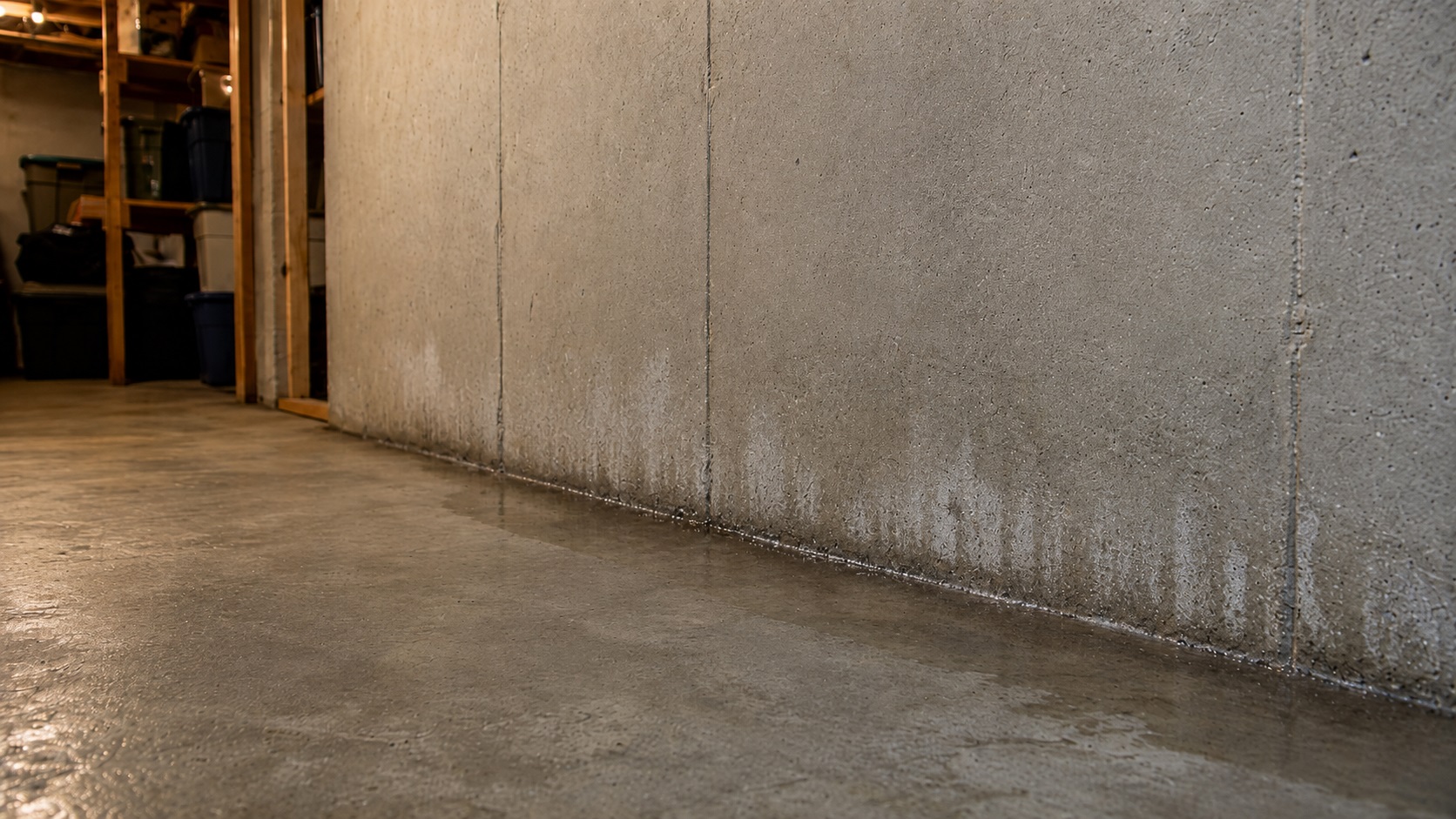
Why Hydrostatic Pressure Causes Basement Leaks
Hydrostatic pressure is one of the most important reasons basements leak, especially after heavy rain, repeated storms, melting snow, poor exterior drainage, or long periods of saturated soil. When water collects in the ground around a foundation, it does not simply sit there harmlessly. It creates pressure against basement walls, beneath the basement slab, and around the lower parts of the foundation. If that pressure has nowhere to drain, water looks for weak points.
That is why a basement leak may show up through a wall crack, along the wall-floor joint, through a floor crack, behind finished basement materials, or across a damp concrete surface. The visible leak is often only the symptom. The deeper problem is the water load pressing against the foundation from outside or below.
This guide explains why hydrostatic pressure causes basement leaks, how water pressure builds around foundations, where water commonly enters, and why simple surface fixes often fail when the pressure source remains active. It also helps connect this problem to the larger system of moisture problems in homes, because basement leaks are rarely isolated from drainage, soil, grading, structural openings, and long-term moisture control.
What Hydrostatic Pressure Means in a Basement
Hydrostatic pressure is the force created by water when it builds up in soil around or beneath a structure. In a basement, that pressure usually develops because the foundation sits below grade, where soil can hold large amounts of water after rain, snowmelt, poor drainage, or high groundwater conditions.
Concrete foundation walls and basement slabs are strong, but they are not magic barriers against unlimited water pressure. Basement foundations are designed to resist soil loads and manage moisture, but when surrounding soil stays saturated, water pushes against the structure. Over time, that pressure can force moisture through cracks, joints, pores, gaps, and weak points.
In practical terms, hydrostatic pressure happens when wet soil pushes water against the foundation faster than the basement drainage system can relieve it.
The Visible Leak Is Often Not the Full Problem
A homeowner may see one damp crack and assume that crack is the entire issue. Sometimes the crack does need repair, but the crack may only be the opening that pressure found. If the water load outside the foundation remains high, sealing one visible spot may not solve the pressure problem. Water may return through the same area, move to another crack, appear at the cove joint, or show up on the basement floor.
Hydrostatic Pressure Can Affect Walls and Floors
Many people think basement leaks only come through walls. Hydrostatic pressure can affect basement walls, but it can also act beneath the floor slab. When water pressure builds below the slab, moisture may enter through floor cracks, control joints, porous concrete, or the wall-floor joint. That is why some basements have wet floors even when the walls do not show an obvious active leak.
If water is collecting across the slab or returning in the same floor areas after storms, the next question is not only “Where is the water visible?” but “Where is the pressure coming from?” A basement floor leak may point to drainage problems below or around the foundation, not just a defect in the slab surface.
How Water Builds Up Around Basement Foundations
Hydrostatic pressure starts with water accumulation. The soil around a basement becomes the holding zone. Once that soil is saturated, water begins pressing against anything in its way, including the foundation walls and slab.
The pressure may increase quickly during a severe storm, but it can also develop slowly after repeated moderate rains. Some basements do not leak during the first hour of rain. They leak later because the soil takes time to absorb water, fill voids, overwhelm drainage paths, and create sustained pressure against the foundation.
Heavy Rain and Saturated Soil
Heavy rain is one of the most common triggers for hydrostatic pressure. When rain falls faster than the soil can absorb or drain it, water collects around the foundation. If the home already has compacted soil, poor grading, clay-heavy soil, or clogged drainage systems, the water may stay near the basement instead of moving away.
Once the soil around the foundation is saturated, the basement wall becomes a boundary holding back wet soil. Water will follow the easiest path available. If that path is a wall crack, a mortar joint, a porous block wall, a pipe penetration, or the cove joint, the basement begins to leak.
When the leak pattern is tied closely to storms, the related guide on why basement walls leak during rain should be used for the rain-specific wall leak explanation. Hydrostatic pressure is part of that larger rainwater behavior, but this article focuses on the pressure system itself.
Poor Grading Near the Foundation
Grading matters because the ground surface controls where rainwater flows. If soil slopes toward the foundation, runoff is directed straight to the basement wall instead of away from the house.
Flat or negative grading can create a recurring pressure problem. Water gathers near the wall, soaks into the backfilled soil, and increases the load against the basement. Inside, that may show up as damp walls, seepage near the floor, wet corners, or stains that return after storms.
Gutters and Downspouts That Discharge Too Close to the House
Roof water is another major source of pressure around foundations. Clogged gutters, missing gutters, damaged gutters, or short downspout extensions can dump roof runoff directly beside the basement wall.
That can make a basement leak look like a foundation-only problem when the first failure is actually water management above grade.
Clay Soil and Slow Drainage
Soil type affects how long water stays around the foundation. Sandy or well-draining soil usually allows water to move away more easily. Clay-heavy soil holds water longer and drains more slowly. When clay soil becomes saturated, it can keep pressure against the foundation for extended periods after rain stops.
This is one reason basement leaks may continue after the weather looks clear. The storm may be over, but the soil beside the foundation may still be wet and heavy. Water pressure can remain active until the soil drains, the sump system catches up, or the water table lowers.
Failed or Missing Footing Drains
Footing drains and drain tile systems are designed to collect water near the foundation and move it away before pressure becomes excessive. When those systems are missing, clogged, crushed, poorly installed, or overwhelmed, water can remain against the foundation long enough to create leaks.
A home can also have a drainage system that once worked but no longer performs well. Sediment, root intrusion, collapsed pipe sections, poor slope, sump pump problems, or discharge issues can all allow water pressure to build again. When a basement keeps leaking even though a drainage system exists, the problem may not be the idea of drainage. It may be that the drainage system is no longer relieving pressure effectively.
How Hydrostatic Pressure Pushes Water Into a Basement
Water under pressure does not need a large opening. It only needs a path. Basement leaks often happen because water finds the smallest available weakness and uses it repeatedly. The pressure may be outside the wall, beneath the slab, or concentrated at the lower joint where the wall and floor meet.
The exact entry point matters because it helps identify what kind of related problem you are dealing with. Water through a vertical wall crack may suggest a different next step than water appearing at the cove joint or spreading across the floor. But the underlying logic is the same: water pressure is trying to move from a wet area outside or below the foundation into a drier, lower-pressure space inside the basement.
Foundation Wall Cracks
Foundation wall cracks are common leak paths because they interrupt the continuity of the wall. A crack may be hairline, vertical, diagonal, stair-step, or wider depending on the foundation type and movement history. Not every crack is actively leaking, and not every crack means major structural failure. But when saturated soil presses water against a cracked wall, that crack can become the easiest route into the basement.
Pressure-driven wall cracks often leak during wet weather, after heavy rain, or during seasons when the soil remains saturated. The leak may appear as a thin wet line, dripping, staining, mineral deposits, or dampness that returns after patching.
Porous Concrete or Block Walls
Concrete and masonry are durable, but they are not always completely waterproof. Poured concrete can allow moisture vapor or seepage through pores and small defects. Concrete block walls can be more vulnerable because hollow cores, mortar joints, and block faces may provide more pathways for moisture under pressure.
When pressure is mild, the wall may only look damp or discolored. When pressure is stronger, water may seep through joints, collect at the bottom of the wall, or leave white mineral deposits after drying. This is why a basement can feel damp even without a dramatic stream of water.
The Cove Joint
The cove joint is the area where the basement wall meets the basement floor. It is one of the most common places for water to appear because it is a natural transition point in the foundation system. The wall and slab are usually separate elements, and the joint between them can become a pressure-release path when water builds outside or below the foundation.
Water at the cove joint often looks like a thin line of seepage along the perimeter of the basement floor. It may be worse after long rain, when the water table rises, or when drainage systems cannot keep up. Because the cove joint sits low in the basement, it can become the place where pressure finally shows itself.
Basement Floor Cracks
Floor cracks can leak when water pressure builds beneath the slab. The slab rests over soil, gravel, or fill material, and moisture conditions below it can change after heavy rain or rising groundwater. If water accumulates beneath the floor and pressure rises, cracks can become entry points.
When this is the main symptom, the article on why cracks in basement floors cause water leaks should handle the floor-crack-specific explanation. This hub should only establish the pressure relationship and guide the reader toward that more focused topic.
Pipe Penetrations and Utility Openings
Any place where a pipe, conduit, drain line, or utility passes through a basement wall can become a weak point if it is not sealed well or if the seal has aged. Under dry conditions, the opening may not cause visible trouble. Under hydrostatic pressure, water may begin tracking along the penetration and entering the basement.
This type of leak can be mistaken for a plumbing issue because it appears near a pipe. Sometimes plumbing is the source, but sometimes the pipe is only the path water uses to enter from outside. The timing of the leak, the wall location, and the relationship to rain can help separate those possibilities.
Why Basement Leaks Often Happen After Rain
Basement leaks often appear during or after rain because rain changes the moisture load around the foundation. A short light rain may not saturate the soil enough to create serious pressure. But heavy rain, repeated storms, or long wet seasons can fill the soil around the basement until water begins pressing against walls and floors.
This is why some basement leaks are delayed. The rain may start in the morning, but the basement may not show water until later that day or even the next day. The delay happens because water takes time to move through soil, reach the foundation, collect around drainage paths, and build enough pressure to force its way through cracks or joints.
If the leak appears mainly across the slab or through floor cracks after storms, the guide on why basement floors leak during rain explains that floor-specific rain pattern in more detail.
Rainwater Does Not Always Enter Immediately
When rain first hits the ground, some water runs across the surface, some soaks into the soil, and some is collected by gutters and downspouts. If surface drainage works well, much of that water moves away from the house. If drainage is poor, water begins collecting near the foundation.
At first, the soil may absorb the water without an obvious basement leak. But once the soil becomes saturated, it cannot absorb much more. Water begins filling the spaces in the soil and pressing against the foundation wall. At that point, the basement may begin leaking even if the heaviest rain has already passed.
Repeated Rain Can Be Worse Than One Storm
One intense storm can cause a basement leak, but repeated moderate rain can sometimes create a worse pressure problem. If the soil never has time to dry between storms, each new rain adds more water to an already saturated area. The foundation stays under pressure for longer periods, and leaks may become more frequent.
This is especially common when the home has slow-draining soil, poor grading, clogged gutters, short downspout extensions, or drainage systems that are partially blocked. The basement may seem to leak “every time it rains,” but the real pattern may be that the soil around the foundation never drains well enough between rain events.
Why Some Basement Walls Leak After Rain but Not During Dry Weather
A foundation wall crack may stay dry for months during normal conditions. That does not mean the crack cannot leak. It may simply mean there is not enough water pressure outside the wall during dry weather to force moisture through it.
After rain, the same crack can become active because the soil pressure changes. Water rises against the wall, pressure increases, and the crack becomes the easiest path into the basement. This is one reason homeowners sometimes think a leak “came out of nowhere” after a storm. The weak point may have existed for years, but it did not leak visibly until the water load increased.
For a deeper look at rain-specific wall seepage, foundation cracks, and exterior drainage patterns, use the guide on why basement walls leak during rain.
Signs Hydrostatic Pressure May Be Involved
Hydrostatic pressure is not the cause of every basement leak, but certain patterns make it more likely. The most important clue is not just where the water appears, but when it appears, how often it returns, and whether the leak pattern follows rain, snowmelt, poor drainage, or rising groundwater conditions.
A single puddle near a water heater may point to a plumbing or appliance leak. Condensation on cold surfaces may point to humidity. Water around a window well may point to above-grade drainage or window well failure. Hydrostatic pressure is more likely when water appears low in the basement, along foundation surfaces, through cracks, at the wall-floor joint, or across the slab after wet weather.
Water at the Wall-Floor Joint
Water along the wall-floor joint is one of the most common signs that pressure may be acting around the lower foundation. This area sits where the basement wall and slab meet, so it can become a natural leak path when water pressure builds outside the wall or beneath the floor.
The water may appear as a thin damp line, small puddles along the perimeter, or repeated staining at the base of the wall. It may be worse in corners, along one wall, or near the side of the house where exterior drainage is weakest.
Wet Basement Floors After Rain
Wet basement floors after rain can indicate that water is entering from below, from the wall-floor joint, from floor cracks, or from drainage failure. If the first issue is recognizing whether water is actually coming up through the slab or lower floor openings, use the guide on signs of water coming through basement floors. The floor may feel damp, show darker patches, develop puddles, or stay wet long after other areas dry.
When this pattern repeats, the issue is usually bigger than surface moisture on the slab. The water may be coming from pressure beneath the floor, poor drainage around the foundation, or a failure to move groundwater away from the basement. For the floor-specific explanation, use the guide on why basement floors stay wet.
Efflorescence on Basement Walls or Floors
Efflorescence is the white, powdery mineral residue left behind when moisture moves through masonry or concrete and then evaporates. It does not automatically prove an active leak is happening at that moment, but it does show that moisture has moved through the material at some point.
On basement walls, efflorescence often appears in areas where moisture repeatedly passes through concrete, block, mortar joints, or cracks. On floors, it may appear near cracks, edges, or damp areas. If it keeps returning after cleaning, the moisture source may still be active.
Leaks That Return After Patching
If a crack, seam, or joint has been patched but water keeps returning, hydrostatic pressure may still be present. A patch can block one opening, but it does not remove the water pressure outside the foundation. If the pressure remains high, water may force through the same repair, move around it, or appear somewhere else.
This is why repeated patch failure is an important warning sign. The repair may not have addressed the cause. In pressure-driven leaks, the long-term solution often has to include drainage improvement, pressure relief, or a more complete waterproofing approach.
Damp Walls Without Obvious Dripping
Hydrostatic pressure does not always create dramatic flowing water. Sometimes it creates dampness, darkened concrete, musty smells, or mineral deposits. This can happen when moisture is moving slowly through porous concrete, block, or mortar joints.
Slow seepage can still matter because repeated dampness can affect finishes, stored items, indoor air quality, and long-term basement usability. A basement does not have to flood for pressure-related moisture to be a real problem.
Why Basement Floors and Floor Cracks Leak Under Pressure
Basement floor leaks can be confusing because homeowners often expect water to enter through walls. But hydrostatic pressure can also build beneath the basement slab. When water accumulates below the floor and cannot drain away, it may press upward through cracks, joints, or porous areas in the concrete.
This does not mean the entire slab is failing. It means water is finding an available path. A basement floor crack can act like a pressure relief point, especially after heavy rain or when groundwater levels rise.
Water Pressure Can Act Beneath the Slab
The basement slab sits over soil, stone, or fill material. If water collects beneath that layer, pressure can build upward. The pressure may not lift the slab dramatically, but it can be enough to push moisture through small openings, cracks, or weak areas.
This is why water can appear in the middle of the basement floor even when no wall leak is visible. The source may still be exterior water or groundwater, but the entry point is below the slab instead of through the wall.
Floor Cracks Become Leak Paths
Concrete can crack for many reasons, including shrinkage, settlement, movement, or stress. A dry floor crack may seem harmless. But when water pressure rises below the slab, that crack can become the path of least resistance.
If water repeatedly appears from the same floor crack, the crack should not be treated only as a surface blemish. It may be connected to moisture conditions under the slab. The related guide on why cracks in basement floors cause water leaks should handle the detailed floor-crack behavior.
Wet Floors May Point to Drainage Failure
A wet basement floor may indicate that the foundation drainage system is not relieving pressure effectively. If footing drains, interior drain tile, gravel layers, or sump systems cannot move water away, pressure may rise below or beside the slab.
This is especially likely when floor wetness appears after storms, when the sump pump runs frequently, or when water appears near the perimeter of the basement. The floor is the symptom, but the pressure source may be outside the foundation, below the slab, or in a drainage system that is no longer working correctly.
Why Surface Fixes Often Fail
Surface fixes often fail because they treat the place where water appears, not the pressure that caused the water to appear. A coating, patch, or sealant may reduce visible seepage for a while, but if water pressure remains active behind the wall or beneath the slab, the moisture still needs somewhere to go.
This does not mean all sealants or crack repairs are useless. Some repairs are appropriate when matched to the correct problem. But pressure-driven leaks usually require a broader view. If the water load around the foundation is not reduced or managed, the repair is working against ongoing force.
Waterproof Paint Does Not Remove Water Pressure
Waterproof paint or masonry coating may help with minor dampness in some conditions, but it does not remove hydrostatic pressure. If water is pressing through a wall from outside, a coating on the inside surface becomes the last barrier holding back that pressure.
When pressure is strong enough, coatings may bubble, peel, flake, stain, or fail. The wall may look better temporarily, but the water source outside the foundation remains. This is why coating a basement wall without understanding drainage can lead to repeated disappointment.
Patching a Crack May Not Solve the System Problem
A leaking crack can sometimes be repaired, but a crack repair is not the same as a drainage solution. If water pressure continues to build outside the wall, the repaired crack may stay dry while water appears somewhere else. In other cases, the repair itself may fail because it is under constant moisture pressure.
Good crack repair depends on the crack type, foundation material, movement, water activity, and surrounding drainage conditions. The key point for this hub is simple: a crack is often the entry point, while hydrostatic pressure is the force pushing water through it.
Water Finds the Next Weak Point
When one opening is sealed but pressure remains, water may move to the next easiest path. That path might be another crack, the cove joint, a pipe penetration, a mortar joint, or the floor. This is why a basement can seem to develop “new” leaks after an old one is patched.
In many cases, the leak did not truly move randomly. The pressure field around the foundation stayed active, and water found another weak spot. Long-term control requires asking why so much water is pressing against the foundation in the first place.
How Drainage Problems Make Hydrostatic Pressure Worse
Drainage problems are one of the biggest reasons hydrostatic pressure becomes severe enough to cause basement leaks. Water pressure does not build simply because rain exists. It builds when water is allowed to collect around or beneath the foundation faster than it can drain away.
A good drainage system reduces the water load before it becomes a basement leak. A poor, clogged, missing, overwhelmed, or poorly designed drainage system allows water to remain against the foundation. Once that happens, even small cracks, joints, and porous areas can become active leak paths.
Poor Exterior Drainage Keeps Water Beside the Foundation
Exterior drainage begins above grade. The ground surface, gutters, downspouts, swales, hardscaping, patios, walkways, and landscaping all affect where water goes during a storm. If exterior drainage moves water away from the house, hydrostatic pressure is less likely to build heavily against the foundation.
If exterior drainage sends water toward the house, the basement becomes the low point in a water collection system. Water gathers beside the foundation wall, soaks into the backfill, and increases pressure against the wall. Over time, this can lead to seepage, damp walls, cove joint leaks, floor moisture, and recurring basement wetness.
Common exterior drainage problems include soil sloping toward the foundation, clogged gutters, short downspouts, downspouts discharging at basement corners, settled backfill beside the house, paved surfaces that drain toward the wall, and landscape beds that trap water against the foundation.
Clogged or Failed Drain Tile Can Allow Pressure to Build
Drain tile systems are designed to collect water near the footing and move it away from the foundation. Depending on the home, drainage may be outside the footing, inside the basement perimeter, or part of a combined waterproofing system. When the drainage system works, it helps lower water pressure before it forces water into the basement.
When drain tile clogs, collapses, silts up, drains too slowly, or loses a clear discharge path, the pressure-control system becomes less effective. Water that should be collected and moved away remains near the foundation instead. The basement may then leak even though a drainage system technically exists.
This is why recurring basement leaks should not be dismissed simply because the home already has a drain tile system. A system can exist and still fail. The article on why basement drainage systems fail should handle that failure topic in more detail.
Sump Pump Problems Can Turn Drainage Into a Bottleneck
A sump pump is often the final exit point for water collected by an interior drainage system. If the pump cannot move water out fast enough, if it loses power, if the float switch fails, if the discharge line is blocked, or if the pump is undersized for the water load, water may remain around or beneath the basement.
When that happens, pressure can rise even though water is being collected. A sump system is only useful if it can move water away from the foundation reliably. If the pump cycles constantly during storms, struggles to keep up, or leaves water standing in the pit, the basement may still be under pressure.
Drainage systems reduce hydrostatic pressure only when the full path works: collection, flow, pump capacity, discharge, and backup protection.
Drainage Can Be Overwhelmed During Severe Weather
Even a working drainage system can be overwhelmed if the water load is extreme. Heavy storms, rapid snowmelt, saturated clay soil, high groundwater, or multiple drainage problems at once can produce more water than the system can handle.
When that happens, pressure may rise temporarily and water may enter through the weakest points. A basement that leaks only during unusually severe weather may not have the same problem as a basement that leaks after every moderate rain. The pattern matters because it helps separate occasional overload from chronic drainage failure.
Signs the Basement Drainage System May Not Be Relieving Pressure
Drainage problems often leave clues before a major basement leak happens. Water pooling near the foundation, overflowing gutters, short downspouts, settled soil beside the house, damp basement corners, repeated water along the wall-floor joint, and sump pump overactivity can all point toward water that is not being controlled properly.
If the question is whether drainage is part of the problem, the related guide on signs of poor basement drainage should be used for symptom recognition. If the next step is inspection, the guide on how to detect basement drainage problems should handle the more practical diagnostic process.
How Waterproofing Systems Reduce Hydrostatic Pressure
Basement waterproofing systems work best when they manage water pressure instead of only covering the visible leak. A complete approach may move roof runoff away from the house, improve grading, collect water near the footing, relieve pressure beneath the slab, repair active cracks, or direct collected water to a sump pump and safe discharge point.
The main point is that waterproofing should give water a controlled path away from the foundation. If water has nowhere to drain, coatings, membranes, and patches may still be under pressure. For the full system-level strategy, use the guide on how to waterproof basements and control water intrusion.
What Hydrostatic Pressure Is Not
Hydrostatic pressure is important, but it is not the cause of every basement water problem. A strong article on this topic should avoid blaming every leak on pressure. Basements can become wet from many sources, and the correct solution depends on correctly identifying the source.
Misdiagnosing the leak can lead to wasted repairs. A homeowner might seal a wall when the real problem is a window well. They might blame the slab when the real issue is a plumbing line. They might install a dehumidifier when liquid water is entering through a foundation joint. Understanding what hydrostatic pressure is not helps narrow the problem more accurately.
It Is Not the Same as a Plumbing Leak
Plumbing leaks can also create wet basement floors, damp walls, stains, or musty odors. A leaking supply line, drain line, water heater, washing machine hose, or appliance connection may create moisture that has nothing to do with outside soil pressure.
One clue is timing. If water appears even during dry weather, near plumbing fixtures, beneath pipes, around appliances, or after water use inside the home, plumbing should be considered. Hydrostatic pressure is more likely when water patterns follow rain, groundwater, snowmelt, or basement perimeter seepage.
It Is Not the Same as Window Well Leakage
Window wells can collect water when drains clog, covers fail, grading sends water toward the window, or the well fills during heavy rain. Water may then enter through the window frame, sill, or surrounding wall opening.
This can look like a basement wall leak, but the source is different. The problem may be above the basement floor level, concentrated around a window, and tied to window well drainage rather than pressure against the entire foundation wall.
It Is Not the Same as Indoor Humidity or Condensation
Humidity and condensation can make a basement feel damp even when liquid water is not being forced through the foundation. Cool basement surfaces can collect condensation when warm, humid air contacts them. This may create dampness, musty odors, or surface moisture without hydrostatic pressure being the main cause.
That does not mean humidity should be ignored. But a dehumidifier cannot solve active water pressure through a wall or floor. Likewise, waterproofing cannot solve every humidity issue. The source of the moisture determines the correct response.
It Is Not Always a Sign of Structural Failure
Hydrostatic pressure can contribute to structural problems, especially when foundation walls are under prolonged stress or show movement. But a basement leak caused by pressure does not automatically mean the foundation is failing structurally.
Small seepage through a crack, damp walls, or water at the cove joint should be taken seriously, but the severity depends on the leak pattern, wall condition, crack behavior, movement, drainage conditions, and whether there are signs such as bowing, displacement, widening cracks, or repeated major water entry.
When Hydrostatic Pressure Requires Professional Evaluation
Some basement moisture problems can be investigated by a careful homeowner, especially when the issue is obviously connected to gutters, downspouts, grading, or minor surface drainage. But hydrostatic pressure can also point to deeper foundation and drainage conditions that need professional evaluation.
The more frequent, active, or widespread the water entry is, the more important it becomes to understand the full system. Repeatedly patching symptoms without evaluating pressure can allow the same moisture cycle to continue.
Repeated Water Entry After Rain
If the basement leaks every time it rains, or after most heavy storms, the problem should not be treated as a one-time event. Repeated water entry usually means the foundation area is receiving or holding too much water, the drainage system is not relieving pressure, or water has a reliable path into the basement.
Repeated leaks can damage finishes, create musty conditions, affect stored items, and make the basement difficult to use. Even if each leak seems small, the pattern matters.
Active Leaks Through Cracks or the Cove Joint
Active dripping, flowing water, or recurring seepage through cracks and the cove joint deserves closer attention. These areas can indicate that water pressure is not being controlled outside or beneath the foundation.
If water enters through multiple cracks or along long sections of the perimeter, the problem may be more than a single isolated opening. The drainage and pressure conditions around the foundation should be evaluated.
Bowing, Movement, or Structural Warning Signs
Hydrostatic pressure can be especially concerning when it appears alongside structural warning signs. Bowing basement walls, horizontal cracks, stair-step cracks in block walls, widening cracks, wall movement, inward displacement, or doors and windows affected by foundation movement should be evaluated promptly.
This article should not diagnose structural safety from symptoms alone. The safe boundary is to explain that water pressure plus visible movement is more serious than dampness alone and should be assessed by a qualified foundation or structural professional.
Failed Previous Waterproofing
If the basement has already been waterproofed but still leaks, the issue may involve system failure, poor installation, clogging, pump problems, exterior water overload, or an incomplete understanding of the original water source. Repeating the same surface repair usually will not solve a failed pressure-control system.
In that situation, the next step is to understand why the existing system is not managing water. That may involve evaluating drainage, sump operation, discharge routing, cracks, grading, and whether water is entering from a different path than the original repair addressed.
Related Basement Leak Guides
If your basement leaks mainly through walls after storms, start with the guide on why basement walls leak during rain. That article focuses more specifically on foundation wall seepage, rain-driven water entry, exterior drainage failures, and why wall leaks often appear after wet weather.
If the water is showing up across the floor, near the wall-floor joint, or in recurring damp floor areas, read why basement floors stay wet. Basement floor moisture can come from pressure beneath the slab, drainage failure, cracks, condensation, or repeated water entry that never fully dries.
If the visible problem is a crack in the basement floor, use the guide on why cracks in basement floors cause water leaks. Floor cracks are not always serious, but when water repeatedly comes through them, the crack may be acting as a path for pressure beneath the slab.
If you suspect the real issue is drainage, start with signs of poor basement drainage. Poor drainage can show up before a major leak, especially through pooling water outside, short downspouts, damp basement corners, recurring perimeter seepage, or a sump system that struggles during storms.
If you need a more practical inspection path, use how to detect basement drainage problems. That article should help separate surface runoff, grading issues, gutter problems, sump problems, and drainage-system weaknesses.
If your basement already has a drainage system but still leaks, read why basement drainage systems fail. A drainage system can clog, collapse, discharge poorly, become overwhelmed, or depend on a sump pump that is no longer keeping up.
If you are ready to move from cause diagnosis into full system planning, the next major guide is how to waterproof basements and control water intrusion. Hydrostatic pressure explains why basement leaks happen; waterproofing and drainage strategy explains how to control the water long term.
FAQ About Hydrostatic Pressure and Basement Leaks
What is hydrostatic pressure in a basement?
Hydrostatic pressure in a basement is the force created when water builds up in the soil around or beneath the foundation. As the soil becomes saturated, water presses against basement walls, slabs, joints, and cracks. If the pressure is not relieved by drainage, water can enter through weak points in the foundation system.
Can hydrostatic pressure make water come up through a basement floor?
Yes. Hydrostatic pressure can act beneath a basement slab. If water collects below the floor and pressure rises, moisture may come up through floor cracks, porous concrete, control joints, or weak areas near the wall-floor joint. This is one reason a basement floor can become wet even when there is no obvious wall leak.
Why does my basement leak after heavy rain?
A basement often leaks after heavy rain because the soil around the foundation becomes saturated. Once the soil holds more water than it can drain, pressure builds against the basement walls and beneath the slab. Water then enters through cracks, joints, porous materials, or drainage failure points.
Why does my basement leak after the rain stops?
Basement leaks can appear after rain stops because water takes time to move through soil and build pressure around the foundation. The storm may be over, but the soil may still be saturated. If drainage is slow or blocked, pressure can continue pushing water into the basement after the weather clears.
Will waterproof paint stop hydrostatic pressure?
Waterproof paint may reduce minor surface dampness in some cases, but it does not remove hydrostatic pressure. If water is actively pressing through a basement wall or floor, an interior coating may bubble, peel, stain, or fail. Pressure-driven leaks usually require drainage, pressure relief, crack repair, or a more complete waterproofing strategy.
Is hydrostatic pressure a drainage problem or a foundation problem?
It can involve both. Hydrostatic pressure usually builds because water is not draining away from the foundation properly. But the water enters through foundation weaknesses such as cracks, joints, porous walls, floor openings, or pipe penetrations. The source may be drainage-related, while the symptom appears in the foundation.
Does hydrostatic pressure always mean my foundation is damaged?
No. Hydrostatic pressure can cause leaks without major structural damage. Water may enter through small cracks, joints, or porous areas. However, if leaks are paired with bowing walls, widening cracks, horizontal cracks, stair-step cracks, wall movement, or repeated severe water entry, the foundation should be professionally evaluated.
Can a sump pump reduce hydrostatic pressure?
A sump pump can help reduce hydrostatic pressure when it is part of a working drainage system that collects water and moves it away from the foundation. However, a sump pump alone cannot solve every pressure problem. It must receive water properly, discharge it safely, and keep up with the volume of water entering the system.
Why did my basement start leaking after years of being dry?
A basement can start leaking after years of being dry if drainage conditions change. Gutters may clog, downspouts may shift, soil may settle toward the foundation, drain tile may clog, cracks may open, landscaping may trap water, or weather patterns may saturate the soil more than before. The foundation may have had weak points for years, but the water pressure may not have been high enough to expose them until conditions changed.
When should I call a basement waterproofing contractor?
You should consider calling a basement waterproofing or foundation professional if water repeatedly enters after rain, if water comes through multiple cracks or along the wall-floor joint, if the sump pump cannot keep up, if previous repairs failed, or if you see bowing walls, movement, widening cracks, or other structural warning signs.
Final Thoughts on Hydrostatic Pressure and Basement Leaks
Hydrostatic pressure causes basement leaks because water does not stay passive when it builds up around a foundation. Saturated soil, poor drainage, heavy rain, slow-draining clay, failed drain tile, and sump system problems can all increase the water load against basement walls and floors. Once that pressure rises, water looks for the easiest path into the basement.
That path might be a wall crack, a floor crack, the cove joint, a porous block wall, a pipe penetration, or a weak seam. The visible leak may look like the whole problem, but the deeper issue is often the pressure behind it. That is why surface coatings, quick patches, and cosmetic repairs often fail when the water source and drainage conditions are not addressed.
The most important takeaway is that hydrostatic pressure is a system problem. To understand it, you have to look at water outside the foundation, drainage around the home, pressure beneath the slab, leak paths through the basement structure, and whether existing waterproofing systems are actually relieving pressure.
If you are still narrowing down the source, begin with the specific symptom you see: wall leaks after rain, wet basement floors, floor cracks, poor drainage signs, or failed drainage systems. If you are ready to move from cause diagnosis into long-term control, use the full guide on how to waterproof basements and control water intrusion to understand the systems that reduce water pressure and protect the basement over time.
One Comment
Comments are closed.