hOmeLabs 50 Pint Dehumidifier Review: Is It Worth It?
The hOmeLabs 50 Pint Dehumidifier is worth considering if you need a large portable dehumidifier for a damp basement, large room, home office, or other indoor space where humidity stays too high. Its main appeal is simple: it gives homeowners stronger room-level moisture control with Wi-Fi settings, bucket operation, auto shut-off, turbo airflow, and continuous gravity-drain support.
It can help reduce damp air and musty conditions, but it will not stop basement seepage, fix drainage problems, repair foundation leaks, or remove existing mold.
Disclosure: This article may contain affiliate links. If you buy through these links, we may earn a commission at no extra cost to you.
Is the hOmeLabs 50 Pint Dehumidifier a Good Buy?
- Best for: Basements, large rooms, home offices, and homeowners who want Wi-Fi humidity control.
- Not ideal for: Flood cleanup, active leaks, crawl-space installations, or drain setups that require a built-in pump.
- Main strength: Large-space humidity control with convenient smart features.
- Main limitation: Performance depends on room layout, airflow, moisture load, and whether water is still entering the space.
- Bottom line: A practical choice for humidity-driven dampness, but not a fix for structural moisture problems.
What the hOmeLabs 50 Pint Dehumidifier Is Designed to Do
The hOmeLabs 50 Pint Dehumidifier is a portable residential unit made for larger indoor spaces. The current listing describes it as a Wi-Fi-enabled dehumidifier for homes, offices, basements, and large rooms. It is rated for 50 pints of moisture removal per day under standard listed conditions, with a higher maximum removal figure under hotter, more humid test conditions.
For homeowners, the useful question is not the biggest number on the listing. It is whether the unit can lower and stabilize humidity in the space where you actually plan to use it. In a damp basement or large room with high indoor humidity, this model can make sense. In a room with water coming through walls, pooling on the floor, or soaking materials after storms, it may help dry the air but will not solve the source.
If you are still deciding what size or style of unit fits your home, see our guide on how to choose and use a dehumidifier effectively. For broader product comparisons, see our guide to the best basement dehumidifiers.
You can also view the hOmeLabs 50 Pint Dehumidifier on Amazon to check the current listing details, availability, and configuration before buying.
hOmeLabs 50 Pint Dehumidifier Specs That Affect Real-World Use
- Model: HME031003N, based on matching retailer listings.
- Dehumidification rating: 50 pints per day at 80°F and 60% relative humidity, with a listed maximum of 120 pints at 95°F and 90% relative humidity.
- Listed coverage: Up to 7,000 square feet, depending heavily on room conditions and moisture load.
- Tank size: 1.6 gallons on the Amazon listing.
- Airflow: 188 CFM on normal fan speed and up to 218 CFM on high fan speed.
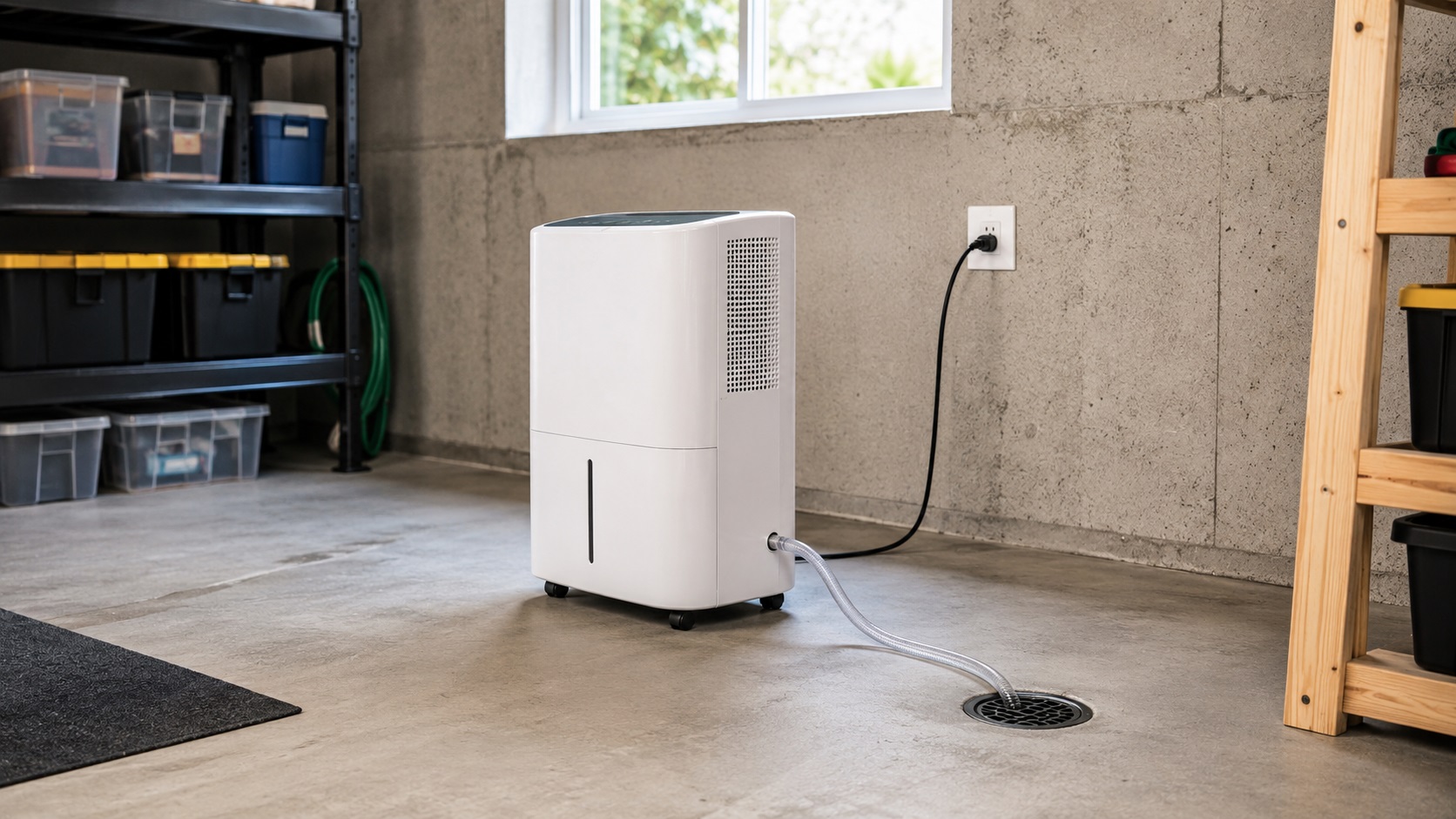
- Drainage: Supports continuous gravity drainage through a hose outlet, but the drain hose is not included. For continuous drainage into a nearby floor drain, use a compatible ¾-inch hose such as the hOmeLabs dehumidifier drain hose.
- Pump: This reviewed unit is the no-pump version. It can drain downward by gravity through a hose, but it will not pump water upward to a sink, standpipe, or higher drain line. If you need pump drainage, consider the hOmeLabs Wi-Fi dehumidifier with pump.
- Smart control: Wi-Fi enabled for remote control and setting adjustments.
The Features That Matter Most on This hOmeLabs Dehumidifier
What the 50-Pint Rating Means in a Real Home
The 50-pint rating is the main reason to consider this model over a compact dehumidifier. It puts the unit in the larger portable residential category, making it more appropriate for basements and larger rooms where smaller units may run constantly without reaching the target humidity level.
That rating still depends on conditions. Temperature, humidity level, airflow, ceiling height, room layout, and ongoing moisture sources all affect how hard the unit has to work. If new moisture keeps entering the space, even a larger dehumidifier may run often.
How Seriously to Take the Large-Space Coverage Claim
The listing presents this model as a large-space dehumidifier, which is helpful for homeowners trying to avoid an undersized unit. Still, coverage claims should be read carefully. A dry, open room is very different from a damp basement with concrete walls, poor airflow, or seasonal seepage.
In real use, the moisture load matters more than square footage alone. If you are unsure whether this capacity fits your space, review how to choose the right size dehumidifier before relying only on the listed coverage area.
When the Wi-Fi Control Actually Helps
Wi-Fi control is useful if the unit will sit in a basement, utility area, office, or another room you do not check constantly. Remote access can make it easier to adjust settings and monitor operation without walking to the unit every time.
This feature matters most for homeowners who actually want app control. If you prefer a basic appliance with manual controls, Wi-Fi may not be a major selling point.
Bucket Emptying vs Continuous Drainage
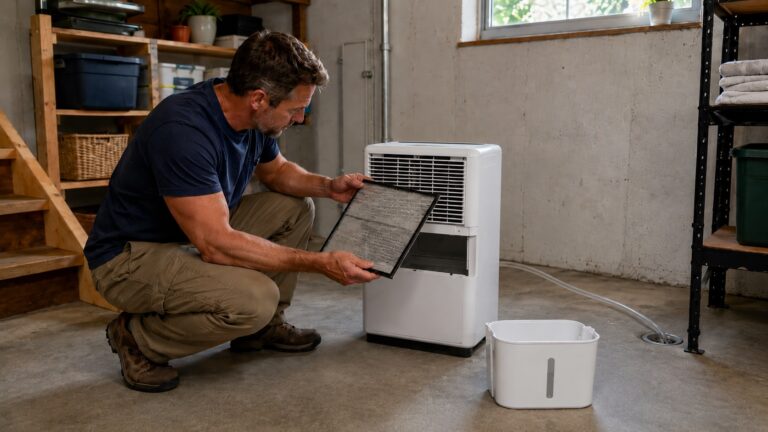
The removable tank and automatic shut-off make the unit usable without a drain nearby. For occasional use, that may be enough. For basements and other damp spaces, continuous drainage is usually more practical because the bucket can fill quickly in humid conditions.
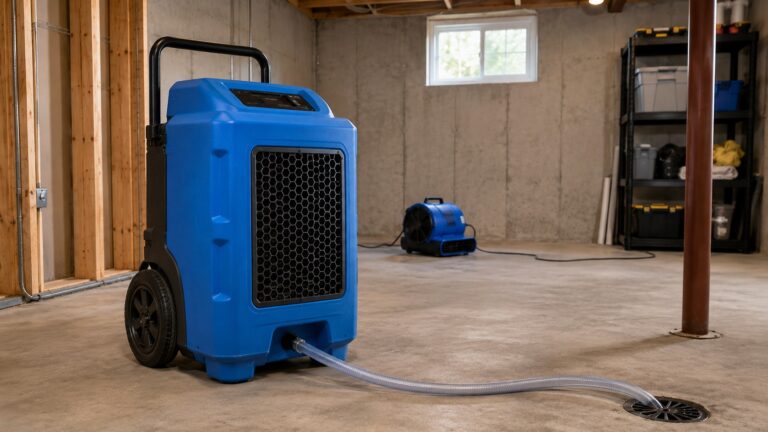
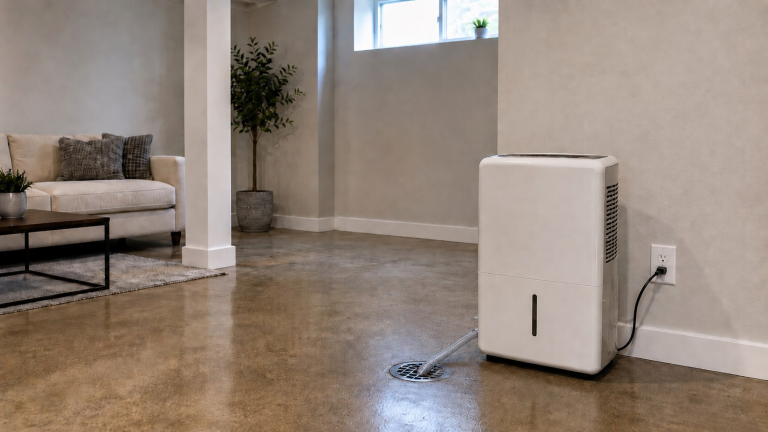
This model supports continuous gravity drainage through a hose outlet, but the drain hose is not included. If you want to drain into a nearby floor drain, use a compatible ¾-inch hose such as the hOmeLabs dehumidifier drain hose. This is the no-pump version, so it will not push water upward to a sink, standpipe, or higher drain line. If your setup requires upward drainage, choose the hOmeLabs Wi-Fi dehumidifier with pump instead.
If the hose has to rise even slightly before reaching the drain, choose a pump model instead of relying on gravity drainage.
Airflow, Fan Speed, and Moving the Unit Around
Turbo mode increases airflow through the unit, which can help in larger rooms or during periods of higher humidity. The wheels and handles also make it easier to test different locations or move the unit closer to a drain during humid seasons.
The tradeoff is that higher fan settings may be louder, and a full-size portable dehumidifier is still not effortless to move up and down stairs. Once a drain hose is attached, most homeowners will leave it in one practical location.
How It Should Perform in a Damp Basement or Large Room
The hOmeLabs 50 Pint Dehumidifier should perform best where the problem is humid air rather than active water entry. In a basement or large room with general dampness, it may help reduce the heavy, musty feeling that comes with elevated humidity and help keep moisture conditions more stable.
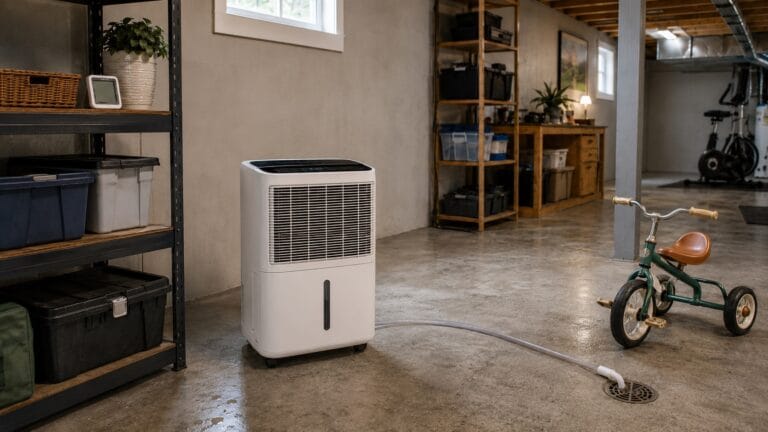
Placement makes a noticeable difference. The unit needs open airflow around it, access to the damp air, and a practical drain setup if you want it to run for long periods without bucket emptying. For setup details, see our guide on where to place a dehumidifier.
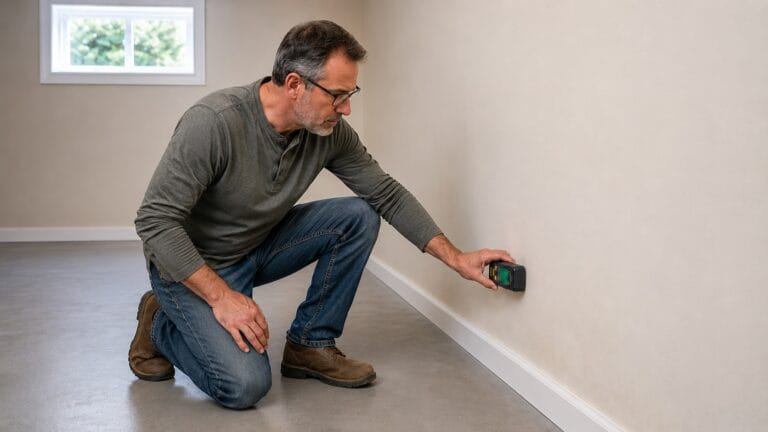
The main limit is source control. If water is seeping through walls, rising through floor cracks, pooling after rain, or reaching electrical outlets, the water source needs to be corrected before relying on a dehumidifier. In that case, the unit becomes a drying and humidity-support tool, not the main repair.
Best Places to Use the hOmeLabs 50 Pint Dehumidifier
This model works best in large indoor areas where the main problem is humid air. Basements are the clearest fit, especially finished or semi-finished basements that feel damp but do not have active water intrusion. It can also work well in large living areas, home offices, laundry-adjacent rooms, and seasonal humidity zones.
It is most practical when you either have a manageable bucket-emptying routine or a good continuous-drain location. For long-running basement use, continuous drainage is usually the better setup.
Where This hOmeLabs Dehumidifier Is Not Enough
This product may fall short when the problem is bigger than indoor humidity. It is not the right primary solution for active basement leaks, wet flooring, soaked drywall, established mold, low-clearance crawl spaces, whole-house HVAC dehumidification, or restoration drying after flooding.
This is also not the right model if your drain route requires water to move upward into a sink, standpipe, or higher drain line. This hOmeLabs unit is the no-pump version, so it is best for bucket use or gravity drainage into a nearby floor drain. If you need pump drainage, the hOmeLabs Wi-Fi dehumidifier with pump is the more appropriate same-brand alternative.
Who the hOmeLabs 50 Pint Dehumidifier Makes Sense For
The hOmeLabs 50 Pint Dehumidifier is a good fit if your basement, large room, or office feels damp during humid weather and you want a stronger portable unit than a small-room model. It is especially useful if you want Wi-Fi control for a unit placed in a basement, utility area, or room you do not check every day.
It also makes sense if you can use continuous drainage. A large dehumidifier can collect water quickly in damp conditions, so a floor drain or other safe drain route makes long-term use easier than relying only on the bucket.
Check today’s price for the hOmeLabs 50 Pint Dehumidifier on Amazon
Who Should Choose a Different Dehumidifier
This should not be your only solution if the real problem is active water intrusion. If water comes through basement walls, rises through floor cracks, pools after rain, or soaks building materials, the water source needs to be repaired. The dehumidifier may still help dry the air, but it cannot seal cracks, redirect groundwater, repair flashing, or stop leaks.
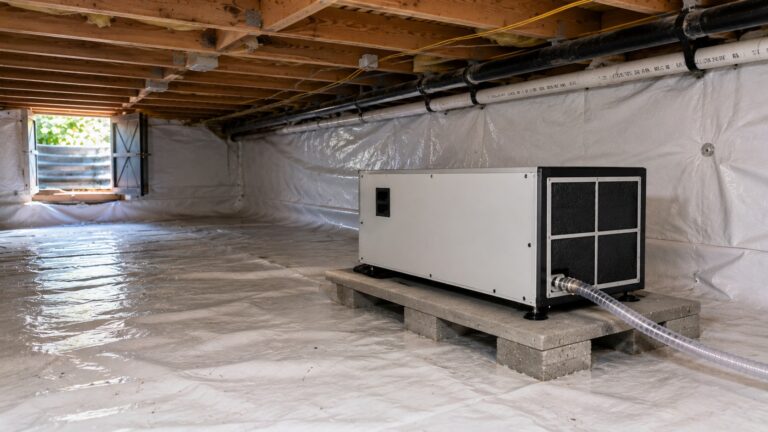
It is also not the best match for crawl spaces that need a dedicated crawl-space dehumidifier, small rooms that only need occasional moisture control, or setups that require pump drainage. For a smaller same-brand option, the hOmeLabs 3,500 sq. ft. Wi-Fi dehumidifier may make more sense than this 50-pint large-space model. If your drain route sends water upward to a sink, standpipe, or higher drain line, choose a pump model such as the hOmeLabs Wi-Fi dehumidifier with pump.
How It Compares With Smaller, Pump, and Crawl Space Models
Compared with smaller room dehumidifiers, the hOmeLabs 50 Pint Dehumidifier is better suited for basements and larger spaces with persistent humidity. Compared with other 50-pint portable models, its main appeal is the mix of large-space capacity and Wi-Fi convenience.
Compared with pump-equipped basement models, the drainage setup is the biggest difference. This hOmeLabs 50 Pint model is the no-pump version, so gravity drainage is only practical when the hose can run downward to a nearby drain. If water must move upward, the hOmeLabs Wi-Fi dehumidifier with pump is a better match. Compared with crawl-space or whole-house systems, this is still a portable room appliance, not a dedicated building-system solution.
For a broader look at options in this category, see our guide to the best basement dehumidifiers. You can also use our dehumidifier selection guide if you are still comparing use cases, placement, sizing, and settings.
Common Questions About the hOmeLabs 50 Pint Dehumidifier
Is the hOmeLabs 50 Pint Dehumidifier good for basements?
Yes, it can be a good fit for basements where the main problem is high humidity or a damp, musty feeling. It is not enough by itself if the basement has active water seepage, flooding, or standing water after rain.
Does the hOmeLabs 50 Pint Dehumidifier remove mold?
No. A dehumidifier does not remove existing mold. It may help reduce humidity conditions that encourage mold growth, but visible mold, contaminated materials, and moisture sources need to be handled separately.
Can the hOmeLabs 50 Pint Dehumidifier drain continuously?
Yes. It supports continuous gravity drainage through a hose outlet, but the hose is not included. For a nearby floor drain, use a compatible ¾-inch hose such as the hOmeLabs dehumidifier drain hose. The hose needs to run downward because this reviewed model does not include a pump.
Is the 7,000 sq. ft. coverage claim realistic?
It should be treated as a maximum listed coverage claim, not a guarantee for every home. Real performance depends on humidity level, temperature, room layout, airflow, ceiling height, and whether moisture is still entering the space.
Does this model have a built-in pump?
No. This reviewed hOmeLabs 50 Pint Dehumidifier is the no-pump version. It can drain continuously by gravity when connected to a compatible hose, but it cannot pump water upward. If you need to drain into a sink, standpipe, or higher drain line, choose the hOmeLabs Wi-Fi dehumidifier with pump instead.
How long should I run the hOmeLabs 50 Pint Dehumidifier each day?
Runtime depends on the starting humidity, target humidity, room size, moisture source, and whether the unit is using auto mode. In a damp basement, it may need to run for long periods until humidity stabilizes, especially during humid weather. For full runtime guidance, see our article on how long to run a dehumidifier each day.
Final Verdict: Is the hOmeLabs 50 Pint Dehumidifier Worth It?
The hOmeLabs 50 Pint Dehumidifier is worth considering if you need a popular portable dehumidifier for humidity-driven dampness in a basement, office, or large indoor room. Its best use case is routine humidity control, especially when you can place it well and use continuous drainage.
Its biggest limitation is source control. If your space has seepage, standing water, wet materials, or recurring leaks, fix the water source first and use the dehumidifier as support.
The main buying caution is drainage. This is the no-pump version, and the drain hose is not included. For gravity drainage into a nearby floor drain, add a compatible hOmeLabs dehumidifier drain hose. If you need water to move upward into a sink, standpipe, or higher drain line, choose the hOmeLabs Wi-Fi dehumidifier with pump.