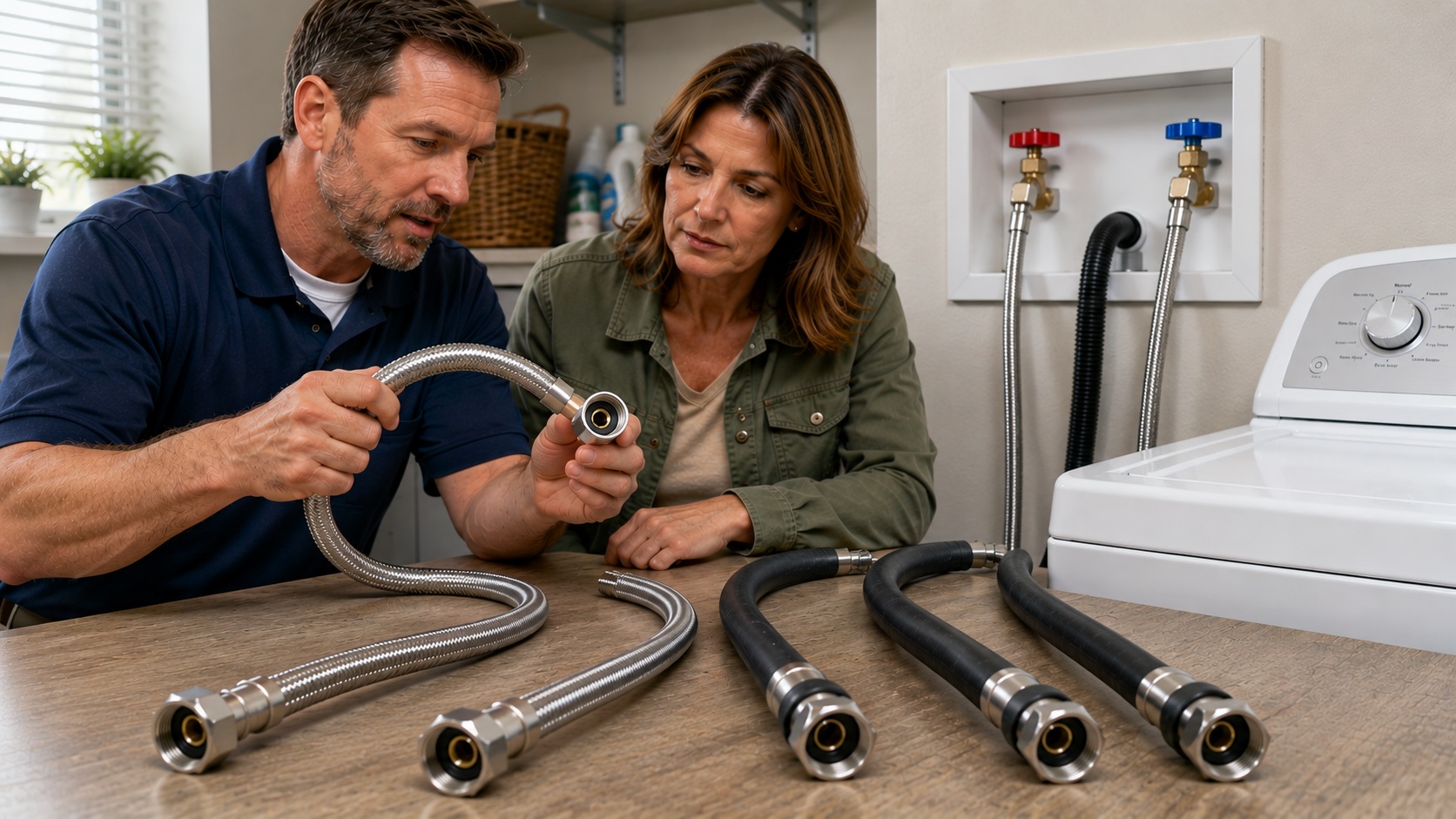
Best Washing Machine Hoses for Safer Laundry Room Leak Prevention
Introduction
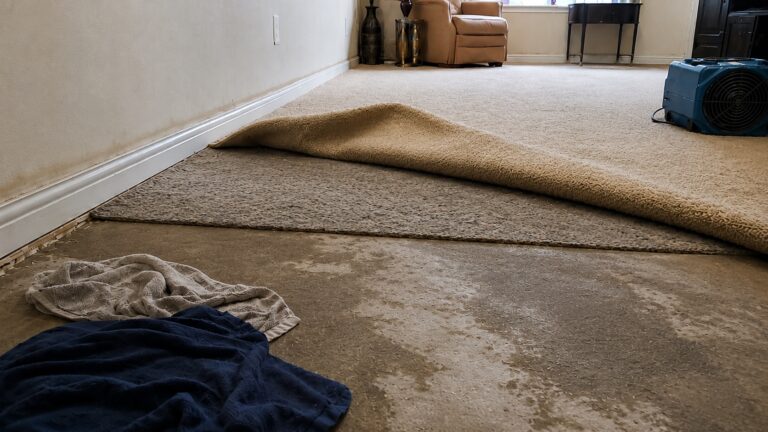
Washing machine hoses are easy to ignore until they fail. A small drip behind the washer can soak flooring, swell baseboards, damage subfloors, and create the kind of hidden moisture that leads to mold problems in laundry rooms. A sudden hose rupture can be even worse, especially if the washer sits upstairs, in a finished basement, or near wood flooring.
The best washing machine hoses are not just about connecting hot and cold water. They should fit your laundry layout, resist kinking, use durable fittings, and give you enough length without leaving excess hose coiled behind the machine. For most homeowners, braided stainless steel washer hoses are a better long-term choice than basic rubber hoses because they provide added reinforcement against bulging and wear.
This guide compares practical washing machine hose options for standard residential washers, including straight hoses, 90-degree elbow hoses, budget-friendly pairs, and easier-grip designs for tighter spaces.
As an Amazon Associate, this site earns from qualifying purchases. This does not affect the price you pay. Our recommendations are based on research, product reliability, and real-world usability in moisture-prone environments.
Quick Picks for Washing Machine Hose Replacements
- Best Overall: K&J Premium 6ft Washing Machine Hoses Burst Proof 2 Pack
- Best Easy-Grip Hose: Washing Machine Hoses (4FT) – OCT Connect by Hippohose
- Best Established Brand: Certified Appliance Accessories Washing Machine Hoses 2 Pack
- Best for Tight Laundry Spaces: Beaquicy 6FT Washer Stainless Steel Hoses with 90 Degree Elbows
- Best Budget Pick: Techecook/TOMOON 4ft Premium Stainless Steel Washing Machine Hoses
- Best Basic Stainless Replacement: Yejesiy 4 Ft Washing Machine Hoses
- Best Alternate 90-Degree Hose: Fetechmate 6FT Premium Stainless Steel Washing Machine Hoses with 90 Degree Elbow
For broader plumbing leak prevention, see the parent guide: How Plumbing Leaks Cause Structural Damage. For a wider site overview, visit How to Find, Fix, and Prevent Moisture Problems in Homes.
Washing Machine Hose Reviews
K&J Premium 6ft Washing Machine Hoses — Best Overall
The K&J Premium 6ft washing machine hose set is the strongest all-around choice for most homeowners because it offers a practical 6-foot length, braided stainless steel reinforcement, and a simple hot-and-cold 2-pack format. The extra length gives more flexibility than a 4-foot set without being excessive for most laundry rooms. This makes it a useful option for replacing older rubber hoses before they become a leak risk behind the washer.
For homeowners concerned about water damage around washing machines, this is the kind of basic upgrade that makes sense before problems appear. It does not replace regular inspection or a working shutoff valve, but it is a practical improvement over aging rubber supply lines.
Key Features
- 6-foot hose length gives useful installation flexibility in standard laundry rooms.
- Two-hose set covers both hot and cold water connections.
- Braided stainless steel exterior helps reduce bulging and abrasion risk.
- Color-coded design helps distinguish hot and cold supply lines.
- Compatible with standard residential washing machine water connections.
Pros
- ✔ Good length for most washer installations.
- ✔ Strong all-purpose pick for replacing old rubber hoses.
- ✔ Simple 2-pack format avoids buying separate hot and cold lines.
- ✔ Braided construction is well suited for moisture-prevention upgrades.
Cons
- ✖ Straight fittings may not be ideal if the washer sits very close to the wall.
- ✖ Six feet may be more hose than needed in compact laundry closets.
Best For
- Homeowners who want one reliable replacement set for a typical residential washer.
- Laundry rooms where the washer needs a little extra pull-out space for maintenance.
- Replacing aging rubber hoses as part of a water damage prevention routine.
Check the K&J Premium 6ft Washing Machine Hoses on Amazon to see current availability.
Hippohose OCT Connect Washing Machine Hoses — Best Easy-Grip Hose
The Hippohose OCT Connect set is a good choice for homeowners who want washer hoses that are easier to grip during installation. The octagon-style connector design is the main reason to choose this product over a basic round-fitting hose. That matters when the washer is tucked into a tight laundry area and you do not have much hand clearance behind the machine.
This 4-foot pair is best when the washer is already close to the supply valves and does not need a longer hose. It is especially helpful for DIY users who want a straightforward braided stainless replacement without fighting slippery fittings in a cramped space.
Key Features
- 4-foot length works well for close washer-to-valve connections.
- OCT-style connectors are designed to be easier to grip and tighten.
- Braided stainless steel construction adds reinforcement compared with plain rubber hoses.
- Two-pack format includes hot and cold supply lines.
- Universal-style fit for standard washing machine hookups.
Pros
- ✔ Easier connector grip than many basic round-fitting hoses.
- ✔ Good for DIY installation in normal laundry rooms.
- ✔ Shorter 4-foot length reduces excess hose behind the washer.
- ✔ Strong fit for homeowners who want a premium-feeling connector design.
Cons
- ✖ Four feet may be too short if the washer must be pulled far from the wall.
- ✖ Straight connector design may still require rear clearance.
Best For
- DIY homeowners who want easier tightening during installation.
- Laundry rooms where the washer sits near the hot and cold valves.
- People replacing old hoses and wanting a more user-friendly connector design.
Check the Hippohose OCT Connect Washing Machine Hoses on Amazon to see current availability.
Certified Appliance Accessories Washing Machine Hoses — Best Established Brand
The Certified Appliance Accessories 2-pack is a good fit for homeowners who prefer a more recognizable appliance-accessory brand. This two-hose listing is important because most residential washing machines need both hot and cold supply lines. It is a better fit for a complete hose replacement than buying a single hose separately.
This set is best for standard laundry hookups where 4 feet is enough. It is not the longest or most specialized option, but it is a practical braided stainless pair from a brand that fits the appliance-accessory category well.
Key Features
- 4-foot hot and cold hose pair for standard washer installations.
- Braided stainless steel exterior over a flexible inner hose structure.
- Designed for residential washing machine water supply connections.
- Compact length helps reduce extra hose behind the washer.
- Good option for replacing both washer hoses at the same time.
Pros
- ✔ More established appliance-accessory brand than many generic hose listings.
- ✔ Correct 2-pack format for full washer hookup replacement.
- ✔ Good choice when 4-foot hoses are enough.
- ✔ Straightforward design without unnecessary complexity.
Cons
- ✖ Not ideal if you need a 6-foot hose for extra service clearance.
- ✖ Straight fittings may not solve tight-wall clearance issues.
Best For
- Homeowners who want a simple replacement set from an established accessory brand.
- Standard laundry rooms with short, direct hose runs.
- Replacing both hot and cold washer hoses together.
Beaquicy 6FT Washer Hoses with 90 Degree Elbows — Best for Tight Laundry Spaces
The Beaquicy 6-foot washer hose set stands out because of its 90-degree elbow fittings. This is a practical feature when a washer is pushed close to the wall or when the water valves sit in a recessed washer box. A straight hose can bend sharply in those situations, increasing stress at the connection point. A 90-degree elbow can help the hose leave the valve or washer connection more cleanly.
This does not mean the hose should be forced into a cramped installation. You still need enough clearance to avoid pinching or rubbing. But for tight laundry rooms, closets, and side-by-side washer setups where rear space is limited, this is one of the most useful designs in the list.
Key Features
- 6-foot length gives room to move the washer for cleaning and inspection.
- 90-degree elbow fittings help reduce sharp bends behind the machine.
- Red and blue hose markings support hot and cold identification.
- Standard 3/4-inch FHT-style washer connections.
- Braided stainless steel design for reinforced residential use.
Pros
- ✔ Excellent choice for tight laundry spaces.
- ✔ Elbow fittings can reduce hose strain behind the washer.
- ✔ Six-foot length provides useful service flexibility.
- ✔ Good choice for washer boxes where straight hoses bend awkwardly.
Cons
- ✖ Elbow orientation must match your installation layout.
- ✖ May be unnecessary in open laundry rooms with plenty of rear clearance.
Best For
- Washers installed close to the wall.
- Laundry closets and tight utility areas.
- Homeowners trying to reduce sharp hose bends behind the washer.
Check the Beaquicy 6FT Washer Hoses with 90 Degree Elbows on Amazon to see current availability.
Techecook/TOMOON 4ft Washing Machine Hoses — Best Budget Pick
The Techecook/TOMOON 4-foot washing machine hose pair is a reasonable budget-oriented choice for homeowners who want stainless braided hoses without paying for a longer hose or specialty fitting. The naming around the listing can be a little inconsistent, so it is best to treat this as a value pick rather than a brand-trust pick. The product itself fits the basic role: a short braided stainless pair for hot and cold washer connections.
This is most useful when the washer sits close to the supply valves and you do not need extra length. If your laundry room has a recessed washer box directly behind the machine, a 4-foot hose may be enough as long as it does not pull tight when the washer is moved slightly for inspection.
Key Features
- 4-foot hose length for short washer connections.
- Two-hose set for hot and cold supply lines.
- Braided stainless steel outer layer for reinforcement.
- Standard residential washer connection style.
- Simple design for basic hose replacement projects.
Pros
- ✔ Good budget-friendly option for short hose runs.
- ✔ Avoids extra hose length behind compact washer setups.
- ✔ Suitable for replacing aging rubber hoses in standard installations.
- ✔ Simple hot-and-cold 2-pack format.
Cons
- ✖ Brand/listing naming is less clean than stronger picks.
- ✖ Four feet may be too short for washers that need extra pull-out clearance.
- ✖ Not the best choice if you specifically want an established appliance accessory brand.
Best For
- Budget-conscious homeowners replacing standard washer hoses.
- Compact laundry rooms where 4-foot hoses are enough.
- Secondary laundry areas or rental units where a basic stainless pair makes sense.
Check the Techecook/TOMOON 4ft Washing Machine Hoses on Amazon to see current availability.
Yejesiy 4 Ft Washing Machine Hoses — Best Basic Stainless Replacement
The Yejesiy 4-foot washing machine hose set is a basic stainless replacement option for homeowners who want a simple hot-and-cold pair. It is not the premium pick, and it does not have the brand recognition of Certified Appliance Accessories, but it can still fit the needs of a standard washer hookup where a 4-foot length is appropriate.
This is the kind of product to consider when the goal is straightforward replacement rather than specialty installation. If your washer is in a standard laundry area, the valves are close, and you simply want to move away from older rubber hoses, this type of braided pair can be a practical option.
Key Features
- 4-foot hot and cold hose pair.
- Braided stainless steel exterior reinforcement.
- 3/4-inch standard-style washer interface.
- Hot and cold striped design for easier identification.
- Basic residential washer hose replacement format.
Pros
- ✔ Simple stainless replacement for standard laundry hookups.
- ✔ Short length can reduce clutter behind the washer.
- ✔ Hot and cold markings help avoid connection confusion.
- ✔ Useful as a lower-priority alternative if stronger picks are unavailable.
Cons
- ✖ Less established brand presence than the top picks.
- ✖ No 90-degree elbow fitting for cramped wall clearance.
- ✖ Not ideal if you need extra length for inspection access.
Best For
- Basic washer hose replacement in standard laundry rooms.
- Homeowners who need a simple 4-foot stainless pair.
- Situations where premium connector features are not necessary.
Check the Yejesiy 4 Ft Washing Machine Hoses on Amazon to see current availability.
Fetechmate 6FT 90-Degree Washing Machine Hoses — Best Alternate 90-Degree Hose
The Fetechmate 6-foot 90-degree washer hose set is a useful alternate option if you want elbow-style fittings but the Beaquicy set is unavailable. Like the Beaquicy option, its main advantage is the 90-degree connection design, which can help in laundry rooms where a straight hose would bend sharply behind the washer.
This product is best treated as a secondary tight-space pick rather than the main recommendation. It gives you the same general layout advantage: 6 feet of length, hot and cold hoses, and elbow fittings that can help manage rear clearance. For homeowners dealing with recurring laundry-area moisture, choosing the correct fitting style can make inspection and maintenance easier.
Key Features
- 6-foot length for more movement and service access.
- 90-degree elbow fittings for tighter washer installations.
- Two-pack format for hot and cold supply lines.
- Standard 3/4-inch FHT-style washer connection.
- Braided stainless steel exterior for reinforced use.
Pros
- ✔ Good alternate choice for tight-space hose routing.
- ✔ Six-foot length helps when moving the washer for inspection.
- ✔ Elbow fittings can reduce awkward bends behind the machine.
- ✔ Practical alternative if the Beaquicy set is unavailable.
Cons
- ✖ Lower priority than the top 90-degree recommendation.
- ✖ Elbow fittings may not be needed in open laundry rooms.
- ✖ Still requires proper installation and periodic inspection.
Best For
- Homeowners who need a 90-degree washer hose alternative.
- Tight laundry spaces where straight hoses are hard to route cleanly.
- Alternate use if the Beaquicy elbow hose set is unavailable.
Check the Fetechmate 6FT 90-Degree Washing Machine Hoses on Amazon to see current availability.
Washing Machine Hose Comparison Table
| Product | Category | Best Use Case | Key Strengths | Main Limitation | Amazon Link |
|---|---|---|---|---|---|
| K&J Premium 6ft Washing Machine Hoses | Best Overall | Most standard washer hose replacements | 6-foot length, stainless braid, hot/cold pair | Straight fittings need rear clearance | View on Amazon |
| Hippohose OCT Connect 4FT Washing Machine Hoses | Best Easy-Grip Hose | DIY installation with easier tightening | Grip-friendly connectors, compact 4-foot length | May be too short for some washer layouts | View on Amazon |
| Certified Appliance Accessories 4-Foot 2-Pack | Best Established Brand | Standard hookups from a known accessory brand | Simple 2-pack, appliance-accessory brand, stainless braid | Shorter length and straight fittings | View on Amazon |
| Beaquicy 6FT Washer Hoses with 90 Degree Elbows | Best for Tight Laundry Spaces | Washers close to the wall | 90-degree elbows, 6-foot length, hot/cold color coding | Elbow orientation must fit your layout | View on Amazon |
| Techecook/TOMOON 4ft Stainless Washing Machine Hoses | Best Budget Pick | Budget replacement in short hose runs | Simple stainless 2-pack, compact length | Brand/listing naming is less clean | View on Amazon |
| Yejesiy 4 Ft Washing Machine Hoses | Best Basic Stainless Replacement | Basic stainless hose upgrade | Hot/cold stripes, 4-foot length, simple 2-pack | Less established than stronger picks | View on Amazon |
| Fetechmate 6FT 90-Degree Washing Machine Hoses | Best Alternate 90-Degree Hose | Alternate elbow hose for tight spaces | 90-degree elbows, 6-foot length, hot/cold pair | Lower priority than Beaquicy | View on Amazon |
How to Choose the Right Washing Machine Hoses for Your Laundry Room
Choose 4 Feet or 6 Feet Based on Real Clearance
A 4-foot hose is often enough when the washer is close to the water valves and you want less excess hose behind the machine. However, if you need to pull the washer out for cleaning, inspection, or access to the shutoff valves, a 6-foot hose may be more practical.
A hose should not be stretched tight. If a hose is under tension, it can stress the fittings and make leaks more likely at the connection points. On the other hand, a hose that is much longer than needed can bend, rub, or get trapped behind the washer.
Pick 90-Degree Elbows for Tight Wall Clearance
If your washer is pushed close to a wall or installed in a shallow laundry closet, a 90-degree elbow hose can help reduce sharp bends. This is especially useful when the water valves are inside a recessed washer box. The Beaquicy and Fetechmate hoses are the best fits in this list for that situation.
Use Straight Hoses When There Is Enough Room
Straight hoses are fine when the washer has reasonable clearance behind it. They are simple, common, and easy to replace. The K&J, Hippohose, Certified Appliance Accessories, Techecook/TOMOON, and Yejesiy options all fit this general use case.
Look for a True Two-Hose Set
Most residential washing machines need both hot and cold supply lines. Make sure the listing is a true 2-pack, not a single hose. This matters because a product title can sometimes look similar even when the ASIN points to a one-hose listing.
Do Not Confuse Standard Hoses with Automatic Shutoff Hoses
This article focuses on standard washing machine hoses. Automatic shutoff hoses and hose burst protection devices are a separate product category. They may be useful in some homes, but they also introduce different compatibility and flow considerations. If you are comparing those safety systems, see Best Washing Machine Hose Burst Protection Devices.
Think About the Moisture Risk Around the Washer
If the washer sits near finished flooring, a finished wall, a basement ceiling, or a second-floor laundry area, hose quality matters even more. A small leak can lead to hidden moisture before you notice visible damage. If you suspect a leak has already occurred, see How to Detect Hidden Washing Machine Leaks.
How to Install and Use Washer Hoses Safely
Before installing new washing machine hoses, turn off both the hot and cold supply valves. Unplug the washer if you need to move it, and keep towels nearby because some water usually remains inside the old hoses.
Inspect the old connection points before installing the new hoses. If the valve threads are corroded, loose, or difficult to turn, replacing the hose alone may not solve the larger leak risk. A new hose attached to a failing shutoff valve can still leave your laundry room vulnerable.
Thread the hose connections by hand first. This reduces the chance of cross-threading the connection. Once the hose is seated properly, tighten it firmly, but do not crush the washer or overtighten the fitting. Over-tightening can damage the gasket and create a leak path.
After installation, turn the water back on slowly and check both ends of each hose. Look for drips at the valve side and at the washer side. Run a short cycle, then inspect again. A connection that looks dry at first can sometimes show moisture once pressure changes during use.
Move the washer carefully back into position. Do not let the hoses kink, fold sharply, or rub against sharp metal edges. If the washer sits in a tight space, leave enough room for the hose to curve naturally. For very tight rear clearance, a 90-degree elbow hose may be safer than forcing a straight hose into a bend.
Even after installing braided stainless hoses, check behind the washer periodically. Look for damp flooring, rust on fittings, mineral deposits, soft baseboards, or musty smells. If a leak has already soaked the floor, use the guidance in How to Dry Floors After Washing Machine Leaks.
Washing Machine Hose Mistakes That Can Lead to Leaks
Keeping Old Rubber Hoses Too Long
Old rubber hoses can become brittle, swollen, or cracked. This article should not replace a full replacement schedule, but if your washer hoses are old, visibly worn, or unknown in age, they should be inspected carefully. For timing guidance, see When to Replace Washing Machine Hoses.
Buying One Hose When You Need Two
A washer hose listing may show one hose, a two-pack, or a variation selector. For a complete replacement, most homeowners need one hot water hose and one cold water hose. Always confirm the listing is the correct pack size before ordering.
Using a Hose That Is Too Short
A hose that barely reaches the valve can pull against the fitting when the washer moves. This stress can create leaks at the connection. If the washer needs to be pulled out for service, choose a length that allows movement without tension.
Leaving Too Much Hose Crushed Behind the Washer
Longer is not always better. Excess hose can kink, rub, or get trapped behind the appliance. Use the shortest length that still allows safe installation and reasonable service access.
Ignoring the Shutoff Valves
New hoses do not fix worn-out valves. If the hot or cold shutoff valve leaks, is stuck, or will not close fully, address that issue before relying on the new hose installation.
Assuming “Burst Proof” Means Leak Proof
Many washer hoses are marketed as burst proof, but no hose can guarantee protection from every leak. Fitting errors, worn washers, damaged valves, corrosion, and installation stress can still cause water problems. Treat braided hoses as risk reduction, not a guarantee.
Failing to Recheck After the First Wash Cycle
Connections should be checked immediately after installation and again after the washer runs. Small drips can appear only after pressure changes or vibration.
Washing Machine Hose FAQ
Are stainless steel washing machine hoses better than rubber hoses?
For most homeowners, braided stainless steel washing machine hoses are a better replacement choice than plain rubber hoses because the outer braid adds reinforcement and helps resist bulging and abrasion. They still need proper installation and regular inspection.
What length washing machine hose should I buy?
Choose 4-foot hoses when the washer is close to the water valves and you want less excess hose behind the machine. Choose 6-foot hoses when you need more room to pull the washer forward for cleaning, inspection, or service.
Are 90-degree washing machine hoses worth it?
They are worth considering when the washer sits close to the wall or the supply valves are in a recessed washer box. A 90-degree elbow can help reduce sharp bends, but it must fit your layout correctly.
Can new washer hoses prevent water damage?
New braided hoses can reduce the risk associated with old, cracked, or worn hoses, but they cannot guarantee that water damage will never happen. Valves, fittings, washers, installation errors, and appliance problems can still cause leaks.
Should I replace both washer hoses at the same time?
Yes, in most cases it makes sense to replace both hot and cold hoses together. If one hose is old enough to replace, the other is usually the same age and exposed to similar wear.
Do I need automatic shutoff hoses?
Not always. Standard braided stainless hoses are enough for many homes, but automatic shutoff hoses or burst protection devices may be worth researching for high-risk laundry rooms. Those products are separate from standard washing machine hose comparisons.
What signs suggest a washer hose may be leaking?
Look for damp flooring, rusted fittings, mineral deposits, swelling, cracks, musty smells, or soft baseboards near the washer. If you see moisture patterns around the washer, inspect the hoses, valves, drain line, and nearby flooring.
Can washing machine hoses cause mold in a laundry room?
A leaking washer hose can create the damp conditions that allow mold to grow, especially behind appliances, under flooring, or along baseboards. If you notice musty odors or visible growth, see Signs of Mold in Laundry Rooms.
Final Recommendation: Which Washing Machine Hose Should You Choose?
The best washing machine hoses for most homeowners are simple, reinforced, correctly sized, and easy to inspect after installation. For a balanced all-around pick, the K&J Premium 6ft Washing Machine Hoses are the strongest choice because they offer a practical length and a straightforward stainless 2-pack design.
If you want easier hand tightening, choose the Hippohose OCT Connect hoses. If brand familiarity matters, the Certified Appliance Accessories 2-pack is the better established-brand option. For tight laundry spaces, the Beaquicy 6FT hoses with 90-degree elbows are the most practical fit.
The Techecook/TOMOON 4ft hoses and Yejesiy 4 Ft hoses are better suited for budget or basic replacement situations, while the Fetechmate 6FT 90-degree hoses make sense as an alternate elbow-style option.
No hose can guarantee that leaks or water damage will never happen. The safest approach is to use the right hose length, avoid kinks, inspect fittings after installation, and monitor the laundry area for early moisture warning signs.