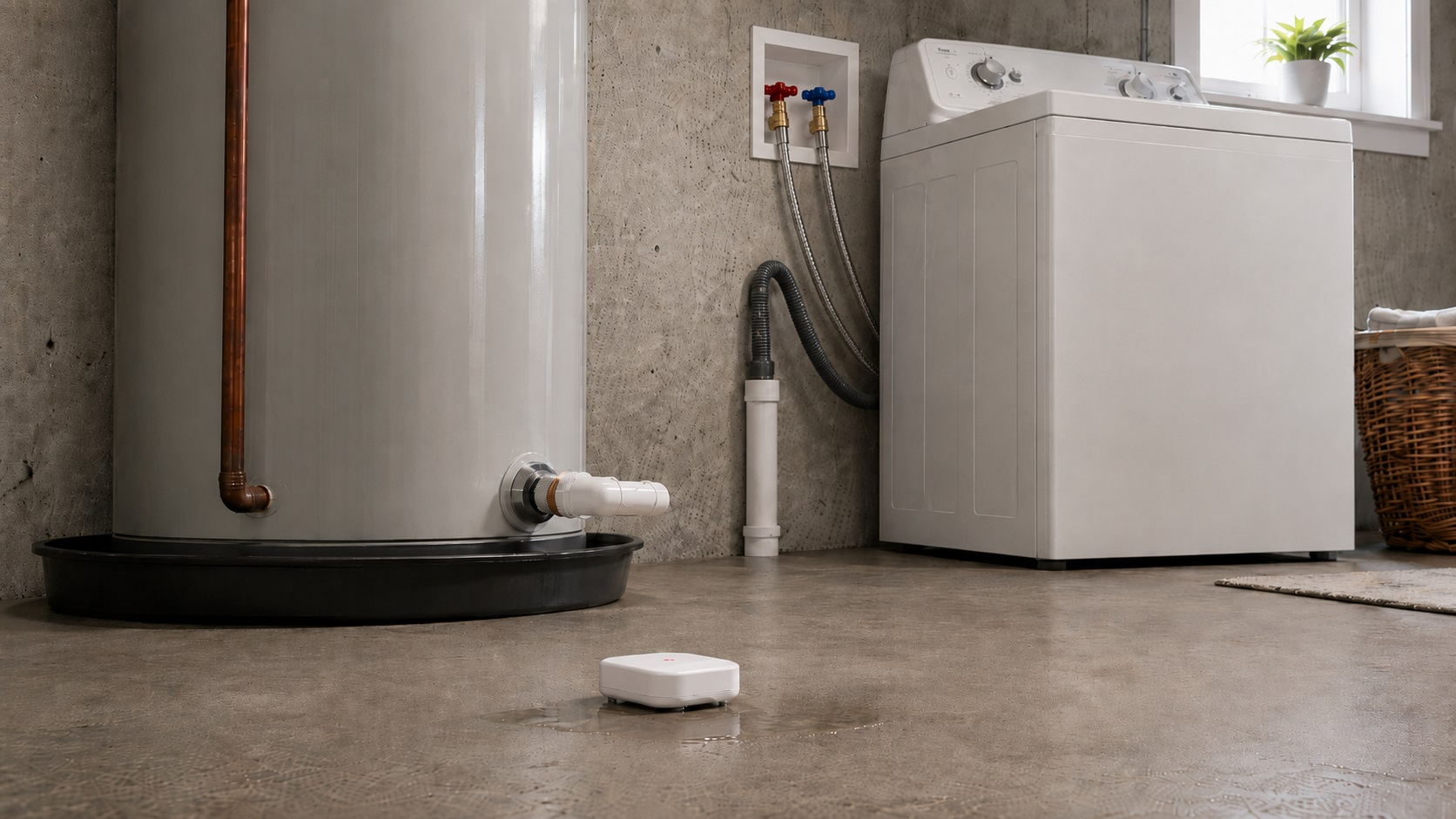
Best Flood Detection Systems for Homes
Introduction
A small leak can turn into hidden moisture, mold growth, damaged flooring, ruined cabinets, or a flooded basement before a homeowner realizes anything is wrong. The best flood detection systems for homes are designed to give you an early warning when water reaches places it should not be: under sinks, near water heaters, beside washing machines, around sump pits, behind appliances, or in basements and crawl spaces.
These devices do not replace good plumbing maintenance, sump pump care, or proper drainage, but they can help you catch problems early enough to respond before water spreads. Some systems send app alerts when you are away from home. Others use loud local alarms for simple, no-Wi-Fi protection. The right choice depends on how many areas you need to monitor, whether you want smart alerts, and how much whole-home coverage you need. For a broader prevention plan beyond alarms and sensors, see our guide to preventing recurring moisture damage.
As an Amazon Associate, this site earns from qualifying purchases. This does not affect the price you pay. Our recommendations are based on research, product reliability, and real-world usability in moisture-prone environments.
Quick Picks Summary
- Best Overall Flood Detection System: YoLink Water Leak Starter Kit
- Best Simple Wi-Fi Leak Detector Kit: Govee WiFi Water Leak Detector 3 Packs
- Best Long-Range Smart Leak Detection System: GoveeLife Upgraded Smart Water Leak Detector 1s, 5 Pack
- Best for Smart Home Automation: Aqara Water Leak Sensor 3 Pack
- Best No-Hub Smart Water Sensor: SwitchBot WiFi Water Sensor
- Best No-Wi-Fi Water Alarm: Zircon Leak Alert Water Leak Detector
- Best Budget Multi-Pack Water Alarms: Geevon 2 Pack Water Leak Detectors
Amazon availability, pack sizes, and seller offers can change. Always confirm that the listing matches the product name, sensor count, and configuration you want before ordering.
Detailed Reviews of the Best Home Flood Detection Systems
YoLink Water Leak Starter Kit — Best Overall Flood Detection System
The YoLink Water Leak Starter Kit is the most complete choice for homeowners who want more than a single alarm sitting on the floor. It includes a hub and multiple leak sensors, making it a better fit for whole-home monitoring around common water-risk areas such as water heaters, washing machines, sump pits, basement corners, utility rooms, and under-sink cabinets. It is especially useful in homes where Wi-Fi does not reach every corner reliably, because YoLink’s long-range system is designed for broader coverage than many basic Wi-Fi-only sensors.
This is a good fit for readers who want a true flood detection system rather than just one standalone alarm. It can also be a smart first step for homeowners who have already dealt with recurring moisture and want to monitor vulnerable areas after repairs.
YoLink Key Features for Whole-Home Leak Monitoring
- Includes a hub and multiple water leak sensors for broader home coverage.
- Designed for long-range wireless communication, which is helpful in basements, garages, and utility rooms.
- Can send remote alerts when connected to the app and notification system.
- Expandable system for homeowners who want to add more sensors over time.
- Useful around appliances, sump pits, mechanical rooms, and hidden leak-prone areas.
YoLink Pros
- ✔ Better whole-home coverage than a single standalone alarm.
- ✔ Long-range design is useful for basements and larger homes.
- ✔ Expandable if you want to monitor more risk zones later.
- ✔ Good option for homeowners who want alerts when away from home.
YoLink Cons
- ✖ Requires a hub, so it is not as simple as a standalone alarm.
- ✖ May be more system than a homeowner needs for one sink or one water heater.
- ✖ Availability and offer status should be checked before publishing because Amazon listings can change.
Who Should Choose the YoLink Kit
- Homeowners who want a multi-sensor flood detection system.
- Basements, laundry rooms, utility rooms, water heaters, and sump pump areas.
- Larger homes where ordinary Wi-Fi sensors may struggle with range.
- People who want to expand coverage over time instead of buying a one-time alarm.
Check the YoLink Water Leak Starter Kit on Amazon to see current availability.
Govee WiFi Water Leak Detector 3 Packs — Best Simple Wi-Fi Leak Detector Kit
The Govee WiFi Water Leak Detector 3 Packs is a strong choice for homeowners who want smart leak alerts without building a large smart-home system. It gives you multiple sensors for the most common leak zones, including under sinks, behind toilets, near water heaters, beside washing machines, and near sump pumps. For many homes, three sensors are enough to protect the highest-risk locations without making setup feel complicated.
This is one of the most practical options for readers who want a balance between smart alerts and simplicity. It is not a full automatic shutoff system, and it does not stop water by itself, but it can help you notice water early. If your main concern is understanding where leaks usually begin, it is worth pairing this product with a guide like Signs of Slow Hidden Water Leaks.
Govee WiFi Kit Features for Simple Leak Alerts
- Three-sensor kit for monitoring several common leak-prone areas.
- Wi-Fi gateway design for remote alerts through the app and notifications.
- Audible alarm helps alert people who are home when a leak starts.
- Useful for appliance areas, plumbing cabinets, basements, and utility spaces.
- Good balance of smart features and homeowner-friendly setup.
Govee WiFi Kit Pros
- ✔ Good choice for first-time smart leak detection.
- ✔ Includes multiple sensors instead of only one detector.
- ✔ Remote alerts are useful when leaks happen while you are away.
- ✔ Strong fit for kitchens, bathrooms, laundry rooms, and basements.
Govee WiFi Kit Cons
- ✖ Depends on Wi-Fi and app setup for remote notifications.
- ✖ Three sensors may not be enough for larger homes.
- ✖ Does not shut off water automatically.
Who Should Choose the Govee WiFi Kit
- Homeowners who want a simple smart leak detector kit.
- People monitoring a few key areas instead of every plumbing fixture.
- Homes with good Wi-Fi coverage near kitchens, bathrooms, laundry rooms, or basements.
- Readers who want app alerts but do not need a large ecosystem.
Check the Govee WiFi Water Leak Detector 3 Packs on Amazon to see current availability.
GoveeLife Upgraded Smart Water Leak Detector 1s, 5 Pack — Best Long-Range Smart Leak Detection System
The GoveeLife Upgraded Smart Water Leak Detector 1s, 5 Pack is a good option for homeowners who want more sensors and wider coverage than a basic starter kit. Because it comes as a five-pack, it is especially useful if you want to place detectors in several parts of the home at once: under the kitchen sink, under a bathroom vanity, beside the washing machine, near the water heater, and close to the sump pit or basement floor drain.
This product makes sense for homes with multiple moisture-risk zones. It is especially useful when you are not trying to diagnose an active leak, but want earlier warning if water appears again. If you are already watching a repaired area, you may also want to read How to Monitor Areas After Leak Repairs so you know where sensors fit into a broader follow-up routine.
GoveeLife Features for Wider Sensor Coverage
- Five-pack sensor setup for covering multiple areas in one purchase.
- Designed for long-range smart leak alerts through the connected system.
- Helpful for basements, kitchens, bathrooms, laundry rooms, garages, and utility areas.
- Audible alert helps notify people nearby when water reaches the sensor.
- Useful for homeowners who want more coverage than a basic 1-pack or 3-pack setup.
GoveeLife Pros
- ✔ Five sensors make it easier to cover several risk zones at once.
- ✔ Good fit for larger homes or homes with multiple appliances.
- ✔ Smart alerts are useful when you are not near the leak.
- ✔ Strong choice for long-range leak monitoring.
GoveeLife Cons
- ✖ More sensors than some small homes need.
- ✖ Requires proper gateway and app setup for remote alerts.
- ✖ Availability can vary by pack size, so confirm the live Amazon listing before publishing.
Who Should Choose the GoveeLife 5-Pack
- Larger homes with several leak-prone areas.
- Homeowners who want more than three sensors from the start.
- Basements, laundry rooms, bathrooms, water heaters, and kitchen plumbing areas.
- People who want a practical balance between multi-zone coverage and smart alerts.
Aqara Water Leak Sensor 3 Pack — Best for Smart Home Automation
The Aqara Water Leak Sensor 3 Pack is the best fit for homeowners who already use Aqara or want leak sensors that can become part of a broader smart-home automation setup. These sensors are small, simple to place, and useful in areas where water often appears before serious damage is obvious. They can work well under sinks, beside toilets, near washing machines, near dishwashers, and in utility rooms.
The important point is that Aqara leak sensors are not the best choice for someone who wants a completely standalone detector. They require a compatible Aqara hub, so they make the most sense for readers who are already comfortable with smart-home devices. They are especially useful if you want a water sensor to trigger other actions, such as sending alerts or activating compatible automation routines.
Aqara Features for Smart Home Leak Automation
- Three-pack of compact leak sensors for several high-risk locations.
- Designed for use with an Aqara hub and smart-home automations.
- Small sensor body fits under cabinets, near appliances, and in tight areas.
- Good option for users who want leak alerts tied into a larger smart-home setup.
- Useful for kitchens, bathrooms, laundry rooms, and mechanical areas.
Aqara Pros
- ✔ Strong option for smart-home users.
- ✔ Compact sensors are easy to place in tight spaces.
- ✔ Good for automation-based leak monitoring.
- ✔ Three-pack provides useful coverage for common household leak zones.
Aqara Cons
- ✖ Requires an Aqara hub.
- ✖ Not ideal for homeowners who want a no-app, no-hub alarm.
- ✖ Smart-home compatibility matters, so buyers should confirm their existing system before choosing it.
Who Should Choose the Aqara 3-Pack
- Homeowners already using Aqara devices.
- Smart-home users who want leak sensors to support automation routines.
- People who want compact sensors for cabinets, bathrooms, and appliance areas.
- Homes where water alerts should become part of a broader connected system.
Check the Aqara Water Leak Sensor 3 Pack on Amazon to see current availability.
SwitchBot WiFi Water Sensor — Best No-Hub Smart Water Sensor
The SwitchBot WiFi Water Sensor is a good pick for homeowners who want smart leak alerts without buying a separate hub. That makes it useful for protecting one important area, such as a water heater, washing machine, bathroom sink, refrigerator water line, or basement sump area. Instead of committing to a larger system, you can use this as a focused smart detector in the spot that worries you most.
This is not the best choice if you need to monitor an entire house with many sensors, but it is very practical when you have one high-risk location and want remote alerts. It is also a good option for renters or homeowners who do not want to build a complicated smart-home system. If your concern is whether a sensor-only approach is enough, compare it with the broader protection concepts in Smart Water Shutoff Systems vs Leak Sensors.
SwitchBot Features for No-Hub Water Alerts
- No separate hub required for basic smart water detection.
- Wi-Fi connection supports app-based leak alerts.
- Audible alarm helps notify people nearby.
- Compact design for placement near plumbing fixtures and appliances.
- Useful for single-zone monitoring where one location is the main concern.
SwitchBot Pros
- ✔ No hub required.
- ✔ Good for protecting one high-risk area.
- ✔ Easier entry point than a multi-sensor ecosystem.
- ✔ Useful for renters, apartments, and smaller homes.
SwitchBot Cons
- ✖ A single sensor does not provide whole-home coverage.
- ✖ Depends on Wi-Fi for remote app alerts.
- ✖ May become less cost-effective if you need many sensors.
Who Should Choose the SwitchBot WiFi Water Sensor
- One important leak-prone area.
- Water heaters, washing machines, sump pits, and under-sink cabinets.
- Homeowners who want smart alerts without a separate hub.
- Renters or small-space users who need simple water detection.
Check the SwitchBot WiFi Water Sensor on Amazon to see current availability.
Zircon Leak Alert Water Leak Detector — Best No-Wi-Fi Water Alarm
The Zircon Leak Alert Water Leak Detector is a simple, practical option for homeowners who want a local alarm without Wi-Fi, apps, hubs, accounts, or smart-home setup. It is the kind of device you place near a water heater, sump pump, washing machine, toilet, sink cabinet, or basement corner so it can sound an alarm when water reaches it.
This is a strong choice for people who want basic protection in one or two areas, especially if they are usually home. It is also useful as a backup to a smart system because it does not depend on your router, phone, or notification settings. It will not send alerts when you are away, so it is not a full replacement for smart flood detection systems, but it is a reliable low-tech layer.
Zircon Features for Simple Local Leak Alarms
- Standalone water alarm with no hub or Wi-Fi requirement.
- Battery-powered design for flexible placement.
- Useful near appliances, sump pits, water heaters, and plumbing fixtures.
- Simple local alarm for homeowners who do not want app-based monitoring.
- Good backup detector for areas where remote alerts are less important.
Zircon Pros
- ✔ Very simple to use.
- ✔ No Wi-Fi, app, or hub required.
- ✔ Good local backup for high-risk moisture areas.
- ✔ Useful for homeowners who prefer basic audible alerts.
Zircon Cons
- ✖ No remote app alerts.
- ✖ Not a whole-home system unless you buy several units.
- ✖ You need to be close enough to hear the alarm.
Who Should Choose the Zircon Leak Alert
- Simple local leak detection.
- Water heaters, sump pits, basement corners, laundry rooms, and under-sink cabinets.
- Homeowners who do not want smart-home setup.
- Backup protection alongside a larger smart system.
Check the Zircon Leak Alert Water Leak Detector on Amazon to see current availability.
Geevon 2 Pack Water Leak Detectors — Best Budget Multi-Pack Water Alarms
The Geevon 2 Pack Water Leak Detectors are a budget-friendly option for homeowners who want more than one local water alarm without moving into a full smart system. Because this is a two-pack, you can cover two common risk areas at once, such as a water heater and washing machine, a basement sump pit and utility sink, or a kitchen sink and bathroom vanity.
This product is best for simple audible warning, not remote monitoring. It does not replace smart flood detection systems, and it will not notify your phone while you are away. But for homeowners who want basic leak alerts in high-risk spots, it is an affordable way to add early warning. It can also support a larger home moisture plan if you already know where leaks are most likely to appear.
Geevon Features for Budget Multi-Area Alarms
- Two-pack local water alarm setup.
- Battery-operated design for flexible placement.
- Audible alert for nearby leak detection.
- Useful near appliances, sink cabinets, sump areas, and water heaters.
- Good option for adding simple protection to more than one location.
Geevon Pros
- ✔ Budget-friendly way to cover two areas.
- ✔ No app, hub, or Wi-Fi setup required.
- ✔ Useful as a backup alarm in leak-prone spaces.
- ✔ Good for homeowners who want simple audible alerts.
Geevon Cons
- ✖ No remote notifications.
- ✖ Not designed to be submerged or treated like waterproof equipment.
- ✖ Limited to local alarm use unless someone is home to hear it.
Who Should Choose the Geevon 2-Pack
- Budget users who want basic water alarms.
- Two high-risk zones, such as a water heater and washing machine.
- Homeowners who prefer no-app devices.
- Secondary alarms in basements, utility rooms, and under sinks.
Check the Geevon 2 Pack Water Leak Detectors on Amazon to see current availability.
Flood Detection System Comparison Table
| Product | Recommended For | Best Use Case | Key Strengths | Main Limitation | Amazon Link |
|---|---|---|---|---|---|
| YoLink Water Leak Starter Kit | Best Overall Flood Detection System | Whole-home leak monitoring | Hub-based, expandable, long-range coverage | Requires hub setup | View on Amazon |
| Govee WiFi Water Leak Detector 3 Packs | Best Simple Wi-Fi Leak Detector Kit | Simple smart monitoring in key rooms | Three sensors, app alerts, audible alarm | Depends on Wi-Fi for remote alerts | View on Amazon |
| GoveeLife Upgraded Smart Water Leak Detector 1s, 5 Pack | Best Long-Range Smart Leak Detection System | Larger homes with multiple leak zones | Five sensors, long-range design, smart alerts | More sensors than some homes need | View on Amazon |
| Aqara Water Leak Sensor 3 Pack | Best for Smart Home Automation | Aqara and smart-home users | Compact sensors, automation-friendly, three-pack | Requires Aqara hub | View on Amazon |
| SwitchBot WiFi Water Sensor | Best No-Hub Smart Water Sensor | Single high-risk area | No hub required, app alerts, local alarm | Single sensor coverage | View on Amazon |
| Zircon Leak Alert Water Leak Detector | Best No-Wi-Fi Water Alarm | Simple audible local protection | No Wi-Fi, no app, easy placement | No remote alerts | View on Amazon |
| Geevon 2 Pack Water Leak Detectors | Best Budget Multi-Pack Water Alarms | Low-cost protection for two areas | Two-pack, audible alarm, simple setup | No smart notifications | View on Amazon |
Buying Guide: How to Choose the Right Flood Detection System
The best flood detection system for your home depends on where water is most likely to appear, whether you need remote alerts, and how many areas you want to monitor. A homeowner with one water heater in a basement may need a different setup than someone with multiple bathrooms, a laundry room, a sump pump, and a finished basement.
Choose a Multi-Sensor Kit for Whole-Home Coverage
If you are worried about leaks in several rooms, start with a multi-sensor system. The YoLink, Govee, GoveeLife, and Aqara kits all make more sense than buying one single detector if you want coverage under sinks, near appliances, and in basement areas. Multi-sensor kits are especially useful if your home has a history of repeated leaks, damp spots, or hidden moisture problems.
Choose Smart Alerts If You Travel or Are Away During the Day
A local alarm only helps if someone is close enough to hear it. If you travel, work outside the home, or own a vacation property, a smart flood detection system is usually the better choice. App, email, or phone-based alerts can help you respond faster when water appears unexpectedly.
Choose a Long-Range System for Basements and Utility Areas
Basements, garages, crawl space access areas, and mechanical rooms are often far from the router. If ordinary Wi-Fi is weak in those areas, choose a long-range system or improve coverage before depending on a Wi-Fi sensor. A sensor that cannot communicate reliably may not alert you when it matters.
Choose No-Hub Wi-Fi for One Important Location
If you only need to protect one spot, such as a water heater closet or laundry area, a no-hub sensor like the SwitchBot WiFi Water Sensor may be enough. It avoids the cost and complexity of a larger system while still giving you smart alerts for one important risk zone.
Choose Local Alarms for Simple Backup Protection
Local alarms like the Zircon Leak Alert and Geevon detectors are simple, inexpensive, and useful. They are especially good for homeowners who do not want another app or hub. They also work well as backup alarms in areas where someone is usually home. However, they are not ideal for vacation homes, rental properties, or situations where a leak might occur while the house is empty.
Understand the Difference Between Leak Sensors and Shutoff Systems
Flood detection systems alert you when water is present. They do not usually stop the water. If you want a system that can automatically shut off water when a leak is detected, you may need a different product category. For that decision, see Best Smart Water Shutoff Systems.
Setup and Usage Advice
A flood detection system is only useful if the sensors are placed where water will actually reach them. The most common mistake is putting sensors in convenient places instead of leak-prone places. Think like water: where would it drip, pool, or spread first?
Place Sensors at the Lowest Likely Leak Point
For sinks, place sensors on the cabinet floor near the supply lines, drain assembly, or back wall where slow drips often land. For water heaters, place the sensor near the base or pan where water would collect first. For washing machines, place the sensor behind or beside the washer near the hose connections and floor edge.
Use More Than One Sensor in Finished Basements
Finished basements need more attention because water can travel under flooring, behind baseboards, or into wall cavities before you see it. Place sensors near sump pits, water heaters, floor drains, foundation wall leak areas, and any past water entry point. For basement flood prevention beyond sensors, see Best Sump Pump Battery Backup Systems.
Test the Alarm Before Relying on It
After setup, test each sensor with a small amount of water according to the product instructions. Confirm that the local alarm sounds and that any app alert arrives on your phone. If the app does not notify you during a test, do not assume it will work during a real leak.
Label Sensors by Location
If the app allows naming sensors, use clear names such as “Water Heater,” “Laundry Room,” “Kitchen Sink,” or “Basement Sump.” During an emergency, a vague label like “Sensor 3” wastes time.
Check Batteries on a Schedule
Battery-powered leak detectors are easy to forget. Add battery checks to your seasonal home maintenance routine. A dead sensor near a water heater or washing machine provides no protection.
Use Sensors After Repairs
If you recently fixed a plumbing leak, waterproofed a basement area, replaced an appliance hose, or dried a water-damaged room, place a sensor nearby for ongoing monitoring. This is especially important when the original moisture problem was slow, hidden, or recurring.
Common Mistakes to Avoid
Relying on One Sensor for the Whole House
One detector near the water heater will not protect the kitchen sink, washing machine, bathroom vanity, refrigerator water line, or sump pit. If you have several risk areas, use a multi-sensor system or combine smart sensors with simple local alarms.
Putting Sensors Too Far from the Leak Source
A sensor must be where water will reach it. If a washing machine hose leaks behind the appliance but the detector is placed across the room, the alarm may not trigger until water has already spread.
Assuming Smart Alerts Work Without Testing
App permissions, Wi-Fi issues, gateway placement, and phone notification settings can all affect alerts. Always test the system after setup and after changing your router, phone, app settings, or batteries.
Ignoring Weak Wi-Fi in Basements
Many water-risk areas are in places with poor signal. If your basement or utility room has weak Wi-Fi, choose a long-range system or improve coverage before depending on a Wi-Fi sensor.
Using Leak Detectors Instead of Fixing the Problem
A water alarm is an early-warning tool, not a repair. If you already have signs of hidden leakage, damaged flooring, mold smell, recurring dampness, or water stains, identify the source. A guide such as How to Detect Slow Plumbing Leaks can help you understand when the issue is more than a sensor-placement problem.
Forgetting About Appliances
Water heaters, washing machines, dishwashers, refrigerators with water lines, and HVAC condensate systems are common leak sources. Sensors should go near the appliances most likely to cause damage, not only in the basement.
Expecting a Detector to Prevent Flooding by Itself
Most flood detection systems only alert you. They do not shut off water, pump out a basement, repair a pipe, or dry flooring. For high-risk homes, sensors should be one part of a larger prevention plan that may include shutoff valves, sump pump backup, better drainage, and regular plumbing maintenance.
FAQ About Flood Detection Systems
What is the best flood detection system for most homes?
For most homes, the best flood detection system is a multi-sensor kit with remote alerts. The YoLink Water Leak Starter Kit is the most complete option if you want a hub-based, expandable system. The Govee WiFi Water Leak Detector 3 Packs is a simpler smart kit for homeowners who want a more straightforward setup.
Are water leak detectors worth it?
Yes, water leak detectors are worth considering if your home has a basement, water heater, washing machine, sump pump, dishwasher, refrigerator water line, or under-sink plumbing. They cannot prevent every problem, but they can alert you early enough to reduce damage when water appears where it should not.
Where should I place flood detection sensors?
Place sensors near the lowest point where water would collect first. Good locations include under sinks, near water heaters, behind washing machines, beside sump pits, near basement floor drains, around toilets, under dishwashers, near refrigerator water lines, and in utility rooms.
Do flood detection systems work without Wi-Fi?
Some do. Local alarms such as the Zircon Leak Alert and Geevon Water Leak Detectors do not need Wi-Fi. They sound an audible alarm when water reaches the sensor. However, they do not send remote alerts to your phone.
What is the difference between a flood detector and a smart water shutoff system?
A flood detector alerts you when water is present. A smart water shutoff system may detect abnormal water flow and shut off the supply automatically, depending on the product. Leak sensors are usually easier to install, while shutoff systems provide a higher level of active protection.
Can a flood detection system prevent mold?
A flood detection system cannot guarantee mold prevention. However, early alerts may help you respond faster, remove water sooner, and reduce the amount of time materials stay wet. That can lower the risk of secondary moisture problems when combined with proper drying and repairs.
How many water leak sensors do I need?
Most homes should start with sensors near the water heater, washing machine, kitchen sink, one bathroom sink, and sump pit or basement floor drain. Larger homes or homes with a history of leaks may need more sensors in appliance areas, utility rooms, crawl space access points, and finished basement corners.
Should I choose a smart detector or a simple audible alarm?
Choose a smart detector if you want alerts when you are away from home. Choose a simple audible alarm if you mainly need local warning and do not want apps or hubs. Many homeowners use both: smart sensors for main risk zones and simple alarms as backups.
Conclusion
The best flood detection systems for homes give you earlier warning when water reaches vulnerable areas. If you want the most complete full-system option, choose the YoLink Water Leak Starter Kit. If you want a simpler smart kit for common household leak zones, the Govee WiFi Water Leak Detector 3 Packs is a practical choice.
For larger homes or more sensor coverage, the GoveeLife Upgraded Smart Water Leak Detector 1s, 5 Pack is a strong long-range option. Smart-home users should consider the Aqara Water Leak Sensor 3 Pack, while homeowners who want one no-hub smart detector should look at the SwitchBot WiFi Water Sensor.
If you prefer simple audible alarms, the Zircon Leak Alert Water Leak Detector is the best no-Wi-Fi pick, and the Geevon 2 Pack Water Leak Detectors is the best budget multi-pack. Whatever you choose, place sensors where water will actually collect first, test them regularly, and use them as part of a broader moisture prevention plan. For a full home moisture strategy, start with How to Find, Fix, and Prevent Moisture Problems in Homes.