Signs Chimney Mortar Is Allowing Water In
Chimney mortar can become a water-entry path when the joints between bricks begin to crack, crumble, recede, or separate. At first, the damage may look like normal aging. Over time, those small openings can allow rainwater to move deeper into the masonry instead of staying on the outer surface of the chimney.
This kind of moisture problem is different from a chimney crown crack, a flashing failure, or water entering around the chimney base. Mortar-related water intrusion usually follows the joints between bricks. The strongest clues are often crumbling mortar, missing joint material, white residue, dark staining after rain, damp masonry, or loose bricks near deteriorated joints.
This article focuses on signs that chimney mortar may be allowing water in. It does not explain how to repoint a chimney, rebuild masonry, repair flashing, or waterproof brick. For a broader look at structural moisture entry paths, see this guide to how water enters homes through structural gaps.
Why Chimney Mortar Matters for Moisture Control
Mortar is the material between chimney bricks or stones. It helps bond the masonry together and fills the joints that would otherwise be open gaps. On a chimney, those joints are exposed to rain, wind, sun, temperature changes, and repeated wetting from every side.
When mortar is intact, it helps the chimney resist water entry. It does not make the chimney completely waterproof, but it reduces the number of direct openings where wind-driven rain can enter the masonry system. When mortar deteriorates, those joints can become pathways for water.
Chimneys are more exposed than many other masonry surfaces. They rise above the roofline, receive wind-driven rain from multiple directions, and often dry unevenly. If mortar erodes, water can enter through the joints, soak into nearby brick, enlarge cracks, contribute to spalling, and remain trapped longer than surface moisture would.
This is why mortar damage should not be treated as only a cosmetic issue. Crumbling or missing mortar can affect both moisture control and the long-term stability of the chimney masonry.
Common Signs Chimney Mortar Is Allowing Water In
The clearest signs of mortar-related water intrusion usually appear at the joints between bricks. A random stain on a chimney does not prove the mortar is leaking, but damage that follows the joint pattern is more meaningful.
A useful first check is to compare the chimney when it is dry with the same area after rain. Mortar-related moisture signs often become easier to see when the same joints darken, hold residue, or stay damp while nearby brick begins to dry.
Crumbling or sandy mortar
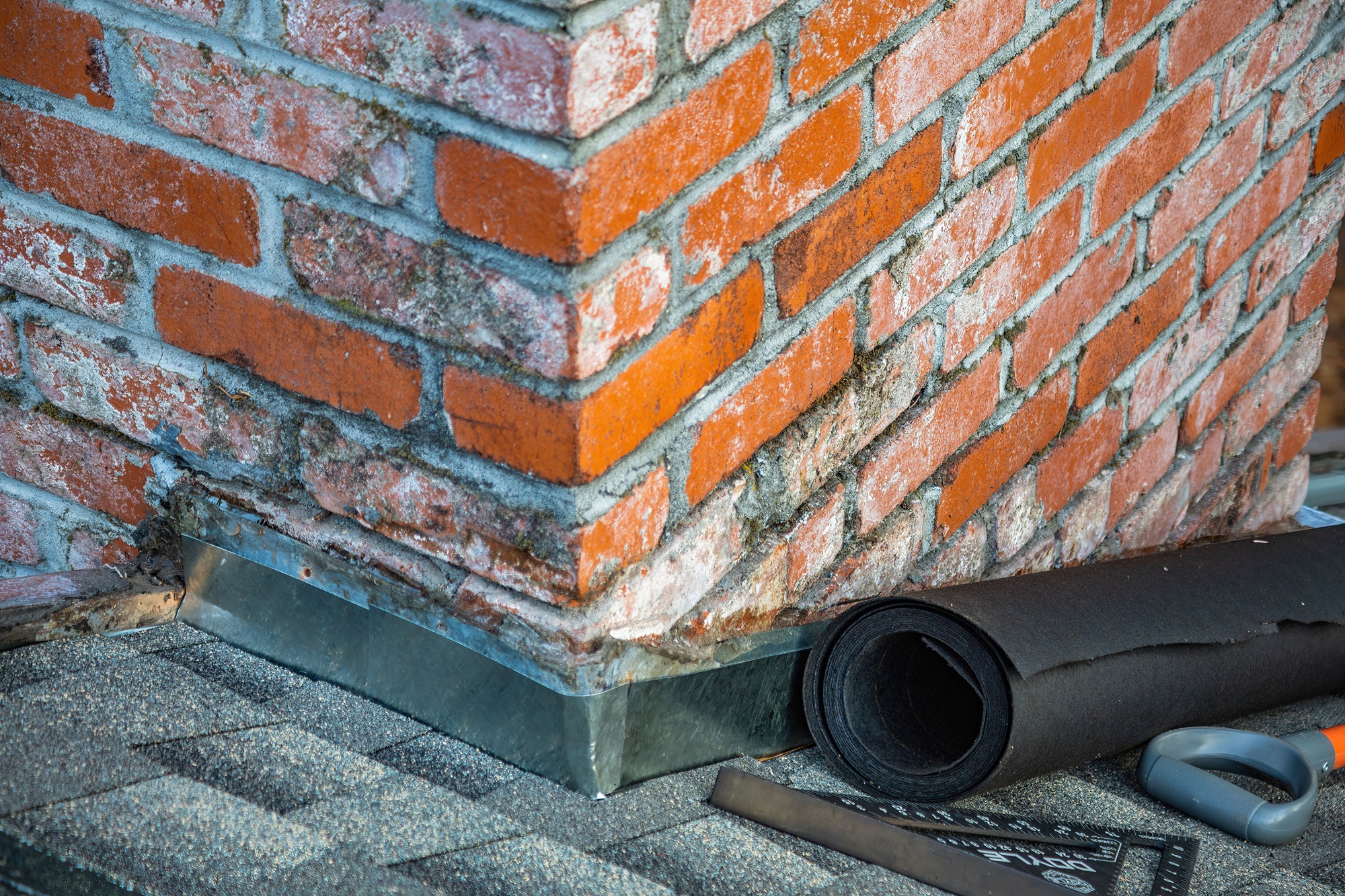
Mortar that crumbles, flakes, powders, or feels sandy is one of the most common warning signs. It may look dry and brittle, or it may break loose in small grains. When mortar loses its hardness, it can no longer protect the joint as effectively.
From the ground, crumbling mortar may appear as rough, uneven lines between bricks. Up close, it may look like the joint surface is breaking apart. If small particles of mortar are falling onto the roof, chimney shoulder, or ground below, the deterioration is active rather than only surface staining.
Missing mortar between bricks
Missing mortar is more serious than minor surface wear. Open spaces between bricks can allow rainwater to enter directly into the chimney wall, especially during storms with wind. These openings may appear as dark gaps, shadowed lines, or sections where the joint looks hollow.
Missing mortar can also allow nearby bricks to loosen over time. If the joint material is gone deeply enough, the problem is no longer just about moisture. It may also become a structural concern for the chimney.
Recessed mortar joints
Mortar joints should not be deeply eroded behind the face of the brick. When joints recede, they create channels where water can sit instead of shedding away. Recessed joints also expose more brick edges to moisture.
A slightly recessed joint may be an early warning sign. A deeply recessed joint, especially one that stays dark after rain, is more concerning. It suggests that the mortar has worn back enough to hold water and allow moisture deeper into the masonry.
Cracks that follow mortar lines
Cracks that run along horizontal or vertical mortar joints can indicate joint failure. This is different from a cracked brick face or a cracked chimney crown. Mortar-line cracks often follow the shape of the brick pattern.
Horizontal cracks may appear along bed joints between rows of brick. Vertical cracks may appear in head joints between individual bricks. Either type can become a water-entry path if it opens enough for rain to enter.
Gaps between brick and mortar
Sometimes the mortar does not disappear completely, but it separates from the brick edges. This creates narrow gaps along the sides of the joint. Those gaps may be difficult to see from far away, but they can admit wind-driven rain.
Separation is especially important when the brick edges look dark or damp after storms. That pattern suggests water is getting into the joint instead of drying only on the surface.
Early Mortar Warning Signs Homeowners Often Miss
Mortar damage does not always begin with large missing sections or loose bricks. In many chimneys, the first warning signs are subtle: a sandy texture, shallow cracks, slight joint recession, fallen mortar grains, or mortar lines that stay damp after rain. These clues matter most when they repeat in the same area or appear near joints that are no longer firm and full.
Faded or rough joint faces before pieces fall out
Old mortar may show early surface wear before large pieces fall out. The joint face may look faded, rough, uneven, or weaker than healthier areas of the chimney. If those same joints darken after rain, shed small particles, or appear recessed, water may already be contributing to the deterioration.
Small cracks in individual joints
Small cracks in mortar joints can be easy to overlook, especially if they are narrow or limited to one section of the chimney. They may appear as short breaks in the horizontal or vertical joint lines.
Small cracks are more important when they repeat across several joints, widen over time, or appear in areas that receive heavy rain exposure. Even narrow cracks can become moisture paths when wind pushes rain against the chimney face.
Slightly recessed joints that hold moisture
Mortar joints that have worn back from the brick face may hold moisture longer than flat, full joints. After rain, these recessed areas may look darker than the surrounding masonry. If the recession continues, the joint can hold more water, expose more brick edges, and eventually develop deeper gaps.
Small grains or flakes of mortar near the chimney
Fallen mortar grains near the chimney, on a roof surface, on a chimney shoulder, or at ground level can indicate active joint deterioration. A small amount of loose debris after severe weather may not prove major damage, but recurring mortar particles are worth noting.
If you keep finding sandy material or small mortar flakes below the same chimney face, the joints above may be breaking down. This is especially important when the visible joints also look cracked or hollow.
Joints that dry slower than surrounding brick
After rain, damaged mortar joints may remain darker or damp-looking longer than nearby masonry. This can happen when the joint is recessed, cracked, or porous enough to hold water.
A drying pattern can reveal what is hard to see when the chimney is fully dry. If certain mortar lines stay wet-looking after the rest of the chimney dries, those joints may be allowing water to enter or remain trapped.
Advanced Signs of Mortar Water Intrusion
Advanced mortar deterioration is easier to recognize because the joints no longer look merely worn. Mortar may be missing deeply, bricks may begin to loosen, and moisture signs may spread beyond the joint surface. At this stage, mortar failure can affect both water resistance and chimney stability.
Deep missing joints between bricks
Deep voids between chimney bricks are a strong sign that mortar is no longer protecting the masonry. These gaps can collect wind-driven rain and allow water to enter behind the outer brick face.
Deep missing joints are more concerning than shallow surface erosion. Once the joint is open, water has a more direct route into the chimney wall. If several joints are missing in the same area, the chimney may need professional masonry evaluation.
Loose or shifting bricks
Loose bricks suggest that the mortar is no longer bonding the masonry properly. This can happen when joints deteriorate deeply enough that the bricks lose support.
A loose brick is not just a moisture clue. It can be a structural warning sign. If bricks appear shifted, tilted, or separated from the surrounding masonry, the chimney should be inspected by a qualified professional before the damage spreads.
Spalling brick near damaged joints
Spalling occurs when the face of a brick flakes, chips, or breaks away. Around a chimney, spalling near deteriorated mortar joints can indicate repeated moisture exposure. Water may be entering through open joints, saturating nearby brick, and contributing to surface breakdown.
Spalling can also be related to other chimney moisture problems, including crown damage or general masonry absorption. The mortar becomes a stronger suspect when brick damage appears directly beside cracked, missing, or recessed joints.
Interior moisture near the chimney after storms
In more advanced cases, mortar-related water intrusion can contribute to interior symptoms. These may include stains near the chimney, damp masonry, musty odor near the fireplace wall, or moisture around a chimney chase after rain.
Interior symptoms alone do not prove the mortar is the source. They become more relevant when they appear alongside visible joint damage outside. For broader comparison, use a guide to signs of water leaks around chimneys before assuming the mortar is the only problem.
Bulging, leaning, or uneven chimney masonry
Bulging, leaning, or visibly uneven masonry is a serious warning sign. It can indicate that moisture and mortar deterioration have affected the structure of the chimney, not just the surface joints.
This is not a cosmetic issue and should not be handled with surface sealant. If the chimney appears out of plane, bricks are shifting, or joints are opening widely, professional inspection is needed.
Moisture Patterns That Point to Failing Mortar Joints
Mortar-related water intrusion is usually recognized by patterns, not by one isolated mark. The strongest signs are moisture clues that follow the shape of the brick joints or appear near visibly damaged mortar. If the staining, residue, or dampness lines up with cracked or recessed joints, the mortar becomes a more likely water-entry path.
Staining that follows the mortar lines
Dark staining that follows horizontal or vertical joint lines can suggest water is entering or being held by the mortar. This is different from random surface discoloration across the brick face. Joint-line staining often traces the same pattern as the brickwork.
If the stain darkens after rain and fades as the chimney dries, it may indicate that the joints are absorbing water or allowing moisture deeper into the masonry. The pattern is especially important when the stained joints are also cracked, recessed, or missing.
White residue near damaged joints
White powdery residue near mortar joints can be a sign that moisture is moving through the masonry and leaving mineral deposits behind as it dries. This residue, often called efflorescence, is most useful as a clue when it appears beside cracked, recessed, or missing joints.
Efflorescence does not prove that the mortar is the only problem. Water may also come from the crown, flashing, brick absorption, or another leak path. But when white residue appears around deteriorated joints, it supports the possibility that moisture is moving through the mortar system.
Joints that repeatedly darken after storms
Some mortar joints look normal when dry but darken after storms. If the same joints darken after multiple rains, especially on the windward side of the chimney, they may be absorbing water or holding moisture longer than surrounding masonry.
Moisture concentrated in one chimney section
Mortar problems often appear in sections rather than across the entire chimney. One side may face more wind-driven rain. One area may have older repairs. Another section may be exposed to runoff from the crown, cap, or roofline.
If moisture signs are concentrated around a group of damaged joints, that section should be taken seriously. Localized dampness can show that water is entering through a specific weak area rather than through the entire chimney surface evenly.
Water movement through porous brick and mortar
Brick chimneys can absorb moisture, but damaged mortar joints can make that moisture movement worse. Open joints allow water to reach deeper surfaces and stay inside the masonry longer.
If you want a broader explanation of masonry moisture behavior, see this guide to how brick chimneys absorb moisture. For this article, the key point is that failing mortar joints create easier pathways for water than intact joints.
How Mortar Problems Differ From Other Chimney Leak Sources
Chimney leaks can be difficult to diagnose because several components can create similar symptoms. A ceiling stain, damp brick, white residue, or musty odor may not immediately reveal whether the problem is mortar, crown damage, flashing failure, or water entering around the base.
The best clue is where the strongest evidence begins. Mortar problems usually follow the joints between bricks. Other chimney leak sources usually have different starting points.
Mortar problems follow the brick joints
Mortar water intrusion is most likely when the visible damage follows horizontal or vertical joint lines. Cracked joints, missing mortar, recessed sections, soft material, or gaps between brick and mortar all point toward the masonry joints.
If the chimney face shows a clear pattern of joint-level deterioration, the mortar should be evaluated before assuming the issue is only a roof leak or crown defect.
Crown damage starts at the top of the chimney
Chimney crown damage usually begins at the top surface of the chimney. Cracks across the crown, water pooling on top, crumbling crown edges, gaps around the flue, or staining immediately below the crown point more directly to the crown.
If those are the strongest clues, compare the issue with the guide to signs of chimney crown damage. Crown damage can send water into mortar joints below it, but the original failure pattern starts higher.
Base water entry starts near the roofline or lower transition
Water entering around the chimney base usually creates symptoms near the roofline, lower chimney masonry, siding intersection, attic penetration, or nearby interior ceiling below the chimney. These symptoms are more focused on the lower transition than the joint pattern across the chimney face.
If the strongest signs are near the lower chimney area, use the guide to signs water is entering around chimney base. Mortar may still be involved, but the first question is whether the base transition is letting water in.
Flashing problems begin where the chimney meets the roof
Flashing failure usually shows up near the point where the chimney intersects the roof surface. Lifted flashing, rusted metal, separated counterflashing, cracked seal lines, or roofline staining are flashing-specific clues.
Mortar deterioration may appear above, below, or beside flashing, but flashing problems usually center on the chimney-to-roof joint. If the visible evidence is mostly metal separation, rusted flashing, or roofline leakage, compare it with the guide to signs of chimney flashing failure before treating the issue as a mortar-only problem.
Rain-driven chimney leaks may involve multiple weak points
Some chimney leaks only happen during heavy or wind-driven rain. In those cases, water may be entering through more than one weakness: crown cracks, open mortar joints, flashing gaps, porous brick, or base transitions. For a broader cause-based explanation, see this guide to why chimneys leak during rain.
When Chimney Mortar Damage Needs Professional Inspection
Chimney mortar damage should be inspected professionally when the joints are missing, deeply recessed, crumbling, or connected to repeated moisture symptoms. Minor surface wear may not be urgent, but open joints can let water deeper into the chimney masonry and may eventually affect the structure of the chimney.
Call a qualified chimney professional or mason when you notice any of the following:
- Mortar missing deeply between bricks.
- Joints that crumble, powder, or fall out in pieces.
- Loose, shifting, bulging, or uneven chimney bricks.
- Dark stains that repeatedly follow the mortar lines after rain.
- White residue near cracked, recessed, or missing joints.
- Spalling brick beside damaged mortar joints.
- Interior stains or dampness near the chimney after storms.
- Mortar fragments collecting on the roof, chimney shoulder, or ground.
- Any damage that would require roof access to inspect safely.
- Any leaning, bulging, or loose masonry that could create a falling-brick hazard.
Professional inspection is especially important when mortar damage appears in several sections of the chimney. A few shallow cracks may be monitored, but widespread missing mortar or loose brick can indicate that the chimney needs more than surface sealing.
A mason or chimney professional can determine whether the issue is isolated joint deterioration, broader masonry moisture damage, crown-related water entry, or a combination of problems. This matters because treating the wrong source can leave the actual water path open. For a closer inspection-focused follow-up, see this guide to how to inspect chimney mortar for moisture damage.
What Not to Assume About Chimney Mortar Water Intrusion
Several chimney issues can create similar stains, odors, or damp areas. These assumptions can lead homeowners to patch the wrong area or underestimate deteriorated mortar.
Do not assume solid-looking bricks mean the mortar is fine
Brick faces can look mostly intact while the joints between them are cracked, recessed, or missing. Mortar damage often begins in the lines between bricks, not on the flat face of the brick.
Do not assume white residue proves the mortar is the only source
White residue is a moisture clue, but it does not identify the source by itself. Water may be moving through mortar joints, crown cracks, brick absorption, flashing gaps, or another chimney weakness. The residue matters most when it appears near visibly damaged joints.
Do not assume waterproof coating rebuilds missing mortar
Waterproofing products cannot replace missing joint material. If mortar is crumbling, hollow, or deeply recessed, the joint needs proper evaluation before any surface treatment is considered. Coating over failing mortar may hide the symptom, trap moisture, or leave the actual water path unresolved.
Do not assume crumbling mortar is only cosmetic
Mortar helps hold chimney masonry together. When it breaks down, water can enter more easily and bricks may eventually loosen. Crumbling mortar is both a moisture concern and, in more advanced cases, a structural concern.
Do not assume every chimney leak is a mortar leak
Mortar is only one possible water-entry path. Chimney leaks can also come from crown damage, flashing failure, base transitions, caps, chase covers, roof leaks, or siding interfaces. The strongest mortar clue is joint-level deterioration that lines up with moisture patterns.
Main Clues That Point to Mortar Water Intrusion
- Chimney mortar can allow water in when joints become cracked, recessed, soft, sandy, or missing.
- The strongest clues usually follow the brick joints rather than appearing randomly across the chimney.
- White residue and dark staining are moisture clues, but they should be interpreted with visible joint damage.
- Loose bricks, deep missing joints, spalling brick, or bulging masonry are more serious signs.
- Mortar water intrusion is different from crown damage, chimney-base leaks, and flashing failure.
- Surface waterproofing should not be used as a substitute for repairing deteriorated mortar.
FAQ: Signs Chimney Mortar Is Allowing Water In
Can deteriorated chimney mortar let rainwater into the masonry?
Yes. Cracked, missing, recessed, or separated mortar joints can allow rainwater to enter the chimney masonry. This is especially likely during wind-driven rain, when water is pushed into openings between bricks.
How do I know if chimney mortar is letting water in?
Look for joint-level symptoms: crumbling mortar, missing sections, cracks along mortar lines, recessed joints, darkening after rain, white residue near damaged joints, or loose bricks. The more the moisture pattern follows the joints, the more likely mortar is involved.
Is white residue on chimney mortar a leak sign?
White residue can indicate moisture movement through masonry, but it does not prove the mortar is the only source. It becomes more meaningful when it appears near cracked, recessed, or missing mortar joints.
Is crumbling chimney mortar dangerous?
Crumbling mortar can become serious if it is widespread, deep, or connected to loose bricks, shifting masonry, or repeated moisture after rain. It may allow water into the chimney and weaken the masonry over time. A chimney professional or mason should inspect advanced deterioration.
Can I seal chimney mortar instead of repairing it?
Sealant or waterproof coating is not a substitute for missing or deteriorated mortar. If the joints are cracked, hollow, or crumbling, they need proper evaluation. Sealing over failing mortar may trap moisture or leave the actual weakness unresolved.
How is mortar water intrusion different from crown damage?
Mortar water intrusion follows the joints between bricks. Crown damage starts at the top surface of the chimney and usually shows as crown cracks, pooling water, crumbling crown edges, or gaps around the flue. The moisture symptoms can overlap, but the starting points are different.
What to Do When Mortar Looks Like the Leak Path
Chimney mortar may be allowing water in when the joints between bricks become cracked, recessed, sandy, crumbling, or missing. The most important signs are joint-level patterns: white residue near damaged joints, gaps between brick and mortar, fallen mortar particles, loose bricks, spalling near deteriorated joints, or mortar lines that darken after rain.
These symptoms should be separated from other chimney leak sources. Crown damage usually begins at the top of the chimney. Chimney-base leaks usually show stronger evidence near the roofline or lower transition. Flashing failure usually centers where the chimney meets the roof. Mortar problems are most likely when the damage follows the masonry joints themselves.
If the signs are recurring, widespread, or connected to interior moisture, the chimney should be inspected before the damage spreads deeper into the masonry. Mortar is part of the chimney’s moisture-control and structural system, so failing joints should not be treated as a cosmetic surface issue.