
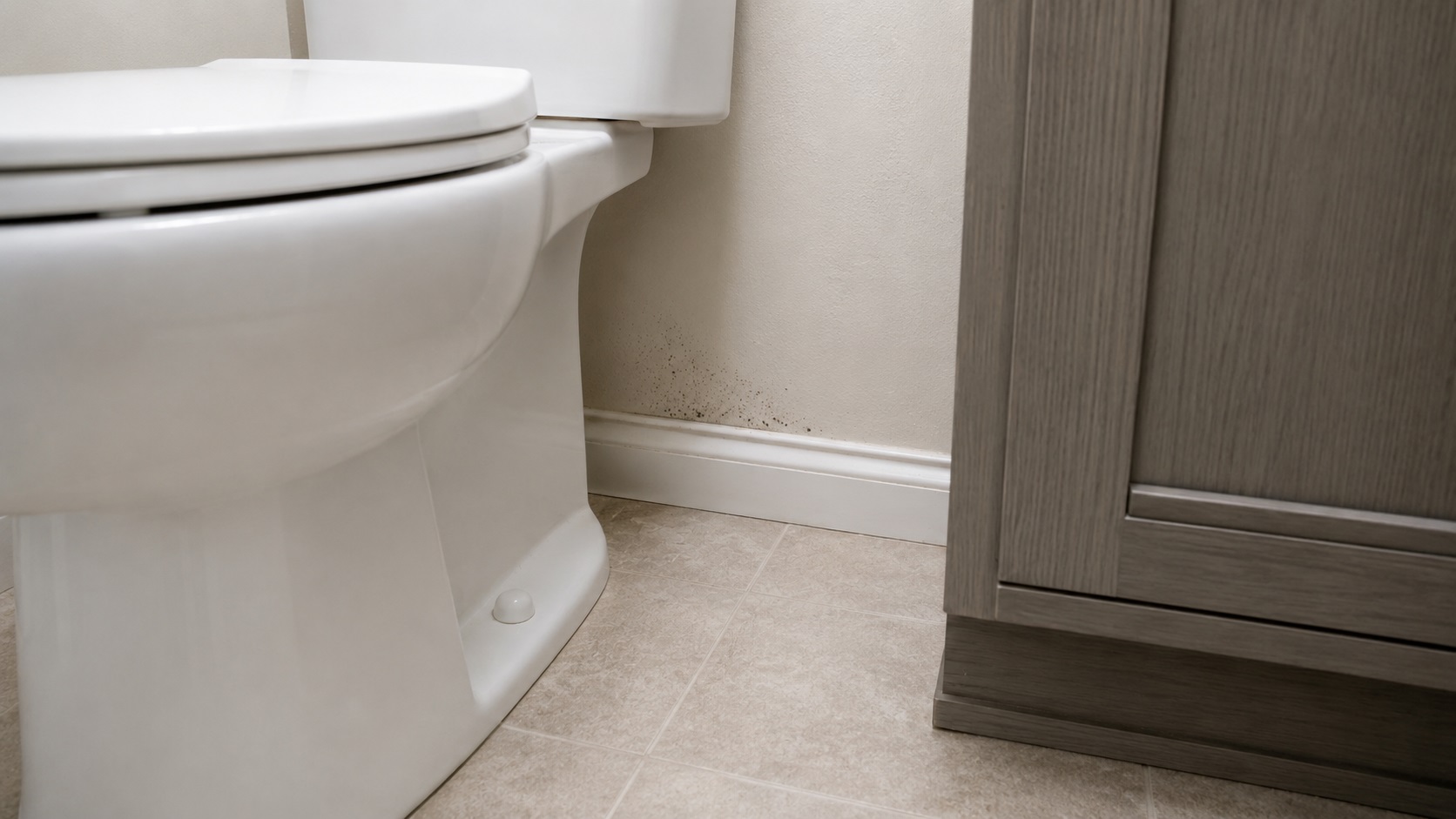
Signs of Mold Behind Bathroom Fixtures
Mold behind bathroom fixtures often develops quietly and remains hidden long before visible damage appears. Areas behind toilets, sinks, and vanities create narrow spaces where moisture collects and airflow remains limited. Because these areas are difficult to see and rarely inspected, mold can grow undetected until odors, stains, or recurring surface mold begin to appear.
The clearest signs are musty odors near a fixture, recurring mold spots along seams, dark staining around plumbing penetrations, soft drywall, swollen trim, and mold that returns after cleaning. These symptoms matter most when they stay localized around a toilet, sink, vanity, supply line, or wall-mounted fixture.
This guide explains the most common signs of mold behind bathroom fixtures, how symptoms develop over time, and when professional inspection may be necessary. Because fixture mold often points to concealed plumbing moisture, the broader warning signs are also connected to how plumbing leaks cause structural damage. If you suspect hidden moisture but are unsure where to begin, reviewing how to detect hidden moisture in bathrooms can help identify the moisture source behind the symptoms.
Why Mold Commonly Develops Behind Bathroom Fixtures
Bathroom fixtures create enclosed spaces where moisture accumulates more easily than in open areas. Because these spaces are often missed during routine cleaning, moisture and mold can persist behind fixtures even when the visible bathroom surface looks clean.
Limited Airflow Around Fixtures
Most bathroom fixtures sit close to walls or floors, leaving narrow gaps behind them. These gaps restrict airflow and prevent moisture from drying quickly. Without consistent airflow, damp conditions persist longer than they would in open areas.
Common locations with restricted airflow include:
- Behind toilet tanks
- Behind sink basins
- Behind vanity cabinets
- Around wall-mounted fixtures
When moisture stays trapped in these spaces, even small damp areas can support mold growth if the fixture area does not dry between bathroom uses.
Hidden Moisture Retention
Moisture behind fixtures often remains hidden from view. Water vapor from showers and sinks settles on cooler surfaces and seeps into small seams or joints. Over time, moisture accumulates behind materials where evaporation happens slowly.
Typical moisture retention patterns include:
- Condensation forming behind toilet tanks
- Water splashing onto walls near sinks
- Humidity settling along plumbing penetrations
- Moisture trapped between fixtures and walls
When moisture stays trapped in these locations, mold growth may begin before any visible signs appear. In bathrooms where humidity remains elevated for long periods, moisture buildup becomes even more likely, especially when wall surfaces remain damp, as described in why bathroom walls stay damp.
Plumbing-Related Humidity and Moisture
Plumbing connections create additional opportunities for moisture accumulation. Even when plumbing appears to function normally, minor condensation or small drips can produce enough moisture to support mold growth.
Common plumbing-related moisture sources include:
- Condensation forming on cold supply lines
- Minor leaks from shutoff valves
- Loose connections beneath sinks
- Humidity buildup inside cabinet spaces
Over time, repeated moisture exposure encourages mold development behind fixtures where materials remain damp and enclosed.
Most Common Fixtures Where Hidden Mold Develops
Hidden mold behind bathroom fixtures usually follows predictable patterns. Each type of fixture creates unique moisture conditions that encourage mold growth in specific locations. By understanding how mold develops around individual fixtures, homeowners can inspect the right areas instead of searching randomly.
Behind Toilets
The space behind toilets is one of the most common locations for hidden mold development. Toilet tanks and supply lines create condensation in humid environments, especially during warmer months. Because the area behind the tank is difficult to access, mold often forms unnoticed.
Common signs of mold behind toilets include:
- Musty odors strongest near the toilet base
- Dark specks forming along the wall behind the tank
- Discoloration around the lower wall edges
- Recurring mold spots near the toilet base
Moisture behind toilets often results from condensation cycles or minor leaks that develop slowly. In some cases, mold formation patterns relate to the moisture behavior explained in why mold forms behind toilets, especially when humidity levels remain high.
If mold continues returning after cleaning, it often indicates that hidden moisture remains trapped behind the fixture rather than on the visible surface.
Behind Bathroom Sinks
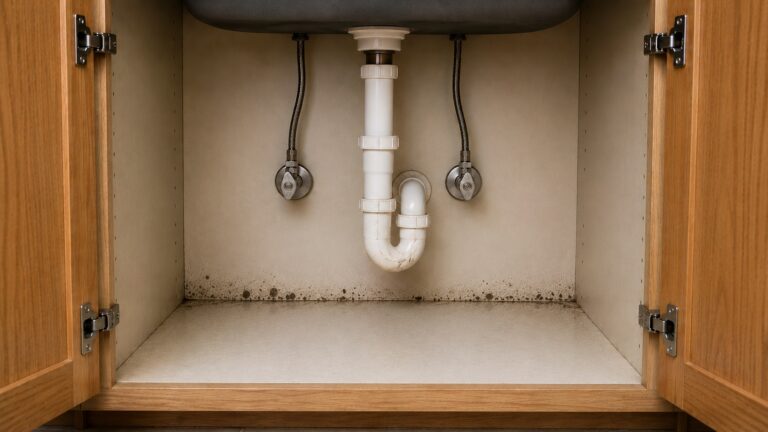
Sinks create multiple moisture pathways that allow mold to develop behind or beneath fixtures. Splashing water, plumbing condensation, and minor leaks all contribute to moisture buildup in concealed areas.
Signs of mold behind sinks may include:
- Musty odors inside sink cabinets
- Dark staining around plumbing penetrations
- Moisture marks behind the sink basin
- Recurring mold spots beneath supply lines
Because sinks often connect directly to cabinetry, mold behind sinks can spread into adjacent cabinet materials. If the strongest symptoms are inside the cabinet rather than behind the sink basin itself, compare them with signs of hidden mold behind bathroom cabinets.
Behind Vanities
Bathroom vanities create large concealed spaces where airflow remains limited. When moisture enters these spaces, it may remain trapped behind cabinetry and along wall contact points.
Vanity-related mold symptoms commonly include:
- Persistent odors inside vanity cabinets
- Dark spots forming along cabinet backs
- Staining along the wall behind the vanity
- Moisture accumulation along cabinet bottoms
Because vanities typically remain stationary for long periods, mold growth behind them may continue unnoticed until odors or visible staining appear along exposed edges.
Around Wall-Mounted Fixtures
Wall-mounted fixtures such as towel bars, shelving units, or mounted accessories can also conceal mold growth. These fixtures often create small gaps where moisture collects behind mounting points.
Signs of mold around wall-mounted fixtures include:
- Dark rings or staining around mounting screws
- Discoloration spreading outward from hardware points
- Moisture staining near fixture attachment locations
- Paint damage around mounted hardware
Although mold behind smaller fixtures may appear less severe, these areas still allow moisture to enter wall materials and spread gradually if left unaddressed.
Early Signs of Mold Behind Bathroom Fixtures
Mold behind bathroom fixtures usually develops gradually. Early warning signs are often subtle and easy to overlook, especially when visible surfaces appear clean. Recognizing these early indicators allows homeowners to respond before mold spreads into surrounding materials.
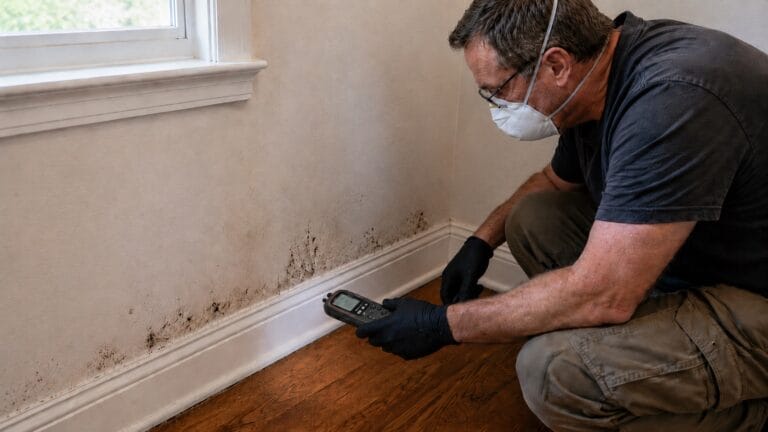
Check the area with a flashlight after the bathroom has been used, then smell near the toilet base, behind the tank, inside the vanity, around supply lines, and along fixture seams. A symptom is more concerning when it is strongest near one fixture instead of evenly present throughout the bathroom.
Musty Odors That Seem Stronger Near Fixtures
A faint musty odor is often the first noticeable symptom of hidden mold behind bathroom fixtures. These odors typically develop in enclosed spaces where airflow is limited and moisture remains trapped.
Early odor patterns commonly include:
- A damp smell strongest near toilets or sinks
- Odors that intensify after hot showers
- Smells that return shortly after cleaning
- A noticeable difference in odor near enclosed areas
If odors consistently appear near specific fixtures, hidden mold may be developing behind them rather than on exposed surfaces. In many cases, these odor patterns originate from moisture conditions similar to those identified during inspections in how to detect hidden moisture in bathrooms.
Small Visible Mold Spots Near Fixture Edges
Small mold spots appearing near fixture seams or edges often signal deeper mold growth behind surfaces. These spots may form along caulking lines, grout seams, or wall joints.
Watch for:
- Black, green, or gray specks near fixture edges
- Repeated mold appearing in the same location
- Mold returning after routine cleaning
- Clusters of spots forming near plumbing openings
When mold repeatedly appears in the same area, it often indicates hidden moisture remains trapped behind the fixture rather than being limited to surface contamination.
Surface Discoloration Around Fixtures
Subtle discoloration often develops before visible mold becomes obvious. Moisture trapped behind fixtures may darken surrounding surfaces or create uneven coloration.
Discoloration patterns may include:
- Slight darkening along lower wall edges
- Yellow or brown staining near plumbing penetrations
- Uneven coloring around fixture contact points
- Faint shadow-like marks spreading outward
These patterns often appear gradually and may be mistaken for dirt or aging surfaces. However, persistent discoloration usually signals moisture activity behind the surface.
Recurring Mold After Cleaning
Mold that returns quickly after cleaning almost always indicates an underlying moisture problem. Surface cleaning removes visible mold temporarily but does not address hidden growth behind fixtures.
Recurring mold patterns often appear:
- Along fixture edges within days of cleaning
- At the same seam or joint repeatedly
- Near areas exposed to regular moisture
- Along base areas where moisture accumulates
When mold returns repeatedly, it strongly suggests that hidden moisture and mold remain behind surfaces.
Serious Signs of Mold Behind Bathroom Fixtures
As mold behind bathroom fixtures progresses, the signs usually move beyond small spots or faint odors. Spreading stains, soft materials, swelling, and persistent odors suggest that moisture has been present long enough to affect nearby surfaces.
Spreading Stains Beyond Fixture Areas
When mold spreads beyond its original location, surrounding materials begin to show signs of moisture damage. Stains may extend outward from fixture edges into nearby walls, trim, or flooring.
Look for:
- Expanding dark or yellow stains
- Stains spreading along wall seams
- Discoloration extending toward baseboards
- Patterns appearing beyond fixture contact points
Spreading stains often indicate that moisture has traveled through structural materials. This movement commonly follows moisture pathways similar to those described in how to reduce bathroom wall moisture, especially when humidity remains elevated.
Soft or Swollen Materials Near Fixtures
Prolonged moisture exposure causes building materials to absorb water and change shape. Soft or swollen materials near fixtures typically signal extended moisture involvement.
Advanced structural symptoms may include:
- Swollen baseboards behind fixtures
- Soft drywall near plumbing areas
- Warped cabinet surfaces
- Flooring that feels uneven near fixture bases
When materials lose their structural strength, moisture has likely been present for an extended period.
Do not caulk, paint, or cover these areas until the moisture source is identified. If drywall feels soft, cabinet backs crumble, flooring flexes, or trim pulls away from the wall, stop surface cleaning and arrange a more thorough inspection.
Persistent Odors That Do Not Improve With Ventilation
Strong mold odors that remain even after ventilation may indicate hidden mold growth behind or around fixture areas. In more serious cases, odors persist regardless of cleaning or short-term airflow improvements.
Persistent odor conditions include:
- Strong smells localized behind fixtures
- Odors spreading into adjacent rooms
- Lingering smells despite cleaning efforts
- Odors returning quickly after drying
When odors intensify or spread, hidden mold growth is likely expanding into surrounding materials.
Where Fixture-Related Mold Signs May Spread
If symptoms move beyond the fixture itself, the concern shifts from surface mold to moisture reaching nearby materials. Stains, softness, swelling, or odors outside the immediate fixture area may involve walls, trim, flooring, or cabinetry.
Spread Into Wall Cavities
Moisture behind fixtures can move into wall cavities through plumbing openings, mounting holes, and seam gaps. When this happens, the visible signs may appear around the fixture first and then spread outward.
Once inside wall cavities, mold may spread along:
- Drywall backing
- Wood framing components
- Insulation materials
- Electrical or plumbing openings
These symptoms should be treated as escalation signs, not as proof that the entire wall needs removal. The goal is to recognize fixture-related warning signs early enough to inspect the moisture source before the damage spreads.
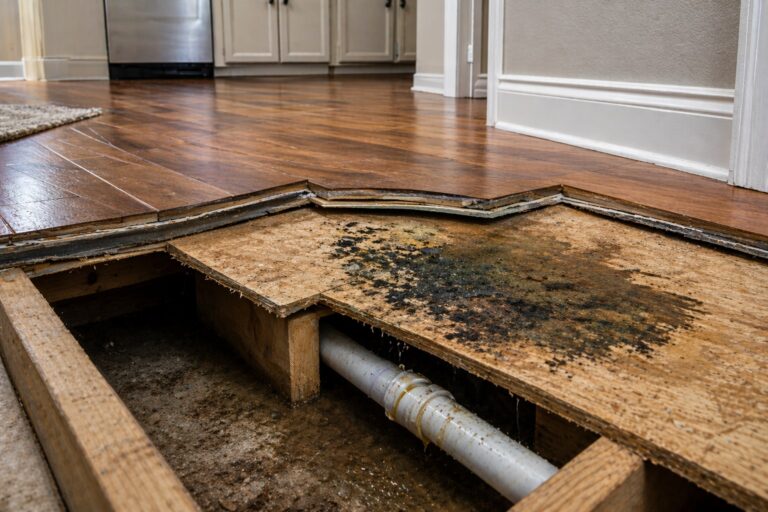
Spread Into Flooring and Subfloor Materials
Moisture near fixture bases often travels downward into flooring materials. Once water reaches subfloor layers, drying becomes slower and mold growth may accelerate.
Common floor-related spread patterns include:
- Moisture moving beneath vinyl flooring seams
- Water entering grout lines around tile
- Dampness spreading beneath laminate joints
- Subfloor swelling beneath fixture bases
These conditions often cause structural changes that become visible over time.
Spread Into Baseboards and Trim
Baseboards and trim materials frequently absorb moisture traveling downward through walls. When mold spreads into trim components, damage often becomes visible along lower wall edges.
Signs of trim involvement include:
- Peeling paint near baseboards
- Discoloration along trim edges
- Warped or swollen molding
- Mold appearing along lower wall seams
These symptoms suggest that moisture from the fixture area may have reached nearby trim or lower-wall materials.
When Mold Behind Fixtures Requires Professional Help
Some mold problems behind bathroom fixtures can be monitored and addressed early, but others require professional inspection to prevent long-term structural damage or indoor air quality problems. Knowing when to stop DIY inspection and seek professional assistance helps avoid worsening hidden damage.
Visible Mold Continues to Expand
If mold spreads outward from fixture edges or continues appearing after repeated cleaning, hidden growth is likely developing behind surfaces. Expansion beyond the original location usually indicates ongoing moisture exposure that cannot be resolved by surface cleaning alone.
Professional evaluation becomes important when:
- Mold spreads across larger areas over time
- New spots appear near the same fixture repeatedly
- Cleaning only removes mold temporarily
- Visible mold begins appearing on nearby walls or trim
Ignoring expanding mold allows it to penetrate deeper into materials, increasing the likelihood of structural involvement.
Structural Materials Show Damage
When materials near fixtures begin to soften, swell, or deteriorate, moisture exposure has likely progressed beyond early stages. Structural symptoms often signal that mold has been present long enough to affect the integrity of surrounding materials.
Warning signs requiring professional attention include:
- Soft drywall behind fixtures
- Swollen baseboards near toilets or sinks
- Cabinet surfaces losing rigidity
- Flooring that flexes or feels unstable
Once structural materials begin to weaken, professional inspection helps determine the extent of damage and prevents further deterioration.
Strong Odors Persist Despite Cleaning
Persistent mold odors that remain after cleaning and ventilation suggest hidden growth behind surfaces. Odors localized near fixtures are especially concerning because they often indicate concealed contamination.
If odors continue to return, professional investigation helps locate hidden mold sources and determine appropriate next steps. Addressing mold effectively requires eliminating underlying moisture sources, not just removing visible growth.
In many cases, lasting mold resolution depends on correcting the hidden moisture source, not just cleaning the surface. If the odor seems tied to a toilet, sink, vanity, or supply line, the next concern is whether a small plumbing leak is contributing to deeper material damage.
Health Concerns or Sensitive Occupants
Households with sensitive occupants may require professional evaluation sooner than others. Mold exposure can affect individuals differently depending on health conditions, sensitivities, or prolonged exposure.
Consider professional help sooner if:
- Residents experience respiratory irritation
- Allergy symptoms worsen indoors
- Mold odors remain noticeable despite cleaning
- Hidden mold exposure is suspected in enclosed areas
Professional evaluation provides safer confirmation when health concerns are involved.
Frequently Asked Questions About Signs of Mold Behind Bathroom Fixtures
How do I know if mold is hiding behind my toilet?
Look for musty odors strongest near the toilet base, recurring mold spots along seams, and discoloration behind the tank. Mold behind toilets often begins in areas with limited airflow and persistent humidity.
Why does mold keep coming back behind fixtures?
Recurring mold usually indicates hidden moisture behind surfaces. Cleaning removes visible mold temporarily but does not eliminate moisture trapped behind fixtures.
Is mold behind fixtures dangerous?
Mold behind fixtures can become a concern when it spreads into porous materials, causes persistent odors, or affects sensitive occupants. Early detection helps reduce exposure risk and limits moisture-related damage.
Can mold grow behind fixtures without leaks?
Yes. Mold can develop from condensation, humidity buildup, or repeated moisture exposure even without an obvious plumbing leak.
Should I remove fixtures to check for mold?
Removing fixtures is usually unnecessary during early inspection stages. However, removal may be appropriate when symptoms worsen or when professional inspection confirms hidden growth.
How fast can mold spread behind bathroom fixtures?
Mold growth speed varies depending on moisture levels, temperature, and airflow. In humid environments, mold may begin developing within days and spread gradually over time.
Key Takeaways
- Mold behind bathroom fixtures often develops in enclosed spaces with limited airflow.
- Musty odors and recurring mold spots are among the earliest warning signs.
- Fixture-specific symptoms help identify hidden mold before major damage occurs.
- Advanced symptoms such as soft materials or spreading stains indicate deeper involvement.
- Professional inspection is recommended when mold expands or structural materials show damage.
- Early detection is most useful when it leads to fixing the hidden moisture source, not just cleaning visible mold.

One Comment
Comments are closed.