How to Prevent Mold Around Bathroom Baseboards
To prevent mold around bathroom baseboards, keep floor edges dry, control bathroom humidity, maintain intact caulk or seal lines, and stop water from collecting where the flooring meets the wall. Baseboards sit at the lowest edge of the bathroom, so splashes, condensation, mopping water, and damp air often collect there before homeowners notice a problem.
Bathroom baseboard mold prevention is mostly a moisture-control routine. Wipe up water after showers and cleaning, ventilate the room until surfaces dry, inspect trim seams regularly, and repair gaps before water can move behind the baseboard. For broader long-term moisture control, this article fits under how to prevent recurring moisture damage.
Visible mold, swelling, peeling paint, or a musty smell near the baseboard usually means moisture has already stayed too long. Prevention works best before those signs appear, while the trim is still dry, sealed, and easy to maintain.
Why Bathroom Baseboards Are Vulnerable to Mold
Bathroom baseboards are vulnerable because they sit where wall moisture, floor water, splashes, and limited airflow meet. If that narrow floor-wall joint stays damp, mold can develop on the surface or behind the trim.
Moisture Naturally Collects at Lower Wall Levels
After showers, sink use, or floor cleaning, water often settles along the lowest edges of the bathroom. Baseboards become a collection point where moisture can linger longer than expected.
Common reasons moisture collects near baseboards include:
- Condensation settling on cooler wall surfaces
- Water splashing onto lower wall areas
- Floor moisture spreading toward wall edges
- Humidity lingering near enclosed floor-level spaces
When dampness repeatedly accumulates in these locations, mold growth becomes more likely. Methods discussed in how to reduce bathroom wall moisture can help manage the humidity conditions that contribute to baseboard mold risk.
Baseboards Often Trap Hidden Moisture
Baseboards are typically installed directly against drywall and flooring materials, creating narrow seams where moisture becomes trapped. Even when the visible surface appears dry, hidden moisture may remain behind the trim.
Hidden moisture behind baseboards commonly develops when:
- Water enters small gaps along trim edges
- Moisture spreads through flooring seams
- Condensation forms along cooler lower wall surfaces
- Airflow remains restricted near the floor
These concealed areas dry slowly because airflow is limited. If moisture remains trapped behind trim materials, mold growth can begin without immediate visible warning signs.
Bathroom Materials Absorb Moisture Easily
Many baseboards are made from materials that readily absorb moisture. Medium-density fiberboard (MDF), wood trim, and particle board molding are especially vulnerable to water exposure. Once moisture enters these materials, it can remain trapped for long periods.
Materials that absorb moisture more easily include:
- Painted wood trim with worn or damaged finish
- MDF baseboards
- Particle board molding
- Unsealed wooden trim
Repeated moisture exposure weakens these materials over time, increasing the likelihood of swelling, paint damage, and mold formation.
The Core Habits That Prevent Baseboard Mold
The most effective prevention steps are simple: dry water quickly, improve airflow, and keep trim protected so moisture cannot soak into the baseboard or slip behind it.
Keep Lower Wall Areas Dry After Daily Use
Drying lower wall surfaces is one of the most effective ways to reduce mold risk. After showers or cleaning routines, moisture frequently remains near the floor where it is not immediately visible.
Simple drying habits include:
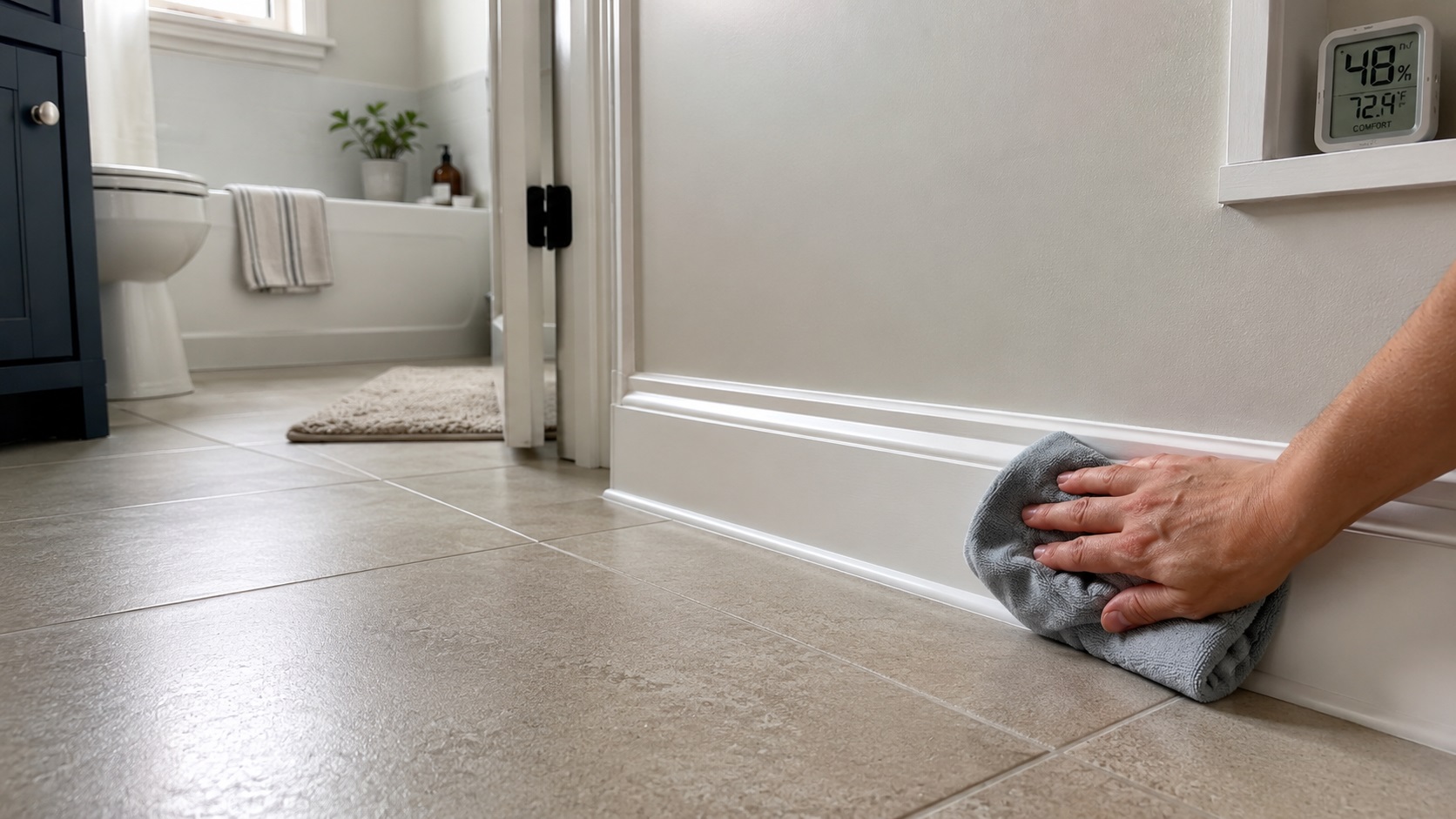
- Wiping visible water from baseboards after cleaning
- Drying splash areas near sinks and tubs
- Removing standing water from floor edges
- Ensuring moisture does not remain along trim seams
Regular drying reduces the amount of moisture that reaches vulnerable trim materials.
Improve Airflow Near Floor Level
Air circulation plays a major role in preventing mold growth. Bathrooms often have limited airflow near the floor, which slows the evaporation process and allows moisture to linger.
Improving airflow may involve:
- Using exhaust fans consistently during bathroom use
- Allowing fresh air to circulate when possible
- Avoiding obstructions that block airflow near baseboards
- Keeping floor-level areas clear of clutter
Better airflow reduces drying time and prevents moisture from remaining trapped in lower wall areas.
Protect Trim From Repeated Moisture Exposure
Preventing mold requires limiting how often trim materials come into contact with water. Repeated moisture exposure weakens protective finishes and allows moisture to penetrate deeper into materials.
Protective measures may include:
- Maintaining painted or sealed surfaces
- Addressing small moisture issues quickly
- Preventing standing water near walls
- Keeping trim surfaces clean and dry
Together, these habits reduce how often bathroom trim stays damp long enough for mold to develop.
How to Keep Floor Moisture Away From Baseboards
Floor moisture is one of the most direct causes of mold around bathroom baseboards. Water that reaches the floor naturally spreads toward wall edges, where it collects along seams between flooring and trim. Preventing mold requires controlling how moisture reaches and remains on the floor surface.
Dry Floors Promptly After Water Exposure
Allowing water to remain on bathroom floors increases the chance that moisture will migrate into baseboards. Even small amounts of water left to dry naturally may enter flooring seams and spread toward trim materials.
Effective floor drying practices include:
- Wiping up water spills immediately after they occur
- Drying floor edges near baseboards after mopping
- Removing standing water after bathing routines
- Checking for moisture in hard-to-see floor corners
Prompt drying reduces the amount of water available to enter baseboard seams and wall materials.
Limit Water Movement Toward Wall Edges
Water naturally moves toward the lowest points in the room. When floors slope slightly toward walls or corners, moisture tends to accumulate along baseboards where drying conditions are limited.
Methods to reduce water movement include:
- Using bath mats near showers and tubs
- Positioning mats to capture splashing water
- Keeping floor slopes clear of debris that traps moisture
- Redirecting cleaning water away from walls
Limiting how water reaches wall edges reduces the chances of moisture entering baseboard materials.
Manage Cleaning Water Carefully
Routine cleaning can unintentionally introduce large amounts of water to baseboards. Excess moisture from mopping or scrubbing may spread into areas that remain damp long after cleaning is complete.
Safer cleaning habits include:
- Using damp rather than saturated cleaning tools
- Avoiding heavy water buildup during floor cleaning
- Drying floors after washing surfaces
- Checking for water trapped beneath rugs or mats
Reducing water exposure during cleaning helps maintain dry conditions along trim edges.
How to Control Humidity Near Baseboards
Humidity contributes significantly to mold development around bathroom baseboards. Even when visible water is absent, moisture in the air settles onto cooler surfaces and creates damp conditions along lower walls.
Use Ventilation During and After Showers
Ventilation plays a critical role in reducing humidity levels. Exhaust fans remove moist air before it has time to settle on baseboards and surrounding surfaces.
Effective ventilation practices include:
- Running exhaust fans during showers and baths
- Continuing fan operation for several minutes afterward
- Ensuring vents remain clean and unobstructed
- Maintaining proper airflow pathways throughout the bathroom
Humidity control methods described in how to reduce bathroom wall moisture provide additional strategies for managing moisture levels that affect baseboard areas.
Reduce Humidity Buildup in Enclosed Areas
Bathrooms often contain enclosed spaces where moisture becomes trapped. Corners behind toilets, cabinets, and storage units tend to hold moisture longer than open areas.
Reducing humidity buildup may involve:
- Allowing space between fixtures and walls when possible
- Keeping storage areas organized to allow airflow
- Avoiding overcrowded floor-level spaces
- Maintaining airflow around enclosed corners
Improving airflow reduces moisture accumulation along baseboards and helps surfaces dry more quickly.
Monitor Humidity Levels Regularly
Monitoring humidity helps confirm whether the bathroom is drying after showers and cleaning. A small hygrometer can show whether humidity remains elevated long after the room should be dry.
Monitoring routines may include:
- Checking humidity levels during daily bathroom use
- Observing condensation patterns on walls and fixtures
- Watching for damp odors near floor-level areas
- Adjusting ventilation habits when humidity remains elevated
Regular monitoring helps you notice when the bathroom is staying damp too long, especially near floor-level corners, trim seams, and enclosed areas.
How to Protect Baseboards From Splash and Cleaning Water
Splashing water is one of the most frequent causes of moisture buildup around bathroom baseboards. Everyday activities such as washing hands, bathing, and cleaning surfaces create repeated water exposure that can reach lower wall areas. Preventing mold requires limiting how much water contacts trim materials and ensuring that splashes are controlled quickly.
Control Splash Zones Around Fixtures
Water splashing from sinks, tubs, and showers often reaches nearby baseboards without being noticed. These small, repeated exposures gradually introduce moisture into seams where drying takes longer.
Ways to control splash zones include:
- Installing splash guards where water frequently contacts walls
- Positioning shower curtains or doors to reduce overspray
- Using sink accessories that limit excessive splashing
- Checking for water buildup near fixture bases
Reducing splash intensity prevents moisture from reaching vulnerable trim areas.
Use Towels and Mats to Capture Water
Absorbent materials placed near high-moisture areas help capture water before it spreads toward baseboards. Without these barriers, moisture easily travels across smooth flooring surfaces.
Effective moisture control methods include:
- Using bath mats near tubs and showers
- Placing absorbent towels in high-splash zones
- Changing wet mats regularly to prevent prolonged dampness
- Ensuring mats fully dry between uses
Capturing water early reduces the likelihood of moisture migrating into lower wall seams, but mats should not stay damp against baseboards for long periods.
Dry Baseboards After Cleaning Routines
Cleaning routines often introduce large amounts of moisture into bathroom environments. Even when surfaces appear dry, water may remain trapped along trim edges.
Safer cleaning habits include:
- Drying baseboards immediately after mopping
- Avoiding excessive water use near wall edges
- Inspecting trim seams after washing floors
- Removing damp cloths from contact with trim
Regular drying helps prevent moisture from remaining in hidden areas where mold growth could begin.
How to Maintain Seals Around Bathroom Baseboards
Seal integrity plays a major role in preventing moisture from entering the seams between baseboards and walls. Even small gaps allow water to travel behind trim materials where drying becomes difficult.
Inspect Caulking and Seal Lines Regularly
Over time, caulking may shrink, crack, or separate from surfaces. These small openings allow moisture to enter areas that are not easily visible.
Routine inspection should focus on:
- Checking for cracks along baseboard seams
- Looking for peeling or separated sealant
- Identifying gaps between trim and flooring
- Watching for discoloration along sealed edges
Regular inspection prevents minor seal failures from developing into larger moisture problems.
Maintain Continuous Seal Coverage
Continuous seal coverage blocks moisture from entering trim seams. When sealant lines remain intact, water has fewer pathways to travel behind baseboards.
Maintaining seal coverage may involve:
- Repairing damaged caulking when gaps appear
- Keeping seal lines smooth and consistent
- Ensuring full contact between trim and adjacent surfaces
- Preventing moisture from pooling along seal lines
Do not simply caulk over a damp, swollen, stained, or musty baseboard. Dry the area first and confirm the moisture source is controlled; otherwise, new caulk can trap moisture behind the trim instead of preventing mold.
Proper sealing reduces hidden dampness only when the area is already dry and the water source is controlled.
Watch for Early Signs of Seal Failure
Seal failure often begins gradually. Recognizing early warning signs allows preventative action before moisture spreads behind trim materials.
Common early indicators include:
- Small gaps forming along trim edges
- Loose or shifting baseboards
- Paint separation near seams
- Water staining along lower wall edges
If moisture begins entering concealed spaces, inspection methods outlined in how to detect moisture behind baseboards can help identify hidden damp areas before mold growth develops.
Ongoing Maintenance to Prevent Mold Behind Baseboards
Ongoing maintenance keeps baseboards dry and reduces long-term mold risk. Preventive care focuses on monitoring moisture patterns and responding quickly when conditions change.
Inspect Baseboards During Regular Cleaning
Routine inspection allows early detection of moisture problems. Many mold issues begin gradually, making periodic visual checks an important prevention strategy.
Inspection habits may include:
- Looking for discoloration or paint changes
- Checking for swelling or soft trim surfaces
- Observing damp areas along floor seams
- Monitoring areas behind fixtures
Regular observation helps identify problems before mold becomes established.
Maintain Dry Conditions Behind Fixtures
Areas behind toilets and cabinets often remain hidden from daily view. Moisture trapped in these spaces may persist without obvious signs.
For fixture-specific prevention, how to prevent mold around bathroom fixtures covers moisture control near toilets, sinks, tubs, and fixture bases.
Maintenance routines should include:
- Occasionally checking behind fixtures for moisture
- Keeping enclosed areas free of clutter
- Ensuring airflow reaches concealed spaces
- Removing damp materials from hidden corners
Maintaining dry conditions behind fixtures reduces the likelihood of concealed mold development.
Address Minor Moisture Issues Quickly
Small moisture problems become more serious when ignored. Addressing damp conditions immediately prevents repeated exposure that encourages mold growth.
Quick-response actions include:
- Drying damp surfaces immediately
- Repairing minor leaks promptly
- Adjusting cleaning practices when water buildup occurs
- Monitoring humidity changes during seasonal shifts
Consistent attention to small moisture issues prevents long-term damage and mold formation.
When Baseboard Mold Prevention Isn’t Enough
Even with consistent prevention efforts, some moisture problems persist due to hidden issues that require deeper investigation. When mold continues forming around bathroom baseboards despite careful drying and humidity control, underlying moisture sources may still be present.
Recurring Moisture Signals a Deeper Problem
If baseboards remain damp despite preventive routines, the moisture source may not be visible. Hidden leaks, trapped humidity, or structural moisture pathways can allow water to accumulate behind trim materials.
Warning signs of persistent moisture include:
- Mold reappearing after cleaning or drying
- Musty odors near lower wall areas
- Paint peeling along baseboard edges
- Soft or swollen trim materials
These symptoms suggest that moisture may be entering concealed areas that require closer inspection. If the problem is not limited to the baseboard seam, how to detect hidden moisture in bathrooms explains broader bathroom moisture checks around fixtures, walls, and enclosed areas.
Structural Moisture May Require Professional Evaluation
When moisture continues to affect baseboards over extended periods, structural materials may become compromised. Hidden leaks beneath flooring or behind walls can cause recurring moisture problems that exceed normal prevention measures.
Situations that may require professional evaluation include:
- Water stains spreading along lower wall areas
- Baseboards separating from walls
- Persistent dampness despite ventilation improvements
- Moisture extending into nearby flooring materials
If moisture problems remain unresolved, professional guidance may be necessary before sealing, repainting, or replacing the trim. Decision-making strategies explained in how to fix persistent bathroom moisture problems can help determine when repair assistance becomes necessary.
Frequently Asked Questions About Preventing Mold Around Bathroom Baseboards
How do I prevent mold on bathroom baseboards?
Preventing mold on bathroom baseboards involves keeping floor-level areas dry, controlling humidity levels, maintaining seal integrity, and improving airflow near lower wall surfaces. Regular inspection and prompt drying significantly reduce mold risk.
Why do bathroom baseboards get moldy?
Bathroom baseboards become moldy when repeated moisture exposure allows water to collect along trim seams. Common causes include splashing water, condensation, high humidity, and trapped moisture behind trim materials.
Can humidity alone cause mold on baseboards?
Yes. High humidity levels can produce condensation along cooler wall surfaces, including baseboards. Over time, repeated condensation cycles create damp conditions that support mold growth.
How often should baseboards be inspected in bathrooms?
Baseboards should be inspected during routine cleaning and whenever signs of moisture appear. Regular inspection helps detect early moisture problems before mold develops.
Should bathroom baseboards be sealed?
Sealing baseboard edges helps prevent moisture from entering seams between walls and flooring. Maintaining intact seal lines reduces the likelihood of hidden moisture buildup behind trim materials.
When should damaged baseboards be replaced?
Baseboards may need replacement when swelling, softening, or persistent mold damage affects their structure. Fix the moisture source first so new trim does not trap the same damp conditions behind it.
Conclusion
Preventing mold around bathroom baseboards comes down to keeping the floor-wall joint dry, ventilating the bathroom after showers or cleaning, and maintaining seals before water can enter behind the trim. If mold, swelling, soft spots, or musty odors keep returning, treat the issue as a hidden moisture problem instead of only a cleaning problem.
Key Takeaways
- Bathroom baseboards are highly vulnerable to mold because moisture naturally collects at lower wall levels.
- Drying floor edges and controlling splash zones reduces moisture reaching baseboard seams.
- Maintaining seal integrity prevents hidden moisture from entering behind trim materials.
- Humidity control plays a major role in preventing mold growth near baseboards.
- Routine inspection helps detect early signs of moisture before mold becomes visible.
- Persistent moisture problems may indicate hidden leaks or structural moisture issues.