
Signs of Condensation on Roof Sheathing
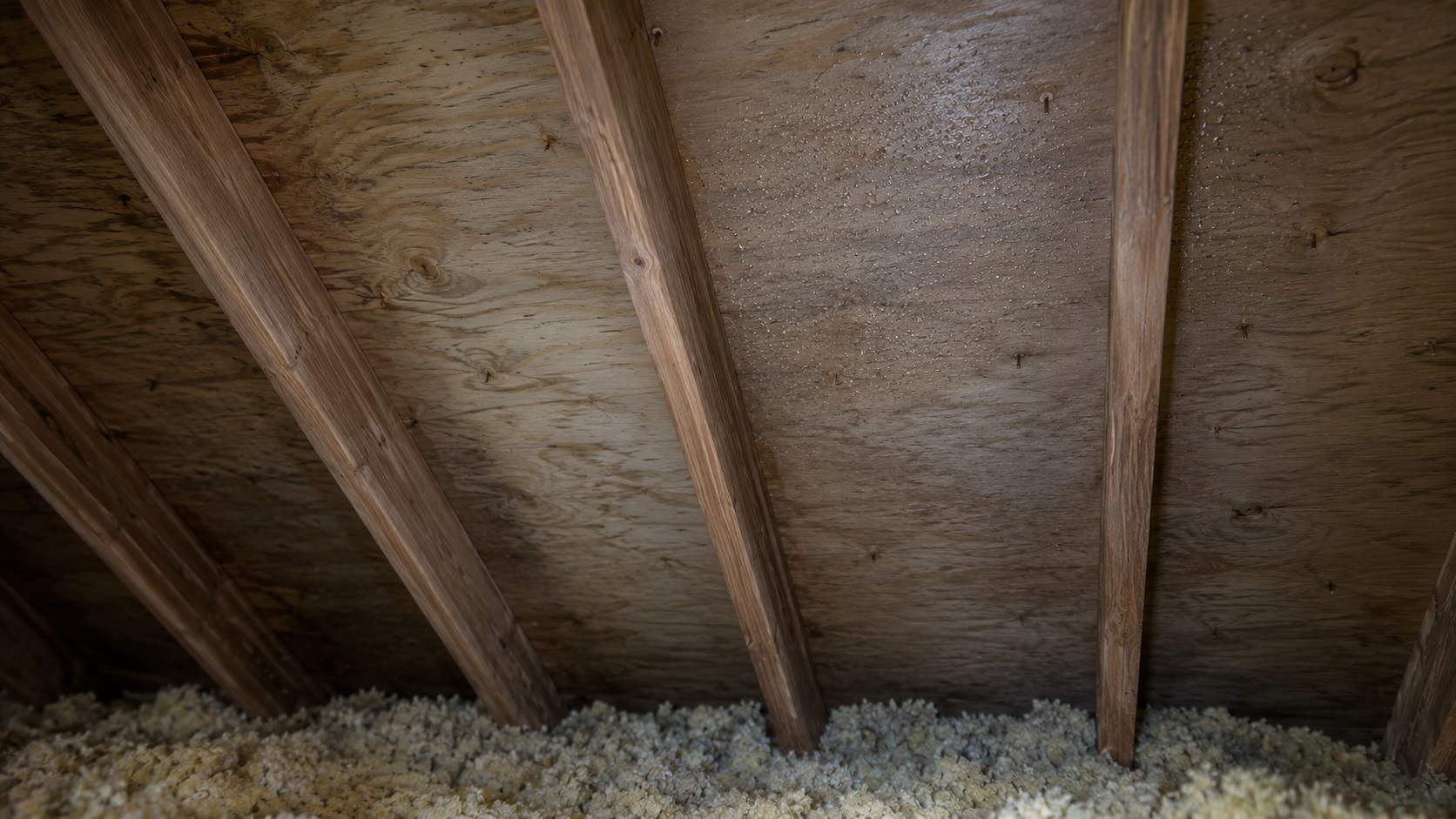
Condensation on roof sheathing is one of the earliest visible signs that attic moisture is reaching the underside of the roof deck. Homeowners often discover it during a seasonal attic check, after noticing a musty smell, or while looking at insulation. The sheathing may look damp, darkened, glossy, stained, or frosted. One light moisture event may dry without damage, but repeated condensation can lead to mold growth, wood deterioration, and long-term roof deck deterioration.
Roof condensation is often mistaken for a roof leak because both involve moisture appearing where it should not be. However, condensation usually forms across wide areas of roof decking rather than in a single isolated path. Understanding the visible signs on the sheathing itself helps homeowners identify problems early and decide whether further inspection or correction is needed.
If you have already noticed broader attic moisture symptoms, it may help to review the patterns described in Signs of Roof Condensation in Attics, which explains how moisture affects attic environments as a whole. This article focuses specifically on the material-level signs that appear directly on roof sheathing surfaces.
What Condensation on Roof Sheathing Looks Like
Roof sheathing condensation usually appears on the underside of plywood or OSB panels that form the roof deck. In cold weather especially, warm indoor air that reaches the attic can condense on the colder roof decking. Repeated cycles leave visible signs on the surface and can gradually move moisture into the wood fibers.
Unlike roof leaks that typically produce streaking patterns from a single entry point, condensation tends to form in more uniform patterns. It often affects multiple roof bays at once and can appear along large sections of the roof structure.
Water Droplets Forming on Wood Surfaces
One of the clearest signs of condensation is the appearance of small water droplets on the underside of roof sheathing. These droplets often resemble dew forming on grass in the early morning. They may appear temporarily during colder hours and disappear as temperatures rise.
Droplets typically form:
- Across broad areas of roof decking
- Along seams between plywood or OSB panels
- Near roof ridges where warm air collects
- Above poorly ventilated attic zones
If droplets repeatedly form in the same areas, it strongly suggests a condensation cycle rather than a single roof leak.
A one-time damp spot after wind-driven rain still deserves leak inspection. Repeated droplets that appear during cold mornings, especially across several bays, point more strongly toward condensation.
Damp or Glossy Wood Appearance
Even when droplets are not visible, roof sheathing may appear slightly glossy or darker than surrounding dry wood. This subtle sheen occurs when moisture is present but not yet forming into beads. It is often easier to notice by shining a flashlight across the wood surface at an angle.
This stage often appears before mold is visible. If the same panels look glossy or darkened during cold weather and return to normal later, photograph the pattern and compare it after the next temperature drop.
Frost or Ice on Roof Decking in Cold Weather
During winter, condensation problems may appear as frost instead of liquid water. Frost develops when warm, humid air contacts cold roof decking surfaces and freezes instantly. This is one of the most overlooked warning signs because frost often melts during the day, leaving little visible evidence afterward.
Common frost-related signs include:
- White crystalline buildup on wood surfaces
- Ice forming along nail tips
- Frozen patches along roof seams
- Water dripping later in the day after melting
Repeated frost cycles are more concerning than a single light frost because melting can wet the sheathing and insulation below it again and again.
Uneven Moisture Patterns Across Roof Bays
Condensation rarely affects every surface equally. Some roof bays may show heavier moisture than others depending on airflow, insulation placement, and temperature variation. You may notice alternating wet and dry sections across the underside of the roof.
This uneven pattern is especially common near:
- Attic corners with restricted airflow
- Areas above bathrooms or kitchens
- Sections near blocked ventilation openings
- Roof valleys where temperature differences are greater
If these patterns continue over multiple seasons, deeper investigation may be necessary using the inspection methods described in How to Inspect Roof Surfaces for Condensation Damage.
Early Warning Signs of Roof Sheathing Moisture
Many homeowners first notice these warning signs while performing routine attic checks or after reading about how to detect roof condensation problems. The key is learning to recognize changes in materials before major damage occurs.
Slight Darkening or Staining of Roof Sheathing
One of the earliest visible signs of condensation is slight discoloration on the wood surface. This usually appears as faint darkened patches rather than large, obvious stains. These patches may look like shadows or uneven shading across the wood grain.
Unlike roof leaks that create obvious water trails, condensation staining tends to appear:
- In broad, irregular blotches
- Across multiple sheathing panels
- Without a clearly defined starting point
- More heavily in colder areas of the attic
Over time, these dark patches may grow larger or spread to adjacent panels if moisture exposure continues.
Rust Forming on Roofing Nail Tips
Roofing nails extend through the roof sheathing and are visible from inside the attic. Because metal reacts quickly to moisture, rusted nail tips are often one of the earliest indicators of repeated condensation.
Rust typically develops when condensation forms on cold metal surfaces. In winter, nail tips may collect frost overnight, which melts during warmer periods and leads to corrosion.
Look for:
- Orange or reddish staining on nail heads
- Small rust rings around fasteners
- Drips forming from rusted nail tips
- Clusters of rust in specific roof areas
A few old rusty nails may only show age, but clusters of rusty nail tips in damp or frosted areas are a stronger sign of repeated condensation.
Damp Insulation Directly Below Roof Decking
When condensation forms on roof sheathing, moisture often drips downward into attic insulation. This may not be immediately obvious unless insulation is carefully examined.
Damp insulation may appear:
- Compressed or flattened
- Darker than surrounding material
- Slightly heavier to the touch
- Cooler than nearby dry insulation
Persistent damp insulation reduces thermal performance and increases the risk of mold growth. If insulation repeatedly becomes damp, it may indicate ongoing condensation rather than an isolated moisture event. Do not dig deeply through insulation if electrical wiring, animal contamination, or heavy mold growth is present.
Musty or Damp Odors in the Attic
Odor is often one of the first noticeable warning signs. Even before mold becomes visible, damp wood and insulation can produce a mild musty smell.
This odor may:
- Become stronger during cold or humid weather
- Appear after frost melts on the roof deck
- Be noticeable near specific roof sections
- Return repeatedly after disappearing temporarily
If musty odors continue to develop, it may indicate moisture persistence that could eventually lead to mold formation, as explained in Why Roof Condensation Causes Mold Growth.
How Roof Sheathing Condensation Progresses Over Time
Roof sheathing condensation usually becomes serious through repetition. A small amount of moisture may dry, but repeated wetting, frost, and drying cycles can gradually change the wood surface.
Repeated Wetting and Drying Cycles
Condensation rarely stays constant. Instead, it appears during certain temperature conditions and disappears when the attic warms. These repeated wetting and drying cycles gradually saturate the wood.
Typical cycle pattern:
- Moisture forms overnight during colder temperatures
- Frost or droplets melt during daytime warming
- Wood absorbs small amounts of water
- Moisture slowly accumulates over weeks or months
Even if the surface appears dry during the day, internal moisture content may continue increasing.
Wood Fiber Swelling and Surface Roughness
As moisture accumulates, wood fibers begin to expand slightly. This swelling may not be visible at first but can eventually create subtle changes in surface texture.
Signs of swelling include:
- Raised wood grain
- Slight surface roughness
- Warped or uneven panel edges
- Visible separation along panel seams
These changes indicate that moisture exposure has progressed beyond surface condensation and is affecting the structure of the wood itself.
Early Mold Specks Appearing on Wood Surfaces
When moisture remains present long enough, mold spores can begin colonizing the surface of roof sheathing. Mold often starts as tiny dark specks rather than large visible patches.
Early mold growth commonly appears:
- In scattered dots or clusters
- Along cooler sections of roof decking
- Near areas of repeated condensation
- On surfaces that remain damp for extended periods
At this stage, the visible mold is a sign that the sheathing has stayed damp long enough for growth to begin.
Increasing Moisture Spread Across Larger Areas
If condensation continues unchecked, affected areas usually expand. What begins as a small localized issue may gradually spread across multiple roof sections.
Expansion patterns often include:
- Moisture spreading from ridge to eave
- New damp areas forming near existing ones
- Widespread staining across several panels
- Increasing mold coverage
Persistent expansion strongly suggests that ventilation or humidity issues are contributing to ongoing moisture exposure. Many of these broader patterns are discussed further in Signs of Persistent Roof Condensation Problems.
Signs That Condensation Is Being Mistaken for a Roof Leak
Many homeowners assume that any moisture on roof sheathing must come from a leaking roof. While leaks are certainly possible, condensation often produces moisture patterns that look very different from typical roof leak damage. Understanding these differences helps prevent unnecessary roof repairs while still addressing real moisture risks.
If you suspect moisture but cannot find a clear entry point from outside, it may be helpful to compare patterns described here with broader roof leak indicators outlined in Signs of Roof Leaks Inside the House.
Moisture Appears Across Wide Areas Instead of a Single Path
Roof leaks typically create visible paths where water enters at a specific location and travels downward. These leak paths often appear as concentrated streaks or stains that follow gravity.
Condensation behaves differently. Instead of forming in one spot, it often appears across large sections of roof decking at once.
Common condensation patterns include:
- Moisture spread across multiple roof panels
- Uniform staining across wide areas
- Similar dampness on both sides of the attic
- Moisture forming without a clear origin point
If moisture appears broadly rather than in narrow streaks, condensation becomes a likely explanation.
No Exterior Roof Damage Is Visible
Another important distinction is the absence of visible exterior damage. Roof leaks often result from damaged shingles, flashing failures, or penetrations around vents and chimneys.
Condensation, however, can develop even when the roof surface is in good condition.
Signs that support condensation rather than leakage include:
- No missing or damaged shingles
- No visible roof penetrations allowing water entry
- No localized wet spots after rainfall
- Moisture appearing without storm activity
This distinction is important because condensation problems usually require airflow or humidity corrections rather than roof repairs.
Moisture Appears During Cold Weather or Overnight
Condensation problems are often seasonal. Moisture commonly forms when outdoor temperatures drop and indoor air remains warm and humid.
You may notice:
- Frost forming overnight on roof decking
- Water droplets appearing during cold mornings
- Moisture disappearing during warmer daytime hours
- More condensation during winter months
Seasonal patterns strongly suggest condensation rather than structural roof failure.
Moisture Forms Near Ridge Lines or Poorly Ventilated Areas
Warm air naturally rises and collects near the highest points of an attic. This makes ridge areas particularly vulnerable to condensation if ventilation is insufficient.
Moisture commonly develops near:
- Roof ridges
- Attic corners
- Blocked ventilation pathways
- Areas with heavy insulation buildup restricting airflow
If these areas repeatedly show moisture, ventilation or airflow problems may be contributing factors, similar to those discussed in Signs of Poor Attic Ventilation.
Where Roof Sheathing Condensation Commonly Starts
Condensation does not form randomly. It usually develops in predictable locations where temperature differences, humidity buildup, or airflow restrictions occur. Knowing where to inspect helps homeowners detect problems earlier.
Near Roof Ridge Areas
The ridge of a roof is one of the most common starting points for condensation. Warm indoor air rises naturally and collects near the highest surfaces of the attic. If this warm air cannot escape through ventilation systems, it condenses when it contacts cooler roof decking.
Typical ridge-area warning signs include:
- Moisture forming near peak areas
- Rust forming on nail tips along the ridge line
- Frost buildup near ridge boards
- Staining spreading downward from the ridge
These signs often appear before moisture becomes visible in other areas.
Along Roof Eaves and Edges
Roof eaves are another common location for condensation. These areas tend to be colder because they are exposed to outdoor temperatures. When warm indoor air reaches these cooler surfaces, condensation can occur quickly.
Look for:
- Moisture along outer roof edges
- Ice buildup in colder climates
- Damp insulation near eave lines
- Localized mold specks forming at edges
Repeated condensation along eaves often points to an airflow imbalance, especially if nearby insulation is damp or blocking ventilation paths.
Around Roof Penetrations and Vent Openings
Roof penetrations such as vents, exhaust ducts, and skylights create temperature differences that can increase condensation risk. These components often interrupt normal airflow patterns, allowing moisture to accumulate nearby.
Common signs include:
- Damp areas surrounding vent pipes
- Condensation near skylight framing
- Moisture forming around attic exhaust outlets
- Localized mold growth near penetrations
If moisture appears around these areas, careful inspection may be necessary to determine whether condensation or leakage is responsible.
Above Insulation Gaps or Uneven Coverage
Insulation plays a critical role in controlling attic temperatures. When insulation coverage is uneven, warm air from living spaces can escape upward and contact cold roof sheathing.
Common indicators include:
- Moisture forming directly above thin insulation areas
- Visible gaps between insulation sections
- Localized frost in poorly insulated sections
- Staining appearing directly above living spaces
These signs often indicate temperature differences that promote condensation rather than external water entry.
What Wet Roof Sheathing Can Lead To If Ignored
Wet roof sheathing becomes more concerning when signs move beyond surface moisture. Mold specks, spreading stains, softened wood, peeling fibers, warped panel edges, or loose fasteners suggest that repeated condensation has started affecting the material instead of only appearing on the surface.
At that point, the issue is no longer just an attic humidity symptom. It may require closer inspection of roof decking, ventilation, insulation, and indoor moisture sources before the damage spreads.
When Roof Sheathing Condensation Becomes Dangerous
Roof sheathing condensation becomes more serious when moisture is persistent, expanding, or changing the wood itself.
Moisture Persists Across Multiple Seasons
One of the strongest warning signs of a developing problem is condensation that continues through multiple weather cycles. If moisture appears every winter or during repeated cold periods, the roof structure is likely experiencing long-term exposure.
Persistent seasonal condensation often leads to:
- Increasing wood staining over time
- Gradual expansion of affected areas
- Growing mold colonies
- Insulation deterioration
These patterns often indicate unresolved humidity or airflow problems similar to those described in How to Prevent Roof Condensation.
Mold Growth Expands Across Multiple Panels
Expanding mold patterns mean the sheathing is staying damp long enough for growth to spread beyond isolated specks.
Signs that mold growth has progressed include:
- Multiple mold clusters forming across several panels
- Dark discoloration spreading outward
- Persistent musty odors throughout the attic
- Visible mold appearing on nearby framing
Once mold spreads beyond isolated patches, corrective action becomes urgent to prevent further contamination.
Wood Softening or Structural Changes Appear
Structural warning signs indicate long-term moisture exposure. Roof sheathing that feels soft or shows physical distortion may have absorbed significant moisture over time.
Danger signs include:
- Soft or spongy wood texture
- Warped or sagging panels
- Separation along seams
- Loose fasteners or weakened nail hold
If these symptoms appear, structural evaluation is strongly recommended.
When to Call a Professional for Inspection
A homeowner can document surface signs, but some roof sheathing conditions need professional inspection.
Professional inspection may be necessary if:
- Condensation appears repeatedly over several months
- Mold growth expands beyond isolated spots
- Wood shows signs of structural deterioration
- Insulation becomes repeatedly wet
- Odors persist despite drying conditions
If the moisture pattern is unclear, use How to Detect Roof Condensation Problems as the next step before assuming the roof deck itself needs repair.
How to Confirm Roof Sheathing Condensation Safely
Homeowners can perform simple visual checks to confirm condensation patterns without disturbing materials or creating safety risks. Stay on stable framing or a safe attic platform, avoid stepping on drywall or insulation, and stop if wiring, mold contamination, pests, or unsafe access conditions are present.
Use a Flashlight to Identify Moisture Patterns
Shining a flashlight across the surface of roof sheathing helps highlight moisture differences. Angled light makes glossy surfaces and droplets easier to see.
Look for:
- Reflective surfaces on wood
- Small beads of moisture
- Uneven wet patterns
- Hidden frost deposits
Check Insulation Directly Below Moisture Areas
Damp insulation directly below roof decking often confirms condensation cycles. If insulation feels heavier or appears compressed, moisture exposure may be occurring repeatedly.
Avoid removing large insulation sections unless necessary. Instead, focus on observing visible surface conditions.
Photograph Changes Over Time
Taking photographs during different weather conditions helps track moisture patterns. Comparing images over weeks or months can reveal whether condensation is improving or worsening.
If the same sheathing areas keep showing moisture, compare those patterns with the broader roof material and ventilation problems discussed in Most Common Roofing Material Failures.
Key Takeaways
- Condensation on roof sheathing usually appears as droplets, frost, or darkened wood surfaces.
- Wide, evenly spread moisture patterns often indicate condensation rather than roof leaks.
- Rusting nail tips and damp insulation are early warning signs of repeated moisture cycles.
- Persistent condensation can lead to mold growth and structural weakening.
- Photographing the same sheathing areas during cold mornings and warmer afternoons helps confirm whether the moisture pattern is repeating.
Frequently Asked Questions About Signs of Condensation on Roof Sheathing
What does condensation on roof sheathing look like?
Condensation usually appears as small water droplets, frost buildup, or darkened patches on the underside of roof decking. It often affects wide areas rather than forming in narrow streaks like typical roof leaks.
Is frost on roof sheathing normal?
Small amounts of frost may occur during cold weather, but repeated frost formation indicates excess moisture in the attic. Over time, melting frost can saturate wood and insulation, increasing the risk of mold growth.
Can roof sheathing dry on its own?
Light surface moisture may dry when attic temperatures rise, but repeated condensation can keep plywood or OSB damp inside the fibers. If the same panels show frost, droplets, staining, or nail rust again and again, the sheathing should not be treated as fully dry just because the surface looks dry later.
How do I know if moisture is from condensation or a leak?
Condensation typically spreads across wide areas and appears during cold conditions. Roof leaks usually create localized streaks originating from a specific entry point. Comparing patterns helps distinguish between the two.
Is wet roof sheathing dangerous?
Occasional moisture may not cause immediate damage, but repeated exposure increases the risk of mold growth and structural weakening. Early detection is the best way to prevent costly repairs.
Conclusion
Condensation on roof sheathing usually shows up as droplets, frost, darkened wood, rusty nail tips, damp insulation, or early mold specks. The most important clue is repetition: the same areas become damp during cold or humid conditions and then appear to dry later.
If those signs keep returning, document the pattern and move from simple observation to a fuller condensation inspection. That helps separate roof leaks from attic moisture problems before mold growth or roof deck deterioration becomes more serious.
2 Comments
Comments are closed.