Signs Crawl Space Ventilation Needs Repair
Crawl space ventilation needs repair when moisture, mold, odors, or structural changes continue after basic maintenance has already been done. Clearing blocked vents, removing debris, and opening airflow paths may solve simple problems, but they will not fix damaged vents, poor vent placement, persistent dead zones, or crawl space moisture that keeps returning.
The clearest warning sign is persistence: damp framing, condensation, musty odors, or mold that returns after vents have been cleared. Many early moisture conditions that lead to repair-level failures begin with the symptoms described in signs of moisture caused by crawl space vent failure.
This guide focuses on identifying the warning signs that indicate maintenance alone is no longer enough. Instead of covering repair techniques, it helps homeowners understand when professional-level correction may be required. These conditions often connect to broader structural moisture concerns addressed in structural moisture problems in homes: causes, risks, and repair guide, where long-term risks are evaluated in detail.
When Airflow Improvements No Longer Work
One of the clearest signs that crawl space ventilation needs repair is when airflow improvements fail to correct moisture problems. Many homeowners begin by clearing debris, opening vents, and removing obstructions. These steps often restore airflow, but if humidity and moisture remain unchanged, deeper ventilation failure may be present.
Persistent Moisture After Clearing Vents
Clearing blocked vents is usually the first step in improving airflow. When moisture continues after this step, it often signals that the problem involves more than simple blockage.
Watch for:
- Damp surfaces remaining after vents are cleared
- Condensation returning repeatedly
- Humidity remaining high inside the crawl space
- Materials that stay damp despite improved airflow
- Moisture that appears across several crawl space areas
These patterns suggest the problem is no longer just a blocked vent or minor obstruction.
Humidity That Remains High Year-Round
Seasonal humidity changes are normal, but year-round humidity often signals ventilation failure. Crawl spaces should dry periodically when airflow is functioning properly.
A hygrometer reading that repeatedly stays above about 60% relative humidity, especially during dry weather or after maintenance, is a stronger repair warning than a single humid-day reading.
Persistent humidity conditions may include:
- Damp air present in all seasons
- Humidity returning shortly after drying attempts
- Moisture lingering even during dry weather
- Condensation forming during multiple seasons
These patterns indicate that ventilation problems are not temporary. Instead, they often reflect structural limitations that require repair-level correction.
Repeated Attempts to Improve Airflow Have No Effect
If airflow improvements have been attempted but conditions remain unchanged, the ventilation system itself may be compromised. This often happens when structural airflow limitations exist that cannot be corrected without modifying the ventilation layout.
Examples of failed improvement attempts include:
- Clearing vents multiple times without improvement
- Removing debris without reducing moisture
- Improving pathways but still observing stagnant air
- Adding temporary airflow aids without long-term results
When repeated maintenance attempts fail, compare your next steps with the basic airflow corrections discussed in how to improve airflow in crawl spaces before assuming the issue requires more advanced repair.
Visible Damage to Crawl Space Vents
Physical damage to crawl space vents is a strong indicator that repairs are needed. Vent systems deteriorate over time due to weather exposure, corrosion, and mechanical stress. When vents are damaged, airflow becomes inconsistent or severely restricted.
Cracked or Broken Vent Frames
Vent frames exposed to outdoor conditions can crack or warp, especially in areas with seasonal temperature changes. Once frames become damaged, airflow pathways may narrow or collapse.
Signs of damaged vent frames include:
- Visible cracks along vent edges
- Warped vent housings that no longer sit flush
- Loose vent assemblies pulling away from the foundation
- Open gaps allowing debris to enter
These issues reduce airflow efficiency and often require replacement rather than simple adjustment.
Rust or Corrosion on Metal Vent Covers
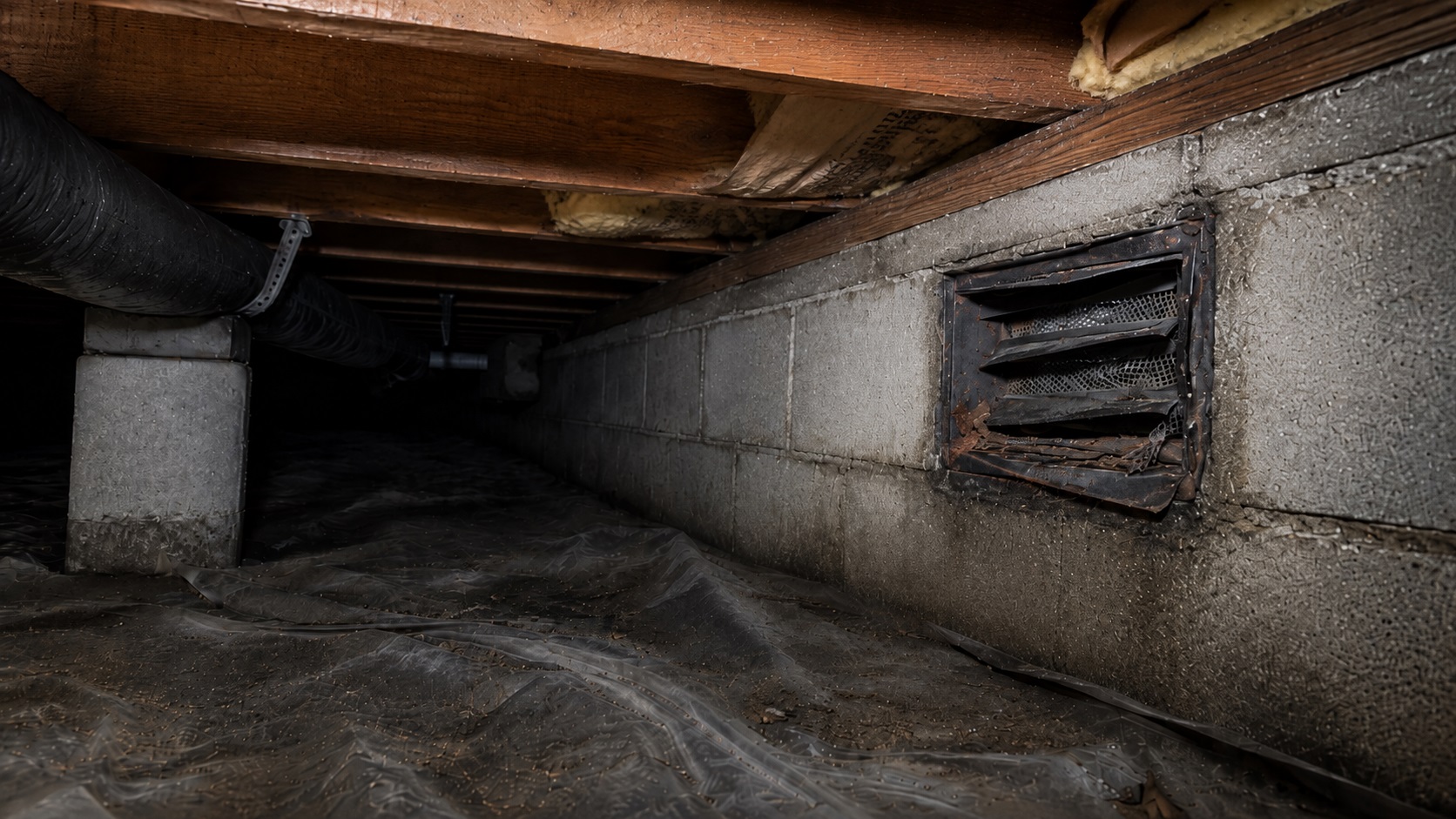
Metal vent covers gradually deteriorate when exposed to moisture and weather. Rust weakens metal surfaces and may eventually create holes that allow debris to enter the crawl space.
Look for:
- Flaking rust on vent surfaces
- Holes forming in metal covers
- Weak or brittle metal structures
- Discoloration spreading across vent surfaces
Severe corrosion often prevents vents from functioning properly and signals the need for replacement.
Louvers That No Longer Open or Close Properly
Vent louvers regulate airflow by allowing air to pass through openings. Over time, moving components may become stuck or damaged.
Signs of louver failure include:
- Louvers stuck in closed positions
- Broken louver mechanisms
- Loose or misaligned vent parts
- Restricted airflow despite open vent frames
These failures reduce airflow efficiency and may allow moisture conditions to worsen over time.
Persistent Moisture Despite Clear Vents
Clear vents do not always mean the crawl space is ventilating properly. If moisture remains after visible blockages are removed, the problem may involve vent placement, poor cross-ventilation, blocked interior pathways, or air that never reaches certain sections of the crawl space.
Moisture That Returns Quickly After Drying
Temporary drying may reduce moisture levels briefly, but when ventilation systems are failing, humidity often returns within days or weeks. This repeated moisture cycle indicates that airflow is not moving moisture out of the crawl space effectively.
Watch for:
- Condensation reappearing shortly after surfaces dry
- Damp materials returning after cleaning efforts
- Humidity rising again after short periods of improvement
- Moisture forming during otherwise dry weather
These patterns often signal deeper airflow limitations rather than temporary environmental changes.
Moisture Appearing Across Multiple Areas
When ventilation problems worsen, moisture typically spreads across wide sections of the crawl space instead of staying isolated in one location. This widespread pattern suggests that airflow is failing throughout the entire system.
Before assuming the vents are the only problem, check whether bulk water, plumbing leaks, missing ground vapor coverage, or exterior drainage is adding moisture faster than ventilation can remove it.
Common signs include:
- Damp framing across several areas
- Moisture forming on both wood and metal surfaces
- Condensation visible along multiple foundation walls
- Humidity affecting large sections of insulation
If moisture appears across broad areas rather than staying near one leak, drain, or plumbing source, ventilation failure becomes more likely.
Persistent Damp Conditions Despite Clear Pathways
Even after clearing obstructions and opening airflow pathways, persistent dampness may continue. This usually indicates that airflow design limitations or structural issues are preventing proper ventilation.
These conditions often resemble the ongoing moisture behavior explained in why crawl space airflow problems lead to mold growth, where humidity accumulates despite visible airflow access.
Recurring Mold After Airflow Improvements
Mold that returns after vents are cleared and airflow paths are opened is a repair-level warning because the crawl space is still staying damp enough for growth to restart.
Mold Returning to the Same Locations
Repeated mold growth in the same areas often indicates that airflow problems are concentrated in specific sections of the crawl space. These locations frequently correspond to dead zones or poorly ventilated regions.
Typical signs include:
- Mold reappearing on the same wood surfaces
- Growth concentrated in corners or enclosed areas
- Repeated discoloration on insulation materials
- Persistent musty odors near specific crawl space zones
These recurring patterns indicate that airflow remains insufficient to control moisture effectively.
Mold Spreading to New Areas Over Time
As ventilation failure progresses, mold may begin appearing in areas that were previously unaffected. This expansion suggests that humidity conditions are worsening across the crawl space.
Signs of spreading mold include:
- New mold growth appearing across additional surfaces
- Increasing areas of discoloration or staining
- Odors spreading into new sections of the home
- Moisture appearing in previously dry areas
These patterns indicate that ventilation problems are progressing beyond simple maintenance solutions.
Mold Returning After Cleaning or Treatment
If mold reappears after removal or treatment, the ventilation system may not be capable of controlling humidity effectively. Mold growth typically returns when moisture conditions remain unchanged.
These repeated cycles often indicate the need for repair-level solutions rather than additional cleaning efforts.
Structural Changes Caused by Poor Ventilation
Long-term ventilation failure eventually affects structural materials. These changes develop slowly, making early detection critical to preventing serious damage.
Soft or Weak Wood Framing
Wood exposed to repeated moisture cycles gradually weakens. As humidity persists, wood fibers absorb moisture and begin breaking down.
Watch for:
- Wood surfaces that feel soft when pressed
- Darkened or stained framing materials
- Wood fibers separating or crumbling
- Persistent dampness in structural components
These changes indicate prolonged exposure to moisture and often require professional repair evaluation.
Warping or Movement in Floor Structures
Flooring systems above crawl spaces may show visible changes when ventilation problems persist. Moisture trapped below flooring materials causes expansion and distortion.
Common warning signs include:
- Uneven or sloping floors
- Floorboards separating or shifting
- Soft areas developing beneath walking surfaces
- Noticeable movement when walking across rooms
These symptoms indicate long-term humidity exposure affecting structural materials.
Increased Corrosion of Metal Components
Metal components deteriorate when exposed to constant humidity. Rust development often signals that ventilation failure has allowed moisture to persist for extended periods.
Signs of corrosion include:
- Rust forming on fasteners
- Metal brackets weakening over time
- Corrosion spreading along ductwork
- Metal components losing structural strength
These changes indicate that moisture conditions have remained unstable for an extended period.
Uneven Airflow or Dead Zones That Persist
Even when crawl space vents appear open and unobstructed, airflow problems may continue if air does not move evenly throughout the space. Persistent dead zones—areas where air movement remains weak—are a strong indication that crawl space ventilation may require repair rather than simple maintenance.
Dead Zones That Remain After Clearing Obstructions
Dead zones are sections of the crawl space where airflow remains limited despite efforts to remove debris and improve circulation. These areas often trap humidity, creating conditions that allow moisture to accumulate over time.
Common locations where dead zones develop include:
- Corners far from vent openings
- Areas behind foundation piers
- Spaces beneath ductwork or plumbing runs
- Sections blocked by structural supports
- Locations beneath tightly packed insulation
If these areas remain damp even after clearing obstructions, ventilation layout problems may be preventing airflow from reaching critical sections of the crawl space.
Uneven Drying Across the Crawl Space
Another indicator of ventilation failure is uneven drying patterns. Some sections of the crawl space may remain damp while others appear dry, suggesting that airflow is not evenly distributed.
Signs of uneven drying include:
- Moisture concentrated in specific corners
- Localized mold growth in isolated areas
- Damp insulation limited to certain sections
- Condensation appearing only in specific zones
These uneven conditions often signal airflow design limitations rather than simple blockages.
Persistent Stagnant Air Conditions
Stagnant air remains one of the strongest indicators of ventilation failure. If the crawl space air feels heavy, damp, or still even after improvements, ventilation repairs may be required.
Common stagnant air indicators include:
- Musty odors concentrated in specific locations
- Slow drying of damp materials
- Persistent condensation despite clear vents
- Air movement that feels weak or inconsistent
These conditions often connect to long-term moisture patterns that cannot be corrected through routine maintenance alone.
Long-Term Humidity Problems Inside the Home
Ventilation problems beneath the home often extend beyond the crawl space itself. When airflow fails, humidity can migrate upward into living areas, affecting indoor air quality and comfort.
Indoor Humidity That Remains Elevated
Homes with crawl space ventilation problems frequently experience elevated indoor humidity levels. Moist air from the crawl space rises into the home, especially during warm or humid weather.
Signs of indoor humidity problems include:
- Air that feels damp or sticky indoors
- Condensation forming on windows
- Difficulty maintaining comfortable humidity levels
- Musty odors appearing in living spaces
When these symptoms persist, they often indicate that crawl space ventilation problems are affecting the entire home environment.
Odors That Spread Beyond the Crawl Space
Musty odors often travel upward into the home when ventilation fails. These odors may become noticeable in areas far from the crawl space access point.
Common odor patterns include:
- Musty smells in closets or lower rooms
- Odors spreading into hallways or living areas
- Persistent smells that return after cleaning
- Odors strongest during humid weather
If odors persist despite ventilation improvements, deeper airflow failures may be present.
Recurring Indoor Moisture Symptoms
Indoor moisture symptoms often reflect crawl space ventilation failures. When moisture rises into living areas, surfaces inside the home may begin showing early signs of humidity damage.
Watch for:
- Peeling paint or wallpaper
- Condensation forming on interior surfaces
- Persistent dampness in lower rooms
- Mold appearing along baseboards or walls
These conditions indicate that crawl space moisture has progressed beyond isolated areas.
When Ventilation System Design Causes Problems
Some crawl space ventilation problems originate from design limitations rather than maintenance failures. In these cases, airflow improvements alone cannot correct the underlying issue.
Insufficient Vent Spacing
Vent spacing plays a major role in determining airflow distribution. If vents are spaced too far apart, airflow may not reach all areas of the crawl space.
Signs of spacing problems include:
- Uneven humidity distribution
- Persistent moisture in distant areas
- Dead zones far from vent openings
- Localized mold growth patterns
These issues often require vent system modification rather than routine maintenance.
Missing Cross-Ventilation Layouts
Effective ventilation requires airflow entering from one side and exiting through another. When cross-ventilation is missing, airflow cannot circulate properly.
Signs of missing cross-ventilation include:
- Airflow entering but not exiting efficiently
- Persistent humidity on one side of the crawl space
- Stagnant air near foundation walls
- Uneven moisture patterns across the space
Correcting these issues typically requires structural adjustments performed during repair-level improvements.
Vent Locations Blocked by Structural Elements
Some crawl space layouts include structural features that interfere with airflow. Foundation walls, beams, or supports may unintentionally block airflow pathways.
Watch for:
- Airflow blocked by foundation piers
- Structural supports interrupting airflow paths
- Limited circulation between crawl space sections
- Moisture accumulating behind structural barriers
These structural airflow limitations often require professional repair strategies to correct airflow distribution.
When to Move From Maintenance to Repair
Many crawl space ventilation problems begin as maintenance issues, but over time they can develop into repair-level failures. Knowing when to transition from simple maintenance to professional repair helps prevent moisture damage from spreading and becoming more expensive to correct.
Multiple Warning Signs Appearing at the Same Time
One isolated issue may not require immediate repair. However, when several warning signs appear together, the likelihood of system-level failure increases significantly.
Repair-level concern often develops when you observe:
- Persistent moisture combined with visible vent damage
- Recurring mold growth alongside uneven airflow
- Structural wood changes occurring with ongoing humidity
- Indoor humidity problems paired with crawl space dampness
- Dead zones that remain despite airflow improvements
When multiple symptoms develop together, the ventilation system may no longer be capable of supporting proper airflow without structural correction.
Maintenance Improvements Provide Only Temporary Relief
If airflow improvements initially reduce moisture but problems return quickly, the ventilation system may be failing at a deeper level. Temporary improvement followed by recurring moisture often signals incomplete airflow coverage or structural limitations.
Typical patterns include:
- Humidity decreases briefly but returns within weeks
- Condensation disappears temporarily but reappears
- Mold growth slows but resumes after seasonal changes
- Musty odors improve but gradually return
These repeating cycles suggest the system is not performing consistently and may require professional repair.
Ventilation Problems Continue After Routine Maintenance
Routine maintenance should improve airflow in most crawl spaces. When repeated maintenance produces little or no change, ventilation failure may be structural rather than operational.
This situation often indicates that airflow limitations cannot be corrected through maintenance alone. In these cases, more advanced repair strategies may be required.
For the next-step repair decision process, see how to fix persistent crawl space ventilation problems.
When Professional Evaluation Becomes Necessary
Professional inspection becomes more important when the warning signs involve structural materials, recurring mold, or airflow patterns that are difficult to evaluate from the vent openings alone.
Visible Structural or Material Damage
Structural damage caused by prolonged moisture exposure is a strong signal that ventilation repair is needed. These signs often develop slowly but worsen if left untreated.
Warning signs include:
- Soft or weakened wood framing
- Warping or movement in flooring systems
- Rusting metal fasteners or connectors
- Extensive mold growth across surfaces
These conditions typically indicate long-term ventilation failure and require professional evaluation to prevent further deterioration.
Recurring Mold After Multiple Improvement Attempts
Mold that returns repeatedly despite airflow improvements often signals that ventilation failure has not been fully corrected. When mold persists, the moisture environment remains unstable.
This repeated cycle often connects to the underlying causes described in why crawl space airflow problems lead to mold growth, where moisture conditions remain favorable for mold development.
FAQ: Signs Crawl Space Ventilation Needs Repair
How do I know if my crawl space vents are failing?
Signs of failing vents include visible damage, persistent moisture despite clearing obstructions, and recurring mold growth. If vents appear intact but airflow remains weak, internal damage or poor design may be present.
Can damaged crawl space vents be repaired or replaced?
Yes. Damaged vent covers, frames, and louvers are often replaceable. However, larger ventilation problems involving layout or spacing may require professional redesign or installation.
Why does moisture return after improving airflow?
Moisture may return if the ventilation system has structural limitations or hidden blockages. In these cases, airflow improvements alone may not provide enough circulation to remove moisture effectively.
What causes crawl space ventilation systems to fail?
Ventilation systems fail due to age, corrosion, structural damage, poor installation, or long-term environmental exposure. Over time, these factors reduce airflow efficiency and allow moisture to accumulate.
When should crawl space ventilation be professionally repaired?
Professional repair is recommended when moisture persists despite maintenance, structural damage appears, or airflow remains uneven across the crawl space.
Final Check Before Repair
Crawl space ventilation usually needs repair when the same moisture, odor, mold, or structural warning signs remain after vents are clear and airflow paths have been improved. One symptom may call for closer monitoring, but several symptoms appearing together usually mean the problem has moved beyond routine maintenance.
Key Takeaways
- Persistent moisture after cleared vents is one of the strongest signs that crawl space ventilation needs repair.
- Broken frames, rusted covers, stuck louvers, and loose vent assemblies usually need repair or replacement.
- Recurring mold, musty odors, dead zones, and uneven drying suggest the airflow problem is not just a simple blockage.
- Soft wood, warped floors, rusted metal parts, or moisture spreading indoors are stronger signs that professional evaluation is needed.