How to Prevent Structural Moisture in Crawl Spaces
To prevent structural moisture in crawl spaces, you need to keep water vapor, liquid water, and humid air away from joists, beams, and subfloor materials. The main defenses are a sealed ground vapor barrier, reliable exterior drainage, controlled crawl space humidity, and regular checks after storms or seasonal humidity changes.
Crawl space framing is vulnerable because it sits close to soil, foundation walls, plumbing, insulation, and outdoor air. Moisture can collect there long before damage is visible from inside the home, so prevention works best when it controls the source instead of waiting for stains, mold, or soft wood.
If your crawl space has already shown warning signs such as discoloration, odors, or mold growth, understanding those early indicators is essential. These symptoms are explained in Signs of Moisture Damage in Crawl Space Joists, which helps identify when preventive action becomes necessary.
This guide focuses on long-term prevention strategies that reduce moisture exposure before damage begins. For a broader whole-home prevention plan, see How to Prevent Recurring Moisture Damage, which explains how repeated moisture problems develop across different parts of a home.
If you only have a few minutes to check the crawl space, start with four areas: the soil surface, foundation edges, the lowest wood framing, and plumbing or duct penetrations. Structural moisture problems often show up first where ground vapor, drainage water, humid air, or wet insulation can stay in contact with wood.
Why Preventing Structural Moisture Is Critical for Crawl Space Safety
Structural moisture problems often begin before the floor feels soft or the crawl space looks damaged. Wood framing can absorb moisture from damp soil, wet insulation, humid air, or repeated water intrusion, which makes early prevention more reliable than waiting for visible deterioration.
Moisture Weakens Structural Wood Over Time
Wood remains strong when moisture levels stay within safe limits. However, when wood absorbs excessive moisture, its strength gradually decreases.
Long-term moisture exposure can cause:
- Wood softening and weakening
- Mold growth on framing surfaces
- Warping or twisting of joists
- Structural instability in flooring systems
These changes often occur slowly and may remain unnoticed until damage becomes significant.
Understanding how moisture leads to mold and structural damage is explained in Why Crawl Space Wood Framing Develops Mold, which details the conditions that allow mold growth to develop.
Preventing Moisture Reduces Repair Costs
Structural repairs can be expensive, especially when moisture damage spreads across multiple framing components.
Preventive maintenance helps reduce the likelihood of:
- Replacing damaged joists
- Repairing weakened subfloors
- Removing widespread mold growth
- Correcting structural alignment problems
Addressing moisture early significantly lowers long-term repair costs.
Prevention Improves Indoor Air Quality
Moisture problems in crawl spaces affect more than structural wood. Air from crawl spaces often enters living areas above, carrying humidity and mold spores.
Preventing moisture helps:
- Reduce musty odors
- Lower indoor humidity
- Limit mold exposure
- Improve overall air quality
Indoor air quality issues often begin with crawl space moisture problems that remain unnoticed for extended periods.
Control Ground Moisture First
Ground moisture is the most common source of crawl space humidity. Soil naturally releases moisture vapor, which rises into crawl space air and eventually reaches structural wood.
Controlling ground moisture is the first step in preventing structural damage.
Install a Crawl Space Vapor Barrier
Vapor barriers reduce moisture movement from soil into crawl space air. These barriers act as protective layers that block moisture vapor before it reaches wood framing.
Effective vapor barriers:
- Cover exposed soil completely
- Overlap and seal seams instead of leaving loose plastic edges
- Run up foundation walls or piers where appropriate
- Fit tightly around posts, pipes, and penetrations
- Remain intact without tears, gaps, or displaced sections
Proper installation is essential for long-term performance. Step-by-step instructions are available in How to Install a Crawl Space Vapor Barrier, which explains how ground protection systems reduce moisture movement.
A common mistake is laying plastic over the soil but leaving seams, wall edges, piers, or pipe penetrations unsealed. Those gaps can still allow enough vapor into the crawl space to keep joists damp.
Keep Soil Surfaces Covered
Exposed soil releases moisture continuously. Covering soil prevents humidity from rising into crawl space air.
Maintaining soil coverage helps:
- Reduce humidity levels
- Limit condensation on wood surfaces
- Prevent mold growth
- Protect structural materials
Ground protection remains one of the most effective long-term moisture prevention methods.
Repair Damaged Vapor Barriers Promptly
Even small tears in vapor barriers allow moisture to escape into crawl space air.
Regular inspections help identify:
- Torn plastic sections
- Separated seams
- Loose edges
- Damaged barrier areas
Repairing these issues quickly prevents moisture from bypassing protective layers.
Improve Crawl Space Drainage to Prevent Structural Moisture
While vapor barriers control ground vapor, liquid water must also be managed properly. Drainage problems are one of the leading causes of long-term structural moisture in crawl spaces. Even small amounts of water entering repeatedly can raise humidity levels enough to damage structural wood.
Improving drainage prevents water from entering crawl spaces and keeps soil moisture levels lower around the foundation.
Ensure Soil Slopes Away From the Foundation
The ground surrounding your home should always slope away from the foundation. This slope directs rainwater away from the structure instead of allowing it to pool near crawl space walls.
As a simple visual check, water should not sit against the foundation after rain, and downspout discharge should not flow back toward crawl space vents, doors, or low foundation areas.
Warning signs of poor grading include:
- Water pooling near foundation walls
- Soil sloping toward the home
- Wet areas forming after rainfall
- Muddy soil near crawl space entrances
Correcting grading problems reduces water accumulation and protects crawl space framing from prolonged moisture exposure.
Maintain Gutters and Downspouts
Roof runoff can introduce large amounts of water around your home’s foundation if gutters and downspouts are not functioning correctly.
Preventive maintenance includes:
- Cleaning gutters regularly
- Repairing leaking sections
- Extending downspouts away from the foundation
- Directing water toward proper drainage areas
Gutters play a critical role in preventing water from saturating soil near crawl spaces.
Install Drainage Systems When Needed
Some crawl spaces require additional drainage systems to manage persistent water problems.
Common drainage solutions include:
- French drains around foundations
- Surface drainage channels
- Foundation perimeter drains
- Sump pump systems
These systems remove water before it reaches structural wood and reduce long-term humidity buildup when they are sized, sloped, and discharged correctly.
If water intrusion has already occurred, identifying moisture sources using methods explained in How to Detect Moisture in Crawl Space Framing helps determine where drainage improvements are needed.
Control Crawl Space Humidity Levels
Humidity control is essential for preventing structural moisture damage. Even when water is not visible, elevated humidity allows wood to absorb moisture from surrounding air.
Maintaining proper humidity levels protects wood framing and reduces the risk of mold development.
Monitor Humidity Levels Regularly
Humidity levels should be checked periodically with a crawl space hygrometer, especially during humid seasons and after heavy rain.
Recommended humidity levels include:
- Below 50% — generally low moisture risk
- 50% to 60% — watch range, especially if wood feels damp or odors appear
- Above 60% — increased mold and wood moisture risk
- Above 70% — high-risk condition that should be corrected promptly
For general moisture guidance, the U.S. Environmental Protection Agency explains that moisture control is the key to mold control and recommends keeping indoor humidity low, ideally between 30% and 50% where possible. Crawl spaces often need stricter monitoring because damp air can stay trapped near structural wood.
Routine monitoring helps detect rising humidity before structural damage occurs.
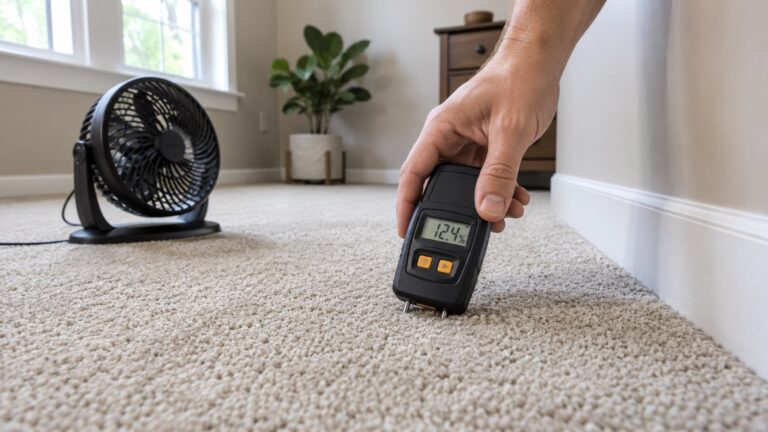
If humidity remains high or wood feels damp, a wood moisture meter can help confirm whether joists, beams, or subfloor materials are absorbing moisture rather than only sitting in humid air.
A single high humidity reading after a storm is less concerning than repeated high readings, musty odor, damp insulation, or wood that stays elevated after conditions should have dried.
Use Dehumidifiers in High-Humidity Areas
In regions with consistently high humidity, mechanical dehumidifiers help remove excess moisture from crawl space air.
Dehumidifiers help:
- Reduce moisture buildup in wood framing
- Lower mold risk
- Improve crawl space air quality
- Maintain stable humidity levels
Mechanical moisture removal is especially useful in sealed or encapsulated crawl spaces where outside ventilation would bring in humid air.
Seal Air Leaks That Allow Moisture Entry
Air leaks can allow humid outdoor air to enter crawl spaces, especially around vents, doors, pipes, wiring, duct openings, and foundation gaps.
Common air leak locations include:
- Openings around pipes
- Foundation cracks
- Vent openings
- Gaps near crawl space doors
Sealing these openings reduces humidity infiltration and helps maintain consistent moisture control.
Use Airflow Carefully in Crawl Spaces
Airflow plays an important role in moisture management, but airflow alone does not always remove humidity effectively. In humid climates, outside air may introduce additional moisture instead of reducing it.
Understanding how airflow interacts with humidity helps prevent unintended moisture increases.
Keep Airflow Pathways Clear
Obstructions inside crawl spaces prevent proper air movement and create humidity pockets.
Airflow blockages often include:
- Stored materials or debris
- Collapsed insulation
- Structural obstructions
- Poor crawl space organization
Removing obstructions improves airflow distribution and reduces localized moisture buildup.
Understand When Ventilation Helps — and When It Doesn’t
Ventilation effectiveness depends heavily on local climate conditions.
In dry climates:
- Ventilation may help remove moisture
- Air exchange improves drying
In humid climates:
- Ventilation may introduce moisture
- Humidity may increase instead of decrease
Before opening vents or adding fans, compare outdoor humidity with crawl space humidity. Moving more air only helps when the incoming air is drier than the air already inside the crawl space.
Protect Structural Wood From Direct Moisture Exposure
Structural wood remains strongest when moisture exposure is minimized. Even small amounts of repeated moisture can weaken wood fibers over time. Protecting joists, beams, and subfloor materials from direct exposure helps extend the lifespan of structural components.
Wood protection strategies work best when combined with ground moisture control and drainage improvements.
Keep Insulation Dry and Properly Installed
Insulation plays an important role in regulating temperature, but wet insulation creates serious moisture risks. When insulation absorbs moisture, it holds water against wood surfaces and slows drying.
Warning signs of insulation problems include:
- Insulation hanging loose between joists
- Wet or compressed material
- Dark stains or discoloration
- Musty odors near insulation
Wet insulation should not be left pressed against joists or subflooring because it can hold moisture directly against structural wood and slow drying.
If insulation is wet, sagging, or holding moisture against wood, treat it as a warning sign instead of a cosmetic issue.
Seal Gaps Around Pipes, Wiring, and Ducts
Gaps around plumbing, wiring, ducts, and foundation penetrations can allow humid air, pests, and water vapor to move through the crawl space. Sealing these openings helps reduce moisture pathways around structural wood.
Common vulnerable areas include:
- Pipe penetrations through framing
- Gaps around wiring
- Openings near ductwork
- Gaps where framing meets foundation walls
Sealing these areas reduces airflow pathways that allow humidity to reach wood surfaces.
Remove Organic Debris From Crawl Spaces
Organic debris inside crawl spaces increases mold risk and supports moisture retention.
Common debris sources include:
- Wood scraps left from construction
- Cardboard storage materials
- Leaves or outdoor debris
- Dust buildup over time
Removing debris reduces mold food sources and improves airflow throughout the crawl space.
Maintain Crawl Spaces to Prevent Recurring Moisture Problems
Moisture prevention is not a one-time task. Crawl spaces require regular monitoring and maintenance to prevent conditions from gradually worsening.
Routine maintenance allows homeowners to identify problems before structural damage develops.
Inspect Crawl Spaces at Regular Intervals
Routine inspections help detect early moisture problems before they spread.
Recommended inspection timing includes:
- At least once per year
- After heavy rainfall events
- After plumbing repairs
- When new odors appear indoors
Regular inspections allow homeowners to identify small problems before they become major repairs.
Detailed inspection methods are explained in How to Inspect Crawl Space Joists for Moisture Damage, which outlines structural evaluation steps.
Repair Minor Moisture Problems Immediately
Small moisture problems often become major issues when ignored. Prompt repair prevents damage from spreading across structural components.
Examples of minor issues that should be addressed quickly include:
- Small vapor barrier tears
- Minor leaks near pipes
- Early signs of mold growth
- Localized humidity increases
Correcting these issues early helps prevent long-term structural damage.
Track Moisture Conditions Over Time
Monitoring moisture conditions allows homeowners to recognize patterns and seasonal changes.
Tracking conditions may include:
- Recording humidity levels
- Documenting moisture readings
- Noting seasonal changes
- Observing recurring problem areas
Tracking moisture patterns improves prevention planning and reduces the likelihood of recurring problems.
When Prevention Requires Professional Help
Some crawl space conditions require professional assistance to implement effective moisture prevention strategies.
Professional involvement is recommended when moisture problems extend beyond simple maintenance tasks.
Stop DIY prevention work and get professional help if joists feel soft, floors are sagging, beams are cracked, standing water is present, or moisture appears near electrical wiring, HVAC equipment, or plumbing leaks.
Persistent Moisture Despite Preventive Efforts
If moisture continues despite installing barriers and improving drainage, additional professional evaluation may be necessary.
Warning signs include:
- Recurring mold growth
- Persistent humidity problems
- Repeated water intrusion
- Unexplained moisture readings
Persistent moisture problems often indicate hidden water entry sources that require specialized solutions.
If structural wood is already wet, prevention should pause until the wood is dried correctly. See How to Dry Crawl Space Structural Wood before sealing, insulating, or covering damp framing.
Do not install new insulation, close off access, or cover damp wood just because the surface looks cleaner. Trapped moisture can continue affecting joists and subfloor materials after the crawl space appears improved.
Large-Scale Drainage or Structural Upgrades
Some preventive systems require professional installation to function correctly.
These projects may include:
- Installing perimeter drainage systems
- Implementing sump pump systems
- Correcting major grading problems
- Installing encapsulation systems
Professional installation ensures proper system performance and long-term reliability.
When moisture keeps returning after basic prevention steps, the issue may require a broader repair plan. See How to Fix Persistent Structural Crawl Space Moisture Problems for situations where prevention alone is no longer enough.
Frequently Asked Questions About Preventing Structural Moisture in Crawl Spaces
What Prevents Crawl Space Moisture Most Effectively?
The most effective crawl space moisture prevention plan controls moisture from below, outside, and within the crawl space. That usually means sealing the ground with a vapor barrier, moving roof and surface water away from the foundation, keeping humidity controlled, and checking conditions after storms or seasonal humidity changes.
One method by itself is rarely enough when structural wood is already close to soil, foundation walls, plumbing, and outdoor air.
How Do Vapor Barriers Prevent Structural Damage?
Vapor barriers block moisture vapor rising from soil. Without a barrier, moisture enters crawl space air and eventually reaches wood framing.
By reducing moisture movement, vapor barriers help:
-Lower humidity levels
-Reduce mold growth risk
-Protect structural wood from moisture absorption
-Improve long-term crawl space stability
Detailed installation steps are available in How to Install a Crawl Space Vapor Barrier, which explains proper barrier placement techniques.
Can Ventilation Alone Prevent Crawl Space Moisture?
Ventilation alone does not always prevent moisture problems. In humid climates, ventilation may increase moisture levels by allowing humid outdoor air to enter the crawl space.
Effective prevention usually requires combining ventilation with moisture control measures such as vapor barriers or humidity management.
How Often Should Crawl Spaces Be Checked for Moisture?
Routine inspections help prevent structural moisture problems before damage develops.
Recommended inspection intervals include:
-At least once per year
-After major storms
-After plumbing repairs
-When new moisture symptoms appear
Regular monitoring helps identify changes early and supports long-term prevention.
What Is the Best Long-Term Moisture Prevention Method?
The best long-term method is a layered system: sealed ground coverage, working gutters and downspouts, corrected grading, humidity monitoring, and prompt repair of vapor barrier tears or small leaks. Crawl spaces change with seasons, so long-term prevention also requires periodic inspection instead of a one-time repair.
Does Gravel Prevent Crawl Space Moisture?
Gravel alone does not prevent moisture from entering crawl spaces. While gravel improves drainage and reduces muddy conditions, moisture vapor still rises through gravel.
A vapor barrier is required to block vapor movement and protect structural wood effectively.
Conclusion: Preventing Moisture Protects Crawl Space Framing
The best way to prevent structural moisture in crawl spaces is to control the main moisture paths before wood damage begins: ground vapor, exterior drainage, humid air, wet insulation, and recurring leaks.
A sealed vapor barrier, dry drainage path, monitored humidity level, and regular crawl space inspections give joists, beams, and subfloor materials the best long-term protection.
If moisture conditions persist despite preventive efforts, broader structural warning signs should be evaluated. These conditions are explained in Signs of Structural Moisture Problems, which helps determine when additional corrective action is needed.