
Signs of Mold Growth in Basements (Early Warning Signs to Watch For)
Early signs of mold growth in basements often appear before large visible patches develop. A musty odor, small dark spots, fuzzy growth, peeling paint, damp stored items, or recurring discoloration can all point to basement mold, especially when the same area stays damp or smells worse after rain.
Basement mold is usually a symptom of moisture that is lingering too long. That moisture may come from high humidity, condensation, foundation seepage, plumbing leaks, poor airflow, or water intrusion after storms. If you need the broader cause-based explanation, see why mold forms in basement areas.
This guide focuses on the warning signs: what basement mold looks like, what it smells like, where it usually starts, how hidden mold may show up, and when the signs point to a larger moisture problem. If mold is confirmed and you need cleanup guidance, start with how to remove mold permanently.
Why Mold Signs Often Show Up First in Basements
Basements are more vulnerable to mold than many other parts of the home because they sit in contact with the ground. Soil around the foundation can hold moisture for long periods, especially after rain, snowmelt, poor drainage, or seasonal humidity changes. Even when water is not visibly leaking inside, moisture can still affect basement air, walls, floors, and stored belongings.
Mold does not need standing water to grow. It only needs enough moisture, a suitable surface, limited drying, and time. That is why mold often develops in basements that seem only mildly damp rather than obviously flooded.
Limited Airflow and Slow Drying
Many basements have fewer windows, less natural ventilation, and more enclosed areas than upper floors. This limited airflow slows drying and allows moisture to remain trapped behind stored items, inside corners, behind finished walls, and near floor edges.
That is why early mold signs often show up behind boxes, shelving, furniture, finished wall sections, and other areas where air cannot move freely.
Cool Basement Surfaces
Basements usually stay cooler than the rest of the house, so warm humid air can condense on foundation walls, metal pipes, concrete floors, and basement windows. If the same surface repeatedly feels damp or shows water beads, treat it as an early mold-risk warning even before visible growth appears.
Moisture Movement Through Foundation Materials
Concrete and masonry are porous materials. Moisture from surrounding soil can move through foundation walls or floors, especially when exterior drainage is poor or hydrostatic pressure builds around the foundation. This does not always appear as an obvious leak. Sometimes it shows up as damp walls, white residue, peeling coatings, or humidity that never seems to fully clear.
When moisture appears after rain, worsens near foundation walls, or collects along the wall-to-floor joint, the mold risk is usually connected to water intrusion. That type of problem is discussed further in why basement walls leak during rain.
What Basement Mold Usually Looks Like
Mold does not always appear as large black patches. Early mold growth often begins as small specks, faint discoloration, fuzzy spots, or powdery patches that are easy to overlook. In basements, mold usually follows moisture patterns, which means it often appears near damp corners, lower wall sections, stored belongings, wood framing, drains, or surfaces with poor airflow.
The most important clue is change over time. Dirt, dust, and old stains usually remain stable. Mold tends to spread, darken, return after cleaning, or appear with odor and dampness.
Common Colors of Basement Mold
Basement mold can appear in several colors depending on the surface, moisture level, and stage of growth. Common colors include:
- Black or dark green: Often seen on damp drywall, painted surfaces, wood framing, or stored materials
- Gray: Common on concrete walls, unfinished wood, or dusty basement surfaces
- White: Sometimes appears powdery or fuzzy, especially on organic materials or damp masonry
- Green: Frequently develops on cardboard, fabrics, furniture, or other stored items that absorb moisture
Color alone does not determine how serious mold is. A small black spot is not automatically the most dangerous condition, and white growth should not be ignored just because it looks less dramatic. The location, spread pattern, odor, material affected, and moisture source provide more useful clues than color alone.
Texture and Growth Patterns to Watch For
Texture is often a stronger clue than color. Basement mold may appear as:
- Fuzzy patches on wood, drywall, cardboard, or fabric
- Powdery growth on damp surfaces
- Speckled clusters that slowly expand
- Irregular patches with uneven edges
- Thin films on surfaces that stay damp
- Dark spotting that returns after cleaning
Mold often spreads outward from damp areas. For example, it may begin near the base of a wall, along a corner seam, behind a stored box, or around a drain before expanding across nearby surfaces. If a spot grows larger, returns repeatedly, or appears with musty odor, it should be treated as a likely mold warning sign.
How Mold Differs from Efflorescence, Dirt, and Old Stains
Not every mark on a basement wall is mold. Basements often develop mineral deposits, dust patterns, old water stains, and surface discoloration that can look similar at first glance. One of the most common sources of confusion is efflorescence, a white mineral residue that forms when water moves through concrete or masonry and leaves salts behind.
Use these differences as a starting point:
- Mold: Often fuzzy, powdery, speckled, musty-smelling, or spreading over time
- Efflorescence: Usually white, chalky, crystalline, odorless, and caused by moisture moving through masonry
- Dirt or dust: Usually more uniform, does not grow, and often wipes away without returning quickly
- Old stains: Usually flat discoloration with no fuzzy texture, no spread, and no active odor
Efflorescence itself is not mold, but it still matters because it shows that moisture is moving through the wall. That moisture condition can support mold on nearby wood, drywall, insulation, stored items, or dust-covered surfaces.
Do not scrub or sample suspected mold aggressively just to identify it. If the material is fuzzy, spreading, musty-smelling, or returning after cleaning, treat it as a mold warning sign and focus on the moisture source.
Early Warning Signs of Mold Growth in Basements
Mold usually begins with subtle warning signs before it becomes obvious. These early symptoms may appear as odor changes, small spots, damp surfaces, stains, or materials that no longer feel dry. Catching these signs early helps prevent mold from spreading into finished walls, flooring, wood framing, and stored belongings.
Persistent Musty Odors
A musty odor is one of the earliest and most reliable signs of mold growth in a basement. Mold can produce odor before visible growth is easy to see, especially when it develops behind stored items, inside wall cavities, under flooring, or in areas with poor airflow.
Basement mold odors are often described as:
- Earthy or damp-smelling
- Similar to wet cardboard
- Stale, heavy, or enclosed
- Stronger after rainfall or humid weather
- Most noticeable after the basement has been closed for several hours
Odors may be strongest near foundation walls, corners, sump pits, floor drains, stored boxes, or finished wall sections. If the smell returns after cleaning or airing out the basement, hidden moisture may still be present. Inspection methods such as those outlined in how to inspect basements for moisture damage can help identify concealed problem areas.
Small Dark Spots or Speckled Patches
Early mold often appears as small, scattered spots rather than large patches. These spots may look harmless at first, especially on concrete, drywall, wood, cardboard, or painted surfaces. However, spots that expand, darken, spread in clusters, or return after cleaning should be taken seriously.
Early mold spots may appear as:
- Small black or dark green specks
- Gray or green spotting patterns
- Faint fuzzy patches on wood or cardboard
- Dust-like growth that returns after wiping
- Clusters forming along wall bases, corners, or damp surfaces
These spots often appear where airflow is limited or moisture collects. Behind stored items, near floor edges, around drains, and along exterior foundation walls are especially common starting points.
Persistent Dampness on Walls or Floors
Basement surfaces that stay damp for long periods create ideal conditions for mold growth. Dampness may be obvious after rain, but it can also be subtle. A wall may feel cool and slightly wet, a floor may remain darkened in one area, or stored items may feel soft even when there is no visible puddle.
Warning signs of persistent dampness include:
- Walls that feel cool, damp, or clammy to the touch
- Concrete floors that remain dark in certain areas
- Dampness that appears after rainfall
- Surfaces that dry slowly after cleaning or water exposure
- Moisture that returns in the same location repeatedly
Persistent dampness usually means moisture is entering, condensing, or remaining trapped in the basement environment. If the same surfaces stay damp again and again, mold may develop even if no active leak is visible.
Water Stains and Discoloration
Staining is often one of the earliest visible signs of moisture exposure. A stain does not always mean mold is already growing, but it does show where moisture has been present. If staining appears with musty odor, dampness, peeling paint, or spreading discoloration, mold risk increases.
Common stain patterns include:
- Yellow or brown stains on drywall or ceiling materials
- Darkened concrete near wall bases or corners
- Discoloration along floor edges
- Stains that become darker after rain
- Marks that spread around pipes, drains, windows, or utility areas
A stain that remains dry and unchanged may be old water damage. A stain that grows, returns, smells musty, or stays damp deserves closer inspection.
Peeling Paint, Bubbling Finishes, and Surface Damage
Paint and coatings often react before mold becomes obvious. When moisture gets behind paint, primer, paneling, or wall finishes, the surface may bubble, peel, soften, or separate. Mold may then develop on the backside of the finish or on the material underneath.
Watch for:
- Peeling paint near the floor or lower wall
- Bubbling coatings on concrete or masonry
- Soft or swollen drywall
- Loose baseboards or trim
- Paint that fails repeatedly in the same area
Repeated paint failure should not be treated only as a cosmetic issue. If the area keeps bubbling or peeling, moisture is likely still present behind or beneath the finish.
Common Places Basement Mold Appears First
Basement mold usually starts in places where moisture lingers and airflow is limited. Checking these locations first can help you find mold before it spreads into finished surfaces or stored belongings.
Mold on Basement Walls
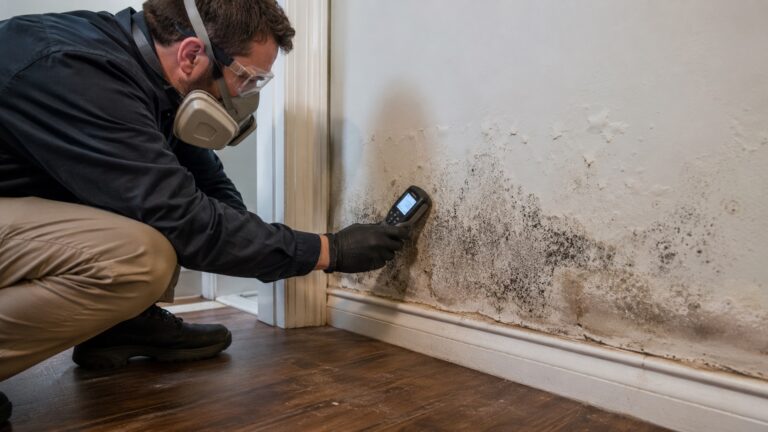
Basement walls are one of the most common places mold signs appear. On unfinished concrete or masonry, mold may show up as gray, green, black, or fuzzy growth on dusty or organic residue. On finished drywall, it may appear as dark spotting, staining, soft areas, or discoloration near the base of the wall.
Wall mold is especially suspicious when it appears near exterior foundation walls, cracks, window wells, pipe penetrations, or areas that darken after rainfall.
Mold Along the Floor and Wall Junction
The joint where the wall meets the floor is a common moisture collection point. Water can seep, wick, condense, or collect along this edge, especially during wet weather or when the basement floor dries slowly.
Look for dark lines, musty odor, peeling coatings, staining, damp baseboards, swollen trim, or small mold spots along the floor edge. If the warning signs worsen after rain, the basement may need a closer water-entry inspection.
Mold in Basement Corners
Corners often have poor airflow, cooler surfaces, and more trapped moisture than open wall areas. Mold may begin as faint speckling, dark patches, musty odor, or damp dust buildup in corners behind shelving, furniture, storage bins, or appliances.
If one corner repeatedly feels damp or smells musty, move stored items away and check the wall, floor, trim, and nearby materials for hidden growth.
Mold on Wood Framing and Ceiling Joists
In unfinished basements, mold may appear on joists, beams, subflooring, sill plates, stair framing, and other exposed wood. It may look like dark staining, greenish patches, gray film, fuzzy growth, or speckled discoloration along the grain of the wood.
Wood framing should be inspected more carefully when mold appears with softness, crumbling, cracking, rot, insect damage, or structural movement. Staining alone does not always mean structural damage, but mold on structural wood should not be ignored.
Mold on Stored Items, Boxes, and Furniture
Stored items often show basement mold early because cardboard, fabric, paper, wood, and upholstery absorb moisture easily. Boxes placed against foundation walls or directly on concrete floors are especially vulnerable.
Warning signs include musty-smelling boxes, warped cardboard, fuzzy growth on furniture, spots on fabric, stained books or papers, and items that feel damp even when the floor looks dry. If several stored items are affected, the larger basement humidity level should be checked.
Mold Around Sump Pits, Drains, and Damp Utility Areas
Sump pits, floor drains, laundry areas, water heaters, utility sinks, and plumbing lines can create localized mold risk. These areas may have condensation, splash moisture, minor leaks, standing water, or organic dust that supports growth.
Look for musty odor near the utility area, damp flooring, staining around pipes, mold on nearby drywall or wood, and items stored too close to moisture-prone equipment.
Hidden Signs of Basement Mold
Basement mold is not always visible on the exposed surface. In finished basements, growth may develop behind drywall, under flooring, inside insulation, behind trim, or behind stored items. Hidden mold usually announces itself through odor, material changes, recurring dampness, or stains that keep returning.
Mold Behind Finished Walls
Finished basement walls can hide moisture inside cavities. Mold behind drywall may not be visible at first, but it can cause musty odor, soft drywall, bubbling paint, darkened baseboards, staining near the floor, or growth that appears along seams and trim.
Be especially cautious if one section of finished wall smells musty, feels damp, or shows new staining after rain. That pattern may indicate hidden moisture behind the surface.
Mold Under Basement Flooring
Basement flooring can trap moisture between the floor covering and the concrete slab. Carpet, padding, laminate, vinyl plank, and floating floors may hide dampness even when the top surface looks normal.
Possible warning signs include musty odor near the floor, lifting edges, soft spots, staining near walls, damp carpet padding, or moldy smell that becomes stronger when furniture or rugs are moved. If flooring was wet after a leak or flood, hidden moisture may remain below the visible surface.
Mold in Insulation and Ceiling Areas
Basement ceiling areas and insulation can hide mold when plumbing leaks, condensation, or moisture from above affects the material. Mold may appear as staining on joists, dark spots near pipes, musty odor above a ceiling tile, or discolored insulation.
Insulation that is stained, sagging, musty, or damp should be treated carefully. Wet insulation can hold moisture against wood and drywall long after the original leak is no longer visible.
Moisture Clues That Often Appear Before Basement Mold
Basement mold usually follows a moisture pattern. Before visible growth appears, homeowners may notice condensation, recurring damp spots, high humidity readings, or stains that darken after rain.
- Condensation on pipes, windows, concrete walls, or cool floor areas
- Humidity readings that stay above 50%
- Dampness that returns in the same wall, corner, or floor area
- Musty odors that become stronger after rain or humid weather
- Stored items that feel soft, damp, warped, or musty
These clues do not always prove mold is present, but they show that conditions may support growth if the basement is not dried, dehumidified, or inspected for water entry.
When Basement Mold Points to a Larger Moisture Problem
Basement mold should be taken more seriously when it follows a pattern instead of appearing as one small isolated spot. Recurring mold usually means moisture is still entering, condensing, or staying trapped somewhere in the basement.
- Mold returns in the same area after cleaning
- Odor, staining, or dampness becomes worse after rain
- Growth appears on several surfaces at once
- Humidity remains high across the basement
- Water collects near walls, drains, sump pits, or floor edges
- Drywall, flooring, insulation, or wood begins to soften, swell, stain, or deteriorate
If mold signs repeatedly follow rainfall, the basement may need drainage, seepage, or waterproofing evaluation. Problems like this are covered more fully in how to waterproof basements and control water intrusion.
When Basement Mold Signs Require Immediate Attention
Some basement mold signs require faster response than others. A faint odor or small isolated spot may indicate an early-stage problem, but rapid spread, strong odor, water damage, or material deterioration can point to a more serious moisture issue.
Basement mold signs require prompt attention when:
- Mold spots are expanding quickly
- New growth appears in several areas at once
- Musty odors spread beyond the basement
- Drywall, wood, flooring, or insulation feels soft or damaged
- Mold returns shortly after cleaning
- Water intrusion continues after rain
- Stored items are repeatedly becoming damp or moldy
These signs suggest that moisture exposure has progressed beyond a minor surface issue. If mold covers a large area, affects porous materials, appears after flooding, involves contaminated water, or appears on structural wood, professional evaluation may be needed.
What to Do After You Notice Signs of Mold in Your Basement
Finding signs of mold in your basement does not always mean the situation is severe, but it does mean moisture is present. Before wiping or painting over the area, identify why the mold appeared and whether the affected material is still damp.
Start by Identifying the Moisture Source
Before cleaning, look for the condition that allowed mold to grow. The source may be obvious, such as a leak or puddle, or subtle, such as high humidity or condensation on cool surfaces.
Common moisture sources include foundation seepage, condensation, high humidity, poor airflow, plumbing leaks, sump pit moisture, utility-area dampness, or stored items blocking airflow against walls. If the mold is concentrated near walls, floor edges, or corners, inspect those areas after rainfall. If it appears on stored items throughout the basement, check humidity levels and airflow.
Evaluate the Extent of Mold Growth
Small isolated spots are different from widespread growth across multiple surfaces. Before deciding how to respond, note where the mold appears, how large the affected area is, what materials are involved, and whether the mold keeps returning.
Pay special attention to porous materials such as drywall, carpet, cardboard, and insulation. Also check whether wood framing shows staining or deterioration, whether odor remains after visible mold is cleaned, and whether dampness is still present.
If mold appears widespread, hidden, or connected to damaged materials, avoid treating it as a simple surface-cleaning task.
Dry the Basement and Control Humidity
Drying is essential because mold will not stay controlled if moisture remains. Remove standing water, increase airflow where appropriate, discard damp cardboard or fabrics that cannot be saved, and use a dehumidifier if basement humidity is elevated.
Do not rely on visible dryness alone. Moisture can remain inside flooring, wall materials, boxes, and insulation after the exposed surface looks dry.
Clean Small Areas Carefully
Small areas of surface mold on nonporous or semi-porous materials may be manageable if the moisture source is corrected and the affected area is limited. However, cleaning should be done carefully to avoid spreading spores or leaving damp materials behind.
Wear appropriate protection such as gloves, eye protection, and a suitable mask. Avoid dry brushing moldy surfaces, remove moldy disposable items such as damaged cardboard, dry the cleaned area completely, and monitor the area to see whether mold returns.
If mold affects porous materials, keeps returning, covers a large area, or appears after flooding, professional remediation may be the safer option. Cleanup guidance should always be paired with moisture correction so the problem does not continue.
Prevent Mold from Returning
Prevention depends on keeping basement moisture under control after the visible signs are addressed. Monitor for recurring odor, damp spots, condensation, high humidity, and mold returning in the same locations.
Basement mold prevention is mostly moisture prevention. For a fuller prevention plan, see how to prevent mold in basements.
Frequently Asked Questions About Signs of Mold Growth in Basements
What is the first sign of mold in a basement?
The first sign of basement mold is often a musty odor. Visible mold may not appear right away because growth can begin behind stored items, inside wall cavities, under flooring, or in damp corners. Small dark spots, persistent dampness, peeling paint, and recurring stains are also common early warning signs.
Can a basement smell musty without visible mold?
Yes. A basement can smell musty before mold is visible. Mold may be hidden behind walls, under flooring, inside insulation, behind stored items, or near drains and utility areas. A musty smell can also come from damp materials, high humidity, or standing water, so the basement should be inspected for moisture even if no mold is visible.
How can you tell the difference between mold and efflorescence?
Mold often appears fuzzy, powdery, speckled, irregular, musty-smelling, or spreading over time. Efflorescence is usually white, chalky, crystalline, and odorless. Efflorescence itself is not mold, but it does show that moisture is moving through masonry, which can create mold risk nearby.
Where does mold usually start in a basement?
Basement mold often starts near lower wall sections, floor-to-wall joints, corners, stored items, sump pits, drains, wood framing, utility areas, and places with limited airflow. In finished basements, mold may also begin behind drywall, under carpet, or beneath flooring materials.
Does mold in a basement always mean there is a leak?
No. Basement mold can develop from high humidity, condensation, poor airflow, damp stored items, or moisture migration through foundation materials. A leak is one possible cause, but mold can also grow in basements that are consistently humid or slow to dry.
When should basement mold be taken seriously?
Basement mold should be taken seriously when it spreads quickly, returns after cleaning, appears on multiple surfaces, causes strong odors, affects drywall or wood, follows rainfall, or appears with standing water. These signs usually indicate an unresolved moisture source that needs correction.
Can high humidity alone cause basement mold?
Yes. High humidity can support mold growth even without visible water leaks. Mold can grow on dust, cardboard, wood, fabric, drywall, and stored belongings when moisture remains in the air long enough. Monitoring basement humidity and using a dehumidifier when needed can help reduce risk.
Key Takeaways
- Early basement mold signs include musty odors, small dark spots, fuzzy patches, damp surfaces, stains, peeling finishes, and moldy stored items.
- Mold often starts near wall bases, corners, floor edges, sump pits, drains, wood framing, stored boxes, and areas with limited airflow.
- Efflorescence is not mold, but it shows that moisture is moving through masonry and may support mold nearby.
- Hidden basement mold may show up as recurring odor, soft drywall, lifting flooring, damp trim, stained insulation, or moldy items against exterior walls.
- Mold that returns after cleaning, appears after rain, spreads across multiple surfaces, or affects porous materials usually points to an unresolved moisture source.
- Cleaning visible mold is only a short-term step if the basement still has recurring dampness, high humidity, seepage, or hidden moisture.

One Comment
Comments are closed.