
Why Basement Walls Leak During Rain
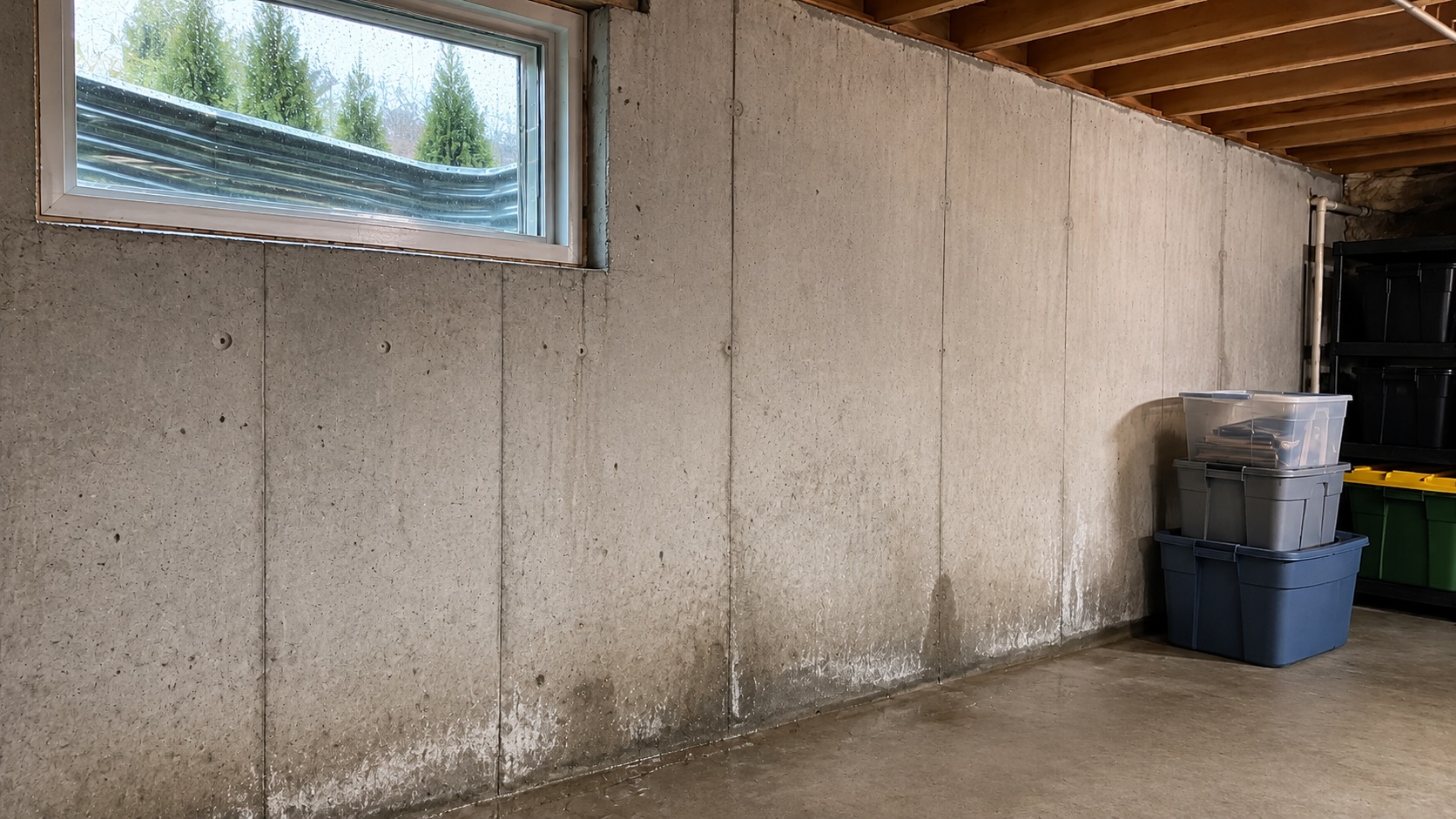
Basement walls usually leak during rain because exterior water collects against the foundation faster than the soil, drainage system, or waterproofing layers can move it away. Once water builds up outside the wall, it follows weak points such as cracks, mortar joints, porous block, pipe penetrations, failed waterproofing, or the joint where the wall meets the basement floor.
This is why a basement wall can stay dry for weeks, then leak during a long storm. Rain changes the whole basement moisture system around the house. Roof runoff, short downspouts, poor grading, compacted soil, clogged drains, and saturated ground can all push water toward the foundation. The basement wall is often where that outside water problem finally becomes visible indoors.
This guide explains why basement walls leak when it rains, how water reaches the foundation, how it gets through the wall, and what different leak patterns can tell you about the likely cause. If you are still trying to understand the broader moisture system in your home, start with the main guide on how to find, fix, and prevent moisture problems in your home.
Why Basement Walls Leak When It Rains
A basement wall leak during rain is usually the result of three things happening at the same time: water collects outside the foundation, pressure or contact increases against the wall, and the water finds an entry path. The entry path may be obvious, such as a visible crack, or subtle, such as a damp block wall, a mortar joint, or a wall-floor seam.
A basement wall does not need a large opening to leak. During dry weather, a small crack, mortar gap, or wall-floor seam may stay inactive. During rain, wetter soil and water near the footing can turn that same weak point into a leak path.
Rain Adds Water Load Around the Foundation
Every rainstorm sends water onto the roof, across the yard, into the soil, and toward low areas around the house. If that water is carried away properly, the foundation may stay relatively dry. If the water is discharged too close to the home or the soil slopes toward the foundation, the basement wall may be exposed to repeated wetting every time it rains.
This matters because basement walls are below grade and stay in contact with wet soil after the storm ends. A wall may not be reacting only to rain falling at that moment; it may be reacting to water still being held against the foundation.
Water Follows the Easiest Path Into the Basement
Water does not need a perfect opening to enter a basement. It follows the easiest available path. In a basement wall, those paths may include:
- vertical or horizontal foundation cracks
- mortar joints in block walls
- porous concrete or masonry surfaces
- pipe penetrations through the wall
- gaps around utility lines
- the wall-floor joint at the base of the wall
- weak points in old or damaged waterproofing
- areas where exterior drainage keeps the soil wet
Some of these pathways create visible dripping or running water. Others create damp patches, mineral staining, peeling coatings, or repeated moisture on the same part of the wall. If you are trying to identify visible warning signs rather than understand the full cause system, see the guide to signs of water seepage through basement walls.
Why Some Leaks Only Appear During Heavy Rain
A basement wall that leaks only during heavy rain is often being exposed to more water than the surrounding drainage conditions can handle. Light rain may soak into the soil without creating enough pressure or pooling to force water through the wall. Heavy rain can overwhelm that balance.
Several things can make a leak appear only during stronger storms:
- gutters overflow and dump water near the foundation
- downspouts discharge too close to the basement wall
- soil becomes saturated after several hours of rain
- surface water pools beside the house
- old exterior drains cannot move water away fast enough
- foundation cracks only leak when enough water builds up outside
- the wall-floor joint leaks after water reaches footing level
Many rain-related basement leaks follow a threshold pattern. The wall may stay dry during light rain, then leak once the soil becomes saturated enough to activate cracks, joints, porous wall areas, or the wall-floor seam. If the problem appears only during stronger storms, the article on how heavy rain changes water flow around homes explains that exterior water behavior in more detail.
The Main Ways Rainwater Reaches Basement Walls
Before blaming the basement wall itself, it helps to understand how rainwater reaches it. In many homes, the wall is only the final place where the problem shows up. The actual cause may begin at the roofline, downspout, yard slope, foundation edge, or exterior drainage system.
Roof Runoff and Short Downspouts
One of the most common reasons basement walls leak during rain is roof water being discharged too close to the foundation. A roof collects a large amount of water during a storm. If gutters are clogged, undersized, damaged, or overflowing, water can spill directly beside the foundation wall. If downspouts are too short, they may concentrate roof runoff in the exact area where the basement wall needs to stay dry.
This does not always create an immediate stream of water through the wall. More often, it keeps the soil near the foundation wetter than it should be. Over time, the same section of wall may develop dampness, seepage, staining, or repeated leaks after storms.
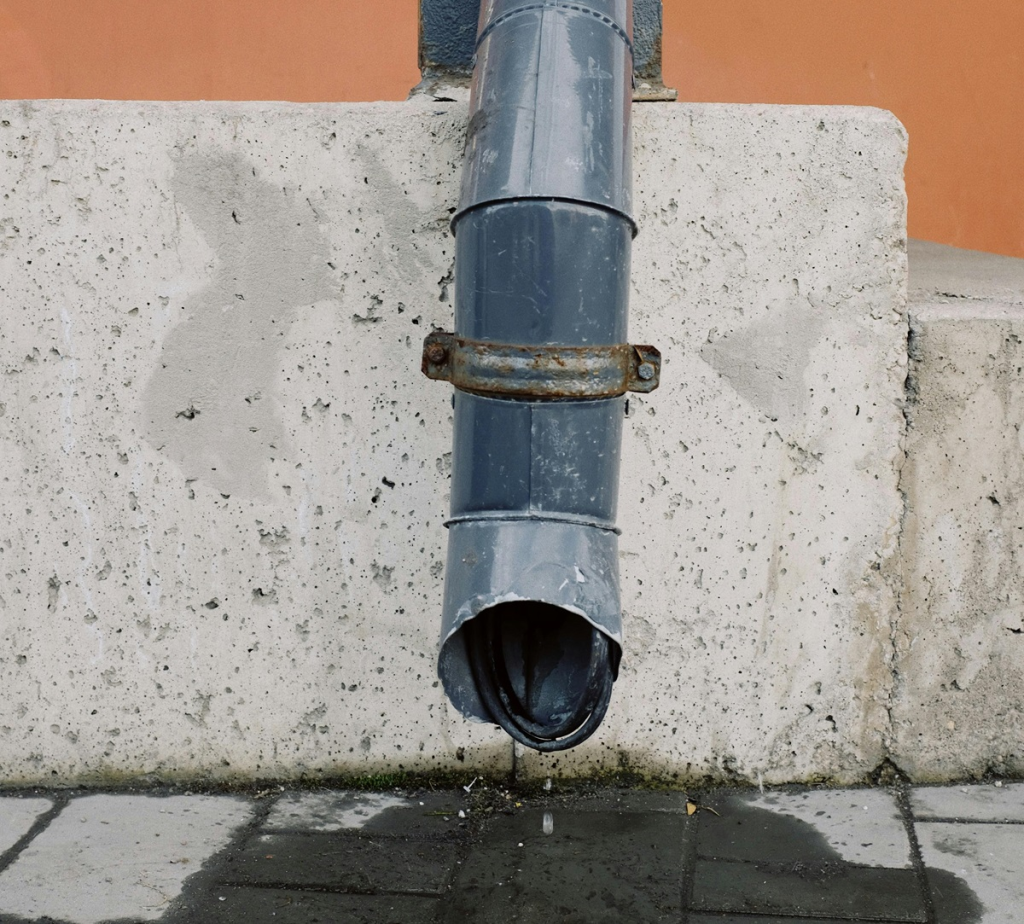
If the leak is worse near a corner, under a gutter run, or close to a downspout outlet, the downspout system should be considered part of the cause. For a narrower explanation, see how downspouts affect foundation moisture.
Poor Grading Around the Foundation
The soil around a home should help move water away from the foundation. When the yard slopes toward the house, rainwater naturally flows back toward the basement walls. This can happen because of original grading problems, soil settlement, landscaping changes, mulch buildup, patios, walkways, or areas where soil has sunk along the foundation.
Poor grading is especially important because it does not require a plumbing leak or a visible wall defect to create moisture. The exterior ground shape keeps sending water toward the foundation every time it rains. If the wall already has cracks, porous masonry, or weak waterproofing, that repeated water contact can eventually show up as basement wall seepage.
When the yard slope appears to be part of the problem, the guide on how improper yard grading causes moisture is the better place for the detailed grading discussion.
Surface Water Pooling Near the House
Standing water near the foundation after rain is a strong clue that water is not moving away from the house properly. Pooling water may appear in low spots, along foundation edges, near basement windows, beside patios, or around areas where soil has settled.
Surface pooling matters because it gives water more time to soak downward along the foundation wall. Instead of quickly draining away, the water remains in contact with the soil beside the basement. That increases the chance of damp walls, seepage through masonry, or leaks through existing cracks.
Pooling water does not always mean the basement wall will leak immediately. But if the same side of the house holds water after storms and the matching interior wall shows dampness, the exterior pooling is likely part of the cause. For a more focused explanation, see why water pools around houses after rain.
Saturated Soil Beside the Basement Wall
Even when there is no visible puddle outside, the soil beside the foundation can become saturated. Saturated soil holds water against the basement wall and slows drying. This is especially common after long rain events, repeated storms, compacted soil, clay-heavy soil, poor drainage, or shaded areas that dry slowly.
When soil stays wet, the basement wall remains exposed to moisture. Concrete and masonry can contain pores, joints, seams, cracks, and penetrations that stay inactive in dry conditions but become visible leak paths when water remains against the exterior side of the wall.
During rain, that extra water load can show up indoors as damp patches, seepage lines, or water at the wall-floor joint. This is one reason basement wall leaks may seem delayed. The rain may have stopped, but the wet soil is still pressing moisture against the wall.
Exterior Drainage That Cannot Keep Up
Exterior drainage features such as footing drains, French drains, surface drains, swales, and sump discharge lines are meant to move water away from the foundation. When they clog, collapse, settle, discharge poorly, or become overwhelmed, the basement wall can receive more water than it was designed to handle.
Drainage failure can be difficult for homeowners to recognize because the problem is often outside, underground, or hidden by landscaping. Indoors, the visible symptom may simply be a wet basement wall, especially when there are signs water is entering from outside drainage. Outside, the clues may include soggy soil, standing water, wet foundation edges, erosion, overflowing drains, or water moving toward the house instead of away from it.
If exterior drainage may be involved, the articles on signs of poor drainage near foundations and signs exterior drainage is failing can help narrow the problem without turning this hub into a full drainage diagnosis guide.
How Water Gets Through Basement Walls
Once rainwater reaches the foundation, it still needs a path into the basement. In some homes, the path is obvious. Water may drip through a crack or run from a pipe penetration. In other homes, the path is more subtle. The wall may darken, mortar joints may stay damp, or water may appear at the base of the wall without an obvious opening.
The type of entry path matters because it helps separate a surface drainage problem from a crack problem, a porous wall problem, or a pressure problem. The same rainstorm can create different leak patterns depending on how the basement wall was built, how old it is, how much exterior water is present, and where the weakest path exists.
Foundation Cracks
Foundation cracks are one of the clearest pathways for rain-related basement wall leaks. A crack gives exterior water a direct weakness to follow. When the soil outside is dry, the crack may not leak at all. When rain saturates the soil, water can collect against the crack and move through it into the basement.
Not every crack behaves the same way. A narrow crack may only create a damp line or occasional staining. A wider crack may allow active seepage during storms. A crack that leaks repeatedly during rain may indicate that exterior water is collecting in that area, even if the crack itself is the visible entry point.
The location of the crack also matters. Cracks near corners, window wells, pipe penetrations, or downspout discharge areas may point to exterior water concentration. Cracks low on the wall may be more connected to saturated soil and pressure near the footing. Cracks that change, widen, or appear with wall movement should be taken more seriously than minor stable hairline cracks.
Porous Concrete or Block Walls
Basement walls do not always leak through one obvious crack. Concrete, block, mortar, and older masonry can absorb and transmit moisture when exposed to repeated wet conditions. This is especially common when the exterior side of the wall stays wet after rain or when drainage near the foundation is poor.
Porous wall seepage may show up as broad damp patches rather than a single drip point. A block wall may darken across several blocks. Mortar joints may look damp before the face of the block does. Paint or coatings may bubble, peel, or flake because moisture is moving from behind the coating toward the interior surface.
This kind of seepage can be confusing because there may be no single “hole” to fix. The wall is responding to moisture exposure outside. If the exterior soil keeps the wall wet, the interior surface may continue showing dampness even after the obvious rain has ended.
Mortar Joints and Block Wall Seepage
Concrete block walls often leak at mortar joints because joints can become weaker moisture paths than the blocks themselves. During rain, water can collect outside the wall and move through small cracks, gaps, or porous sections in the mortar. The result may be damp horizontal or vertical lines that follow the block pattern.
Mortar joint seepage is often seen after repeated wetting rather than one isolated storm. If the outside of the wall is frequently exposed to water from poor drainage, pooling, or downspout discharge, the same joints may keep showing moisture after every rain event.
White mineral deposits, also called efflorescence, are another clue that moisture has been moving through masonry. The deposits do not prove the current source by themselves, but they do show that water has carried minerals through the wall surface at some point.
Pipe Penetrations and Wall Openings
Any opening through a basement wall can become a water-entry point if the seal around it fails or if exterior water collects nearby. Common examples include utility penetrations, water lines, sewer lines, electrical conduits, old pipe openings, and gaps around sleeves through the foundation wall.
Leaks around penetrations may appear as water trails, staining, damp rings, or dripping during storms. These leaks are easy to mistake for plumbing problems if the pipe or utility line is nearby. The timing matters. If the moisture appears during rain and is dry during normal plumbing use, exterior water entry is more likely than a supply or drain leak.
Wall openings should be evaluated carefully because simply sealing the interior surface may not address the water load outside. If water continues collecting around the penetration, it may find another weak spot or push through the same area again.
The Wall-Floor Joint
Water at the base of a basement wall often comes from the wall-floor joint, sometimes called the cove joint. This is the seam where the foundation wall meets the basement slab. During heavy rain, water can collect near the footing and appear along this joint, especially when exterior water pressure rises or drainage is overwhelmed.
Homeowners often think the floor is leaking when water appears at the base of the wall. Sometimes floor moisture is involved, but in many cases, the water is entering at the wall-floor seam after traveling down the outside of the foundation or collecting near the footing.
This leak pattern often points to a larger water management issue. If water repeatedly appears along the wall-floor joint during rain, the problem may involve exterior drainage, footing drainage, soil saturation, or hydrostatic pressure rather than a simple surface crack.
Failed or Missing Exterior Waterproofing
Many basement walls rely on exterior waterproofing or damp-proofing layers to reduce water contact with the foundation. Over time, these layers can age, crack, separate, get damaged during backfilling, or fail to handle the amount of water collecting outside the wall.
If exterior waterproofing is missing, damaged, or overwhelmed, rainwater has a much easier path toward the wall. The result may be seepage through masonry, damp lower walls, recurring leaks at cracks, or water entering at the wall-floor joint.
This is where cause diagnosis needs to stay separate from solution planning. This article explains why water gets in. Full waterproofing strategy, drainage systems, sump pumps, membranes, and long-term water-control planning belong in the guide on how to waterproof basements and control water intrusion.
How Soil Pressure Causes Basement Wall Leaks
Soil pressure is one of the most important reasons basement walls leak during rain, but it is also one of the easiest causes to misunderstand. The issue is not simply that the ground is wet. The issue is that wet soil can hold water against the basement wall and increase the pressure pushing moisture toward weak points.
What Happens When Soil Becomes Saturated
Soil contains air spaces between particles. During dry conditions, those spaces may hold air. During rain, water fills more of those spaces. When the soil becomes saturated, it cannot absorb water as easily, so water begins collecting, moving sideways, or pressing against buried surfaces such as basement walls.
The type of soil affects how this behaves. Some soils drain relatively quickly. Others hold moisture longer. Clay-heavy or compacted soils can keep water near the foundation after a storm, especially if the yard slope, drainage, or downspout layout directs water toward the house.
This is why the same basement may leak after a long soaking rain but not after a short shower. Clay-heavy soil, compacted soil, rising seasonal groundwater, and back-to-back storms can all keep water against the lower wall longer.
Why Water Pressure Builds Against Basement Walls
When water collects in soil beside a basement wall, it can create pressure against the wall. That pressure pushes water toward cracks, joints, porous materials, and seams. If the wall has a weak point, the water may enter there. If the footing area becomes saturated, water may also appear at the wall-floor joint.
This pressure-driven behavior is one reason interior symptoms can seem disconnected from the rain outside. The leak may not appear the moment the storm starts. It may appear later, after the soil has absorbed enough water and pressure has built against the wall.
Pressure also explains why a small defect can leak repeatedly. A tiny crack or joint may not matter under dry conditions. Once wet soil is pressing water against the exterior side of the wall, that same small weakness can become an active leak path.
When Hydrostatic Pressure Becomes the Bigger Issue
Hydrostatic pressure becomes a bigger concern when water consistently builds up around the foundation and pushes against basement walls or the slab. This can happen when exterior drainage is poor, footing drains fail, soil stays saturated, or the water table rises during wet periods.
In practical terms, hydrostatic pressure may be involved when leaks appear low on the wall, at the wall-floor joint, through floor cracks, or repeatedly after heavy rain. It may also be part of the problem when simple surface fixes do not stop the leak because the outside water load is still present.
Hydrostatic pressure is only one part of the larger rain-leak picture. For a more focused breakdown, see the guide to why hydrostatic pressure causes basement leaks.
What Leak Patterns Can Tell You About the Cause
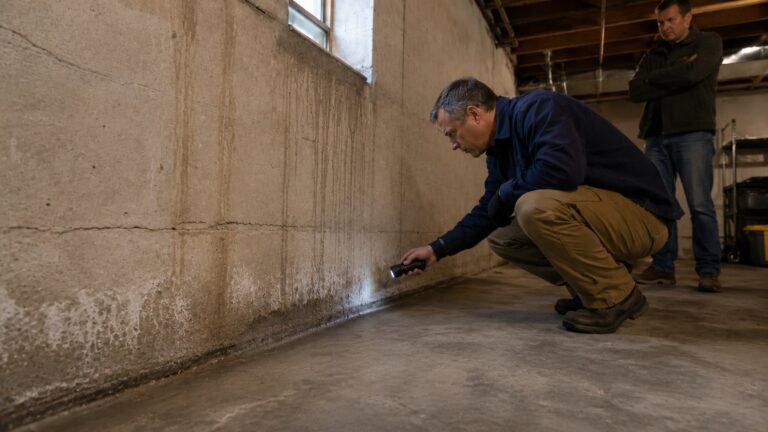
The exact leak pattern does not prove the cause by itself, but it can point you in the right direction. Basement wall leaks should be evaluated by timing, location, height on the wall, exterior conditions, and whether the same pattern repeats after each storm.
Water Appears Low on the Wall
Water low on the wall often suggests that moisture is building up near the lower foundation area or footing. This may happen when soil stays saturated, exterior drainage is overwhelmed, or water collects near the base of the wall. If the moisture appears along the wall-floor seam, the cove joint may be involved.
Low-wall moisture can also come from block wall seepage, porous masonry, or cracks near the lower part of the foundation. The key is to compare the interior pattern with exterior conditions. If the outside grade is low, soggy, or poorly drained on the same side, exterior water load is likely part of the problem.
Water Appears From a Crack
When water appears from a visible foundation crack, the crack is the entry point, but not always the full cause. The water still has to reach the outside of that crack. That means downspouts, grading, pooling, saturated soil, or failed waterproofing may be feeding water toward the crack during rain.
A crack that only leaks during heavy rain may be exposed to water only when the surrounding soil becomes saturated. A crack that leaks during moderate rain may be in an area where water is being concentrated more directly. A crack that changes shape, widens, or appears with wall movement needs more caution than a stable surface crack.
Several Blocks or Mortar Joints Look Damp
When several blocks or mortar joints look damp, the issue may be broad seepage rather than one isolated leak. This is common in block walls where moisture moves through joints, porous areas, or sections repeatedly exposed to exterior wet soil.
This pattern often shows up as darkened block faces, damp horizontal lines, white mineral residue, bubbling paint, or staining that follows the block layout. It may be worse after long rain events because the wall remains in contact with wet soil for longer periods.
The Wall Stays Wet After Rain Ends
If the basement wall stays wet after the rain ends, the wall may still be drying from exterior saturation, or moisture may still be moving through the wall from wet soil outside. Masonry can hold moisture, and soil beside the foundation can remain wet long after the weather clears.
Persistent dampness can also mean the exterior source has not been corrected. A wall that dries completely between storms is different from a wall that remains damp all week. If this is the main issue, the guide on why basement walls stay wet should handle the deeper diagnosis.
Leaks Happen Only on One Side of the Basement
When only one basement wall leaks during rain, the cause is often concentrated outside that wall. Look for downspouts, gutter overflow, poor grading, low soil areas, patios, walkways, window wells, clogged drains, or landscaping that traps water on that side of the house.
One-sided leakage can also point to a crack, failed waterproofing section, or local drainage problem. Instead of treating the whole basement as equal, compare the wet interior area to what is happening outside the matching wall. Rain-related basement leaks often make more sense when the interior symptom is mapped to the exterior water source.
Basement Wall Leaks vs Other Basement Moisture Problems
Not every wet basement surface means rainwater is leaking through the wall. Basement moisture can also come from condensation, indoor humidity, plumbing leaks, floor seepage, or moisture trapped in materials after a past water event. The reason this distinction matters is simple: the wrong cause leads to the wrong fix.
A rain-related basement wall leak usually has a pattern. It appears during rain, after rain, or after repeated wet weather. It often affects the same wall or the same lower-wall area. It may line up with exterior drainage problems, downspouts, poor grading, or wet soil outside the foundation. Other basement moisture problems may not follow that rain-based pattern.
Wall Seepage vs Condensation
Wall seepage comes from water moving through or around the basement wall. Condensation forms when humid indoor air contacts a cooler surface and leaves moisture behind. Both can make a wall look damp, but they are not the same problem.
Seepage is more likely when moisture appears after rain, follows cracks or mortar joints, leaves mineral residue, or shows up in the same location near an exterior water source. Condensation is more likely when moisture appears on many cool surfaces, worsens during humid weather, affects pipes or windows too, and does not clearly match rainfall.
This distinction is important because sealing or painting a wall will not solve a humidity problem, and running a dehumidifier will not fix exterior water pressure against a foundation wall. If the moisture pattern is tied to rain, the exterior water path needs to be considered.
Wall Leaks vs Floor Moisture
Water near the edge of a basement floor can make it look like the floor is leaking, but the wall may still be involved. Water can enter at the wall-floor joint and spread across the slab, especially during heavy rain or when water collects near the footing outside.
Floor moisture can also come from vapor movement through the slab, cracks in the floor, plumbing leaks, sump pump issues, or high groundwater. The location and timing matter. If water first appears along the wall edge after rain, the wall-floor joint or foundation drainage may be involved. If dampness appears across broad floor areas without a wall pattern, the problem may be different.
For this hub, the focus stays on basement wall leaks during rain. Floor moisture should only be discussed enough to help readers avoid misreading a wall-floor joint leak as a separate floor problem.
Rainwater Entry vs General Basement Humidity
General basement humidity can make a basement feel damp even when there is no active leak. It may cause musty odors, condensation on cool surfaces, and slow drying after moisture events. But humidity alone does not usually create a concentrated wet streak from a crack, water at a wall-floor joint during rain, or damp masonry that lines up with exterior drainage problems.
Rainwater entry is more location-specific. It often affects one wall, one corner, one crack, or one lower section of the basement. The key question is whether the moisture pattern follows weather and exterior water movement. If it does, the basement wall leak should be treated as a water-entry problem first, not only as a humidity problem.
What to Check Outside Before Blaming the Wall
Because basement walls are below grade, the cause of an interior leak is often outside. Before assuming the wall itself is the only problem, look at how rainwater moves around the house. The exterior conditions may explain why one wall leaks, why the leak appears only during storms, or why the same area gets wet again after every rainfall.
You may not be able to diagnose the entire foundation system yourself, but the outside water pattern gives useful clues. A wet wall beside a short downspout, sunken soil, or pooling water points to a different cause than a wet wall with no obvious exterior water concentration.
Downspout Discharge
Downspouts should carry roof water away from the foundation. If they discharge right beside the house, they can concentrate a large amount of water along one section of basement wall. During heavy rain, this can saturate the soil and increase the chance of seepage through cracks, blocks, joints, or the wall-floor seam.
Check whether the leaking wall is near a downspout, roof valley, gutter corner, or area where water pours off the roof. Overflowing gutters can cause the same problem by dumping roof water beside the wall even when the downspout extension itself is in the right place.
Also check whether downspout extensions are disconnected, crushed, too short, or sloped back toward the foundation. A basement wall leak near a downspout is often not just a wall problem; it may be a roof runoff problem showing up inside the basement.
Yard Slope
The yard should slope away from the foundation where possible. If the ground slopes toward the house, rainwater naturally moves toward the basement wall. This can happen gradually as soil settles, landscaping changes, mulch builds up, or hard surfaces direct water back toward the foundation.
A yard does not need to look dramatically wrong to cause moisture problems. Even small low areas near the foundation can collect water long enough to saturate the soil. If the wall leak appears on the same side where the ground slopes inward, grading should be considered part of the cause.
Soil Settlement Near the Foundation
Soil often settles around foundations over time. When it settles, it can create a low trench or depression along the foundation edge. Rainwater then collects in that low area instead of flowing away from the house.
This can be easy to miss because the problem may look like a normal landscaping edge. But if the soil beside the foundation stays wet, holds puddles, or slopes inward, it can keep the basement wall exposed to moisture after every rain, which is why some foundation edges stay wet long after the storm ends. The result may be recurring seepage, damp lower walls, or water at the wall-floor joint.
Standing Water After Rain
Standing water near the house is one of the clearest exterior clues. It shows that rainwater is not draining away quickly. When water sits near a foundation, it has more time to soak downward and press against the basement wall.
Standing water may come from compacted soil, poor grading, blocked drains, low spots, patios, sidewalks, or landscaping features that trap runoff. If the same area outside stays wet after rain and the matching basement wall leaks, the exterior drainage problem should be addressed before assuming the wall can be solved from the inside alone.
When a Basement Wall Leak Needs More Than a Simple Fix
Some basement wall leaks are minor and tied to obvious exterior water issues, such as a short downspout or clogged gutter. Others point to a larger water-control problem. The difference usually depends on how often the leak happens, how much water enters, whether the leak location is changing, and whether there are signs of foundation movement or drainage failure.
A simple surface fix may not hold if water continues building outside the wall. Interior patching, paint, or sealers can fail when they are asked to resist ongoing exterior pressure. That is why recurring rain leaks should be evaluated as part of a full moisture pathway: where the water starts, where it collects, how it reaches the wall, and where it enters.
Repeated Leaks After Every Storm
A basement wall that leaks after nearly every storm usually has an unresolved water source. The source may be roof runoff, grading, saturated soil, drainage failure, a crack, or weak waterproofing. The repeated pattern matters because it shows that the basement wall is being exposed to the same moisture condition again and again.
If the leak returns even after basic exterior corrections, the problem may be deeper than one obvious surface issue. The next step may involve more careful inspection, drainage evaluation, crack repair, or waterproofing planning.
Cracks That Widen or Move
A leaking crack should be watched more carefully if it widens, shifts, stains heavily, appears with wall movement, or leaks more over time. Stable hairline cracks and moving structural cracks are not the same issue.
If a crack is actively changing, if the wall is bowing, or if water intrusion is increasing, the situation may require professional evaluation. This hub can explain why cracks leak during rain, but it should not replace structural assessment or repair guidance for serious foundation movement.
Water Entering at Multiple Points
Water entering at several points may mean the basement is dealing with a broad exterior water load rather than one isolated crack. For example, damp blocks, seepage at the wall-floor joint, and water near several cracks on the same wall can all point to saturated soil or drainage problems outside.
Multiple leak points can also mean that the waterproofing system is old, missing, damaged, or overwhelmed. In that case, patching one spot may not solve the overall water movement problem. The water may simply find the next easiest path.
Signs of Exterior Drainage Failure
Exterior drainage failure can show up indoors as basement wall leakage and outdoors as soggy soil, pooling water, erosion, overflowing drains, wet foundation edges, or water flowing toward the house. These exterior clues matter because they show that the wall may be receiving more water than it should.
If drainage is failing, the basement wall is not the only issue. The house needs a better water path. That may mean correcting downspouts, grading, surface drainage, footing drainage, or other water-control systems depending on the property.
When to Consider a Waterproofing System
A waterproofing system becomes more relevant when the problem is recurring, widespread, pressure-related, or not solved by simple exterior corrections. Waterproofing is not just one coating or one tube of sealant. In many basements, long-term control depends on managing water before it enters, relieving pressure around the foundation, and directing water to a safe discharge point.
That may involve exterior waterproofing, interior drainage, sump systems, foundation sealing, drainage improvements, or a combination of methods. Those solution details belong in the broader guide on how to waterproof basements and control water intrusion.
How to Use This Cause Guide to Choose the Right Next Step
Use the leak pattern to choose the next step. Rain-related basement wall leaks may require symptom identification, exterior drainage correction, leak detection, drying, prevention, or a more complete waterproofing system.
Before choosing a fix, write down the pattern: whether the leak happens only after heavy rain, whether it appears in the same wall area each time, whether the wall dries completely between storms, whether the damp area is spreading, and whether the matching exterior area has downspouts, pooling water, low soil, or poor drainage. That simple pattern record can help separate occasional seepage from a recurring water intrusion problem.
If You See Seepage Symptoms
If the wall shows damp blocks, mineral residue, peeling paint, staining, or moisture that appears through masonry after rain, start by identifying whether the issue is seepage. The guide to signs of water seepage through basement walls is the better next step for symptom-focused evaluation.
If You Suspect Poor Drainage
If the leak is worse near downspouts, gutter overflow, low soil, pooling water, or soggy foundation edges, focus on exterior water movement. Articles on signs of poor drainage near foundations, how surface water moves toward foundations, and how to redirect water away from foundations can help narrow the drainage side of the problem.
If You Suspect Hydrostatic Pressure
If water appears low on the wall, at the wall-floor joint, through floor cracks, or after long periods of saturated soil, hydrostatic pressure may be part of the problem. For that specific pressure-driven explanation, read the guide to why hydrostatic pressure causes basement leaks.
If the Wall Stays Wet
If the wall does not dry normally after rain, the issue may involve moisture retention, repeated exterior wetting, porous masonry, poor airflow, or ongoing damp soil outside the wall. The article on why basement walls stay wet should handle that more specific diagnosis.
If the Leak Keeps Coming Back
If the same basement wall keeps leaking after basic fixes, the problem may need a broader repair or water-control plan. Start with identifying the source, then move toward prevention or waterproofing strategy. For recurring wall leak decisions, see how to fix persistent basement wall leak problems.
FAQ About Basement Walls Leaking During Rain
Why does my basement wall leak only when it rains hard?
Your basement wall may leak only during hard rain because heavy rainfall adds more water around the foundation than the soil and drainage system can handle. Light rain may soak in without creating enough pressure to force water through cracks, joints, or porous wall areas. Heavy rain can saturate the soil, overwhelm exterior drainage, and push water toward weak points in the basement wall.
Does water on a basement wall always mean hydrostatic pressure?
No. Hydrostatic pressure is one possible cause, but it is not the only reason basement walls leak during rain. Water can also enter because of short downspouts, clogged gutters, poor grading, surface pooling, foundation cracks, porous masonry, failed waterproofing, pipe penetrations, or exterior drainage problems.
Why does water come through basement walls after the rain stops?
Water can come through basement walls after the rain stops because the soil outside the foundation may still be saturated. Even when the storm is over, wet soil can continue holding moisture against the wall. That moisture may keep moving through cracks, joints, porous block, or the wall-floor seam until the soil begins to drain and dry.
Can I fix a basement wall leak from the inside?
Some minor seepage issues can be managed from the inside, but interior fixes do not always solve the cause. If rainwater is collecting outside the foundation, building pressure, or entering because of poor drainage, the exterior water problem may still need to be corrected. Interior sealers, patches, or coatings may fail if the wall continues to face repeated water pressure from outside.
When should I call a professional for basement wall leaks?
You should consider calling a professional if the wall leaks after most storms, water enters at multiple points, cracks are widening, the wall is bowing, the leak is getting worse, or basic drainage corrections do not help. Professional evaluation is also wise when water enters heavily, when the leak appears at the wall-floor joint repeatedly, or when you suspect a larger foundation drainage problem.
Is basement wall seepage different from condensation?
Yes. Basement wall seepage comes from water moving through or around the wall from outside. Condensation forms when humid indoor air touches a cooler surface and leaves moisture behind. Seepage is more likely to follow rainfall, cracks, mortar joints, mineral deposits, or one specific wall. Condensation is more likely to affect multiple cool surfaces and may not match rain timing.
What is the first thing to check outside when basement walls leak during rain?
Start with the exterior water path. Check gutters, downspouts, grading, soil settlement, and standing water near the leaking wall. If roof runoff or surface water is being directed toward the foundation, the basement wall may be leaking because too much water is collecting outside it during storms.
Does waterproof paint stop basement wall leaks?
Waterproof paint may reduce minor surface dampness in some situations, but it does not remove exterior water pressure or correct drainage problems outside the foundation. If rainwater continues to collect against the basement wall, moisture may return through cracks, seams, joints, or another weak point.
Conclusion
Basement walls leak during rain because water is reaching the foundation, staying there long enough to create pressure or repeated contact, and finding a weak path into the basement. The visible leak may be inside, but the cause often begins outside with roof runoff, short downspouts, poor grading, surface pooling, saturated soil, exterior drainage failure, or aging waterproofing.
The most important step is to avoid treating every basement wall leak as the same problem. Water from a visible crack is different from broad block wall seepage. A damp lower wall is different from condensation. A leak that happens only during heavy rain is different from a wall that stays wet for days. The pattern tells you which cause category is most likely.
Once you understand why the wall is leaking, the next step becomes clearer. You may need to identify seepage signs, inspect the wall more carefully, improve exterior drainage, redirect water away from the foundation, dry the affected wall, or consider a broader basement waterproofing system. The goal is not just to stop the water you see today, but to correct the moisture path that allows rainwater to reach the basement wall in the first place, especially because repeated basement moisture can also explain why mold forms in basement areas.
8 Comments
Comments are closed.