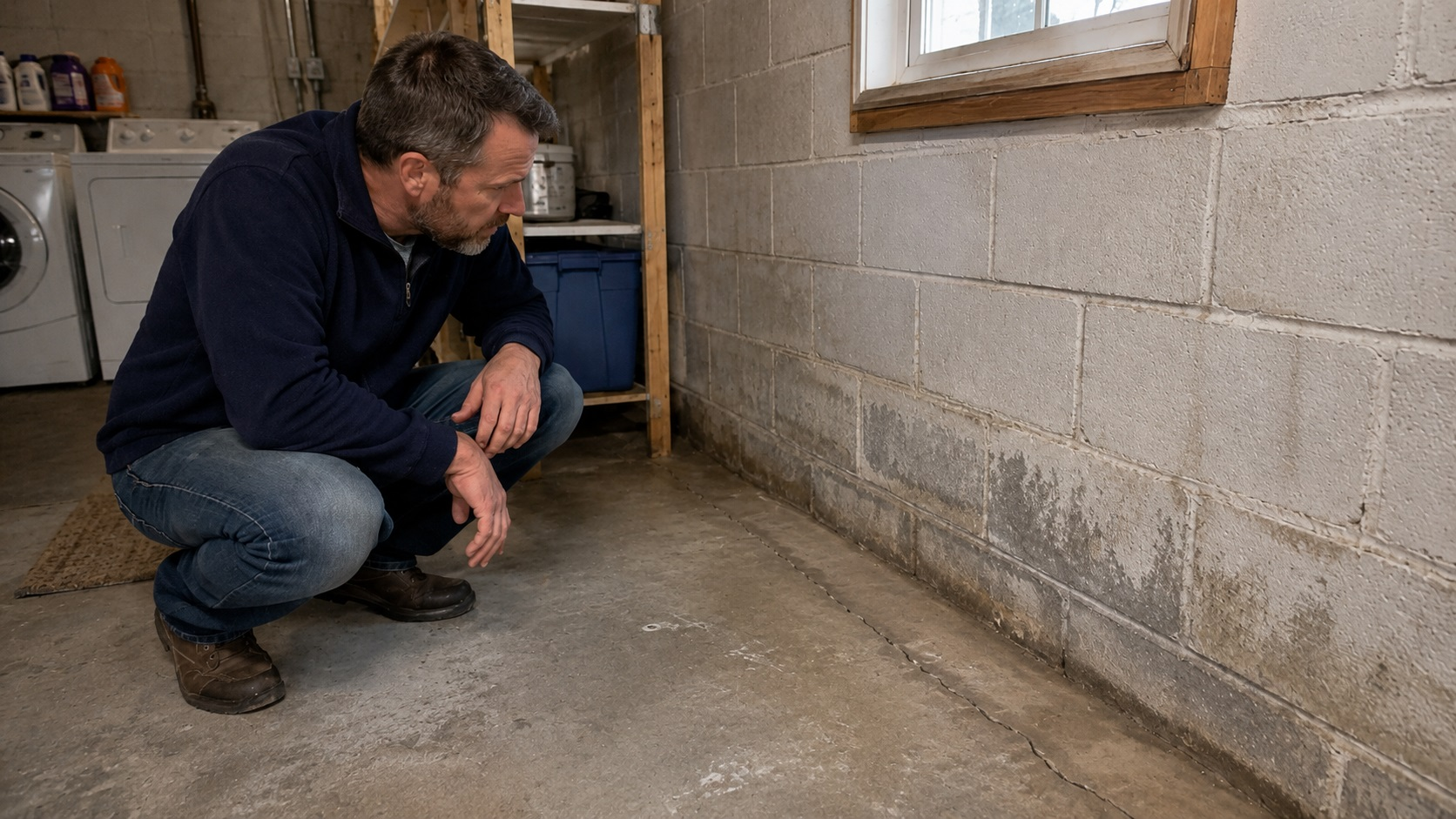
Best Basement Waterproofing Sealants and Coatings for Damp Walls, Cracks, and Foundation Moisture
When a basement smells musty or the wall feels damp, it is tempting to grab the first “waterproof” product that looks close enough. A damp concrete wall, a leaking foundation joint, a hairline floor crack, and a porous block wall may all need different products.
That is why the best basement waterproofing sealants and coatings are not all the same type of material. Some are waterproofing paints, some are flexible membrane coatings, and others are concrete crack fillers meant for smaller repair areas.
In real basements, the problem is often mixed: one wall feels damp, one corner smells musty, and one floor crack looks worse after rain. That is why this list separates wall coatings from foundation coatings and crack fillers. For example, a homeowner with a musty block wall after heavy rain needs a different product than someone sealing a thin crack in an otherwise dry basement floor.
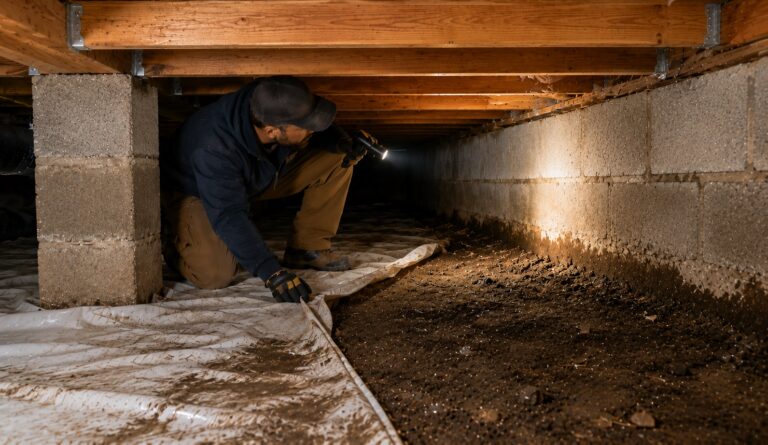
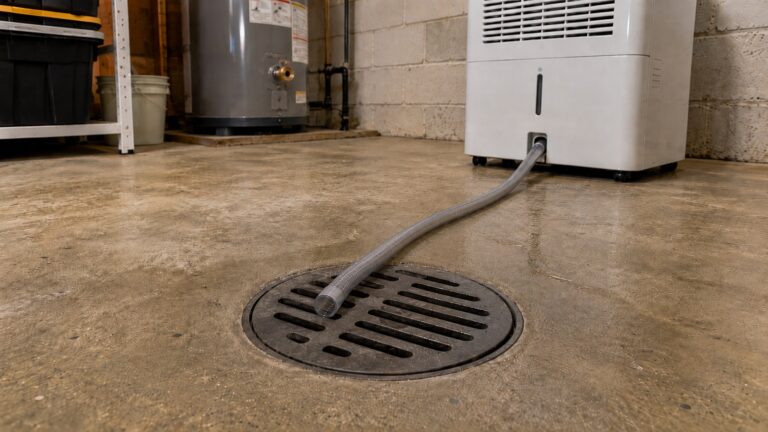
This guide is written for homeowners who are trying to reduce basement dampness, seal minor cracks, protect masonry surfaces, or prepare a basement before moisture leads to mold. If your basement has active water intrusion, standing water, major foundation movement, or repeated seepage after heavy rain, start by understanding the bigger waterproofing system first.
DryHomeGuide’s parent guide on how to waterproof basements and control water intrusion explains how sealants fit into drainage, sump pumps, exterior grading, and long-term water control. You can also use the sitewide guide to find, fix, and prevent moisture problems in homes if you are still diagnosing where the moisture is coming from.
The picks below are organized by the problem they solve, not just by rating. That matters because a wall coating, a foundation sealant, and a crack filler all do different jobs.
Disclosure: As an Amazon Associate, this site earns from qualifying purchases. This does not affect the price you pay. Our recommendations are based on research, product reliability, and real-world usability in moisture-prone environments.
Quick Picks: Best Basement Waterproofing Sealants
Quick Picks: Best Basement Waterproofing Sealants
- Best Overall Foundation Sealant: Liquid Rubber Basement and Foundation Repair Sealant — Best for flexible waterproofing over foundation surfaces, basement walls, and larger waterproofing areas.
- Best Masonry Waterproofing Paint: KILZ Basement and Masonry Waterproofing Paint — Best for properly prepared concrete, cinder block, brick, stucco, and masonry basement walls.
- Best for Concrete Block Basement Walls: Ames Block & Wall Liquid Rubber Waterproofer — Best for porous block walls where a flexible wall coating is preferred.
- Best for Basement Floor Cracks: Bluestar Flexible Concrete Crack Filler, Gray — Best for visible concrete cracks in basement floors and similar slabs.
- Best for Hairline Concrete Cracks: Bluestar Flexible Concrete Hairline Crack Filler — Best for very narrow cracks where regular filler may be too thick.
Before using any of these products, read the label carefully and confirm the surface is clean, dry enough, structurally sound, and approved for that product. Basement sealants fail most often when they are applied over active leaks, loose paint, chalky masonry, or unresolved drainage problems.
1. Liquid Rubber Basement and Foundation Repair Sealant Review
Category Label: Best Overall Foundation Sealant
Liquid Rubber Basement and Foundation Repair Sealant is the strongest overall pick for homeowners who need a flexible waterproofing product rather than a simple masonry paint.
It is designed to form a rubber-like waterproof membrane over foundation and basement surfaces, which makes it a good fit for larger waterproofing jobs, foundation walls, and areas where some flexibility is helpful. That makes it a good fit for homeowners looking for a foundation waterproofing sealant.
Think of this less like a touch-up product and more like a coating you build up over a larger foundation surface. That makes it useful when you want broader protection over concrete, masonry, or foundation areas instead of spot-treating one narrow crack. It is especially relevant if the basement wall surface needs more than cosmetic sealing but does not yet require a full contractor-installed waterproofing system.
The important limitation is that Liquid Rubber should not be treated as a cure-all for serious water pressure. If water is actively entering through a wall, if water is pooling on the floor, or if the foundation has structural cracks, the source of the water still needs to be corrected. For those situations, the article on why hydrostatic pressure causes basement leaks is a better starting point before relying on any coating.
Best use: Larger foundation or basement wall surfaces that need a flexible waterproofing membrane.
Do not rely on it alone if: The area is actively leaking, structurally cracked, or still getting wet from unresolved drainage problems. It also should not be treated as a walking-surface coating unless the product label specifically supports that use.
Key Features:
- Flexible waterproofing membrane for basement and foundation surfaces
- Suitable for concrete, masonry, foundation walls, and similar building surfaces
- Can be used for larger waterproofing areas instead of only small cracks
- Works as a coating-style sealant rather than a traditional paint
- Useful where flexibility is more important than a hard paint-like finish
Pros:
- ✔ Strongest overall fit for foundation sealing and broad waterproofing coverage
- ✔ Better suited to larger surfaces than small tube-style crack fillers
- ✔ Flexible membrane design helps it handle minor movement better than rigid coatings
- ✔ Strong review count compared with many basement waterproofing products
- ✔ Good choice when a homeowner wants a more serious coating than basic waterproofing paint
Cons:
- ✖ Requires careful surface prep and multiple coats for best results
- ✖ Not the best choice for walking surfaces
- ✖ More involved than applying a simple crack filler
- ✖ Should not be used as a substitute for fixing drainage, grading, or active water pressure problems
Best For:
- Homeowners sealing larger basement or foundation surfaces
- Foundation walls that need a flexible waterproofing coating
- Basement areas where a membrane-style product makes more sense than paint
- Moisture-prone foundation surfaces that are dry enough for proper application
Check the Liquid Rubber Basement and Foundation Repair Sealant on Amazon to see current availability.
2. KILZ Basement and Masonry Waterproofing Paint Review
Category Label: Best Masonry Waterproofing Paint
KILZ Basement and Masonry Waterproofing Paint is the clearest wall-coating choice in this list. It is a basement waterproofing coating made for properly prepared masonry surfaces, including concrete block, cinder block, brick, stucco, and similar porous wall materials.
That makes it a strong choice for a damp basement wall where the main goal is coating the masonry surface, not filling a wide crack or creating an exterior foundation membrane. A good example would be an unfinished basement wall that feels slightly damp in humid weather but is not actively dripping or leaking during storms.
If you are specifically looking for a waterproofing paint for basement walls, this is the most direct match in the lineup. KILZ earns its place because it matches what many homeowners are really looking for: a basement wall coating they can roll or brush onto prepared masonry to help control dampness.
KILZ is not a foundation repair product, and it is not meant for active leaks. But when the wall is sound, clean, dry enough, and properly prepared, it is one of the most practical basement wall coating options in this roundup.
The most important warning is that waterproofing paint should not be applied over a wall that is still leaking. If water is entering during rain, or if the surface is chalky, dirty, efflorescent, or already coated with failing paint, the product may not bond well. In that case, you may need to diagnose why the basement wall leaks during rain before painting over the symptom.
Best use: Damp, prepared masonry basement walls where a waterproofing paint is appropriate.
Do not rely on it alone if: The wall is actively leaking, the floor needs sealing, or the surface has loose paint, chalky residue, or unresolved seepage. Those problems should be corrected before coating.
Key Features:
- Waterproofing paint for basement and masonry walls
- Designed for properly prepared above-grade and below-grade masonry surfaces
- Works on concrete block, cinder block, brick, stucco, and similar materials
- Good option for damp wall surfaces where a paint-like coating is appropriate
- Strong rating and review signal compared with many masonry waterproofers on Amazon
Pros:
- ✔ Best match for homeowners who want a basement wall waterproofing paint
- ✔ Strong fit for concrete, block, and masonry walls
- ✔ Easier to understand and apply than membrane-style products
- ✔ Good choice for properly prepared bare masonry
- ✔ Stronger Amazon review signal than many comparable basement wall coatings
Cons:
- ✖ Not for basement floors
- ✖ Not for active water leaks
- ✖ Requires good surface prep before application
- ✖ May fail if the real problem is hydrostatic pressure or exterior drainage
Best For:
- Damp but stable basement masonry walls
- Concrete block or cinder block basement walls
- Homeowners who want a paint-style waterproofing product
- Basement walls that are not actively leaking and have been properly cleaned and repaired
Check the KILZ Basement and Masonry Waterproofing Paint on Amazon to see current availability.
3. Ames Block & Wall Liquid Rubber Waterproofer Review
Category Label: Best for Concrete Block Basement Walls
Ames Block & Wall Liquid Rubber Waterproofer is a great concrete block wall sealer. It’s the product I would look at first for rough concrete block or cinder block basement walls. Block walls can absorb and hold moisture differently than smooth poured concrete, so a flexible coating can be useful when the goal is to cover a rougher masonry surface.
This product fits between a traditional waterproofing paint and a heavier foundation membrane coating. It is designed to dry into a flexible waterproof layer, which makes it useful for basement walls, foundation surfaces, and masonry that need more elasticity than a hard coating. It is not the highest-review product in the list, but it does meet the review threshold and has a clear use case for concrete block basement walls.
Ames makes the most sense on rough, porous block walls where a thin paint-like coating may not feel like enough. However, it should not be used as a shortcut for major crack repair. If a crack is wider, actively leaking, or showing movement, it should be repaired properly before any wall coating is applied. For homeowners dealing with broader basement water-control decisions, this product should be treated as one layer of protection, not a complete waterproofing system by itself.
Best use: Rough concrete block or cinder block basement walls that need a flexible wall coating.
Do not rely on it alone if: The wall has active seepage, wide cracks, bowing, or unresolved pressure from outside the foundation. Those issues should be diagnosed before the coating is expected to solve the problem.
Key Features:
- Flexible liquid rubber-style coating for block and masonry walls
- Good fit for concrete block, cinder block, and basement wall surfaces
- Can help seal porous masonry when applied to a properly prepared surface
- Works as a wall coating rather than a narrow crack filler
- Useful where flexibility is preferred over a rigid paint-like coating
Pros:
- ✔ Strong match for concrete block basement walls
- ✔ Flexible coating helps cover rough masonry surfaces
- ✔ More specialized for block and wall applications than general-purpose sealers
- ✔ Good option for homeowners who want a liquid rubber-style coating
- ✔ Can complement broader basement moisture-control work
Cons:
- ✖ Lower review count than Liquid Rubber and KILZ
- ✖ Not a replacement for proper crack repair on larger or active cracks
- ✖ Requires patient surface prep and curing time
- ✖ Should not be relied on alone for serious exterior water pressure problems
Best For:
- Concrete block basement walls
- Cinder block walls with minor dampness concerns
- Basement masonry that needs a flexible coating
- Homeowners who want a wall-focused waterproofing product rather than a floor crack filler
Check the Ames Block & Wall Liquid Rubber Waterproofer on Amazon to see current availability.
4. Bluestar Flexible Concrete Crack Filler (Gray) Review
Category Label: Best for Basement Floor Cracks
Bluestar Flexible Concrete Crack Filler is the best fit in this list for homeowners who are dealing with visible cracks in a basement floor rather than broad wall dampness.
A floor crack needs a more targeted repair than a damp wall does. It needs a basement floor crack filler that can flow into the crack, bond to the concrete edges, and remain flexible enough to handle normal surface movement. For example, a narrow shrinkage crack across a dry slab is a very different situation from a crack that darkens every time it rains.
Use this when the basement floor has narrow to moderate cracks that are large enough to collect dirt, moisture, or debris. It is not a full basement waterproofing coating, and it should not be used as a substitute for fixing major seepage, structural cracks, or water pressure under the slab. But for smaller basement floor cracks, it gives homeowners a more targeted solution than rolling a wall coating over the entire area.
The main reason to include this product in a best basement waterproofing sealants article is that many basement moisture problems begin at small openings. A concrete crack filler can help close those weak points before they collect moisture or contribute to mold-prone dampness around the floor edge.
If your basement floor stays wet more broadly, though, the cause may be deeper than one crack. In that case, it is worth reviewing why basement floors stay wet before assuming a filler alone will solve the issue.
Best use: Visible basement floor cracks that need a targeted concrete filler.
Do not rely on it alone if: The crack is moving, widening, uneven, or leaking water during rain. In those cases, the crack may be a symptom of a deeper slab, drainage, or foundation issue.
Key Features:
- Flexible concrete crack filler for visible cracks in concrete surfaces
- Useful for basement floors, garage slabs, patios, sidewalks, and similar concrete areas
- Designed for crack repair rather than whole-wall or whole-floor waterproofing
- Gray color blends better with many concrete surfaces than black sealants
- DIY-friendly bottle format for smaller repair areas
Pros:
- ✔ Best fit for visible basement floor cracks
- ✔ Easier to apply in cracks than a broad waterproofing coating
- ✔ Flexible formula helps reduce cracking from normal temperature changes
- ✔ Useful before applying other basement moisture-control products
- ✔ Stronger fit for spot repairs than wall-focused waterproofing paints
Cons:
- ✖ Not a full waterproofing system
- ✖ Not meant for coating entire basement walls or floors
- ✖ Not enough for active water seepage or structural foundation cracks
- ✖ Coverage depends on crack width, depth, and length rather than square footage
Best For:
- Basement floor cracks that need targeted filling
- Small to moderate concrete cracks before moisture problems get worse
- Homeowners repairing slab cracks before broader moisture-control work
- Concrete surfaces where a flexible crack filler is more appropriate than waterproofing paint
Check the Bluestar Flexible Concrete Crack Filler on Amazon to see current availability.
5. Bluestar Flexible Concrete Hairline Crack Filler Review
Category Label: Best for Hairline Concrete Cracks
Bluestar Flexible Concrete Hairline Crack Filler is the better choice when the crack is too narrow for a standard concrete crack filler. Hairline cracks are common in basement floors, garage slabs, and concrete surfaces, but they can be frustrating because thicker fillers may sit on top of the crack instead of flowing into it properly.
This product is designed for very narrow concrete cracks, which makes it a useful companion to the gray Bluestar crack filler. Instead of treating every crack the same way, homeowners can match the filler to the size of the crack. Wider visible cracks need a regular flexible concrete crack filler. Very thin cracks may need a thinner, more targeted hairline formula.
Hairline cracks are not always a serious moisture problem, but they should still be inspected carefully in a basement. A small crack that stays dry may be mostly cosmetic.
A small crack that darkens, smells musty, widens over time, or appears near repeated seepage can point to a larger basement water issue. If moisture keeps returning after repair, the crack may be only one symptom of a bigger drainage or pressure problem.
Best use: Very narrow hairline concrete cracks where standard filler may be too thick.
Do not rely on it alone if: The crack is wet, actively leaking, widening, or showing signs of structural movement. A filler may still be part of the repair, but the source of movement or moisture should be addressed first.
Key Features:
- Designed specifically for hairline cracks in concrete
- Thinner formula for narrow openings where standard filler may be too heavy
- Light gray color for concrete surface blending
- Flexible formula for normal expansion and contraction
- DIY-friendly option for small crack repair projects
Pros:
- ✔ Best option in this list for very narrow concrete cracks
- ✔ More appropriate than standard filler for hairline openings
- ✔ Useful for small basement floor cracks before they collect moisture or dirt
- ✔ Simple bottle-style application
- ✔ Pairs well with broader basement inspection and moisture-control work
Cons:
- ✖ Not for wide cracks
- ✖ Not a wall waterproofing coating
- ✖ Not a solution for active water seepage
- ✖ Not appropriate for structural cracks or foundation movement
If the crack is widening, uneven, raised, or letting water through during rain, treat it as a diagnosis problem first and a filler problem second.
Best For:
- Hairline cracks in basement floors
- Thin concrete cracks that are too narrow for standard filler
- Small DIY concrete repair projects
- Homeowners who want to seal minor openings before they become dirt or moisture traps
Check the Bluestar Flexible Concrete Hairline Crack Filler on Amazon to see current availability.
Basement Waterproofing Sealants and Coatings Comparison Table
The best product depends on the surface and the problem you are trying to solve. A flexible foundation coating is not the same as a basement wall sealer or waterproofing paint, and neither one replaces a concrete crack filler. Use this table to quickly compare the best basement waterproofing sealants and coatings by use case.
| Product | Best For | Type | Size | Coverage / Use Notes | Works On | Not For |
|---|---|---|---|---|---|---|
| Liquid Rubber Basement and Foundation Repair Sealant | Best Overall Foundation Sealant | Flexible waterproofing membrane / foundation coating | 1 gallon and larger size options may be available | Best used as a multi-coat waterproofing membrane. Coverage depends on surface type and number of coats. | Foundation walls, basement surfaces, concrete, masonry, and similar prepared surfaces | Walking surfaces, active leaks, structural cracks, or severe water pressure problems by itself |
| KILZ Basement and Masonry Waterproofing Paint | Best Masonry Waterproofing Paint | Basement and masonry waterproofing paint | 1 gallon | Typically used in at least two coats on properly prepared masonry. Coverage varies by surface porosity. | Concrete block, cinder block, brick, stucco, masonry, and properly prepared basement walls | Floors, active water leaks, dirty surfaces, chalky masonry, or walls with unresolved seepage |
| Ames Block & Wall Liquid Rubber Waterproofer | Best for Concrete Block Basement Walls | Flexible liquid rubber wall coating | 1 gallon | Best applied as a coating over properly prepared block or masonry. Multiple coats may be needed. | Concrete block, cinder block, basement walls, masonry, foundations, and similar surfaces | Wide cracks, active leaks, structural movement, or unprepared surfaces |
| Bluestar Flexible Concrete Crack Filler, Gray | Best for Basement Floor Cracks | Flexible concrete crack filler | 16 fl. oz. bottle | Coverage depends on crack width, depth, and length rather than square footage. | Basement floor cracks, garage slabs, patios, sidewalks, driveways, and concrete surfaces | Whole-wall waterproofing, foundation coating, active seepage, or structural cracks |
| Bluestar Flexible Concrete Hairline Crack Filler | Best for Hairline Concrete Cracks | Hairline concrete crack filler | Small bottle format | Best for very narrow cracks where thicker fillers may not penetrate well. | Hairline cracks in basement floors and other concrete surfaces | Wide cracks, active leaks, broad waterproofing, or structural foundation cracks |
Which Basement Waterproofing Sealant Should You Choose?
For most homeowners, the easiest way to choose is to match the product to the moisture problem instead of starting with the label on the can. A good rule of thumb: if the problem is spread across a surface, think coating. If the problem is a line or opening, think crack filler. If water keeps coming back after rain, think drainage first.
If the main problem is a damp masonry basement wall, KILZ is the most direct fit because it is a waterproofing paint made for prepared basement and masonry surfaces.
If the main problem is a foundation surface that needs a flexible waterproofing membrane, Liquid Rubber is the better overall choice because it is designed as a flexible coating rather than a standard paint.
If the main problem is a porous concrete block or cinder block basement wall, Ames Block & Wall is worth considering because it is a flexible wall coating that fits rough masonry surfaces well.
If the issue is a visible basement floor crack, use the gray Bluestar Flexible Concrete Crack Filler instead of painting over the crack.
If the issue is a very thin hairline crack, the Bluestar Hairline Crack Filler is more appropriate than a thicker crack filler.
Sealants can help with small openings, damp surfaces, and prepared masonry, but drainage still does the heavy lifting when water is building up outside the foundation. If your basement leaks during rain, has recurring seepage, or shows signs of pressure behind the wall, the cause may be outside the wall rather than on the surface. In that case, it is better to understand the full water-entry pattern before relying on a coating alone.
How to Choose the Right Basement Waterproofing Sealant
Choosing the best basement waterproofing sealant starts with the problem you are trying to solve. Many homeowners make the mistake of treating every basement moisture issue as if it can be fixed with one coating. In reality, a damp block wall, a hairline floor crack, a wide concrete crack, and foundation seepage all require different thinking.
The right product depends on four things: the surface, the moisture source, the crack size, and whether water is actively entering the basement. A sealant can help protect prepared masonry or close small cracks, but it cannot overcome serious water pressure, poor drainage, foundation movement, or standing water by itself.
1. Choose a Basement Wall Coating for Damp Masonry Walls
If your basement walls feel damp, show minor discoloration, or have a musty smell nearby, a masonry waterproofing paint may be the right place to start. These products used to waterproof basement walls are made for bare or properly prepared concrete, cinder block, brick, stucco, and masonry walls.
For this use case, KILZ Basement and Masonry Waterproofing Paint is the most direct fit from this list. It is designed for basement and masonry walls, not for filling wide cracks or coating floors.
A masonry waterproofing paint is best when the wall is structurally sound, mostly dry during application, and not actively leaking. It is not the right fix if water is visibly running through the wall during rain or if pressure is pushing moisture through cracks and joints.
2. Choose a Flexible Foundation Coating for Larger Foundation Areas
If you need to coat a larger foundation surface, especially where flexibility matters, a membrane-style foundation sealant may be a better fit than ordinary waterproofing paint. Flexible coatings are useful when the goal is to build a protective layer over concrete, masonry, or foundation surfaces.
For this type of project, Liquid Rubber Basement and Foundation Repair Sealant is the strongest overall option in this roundup. It works best when you treat it as a multi-coat waterproofing membrane, not a quick one-coat patch.
This type of product is especially useful for homeowners who want a more flexible coating than a paint-style wall product. However, it still needs clean, dry, properly prepared surfaces. It also should not be used as the only fix for active leaks, heavy hydrostatic pressure, or structural foundation cracks.
3. Choose a Block-Wall Coating for Porous Concrete Block
Concrete block and cinder block walls can be more porous and textured than poured concrete. That means they may need a coating that can handle rougher surfaces and small surface irregularities. If the wall is dry enough to coat and the main issue is surface dampness or porosity, a flexible block-wall coating can be useful.
Ames Block & Wall Liquid Rubber Waterproofer is the best fit from this list for concrete block basement walls. It is more specialized for wall and block applications than a general crack filler.
Do not use a block-wall coating to hide major cracks, bowing walls, or active seepage. If water is entering through joints or pressure is building behind the wall, the basement may need drainage correction, exterior grading changes, or professional waterproofing work.
4. Choose a Crack Filler for Visible Basement Floor Cracks
If the problem is a visible crack in the basement floor, do not start with a wall paint. Floor cracks need a filler that can get into the crack and seal the opening. Use a product like Bluestar Flexible Concrete Crack Filler, Gray to seal basement cracks.
A flexible concrete crack filler is best for localized cracks in concrete surfaces. It can help keep dirt, moisture, and minor surface water from collecting in the crack. It is also useful before broader basement improvements, because cracks should usually be addressed before coating or finishing nearby surfaces.
However, floor cracks need careful judgment. A stable, narrow crack is very different from a crack that is widening, lifting, settling, or letting water seep through. If the crack shows movement, water pressure, or repeated dampness, the issue may be more serious than a surface repair.
5. Choose a Hairline Crack Filler for Very Narrow Cracks
Hairline cracks need a thinner product than standard concrete crack filler. If the crack is very narrow, a thicker filler may not penetrate properly and may simply sit on the surface. That is why a dedicated hairline crack filler is useful.
Bluestar Flexible Concrete Hairline Crack Filler is the best match in this list for very thin cracks in concrete. It is not a basement wall coating and not a waterproofing membrane. Its role is narrow and specific: filling small hairline concrete cracks.
Hairline cracks are often minor, but in a basement, they should still be watched. If they darken after rain, develop white mineral deposits, smell musty nearby, or grow over time, the crack may be connected to a larger moisture problem.
How to Apply Basement Waterproofing Sealants Correctly
The best basement waterproofing sealants only work when the surface is prepared correctly. Poor prep is one of the biggest reasons basement coatings peel, blister, flake, or fail after the next heavy rain.
Start by Identifying the Moisture Source
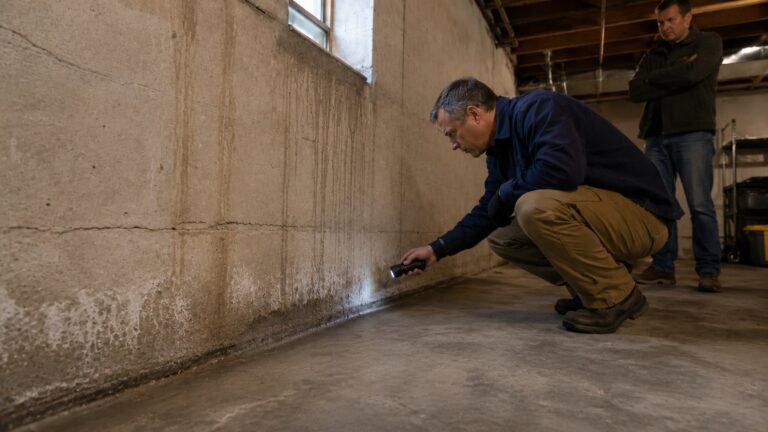
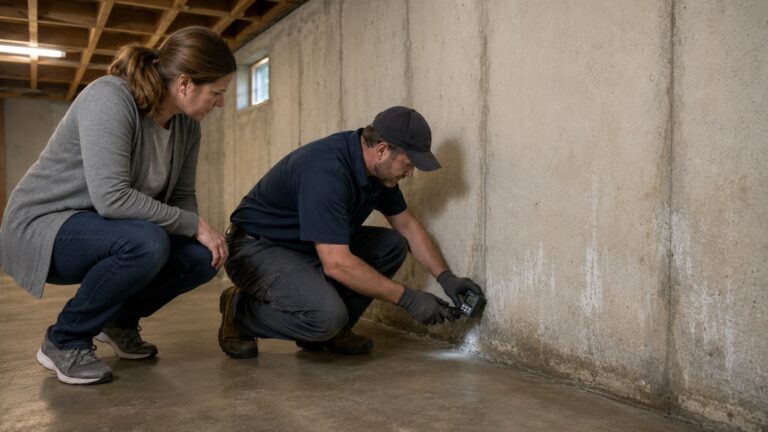
Before applying any sealant, try to understand where the moisture is coming from. Is the wall damp all the time? Does water appear only after rain? Is moisture coming through a crack, along the floor-wall joint, or across a broad masonry surface?
A wall that gets damp only after a storm usually points to a different problem than a wall that stays clammy all summer. If the wall only gets damp after rain, treat that as a warning sign that the problem may be drainage or water pressure rather than just an unsealed surface.
If the basement leaks mainly after storms, read more about why basement walls leak during rain before assuming a coating is enough. Surface sealants can help with some dampness problems, but repeated rain-related seepage often points to drainage, grading, gutter, or hydrostatic pressure issues.
Clean the Surface Thoroughly
Basement walls and floors often collect dust, mineral deposits, old paint, mildew, loose concrete, and efflorescence. These materials can prevent sealants from bonding properly.
Before applying a coating or crack filler, the surface should be cleaned according to the product instructions. Wear gloves and eye protection when cleaning old masonry or applying coatings, especially in tight basement areas with limited ventilation.
For walls, this may include brushing away loose material, removing flaking paint, scrubbing dirty masonry, and letting the surface dry. For cracks, this usually means removing loose debris from the crack so the filler can bond to solid concrete.
Repair Cracks Before Coating Walls
Do not rely on waterproofing paint to fill every crack. Larger cracks, active cracks, or cracks at wall joints usually need repair before a coating is applied. A wall coating can help protect the surface, but it should not be expected to bridge every opening by itself.
For floor cracks, use the appropriate crack filler. For hairline cracks, use a hairline crack filler. For larger cracks, movement cracks, or foundation cracks, consider whether the repair is beyond a simple DIY product.
Let the Surface Dry Before Application
Most basement waterproofing sealants and coatings need a surface that is dry enough for bonding. Applying a coating over wet masonry can trap moisture and increase the chance of peeling or bubbling.
If the wall or floor keeps getting wet, stop and solve the water source first. That may involve downspout extensions, grading corrections, gutter cleaning, sump pump improvements, drainage repairs, or professional waterproofing work.
Apply the Recommended Number of Coats
Basement waterproofing products often require more than one coat. One thin coat may not create enough protection, especially on porous block or rough masonry. Follow the product label for coat thickness, recoat time, temperature range, and curing time.
This is especially important for liquid rubber-style products. These are not meant to be brushed on lightly like ordinary paint. They usually need enough thickness to form a continuous protective layer.
If you are working indoors, ventilate the basement according to the product label and avoid trapping strong odors in a closed space.
Respect Cure Time Before Testing the Area
Do not assume a product is fully ready just because it feels dry to the touch. Many coatings need extra cure time before they reach full performance. If you expose the area to moisture too soon, the coating may not bond or cure properly.
Plan basement projects around dry weather when possible, especially if the wall tends to dampen after storms. Give the product the best chance to cure before the next moisture event.
Common Basement Waterproofing Sealant Mistakes to Avoid
The coating is usually the easy part. The harder part is being honest about whether the basement is only damp or actually leaking.
Mistake 1: Using Wall Paint on Basement Floors
One of the easiest mistakes is using a basement wall waterproofing paint on a floor. Wall coatings and floor coatings are not automatically interchangeable. A product designed for vertical masonry may not handle foot traffic, abrasion, or floor moisture conditions.
If you are dealing with floor cracks, use a crack filler. If you are dealing with a floor coating project, make sure the product specifically allows floor use.
Mistake 2: Coating Over Active Leaks
Waterproofing paint should not be used to cover active leaks. If water is visibly entering through a wall, seam, or crack, the pressure behind that water can push coatings off the surface. The leak source needs to be corrected first.
Sealants work best on prepared surfaces with minor dampness risks, not on running water or severe seepage.
Mistake 3: Ignoring Hydrostatic Pressure
Hydrostatic pressure happens when water builds up in the soil around the foundation and pushes against basement walls or floors. No simple coating can fully compensate for serious pressure from the outside.
If pressure is the real problem, you may need drainage improvements instead of only a surface-applied sealant. If water appears along the floor-wall joint or returns after storms, also check for signs of poor basement drainage.
This is why basement waterproofing should be viewed as a system. Coatings and sealants can help, but they should fit into the larger strategy explained in the guide on how to waterproof basements and control water intrusion.
Mistake 4: Applying Sealant Over Dirty or Chalky Masonry
Dust, efflorescence, old paint, mildew, and loose masonry can all interfere with adhesion. If the coating sticks to loose material instead of the wall itself, it may peel away later.
Surface prep is not optional. The wall should be as clean, sound, and dry as the product instructions require.
Mistake 5: Treating Crack Filler as a Full Waterproofing System
Concrete crack filler is helpful, but it only treats the crack where it is applied. It does not waterproof the entire basement, stop wall seepage, improve drainage, or correct foundation pressure.
Use crack filler for cracks. Use masonry coatings for masonry walls. Use flexible foundation coatings for larger foundation surfaces. Use drainage and waterproofing systems when the water source is bigger than the surface problem.
Mistake 6: Ignoring Mold Risk After Sealing
Sealing a surface does not automatically remove moisture that is already trapped behind walls, under flooring, or inside porous materials. If the basement has a musty smell, visible staining, or repeated dampness, inspect for mold risk before finishing the space.
Sealants can reduce future moisture entry in the right situation, but they should not be used to hide a mold problem. If moisture keeps returning after cleanup or sealing, use a broader recurrence strategy like the one explained in how to prevent recurring moisture damage. Fix the source, dry the area, and monitor humidity before covering surfaces.
Mistake 7: Choosing by Rating Alone
A highly rated product can still be wrong for your project. The best product is the one that matches your surface and moisture problem. A crack filler may have excellent reviews but still be wrong for a damp wall. A wall coating may be popular but still be wrong for a moving foundation crack.
Use ratings as a quality signal, but choose by problem type first.
Frequently Asked Questions About Basement Waterproofing Sealants
What is the best basement waterproofing sealant?
The best basement waterproofing sealant depends on the problem. For larger foundation surfaces, Liquid Rubber Basement and Foundation Repair Sealant is the strongest overall foundation sealant in this list because it is designed as a flexible waterproofing membrane.
For damp masonry basement walls, KILZ Basement and Masonry Waterproofing Paint is the better fit because it is made specifically for prepared masonry wall surfaces. For concrete cracks, a crack filler is more appropriate than a wall coating.
Can basement waterproofing sealants stop active leaks?
Usually, no. Basement waterproofing sealants are best for prepared surfaces, minor dampness, small cracks, and preventive moisture control. They should not be treated as a reliable fix for running water, active leaks, standing water, severe hydrostatic pressure, or structural foundation cracks. If water appears during heavy rain, the real issue may involve exterior grading, gutters, footing drains, sump pump performance, or pressure around the foundation.
Can I use basement waterproofing paint on the floor?
Do not use basement waterproofing paint on a floor unless the product label specifically says it is approved for floor use. Many masonry waterproofing paints are designed for vertical walls, not walking surfaces. If the problem is a basement floor crack, use a concrete crack filler such as Bluestar Flexible Concrete Crack Filler or a hairline crack product if the crack is very narrow.
Should I use a crack filler before waterproofing basement walls?
Yes, cracks and holes should usually be repaired before a wall coating is applied. Waterproofing paint or liquid rubber coating should not be expected to fill every opening by itself. Small hairline cracks may need a dedicated hairline crack filler, while wider or moving cracks may require a more serious repair. If a crack is actively leaking or changing shape, do not simply cover it with a coating.
What is the difference between waterproofing paint and foundation sealant?
Waterproofing paint is usually a wall coating for prepared masonry surfaces such as concrete block, brick, stucco, or basement walls. A flexible foundation sealant or liquid rubber product is usually closer to a membrane-style coating that forms a thicker waterproof layer over a surface. Both can be useful, but they are not identical. Waterproofing paint is often better for damp basement walls, while a flexible foundation coating may be better for larger foundation surfaces.
Do basement waterproofing sealants prevent mold?
They can help reduce one source of moisture, but they do not automatically prevent mold. Mold prevention requires moisture control, drying, ventilation, humidity management, and fixing the water source. If moisture is trapped behind walls, under flooring, or inside porous materials, sealing the surface will not remove that hidden moisture. If the basement floor already has musty odors, discoloration, or damp areas, check for signs of mold growth on basement floors before covering the area. For a broader basement mold-prevention strategy, see DryHomeGuide’s article on how to prevent mold in basements.
How many coats of basement waterproofing sealant do I need?
It depends on the product and the surface. Porous concrete block, rough masonry, and foundation surfaces often need more than one coat. Many waterproofing paints and liquid rubber coatings require multiple coats to build an effective layer. Always follow the product label for coverage, coat thickness, drying time, recoat time, and curing time. Applying one thin coat over a porous wall is one of the most common reasons waterproofing products disappoint homeowners.
When should I call a basement waterproofing contractor instead of using a sealant?
Call a professional if the basement has active water intrusion, standing water, bowing walls, large structural cracks, repeated seepage after rain, failed drainage, or signs that water pressure is pushing through the foundation. Sealants and coatings are useful for the right surface-level problems, but they are not a replacement for drainage systems, sump pumps, exterior waterproofing, or structural repairs when the basement needs a larger solution.
Conclusion: Choose the Best Basement Waterproofing Sealant for the Problem
The best basement waterproofing sealants are not interchangeable. A damp masonry wall needs a different product than a visible floor crack. A concrete block wall may need a different coating than a smooth foundation surface. A hairline crack needs a different filler than a wider crack.
For the strongest overall foundation coating, Liquid Rubber Basement and Foundation Repair Sealant is the top pick because it works as a flexible waterproofing membrane for larger basement and foundation surfaces. For homeowners who mainly need a masonry wall coating, KILZ Basement and Masonry Waterproofing Paint is the clearest match for prepared basement walls, cinder block, concrete block, brick, stucco, and masonry. For concrete block basement walls, Ames Block & Wall remains a strong specialized option. For cracks, the two Bluestar products are better choices than trying to force a wall coating into a crack repair role.
The biggest takeaway is simple: do not use a sealant to cover up a water problem you have not diagnosed yet. If the basement leaks after rain, has standing water, or shows repeated moisture return, solve the water source first. Then use the right sealant, coating, or crack filler as one layer of a complete basement moisture-control strategy.