How to Dry Basement Floors After Water Intrusion
To dry a basement floor after water intrusion, remove standing water first, clear anything that traps moisture, run fans across the concrete, and use a dehumidifier continuously until the slab and basement air both stay dry. The floor may look dry before the concrete has released the moisture it absorbed, so drying usually needs to continue beyond the first dry-looking surface.
Basement floors dry slowly because concrete absorbs water and releases it over time. Simply wiping up water or running one fan may remove surface moisture, but it often leaves deeper dampness behind.
If your basement floor became wet due to seepage or rain, you may also want to understand why basement floors stay wet, since unresolved moisture sources can cause the problem to return even after drying.
For the broader prevention strategy after cleanup, see how to prevent recurring moisture damage so the floor does not dry temporarily and then become damp again.
What to Do Immediately After Water Intrusion
The first few hours after water enters your basement are the most important. Acting quickly can significantly reduce damage and make the drying process easier.
Remove Standing Water as Soon as Possible
If water is pooled on the floor, the priority is to remove it right away. The longer water sits on the surface, the more it soaks into the concrete and surrounding materials.
Effective methods include:
- Using a wet/dry vacuum for smaller areas
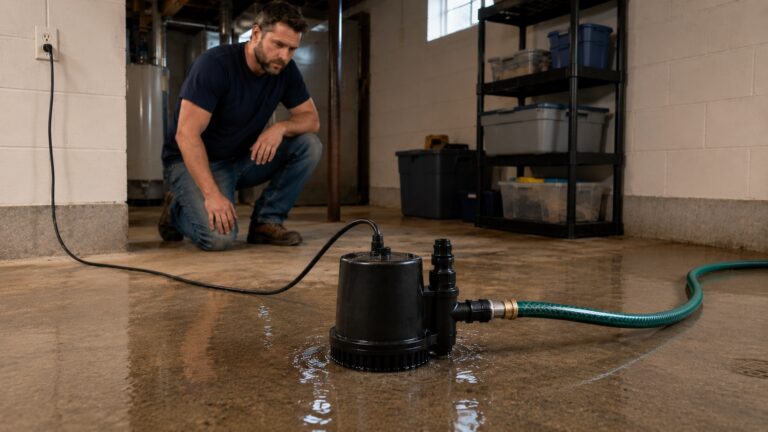
- Using a pump for larger volumes of water
- Mopping or absorbing water with towels for minor intrusion
This step only removes surface water, but it is essential for preventing deeper saturation.
Stop the Source of Water if Possible
Before beginning the full drying process, identify and stop the source of water if you can. Otherwise, moisture will continue entering the space and prevent the floor from drying.
Common sources include:
- Water seepage during rain
- Plumbing leaks
- Drain backups
If you are unsure where the water is coming from, reviewing how to detect basement floor leaks can help you identify the problem before continuing.
Clear the Area Around the Floor
Anything sitting on the basement floor should be removed immediately. Items left in place can trap moisture underneath and block airflow, slowing down the drying process.
Remove:
- Furniture
- Storage boxes
- Rugs or mats
- Loose flooring materials
Pay special attention to cardboard and fabric items, as these absorb water quickly and can begin to grow mold within a short period.
Check for Safety Hazards
Before proceeding, make sure the area is safe to work in. Water in basements can create hazards, especially when electrical systems are involved.
Take precautions such as:
- Do not enter standing water if outlets, cords, appliances, or electrical panels may be energized
- Turn off power from a dry, safe location if water levels are significant
- Wear waterproof footwear and gloves when handling wet materials
- Treat sewage backups, drain backups, and floodwater as contaminated water that may require professional cleanup
Once standing water is removed and the area is safe, you can begin the full drying process to eliminate moisture from the floor.
Step-by-Step Process to Dry Basement Floors
Once standing water has been removed and the area is clear, the next step is to begin the actual drying process. This involves more than just surface drying—you need to remove moisture from both the floor surface and the air to prevent long-term problems.
Increase Airflow Across the Floor Surface
The first step in drying is to promote evaporation. Air movement helps moisture leave the surface of the concrete and enter the surrounding air.
To improve airflow:
- Position fans so they blow directly across the floor, not just into the room
- Use multiple fans to cover larger areas
- Keep doors open to allow air circulation if conditions permit
Airflow alone does not remove moisture—it only speeds up evaporation. Without proper moisture removal from the air, the drying process will stall.
Use Dehumidifiers to Remove Moisture From the Air
As moisture evaporates from the floor, it increases humidity in the basement. If that moisture is not removed, it can settle back onto surfaces and keep the floor damp.
Dehumidifiers are essential because they:
- Pull moisture out of the air
- Allow continuous evaporation from the floor
- Reduce the risk of mold growth
For best results:
- Run the dehumidifier continuously
- Empty the water collection container regularly or connect a drain hose
- Keep windows closed in humid conditions to prevent moisture from re-entering
Combining airflow and dehumidification is the most effective way to dry a basement floor.
Focus on Drying the Concrete Slab
Even after the surface appears dry, moisture often remains inside the concrete. This hidden moisture slowly rises back to the surface if not properly managed.
To encourage deep drying:
- Continue running fans and dehumidifiers for several days
- Maintain consistent airflow across the same areas
- Avoid covering the floor until drying is complete
This stage takes time, especially after significant water exposure. Stopping too early is one of the most common reasons moisture problems return.
Do not reinstall rugs, mats, vinyl flooring, laminate, or stored boxes until the floor has stayed dry for several days. Covering the slab too soon can trap moisture that would otherwise continue evaporating.
Dry Cracks, Edges, and Problem Areas
Some parts of the basement floor dry more slowly than others. Cracks, joints, and edges tend to retain moisture longer because water collects in these areas.
Pay extra attention to:
- Visible cracks in the slab
- The floor-to-wall junction
- Low spots where water pooled
These areas may require extended airflow or targeted drying to fully remove moisture.
Monitor Moisture Throughout the Process
Drying is not always obvious by appearance alone. A floor may look dry while still holding moisture beneath the surface.
A simple hygrometer can help you track basement humidity during drying. A moisture meter can also help compare damp areas against dry areas, although concrete readings should be treated as comparison readings rather than perfect proof that the slab is dry.
Signs that drying is still in progress include:
- Dark patches that slowly lighten over time
- Slight damp feeling when touched
- Humidity levels remaining elevated in the basement
If moisture seems to persist despite drying efforts, it may indicate that water is still entering the space. In that case, reviewing signs of water coming through basement floors can help determine whether the issue is ongoing.
How Long Basement Floors Take to Dry
One of the most common questions homeowners ask is how long it takes for a basement floor to dry after water intrusion. The answer depends on several factors, including how much water entered the space, how long it remained, and how effectively the drying process is managed.
Unlike other surfaces, concrete holds moisture internally, which means drying takes longer than expected—even after the surface looks dry.
Typical Drying Timeframes
- Minor moisture exposure: 1 to 3 days
- Moderate water intrusion: 3 to 7 days
- Heavy water exposure or flooding: 7 to 10 days or longer
These timelines assume continuous airflow and dehumidification. Keep drying until dark patches stop returning, basement humidity stays controlled, and cracks, edges, and low spots no longer feel damp.
Factors That Affect Drying Speed
Several conditions influence how quickly your basement floor dries:
- Amount of water: More water leads to deeper absorption and longer drying time
- Duration of exposure: Water that sits for hours or days soaks deeper into the slab
- Basement humidity: High humidity slows evaporation
- Air movement: Poor airflow leaves damp areas behind
- Temperature: Cooler basements usually dry more slowly
- Floor coverings: Rugs, mats, or flooring materials can trap moisture
Because these factors vary, drying should be judged by moisture conditions, not just by the number of days that have passed.
Signs the Basement Floor Is Fully Dry
A basement floor is not fully dry just because the surface looks lighter. Check the surface, edges, cracks, odor, and humidity before stopping fans and dehumidifiers.
Signs that drying is likely complete include:
- The floor surface no longer feels cool or damp
- Dark moisture patches have disappeared
- Humidity levels have returned to normal
- No musty odors are present
- Cracks and edges are no longer damp
If any of these signs remain, continue drying and monitoring before replacing stored items or covering the floor.
Common Mistakes When Drying Basement Floors
Drying mistakes often happen because the surface looks better before the deeper moisture is gone. Avoiding these mistakes can prevent recurring dampness and mold problems.
Stopping the Drying Process Too Early
The most common mistake is assuming the floor is dry once standing water disappears. Concrete may still be holding moisture even when the surface looks normal.
Stopping too early can result in:
- Dark patches returning after equipment is turned off
- Musty odors developing near cracks, edges, or stored items
- Dampness returning after the next rain or humid spell
Using Fans Without Dehumidifiers
Fans help move moisture off the surface, but they do not remove moisture from the basement air. Without a dehumidifier, the moisture may simply circulate and settle back onto surfaces.
This is especially common in basements with limited ventilation or naturally high humidity.
Covering the Floor Too Soon
Replacing rugs, mats, flooring, or stored items too soon can trap moisture against the concrete. This prevents evaporation and creates ideal conditions for mold.
Wait until the floor has remained dry for an extended period before covering it again.
Ignoring the Water Source
Drying the floor does not solve the underlying problem if water is still entering the basement. Recurring dampness often means the source has not been fixed.
If the same area keeps getting wet, drying should be combined with leak detection or basement water intrusion repair.
How to Prevent Mold While Drying Basement Floors
Mold prevention during basement floor drying depends less on one quick cleanup and more on keeping wet materials, humid air, and damp concrete from staying in contact for long periods.
Keep Humidity Low
Humidity control is one of the most important parts of mold prevention. Even if the floor surface dries, high humidity can continue feeding mold on nearby materials.
To reduce mold risk:
- Run dehumidifiers continuously during drying
- Keep air moving across the floor for several days
- Avoid turning off equipment at night during active drying
- Monitor humidity levels and keep them consistently low during active drying
Remove Moisture-Prone Materials
Items that absorb water should be removed or dried separately. Leaving them in place increases the likelihood of mold forming and spreading.
High-risk materials include:
- Cardboard boxes
- Carpet and padding
- Fabric furniture
- Wood-based materials
If mold has already begun forming on stored items, trim, or nearby materials, follow how to remove mold permanently before putting those materials back into the basement.
Inspect the Floor Regularly During Drying
Check the basement floor daily for signs of mold development or persistent moisture. Early detection allows you to adjust your drying approach before the problem worsens.
Watch for:
- New discoloration forming on the surface
- Musty odors developing or intensifying
- Moisture returning in previously dry areas
When DIY Drying Is Not Enough
Some basement floor drying situations need professional equipment, especially when water is widespread, contaminated, recurring, or not improving after several days.
Situations That Require Professional Help
- Large amounts of standing water or flooding
- Water intrusion affecting multiple areas
- Moisture that does not improve after several days of drying
- Visible mold growth spreading across the floor
- Unidentified or recurring water sources
Professionals use specialized drying equipment and moisture detection tools to verify drying progress and reduce the chance that hidden moisture remains before repairs or finishing work begins.
Why Professional Drying May Be Necessary
In more severe cases, standard household equipment may not be enough to remove deeply absorbed moisture. Professional drying services can:
- Compare moisture conditions across the slab, cracks, edges, and affected areas
- Use high-capacity dehumidifiers and air movers
- Identify hidden moisture pockets
- Confirm the floor is dry enough before repairs, coatings, flooring, or finishing work
Choosing professional help can prevent recurring issues and reduce the risk of long-term structural or mold-related problems.
Key Takeaways
- Drying basement floors requires both surface drying and moisture removal from inside the concrete
- Fans and dehumidifiers must be used together for effective results
- Drying can take several days depending on the severity of water exposure
- Stopping too early is one of the most common causes of recurring moisture problems
- Professional help may be needed for severe or persistent water intrusion
Frequently Asked Questions About How to Dry Basement Floors After Water Intrusion
How long does it take for a basement floor to dry after water intrusion?
A lightly damp basement floor may dry in 1 to 3 days, while a floor exposed to heavier water intrusion may take 7 to 10 days or longer. Concrete can hold moisture after the surface looks dry, so drying should continue until dark patches, damp edges, and elevated humidity stop returning.
Can I dry a basement floor with just fans?
Fans help move moisture off the concrete surface, but they do not remove that moisture from the basement air. For reliable drying, fans should usually be paired with a dehumidifier so evaporated moisture does not settle back onto the floor.
Will a dehumidifier alone dry the floor?
A dehumidifier can lower basement humidity, but it works better when fans move air across the floor surface. Without airflow, damp cracks, corners, and low spots may dry much more slowly.
How do I know if moisture is still inside the concrete?
Moisture may still be inside the concrete if dark patches return, cracks feel damp, musty odors remain, or humidity rises again after drying equipment is turned off. A moisture meter can help compare damp areas with dry areas, but it should not be the only sign you rely on.
What should I avoid putting back on a basement floor too soon?
Avoid putting rugs, mats, cardboard boxes, fabric furniture, laminate, vinyl flooring, or stored items back on the floor until it has stayed dry for several days. These materials can trap moisture against the slab and create hidden mold or odor problems.
Conclusion
Drying a basement floor after water intrusion means removing standing water, moving air across the slab, lowering humidity, and continuing the process until damp patches, musty odors, and moisture return have stopped. Do not cover the floor or move stored items back too soon.
If the floor becomes damp again after drying, the next step is not more airflow—it is finding and fixing the water source so the problem does not keep returning.