
Why Humidity Problems Worsen in Winter
Winter creates some of the most confusing moisture conditions inside a home. The air often feels dry, yet condensation appears on windows, walls, and other surfaces. In some cases, mold may even develop during the coldest months of the year.
This happens because winter moisture problems are not caused by high humidity alone. They are caused by the interaction between indoor moisture, cold surfaces, and reduced ventilation. Even when overall humidity levels are low, moisture can still concentrate in specific areas and create visible problems.
Understanding why humidity problems worsen in winter helps you recognize what is normal, what is not, and how to prevent damage. If you are unsure whether winter condensation is coming from indoor humidity or cold surface temperatures, start with how to test indoor humidity levels so you can compare room readings with problem areas like windows, corners, and exterior walls.
Why Winter Creates Unique Moisture Problems
Winter conditions create a unique combination of factors that increase the risk of condensation and localized moisture buildup. Unlike other seasons, the issue is not excess moisture in the air—it is how that moisture behaves when it encounters cold surfaces.
Cold outdoor air contains very little moisture. When this air enters the home and is heated, its relative humidity drops even further. This is why indoor air often feels dry during winter.
However, moisture is still constantly being added inside the home. Everyday activities such as cooking, showering, and breathing release water vapor into the air. Because homes are typically more sealed during winter, this moisture has fewer ways to escape.
At the same time, many surfaces inside the home become much colder than the surrounding air. Windows, exterior walls, and poorly insulated areas are especially vulnerable. When warm, moist air comes into contact with these cold surfaces, it cools rapidly and releases moisture in the form of condensation.
This creates a situation where the home can feel dry overall while still developing visible moisture in specific locations. It is not a contradiction—it is the result of how temperature and moisture interact in winter conditions.
For a broader understanding of how seasonal patterns influence indoor moisture, see how seasonal changes affect indoor moisture.
How Cold Air Changes Indoor Humidity
Cold air changes winter humidity behavior because temperature controls how much moisture air can hold. Once cold outdoor air is heated indoors, its relative humidity drops, which is why winter air often feels dry even before indoor moisture sources are added.
However, this dry-air effect does not eliminate moisture problems. Instead, it changes how moisture behaves. Small amounts of water vapor from everyday activities can become concentrated in certain areas, especially where temperatures are lower.
This is why winter moisture problems often appear as localized condensation rather than widespread dampness. Even if humidity readings seem acceptable, cold surfaces can still create conditions where moisture collects.
Why Condensation Forms on Windows and Walls
Condensation is the most visible winter humidity problem. It forms when warm indoor air touches a surface cold enough to make that air give up moisture as liquid water. This is why the same room can feel dry while glass, wall corners, or metal surfaces still become wet.
This process is most noticeable on windows because glass surfaces cool quickly and are often the coldest surfaces in the home. When warm indoor air touches the cold glass, the air temperature drops at that surface, and moisture condenses into water droplets.
This is why windows may appear foggy or wet in the morning, especially after a cold night. The moisture did not come from outside—it came from the indoor air.
Condensation can also form on:
- Exterior-facing walls
- Ceiling corners
- Uninsulated or poorly insulated areas
- Metal surfaces and fixtures
In many cases, condensation is not evenly distributed. It tends to form in areas where airflow is limited or where surfaces are colder than the rest of the room. This is why problems often appear behind furniture, inside closets, or in corners.
Light condensation that disappears during the day may be normal in very cold conditions. However, heavy or persistent condensation is a warning sign. It may indicate that indoor humidity is too high or that insulation and airflow are not adequate.
If condensation is frequent or widespread, it is important to evaluate signs of high indoor humidity problems to determine whether the issue is becoming more serious.
How Heating Systems Affect Indoor Moisture
Heating systems influence winter moisture in two ways: they lower relative humidity by warming the air, and they move that air toward colder surfaces where condensation can form.
Heating can also move air throughout the home, carrying moisture toward colder surfaces where condensation can occur.
Warm air naturally rises, bringing moisture upward. This can lead to moisture accumulation near ceilings and in upper areas of the home. If these areas are poorly insulated or poorly ventilated, condensation can develop.
Heating also makes indoor moisture sources more noticeable. In a dry environment, even small amounts of moisture from cooking or showers can significantly affect localized humidity levels.
Another important factor is how heating affects airflow. In some homes, certain areas receive less circulation, allowing moisture to collect. This can create uneven humidity levels and increase the risk of condensation in specific locations.
Why Moisture Builds Up in Hidden Areas During Winter
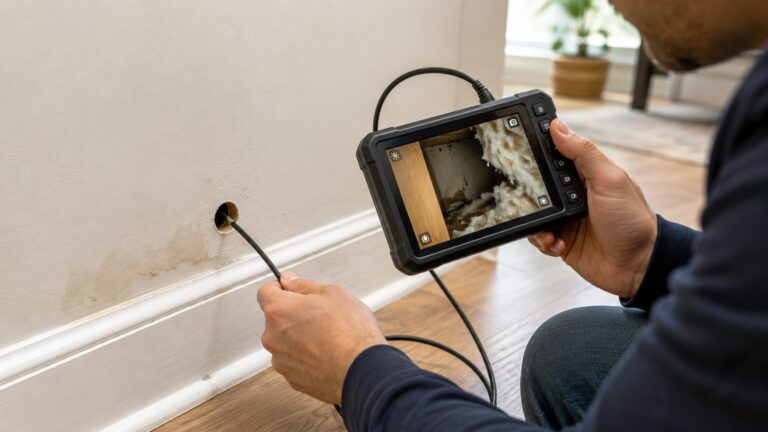
Winter conditions often cause moisture to build up in areas that are not immediately visible. These hidden moisture problems can develop slowly and may not be noticed until damage or mold appears.
One reason this happens is reduced ventilation. Homes are typically more sealed during winter to conserve heat. This limits the exchange of indoor and outdoor air, allowing moisture to accumulate over time.
Another factor is temperature differences within the home. Some areas remain colder than others, especially:
- Behind furniture placed against exterior walls
- Inside closets and storage areas
- Along poorly insulated walls
- Near windows and door frames
When warm, moist air reaches these colder areas, condensation can occur even if it is not visible. Over time, this can lead to damp materials, musty odors, and mold growth.
Hidden moisture problems are particularly common in spaces with limited airflow. Without proper circulation, moisture cannot evaporate or disperse, increasing the likelihood of buildup.
If winter moisture issues persist, it may be necessary to improve airflow, insulation, and moisture control strategies. In some cases, learning how to stabilize indoor humidity levels can help reduce seasonal fluctuations and prevent long-term damage.
Why Homes Can Feel Dry but Still Have Moisture Problems
One of the most confusing aspects of winter humidity is that a home can feel dry while still developing moisture problems. This happens because overall indoor humidity and localized surface conditions are not always the same.
In winter, indoor air often has low relative humidity due to heating and cold outdoor air. This creates the familiar dry-air feeling. However, small amounts of moisture from daily activities still exist in the air.
When that moisture comes into contact with cold surfaces, it condenses—even if the rest of the air feels dry. This creates localized moisture that is not reflected in general humidity readings.
This is why you may see:
- Condensation on windows even when the air feels dry
- Damp spots on walls or ceilings
- Mold forming in corners or behind furniture
The key difference is that moisture is concentrating in specific areas rather than being evenly distributed throughout the air. This makes winter moisture problems more about surface conditions than overall humidity levels.
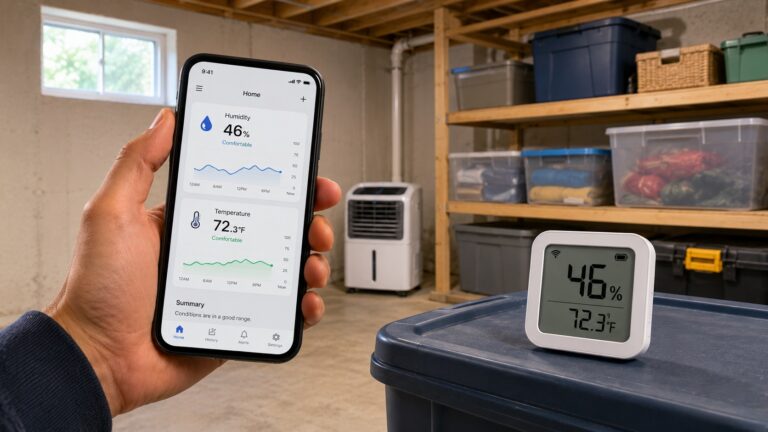
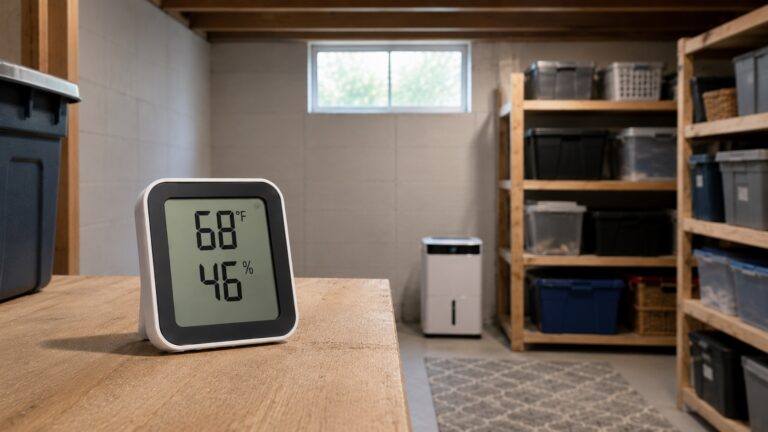
This also explains why a hygrometer may show acceptable readings while condensation is still occurring. The device measures the general air condition, not the temperature and moisture interaction at specific surfaces.
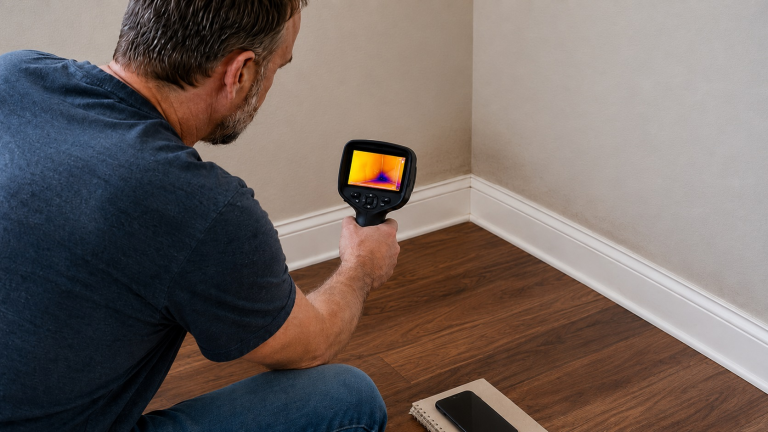
For a clearer picture, compare the hygrometer reading with what you see at the coldest surfaces. A room reading may look acceptable, but repeated moisture on window glass, lower corners, exterior-wall baseboards, or closet walls means the surface conditions still need attention.
Common Winter Moisture Trouble Spots
Some areas of the home are more vulnerable to winter moisture problems due to temperature differences and airflow limitations. These locations tend to collect condensation more easily.
Common trouble spots include:
- Windows: Cold glass surfaces cause frequent condensation
- Exterior walls: Poor insulation can create cold surfaces
- Ceiling corners: Warm air rises and meets cooler surfaces
- Behind furniture: Limited airflow allows moisture to accumulate
- Closets: Enclosed spaces trap moisture and reduce circulation
Check these areas during cold mornings and again later in the day. Moisture that dries quickly may be temporary, but repeated dampness in several locations can point to a larger humidity, airflow, or insulation imbalance.
When Winter Humidity Problems Are Normal vs Serious
Not every winter moisture problem means something is wrong. Light window condensation after a very cold night can be normal. The concern begins when moisture is heavy, persistent, widespread, or damaging nearby materials.
Normal winter behavior:
- Light condensation on windows during cold mornings
- Moisture that disappears as temperatures rise during the day
- Occasional humidity fluctuations
Potentially serious conditions:
- Condensation that persists throughout the day
- Moisture appearing on walls, ceilings, or multiple surfaces
- Visible mold growth or musty odors
- Water pooling on windowsills or damaging materials
Persistent or widespread moisture problems often indicate that indoor humidity is too high or that airflow and insulation are not adequate. In these cases, it may be necessary to take steps to reduce indoor humidity levels and improve moisture control.
How to Monitor Winter Moisture Conditions
Monitoring humidity during winter requires more than just checking a single reading. Because moisture problems are often localized, it is important to observe both humidity levels and visible signs of condensation.
Start by placing a hygrometer in a central location to track general humidity. Then, check areas where condensation is most likely to occur, such as windows and exterior walls.
During cold weather, check:
- morning window condensation before it dries;
- damp corners behind curtains or furniture;
- closet walls that feel cooler than the room;
- water marks or swelling on window trim and sills;
- musty odors near exterior walls or poorly ventilated rooms.
Pay attention to patterns over time. For example:
- Does condensation appear only at night or in the morning?
- Does it disappear during the day?
- Does it occur in one area or throughout the home?
These patterns help determine whether the issue is temporary or ongoing. If humidity remains elevated or condensation persists, it may indicate that moisture is not being managed effectively.
If readings stay high even after condensation dries, review why indoor humidity levels become too high to narrow down whether the moisture is coming from daily activities, poor ventilation, or hidden sources.
FAQ: Winter Humidity Problems
Why do my windows sweat in winter?
Windows sweat because warm indoor air contacts cold glass surfaces. The air cools at the surface and releases moisture as condensation. This is common during cold weather, especially when indoor humidity is elevated.
Why do I have condensation if my house feels dry?
Even when the air feels dry, small amounts of moisture can still condense on cold surfaces. This creates localized moisture that is not always reflected in general humidity readings.
Is some condensation normal in winter?
Light condensation on windows during very cold conditions can be normal, especially in the morning. However, heavy or persistent condensation is a sign that humidity levels may be too high or that airflow is limited.
Should I use a humidifier in winter?
Humidifiers can improve comfort when winter air is very dry, but they should be used with a hygrometer. If window condensation increases after using one, the added moisture may be too much for the home’s cold surfaces.
How much humidity is too much in winter?
Indoor humidity above 40–50% during cold weather can increase condensation risk, especially on windows and exterior walls. In very cold weather, even lower readings may still cause condensation if surfaces are poorly insulated or airflow is limited.
Can winter humidity problems lead to mold?
Yes. Persistent condensation and damp surfaces create ideal conditions for mold growth, particularly in corners, behind furniture, and on poorly insulated walls.
Conclusion
Humidity problems worsen in winter because indoor moisture meets colder surfaces while ventilation is usually reduced. That is why a home can feel dry overall but still develop condensation on windows, exterior walls, corners, and hidden surfaces.
The most important step is to compare humidity readings with visible moisture patterns. Light condensation that dries quickly may be normal, but persistent moisture, musty odors, mold, or damp materials should be treated as signs that humidity, airflow, or insulation needs attention.
2 Comments
Comments are closed.