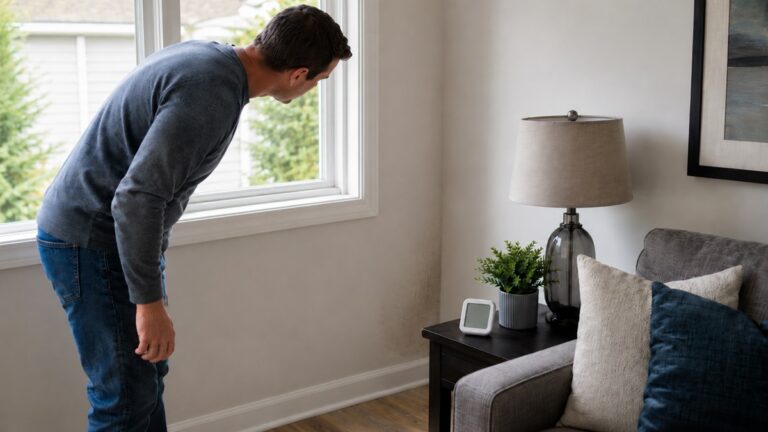
What to Do If You Suspect Mold Exposure in Your Home
If you suspect mold exposure in your home, the first step is to stay calm and avoid jumping straight to demolition, panic cleaning, or expensive remediation before you understand the situation. Mold concerns should be taken seriously, especially when symptoms, musty odors, visible growth, damp materials, or past leaks are involved. But symptoms alone do not prove mold exposure, and mold testing alone does not solve the source of the problem.
The safest approach is to work in order: protect people first, avoid disturbing suspected mold, look for moisture clues, document what you find, check humidity and damp materials, decide whether testing or professional inspection is needed, and correct the moisture source. For the broader indoor air context, start with this guide to mold exposure and indoor air quality.
If you are still trying to decide whether the signs fit, review the signs mold exposure may be coming from your home before moving into the action steps below.
What Should You Do First If You Suspect Mold Exposure?
The first thing to do is separate immediate health concerns from building investigation. If someone has severe, persistent, worsening, or unusual symptoms, contact a healthcare professional. If someone has asthma, mold allergy, chronic lung disease, immune compromise, or another high-risk condition, do not rely on home inspection alone to decide what is safe for that person.
At the same time, begin looking at the home itself. Mold usually points back to moisture. That moisture may come from a plumbing leak, roof leak, damp basement, crawl space, appliance leak, HVAC condensation, window leak, high humidity, or poor ventilation. The goal is to identify whether there is a moisture condition that could support mold growth.
A practical first response looks like this:
- Take symptoms seriously, but do not self-diagnose mold exposure.
- Avoid the most suspicious rooms or areas when possible.
- Do not scrape, sand, fan, or disturb suspected mold.
- Look for moisture clues such as odor, stains, condensation, leaks, or damp materials.
- Document what you see, smell, and experience.
- Check humidity and suspicious moisture areas.
- Use mold testing only as one part of the investigation.
- Call the right professional when the source is hidden, recurring, widespread, or health-sensitive.
Step 1: Take Symptoms Seriously Without Self-Diagnosing
If you suspect mold exposure because of symptoms, pay attention to timing and severity. Symptoms such as congestion, coughing, throat irritation, eye irritation, wheezing, skin irritation, or allergy-like reactions may be worth discussing with a healthcare professional, especially if they persist or worsen. A doctor can evaluate health symptoms. A home inspection can evaluate building conditions. These are related concerns, but they are not the same task.
Try to notice whether symptoms are worse at home, better away from home, stronger in certain rooms, or connected to rain, humidity, HVAC use, showering, or time spent in a musty area. If you need a more detailed source-pattern guide, see how to tell if mold exposure is coming from your house.
Do not assume mold is the only possible cause. Dust, pet dander, pollen, dry air, smoke, cleaning products, dirty HVAC filters, poor ventilation, illness, and other indoor air issues can create similar symptoms. Mold becomes more plausible when symptoms line up with moisture evidence inside the home.
Step 2: Avoid the Most Suspicious Areas When Possible
While you investigate, reduce unnecessary time in the areas that seem most suspicious. This may mean avoiding a musty basement room, not sleeping in a bedroom with visible mold or damp materials, keeping children away from a visibly moldy bathroom ceiling, or limiting access to a crawl space, attic, or storage area with strong odor.
This does not mean every suspected mold situation requires leaving the home immediately. The right response depends on symptom severity, visible mold, active moisture, occupant sensitivity, and whether a safer temporary room is available. Avoiding one affected area while arranging inspection may be reasonable, but high-risk occupants or severe symptoms justify medical and professional guidance sooner.
If the concern involves no visible mold but persistent odor, symptoms, or moisture clues, see whether mold exposure can happen without visible mold. Hidden mold concerns should be handled carefully rather than ignored or aggressively disturbed.
Step 3: Do Not Disturb Suspected Mold
If you see or strongly suspect mold, avoid disturbing it until you understand the size and source of the problem. Scraping, sanding, brushing, dry vacuuming, pulling up moldy materials, opening wall cavities, or running fans across moldy surfaces can spread particles into the air and move contamination into nearby areas.
Also avoid entering wet or moldy areas where electrical hazards, sagging ceilings, sewage, floodwater, or structural damage may be present. Those situations need safety-first professional help, not ordinary homeowner inspection.
This is especially important if mold may be on porous materials such as drywall, insulation, carpet padding, ceiling tiles, particleboard, subflooring, or unfinished wood. These materials can hold moisture below the surface, which means surface cleaning may not solve the problem.
Do not spray a product on suspected mold and assume the issue is fixed. Cleaning products may affect the surface, but they do not repair a roof leak, stop a plumbing drip, dry wet insulation, correct basement seepage, or solve high humidity. Mold that keeps returning after cleaning usually means the moisture source is still active.
Step 4: Look for Moisture and Mold Clues
Once people are safe and you are not disturbing suspicious materials, begin looking for evidence. Mold problems usually begin with moisture, so the inspection should focus on places where water or humidity can collect. If you want a broader framework for tracing moisture sources, use this guide on how to find, fix, and prevent moisture problems.
Musty Odor
A musty smell is one of the most important clues when you suspect mold exposure. Note where the odor is strongest and when it appears. It may be stronger in a basement, crawl space, bathroom, closet, cabinet, laundry area, HVAC vent, or room that stays closed for long periods.
Also notice whether the odor changes after rain, showering, air conditioning, heating, or opening a door to a damp area. The timing can help point toward the source.
Visible Mold or Staining
Look for dark spots, fuzzy growth, speckled patches, discoloration, or staining on walls, ceilings, trim, cabinets, stored items, attic materials, crawl space framing, or basement surfaces. Not every stain is mold, but staining often means moisture has been present.
Do not focus only on large patches. A small ceiling stain, swollen baseboard, peeling paint line, or damp cabinet back may be the visible edge of a larger hidden moisture problem.
Condensation or High Humidity
Condensation can point to humidity, ventilation, insulation, or temperature problems. Look for water droplets on windows, damp walls, sweating ducts, moisture around vents, wet toilet tanks, or condensation on cold surfaces.
High indoor humidity can also support mold growth even without an obvious leak. Bathrooms, basements, crawl spaces, laundry rooms, and closed rooms should be checked carefully because they may stay damp longer than the rest of the home.
Past Leaks or Damp Materials
A past leak still matters if materials were never fully dried. Check areas below roof leaks, around windows, behind appliances, under sinks, near toilets, along basement walls, around HVAC equipment, and under flooring transitions. Dry-looking surfaces do not always prove that the backside of drywall, subflooring, cabinet bases, or insulation dried properly.
If the home recently had water damage, the priority is to identify what got wet, how long it stayed wet, and whether porous materials were affected. Mold concerns are much more realistic when damp materials were left enclosed or partially dried.
Step 5: Document What You Find
Documentation helps you think clearly and gives professionals better information if you need help later. It can also be useful for landlords, property managers, insurance conversations, or repair planning.
Document the following:
- Photos of visible mold, stains, leaks, condensation, or damaged materials
- Dates when symptoms, odors, leaks, or dampness appeared
- Rooms where symptoms or odors are strongest
- Weather conditions such as heavy rain, humidity, or snowmelt
- HVAC use, shower use, cooking, or other moisture-producing activities
- Humidity readings if you have a hygrometer
- Moisture meter readings from suspicious materials, compared with nearby dry areas
- Known leak history, repairs, or previous water damage
Try to record facts rather than conclusions. Instead of writing “mold is making us sick,” write “musty odor strongest in north bedroom after rain; congestion worse after sleeping there; ceiling stain near exterior wall.” That kind of note is more useful for inspection and repair decisions.
Step 6: Check Humidity and Moisture Conditions
After documenting visible clues, check the conditions that may be allowing mold to grow: high humidity, damp materials, trapped moisture, or a leak that is still active.
Use a hygrometer to compare rooms. A bedroom, bathroom, basement, crawl space-adjacent room, or laundry area may have very different humidity than the main living area. If you are not sure how to check room conditions, this guide on how to test indoor humidity levels can help you measure and compare the right areas.
A moisture meter can also be useful around suspicious materials such as stained drywall, swollen baseboards, damp cabinet bottoms, flooring transitions, window trim, and areas below known leaks. A moisture meter does not diagnose mold exposure, but it can help identify damp materials that may need further inspection.
Treat unusual readings as a clue, not a final answer. Compare the suspicious spot with a nearby dry-looking area of the same material, and pay more attention to patterns than one isolated reading.
Step 7: Decide Whether Mold Testing Makes Sense
Mold testing can be helpful, but it should not be treated as the first or only answer. A test may provide screening information when mold is suspected but not visible, when you need documentation, or when you are comparing suspicious rooms. It still does not locate the moisture source or prove whether materials are dry.
Testing may make sense when:
- You smell musty odor but cannot find visible mold.
- Symptoms seem connected to the home and you need more information.
- You want to compare one suspicious room with another area.
- You need documentation before deciding whether to call an inspector.
- You have a visible surface sample and want basic identification.
Testing is less useful when the problem is already obvious. If you can see widespread mold, active leaking, wet drywall, or soaked insulation, the priority is source correction and proper cleanup, not proving that mold exists. If you compare home testing options, this guide to best mold test kits for homeowners can help you understand what DIY kits can and cannot do.
For a more complete verification process, use this guide on how to confirm mold exposure risks inside your home. If your main question is whether symptoms justify home testing, see whether you should test your home after mold exposure symptoms before relying on a kit alone. Confirmation should combine moisture evidence, visual inspection, humidity readings, possible testing, and source identification.
Step 8: Know When DIY Cleaning Is Not Enough
Small, surface-level mold on a nonporous or easy-to-clean surface may sometimes be manageable with careful homeowner cleanup, but many suspected mold exposure situations are not simple cleaning problems. The more hidden, porous, widespread, or recurring the mold is, the less appropriate DIY cleaning becomes.
DIY cleaning is usually not enough when:
- Mold covers a large area.
- Mold is growing on drywall, insulation, carpet padding, particleboard, or ceiling tiles.
- The source is inside a wall, ceiling, crawl space, attic, or HVAC system.
- Mold keeps returning after cleaning.
- Materials are still wet or the leak is active.
- There is a strong musty odor but no visible source.
- Someone in the home has asthma, severe allergies, chronic lung disease, immune compromise, or persistent symptoms.
- The cleanup would require tearing out materials or disturbing contaminated dust.
In these cases, cleaning the surface may hide the warning sign without solving the problem. Mold control depends on moisture control. If the source stays active, the mold is likely to return.
Step 9: Call the Right Professional
The right professional depends on what you have found. A suspected mold exposure concern may involve health symptoms, hidden moisture, visible growth, plumbing leaks, HVAC condensation, roof leaks, basement seepage, or crawl space dampness. One contractor may not be the right answer for every situation.
Use these general guidelines:
- Healthcare provider: Call for severe, persistent, worsening, unusual, or high-risk symptoms.
- Mold inspector: Call when the source is unclear, hidden, or needs documentation.
- Mold remediation contractor: Call when mold is widespread, recurring, hidden, or affecting porous materials.
- Plumber: Call when the likely source is a sink, toilet, pipe, appliance line, or wall leak.
- HVAC contractor: Call when musty odor, water overflow, condensation, or irritation appears tied to heating or cooling equipment.
- Roofer: Call when stains, attic moisture, or odors appear after rain or roof leak events.
- Basement or crawl space specialist: Call when seepage, standing water, damp soil, failed vapor barriers, or crawl space odor is involved.
- Landlord or property manager: Contact them promptly if you rent and document the condition clearly.
If two professionals seem relevant, start with the one most likely to stop active moisture. For example, a plumber may be the first call for a wet cabinet, while a mold inspector may be more useful when the odor is strong but the source is hidden.
If you are unsure whether the problem has moved beyond homeowner cleanup, see this guide on when to hire a mold remediation professional. The decision usually depends on size, location, material type, recurrence, moisture source, and occupant sensitivity.
What Not to Do If You Suspect Mold Exposure
When you are worried about mold exposure, it is easy to act too quickly. Some rushed actions can spread particles, hide the real source, or delay the moisture repair that actually matters. Before cleaning, testing, or opening materials, avoid the most common mistakes.
- Do not scrape, sand, or dry-brush suspected mold. Disturbing moldy material can spread particles into the air.
- Do not run fans across moldy or damp materials. Air movement can spread contamination if mold is present.
- Do not tear open walls as your first step. Start with visible inspection, humidity readings, moisture clues, and professional guidance when hidden mold is likely.
- Do not rely on fragrance, candles, or air fresheners. Covering odor does not remove mold or fix moisture.
- Do not treat bleach or sprays as a complete solution. Surface treatment does not solve hidden dampness, porous material contamination, or recurring moisture.
- Do not assume an air purifier fixes the source. Filtration may help reduce airborne particles, but it does not remove mold growth or dry wet materials.
- Do not ignore the moisture source. If the leak, humidity, seepage, or condensation remains, the problem can return.
FAQ: What to Do If You Suspect Mold Exposure in Your Home
Should I leave my home if I suspect mold exposure?
Not every suspected mold situation requires leaving the home immediately. If the concern is small, localized, and not causing severe symptoms, avoiding the affected area while you investigate may be enough at first. However, if symptoms are severe, someone in the home is medically vulnerable, the odor is strong, visible mold is widespread, or the suspected source is in a bedroom, HVAC system, crawl space, or major living area, seek medical and professional guidance sooner.
Should I see a doctor for suspected mold exposure?
You should contact a healthcare professional if symptoms are persistent, severe, worsening, unusual, or involve someone with asthma, allergies, chronic lung disease, immune compromise, or other higher-risk conditions. A mold inspection can evaluate the home, but it cannot diagnose a medical problem or prove that mold is the cause of symptoms.
Should I test my home for mold first?
Testing can help in some cases, but it should not be the only first step. Begin by looking for moisture clues such as musty odor, stains, condensation, damp materials, high humidity, visible mold, or past leaks. Testing is most useful when the source is unclear, you need documentation, or you want to compare a suspicious room with a less suspicious area. If mold and moisture are already obvious, the next step may be source correction and proper cleanup instead of more testing.
Can I clean suspected mold myself?
Small surface mold on a limited, easy-to-clean area may sometimes be manageable with careful precautions, but suspected mold exposure often involves hidden or porous materials. Do not try to handle large mold areas, HVAC-related mold, mold inside walls, mold on insulation, or recurring mold without proper guidance. If the moisture source is still active, cleaning alone will not solve the problem.
Can an air purifier help while I investigate?
An air purifier may help reduce some airborne particles, but it does not fix mold growth or moisture problems. It should be treated as a support tool, not the main solution. If mold is growing on damp materials, the source must still be found, dried, repaired, cleaned, or removed as needed.
Who should I call first for suspected mold exposure?
Call a healthcare professional first for concerning symptoms. If the home problem is unclear, start with a mold inspector. If mold is already widespread, recurring, hidden, or affecting porous materials, call a remediation contractor. If the evidence points to active moisture, call the trade most likely to stop it first: plumber, roofer, HVAC contractor, basement contractor, or crawl space specialist.
What if I smell mold but cannot see it?
A musty smell without visible mold should be investigated, especially if it is recurring or connected to symptoms, humidity, rain, HVAC use, or a specific room. Start with non-destructive checks such as odor tracking, humidity readings, visual inspection, and moisture checks. If the source remains hidden, a professional inspection may be more useful than guessing.
Suspected Mold Exposure Action Checklist
- Take suspected mold exposure seriously, but do not self-diagnose from symptoms alone.
- Seek medical guidance for severe, persistent, worsening, or high-risk symptoms.
- Avoid the most suspicious areas when practical while you investigate.
- Do not scrape, sand, fan, or disturb suspected mold.
- Look for moisture clues such as musty odor, stains, condensation, high humidity, damp materials, and leak history.
- Document photos, dates, rooms, symptoms, humidity readings, moisture readings, and moisture events.
- Mold testing can support investigation, but it does not replace finding the moisture source.
- DIY cleaning is not enough for hidden, recurring, widespread, porous-material, or HVAC-related mold.
- Call the professional who matches the evidence: medical, mold inspection, remediation, plumbing, HVAC, roofing, basement, crawl space, or property management.
The Best Next Step Is to Match the Response to the Evidence
If you suspect mold exposure in your home, do not choose the next step based on fear alone. Match the response to the evidence: symptoms, odor, visible growth, damp materials, humidity readings, leak history, and occupant risk.
When several clues point to the same area, move from guessing to action: limit exposure, document the pattern, check moisture conditions, decide whether testing adds value, and bring in the right professional when the source is hidden, recurring, widespread, or health-sensitive.