Best Backup Sump Pumps for Homes
Introduction
A primary sump pump can do a good job during normal rain, but it is also one of the most vulnerable parts of a basement water-control system. If the power goes out, the pump fails, the float switch sticks, or heavy rain overwhelms the system, water can rise quickly in the sump basin. That is why choosing one of the best backup sump pumps for homes is an important step for homeowners who want an extra layer of protection against basement flooding, moisture damage, and mold risk.
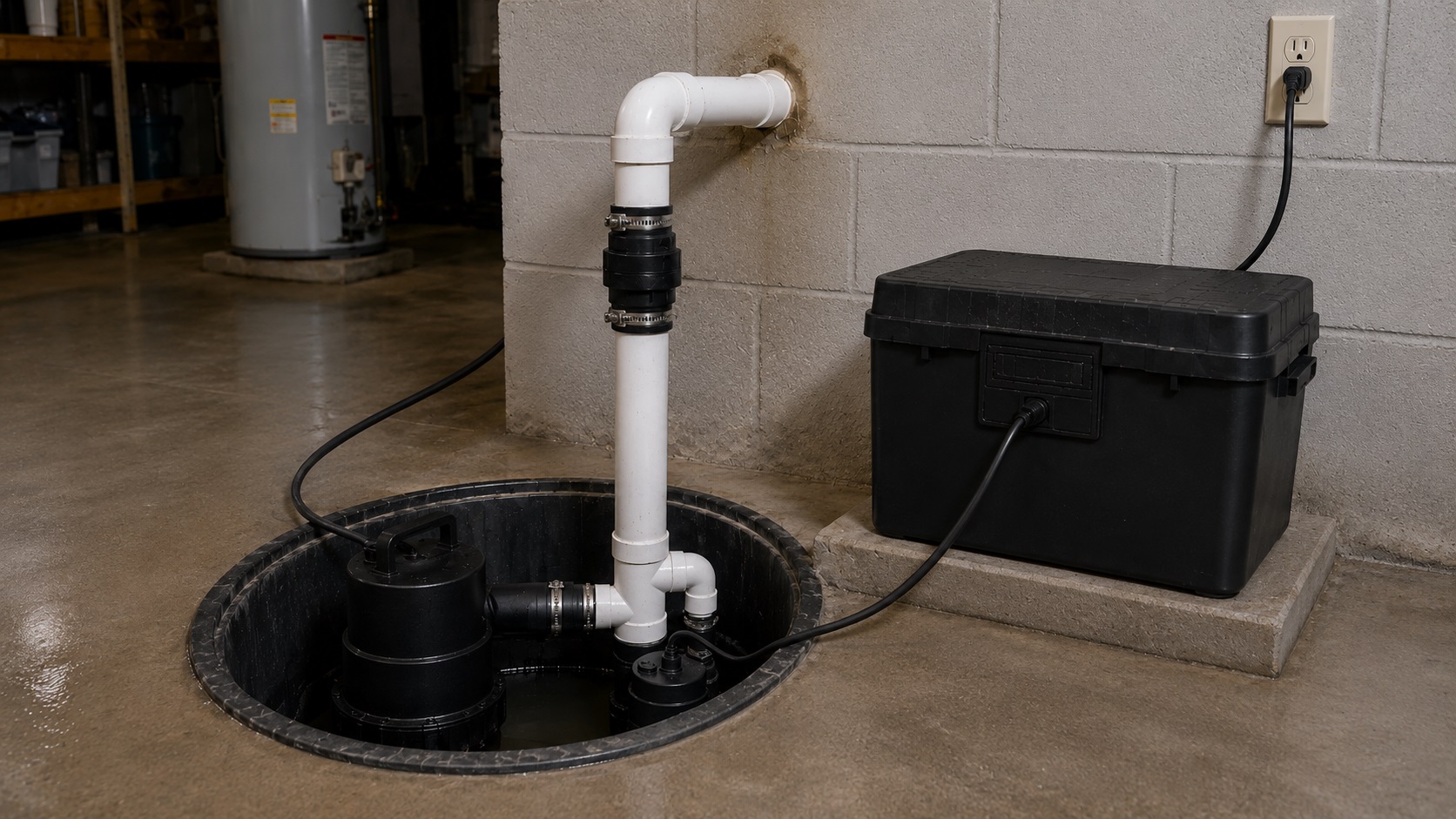
A backup sump pump is not a substitute for good drainage, proper grading, or a complete basement waterproofing strategy. It is a safety layer that helps keep water moving when the main pump cannot. Some systems use battery power, some use municipal water pressure, and some combine a primary pump and backup pump in one preassembled package. This guide focuses on practical residential options available on Amazon for homeowners who want dependable emergency pumping support.
As an Amazon Associate, this site earns from qualifying purchases. This does not affect the price you pay. Our recommendations are based on research, product reliability, and real-world usability in moisture-prone environments.
Quick Picks: Best Backup Sump Pumps for Different Basement Risks
- Best Overall Combination System: WAYNE 1/2 HP Sump Pump with Integrated Vertical Float Switch and 12 Volt Battery Back Up Capability
- Best Standalone Battery Backup Pump: WAYNE ESP25n 12 Volt Battery Back Up Sump Pump
- Best Water-Powered Backup Pump: SumpJet Water Powered Backup Emergency Sump Pump
- Best Budget Battery Backup: The Basement Watchdog Emergency Battery Backup Sump Pump System with Copper-Wound Motor
- Best Monitoring Backup System: The Basement Watchdog Special CONNECT Battery Backup Sump Pump System
- Best High-Capacity Backup: The Basement Watchdog Big Dog CONNECT Battery Backup Sump Pump System
For a broader basement water-control plan, see our guide to how to waterproof basements and control water intrusion. A backup pump works best when it supports good drainage, proper sump pit maintenance, and a realistic flood-prevention strategy.
If you are still deciding whether backup protection is necessary, see our guide to why sump pump backup systems are important.
Backup Sump Pump Reviews
Best Overall Combination System: WAYNE 1/2 HP Sump Pump with Integrated Vertical Float Switch and 12 Volt Battery Back Up Capability
The WAYNE combination system is the most complete overall pick for homeowners who want to replace or upgrade their sump setup instead of simply adding a backup pump to an older system. It combines a primary sump pump with a 12-volt battery backup pump, which makes it especially useful for basements where the existing pump is aging, undersized, or due for replacement. For homeowners dealing with recurring wet basement concerns, this type of combination system can simplify the upgrade because the primary and backup pumps are designed to work together.
This is a good fit when the goal is not only emergency pumping during power outages, but also better overall pump reliability. It is still important to size the system correctly, use a compatible battery, and confirm that the sump basin has enough room for installation.
Key Features
- Combination design with a primary sump pump and 12-volt backup pump
- Integrated vertical float switch for residential sump basins
- High pumping capacity for active basement drainage situations
- Useful for homeowners replacing a complete sump pump setup
- Battery backup support for outages and primary pump interruptions
Pros
- ✔ Strong all-in-one solution for homeowners who need both primary and backup protection
- ✔ Reduces the guesswork of pairing separate pumps
- ✔ Well-suited for basements with frequent water entry
- ✔ Good option when the current primary pump is old or unreliable
Cons
- ✖ Battery is not included
- ✖ More involved than adding a backup-only pump
- ✖ May not fit smaller or crowded sump basins
- ✖ Not necessary if the existing primary pump is already new and dependable
Best For
- Homeowners replacing an older sump pump system
- Basements with regular water entry during storms
- People who want a coordinated primary and backup setup
- Homes where power outages and pump failure are both concerns
Best Standalone Battery Backup Pump: WAYNE ESP25n 12 Volt Battery Back Up Sump Pump
The WAYNE ESP25n is a strong choice for homeowners who already have a working primary sump pump but want a separate emergency backup pump. This style of system is useful when the main pump is still in good condition, but the basement needs protection during power outages, switch problems, or primary pump failure. Instead of replacing the whole sump pump setup, the ESP25n adds a dedicated backup layer.
This is one of the most practical backup sump pumps for homes where the sump pit already has a reliable primary pump and enough room for an additional pump. It is especially helpful for homeowners who want a recognized sump pump brand without moving into a full combination system. As with most battery backup pumps, battery choice matters. A weak, undersized, or poorly maintained battery can reduce real-world performance.
Key Features
- 12-volt battery backup design for emergency pumping
- Standalone backup pump for existing sump systems
- Designed for residential basement sump pits
- Audible alarm support to alert homeowners during backup operation
- Useful when the main sump pump is still worth keeping
Pros
- ✔ Good upgrade for an existing sump pump system
- ✔ Does not require replacing a working primary pump
- ✔ Strong brand reputation in residential sump pumps
- ✔ Practical for homes with storm-related power outages
Cons
- ✖ Battery is sold separately
- ✖ Requires enough space in the sump basin
- ✖ Runtime depends heavily on battery condition and pumping frequency
- ✖ Does not solve problems caused by poor drainage or an undersized main system
Best For
- Homes with a good primary pump that needs backup protection
- Basements where power outages are the main concern
- Homeowners who want a backup-only sump pump
- People who do not need a full primary-and-backup combo system
Check the WAYNE ESP25n 12 Volt Battery Back Up Sump Pump on Amazon to see current availability.
Best Water-Powered Backup Pump: SumpJet Water Powered Backup Emergency Sump Pump
The SumpJet is different from the battery backup pumps in this guide because it uses municipal water pressure rather than stored battery power. That makes it a valuable option for homeowners who want backup pumping during long power outages without worrying about battery charge limits. It can be a smart solution in homes connected to reliable city water, especially where outages sometimes last longer than a typical backup battery can support.
The main limitation is that this type of pump is not right for every home. If the house uses a private well, a power outage may also stop the well pump, which means a water-powered backup may not function as intended. It also uses household water to remove sump water, so it should be chosen with a clear understanding of local plumbing conditions, water pressure, and code requirements.
If your home depends on a well pump during outages, choose a battery backup instead unless a qualified plumber confirms that your water supply will still support the system.
Key Features
- Water-powered backup design that does not rely on a battery
- Uses municipal water pressure for emergency sump pumping
- Fully automatic operation when installed correctly
- Useful during extended power outages
- Compact design for backup use in residential sump systems
Pros
- ✔ No battery charging or battery replacement schedule
- ✔ Good option for long outages where battery runtime is a concern
- ✔ Useful emergency layer for homes with reliable city water
- ✔ Avoids some maintenance issues associated with backup batteries
Cons
- ✖ Not ideal for homes on wells
- ✖ Requires adequate municipal water pressure
- ✖ Uses household water during operation
- ✖ Installation may be more plumbing-intensive than a battery backup
Best For
- Homes connected to municipal water
- Basements where long power outages are a concern
- Homeowners who do not want to maintain a backup battery
- Situations where battery runtime may not be enough
Check the SumpJet Water Powered Backup Emergency Sump Pump on Amazon to see current availability.
Best Budget Battery Backup: The Basement Watchdog Emergency Battery Backup Sump Pump System with Copper-Wound Motor
The Basement Watchdog Emergency Battery Backup Sump Pump System is a practical budget-focused option for homeowners who want basic emergency backup protection without moving into a premium monitoring system. It is designed to provide a separate backup pump, controller, float switch, and battery box so the home has an emergency pumping layer if the primary sump pump stops working.
This is a useful pick for basements that need backup protection but do not necessarily need advanced connectivity features. It can help homeowners reduce risk during outages, but it should not be treated as a replacement for a healthy primary pump or good exterior drainage. If your basement floods often, you may need a higher-capacity backup, a primary pump upgrade, or professional evaluation of the water-control system.
Key Features
- Battery backup sump pump system for residential sump pits
- Controller and alarm functions for backup operation awareness
- Dual float switch design for added activation reliability
- Battery box included, with battery sold separately
- Budget-friendly backup layer for existing sump systems
Pros
- ✔ Good entry-level backup option
- ✔ Suitable for homeowners who want basic protection
- ✔ Includes core system components other than the battery
- ✔ Helpful for occasional outages or primary pump interruptions
Cons
- ✖ Battery is not included
- ✖ Lower-capacity than premium backup systems
- ✖ Not the best choice for very high water inflow
- ✖ Monitoring features are more limited than CONNECT models
Best For
- Budget-conscious homeowners
- Basements with moderate backup needs
- Homes where the primary pump is still working well
- People who want a basic emergency layer without smart features
Best Monitoring Backup System: The Basement Watchdog Special CONNECT Battery Backup Sump Pump System
The Basement Watchdog Special CONNECT is a better fit for homeowners who want more system awareness than a basic backup pump provides. Backup sump pumps are most useful when they activate before a basement flood becomes obvious, and monitoring features can help homeowners respond sooner when something is wrong. This system is designed around backup pumping plus controller-based alerts, with WiFi capability available through an add-on module.
This type of backup makes sense in finished basements, storage-heavy basements, or homes where the owner may not always be near the sump pit during storms. It still requires proper installation, a compatible battery, and regular testing. Monitoring does not eliminate water problems, but it can make system failures harder to miss.
Key Features
- Battery backup sump pump system with controller-based monitoring
- Dual-float switch design for backup activation
- WiFi-capable with an optional add-on module
- Designed for emergency pumping if the main pump fails or power is lost
- Useful for homeowners who want alerts and status awareness
Pros
- ✔ Better monitoring support than basic backup systems
- ✔ Good fit for finished basements or stored valuables
- ✔ Strong middle-ground option between budget and premium systems
- ✔ Helps homeowners notice backup operation or system issues sooner
Cons
- ✖ Battery is sold separately
- ✖ WiFi functionality may require an additional module
- ✖ More expensive and more complex than basic backup systems
- ✖ Still needs periodic testing and maintenance
Best For
- Finished basements
- Homeowners who want backup alerts
- People who travel or may not hear a local alarm
- Basements where early warning matters
Best High-Capacity Backup: The Basement Watchdog Big Dog CONNECT Battery Backup Sump Pump System
The Basement Watchdog Big Dog CONNECT is the high-capacity pick in this roundup. It is designed for homeowners who want a more powerful backup sump pump system than a basic emergency model. That can matter in basements where the sump pit fills quickly during storms, where the primary pump cycles often, or where a weaker backup pump would not keep up with incoming water.
This is not the simplest or cheapest way to add backup protection. It is better for higher-risk homes where backup pumping capacity, monitoring potential, and longer emergency readiness are more important than choosing the most basic option. Because high-capacity backup systems can still be limited by battery setup, discharge height, and water inflow rate, the system should be matched carefully to the home.
Key Features
- High-capacity battery backup sump pump system
- Designed for more demanding residential sump applications
- CONNECT platform with optional communication features
- Controller-based system awareness
- Useful when a basic backup pump may be undersized
Pros
- ✔ Strong option for basements with heavier water inflow
- ✔ Better suited to high-risk sump systems than entry-level backups
- ✔ Monitoring-capable design
- ✔ Good fit for homeowners who want a more serious emergency system
Cons
- ✖ Battery is not included
- ✖ More system than some homes need
- ✖ Higher-capacity setup may require more planning
- ✖ Listing-specific review volume may be lower than some mainstream picks
Best For
- Larger basements
- Homes with frequent sump pump cycling
- Higher-risk flood-prone sump pits
- Homeowners who want a premium backup system
Backup Sump Pump Comparison Table
| Product | Recommended For | Best Use Case | Key Strengths | Main Limitation | Amazon Link |
|---|---|---|---|---|---|
| WAYNE 1/2 HP Sump Pump with Integrated Battery Back Up Capability | Best Overall Combination System | Replacing a full sump pump setup | Primary and backup pump in one coordinated system | Battery not included; more involved installation | View on Amazon |
| WAYNE ESP25n 12 Volt Battery Back Up Sump Pump | Best Standalone Battery Backup Pump | Adding backup to a good existing pump | Backup-only design from an established sump pump brand | Battery sold separately; basin space required | View on Amazon |
| SumpJet Water Powered Backup Emergency Sump Pump | Best Water-Powered Backup Pump | City-water homes with long outage concerns | No battery maintenance; runs from municipal water pressure | Not ideal for wells; uses household water during operation | View on Amazon |
| Basement Watchdog Emergency Battery Backup Sump Pump System | Best Budget Battery Backup | Basic emergency backup protection | Good entry-level system with controller and battery box | Lower-capacity than premium models; battery not included | View on Amazon |
| Basement Watchdog Special CONNECT Battery Backup Sump Pump System | Best Monitoring Backup System | Finished basements and alert-focused protection | Controller-based monitoring and optional WiFi capability | Battery and some connectivity features may be separate | View on Amazon |
| Basement Watchdog Big Dog CONNECT Battery Backup Sump Pump System | Best High-Capacity Backup | Higher-risk basements with heavier inflow | Higher-capacity backup design with monitoring potential | More expensive and more system than some homes need | View on Amazon |
How to Choose the Right Backup Sump Pump for Your Basement
The right backup sump pump depends on what can actually go wrong in your home. Some basements mainly need protection during short power outages. Others need a stronger backup because the sump pit fills fast during heavy rain. A finished basement with flooring, drywall, storage, or mechanical equipment also has a lower tolerance for failure than an unfinished utility basement.
Choose a Combination System if Your Primary Pump Is Aging
If your existing sump pump is old, loud, unreliable, or near replacement age, a combination system like the WAYNE model may make more sense than adding a backup pump to a weak primary pump. A backup pump should not be used to cover up a failing main pump. If the primary pump is already showing warning signs, read our guide to signs your basement sump pump is not working before deciding whether to add backup protection or replace the whole setup.
Choose a Standalone Battery Backup if Your Main Pump Is Still Good
If your main pump is relatively new and correctly sized, a standalone battery backup may be the most efficient upgrade. The WAYNE ESP25n and Basement Watchdog backup systems are examples of products meant to add a second emergency pump to an existing sump basin.
This approach works best when the sump pit has enough room, the discharge plumbing can be installed correctly, and the battery can be placed safely near the system.
Choose a Water-Powered Backup Only if Your Home Fits the Requirements
Water-powered backup sump pumps can be excellent in the right homes, but they are not universal. They usually make the most sense for homes connected to municipal water. If your home uses a private well, a power outage may stop the well pump, which can make a water-powered backup unsuitable.
Before choosing a water-powered pump, confirm that your plumbing setup, local code, and water pressure are appropriate. Some installations may require a plumber.
Consider Pumping Capacity at Realistic Lift Heights
Pump capacity is not just about the largest number shown on the product listing. The real question is how much water the pump can move at the vertical lift height in your home. A pump moving water up 10 feet will usually pump less than it does at a lower lift height.
If your basement has fast water inflow, a high-capacity backup may be worth considering. If the sump pit only collects moderate water during storms, a simpler backup system may be enough.
Think About Alerts and Monitoring
A backup sump pump is more useful when you know it is running. If the backup pump activates, that means something is wrong: the power may be out, the primary pump may have failed, or incoming water may be more than the primary system can handle.
For finished basements, stored valuables, rental homes, or homes where the owner travels, a monitoring-capable system can be worth the added complexity. For broader early-warning protection, you may also want to compare backup pumps with leak alarms and flood sensors. See our guide to best flood detection systems for homes for whole-home water alerts.
Match the Pump to the Larger Basement Water-Control System
A backup sump pump is only one part of basement protection. If water is entering through foundation cracks, poor grading, clogged drains, hydrostatic pressure, or failed waterproofing, the pump may be working harder than it should. For a broader system-level plan, review how to waterproof basements and control water intrusion.
Backup Sump Pump Setup and Usage Tips
Even the best backup sump pumps for homes can perform poorly if they are installed incorrectly or ignored after installation. Backup systems should be treated as emergency equipment, not as a set-it-and-forget-it appliance.
Use the Right Battery
For battery backup pumps, use a compatible deep-cycle or manufacturer-recommended standby battery. Do not assume that any automotive battery is the right choice. Battery size, condition, charge level, and maintenance affect how long the backup pump can operate during an outage.
Test the Backup Pump Before Storm Season
Test the system periodically by lifting the float or following the manufacturer’s testing procedure. Make sure the backup pump turns on, the alarm works, and water discharges properly. Testing is especially important before spring storms, hurricane season, or long periods of heavy rainfall.
Keep the Sump Basin Clean
Mud, gravel, debris, and floating objects can interfere with pump operation. A backup pump with a blocked intake or stuck float may fail when it is needed most. If your sump pit collects debris, inspect and clean it before the rainy season.
Confirm the Discharge Line Is Clear
A backup pump cannot protect the basement if the discharge line is frozen, clogged, crushed, or routed incorrectly. Make sure water exits away from the foundation. If water is being discharged too close to the house, it can cycle back into the drainage system and force the pump to run repeatedly.
Use Backup Protection Alongside Maintenance
Backup pumps are not a substitute for sump pump maintenance. Check valves, float switches, power cords, battery terminals, and discharge pipes should be inspected regularly. For more detailed routine care, see our guide to how to maintain basement sump pumps.
Backup Sump Pump Mistakes That Can Leave a Basement Vulnerable
Assuming a Backup Pump Guarantees a Dry Basement
No backup sump pump can guarantee that a basement will stay dry. A pump can only move water that reaches the sump pit and can only pump within its capacity. If water enters through walls, floor cracks, window wells, or exterior drainage failures, the broader problem may still need repair.
Buying a Backup Pump Without Checking Basin Space
Some sump pits are too narrow or crowded for a backup pump, float switch, check valve, and discharge plumbing. Measure the basin and compare it with installation requirements before buying.
Ignoring Battery Requirements
Many backup sump pumps do not include the battery. That is not a small detail. A weak or incompatible battery can leave the system unable to perform properly during an outage.
Choosing Water-Powered Backup for a Well System
Water-powered backup pumps depend on water pressure. In homes with private wells, a power outage may stop the well pump, which can make this type of backup a poor fit.
Forgetting to Test the System
A backup pump that has never been tested may not be ready. Float switches can stick, batteries can fail, alarms can be missed, and discharge lines can clog. Testing helps catch problems before a storm exposes them.
Letting the Pump Discharge Too Close to the Foundation
If discharged water flows back toward the home, the sump system may cycle repeatedly and become overwhelmed. The discharge point should move water away from the foundation and toward a safe drainage area.
Using a Backup Pump Instead of Fixing a Serious Water Problem
If your sump pump runs constantly or the basement still gets wet, the issue may be bigger than the pump. You may need to evaluate drainage, grading, waterproofing, foundation cracks, or hydrostatic pressure. Our article on how to prevent basement flooding with sump pumps explains how sump pumps fit into a larger prevention strategy.
Backup Sump Pump FAQ
What is the best backup sump pump for most homes?
For many homeowners, the best choice is either a combination primary-and-backup system or a standalone battery backup pump from an established brand. If your existing primary pump is old, a combo system like the WAYNE model may make sense. If your main pump is still reliable, a standalone backup like the WAYNE ESP25n or Basement Watchdog system may be more practical.
Is a battery backup sump pump better than a water-powered backup?
It depends on the home. Battery backup pumps work in many homes and do not require municipal water pressure, but runtime depends on battery capacity and condition. Water-powered backups can run without a battery, but they generally require city water and are not usually the right fit for homes on wells.
Do backup sump pumps come with batteries?
Many battery backup sump pumps do not include the battery. Always check the listing details before buying. You may need to purchase a compatible battery separately, and the battery should be maintained according to the system instructions.
How long will a battery backup sump pump run?
Runtime varies based on battery size, battery condition, pumping frequency, lift height, and how much water is entering the sump pit. A pump that runs occasionally during an outage will last longer than one that runs almost continuously during heavy inflow.
Can a backup sump pump prevent mold?
A backup sump pump can reduce the chance of standing water after pump failure or power loss, which may reduce moisture conditions that contribute to mold. However, it does not guarantee mold prevention. Mold prevention also depends on drying, humidity control, leak repair, ventilation, and removing water sources.
Should I install a backup sump pump myself?
Some homeowners with plumbing and electrical comfort may be able to install certain backup systems, but many installations are better handled by a professional. This is especially true when adding discharge plumbing, installing water-powered systems, or working in a crowded sump pit.
How often should I test my backup sump pump?
Testing before storm season and after long inactive periods is a good habit. You should also inspect the system after power outages, heavy rain, or any time the alarm activates. Follow the manufacturer’s testing instructions for your specific pump.
What is the difference between a backup sump pump and a flood detector?
A backup sump pump moves water out of the sump pit when the main pump cannot. A flood detector only alerts you that water is present. Both can be useful, but they solve different problems. Backup pumps provide emergency pumping, while flood detectors provide early warning.
Which Backup Sump Pump Should You Choose?
The best backup sump pump for your home depends on your existing sump system, water source, outage risk, and basement vulnerability. If you want the strongest all-around upgrade and your primary pump is due for replacement, the WAYNE combination system is the most complete choice. If your existing primary pump is still reliable, the WAYNE ESP25n is a strong standalone backup option.
For homes on reliable municipal water, the SumpJet water-powered backup pump is worth considering, especially where long power outages are a concern. Budget-focused homeowners can look at the Basement Watchdog Emergency system, while homeowners who want more monitoring should consider the Basement Watchdog Special CONNECT. For higher-risk basements with heavier water inflow, the Basement Watchdog Big Dog CONNECT is the best fit among these picks for higher-capacity backup protection.
Whichever product you choose, remember that a backup pump is only one layer of protection. It works best alongside a reliable primary pump, clear discharge line, maintained sump basin, and a broader basement moisture-control plan.