Best Emergency Shutoff Valves for Quick Manual Water Isolation
When a pipe starts leaking, a toilet supply valve will not close, or a fixture line needs quick service, a reliable manual shutoff valve can limit how much water reaches the problem area. The best emergency shutoff valves are not leak sensors or smart shutoff systems. They are physical valves that let you stop water at a main line, branch line, toilet, sink, appliance connection, or repair point before the leak spreads into cabinets, flooring, drywall, or framing.
This guide focuses on manual water shutoff valves for homeowners who want practical protection against plumbing leaks and water damage. If you are looking for automatic leak detection, app alerts, or whole-home smart shutoff systems, those are different product categories. For broader background on why fast water control matters, see our guide to how plumbing leaks cause structural damage.
Below are the best emergency shutoff valves we selected for common residential situations, including main-line shutoff, branch-line shutoff, fixture shutoff, existing-pipe repairs, and compression-style angle stops.
As an Amazon Associate, this site earns from qualifying purchases. This does not affect the price you pay. Our recommendations are based on research, product reliability, and real-world usability in moisture-prone environments.
Quick Picks Summary
- Best Overall Emergency Shutoff Valve: SharkBite 22185-0000LFA 3/4-Inch Push-to-Connect Ball Valve
- Best 1/2-Inch Branch-Line Shutoff Valve: SharkBite Max UR22222 1/2 x 1/2 in. PTC Ball Valve
- Best Emergency Repair Valve for Existing Copper or CPVC Pipe: SharkBite 24735LF 1/2 Inch Slip Ball Valve
- Best Straight Fixture Shutoff Valve: SharkBite 23037-0000LF 1/2 x 3/8 Inch Compression Straight Stop Valve
- Best Push-to-Connect Angle Stop Valve: SharkBite 23036-0000LF Brass Push Angle Stop
- Best Traditional Quarter-Turn Angle Stop: BrassCraft G2CR19X C1 1/4 Turn Angle Valve
- Best Compression Fixture Shutoff Valve: Eastman 10738LF Quarter-Turn Angle Stop Valve
Best Emergency Shutoff Valve Reviews
Best Overall Emergency Shutoff Valve: SharkBite 22185-0000LFA 3/4-Inch Push-to-Connect Ball Valve
The SharkBite 22185-0000LFA is the strongest overall pick for homeowners who want a fast manual shutoff option on a common 3/4-inch residential water line. It is especially useful when you need a quarter-turn valve that can be installed without soldering in compatible plumbing systems. For an emergency shutoff valve article, this product fits well because it addresses one of the most important leak-control situations: stopping water before a branch line, repair area, basement utility line, or appliance supply problem causes more damage.
This is not a substitute for understanding your plumbing system, and it should not be installed casually on the wrong pipe type or in a location that violates local plumbing rules. But for compatible residential water lines, it is one of the most practical manual shutoff valves to keep in mind when planning leak prevention or emergency repairs.
Key Features
- 3/4-inch push-to-connect ball valve for compatible residential water lines
- Quarter-turn handle for fast open or closed positioning
- Designed for use with common pipe materials such as copper, CPVC, PEX, PE-RT, and HDPE when installed correctly
- No soldering required in compatible installations
- Useful for adding or replacing a manual shutoff point
Pros
- ✔ Strong choice for quick manual water isolation on 3/4-inch lines
- ✔ Easier for many DIY homeowners than sweat-soldered copper valves
- ✔ Quarter-turn handle is easier to use in a leak emergency than a stiff multi-turn valve
- ✔ Works well as a main-line or branch-line shutoff in the right location
Cons
- ✖ More expensive than basic compression or threaded valves
- ✖ Pipe must be clean, round, deburred, and fully inserted for a reliable installation
- ✖ Not the right choice if your plumbing layout requires a threaded or soldered valve
Best For
- Homeowners who want a fast manual shutoff valve for a 3/4-inch water line
- Basement, utility room, branch-line, or main-line shutoff upgrades where push-to-connect fittings are appropriate
- Situations where a quarter-turn emergency valve is easier to operate than an older gate valve or multi-turn valve
Best 1/2-Inch Branch-Line Shutoff Valve: SharkBite Max UR22222 1/2 x 1/2 in. PTC Ball Valve
The SharkBite Max UR22222 is the better fit when the line you need to isolate is 1/2 inch rather than 3/4 inch. Many residential branch lines feeding fixtures, bathrooms, laundry areas, and appliances are smaller than the main supply line, so a 1/2-inch manual shutoff valve can be more useful than a full-size main-line valve in the right situation.
This product belongs in the article because emergency water control is not only about shutting off the whole house. Sometimes the better solution is to isolate a smaller branch line so the rest of the home can keep water service while a leak or repair is handled. That can be especially helpful when dealing with a bathroom, sink area, laundry room, or appliance line. For more guidance on monitoring plumbing risk before a leak becomes serious, see our article on signs plumbing parts are near failure.
Key Features
- 1/2-inch push-to-connect ball valve for compatible branch lines
- Quarter-turn operation for quick shutoff
- Designed for residential water line use when installed according to product requirements
- Useful for adding a local shutoff point before a fixture or appliance run
- Compact enough for many branch-line installations
Pros
- ✔ Better fit than a 3/4-inch valve for many smaller residential branch lines
- ✔ Push-to-connect design can simplify installation in compatible systems
- ✔ Quarter-turn handle is clear and quick in an emergency
- ✔ Useful for isolating part of the home instead of shutting off everything
Cons
- ✖ Not suitable for 3/4-inch main lines
- ✖ Requires careful pipe preparation and correct insertion depth
- ✖ May not be appropriate where local code or access conditions require another valve type
Best For
- Adding a manual shutoff to a 1/2-inch branch line
- Homeowners who want better control over bathroom, kitchen, laundry, or utility-room water lines
- Repair planning where local isolation is more convenient than whole-home shutoff
Check the SharkBite Max UR22222 1/2 x 1/2 in. PTC Ball Valve on Amazon to see current availability.
Best Emergency Repair Valve for Existing Copper or CPVC Pipe: SharkBite 24735LF 1/2 Inch Slip Ball Valve
The SharkBite 24735LF Slip Ball Valve is different from a standard push-to-connect ball valve. It is designed for situations where you need to add or replace a valve in an existing section of pipe and need some installation flexibility. That makes it especially relevant for emergency repair planning, but it also means the article should describe it carefully.
This is the best fit for homeowners dealing with compatible existing copper or CPVC pipe where a slip-style valve makes sense. It should not be presented as a universal repair valve for every pipe material or every layout. The installation details matter. For an active leak where the goal is only a temporary patch rather than adding a real shutoff valve, see our guide to the best emergency pipe repair kits.
Key Features
- 1/2-inch slip ball valve for compatible repair situations
- Quarter-turn handle for fast shutoff
- Useful for replacing or adding a valve in an existing pipe run
- Push-to-connect style design for compatible installations
- Best treated as a repair-focused valve rather than a general-purpose fitting
Pros
- ✔ Helpful when adding a shutoff valve to an existing pipe section
- ✔ Good option for repair planning on compatible copper or CPVC lines
- ✔ Quarter-turn shutoff is more practical than older multi-turn valves
- ✔ Can reduce the need for more invasive pipe rework in the right situation
Cons
- ✖ More installation-specific than a standard straight push-to-connect ball valve
- ✖ Not the best choice for every pipe material or every repair layout
- ✖ Requires careful measurement, cutting, and pipe preparation
Best For
- Adding a shutoff valve to an existing compatible copper or CPVC pipe run
- Repair situations where a slip-style valve is more practical than a standard coupling and valve combination
- Homeowners or plumbers who need a valve-focused repair option rather than a temporary patch
Check the SharkBite 24735LF 1/2 Inch Slip Ball Valve on Amazon to see current availability.
Best Straight Fixture Shutoff Valve: SharkBite 23037-0000LF 1/2 x 3/8 Inch Compression Straight Stop Valve
The SharkBite 23037-0000LF Straight Stop Valve is a fixture-level shutoff valve for situations where the supply pipe and fixture connector line up in a straight path. This can be useful for floor-fed toilets, certain sink supplies, and some appliance or fixture configurations where an angle stop is not the right shape.
Fixture shutoff valves matter because many water damage events begin in small, hidden places: under sinks, behind toilets, below vanities, or near appliance connections. A reliable local shutoff lets you stop water at the fixture without turning off the whole home. If you are already seeing stains, swelling, or moisture near cabinets, you may also want to review our guide to signs of water damage under sink cabinets.
Key Features
- 1/2-inch push-to-connect inlet with 3/8-inch compression outlet
- Straight stop design for aligned fixture supply connections
- Quarter-turn operation for quick fixture isolation
- Useful for toilets, sinks, and similar residential fixture lines when the layout fits
- Push-to-connect installation for compatible pipe materials
Pros
- ✔ Strong option when a straight stop fits the plumbing layout
- ✔ Faster to operate than many older multi-turn fixture valves
- ✔ Lets you shut off a fixture without shutting down the whole house
- ✔ Useful for replacing unreliable fixture shutoffs in compatible systems
Cons
- ✖ Not the right body shape for most wall-fed angle-stop installations
- ✖ Must match the pipe direction and supply hose connection
- ✖ Push-to-connect fittings require proper pipe preparation
Best For
- Floor-fed fixture supply lines
- Toilets, sinks, or appliance lines where a straight valve body fits better than an angle stop
- Homeowners replacing old fixture valves that are hard to turn or no longer close fully
Check the SharkBite 23037-0000LF Straight Stop Valve on Amazon to see current availability.
Best Push-to-Connect Angle Stop Valve: SharkBite 23036-0000LF Brass Push Angle Stop
The SharkBite 23036-0000LF Brass Push Angle Stop is the better SharkBite fixture option when the water supply comes out of the wall and turns toward a toilet, faucet, or appliance connector. Angle stops are common behind toilets and under sinks, and a quarter-turn push-to-connect version can be a practical upgrade when the existing shutoff is corroded, frozen, or difficult to use.
This valve fits the article because a fixture leak often needs a fast response. If the valve behind a toilet or sink will not shut off, a small leak can become a larger cabinet, floor, or wall moisture problem. Replacing questionable angle stops before they fail is part of a good plumbing maintenance plan. For broader timing guidance, see our article on when to replace angle stop valves.
Key Features
- Push-to-connect angle stop design
- 1/2-inch inlet with 3/8-inch compression outlet
- Quarter-turn handle for fast fixture shutoff
- Designed for wall-fed fixture supply layouts
- Brass body with chrome finish
Pros
- ✔ Good fit for common wall-fed toilet and sink supply lines
- ✔ Quarter-turn handle is easy to understand in an emergency
- ✔ Push-to-connect design avoids soldering in compatible installations
- ✔ Useful upgrade from an old valve that is stiff, leaking, or unreliable
Cons
- ✖ Not ideal for floor-fed straight-line fixture connections
- ✖ Requires a clean, properly prepared pipe end
- ✖ Matching the inlet and outlet sizes is essential before ordering
Best For
- Wall-fed toilet and sink shutoff replacements
- Homeowners who want a push-to-connect angle stop instead of a compression angle stop
- Fixture locations where fast shutoff access matters during leaks or maintenance
Check the SharkBite 23036-0000LF Brass Push Angle Stop on Amazon to see current availability.
Best Traditional Quarter-Turn Angle Stop: BrassCraft G2CR19X C1 1/4 Turn Angle Valve
The BrassCraft G2CR19X C1 is a strong traditional angle stop for homeowners who prefer a compression-style valve from a long-established plumbing brand. It is a good fit for standard sink and toilet shutoff replacement when the existing installation uses a compatible compression inlet and 3/8-inch outlet.
This product is different from the SharkBite push-to-connect angle stop. It is not the fastest option for every DIY homeowner, but it may be the more familiar choice for plumbers and homeowners who are comfortable working with compression connections. It also fits well in an article about the best emergency shutoff valves because quarter-turn angle stops are easier to use quickly than many older multi-turn fixture valves.
Key Features
- Compression-style quarter-turn angle valve
- Common fixture shutoff configuration for sinks and toilets
- Chrome-plated brass construction
- Quarter-turn operation for quick on/off control
- Traditional design that many plumbers recognize
Pros
- ✔ Strong choice for traditional compression angle-stop replacement
- ✔ Quarter-turn operation is practical for emergency fixture shutoff
- ✔ Established plumbing brand
- ✔ Good alternative for homeowners who do not want push-to-connect fittings
Cons
- ✖ Compression installation requires the correct pipe condition and fitting match
- ✖ Not as simple for some DIY users as push-to-connect options
- ✖ Not useful where the pipe layout calls for a straight stop instead of an angle stop
Best For
- Replacing old sink or toilet angle stops with a quarter-turn valve
- Homeowners who prefer a traditional compression-style fixture shutoff
- Plumbing layouts where a standard angle stop is the correct fit
Check the BrassCraft G2CR19X C1 1/4 Turn Angle Valve on Amazon to see current availability.
Best Compression Fixture Shutoff Valve: Eastman 10738LF Quarter-Turn Angle Stop Valve
The Eastman 10738LF is another practical compression-style fixture shutoff valve. It earns its place in this lineup because it gives homeowners a second traditional quarter-turn option, especially for common fixture supply configurations that use a 5/8-inch OD compression inlet and 3/8-inch OD compression outlet.
This product is a better final pick than a questionable listing with a high return warning. As with any angle stop, the key is making sure the inlet and outlet match your actual plumbing. A shutoff valve with the wrong inlet type can waste time and money, especially if you are trying to solve a leak quickly.
Key Features
- Quarter-turn angle stop valve
- 5/8-inch OD compression inlet with 3/8-inch OD compression outlet
- Chrome finish for common visible fixture locations
- Designed for residential fixture shutoff applications
- Traditional compression connection style
Pros
- ✔ Useful for common sink and toilet shutoff replacements
- ✔ Quarter-turn control is faster than a multi-turn valve
- ✔ Good alternative to push-to-connect valves when compression is preferred
- ✔ Practical backup choice if BrassCraft availability changes
Cons
- ✖ Must match the existing pipe and compression size
- ✖ Not the right choice for push-to-connect-only repair planning
- ✖ Less forgiving for beginners than simply replacing a matching supply hose
Best For
- Standard fixture shutoff replacement where a compression angle stop is required
- Homeowners replacing aging sink or toilet shutoff valves
- Situations where a traditional quarter-turn compression valve is preferred over a push-to-connect valve
Check the Eastman 10738LF Quarter-Turn Angle Stop Valve on Amazon to see current availability.
Emergency Shutoff Valve Comparison Table
| Product | Recommendation | Best Use Case | Key Strengths | Main Limitation | Amazon Link |
|---|---|---|---|---|---|
| SharkBite 22185-0000LFA 3/4-Inch Push-to-Connect Ball Valve | Best Overall Emergency Shutoff Valve | 3/4-inch main or branch water lines | Fast quarter-turn shutoff, push-to-connect installation, broad residential usefulness | Must match pipe size and be installed on properly prepared pipe | View on Amazon |
| SharkBite Max UR22222 1/2 x 1/2 in. PTC Ball Valve | Best 1/2-Inch Branch-Line Shutoff Valve | Smaller branch lines feeding fixtures or appliances | Good local isolation option, quarter-turn operation, useful for 1/2-inch lines | Not suitable for 3/4-inch main-line applications | View on Amazon |
| SharkBite 24735LF 1/2 Inch Slip Ball Valve | Best Emergency Repair Valve for Existing Copper or CPVC Pipe | Adding or replacing a valve in an existing compatible pipe run | Repair-focused slip design, quarter-turn shutoff, useful in specific retrofit situations | More installation-specific than a standard ball valve | View on Amazon |
| SharkBite 23037-0000LF Straight Stop Valve | Best Straight Fixture Shutoff Valve | Floor-fed or straight-line fixture supplies | Straight body, quarter-turn fixture isolation, push-to-connect inlet | Wrong shape for most wall-fed angle-stop locations | View on Amazon |
| SharkBite 23036-0000LF Brass Push Angle Stop | Best Push-to-Connect Angle Stop Valve | Wall-fed toilets, sinks, and fixture lines | Push-to-connect angle stop, quarter-turn operation, common fixture layout | Not ideal for straight-line supply connections | View on Amazon |
| BrassCraft G2CR19X C1 1/4 Turn Angle Valve | Best Traditional Quarter-Turn Angle Stop | Standard sink and toilet compression valve replacement | Established brand, traditional compression design, fast quarter-turn control | Requires correct compression fit and installation technique | View on Amazon |
| Eastman 10738LF Quarter-Turn Angle Stop Valve | Best Compression Fixture Shutoff Valve | Compression-style fixture shutoff replacement | Common fixture sizing, quarter-turn operation, useful BrassCraft alternative | Must match existing inlet and outlet sizing | View on Amazon |
Buying Guide: How to Choose the Right Emergency Shutoff Valve
The right emergency shutoff valve depends on where you need to stop water. Do not choose only by brand or review count. First identify the location, pipe size, pipe material, connection type, and whether the valve will serve a main line, branch line, or individual fixture.
Main-Line vs Branch-Line Shutoff
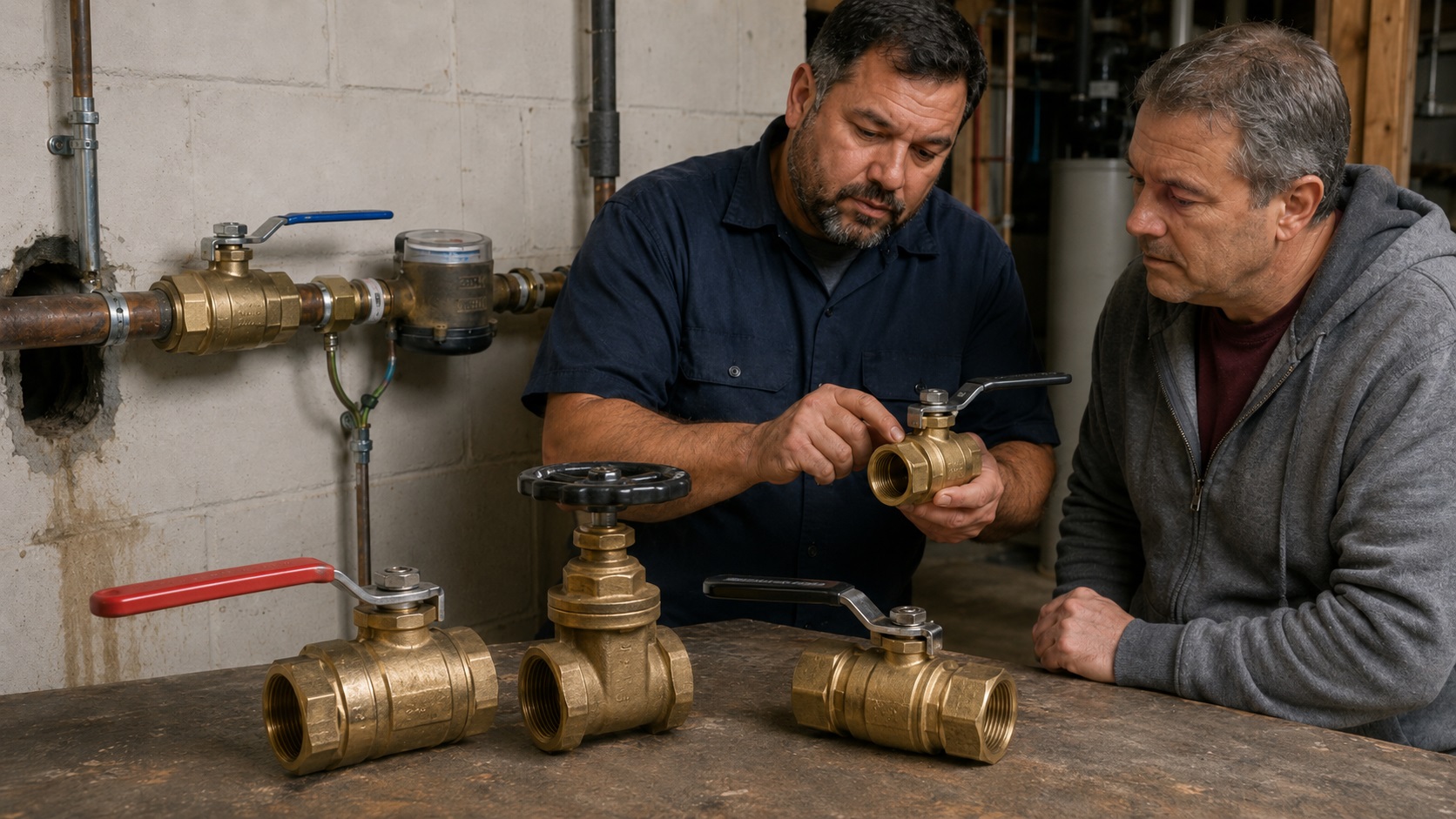
A main-line shutoff controls water to a large part of the home or the whole home. A branch-line shutoff controls a smaller section, such as a bathroom, kitchen, laundry area, or appliance run. For many homes, a 3/4-inch valve like the SharkBite 22185-0000LFA is more appropriate for a larger line, while a 1/2-inch valve like the SharkBite Max UR22222 is better for smaller branch lines.
If you are not sure which line you are working on, do not guess. Trace the pipe, confirm the size, and consider asking a licensed plumber. Installing the wrong valve in the wrong place can create access problems, flow problems, or future leak risk.
Fixture Shutoff vs Pipe Shutoff
Fixture shutoff valves are used near toilets, faucets, sinks, and some appliance connections. These are usually smaller valves with a 3/8-inch compression outlet for a supply hose. A pipe shutoff valve, on the other hand, is installed directly in the pipe run and controls water before it reaches a fixture or group of fixtures.
For fixture shutoff, choose between a straight stop and an angle stop. A straight stop is better when the pipe and supply hose run in a straight line. An angle stop is better when the pipe comes out of the wall and the supply hose turns toward the fixture.
Push-to-Connect vs Compression
Push-to-connect valves are popular because they can simplify installation on compatible pipe materials. They still require careful pipe preparation. The pipe must be cut square, deburred, clean, and inserted fully. A rushed push-to-connect installation can leak.
Compression valves are traditional and common under sinks and behind toilets. They can be a good choice when you are replacing a matching compression valve, but they require the right nut, ferrule, pipe condition, and tightening technique. If the existing pipe is damaged or distorted, a compression valve may not seal properly.
Quarter-Turn vs Multi-Turn
For emergency use, quarter-turn valves are usually easier to operate. You can quickly see whether the handle is open or closed, and the motion is simple. Multi-turn valves can still work, but older ones often become stiff, corroded, or unreliable. For a full comparison of the two styles, see our guide to quarter-turn vs multi-turn shutoff valves.
Choose the Valve Before the Emergency
The worst time to figure out valve size and pipe type is during an active leak. If your current shutoff valves are stiff, corroded, dripping, or hard to identify, consider inspecting and replacing them before they become urgent. Our guide on signs a shutoff valve is failing can help you decide whether replacement should move higher on your maintenance list.
How to Install and Use Manual Shutoff Valves Safely
Before installing any emergency shutoff valve, turn off the water upstream and relieve pressure in the line. Open a nearby faucet to reduce trapped pressure, and keep towels or a small container nearby for residual water. If you are working near electrical equipment, wet flooring, or a finished wall cavity, slow down and address safety first.
For main-line work, hidden pipe runs, older plumbing, or any valve located before important household branches, consider using a licensed plumber. A poorly installed shutoff valve can become the next leak source, and local plumbing codes may affect where and how shutoff valves should be installed.
Measure the pipe and confirm the material before ordering. A 1/2-inch valve and a 3/4-inch valve are not interchangeable. A compression angle stop and a push-to-connect angle stop may serve a similar purpose, but they connect differently. The valve must match the pipe, fixture supply line, and direction of flow.
For push-to-connect valves, cut the pipe square, remove burrs, clean the outside surface, and mark the insertion depth if the manufacturer provides a depth requirement. Push the valve fully onto the pipe and verify it is seated. Do not install it on damaged, scratched, oval, or dirty pipe.
For compression valves, inspect the pipe surface and avoid reusing damaged ferrules unless the installation method specifically allows it. Overtightening can damage fittings, while undertightening can allow leaks. After installation, restore water slowly and inspect the valve under pressure.
Once installed, label important shutoff valves if they are not obvious. A simple tag can help family members know which valve controls a toilet, sink, appliance, branch line, or main section. Also test shutoff valves periodically. A valve that has not moved for years may not close when you need it most.
Common Shutoff Valve Mistakes That Can Lead to Leaks
Choosing a Smart Shutoff Product for a Manual Valve Article
Smart shutoff systems and automatic water shutoff valves are useful, but they are a separate category. If you want sensors, app alerts, and automatic shutoff, see our guides to the best smart water shutoff systems and the best automatic water shutoff valves. This guide is about manual valves you physically operate during repairs or emergencies.
Buying the Wrong Size Valve
A common mistake is buying a valve based on the product photo instead of the actual pipe size and fitting type. Always confirm whether you need 1/2 inch, 3/4 inch, 5/8 inch OD compression, 3/8 inch OD compression, FIP, push-to-connect, or another connection style.
Confusing Straight Stops and Angle Stops
A straight stop and an angle stop may look similar in a product list, but they fit different layouts. If the water line comes from the floor or runs straight toward the fixture, a straight stop may fit. If the pipe comes out of the wall and the supply hose turns toward the fixture, an angle stop is usually more appropriate.
Installing on Poorly Prepared Pipe
Push-to-connect valves depend on clean, smooth, properly cut pipe. Compression valves depend on sound pipe and a correct seal. Damaged, scratched, corroded, or out-of-round pipe can turn a valve replacement into another leak source.
Ignoring Access
An emergency shutoff valve must be reachable. Do not install a valve where it will be hidden behind a wall, blocked by an appliance, buried behind storage, or too close to another fitting to operate easily. In a leak emergency, access matters as much as the valve itself.
Waiting Until the Valve Fails
If a shutoff valve is stiff, crusted with mineral buildup, dripping at the stem, or unable to close fully, do not ignore it. These are warning signs that the valve may not protect you when a leak starts. Preventive replacement is often less stressful than emergency replacement.
Emergency Shutoff Valve FAQs
What is the best emergency shutoff valve for most homeowners?
For a common 3/4-inch residential water line, the SharkBite 22185-0000LFA is the best overall pick in this lineup. It is a manual quarter-turn push-to-connect ball valve that can be useful for quickly isolating water in compatible plumbing systems.
Should I use a 1/2-inch or 3/4-inch shutoff valve?
Use the size that matches the pipe you are installing it on. Many main or larger branch lines are 3/4 inch, while many fixture or smaller branch lines are 1/2 inch. Do not guess by appearance alone. Confirm the pipe size before buying.
Are push-to-connect shutoff valves reliable?
Push-to-connect shutoff valves can be reliable when they are used on compatible pipe and installed correctly. The pipe must be clean, cut square, deburred, and fully inserted. Poor pipe preparation is one of the biggest causes of problems.
Is a quarter-turn valve better than a multi-turn valve?
For emergency use, a quarter-turn valve is usually easier and faster to operate. A multi-turn valve may still work, but older multi-turn fixture valves often become stiff or unreliable over time.
What is the difference between an angle stop and a straight stop?
An angle stop turns the water path 90 degrees and is common where the pipe comes out of a wall. A straight stop keeps the water path in line and is useful where the pipe and supply hose run straight. The right choice depends on your fixture layout.
Can these valves prevent mold?
No shutoff valve can guarantee mold prevention. A good valve can help you stop water faster during a leak, which may reduce moisture exposure. Mold prevention still depends on fast drying, proper repair, and monitoring the affected area afterward.
When should I replace old shutoff valves?
Consider replacement if a valve is hard to turn, leaking, corroded, visibly damaged, or unable to stop water fully. You should also consider replacement during fixture upgrades or plumbing maintenance if the existing valve is old and unreliable.
Do I need a plumber to install an emergency shutoff valve?
Some homeowners can replace simple fixture valves or install compatible push-to-connect valves, but main-line work, hidden plumbing, damaged pipe, older plumbing systems, and code-sensitive installations may require a licensed plumber. When in doubt, get professional help.
Which Emergency Shutoff Valve Should You Choose?
The best emergency shutoff valve depends on where you need control. For a strong all-around manual valve on a 3/4-inch line, choose the SharkBite 22185-0000LFA 3/4-Inch Push-to-Connect Ball Valve. For a smaller 1/2-inch branch line, the SharkBite Max UR22222 1/2 x 1/2 in. PTC Ball Valve is the better fit. If you need a repair-focused valve for an existing compatible copper or CPVC pipe, consider the SharkBite 24735LF 1/2 Inch Slip Ball Valve.
For fixture-level protection, choose the valve body style that matches your layout. The SharkBite 23037-0000LF Straight Stop Valve is best for straight fixture connections, while the SharkBite 23036-0000LF Brass Push Angle Stop is better for wall-fed angle-stop layouts. If you prefer traditional compression valves, the BrassCraft G2CR19X C1 1/4 Turn Angle Valve and Eastman 10738LF Quarter-Turn Angle Stop Valve are practical quarter-turn options.
Manual shutoff valves do not replace leak sensors, automatic shutoff systems, or proper plumbing repairs. But they are one of the simplest ways to improve water control in a home. The right valve, installed in the right location, can help you respond faster when a leak starts and reduce the chance that a small plumbing problem turns into moisture damage.