
Can Wet Drywall Be Saved? How to Decide Whether to Repair or Replace Water-Damaged Walls
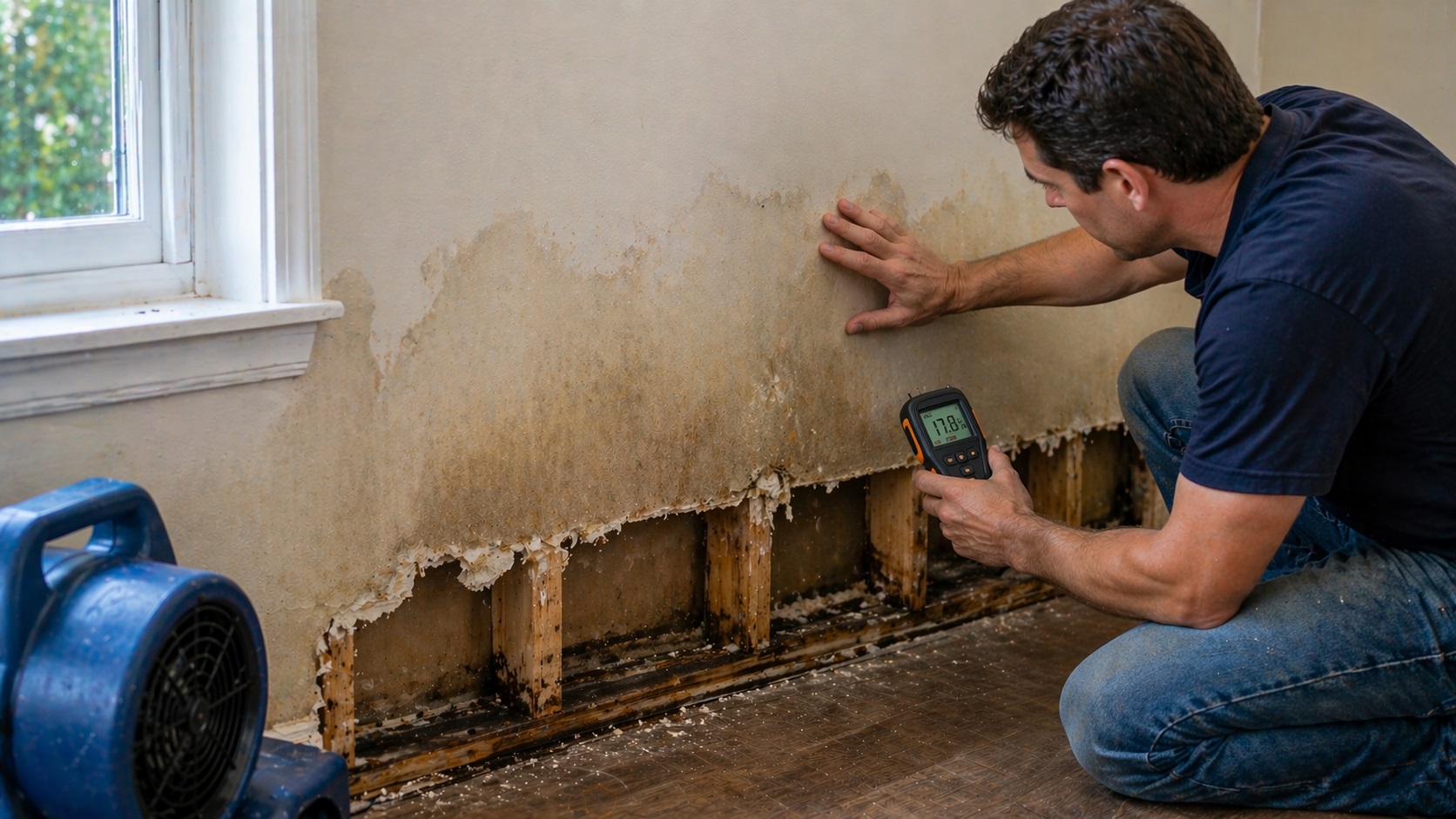
Wet drywall can often be saved if the water was clean, exposure was brief, drying began quickly, and the drywall is still firm. It usually needs replacement if it stayed wet for more than 48 hours, feels soft or crumbly, has visible mold, or was exposed to sewage, floodwater, or other contaminated water.
The safest decision comes from checking exposure time, water type, moisture levels, and the condition of the drywall surface. Acting quickly improves the chance of saving the wall while reducing the risk of hidden mold and structural damage.
For broader moisture prevention after leaks, see our guide to preventing recurring moisture damage.
Can Wet Drywall Be Saved?
In many situations, wet drywall can be saved if drying begins quickly and moisture exposure remains limited. However, drywall that stays wet for extended periods often requires replacement due to structural weakening and mold risk.
When Wet Drywall Can Often Be Saved
- Water exposure lasted less than 24 hours
- Drying began immediately
- No visible mold growth is present
- Drywall remains firm and structurally intact
- Moisture readings return close to the dry baseline for nearby unaffected drywall
If drywall meets these conditions, recovery is often possible through proper drying. You can follow structured drying methods in our guide on how to dry walls after water damage.
How Long Can Drywall Stay Wet Before It Needs Replacement?
Time is one of the most critical factors in determining whether drywall can be saved. The longer drywall remains wet, the greater the risk of structural damage and mold growth.
Drywall Risk Based on Time Exposure
| Time Wet | Risk Level | Typical Outcome |
|---|---|---|
| Less than 24 hours | Low | Often salvageable |
| 24–48 hours | Moderate | Mold risk begins |
| 48–72 hours | High | Structural weakening likely |
| More than 72 hours | Severe | Replacement often required |
Moisture that remains trapped inside drywall creates conditions where mold can develop quickly. You can review typical growth timelines in our guide on how long mold takes to grow after water damage. If mold is already visible on the drywall, follow the safety guidance in our article on removing mold from drywall safely.
Key Factors That Determine Whether Drywall Can Be Saved
Several conditions influence whether wet drywall remains salvageable. Evaluating these factors carefully helps homeowners make informed decisions.
Primary Decision Factors
- Duration of water exposure
- Type of water involved (clean vs contaminated)
- Amount of moisture absorbed
- Speed of drying response
- Presence of mold growth
- Condition of surrounding materials
The more risk factors present at the same time, the more likely replacement becomes.
Save vs Replace: Drywall Decision Guide
No single sign gives the full answer. Compare exposure time, water type, moisture severity, and material condition together before deciding to dry, repair, or replace the drywall.
Drywall Save vs Replace Decision Table
| Condition | Can It Be Saved? | Recommended Action |
|---|---|---|
| Wet less than 24 hours | Usually Yes | Begin drying immediately |
| Wet 24–48 hours | Possibly | Inspect carefully and monitor moisture |
| Wet longer than 48 hours | Often No | Prepare for possible replacement |
| Visible mold present | Rarely | Remove affected sections |
| Drywall soft or crumbling | No | Replace damaged material |
| Minor surface dampness only | Yes | Dry and monitor |
If replacement or patching is needed, follow the repair process in our guide on how to fix water-damaged drywall.
How Water Type Affects Whether Drywall Can Be Saved
The type of water that soaked the drywall plays a major role in determining whether the material can be safely restored. Clean water presents lower risk, while contaminated water often requires removal.
Water Contamination Categories
| Water Type | Examples | Drywall Recovery Likelihood |
|---|---|---|
| Clean Water | Broken supply lines, sink overflows | Often salvageable if dried quickly |
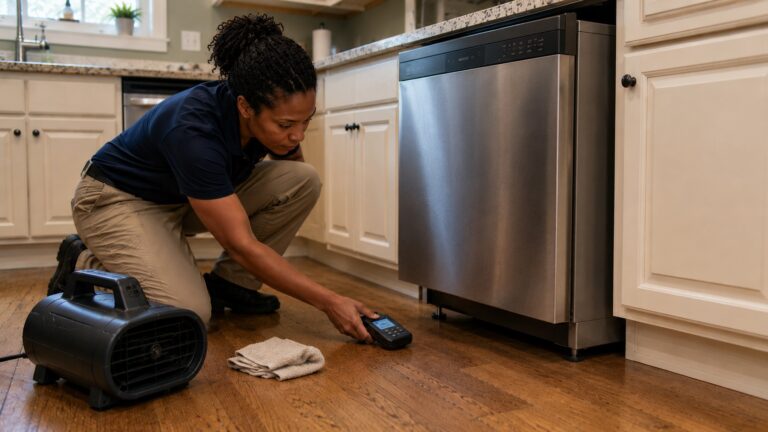
| Gray Water | Dishwasher leaks, washing machine failures | Sometimes salvageable with caution |
| Black Water | Sewage backups, floodwater | Replacement required in most cases |
Contaminated water can introduce bacteria, sewage, chemicals, and debris that make drywall unsafe to restore, even if it appears structurally sound. If floodwater or sewage touched the drywall, replacement is usually the safer decision.
Drywall Damage Severity Levels: Minor, Moderate, Severe, and Critical
Understanding the severity of water damage helps determine the most appropriate response. Drywall damage progresses through predictable stages as moisture spreads.
Severity Classification System
| Severity Level | Symptoms | Recommended Action |
|---|---|---|
| Minor | Light staining, slight dampness | Dry and monitor |
| Moderate | Soft spots or swelling | Repair or partial replacement |
| Severe | Bulging or crumbling drywall | Replace affected areas |
| Critical | Mold growth or structural failure | Professional remediation |
If you are unsure how severe the damage is, perform structured evaluation steps using our guide on how to tell if drywall has water damage.
Structural Warning Signs That Drywall Cannot Be Saved
Some symptoms clearly indicate that drywall has suffered irreversible damage. Attempting to save drywall under these conditions increases the risk of hidden mold growth and long-term structural problems.
Signs Replacement Is Necessary
- Drywall crumbles when touched
- Sections sag or bulge outward
- Strong musty odors persist
- Large water stains spread across surfaces
- Visible mold growth appears
- Drywall remains wet despite drying attempts
If surrounding materials also show damage, additional inspection may be necessary to identify the full extent of moisture exposure.
What Happens If Wet Drywall Is Left Untreated?
Leaving wet drywall untreated can lead to progressive structural damage and mold growth. Even small amounts of trapped moisture can weaken drywall over time, allowing deterioration to spread beyond the original wet area.
Problems That Develop When Drywall Stays Wet
| Problem | What Happens | Typical Timeline |
|---|---|---|
| Mold growth | Moisture supports mold development | 24–48 hours |
| Structural weakening | Drywall softens and loses strength | 1–3 days |
| Material separation | Paper facing separates from gypsum | Several days |
| Hidden damage spread | Moisture moves into nearby materials | Ongoing |
| Persistent odors | Moisture creates long-term smell issues | Within days |
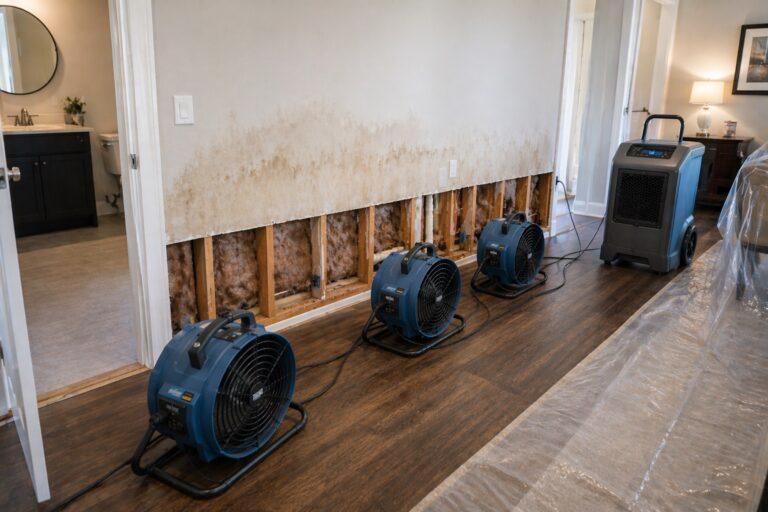
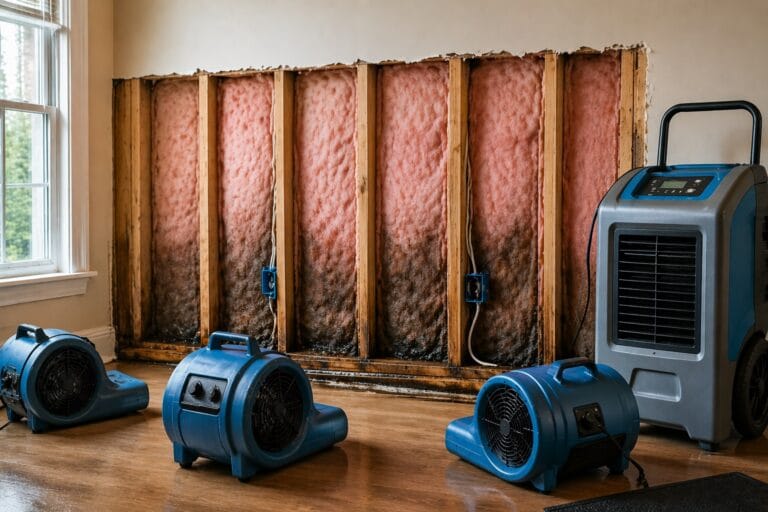
If drywall remains wet long enough, surrounding materials such as insulation and framing may also become affected. Addressing moisture quickly helps prevent damage from spreading.
How to Improve the Chances of Saving Wet Drywall
Quick action significantly increases the likelihood that drywall can be saved. The sooner drying begins, the less time moisture has to penetrate deeply into the material.
Steps That Increase Recovery Success
- Stop the water source immediately
- Begin drying within the first 24 hours
- Use airflow to speed evaporation
- Maintain humidity between 30% and 50%
- Monitor moisture levels regularly
- Inspect surrounding materials for damage
Structured drying plays a major role in recovery success. Follow the recommended process in our guide on how to dry walls after water damage. Non-invasive tools can help identify hidden moisture, as explained in our guide on how to detect moisture without opening walls. Do not repaint, patch, or reinstall trim until the wall has dried fully and the moisture source has been fixed.
Common Mistakes That Lead to Unnecessary Drywall Replacement
Many homeowners replace drywall unnecessarily due to incorrect assumptions about moisture damage. Avoiding common mistakes helps preserve materials when recovery is possible.
Drywall Recovery Mistakes to Avoid
| Mistake | Why It Causes Problems |
|---|---|
| Assuming all wet drywall must be replaced | Minor damage can often be saved |
| Ignoring moisture testing | Hidden moisture remains undetected |
| Waiting too long to begin drying | Increases mold risk |
| Failing to check surrounding materials | Hidden damage spreads unnoticed |
| Relying only on visual inspection | Internal moisture may remain hidden |
If nearby wall areas show stains, swelling, odors, or soft spots, compare them with the early warning signs in our guide to signs of hidden moisture in walls.
Accurate diagnosis helps reduce unnecessary material removal and ensures proper repair decisions.
When to Call a Professional for Wet Drywall Damage
Some water damage situations exceed the limits of standard homeowner repairs. Professional inspection may be necessary to prevent structural risks and long-term moisture problems.
Situations That Require Professional Help
- Large sections of drywall are affected
- Moisture remains after drying attempts
- Visible mold growth appears
- Water exposure lasted longer than 48 hours
- Damage spreads into multiple rooms
- Contaminated water exposure occurred
Professional restoration services use specialized drying equipment and moisture mapping tools to identify hidden damage and restore affected areas safely.
Frequently Asked Questions About Saving Wet Drywall
How long can drywall stay wet before it must be replaced?
Drywall wet for less than 24 hours is often salvageable if drying begins immediately. After 48 hours, mold risk increases significantly, and replacement becomes more likely.
Can drywall dry without permanent damage?
Yes. Minor water exposure can dry without long-term damage if moisture is removed quickly and drywall remains structurally intact.
What happens if wet drywall dries too slowly?
Slow drying increases the chance of mold growth and structural weakening, making replacement more likely.
Can mold grow in wet drywall?
Yes. Mold can begin developing within 24 to 48 hours when moisture remains trapped inside drywall materials.
Should drywall always be replaced after water exposure?
No. Many drywall sections can be saved if the water was clean, exposure was brief, drying began quickly, and the material remains firm.
Final Thoughts: Making the Right Decision About Wet Drywall
Wet drywall does not always require replacement, but the decision should be based on exposure time, water type, moisture readings, and whether the material is still firm. When those factors point to high risk, replacement is safer than trying to save weakened drywall.
By evaluating exposure time, moisture severity, and material condition, homeowners can make informed decisions that protect both safety and property value.
For long-term prevention after the wall has dried or been repaired, review our guide to preventing recurring moisture damage.
One Comment
Comments are closed.