

How to Find Roof Leaks Before Mold Forms: Early Detection Methods Every Homeowner Should Know
To find roof leaks before mold forms, inspect the attic after rain, look for damp insulation, dark roof-deck stains, wet rafters, rusted nail tips, moisture trails, and recurring wet spots near penetrations, valleys, chimneys, skylights, and roof-to-wall intersections. Roof leaks rarely begin with obvious dripping water; many start as slow moisture entry long before ceiling stains appear.
Early detection matters because attic moisture can spread across roof decking, insulation, and framing before it reaches the living space. Catching these warning signs quickly helps limit moisture damage, reduce mold risk, and prevent small roof defects from becoming larger structural problems.
If moisture persists inside the attic, mold growth can begin surprisingly quickly, especially when insulation or wood stays damp after repeated rain events. For the broader structural pathways that let exterior water enter a home, see How Water Enters Homes Through Structural Gaps.
This article focuses strictly on identifying roof leaks early. It does not cover repair procedures or roof replacement decisions. Instead, it teaches how to recognize warning signs, inspect critical areas safely, and understand how moisture moves through roofing systems before visible damage spreads.
Why Roof Leaks Often Go Unnoticed Until Damage Spreads
One of the biggest challenges with roof leaks is that they rarely appear immediately beneath the point where water enters. Moisture often travels along roof decking, rafters, or nails before reaching insulation or ceiling materials. This delayed appearance makes early detection difficult without targeted inspection.
Several factors contribute to hidden roof leaks:
- Small gaps in flashing that allow slow water entry
- Damaged shingles that allow moisture penetration during storms
- Sealant deterioration around roof penetrations
- Improper installation of roof components
- Seasonal expansion and contraction of materials
Water movement inside the attic rarely follows a straight vertical path. Instead, it often spreads sideways along wood surfaces before dripping downward. This explains why ceiling stains may appear far from the actual roof entry point.
Many homeowners only investigate roof leaks after visible damage occurs indoors. Unfortunately, by that time, moisture may have already spread into insulation or structural materials. If you have noticed ceiling discoloration or drywall changes, reviewing common signs of ceiling water damage can help confirm whether moisture exposure has progressed beyond early stages.
Moisture trapped inside insulation or wood also increases mold risk, especially when airflow is limited.
Where Roof Leaks Usually Begin
Roof leaks rarely develop randomly. Instead, they occur most often at predictable structural weak points. Understanding these high-risk locations makes inspection more effective and helps identify problems before moisture spreads.
Roof Penetrations and Pipe Openings
Roof penetrations are one of the most common starting points for leaks. These include plumbing vents, exhaust pipes, and electrical penetrations that pass through roofing materials.
Each penetration requires sealing and flashing to prevent water intrusion. Over time, these seals can degrade due to weather exposure, UV damage, and temperature fluctuations.
Inspect these areas carefully for:
- Damp insulation near pipe bases
- Water staining on nearby roof decking
- Moisture trails running downward
- Visible gaps or cracking around flashing
Even small gaps around penetrations can allow repeated water entry during rainfall events. These slow leaks often develop unnoticed until insulation becomes saturated.
Roof Valleys Where Water Collects
Roof valleys are areas where two roof slopes meet. Because valleys channel large volumes of water during storms, they experience more stress than other roof areas.
Leaks in valleys often begin gradually and worsen over time. High water flow increases the likelihood of flashing wear and material separation.
Signs of valley-related leaks include:
- Wet or stained decking aligned with valley direction
- Repeated damp spots after heavy rain
- Moisture patterns that follow roof slope angles
- Water trails extending into attic insulation
Valley leaks are particularly dangerous because they expose large surface areas to water movement.
Flashing Around Chimneys and Roof Intersections
Flashing protects vulnerable transitions between roof surfaces and vertical structures. Chimneys, dormers, and wall intersections depend on properly installed flashing to prevent water entry.
Over time, flashing may separate, corrode, or shift slightly. These small changes create openings that allow water to enter during storms.
Inspect flashing areas for:
- Moisture streaks near vertical surfaces
- Discoloration along flashing edges
- Wet framing adjacent to chimney bases
- Recurring damp insulation near intersections
Flashing failures often create hidden leaks that spread behind structural surfaces before becoming visible.
How to Inspect Your Attic for Roof Leaks
The attic is the most important place to detect roof leaks before mold forms. Most early moisture problems appear there before ceiling damage becomes visible, and a careful inspection can reveal warning signs before damage spreads.
Before entering the attic, use a strong flashlight, wear a dust mask and gloves, and step only on structural framing members, not insulation or drywall. Avoid entering during active storms, and do not touch wet electrical components, wiring, or fixtures.
Start With a Visual Scan of Roof Decking
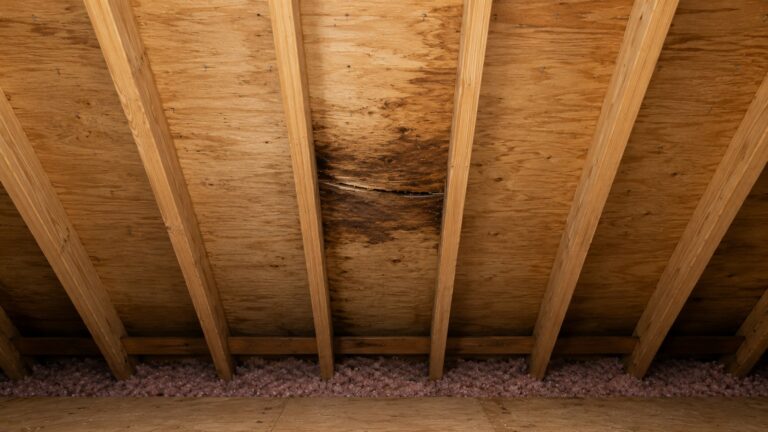
Roof decking — the underside of the roof structure — is often the first material to show moisture damage. This surface is typically made of plywood or oriented strand board (OSB), both of which react visibly to moisture exposure.
During inspection, look for:
- Dark staining along wood surfaces
- Irregular moisture patches
- Shiny or damp-looking wood areas
- Localized discoloration near seams
- Wood that appears swollen or uneven
Even small discoloration spots can indicate early-stage leaks. Pay special attention to areas near roof penetrations, valleys, and intersections where moisture entry is more likely.
If visible staining appears on roof decking, tracing the moisture path downward may help identify where water is traveling next.
Inspect Insulation for Signs of Moisture
Attic insulation often shows leak-related changes before structural materials become visibly damaged. Because insulation absorbs water easily, moisture intrusion leaves recognizable physical clues.
Check insulation carefully for:
- Clumped or compressed areas
- Dark or discolored patches
- Sections that appear flattened
- Wet or damp insulation texture
- Uneven insulation distribution
Wet insulation not only signals a roof leak but also reduces energy efficiency. Saturated insulation loses its ability to regulate temperature and may remain damp long after rainfall ends.
Moisture trapped in insulation also increases the risk of hidden mold growth, especially when airflow is limited.
Look for Moisture Trails Along Rafters
Water entering through the roof often travels along rafters before reaching lower surfaces. These wooden framing members can reveal moisture patterns that point toward the original entry location.
Inspect rafters for:
- Dark streaking along wood grain
- Shiny moisture lines
- Localized dampness beneath roof penetrations
- Repeated staining patterns
- Discoloration near nail locations
Rafter staining is especially useful for tracing leak paths because it often follows the direction water traveled after entering the roof.
Signs a Roof Leak May Be Active
Some attic symptoms strongly suggest ongoing roof leakage rather than isolated humidity or condensation. These warning signs are most important when they appear after rain, return in the same area, or worsen over time.
Persistent Damp Odors in the Attic
One of the earliest non-visual signs of a roof leak is a musty or damp smell inside the attic. Odors often develop when moisture becomes trapped in enclosed spaces.
Typical odor-related clues include:
- A stale smell that remains even during dry weather
- Odor intensifying after rainfall
- Localized smell near roof penetrations
- Lingering damp scent near insulation clusters
Odors alone do not confirm a roof leak, but when combined with visual moisture signs, they strongly indicate hidden water intrusion.
Repeated Wet Areas After Rainfall
One of the clearest signs of an active roof leak is recurring dampness that appears after storms. Moisture that returns repeatedly in the same location usually indicates a consistent entry point.
Common patterns include:
- Damp insulation appearing after each rain event
- Moisture spots forming beneath the same roof section
- Localized wet areas that gradually expand
- Water trails becoming more defined over time
If recurring moisture is detected, the problem should not be ignored. Repeated exposure dramatically increases the likelihood of mold formation and structural deterioration.
If moisture has already spread into ceilings below the attic, reviewing how ceiling water damage develops can help determine how far the issue has progressed.
Nail Tip Moisture or Dripping
Roof nails can sometimes reveal hidden leaks before other materials show damage. In colder climates or during seasonal moisture changes, nail tips may collect condensation or moisture from small leaks.
Look for:
- Small droplets forming on nail tips
- Rust developing on exposed nails
- Moisture accumulation near clusters of nails
- Minor dripping beneath roofing fasteners
This symptom is often subtle but extremely valuable for identifying micro-leaks that have not yet caused widespread damage.
How Roof Flashing Failures Create Hidden Leaks
Flashing systems protect vulnerable transition points where different materials meet. These areas include chimneys, skylights, and wall intersections. Because flashing is designed to redirect water, even minor failures can allow moisture to enter hidden spaces.
Flashing failures often produce slow leaks that are difficult to detect without careful inspection.
Common Causes of Flashing Failure
Flashing may fail due to:
- Material corrosion over time
- Improper installation
- Thermal expansion and contraction
- Storm damage
- Sealant deterioration
Each of these conditions increases the likelihood of hidden moisture entry, especially during heavy rainfall or wind-driven storms.
Warning Signs of Flashing-Related Leaks
Flashing-related leaks often produce specific moisture patterns. Watch for:
- Localized staining near vertical surfaces
- Moisture forming behind chimneys
- Damp framing at roof intersections
- Recurring wet spots near skylight edges
These patterns often appear before visible ceiling damage occurs.
How to Trace Moisture Paths Inside the Attic
Finding the true source of a roof leak often requires tracing the path water takes after it enters the roof system. Because water rarely travels straight downward, following moisture trails carefully is one of the most reliable ways to locate the original entry point.
Water typically follows structural surfaces such as roof decking, rafters, or nails before reaching insulation or ceiling materials. This movement can make the visible damage location very different from the leak origin.
Follow Moisture Trails Upward
When inspecting attic moisture, always begin at the lowest visible damage point and trace the path upward. This helps identify the direction water traveled after entering the roof.
Key steps include:
- Locate the lowest visible stain or wet insulation
- Look directly above that area for streaking
- Follow dark lines along rafters upward
- Identify where the staining begins
- Inspect the roof surface above that location
Tracing moisture upward often reveals the highest point of staining, which is usually close to the leak entry location.
If interior damage is already visible, such as ceiling staining, comparing attic findings with known ceiling symptoms can help confirm moisture spread patterns. Reviewing how ceiling water damage develops and spreads can clarify whether attic moisture has reached finished living spaces.
Check Roof Penetrations Along Moisture Paths
Once a moisture trail is identified, inspect nearby roof penetrations. These areas are among the most common entry points for leaks.
Pay close attention to:
- Vent pipe bases
- Electrical penetrations
- Exhaust vent openings
- Chimney transitions
- Skylight frames
Even small cracks in flashing or sealant can allow repeated water entry during rainfall.
Identify Moisture Patterns After Rain Events
Timing matters when tracing roof leaks. Inspecting the attic shortly after rainfall often reveals active moisture patterns that are difficult to detect during dry weather.
Look for:
- Fresh damp spots on wood surfaces
- Active dripping points
- Recently darkened insulation
- Wet areas aligned with roof slopes
Comparing attic conditions before and after storms can help confirm whether moisture intrusion is ongoing.
What Tools Help Detect Roof Leaks
While visual inspection remains the most important detection method, certain tools can help confirm moisture presence and improve inspection accuracy.
Using proper tools does not replace professional evaluation, but it can help homeowners verify suspected moisture problems.
For most homeowners, the most useful basic inspection tools are a bright flashlight or headlamp, a simple moisture meter, gloves, a dust mask, and an inspection mirror for tight attic areas.
Flashlights and Inspection Lighting
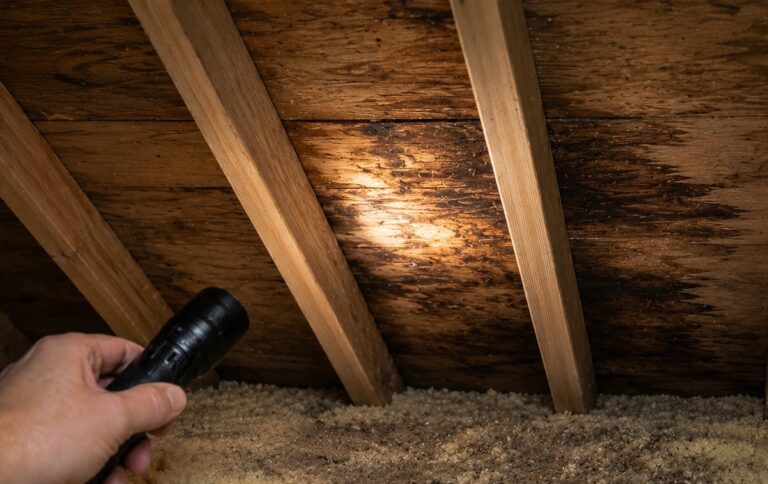
A bright flashlight is essential for attic inspections. Moisture staining often appears subtle, especially in low-light environments.
Effective inspection lighting helps reveal:
- Dark moisture streaks
- Shiny damp surfaces
- Surface texture changes
- Water trails along wood grain
Using angled lighting can make moisture patterns more visible by creating shadows that highlight surface changes.
Moisture Meters for Confirming Hidden Dampness
Moisture meters are among the most useful tools for confirming whether materials contain excess moisture. These devices measure moisture content inside wood, drywall, and insulation.
Typical applications include:
- Testing suspicious wood surfaces
- Verifying damp insulation areas
- Confirming suspected leak locations
- Monitoring drying progress
Use a moisture meter to compare suspicious wood or drywall with nearby dry material. A noticeably higher reading in the stained or damp area is more useful than a single isolated number, especially when checking after rain.
Inspection Mirrors for Hard-to-See Areas
Inspection mirrors allow viewing behind tight spaces where direct visibility is limited. These tools are especially useful around roof penetrations and structural joints.
They help detect:
- Hidden moisture behind framing
- Small gaps near flashing
- Staining in confined areas
- Obscured roof surfaces
Although mirrors improve visibility, they should always be used cautiously to avoid disturbing insulation or structural materials.
How Weather Patterns Reveal Roof Problems
Weather events often provide valuable clues about hidden roof leaks. Observing moisture patterns in relation to rainfall helps determine whether a leak is active or seasonal.
Wind-Driven Rain Exposure
Strong winds can force rainwater upward beneath shingles, allowing moisture to enter areas that normally remain protected. This type of leak often occurs intermittently during storms.
Typical wind-driven leak clues include:
- Moisture appearing only during heavy storms
- Leaks near exposed roof sections
- Temporary dripping during intense rainfall
- Localized damp areas that dry afterward
These intermittent leaks can remain undetected for long periods because they do not occur during every rainfall event.
Seasonal Freeze and Melt Conditions
In colder climates, melting snow and ice buildup can create temporary water backup along roof edges. When water refreezes near the roof edge, it may force moisture beneath shingles.
Signs of freeze-related leaks include:
- Moisture appearing during snow melt periods
- Water staining near roof edges
- Recurring seasonal leaks
- Insulation dampness during temperature changes
While not all regions experience freeze-related leaks, understanding seasonal patterns helps homeowners recognize unusual moisture behavior.
Heavy Rainfall Events
Intense rainfall often reveals weak points in roofing systems. Roof components that previously performed adequately may fail when exposed to large volumes of water.
Watch for:
- Sudden appearance of attic moisture after storms
- New staining that develops quickly
- Water dripping during heavy rainfall
- Expanding damp areas following severe weather
Weather-related patterns are especially useful for identifying intermittent leaks that might otherwise remain hidden.
When a Roof Leak Becomes a Mold Risk
Roof leaks create one of the most common pathways for mold development in homes. When moisture enters the attic and remains trapped in wood or insulation, mold can begin growing in as little as 24 to 48 hours under favorable conditions.
The risk increases when moisture exposure happens repeatedly. Even small leaks that occur during storms can leave materials damp long enough to support mold growth if airflow is limited.
The goal is to identify recurring attic moisture before wood, insulation, or ceiling materials stay wet long enough for mold to develop.
If attic moisture remains untreated, mold may begin forming on roof decking, rafters, or insulation surfaces. In many cases, this growth occurs long before visible ceiling damage appears.
Signs that roof leaks may be creating mold risk include:
- Persistent musty odors in attic spaces
- Damp insulation that does not dry fully
- Dark staining on wood surfaces
- Recurring moisture patterns after rainfall
- Visible spotting on framing or decking
If mold concerns develop, the first priority is still to stop the roof moisture source. Mold cleanup should not begin until the leak path is identified and damp attic materials are addressed.
When Professional Inspection Becomes Necessary
Many homeowners can identify early roof leak symptoms, but advanced warning signs require professional evaluation.
Professional inspection is recommended when:
- Active dripping occurs during rainfall
- Moisture spreads across large attic areas
- Structural wood feels soft or weakened
- Ceiling materials begin sagging
- Mold odors persist despite drying efforts
- The leak source cannot be identified
Roof leaks that remain unresolved often lead to secondary damage in ceilings, walls, and insulation. If moisture has already reached finished ceiling materials, reviewing signs of ceiling water damage can help determine whether the problem has moved beyond early attic detection.
Professional inspectors use advanced tools such as moisture meters, infrared imaging, and specialized inspection methods to locate hidden leak pathways.
Frequently Asked Questions About Finding Roof Leaks
Can roof leaks exist without visible water?
Yes. Many roof leaks develop slowly and allow moisture to enter without producing visible dripping. Small leaks often soak insulation or wood gradually before visible water appears inside the home.
This delayed visibility is one of the main reasons roof leaks frequently go unnoticed until damage spreads.
How do you find roof leaks in an attic?
Finding roof leaks in an attic typically involves inspecting roof decking, insulation, and framing for moisture patterns. Look for staining, damp materials, and repeated wet areas following rainfall.
Tracing moisture trails upward from visible damage often leads to the original entry location.
What causes hidden roof leaks?
Hidden roof leaks commonly develop from small failures in flashing, sealant, or roofing materials. These problems may occur at roof penetrations, valleys, or structural intersections.
Because these areas handle large volumes of water, even minor defects can allow repeated moisture entry.
How long before roof leaks cause mold?
Mold can begin developing within 24 to 48 hours when materials stay wet and airflow is limited, but visible or widespread growth usually depends on repeated moisture, temperature, material type, and drying conditions.
This is why recurring attic dampness after rain should be investigated quickly.
Can a roof leak dry without repair?
While materials may appear to dry temporarily, leaks rarely resolve on their own. Moisture typically returns during future rainfall events unless the entry point is properly addressed.
Temporary drying does not eliminate the risk of continued moisture damage.
Conclusion: Early Roof Leak Detection Prevents Structural Damage and Mold
The best time to find a roof leak is before water reaches the ceiling. After heavy rain, check the attic for damp insulation, dark roof-deck staining, rafter streaks, rusted nail tips, and moisture trails near penetrations, valleys, chimneys, skylights, and roof intersections.
If the same area becomes damp after more than one rain event, treat it as an active leak until proven otherwise. Early attic inspection gives homeowners the best chance to stop moisture before it spreads into ceilings, wall cavities, insulation, or mold-prone hidden spaces.
Key Takeaways
- Roof leaks often begin at penetrations, flashing, or valleys rather than open roof surfaces.
- Water rarely travels straight downward and often spreads along structural materials.
- Attic inspection is the most effective method for detecting early roof leaks.
- Wet insulation and dark wood staining are among the earliest warning signs.
- Recurring moisture after rainfall strongly indicates an active leak.
- Mold can begin developing within 24 to 48 hours when materials stay wet and airflow is limited.
- Professional inspection is necessary when moisture spreads or structural damage appears.
- Early detection prevents long-term structural damage and reduces mold risk.

One Comment
Comments are closed.