How to Prevent Mold Around Floor Trim
Mold around floor trim often begins with small, repeated moisture exposure that goes unnoticed. Because floor trim sits at the lowest edge of walls, it is naturally exposed to spills, condensation, cleaning water, and humidity changes. Over time, even minor moisture exposure can create conditions that allow mold to grow along trim edges and behind baseboards.
Preventing mold around floor trim depends on keeping water from collecting at the floor-wall joint, helping damp edges dry quickly, and checking high-risk areas before moisture becomes hidden. These steps are especially important in homes with past leaks, high humidity, or rooms where floors are cleaned or splashed often.
If you suspect mold may already be present, reviewing how to inspect baseboards for hidden mold can help you identify early warning signs before focusing on prevention. For broader moisture protection strategies across your home, visit how to prevent recurring moisture damage to explore additional prevention strategies.
Why Floor Trim Is Vulnerable to Mold
Floor trim is uniquely positioned to collect moisture. It sits where flooring meets the wall, which is one of the most common pathways for water movement. Understanding why this location is vulnerable helps explain why preventive measures are so effective.
Moisture Collects Naturally at Floor Edges
Water tends to move downward and collect along floor edges. Even small spills or condensation can settle along baseboards, especially when floors are slightly uneven or materials absorb moisture slowly.
Common moisture sources that affect floor trim include:
- Water from mopping or floor cleaning
- Spills that spread along flooring seams
- Wet shoes tracking rainwater indoors
- Pet accidents near walls
- Condensation forming along exterior walls
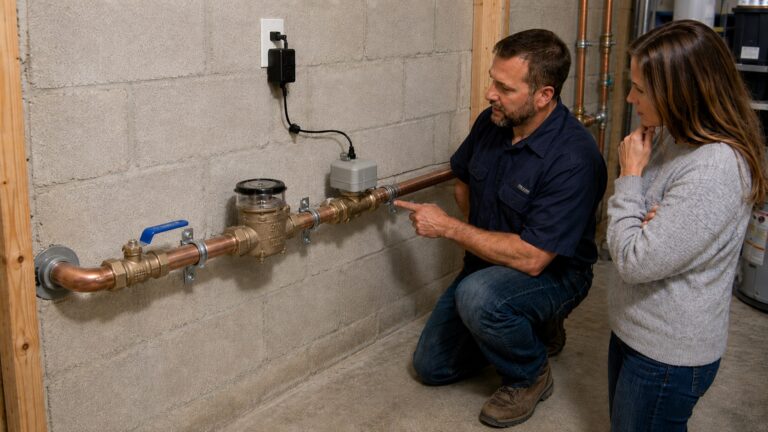
- Small plumbing leaks hidden inside walls
Repeated exposure to these sources allows moisture to linger near trim, creating favorable conditions for mold growth.
Trim Can Trap Moisture Against the Wall
Baseboards and floor trim often create small enclosed spaces that limit airflow. When moisture enters this space, drying slows significantly. This delay increases the chance that mold spores will begin growing along hidden surfaces.
Different trim materials respond differently to moisture, but all materials create some level of airflow restriction. Understanding why baseboards trap moisture can help clarify why preventive habits are necessary even when visible surfaces appear dry.
Some Rooms Are Naturally Higher Risk
Certain rooms expose floor trim to moisture more frequently than others. These areas require additional preventive attention.
High-risk rooms include:
- Bathrooms with frequent splashing or condensation
- Kitchens where water use is constant
- Laundry rooms exposed to washing machine leaks
- Basements with elevated humidity levels
- Entryways where wet shoes introduce moisture
- Exterior walls exposed to seasonal condensation
Identifying high-risk areas helps prioritize preventive actions where they matter most.
Control Moisture at the Floor Level
The most effective way to prevent mold around floor trim is to reduce moisture exposure at the floor level. Even small amounts of standing water can create long-term problems if left unaddressed.
Respond Quickly to Spills
Spills that remain on the floor for extended periods often migrate toward trim edges. Once moisture reaches the wall seam, drying becomes more difficult.
Effective spill response includes:
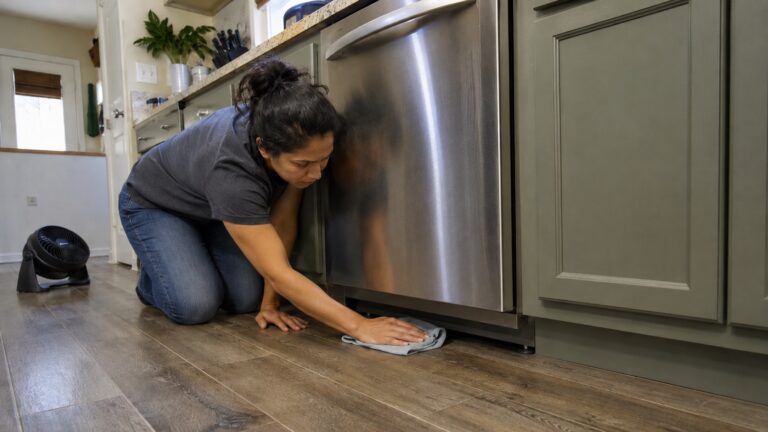
- Drying spills immediately with absorbent materials
- Checking nearby trim for moisture exposure
- Monitoring affected areas for lingering dampness
- Inspecting flooring edges after cleanup
Prompt spill response significantly reduces the chance of moisture becoming trapped behind trim.
Prevent Standing Water Near Walls
Standing water creates one of the highest mold risks around floor trim. Water that remains in place for extended periods increases the likelihood of moisture entering wall materials.
Check for standing water near:
- Appliances such as dishwashers and washing machines
- Bathroom fixtures
- Basement floors
- Entryway flooring
- Exterior door thresholds
If standing water has occurred, reviewing how to dry baseboards after water damage can help clarify the drying process needed to prevent mold growth.
Improve Airflow Around Floor Trim
Airflow plays a major role in preventing mold around floor trim. When air moves freely along walls and floors, moisture evaporates faster. When airflow is blocked, damp conditions last longer, increasing the likelihood of mold growth behind trim.
Many homeowners focus only on leaks or spills, but poor airflow alone can allow small moisture exposures to persist. Improving air circulation near floor edges is one of the most effective long-term prevention strategies.
Keep Furniture Slightly Away From Walls
Large furniture placed tightly against walls can trap moisture and restrict airflow near floor trim. This is especially common with couches, dressers, cabinets, and shelving units.
To improve airflow:
- Leave a small gap between furniture and walls whenever possible
- Avoid placing heavy items directly against exterior walls
- Check hidden areas behind furniture periodically
- Rotate or move large furniture occasionally to inspect trim
Exterior walls are particularly vulnerable because temperature differences often cause condensation. Allowing airflow behind furniture helps reduce trapped moisture in these locations.
Use Ventilation to Support Drying
Proper ventilation helps remove moisture from indoor air, reducing the amount of humidity that reaches floor trim. Rooms with frequent moisture exposure benefit the most from improved ventilation.
Helpful ventilation practices include:
- Running bathroom exhaust fans during and after showers
- Using kitchen ventilation when cooking with steam
- Opening windows when outdoor humidity conditions allow
- Ensuring laundry rooms are properly vented
- Keeping air vents unobstructed
When ventilation is insufficient, moisture remains suspended in indoor air and settles on cooler surfaces, including floor edges and trim.
Watch for Hidden Airflow Restrictions
Airflow problems are not always obvious. Some restrictions develop gradually as furniture layouts change or ventilation systems become blocked.
Hidden airflow issues may occur when:
- Air vents are covered by rugs or furniture
- Closets remain closed for long periods
- Storage boxes block lower wall airflow
- Curtains extend to the floor and trap air
- Seasonal changes reduce natural ventilation
If trim moisture appears repeatedly in certain locations, airflow restrictions should be evaluated alongside other moisture sources.
Manage Indoor Humidity to Prevent Mold
Indoor humidity levels strongly influence mold growth around floor trim. When humidity remains elevated, surfaces dry slowly and moisture persists in hidden areas. Controlling humidity is one of the most reliable ways to prevent mold before it starts.
Maintain Safe Indoor Humidity Levels
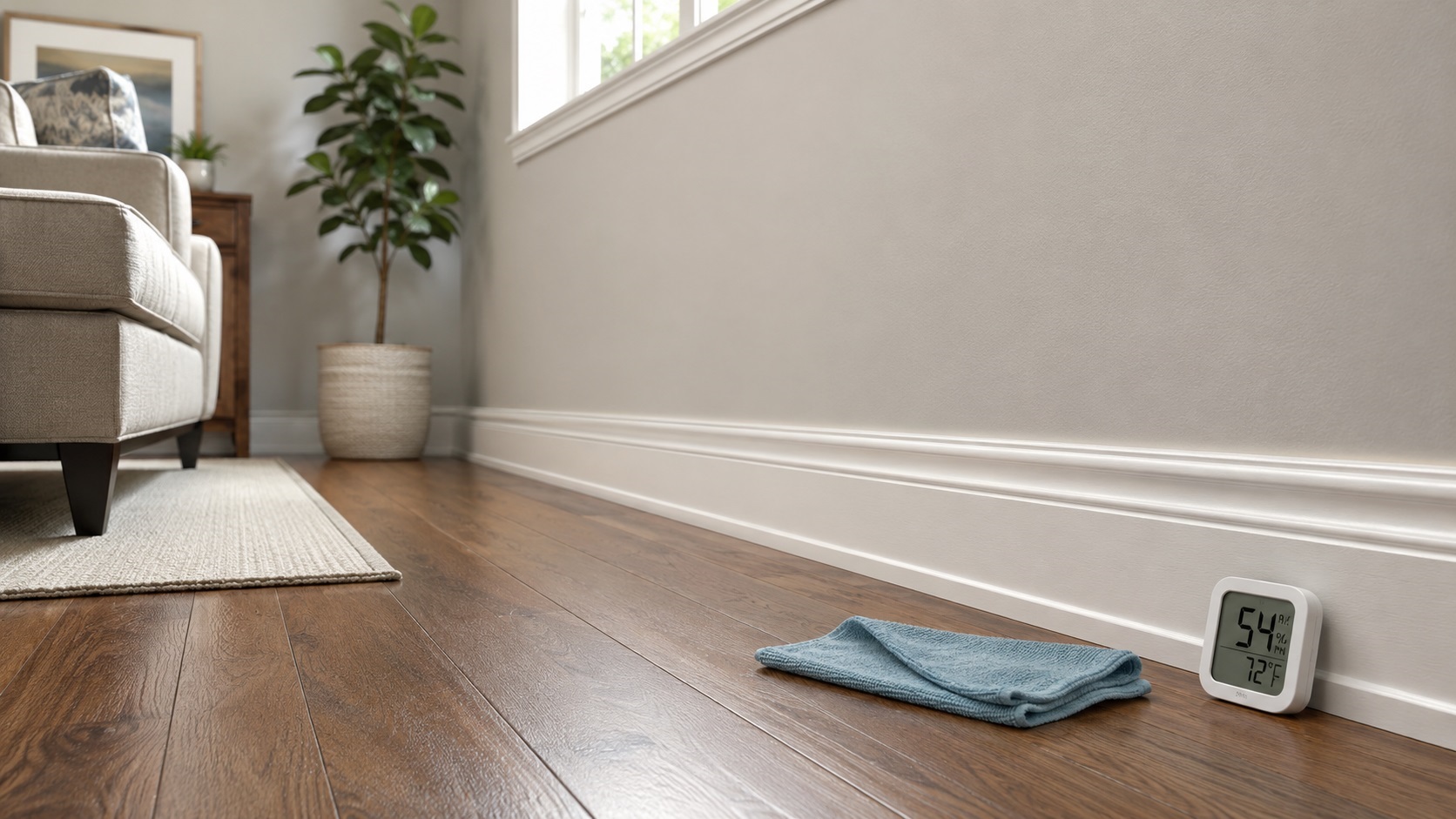
Most homes should maintain indoor humidity between 30% and 50%. Levels above 60% significantly increase mold risk, especially near cooler surfaces such as exterior walls and floor edges.
Signs of high humidity may include:
- Condensation on windows
- Musty odors in closed rooms
- Damp-feeling surfaces
- Visible moisture on walls or trim
- Slow drying after cleaning or spills
If humidity problems persist, evaluating the causes described in why baseboards trap moisture can help clarify how environmental conditions contribute to mold risk.
Watch for Seasonal Humidity Changes
Humidity levels often fluctuate with seasonal weather changes. Summer humidity, winter condensation, and seasonal storms can all increase moisture exposure near floor trim.
Seasonal prevention strategies include:
- Monitoring humidity during humid months
- Using air conditioning to reduce indoor moisture
- Inspecting exterior walls during cold weather
- Increasing ventilation during seasonal transitions
Homes in humid climates require more frequent monitoring, particularly in lower-level rooms.
Pay Special Attention to Basements and Exterior Walls
Basements and exterior walls are among the most vulnerable areas for mold development near floor trim. These areas often experience cooler temperatures, which encourages condensation when warm air contacts cooler surfaces.
Basement prevention measures include:
- Monitoring humidity levels regularly
- Inspecting wall edges for moisture buildup
- Ensuring drainage systems function properly
- Maintaining airflow across basement walls
When moisture is suspected in these areas, comparing symptoms with how to inspect baseboards for hidden mold can help determine whether early inspection is necessary.
Protect Trim During Routine Cleaning
Routine cleaning is one of the most overlooked sources of moisture around floor trim. While cleaning floors helps maintain hygiene, excessive water exposure during routine cleaning can slowly create conditions that support mold growth. Many cases of trim mold develop not from major leaks, but from repeated low-level moisture exposure during cleaning.
Use Controlled Moisture When Cleaning Floors
Using too much water during cleaning allows moisture to migrate toward baseboards and wall seams. Once water reaches these edges, it becomes more difficult to remove completely.
To reduce moisture risk during cleaning:
- Use a damp mop rather than a soaking wet one
- Wring out mop heads thoroughly before use
- Avoid pouring water directly onto floors near trim
- Work in small sections to prevent water buildup
- Dry visible moisture along trim edges immediately
These small adjustments significantly reduce long-term moisture exposure and help protect trim materials from repeated wetting cycles.
Dry Floor Edges After Cleaning
Even when using minimal water, some moisture will collect along floor edges. Taking a few extra moments to dry these areas helps prevent hidden moisture from lingering behind trim.
Focus drying efforts on:
- Corners where water tends to accumulate
- Doorways and transition areas
- Exterior wall edges
- Bathroom floor perimeters
- Entryway flooring near baseboards
Drying these areas consistently reduces the chance that moisture will penetrate behind trim materials.
Inspect Trim During Routine Cleaning
Cleaning time provides an opportunity to monitor trim conditions. Observing trim closely during routine maintenance helps identify early changes that may signal moisture problems.
Watch for:
- New discoloration or stains
- Paint bubbling or separation
- Minor swelling along trim edges
- Soft or uneven surfaces
- Developing gaps between trim and wall
If early signs appear, comparing them with the symptoms outlined in signs of moisture behind wall trim can help determine whether further inspection may be necessary.
Prevent Mold After Water Incidents
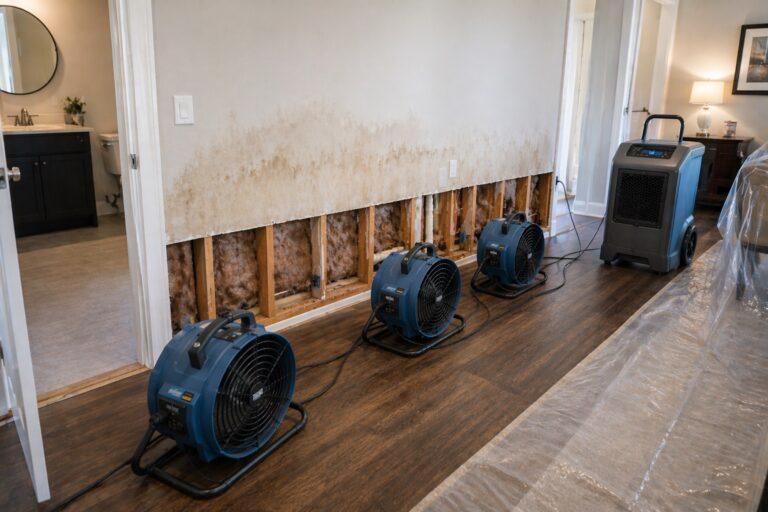
Water incidents create one of the highest risks for mold growth around floor trim. Whether the event involves flooding, leaks, or large spills, the time immediately following exposure is critical. Quick response reduces the chance of moisture becoming trapped behind trim.
Act Quickly After Water Exposure
The first 24 to 48 hours after water exposure are the most important for preventing mold growth. Moisture left inside walls or flooring beyond this window increases the likelihood of mold forming behind trim.
Immediate actions should include:
- Removing standing water as quickly as possible
- Drying floor surfaces thoroughly
- Using fans to increase airflow
- Opening windows when conditions allow
- Checking trim areas for moisture retention
If drying efforts were delayed or incomplete, reviewing how to dry baseboards after water damage can help clarify the recovery steps needed to prevent mold development.
Monitor Areas After Moisture Events
Even after surfaces appear dry, moisture may remain hidden within walls or flooring materials. Continued observation helps identify lingering moisture before mold becomes visible.
Monitor affected areas for:
- New or recurring odors
- Gradual trim swelling
- Paint changes near floor edges
- Slow-drying flooring materials
- Increasing wall softness
Continued monitoring reduces the chance of hidden moisture becoming a long-term mold problem.
Long-Term Prevention Strategies
Preventing mold around floor trim requires consistent habits rather than one-time fixes. Long-term prevention focuses on reducing moisture exposure and maintaining healthy environmental conditions.
Create a Routine Inspection Schedule
Routine inspections help identify minor moisture problems before they become serious. Even simple visual checks can detect early warning signs that would otherwise go unnoticed.
A practical inspection schedule may include:
- Weekly visual checks in high-moisture rooms
- Monthly inspections along exterior walls
- Seasonal reviews during humidity changes
- Immediate inspections following water incidents
Routine monitoring supports early detection and reduces long-term damage risks.
Maintain Stable Environmental Conditions
Environmental stability plays a key role in preventing mold growth. Sudden temperature changes and prolonged humidity increase the likelihood of condensation forming near floor trim.
Helpful environmental practices include:
- Maintaining consistent indoor temperatures
- Reducing excessive indoor humidity
- Ensuring proper insulation near exterior walls
- Addressing condensation promptly
- Keeping moisture-prone areas well ventilated
Stable environmental conditions allow materials to dry naturally and reduce mold risk.
Upgrade Materials When Necessary
In homes with repeated moisture exposure, upgrading trim materials may improve resistance to mold-related damage. Some materials tolerate moisture better than others, especially in high-risk environments.
Material improvements may include:
- Using moisture-resistant trim in wet areas
- Replacing severely damaged trim materials
- Sealing vulnerable joints when appropriate
- Improving flooring transitions near walls
Material upgrades should always accompany moisture control efforts, as improved materials alone do not eliminate mold risk.
Key Takeaways
- Floor trim is vulnerable to mold because moisture naturally collects along floor edges.
- Routine cleaning practices can introduce hidden moisture if excess water reaches trim areas.
- Maintaining proper airflow helps surfaces dry faster and reduces mold risk.
- Indoor humidity levels above 60% significantly increase the chance of mold growth.
- Prompt drying after spills or leaks is essential to preventing hidden moisture buildup.
- Regular inspections help detect early warning signs before mold becomes widespread.
- Long-term prevention depends on consistent moisture control, not one-time fixes.
Frequently Asked Questions About Preventing Mold Around Floor Trim
How do you stop mold from growing on baseboards?
Stopping mold growth on baseboards requires controlling moisture exposure and maintaining good airflow. This includes drying spills quickly, avoiding excessive water during cleaning, managing indoor humidity, and monitoring trim areas for early warning signs. Preventive habits are most effective when applied consistently, especially in rooms with frequent moisture exposure.
Does humidity cause mold around floor trim?
Yes, high indoor humidity is one of the most common causes of mold around floor trim. When humidity levels remain elevated, surfaces dry slowly and moisture lingers behind trim. This creates ideal conditions for mold growth, especially along exterior walls and in basements.
If humidity-related moisture is suspected, comparing visible conditions with signs of moisture behind wall trim can help identify whether hidden moisture may already be present.
Should baseboards be sealed to prevent mold?
Sealing baseboards may help reduce minor moisture penetration, but sealing alone does not prevent mold if moisture conditions remain uncontrolled. Mold prevention depends primarily on controlling water exposure, maintaining airflow, and managing indoor humidity levels. Sealing trim should be viewed as a supplemental measure rather than a primary prevention method.
How often should floor trim be inspected for moisture?
Floor trim should be inspected regularly, especially in moisture-prone areas. Weekly visual checks are helpful in bathrooms, kitchens, and basements. Monthly inspections along exterior walls help detect slow-developing moisture problems. Immediate inspections should always follow water incidents such as leaks or flooding.
What rooms are most likely to develop mold around floor trim?
Rooms with frequent moisture exposure are the most likely to develop mold around floor trim. These include bathrooms, kitchens, laundry rooms, basements, and entryways. Exterior walls in humid climates also present increased risk due to condensation and temperature differences.
Conclusion: Consistent Prevention Protects Floor Trim From Mold
Preventing mold around floor trim requires attention to everyday moisture conditions. Small habits — such as drying spills quickly, managing humidity, and maintaining airflow — play a major role in protecting walls and flooring materials. Over time, these preventive steps reduce the likelihood of hidden moisture becoming a long-term mold problem.
Routine monitoring and early response are essential to maintaining healthy indoor conditions. When preventive habits are combined with proper moisture control strategies, the risk of mold growth around floor trim decreases significantly. If warning signs appear despite preventive efforts, reviewing how to inspect baseboards for hidden mold can help determine whether deeper inspection is necessary.
Understanding how moisture behaves across your home supports long-term protection. For a broader understanding of recurring moisture prevention strategies, refer to how to prevent recurring moisture damage to learn how floor-trim prevention fits into a whole-home moisture control plan.