Dr.meter MD918 Moisture Meter Review: Is It Worth It?
The Dr.meter MD918 is a budget-friendly pinless wood moisture meter designed for homeowners who want to check moisture levels without driving pins into the surface. It is best understood as a simple screening tool for wood, firewood, trim, boards, and other accessible wood surfaces—not as a professional leak-detection system or mold-testing device.
That distinction matters because the MD918 is most useful when you are comparing wood moisture readings, not trying to diagnose an entire moisture problem from one number. It can help you check whether firewood is ready to burn, whether exposed wood still seems damp after a small leak, or whether one section of trim reads higher than a similar dry area. For broader product comparisons, see our guide to the best pinless moisture meters for home use.
Disclosure: This article may contain affiliate links. If you buy through these links, we may earn a commission at no extra cost to you.
Quick Verdict
- Best for: Budget-conscious homeowners who want a non-destructive moisture meter for wood, firewood, trim, boards, and basic DIY moisture checks.
- Not ideal for: Professional restoration work, drywall-specific testing, concrete, masonry, hidden leak tracing, or mold confirmation.
- Main strength: Pinless scanning lets you check wood moisture without leaving small probe holes.
- Main limitation: It is mainly a wood moisture meter, so readings need to be interpreted carefully and should not be treated as a complete home moisture diagnosis.
- Bottom line: The Dr.meter MD918 is a practical entry-level choice for wood moisture screening if you understand its limits.
What the Dr.meter MD918 Is Designed to Do
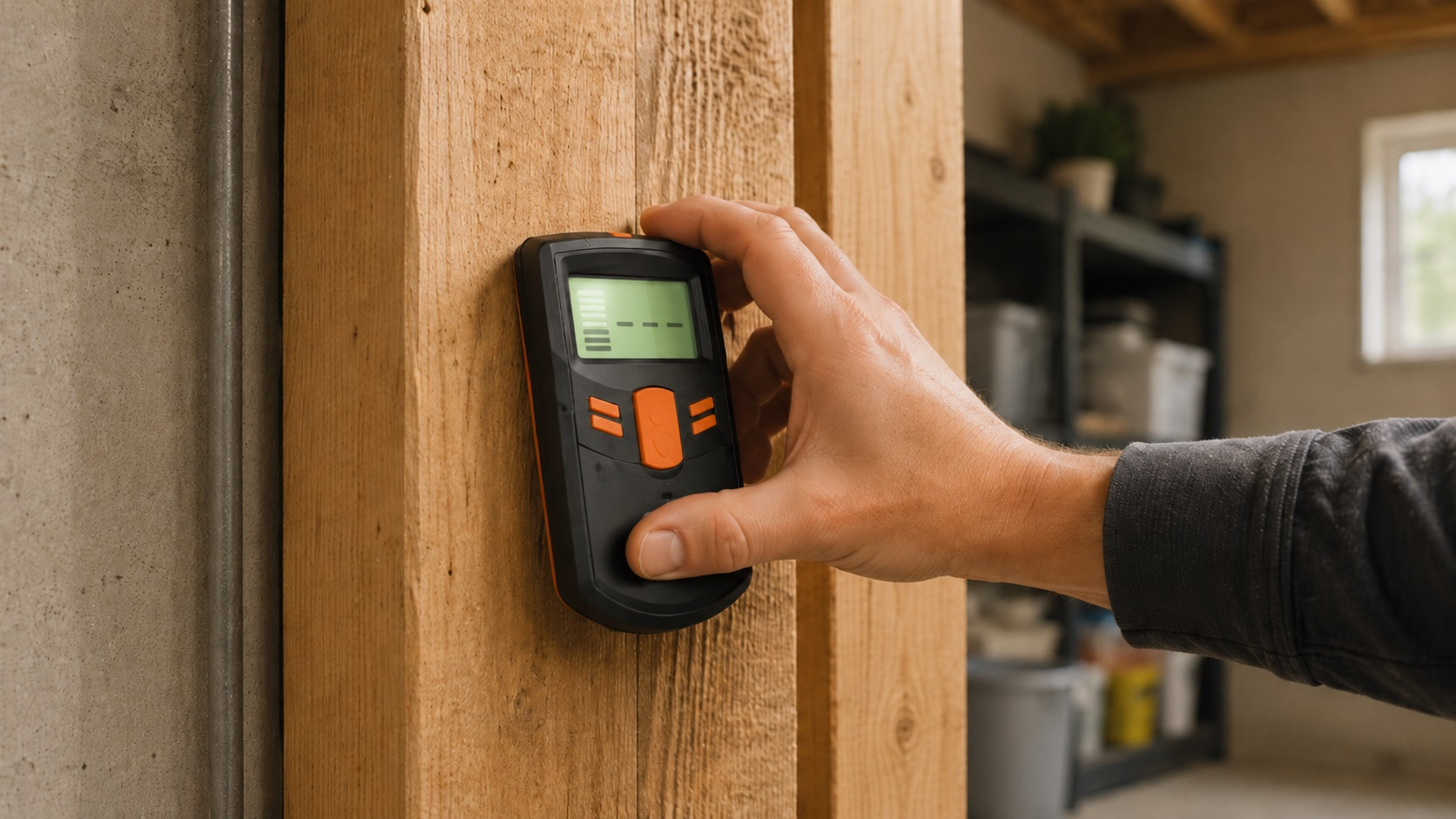
The Dr.meter MD918 is a handheld pinless moisture meter made for checking moisture content in wood. Instead of using sharp pins that penetrate the surface, it scans without puncturing the material. That makes it useful when you want to test finished wood, trim, furniture, boards, or firewood without causing visible damage.
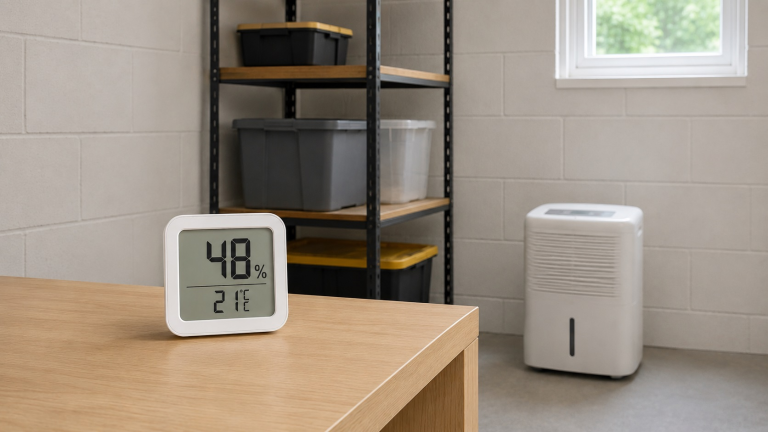
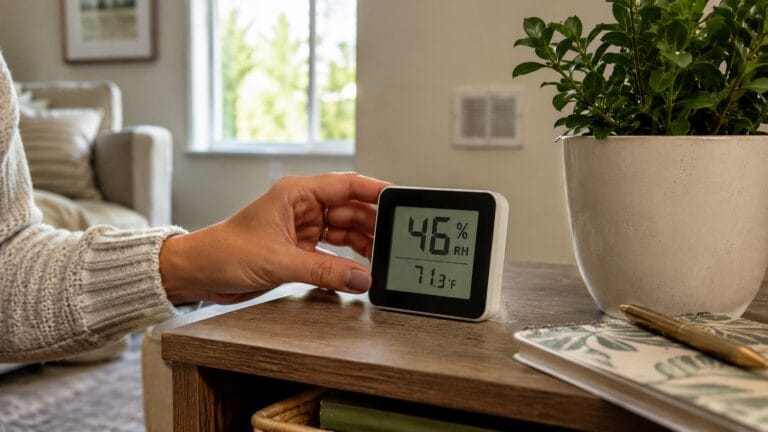
This review is focused on the MD918 as a homeowner moisture-testing tool. It fits naturally into the broader category of humidity monitoring and moisture testing guides, but it is not the same type of product as a room hygrometer. A hygrometer monitors air humidity. The MD918 checks moisture content in wood. Both can help you understand moisture conditions in a home, but they answer different questions.
The main appeal of the MD918 is simple: it gives homeowners an affordable way to screen wood for moisture without buying a more expensive professional meter. That can be helpful after a minor leak, before using firewood, when checking stored lumber, or when comparing one suspicious area of trim or framing against another area that appears dry.
The key is to use it as a comparison and screening tool. If one section of wood reads noticeably higher than a similar nearby section, that can be a sign that the area deserves more attention.
The current Amazon listing identifies the MD918 as a pinless wood moisture meter for wood and firewood, with a 4% to 80% measuring range. It also lists the meter, user manual, and 3 AAA batteries as included components, though availability and package details can change over time. You can view the Dr.meter MD918 on Amazon for current price and availability.
Key Features Explained
Pinless Moisture Testing
The most important feature of the Dr.meter MD918 is its pinless design. Instead of pressing metal probes into the material, it scans from the surface. That makes it useful on finished wood, furniture, trim, boards, or other visible surfaces where small probe holes would be undesirable.
The tradeoff is that pinless readings can be affected by wood type, surface condition, density setting, and nearby hidden materials. That does not make the tool useless, but it does mean the readings should be treated as screening evidence rather than a final diagnosis.
Wood-Focused Moisture Readings
The MD918 is best understood as a wood moisture meter, not a universal scanner for every building material. Its strongest uses are firewood, exposed framing, wood trim, boards, shelves, furniture, and other accessible wood surfaces.
That matters because many homeowners want one tool for drywall, concrete, plaster, tile, masonry, and finished wall assemblies. This model is a better fit when the main question is whether wood seems damp compared with similar wood nearby.
Digital Display
The digital display gives a numerical moisture reading, which makes it easier to compare one test area with another. For example, a homeowner could check several pieces of firewood, several sections of trim, or several areas of exposed framing and look for unusual differences.
Moisture testing is usually more useful when you compare patterns instead of relying on one isolated number.
Wide Moisture Range for Wood Screening
The MD918 is commonly listed with a 4% to 80% measuring range. For normal homeowner use, that gives it enough range to screen dry wood, moderately damp wood, and clearly elevated moisture conditions. It is especially relevant for firewood users and homeowners checking whether wood has dried after moisture exposure.
Still, the range should not be confused with perfect accuracy in every real-world condition. Surface moisture, wood type, density settings, hidden materials, and user technique can all affect readings. The better use is to compare similar materials under similar conditions.
Wood Density Settings
Wood species vary in density, and density can affect moisture readings. The MD918 includes wood density settings, which can help users adjust the meter for different wood types. This is a useful feature for a budget pinless meter, especially for people checking lumber or firewood from different sources.
The limitation is that the user still needs to select the appropriate setting. If the wrong setting is used, the reading may be less useful. For casual home inspection, this means the MD918 works best when you are looking for moisture patterns and differences rather than treating each reading as a lab-grade measurement.
How the Dr.meter MD918 Performs in Real Home Checks
In real home use, the Dr.meter MD918 makes the most sense as a quick wood moisture screening tool. It can help you check whether exposed wood seems dry, whether firewood may still contain too much moisture, or whether a wood surface near a past leak deserves closer inspection.
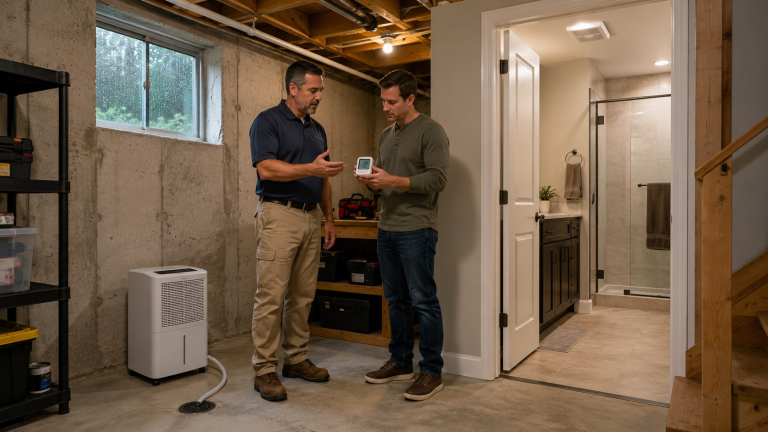
For example, if a basement baseboard, window trim area, or wood shelf was near a moisture problem, a pinless meter can help you compare that area against similar wood in a dry part of the home. If the suspicious area reads much higher, that does not prove the exact cause, but it gives you a reason to investigate further.
This is where the MD918 fits into a broader moisture-testing routine. Homeowners often need more than one type of observation: visual signs, humidity readings, odor, material condition, and moisture meter readings. Our guide on how to test indoor humidity levels and moisture conditions explains how different tools fit into a larger inspection process.
The MD918 can point you toward areas that deserve closer attention, but it does not tell the whole story by itself. For hidden leaks, major water damage, or suspected mold, the reading should be treated as one clue alongside visual inspection, odor, humidity conditions, and professional evaluation when needed.
Best Uses for the Dr.meter MD918
The Dr.meter MD918 works best when the material is wood and the goal is basic screening. Firewood is one of the clearest uses because the meter can help you avoid relying only on appearance or guesswork. Damp firewood can burn poorly, smoke more, and perform worse than properly dried wood.
Around the home, it is most useful on accessible wood surfaces after a small leak or dampness concern. Trim, boards, exposed framing, wood shelving, furniture, and stored lumber are all better use cases than sealed wall cavities or masonry surfaces.
Homeowners who are trying to monitor moisture levels throughout the home may find this tool helpful as one part of a larger routine, especially in areas where wood has been damp before.
Where the MD918 Is Less Reliable
The biggest limitation is that the Dr.meter MD918 is not a universal moisture detector. If your main concern is drywall, concrete, plaster, masonry, tile, or a finished wall assembly with unknown materials behind it, this may not be the right meter.
It is also limited when the problem is hidden. A pinless meter can screen accessible surfaces, but it does not reveal the leak path, plumbing source, wall cavity condition, or mold status. Serious water damage, recurring leaks, musty odors, or visible staining may require additional tools or a professional inspection.
The MD918 is also not ideal for documentation-grade readings. Restoration contractors, inspectors, and insurance-related drying projects often require more advanced equipment and repeatable testing procedures.
Who the Dr.meter MD918 Makes Sense For
The Dr.meter MD918 makes sense for homeowners who want an affordable way to check wood moisture without damaging the surface. If your main goal is to test firewood, inspect accessible wood, compare damp-looking trim against dry trim, or screen exposed boards after a minor leak, this meter fits that job well.
It is especially useful for people who want a simple tool they can keep on hand for occasional checks. You do not need a contractor-grade meter for every basic moisture concern; sometimes you just need a way to compare one wood area against another and decide whether the situation looks normal or deserves more attention.
The best buyer understands that this is a screening tool. It can help you notice moisture patterns, but it should not be treated as proof that a structure is safe, dry, or mold-free.
Check current availability on Amazon
Who Should Skip the MD918
Skip the Dr.meter MD918 if you need a meter for professional restoration work, insurance documentation, or serious water damage assessment. Those situations often require more advanced equipment and more controlled testing methods.
This is also not the best choice if your main concern is drywall, concrete, plaster, tile, masonry, or a mixed wall assembly. The MD918 is primarily a wood moisture meter, so using it outside that role can lead to confusing readings or false confidence.
It is also the wrong tool if you expect one device to answer every moisture question in the home. The MD918 is best for accessible wood checks, not complete moisture investigation.
Dr.meter MD918 vs Pin-Type Meters and Other Tools
Compared with a basic pin-type moisture meter, the Dr.meter MD918 has the advantage of non-destructive testing. You can scan wood without pressing metal probes into the surface, which makes it better for visible trim, furniture, finished boards, and other areas where small holes would be undesirable.
The tradeoff is that pin-type meters can be better for direct spot checks because the probes contact the material more directly. If you need to test a specific point and do not care about small pin marks, a pin-type meter may be more appropriate.
Compared with higher-end pinless meters, the MD918 is more of a budget homeowner option. More expensive models may offer broader material modes, stronger build quality, or more professional features. Compared with thermal imaging cameras, the MD918 directly estimates wood moisture instead of showing temperature patterns.
For readers comparing this model with other non-destructive meters, our guide to the best pinless moisture meters for home use is the better place for side-by-side product selection.
Frequently Asked Questions
Is the Dr.meter MD918 good for checking firewood?
Yes. Firewood is one of the clearest uses for the MD918 because it is designed for wood moisture testing. For best results, test multiple pieces and compare readings instead of relying on one measurement.
Can the Dr.meter MD918 detect moisture behind walls?
Only in a limited way. The MD918 can scan accessible surfaces, especially wood, but it should not be treated as a hidden wall leak detector. If you suspect a concealed leak, use the reading as one clue rather than a final answer.
Does the Dr.meter MD918 work on drywall?
I would not buy it mainly for drywall testing. The MD918 is best positioned as a wood moisture meter. If drywall is your main concern, choose a meter that clearly supports drywall or building-material modes.
Is a pinless moisture meter better than a pin-type meter?
It depends on the job. A pinless meter is better when you want to avoid surface damage and quickly scan wood. A pin-type meter may be better when you need a direct spot reading and small pin holes are acceptable. Many serious moisture inspections use more than one tool.
Can this moisture meter detect mold?
No. A moisture meter does not detect mold. It can help identify areas where moisture may be elevated, and moisture can support mold growth, but mold confirmation requires a different process. If moisture readings raise concern, read our guide on how to confirm mold exposure risks inside your home.
Is the Dr.meter MD918 accurate enough for homeowners?
It can be accurate enough for basic homeowner screening when used realistically. It is best for comparing similar wood materials and noticing unusual moisture patterns. It should not be treated as a professional verification tool for major water damage or complex building assemblies.
Final Verdict on the Dr.meter MD918
Yes—the Dr.meter MD918 is worth considering if you want a budget-friendly pinless moisture meter for wood. Its strongest uses are firewood testing, exposed wood checks, trim screening, lumber checks, and basic homeowner moisture comparisons after minor dampness concerns.
Its main strength is convenience. You can scan wood without leaving pin holes, and the digital display makes it easy to compare readings across different areas. For homeowners who want a simple wood moisture screening tool rather than a professional inspection system, that is enough to make it useful.
Its main weakness is scope. The MD918 should not be treated as a universal moisture detector, mold detector, or serious hidden leak investigation tool. If you need professional-grade testing, drywall-specific readings, or major water damage verification, look at more specialized tools or bring in a qualified inspector.
If your expectations are realistic, the Dr.meter MD918 is a solid entry-level option for non-destructive wood moisture checks.