How to Prevent Mold Under Dishwashers (Simple Steps to Stop Hidden Moisture Problems)
Mold under a dishwasher usually starts because moisture stays trapped in a dark, enclosed space. The problem often begins long before there is visible mold, standing water, or obvious appliance failure. A small leak, slow seepage, poor airflow, or repeated dampness can create the conditions mold needs to grow beneath and behind the appliance.
Preventing mold under dishwashers is mostly about controlling moisture before it becomes persistent. The goal is not to rely on bleach, sprays, or surface cleaning after mold appears. The goal is to keep the dishwasher area dry enough that mold never gets a chance to establish itself.
If you already see dampness, staining, or swelling near the appliance, first compare those symptoms with the signs of water leaks under dishwashers. Prevention works best when hidden leaks are caught before moisture spreads into flooring, cabinets, or subfloor materials.
This guide explains how to prevent mold under dishwashers using practical homeowner routines, moisture control habits, airflow awareness, and routine maintenance. It focuses on prevention, not mold diagnosis or major repair.
Why Mold Forms Under Dishwashers in the First Place
The space under a dishwasher is naturally vulnerable to mold because it combines several risk factors in one hidden area. Dishwashers use hot water, sit inside tight cabinet openings, and connect to both water supply and drain lines. When even a small amount of moisture escapes, it may stay trapped where homeowners rarely look.
Mold needs persistent moisture, organic material, warmth, and limited airflow. The area beneath a dishwasher often provides all four. Cabinet wood, dust, food residue, subfloor materials, and warm air from wash cycles can support mold growth if moisture remains long enough.
Moisture Often Collects Before It Becomes Visible
Many homeowners expect mold risk only after a major leak, but dishwasher mold often begins with small moisture events. A few drops from a loose connection, condensation near the base, or moisture from a worn door seal may not create a visible puddle. Instead, the water may soak into cabinet edges, plywood, particle board, or nearby flooring seams.
Because the dishwasher blocks the view, this moisture can remain hidden. The first visible clue may be a musty smell, slight swelling along the cabinet base, or dark staining near the toe-kick area.
Limited Airflow Makes the Area Dry Slowly
Airflow is one of the biggest differences between a harmless short-term spill and a mold-prone moisture problem. Open surfaces dry quickly. Enclosed spaces under dishwashers dry slowly.
The cabinet opening around the appliance restricts air movement. The toe-kick area, rear wall, and side panels can trap humid air. When moisture enters that space, it may remain long enough to support mold growth even if the leak itself is small.
This is why dishwasher mold prevention belongs in a broader water damage prevention strategy. The goal is to stop small moisture problems from becoming hidden material damage.
Small Leaks Can Create Long-Term Mold Conditions
A slow dishwasher leak may release only a small amount of water during each cycle. That does not make it harmless. If moisture returns repeatedly, surrounding materials may never fully dry.
Repeated dampness is more important than the size of a single leak. Mold risk increases when the area under the dishwasher stays damp cycle after cycle, especially when warmth and poor ventilation are also present.
For deeper cause analysis, see why dishwashers develop hidden leaks. That article explains the mechanical failures that create moisture conditions under and behind dishwashers.
Daily and Weekly Habits That Reduce Mold Risk
The best mold prevention routine is simple, consistent, and focused on early moisture control. You do not need to dismantle the appliance every week. You do need to notice small changes before they become hidden damage.
Wipe Visible Moisture Right Away
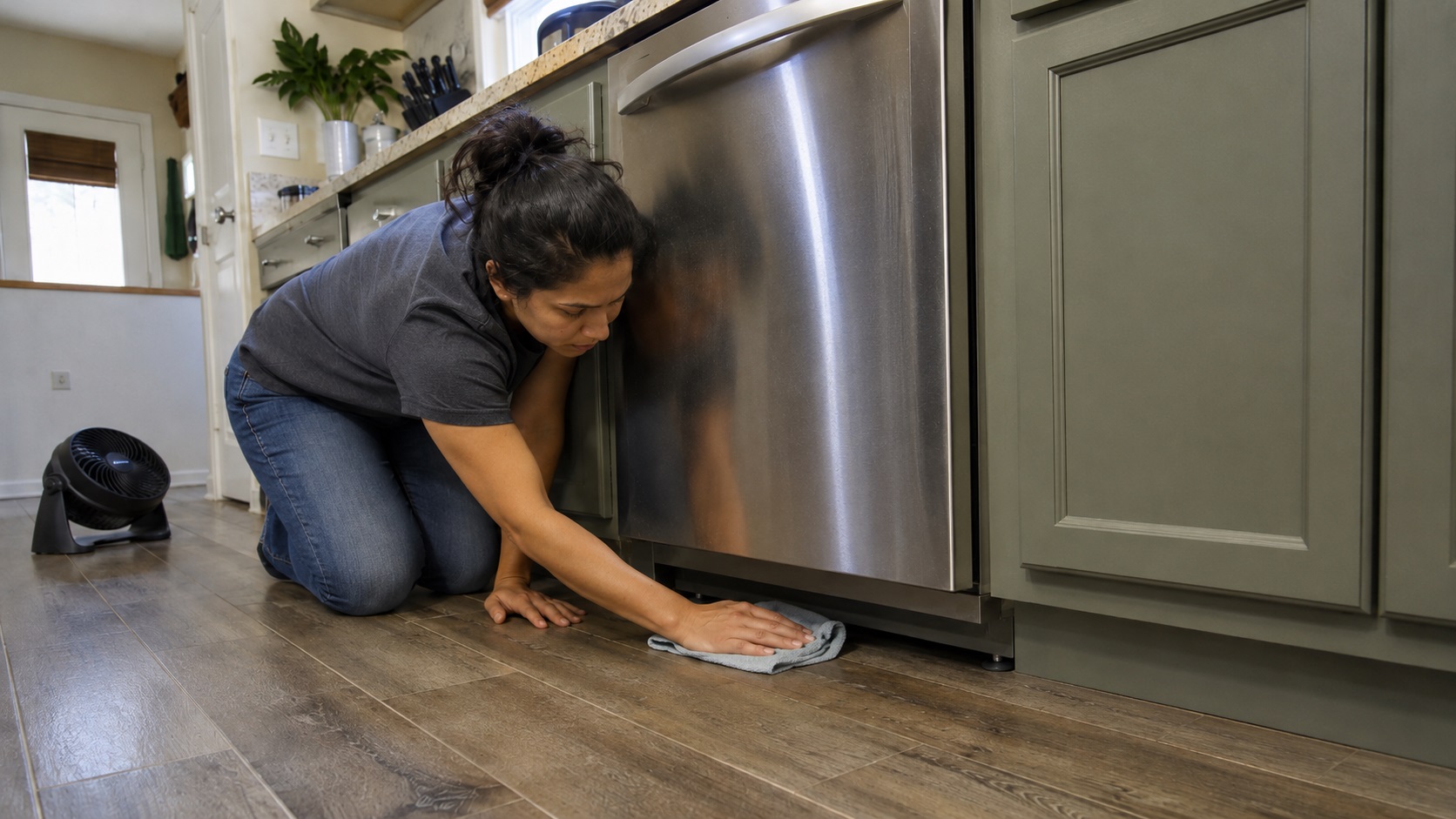
After using the dishwasher, check the front edge, nearby flooring, and lower cabinet area for moisture. Small droplets near the base may come from door seal seepage, condensation, or minor splash-out during loading and unloading.
Any visible moisture should be wiped immediately. This simple habit reduces the amount of water that can migrate into seams, cabinet edges, or flooring gaps.
- Dry the floor in front of the dishwasher after each cycle if moisture appears.
- Wipe the lower door edge if condensation collects there.
- Do not allow damp towels, mats, or rugs to sit directly in front of the appliance.
- Pay attention to repeated moisture in the same area.
One damp spot may be a minor event. Repeated dampness in the same location is a warning sign that something is allowing moisture to return.
Check the Floor Area Around the Dishwasher Weekly
A quick weekly check around the dishwasher helps detect moisture before mold has time to develop. This inspection does not require tools—just careful observation of the surrounding floor and cabinet base.
Look closely at the flooring directly in front of and beside the dishwasher. Pay attention to subtle changes that may indicate moisture exposure. Early warning signs are often easy to miss unless you deliberately look for them.
- Feel for damp or cool spots along the floor surface.
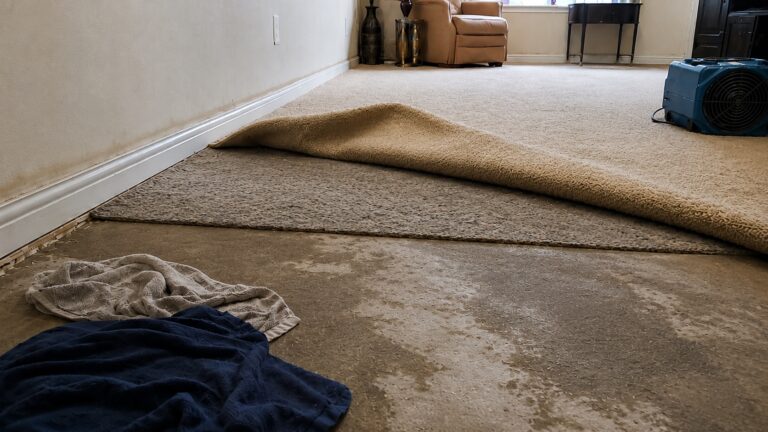
- Look for slight warping or lifting along flooring seams.
- Watch for darkened grout lines near tile flooring.
- Check for recurring moisture patterns in the same location.
Weekly inspections allow homeowners to recognize changes quickly. Moisture that is caught early is much easier to control than moisture that has been spreading unnoticed for months.
Inspect Cabinet Base Edges for Swelling
Cabinet materials often show early moisture damage before visible mold appears. The base edges of cabinets are especially vulnerable because they sit directly against the floor where moisture collects.
Swelling or softening at cabinet edges usually indicates repeated moisture exposure rather than a single isolated spill.
During routine inspections, check for:
- Raised or uneven cabinet edges
- Soft or crumbly particle board
- Paint bubbling or peeling near the base
- Discoloration along cabinet seams
These changes suggest that moisture has already reached the cabinet structure. Early detection at this stage allows homeowners to prevent mold formation before deeper damage develops.
Use the Dishwasher Correctly to Reduce Moisture Risk
Improper dishwasher use can increase moisture buildup and raise the risk of hidden mold growth. Many homeowners unintentionally create excess moisture conditions by overloading the machine or ignoring maintenance warnings.
Correct usage habits reduce internal stress and minimize leak risks.
- Avoid overloading dishes beyond manufacturer recommendations.
- Use the correct amount of detergent.
- Do not force the door closed against resistance.
- Pay attention to unusual sounds or cycle interruptions.
- Address error messages promptly.
Dishwashers that operate under excessive stress are more likely to develop small leaks, which eventually create mold-prone conditions beneath the appliance.
How Airflow Helps Prevent Mold Growth Under Dishwashers
Airflow plays a major role in mold prevention. Even small amounts of air movement can help remove moisture from enclosed cabinet spaces. Without airflow, moisture remains trapped longer, allowing mold conditions to develop.
The dishwasher enclosure naturally restricts airflow. Cabinet walls, side panels, and toe-kick covers block natural air circulation. When moisture enters these spaces, it may stay trapped unless airflow allows it to evaporate.
Why Cabinet Ventilation Matters
Cabinet ventilation determines how quickly moisture dries. Well-ventilated spaces allow damp surfaces to dry between wash cycles. Poorly ventilated spaces allow moisture to accumulate and remain.
Signs of poor airflow near dishwashers include:
- Persistent musty odors near cabinet openings
- Slow drying after small spills
- Warm, humid air trapped inside cabinets
- Condensation buildup along cabinet edges
Improving airflow reduces the amount of time moisture stays inside hidden areas. Shorter drying time means less opportunity for mold growth.
Avoid Blocking Natural Air Movement
Homeowners sometimes unknowingly block airflow paths that help moisture escape. Storage items, insulation materials, or tightly sealed cabinet modifications may reduce natural ventilation.
Prevent airflow restrictions by:
- Keeping toe-kick openings unobstructed.
- Avoiding tightly packed storage around the dishwasher enclosure.
- Leaving small ventilation gaps where originally designed.
- Ensuring nearby cabinet areas remain accessible to airflow.
Airflow improvements do not need to be complicated. Even small adjustments can help the dishwasher area dry faster between cycles.
Allow Moisture to Escape After Wash Cycles
Dishwasher cycles generate warm, humid air. If moisture remains trapped immediately after a cycle ends, it may condense on cooler surfaces nearby.
Allowing moisture to escape reduces condensation buildup and prevents repeated dampness beneath the appliance.
Helpful airflow habits include:
- Opening the dishwasher door slightly after cycles finish.
- Allowing steam to dissipate before unloading dishes.
- Ensuring kitchen ventilation systems are functioning properly.
- Using range hoods or ventilation fans when humidity levels are high.
These small adjustments help reduce moisture levels that might otherwise remain trapped inside surrounding cabinet spaces.
Routine Maintenance That Prevents Hidden Mold Under Dishwashers
Routine maintenance helps prevent the conditions that allow mold to form. Most hidden mold problems begin with neglected components or small mechanical failures that gradually worsen.
Regular maintenance reduces the likelihood of moisture escaping from worn parts.
Inspect Dishwasher Hoses on a Regular Schedule
Hoses carry pressurized water into and out of the dishwasher. Because they operate under repeated stress, they are one of the most common sources of hidden moisture problems.
Routine inspection helps identify wear before leaks develop.
- Look for visible cracks or bulging along hose surfaces.
- Check connections for looseness or corrosion.
- Watch for moisture accumulation near fittings.
- Ensure hoses are properly routed without sharp bends.
For a detailed inspection process, see how to inspect dishwasher hoses for leaks. That guide explains exactly where hose failures most often occur.
Clean Filters and Drain Components
Drain restrictions increase internal pressure inside the dishwasher system. When pressure rises, weak connections may begin leaking.
Regular cleaning reduces the chance of blockages forming inside drain components.
- Remove debris from dishwasher filters regularly.
- Check for grease buildup inside drain lines.
- Ensure water flows smoothly during draining cycles.
- Address slow drainage immediately.
Preventing drain pressure buildup reduces long-term leak risks and helps keep moisture contained inside the appliance.
Check Dishwasher Leveling Periodically
Proper leveling is an often-overlooked factor in preventing hidden moisture buildup under dishwashers. When a dishwasher sits unevenly, water inside the appliance may collect in unintended areas. This pooling increases the chance of seepage along seals or connections.
An improperly leveled dishwasher may also create uneven pressure on door gaskets. Over time, this stress weakens sealing surfaces and increases the likelihood of small leaks developing along the front or sides.
Signs that leveling may need attention include:
- Water pooling along one side of the dishwasher interior
- The door not closing evenly
- Unusual vibration during operation
- Repeated moisture appearing near the same cabinet edge
Leveling should be checked periodically, especially after installation, remodeling work, or floor replacement. Even minor floor changes can alter the dishwasher’s alignment and increase moisture risks.
How to Prevent Mold After Minor Dishwasher Leaks
Minor dishwasher leaks are one of the most common causes of mold growth under appliances. Even a small amount of water can create long-term moisture conditions if it is not addressed immediately.
The most effective mold prevention strategy after a minor leak is fast moisture removal. Mold does not require large volumes of water—only persistent dampness.
Dry Moisture Immediately After Any Leak
Whenever water appears near the dishwasher, it should be dried immediately. Delayed drying allows moisture to soak into porous materials such as wood cabinets, plywood subfloors, and flooring seams.
Immediate drying steps include:
- Wiping all visible water from flooring surfaces
- Drying cabinet bases and edges thoroughly
- Using fans to increase airflow in enclosed areas
- Monitoring the area for recurring moisture
Even small moisture events should be taken seriously. Repeated dampness is far more likely to cause mold than a single isolated spill.
Increase Airflow After Moisture Exposure
After drying visible moisture, increasing airflow helps remove trapped humidity from hidden spaces. This step is especially important because enclosed cabinet areas dry slowly without assistance.
Airflow improvements may include:
- Using portable fans to circulate air
- Leaving cabinet doors open temporarily
- Allowing air to reach hidden corners beneath the appliance
- Running kitchen ventilation fans when humidity rises
Drying alone removes visible moisture. Airflow removes hidden moisture that may remain trapped inside materials.
Monitor the Area for Recurring Moisture
After a minor leak, continued monitoring is essential. Moisture that returns after cleaning usually indicates an unresolved leak or hidden water source.
Pay attention to repeated signs such as:
- Damp flooring appearing after wash cycles
- Musty odors developing over time
- Cabinet swelling that continues to worsen
- Discoloration along floor seams
If moisture continues returning after cleanup, additional inspection may be required to identify the source of the problem.
Environmental Changes That Reduce Mold Risk
Environmental conditions inside the kitchen influence how quickly moisture dries and how easily mold develops. Adjusting these conditions can significantly reduce mold risk under dishwashers.
Manage Indoor Humidity Levels
High indoor humidity slows evaporation and increases the chance of mold growth. Kitchens naturally produce moisture from cooking, washing, and cleaning activities. Without proper humidity control, moisture may remain in the air and settle into hidden spaces.
Reducing indoor humidity helps prevent damp conditions beneath appliances.
Helpful humidity control strategies include:
- Using exhaust fans during cooking
- Operating ventilation systems regularly
- Reducing excess moisture buildup in enclosed kitchens
- Monitoring humidity levels during humid seasons
Managing indoor humidity supports long-term mold prevention throughout the home—not just under dishwashers.
Choose Flooring Materials That Resist Moisture
Some flooring materials absorb water more quickly than others. Highly absorbent materials increase mold risk when moisture exposure occurs.
Materials with higher moisture resistance help reduce long-term damage risks beneath dishwashers.
Higher-risk materials include:
- Particle board subfloors
- Wood-based flooring systems
- Laminates with exposed seams
Lower-risk materials include:
- Tile flooring
- Sealed concrete
- Water-resistant vinyl surfaces
Choosing moisture-resistant flooring provides an additional layer of protection when small leaks occur.
Reduce Heat and Moisture Trapping Conditions
Warm, enclosed cabinet spaces encourage mold growth when moisture is present. Reducing heat and moisture buildup helps prevent mold from developing under dishwashers.
Strategies that reduce heat trapping include:
- Allowing adequate cooling time after wash cycles
- Improving general kitchen ventilation
- Keeping cabinet interiors clean and uncluttered
- Avoiding insulation or materials that trap moisture near appliances
Reducing heat buildup helps prevent moisture from remaining trapped in hidden areas.
When Prevention Isn’t Enough to Stop Mold Under Dishwashers
Even with careful maintenance and moisture control habits, there are situations where mold prevention measures are no longer enough. Hidden moisture problems sometimes develop beyond what routine drying or ventilation can resolve. Recognizing when prevention has failed helps reduce the risk of structural damage and widespread contamination.
The earlier these warning signs are recognized, the easier it is to limit long-term damage beneath the appliance.
Persistent Dampness That Returns Repeatedly
If moisture returns after cleaning and drying, this usually indicates an unresolved leak or trapped moisture inside surrounding materials. Recurring dampness is one of the clearest indicators that prevention steps alone are not solving the underlying issue.
Watch for:
- Moisture reappearing after multiple wash cycles
- Damp flooring returning after drying efforts
- Cabinet areas that remain cool or wet to the touch
- Recurring musty odors near the dishwasher
Repeated moisture exposure allows mold conditions to remain active, even if visible water is removed.
Cabinet Warping or Surface Damage
Cabinet distortion often signals long-term moisture exposure beneath the appliance. Warping rarely happens from a single spill—it usually results from repeated moisture absorption over time.
Warning signs of cabinet damage include:
- Bowed cabinet panels
- Cracked or peeling finishes
- Soft or weakened cabinet edges
- Gaps forming between cabinet components
Once cabinet damage appears, hidden moisture is likely already present within structural materials.
Soft or Uneven Flooring Near the Dishwasher
Floor softening is one of the most serious warning signs that moisture has reached structural components below the appliance. Subfloor materials weaken when exposed to repeated moisture.
Signs of subfloor involvement include:
- Spongy or flexible flooring
- Sagging areas near the dishwasher
- Uneven walking surfaces
- Persistent moisture stains along seams
If flooring changes appear, reviewing signs of water damage in subfloors can help determine whether structural damage may already be developing.
Visible Mold or Strong Musty Odors
Once mold becomes visible, prevention alone is no longer sufficient. Mold colonies grow quickly in hidden environments, especially when moisture remains present.
Signs that mold may already exist include:
- Dark spots along cabinet bases
- Powdery or fuzzy growth near seams
- Persistent musty odors that do not fade
- Air quality concerns in nearby rooms
Visible mold requires targeted cleanup and moisture correction before conditions can safely return to normal.
Frequently Asked Questions About Preventing Mold Under Dishwashers
How often should I check under my dishwasher for moisture?
A weekly visual check around the dishwasher base is usually sufficient for most homes. If you have experienced leaks in the past, more frequent inspections may be helpful. Regular checks help detect moisture early before mold conditions develop.
Can mold grow under a dishwasher without visible leaks?
Yes. Mold can grow when small amounts of moisture accumulate slowly over time. Condensation, minor seepage, or repeated dampness can create conditions that allow mold to develop even without noticeable puddles.
Is ventilation necessary under dishwashers?
Ventilation helps reduce mold risk by allowing moisture to evaporate more quickly. While dishwashers are installed inside cabinets, maintaining airflow around surrounding spaces improves drying conditions and reduces long-term moisture buildup.
What humidity levels increase mold risk under appliances?
Higher humidity levels slow evaporation and allow moisture to remain in enclosed spaces. Kitchens with frequent cooking, washing, or limited ventilation may experience elevated humidity that increases mold risk beneath appliances.
Should I worry about mold after a single small leak?
A single small leak does not always lead to mold growth, especially if moisture is dried immediately. However, repeated leaks or delayed drying increase the likelihood of mold developing beneath the appliance.
Can cleaning alone prevent mold under dishwashers?
Cleaning removes surface contamination, but it does not eliminate moisture sources. Mold prevention depends on keeping the area dry, maintaining airflow, and addressing moisture conditions before mold develops.
Conclusion: Preventing Mold Under Dishwashers Starts With Moisture Awareness
Mold prevention under dishwashers is not complicated, but it does require consistent attention to moisture control. Most mold problems begin with small, repeated moisture events rather than large, visible leaks. Recognizing these early moisture conditions helps homeowners stop mold before it spreads into cabinets, flooring, or structural materials.
Simple daily and weekly habits—such as wiping moisture, maintaining airflow, and inspecting surrounding surfaces—can significantly reduce mold risk. Routine maintenance and early response to minor leaks further protect hidden spaces beneath appliances.
Understanding how moisture behaves under dishwashers allows homeowners to prevent mold before it becomes a costly repair issue. Staying alert to early warning signs and maintaining proper moisture control habits are the most effective long-term prevention strategies.
Key Takeaways
- Mold under dishwashers usually begins with small moisture problems rather than large leaks.
- Regular inspections help detect moisture before mold develops.
- Airflow plays a critical role in reducing moisture retention inside cabinet spaces.
- Routine maintenance reduces the chance of hidden leaks forming.
- Immediate drying after small leaks helps prevent moisture from becoming persistent.
- Persistent dampness is a warning sign that prevention alone may not be enough.
- Visible mold or structural changes require immediate attention.