
Why Basement Sump Pumps Fail (Common Causes and Hidden Risks)
Basement sump pumps usually fail for predictable reasons: stuck float switches, power loss, clogged discharge lines, worn pump parts, poor installation, system overload, or age. The hidden risk is that many failures do not look like a broken pump at first. A pump may still hum, cycle, or move some water while the basement remains at risk.
Because a sump pump works as part of a larger basement waterproofing and water control system, the cause of failure may be inside the pump, in the sump pit, in the discharge line, or in the drainage system feeding the pit. This guide explains the most common failure causes, what each one looks like, and why the problem can become dangerous during heavy rain.
Why Basement Sump Pumps Usually Fail Under Stress
Sump pump systems operate in harsh conditions. They are exposed to moisture, debris, fluctuating water levels, and mechanical stress. Unlike many home systems, they often sit unused for long periods and then must perform perfectly during storms or heavy groundwater events.
Several factors contribute to frequent failure:
- Continuous exposure to water and sediment
- Mechanical components that wear over time
- Electrical systems vulnerable to outages
- Changing environmental conditions
- Lack of regular testing, cleaning, and maintenance
Many homeowners only discover a problem after noticing warning signs like unusual sounds or rising water levels. These symptoms are covered in signs your basement sump pump is not working, which focuses on recognizing failure as it happens.
Mechanical Failures Inside the Pump
Mechanical failure is one of the most common reasons sump pumps stop working. These failures occur when internal components wear out, become damaged, or are obstructed.
Key Components That Commonly Fail
- Motor
- Impeller (moves water through the pump)
- Bearings and internal moving parts
- Seals that prevent water from entering the motor
Over time, these parts degrade due to continuous use, exposure to debris, and normal wear.
Why Mechanical Failures Happen
- Sediment and debris entering the pump
- Continuous operation during heavy water conditions
- Lack of cleaning or maintenance
- Aging components reaching the end of their lifespan
When debris enters the sump pit, it can clog or damage internal parts. Even small particles can interfere with the impeller, reducing the pump’s ability to move water.
A useful distinction is whether the pump is silent, humming, or running without moving water. A silent pump often points toward power, switch, or motor failure. A humming pump may point toward a jammed impeller or failed motor. A pump that runs but does not lower the pit level may point toward a discharge, check valve, or capacity problem.
How Mechanical Failure Appears
- Pump hums but does not move water
- Grinding or rattling noises during operation
- Reduced pumping efficiency
- Complete motor failure
These issues often develop gradually but can lead to sudden failure during heavy rain.
Float Switch Failures (The Most Common Problem)
The float switch is responsible for activating the sump pump when water levels rise. Despite its simple design, it is the most common point of failure in sump pump systems.
Why Float Switches Fail
- Debris blocking movement
- Float pressed against the pit wall
- Tangled or restricted cord
- Mechanical wear over time
Because the float must move freely to trigger the pump, even minor obstructions can prevent activation.
Failure Behavior
- Pump does not turn on when water rises
- Pump runs continuously without shutting off
- Irregular or unpredictable activation
Float switch issues are often preventable with proper setup and periodic checks, but they are frequently overlooked.
Problems with float switches are often first noticed during testing or unusual behavior, which is why regular evaluation is important. For a more practical testing process, see how to detect sump pump problems early.
Electrical Failures That Stop the Pump From Working
Sump pumps depend entirely on electricity, which makes electrical issues one of the most disruptive and unpredictable causes of failure. Unlike mechanical wear, electrical failures often happen suddenly and without warning.
Common Electrical Failure Causes
- Power outages during storms
- Tripped GFCI outlets or circuit breakers
- Loose or damaged power connections
- Corroded electrical contacts
- Motor electrical failure
Storms—the exact time when sump pumps are most needed—are also when power disruptions are most likely. This creates a high-risk scenario where the system cannot operate when groundwater levels rise.
Safety note: Do not handle plugs, outlets, extension cords, or pump wiring while standing in water or when the outlet, cord, or pit area is wet. Shut off power safely and call a qualified electrician or waterproofing professional if electrical components may be wet or damaged.
How Electrical Failures Appear
- Pump does not turn on at all
- No sound or vibration during testing
- Intermittent or inconsistent operation
- Sudden shutdown during use
Because these failures can happen instantly, many homeowners only discover them when water begins to accumulate. This is one reason backup systems are often recommended, as explained in why sump pump backup systems are important.
Discharge Line Problems That Prevent Water Removal
The discharge line is responsible for carrying water away from your home. Even if the sump pump is working properly, failure in the discharge line can render the entire system ineffective.
Why Discharge Lines Fail
- Clogs caused by debris or sediment
- Frozen pipes in cold conditions
- Improper slope or installation
- Blocked or restricted outlet points
Discharge lines must remain clear and properly routed so water leaves the home instead of backing up, freezing, or being dumped too close to the foundation where it can re-enter the drainage system.
Failure Behavior
- Pump runs but water does not leave the system
- Water returns into the sump pit after pumping
- Pump cycles repeatedly without lowering water levels
In these situations, the sump pump may appear functional, but the system still fails to protect the basement. This often leads to confusion because the problem is not inside the pump itself.
Why This Problem Is Often Missed
Homeowners rarely check where the discharge pipe exits the home. As a result, blockages or freezing can go unnoticed until flooding occurs.
Discharge issues often contribute to broader system failures that can eventually lead to basement flooding, which is why prevention strategies discussed in how to prevent basement flooding with sump pumps are important.
Check Valve Failures That Cause Water to Flow Back
The check valve is a small but critical component that prevents water from flowing back into the sump pit after it has been pumped out. When it fails, water can return into the system, increasing workload and reducing efficiency.
Why Check Valves Fail
- Normal wear over time
- Improper installation
- Debris interfering with valve operation
Although the check valve is a simple device, it plays a major role in maintaining proper system performance.
Failure Behavior
- Water flows back into the pit after pumping
- Pump cycles more frequently than normal
- Increased strain on the pump motor
Repeated cycling caused by backflow can significantly shorten the lifespan of the sump pump. This type of issue often goes unnoticed until it leads to more serious mechanical problems.
Because these failures affect overall system efficiency, they are often identified during detailed system evaluations like those covered in how to inspect basement sump pump systems.
System Overload and Capacity Limitations
Not all sump pump failures are caused by broken components. In many cases, the system simply cannot handle the volume of water entering the basement. This is known as a capacity or overload failure.
Why Overload Happens
- The pump is undersized for the home’s drainage needs
- Groundwater levels increase beyond normal conditions
- Heavy rainfall exceeds system design limits
- Poor exterior drainage sends excess water toward the foundation
Even a fully functional sump pump can fail under these conditions because it cannot remove water as quickly as it enters the system.
How Overload Failure Appears
- Pump runs continuously without stopping
- Water level remains high in the sump pit
- Basement flooding occurs despite pump operation
- System struggles during storms but works during normal conditions
This type of failure often surprises homeowners because the pump appears to be working—but cannot keep up with demand.
Why This Type of Failure Is Critical
Capacity issues are often overlooked during installation. If the system is not properly designed for the home’s conditions, repeated flooding can occur even with a functioning pump.
Addressing overload problems typically requires system upgrades or improved water management strategies, not just pump repair.
Installation Mistakes That Lead to Failure
Improper installation is another major cause of sump pump failure. Even a new pump can perform poorly or fail entirely if it is not installed correctly.
Common Installation Errors
- Incorrect pump size for the application
- Poor placement within the sump pit
- Improper float switch positioning
- Discharge pipe installed at the wrong angle
- Missing or improperly installed check valve
- No required weep hole or air relief where the pump manufacturer calls for one
These issues often originate during initial installation and may not become apparent until the system is under stress.
Failure Behavior From Installation Problems
- Inefficient water removal
- Frequent cycling or short cycling
- Water returning into the sump pit
- Inconsistent operation
Installation errors are particularly problematic because they can affect every part of the system’s performance.
Identifying these issues often requires a more thorough system review, which is covered in how to inspect basement sump pump systems.
Maintenance-Related Failures
Many sump pump failures can be reduced with basic maintenance. Over time, debris, sediment, and wear can reduce system efficiency and lead to breakdown.
Why Maintenance Matters
- Debris can clog intake openings
- Sediment can interfere with internal components
- Moving parts can wear out without inspection
- Minor issues can go unnoticed until failure occurs
Without regular checks, small problems can develop into major system failures.
Common Maintenance-Related Failure Signs
- Reduced pumping performance
- Increased noise during operation
- Irregular cycling patterns
- Gradual decline in efficiency
Routine care helps extend the lifespan of the pump and reduce the risk of unexpected breakdowns. Basic upkeep practices are explained in how to maintain basement sump pumps.
Environmental and External Factors That Increase Failure Risk
Even a well-installed and properly maintained sump pump can fail due to environmental conditions. These external factors increase stress on the system and can push it beyond its limits.
Common Environmental Risk Factors
- High water table levels
- Clay-heavy soil that drains poorly
- Frequent or heavy rainfall
- Poor exterior grading directing water toward the foundation
- Aging or compromised foundation drainage systems
These conditions increase the volume of water entering the sump pit and require the system to operate more frequently and under greater pressure.
How Environmental Stress Leads to Failure
- Increased wear on mechanical components
- Higher likelihood of system overload
- More frequent cycling, leading to faster degradation
- Greater dependence on continuous operation
In these environments, sump pumps often fail sooner and require more frequent monitoring and replacement.
Age and Lifespan Limitations
All sump pumps have a limited lifespan. Even if a system appears to function normally, aging components can fail without warning—especially under stress.
Typical Lifespan
- Common service life: about 7–10 years, depending on use and conditions
- Shorter lifespan in high-use environments
- Longer lifespan with proper maintenance and ideal conditions
As sump pumps age, internal components gradually lose efficiency and reliability. This makes them more likely to fail during heavy rain or groundwater events.
Why Older Pumps Fail More Often
- Wear on motor and internal parts
- Reduced pumping efficiency
- Increased susceptibility to debris damage
- Higher risk of sudden failure under load
Older systems often show warning signs before failing, but these signs are not always obvious. Homeowners should be aware of signs your sump pump needs replacement to avoid unexpected breakdowns.
Hidden Risks of a Partially Failing Sump Pump
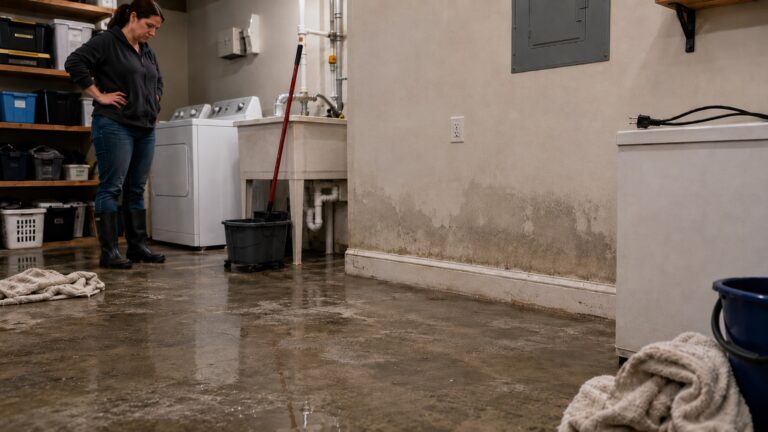
The most dangerous sump pump failures are not always complete shutdowns. A partially failing pump may still run, make noise, or remove some water while the basement remains vulnerable.
- Water may stay high in the pit, keeping pressure on the foundation drainage system.
- Short cycling can wear out the motor faster.
- Backflow can make the pump move the same water repeatedly.
- A weak pump may handle normal seepage but fail during heavy rain.
- Repeated dampness near the pit can raise the risk of basement moisture and mold problems.
If moisture or odor appears after sump pump problems, the issue may extend beyond the pump itself. Mold-specific warning signs are covered in signs of mold growth caused by sump pump failures.
Which Sump Pump Failures Are Preventable?
Not all sump pump failures can be avoided, but many are preventable with proper care and system design.
Preventable Causes
- Debris-related mechanical damage
- Float switch obstruction
- Maintenance neglect
- Improper installation issues
Partially Preventable Causes
- Electrical issues (with backup systems)
- Discharge line freezing or blockage
- System overload with improved drainage
Less Preventable Causes
- Aging and normal wear
- Extreme weather events
- Sudden mechanical or electrical failure
Understanding which risks can be managed helps homeowners make better decisions about maintenance, upgrades, and system improvements.
FAQ: Why Basement Sump Pumps Fail
Why do sump pumps often fail during storms?
Storms increase groundwater pressure and water volume, putting maximum stress on the system. At the same time, power outages and overload conditions are more likely, making failure more common.
What is the most common cause of sump pump failure?
The float switch is the most common failure point because it controls activation and can easily become stuck or worn out.
Can a sump pump fail even if it seems to be working?
Yes. A pump may run but still fail to remove water effectively due to discharge issues, capacity limitations, or internal wear.
How long do sump pumps usually last?
Many sump pumps last about 7 to 10 years, depending on usage, maintenance, and environmental conditions.
Are sump pump failures preventable?
Many failures can be reduced with regular testing, proper installation, routine maintenance, and a clear discharge path. Aging, extreme storms, sudden power loss, and unusually high groundwater conditions may still cause failure.
Conclusion
Most basement sump pump failures come from a small group of causes: switch problems, power loss, clogged discharge lines, worn parts, backflow, poor installation, overload, maintenance neglect, or age. The safest next step is to identify whether the pump is failing to turn on, failing to move water, cycling too often, or being overwhelmed by incoming water.
If the pump is older, unreliable, constantly running, or unable to lower the pit level during rain, treat it as a system problem—not just a pump problem. The cause may involve the pump, pit, discharge line, check valve, backup power, or basement drainage design.
Key Takeaways
- Float switch issues are the most common cause
- Electrical failures often happen suddenly during storms
- Discharge line problems can make a working pump ineffective
- System overload can cause failure even when the pump is functional
- Improper installation can lead to long-term performance issues
- Regular maintenance helps prevent many common failures
- All sump pumps have a limited lifespan and eventually require replacement
One Comment
Comments are closed.