
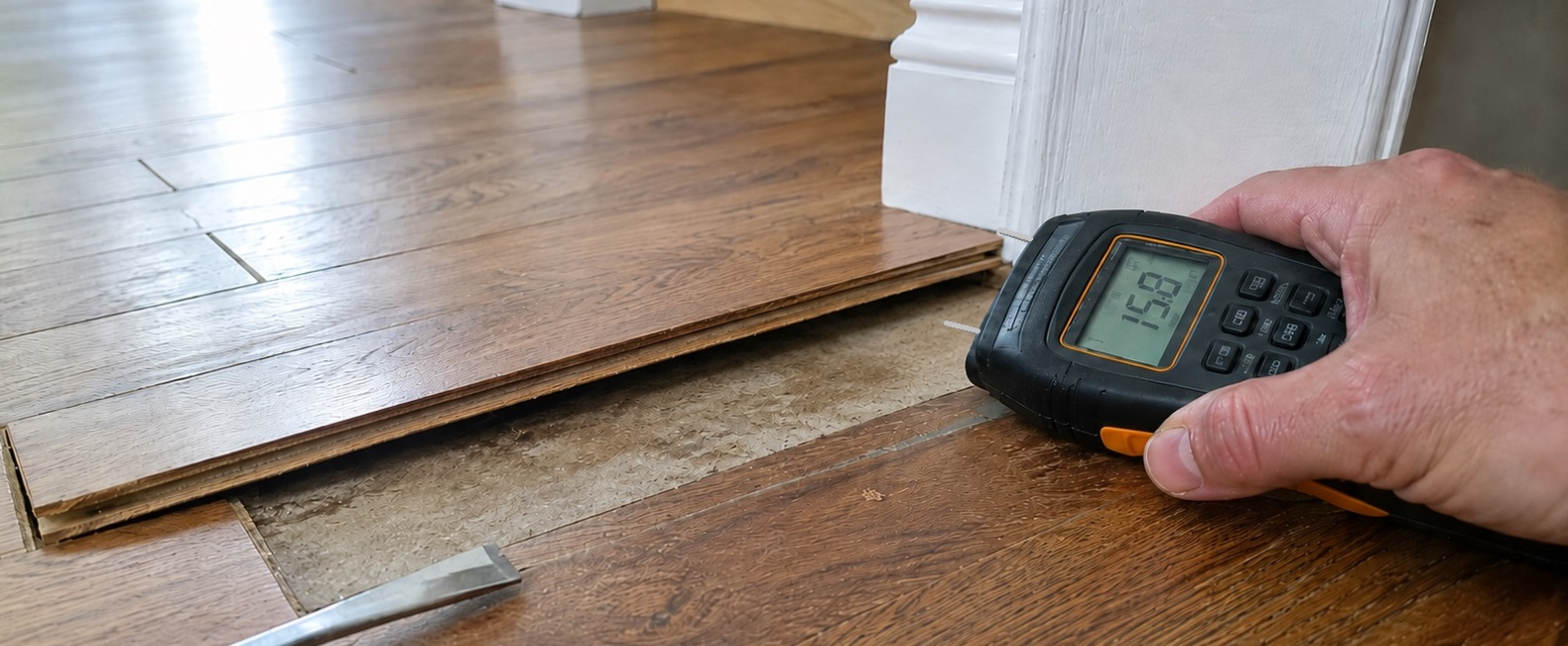
How to Fix Persistent Moisture Under Floors
To fix persistent moisture under floors, you first need to find the active moisture source, confirm how far the moisture has spread, dry or remove materials that cannot recover, and correct the condition that allowed water to return. Surface drying alone is not enough if water is still entering from a leak, crawl space, slab, appliance, bathroom fixture, or exterior drainage problem.
Persistent moisture is different from a one-time spill or minor water event. When dampness returns after drying, the flooring system is usually still being fed by an unresolved source or by moisture trapped in subfloor materials. Over time, that moisture can weaken subfloors, damage adhesives, create soft spots, and support mold growth.
This article focuses on repair-readiness decisions: how to identify why moisture keeps returning, when drying is no longer enough, when flooring or subfloor materials may need replacement, and when professional evaluation becomes necessary. For a broader look at how moisture weakens framing, subfloors, and other building materials, see Structural Moisture Problems in Homes: Causes, Risks, and Repair Guide.
Why Moisture Under Floors Becomes Persistent
Moisture becomes persistent when the floor system is still being fed by water or when trapped moisture cannot escape. The most common reasons are active leaks, moisture rising from below, incomplete drying, sealed flooring layers, and indoor conditions that keep materials damp.
Hidden Moisture Sources Continue Feeding the Problem
One of the most common reasons moisture persists under flooring is the presence of an unresolved water source. Even small leaks can allow continuous moisture entry beneath flooring materials.
Common hidden moisture sources include:
- Slow plumbing leaks beneath fixtures
- Faulty appliance water lines
- Damaged pipe connections
- Loose toilet seals
- Hidden leaks inside walls
Moisture Becomes Trapped Beneath Flooring Materials
Many flooring systems limit airflow beneath the surface, making it difficult for trapped moisture to evaporate. Even when the surface feels dry, moisture may remain beneath flooring layers.
Moisture trapping often occurs when:
- Flooring materials block airflow
- Adhesive layers prevent evaporation
- Subfloor materials absorb large amounts of water
- Ventilation is limited beneath flooring systems
Moisture Migration From Below the Floor
Moisture does not always originate from above the floor. In many homes, moisture migrates upward from below, particularly in basements and slab-on-grade structures.
This type of moisture movement may result from:
- Soil moisture rising through concrete slabs
- Water intrusion beneath foundation walls
- Moist crawl space conditions
- Poor drainage around the home exterior
Incomplete Drying After Water Exposure
Incomplete drying is one of the most frequent causes of persistent moisture. When drying efforts stop too early, moisture remains trapped within structural materials.
Incomplete drying often occurs when:
- Surface materials dry faster than deeper layers
- Drying equipment is removed prematurely
- Hidden moisture is not measured during drying
- Subfloor materials retain water longer than expected
Environmental Conditions Maintain Moisture Levels
Environmental conditions inside and outside the home influence how quickly moisture evaporates. High humidity, poor ventilation, and seasonal moisture changes may allow damp conditions to persist beneath flooring.
Environmental contributors include:
- Elevated indoor humidity
- Poor airflow within enclosed spaces
- Moist outdoor climates
- Limited ventilation in basements or crawl spaces
Common Causes of Recurring Floor Moisture
Recurring floor moisture usually comes from one of five source categories: plumbing leaks, slab or foundation moisture, appliance leaks, condensation, or previous water damage that was never fully dried. Identifying the right category helps determine whether the next step is drying, leak repair, drainage correction, flooring removal, or structural evaluation.
Undetected Plumbing Leaks Beneath Flooring
Plumbing leaks beneath flooring materials are one of the most common causes of recurring moisture. Because these leaks often release small amounts of water gradually, they may remain hidden for long periods before noticeable symptoms appear.
Typical plumbing-related causes include:
- Small pipe leaks beneath sinks or fixtures
- Loose plumbing fittings
- Damaged supply or drain lines
- Failing seals around toilets or tubs
- Condensation forming on cold water pipes
Even slow leaks can introduce enough moisture to saturate subfloor materials over time.
Foundation or Slab Moisture Intrusion
Moisture entering through foundation systems can create recurring dampness beneath flooring materials. In homes built on concrete slabs or with basements, moisture may migrate upward from the ground.
This type of moisture intrusion may result from:
- Groundwater pressure beneath the slab
- Inadequate moisture barriers
- Poor exterior drainage conditions
- Foundation cracks allowing water entry
- Soil saturation during heavy rainfall
Because this moisture originates below the floor, it may return even after repeated surface drying.
Moisture From Appliances and Household Equipment
Household appliances that use water can introduce recurring moisture when small leaks develop. These leaks often go unnoticed because they remain hidden beneath flooring materials.
Common appliance-related moisture sources include:
- Dishwashers leaking beneath cabinets
- Washing machine hose failures
- Refrigerator water line leaks
- Water heater seepage
- Ice maker connections loosening over time
Condensation Beneath Flooring Systems
Condensation may form beneath flooring when warm air contacts cooler surfaces. This process can introduce recurring moisture even in the absence of visible leaks.
Condensation-related moisture often develops when:
- Indoor humidity levels remain elevated
- Temperature differences occur across flooring materials
- Ventilation is limited in enclosed areas
- Insulation barriers are insufficient
Previous Water Damage That Was Never Fully Resolved
Water damage from past events may continue affecting flooring long after the original incident occurred. If drying efforts were incomplete, moisture may remain trapped inside subfloor materials.
Common situations include:
- Flooding events that were partially dried
- Water spills that saturated structural materials
- Roof or plumbing leaks that remained undetected
- Incomplete restoration following water damage
Residual moisture from earlier damage often causes recurring symptoms months after the initial event.
Why Drying Sometimes Fails to Stop Moisture Problems
Drying fails when it treats the symptom instead of the source. If moisture remains inside the subfloor, enters again after rain, leaks from plumbing, or forms through condensation, fans and dehumidifiers may only create temporary improvement.
Surface Drying Does Not Remove Deep Moisture
Drying visible surfaces may create the impression that the flooring has fully recovered. However, moisture trapped within deeper layers often remains long after the surface appears dry.
Deep moisture may remain inside:
- Subfloor materials
- Underlayment layers
- Insulation materials
- Flooring adhesives
- Framing components beneath the floor
When deep moisture remains, it can slowly migrate back toward the surface.
Hidden Water Sources Continue Operating
Active sources may include:
- Undetected leaks
- Poor foundation drainage
- Ongoing condensation
- Moisture migration from crawl spaces
Damaged Materials Retain Moisture
Some materials retain moisture after repeated exposure. Wood-based subfloors, underlayment, and porous building materials may continue holding moisture even after the surface appears dry.
Moisture-retaining materials may show:
- Swelling
- Delamination
- Softening
- Musty odors
- Surface distortion
Once materials become damaged, drying may no longer restore their original condition.
Moisture Measurements Are Not Confirmed
Drying efforts sometimes fail because moisture levels are not measured. Surface appearance alone cannot confirm that hidden materials have dried properly, and homeowners may assume flooring is dry while moisture remains active beneath the surface.
Moisture measurement is especially important when:
- Water reached subfloor materials
- Moisture persisted for more than a short period
- Flooring feels soft or unstable
- Musty odors remain after cleanup
Confirming moisture levels helps determine whether drying is complete or further action is needed.
Environmental Conditions Slow Drying
Even when water sources are corrected, environmental conditions may prevent full drying. High humidity, poor airflow, and cool temperatures slow evaporation from flooring materials.
Conditions that slow drying include:
- Elevated indoor humidity levels
- Poor ventilation in enclosed spaces
- Cool temperatures that reduce evaporation
- High outdoor humidity entering indoor spaces
Without proper environmental control, drying may remain incomplete even after extended time periods.
How to Identify the True Moisture Source
Fixing persistent moisture under floors requires identifying the true source of the problem. Without locating where moisture originates, drying and repair efforts often fail to produce lasting results. Many moisture problems continue because only visible symptoms are addressed while the root cause remains active.
Start by checking whether moisture appears after rain, near plumbing fixtures, beside appliances, over a slab, above a crawl space, or in the same area after each drying attempt. Those patterns help separate leak problems from trapped moisture, humidity, slab vapor, or structural damage.
What to Check Before Replacing Flooring
Do not install new flooring over an area that still has an active moisture source. Before replacing flooring, check these conditions:
- The moisture source has been identified and corrected.
- Subfloor materials have been tested, not just touched at the surface.
- Soft, swollen, delaminated, or crumbling materials have been evaluated for replacement.
- The area has stayed dry through normal use, humidity changes, and at least one rainfall cycle if exterior moisture is suspected.
- Any mold odor, musty smell, or spreading discoloration has been investigated before the floor is covered again.
Look for Patterns That Reveal Moisture Entry Points
Moisture problems often follow recognizable patterns. Paying attention to when and where moisture appears helps narrow down potential sources.
Useful pattern clues include:
- Moisture appearing after rainfall events
- Dampness forming near plumbing fixtures
- Recurring moisture in the same location
- Damage concentrated along exterior walls
- Soft spots developing near appliances
Inspect Areas Near Known Water Sources
Many persistent moisture problems originate near locations where water is commonly used. These areas deserve careful attention when moisture symptoms appear.
High-risk inspection areas include:
- Kitchens and laundry rooms
- Bathrooms and utility areas
- Water heater locations
- Refrigerator and dishwasher zones
- Exterior door thresholds
In some cases, performing a structured inspection helps reveal hidden signs of moisture movement. A detailed inspection process is outlined in How to Inspect Flooring for Hidden Moisture, which explains how to identify moisture indicators beneath flooring systems.
Evaluate Moisture Movement From Below
Moisture rising from below flooring systems often goes unnoticed because it may not involve visible leaks. In homes built on concrete slabs or above crawl spaces, moisture movement from below is a frequent contributor to persistent dampness.
Signs that moisture originates below the floor include:
- Widespread dampness without visible leaks
- Moisture appearing across large areas
- Symptoms worsening during humid weather
- Flooring damage concentrated in lower areas of the home
Understanding upward moisture movement helps prevent misdiagnosis and repeated failed repairs.
Monitor Changes Over Time
Moisture problems often change gradually rather than appearing suddenly. Monitoring changes helps identify whether conditions are improving or worsening.
Important changes to watch for include:
- Expansion of soft flooring areas
- Recurring odors returning after cleaning
- Visible changes in flooring surface condition
- New symptoms appearing in nearby areas
When Structural Solutions Become Necessary
Persistent moisture problems sometimes reach a point where surface-level fixes are no longer effective. Structural solutions become necessary when damage spreads beneath flooring layers or when repeated moisture exposure weakens supporting materials.
Recognizing when structural intervention is required helps prevent further damage and protects the long-term stability of the flooring system. If the floor shows spreading softness, swelling, sagging, or repeated moisture after repairs, compare those symptoms with the broader warning signs in Signs of Structural Moisture Problems.
Repeated Moisture Problems Indicate Deeper Issues
When moisture returns multiple times despite drying attempts, the underlying cause likely involves deeper structural conditions. Repeated failures often signal that moisture has penetrated structural materials such as subfloors or framing components.
Signs of deeper issues include:
- Recurring dampness in the same area
- Moisture returning after previous repairs
- Structural materials showing signs of swelling
- Soft flooring continuing to spread
Structural Materials Show Signs of Deterioration
Structural deterioration occurs when moisture weakens the materials responsible for supporting the flooring system. As materials lose strength, the floor may begin to shift or deform.
Indicators of structural deterioration include:
- Soft or spongy flooring surfaces
- Visible sagging or uneven flooring
- Cracking or separation along seams
- Movement felt while walking across the floor
These symptoms suggest that moisture has affected the structural integrity of the flooring system.
Moisture Problems Spread Across Large Areas
When moisture affects wide sections of flooring, localized repairs may not address the full extent of the damage. Widespread moisture often indicates that water has traveled through interconnected materials beneath the floor.
Signs of widespread damage include:
- Moisture extending beyond the original leak area
- Multiple flooring sections showing symptoms
- Damage appearing in adjacent rooms
- Large areas of flooring becoming unstable
Temporary Fixes No Longer Work
Temporary fixes may provide short-term improvement but often fail when persistent moisture is caused by deeper conditions. Repeated use of temporary repairs can delay necessary structural correction.
Temporary fixes often fail when:
- Moisture returns after repeated drying
- Sealants trap moisture instead of resolving it
- Flooring is replaced without correcting the source
- Surface repairs hide active damage underneath
Warning Signs Repairs Cannot Be Delayed
Persistent moisture problems sometimes reach a stage where waiting or repeated drying attempts only allow damage to spread. The warning signs below suggest that moisture has moved beyond a minor surface problem and may already be affecting structural materials beneath the flooring.
Safety warning: Stop using the affected area and get professional evaluation if the floor feels unstable, continues sinking, has soft spots that spread, or shows signs of rot around structural supports. Do not cover the area with new flooring, underlayment, paint, or sealant until the moisture source has been corrected and damaged materials have been evaluated.
Soft Flooring Continues Expanding Over Time
Soft flooring that spreads outward from the original location is a strong indicator that moisture remains active beneath the surface. As water continues weakening structural materials, surrounding areas become increasingly unstable.
Warning indicators of expanding damage include:
- Soft spots becoming larger over time
- New soft areas forming nearby
- Movement spreading into adjacent rooms
- Flooring deflection becoming more noticeable
Expanding soft areas suggest that moisture damage is continuing rather than stabilizing.
Visible Flooring Changes Become Worse
Visible changes in flooring materials indicate that moisture has begun altering the physical condition of the floor. When these changes worsen, repairs should not be delayed.
Visible worsening may include:
- Buckling or lifting flooring sections
- Warping or cupping in wood flooring
- Loose tiles or planks
- Separation between flooring seams
- Dark staining that continues spreading
Visible deterioration often reflects hidden changes occurring beneath the surface.
Musty Odors Persist After Cleaning
Persistent musty odors suggest that moisture remains trapped or that microbial growth may be developing beneath flooring materials. Odor that returns after cleaning should be taken seriously.
Odor-related warning signs include:
- Musty smells returning after ventilation
- Odors strongest near floor level
- Smells concentrated near soft flooring areas
- Odors worsening during humid weather
Moisture Returns After Multiple Drying Attempts
If moisture returns after several drying attempts, the problem is unlikely to resolve through drying alone. Repeated recurrence strongly suggests that the root cause remains active.
Repeated drying failure may appear as:
- Dampness returning within days or weeks
- Moisture appearing after humidity changes
- Softness returning after surface drying
- Readings remaining elevated despite drying efforts
At that point, professional evaluation is usually the safest next step.
Structural Movement or Instability Appears
Structural movement is a serious warning sign. If the flooring system begins shifting, sagging, or moving under normal use, moisture may have weakened supporting materials.
Instability signs include:
- Floors flexing more than before
- Uneven walking surfaces
- Noticeable dips or sagging
- Movement around fixtures or walls
- Noticeable shifting under heavy furniture
How Professionals Fix Persistent Floor Moisture
Professional repair becomes important when persistent moisture affects structural materials or when the source cannot be identified through basic inspection. Because moisture can travel beneath flooring systems, lasting repair often requires more than surface treatment.
A professional repair plan should identify the moisture source, document the affected area, determine whether materials can dry safely, and decide whether any subfloor, underlayment, or framing components need replacement.
Moisture Source Identification
Professionals begin by identifying where moisture originates. This step is essential because repairs fail when the source remains active.
Source identification may involve:
- Moisture mapping beneath flooring
- Inspection of plumbing and appliance connections
- Evaluation of crawl spaces or basements
- Assessment of exterior drainage conditions
- Testing for moisture migration through slabs
Accurate source identification determines the correct repair approach.
Removal of Trapped Moisture
Once the moisture source is addressed, trapped moisture must be removed from affected materials. This may require controlled drying, removal of damaged materials, or exposure of concealed areas.
Moisture removal may include:
- Using professional drying equipment
- Increasing airflow beneath flooring
- Removing damaged flooring layers
- Monitoring moisture levels during drying
- Adjusting drying strategies as conditions change
Monitoring ensures that moisture levels return to safe conditions before repairs are considered complete.
If moisture readings remain elevated, replacing flooring too early can trap the same problem beneath a new finished surface.
Replacement of Damaged Structural Materials
When moisture causes significant deterioration, damaged structural materials may require replacement. Materials weakened by prolonged moisture exposure may not regain their original strength even after drying.
Situations requiring material replacement include:
- Severely weakened subfloor panels
- Materials showing permanent deformation
- Structural components losing load-bearing strength
- Areas where moisture damage continues spreading
Replacement may be necessary when materials have lost strength, but this article does not provide step-by-step structural repair instructions. If subfloor panels, joists, or load-bearing components are involved, the repair should be evaluated by a qualified professional before the floor is closed up.
Correction of Moisture Entry Conditions
Fixing persistent moisture problems requires addressing the conditions that allowed moisture to enter the flooring system. Without correcting these conditions, moisture problems often return.
Corrective actions may involve:
- Repairing plumbing leaks
- Improving drainage around foundations
- Enhancing ventilation in enclosed spaces
- Installing moisture control barriers
Addressing entry conditions reduces the risk of future moisture-related damage.
How to Prevent Persistent Moisture From Returning
Preventing persistent moisture from returning requires controlling the sources and conditions that keep flooring systems damp.
Repair Leaks Promptly
Leaks should be repaired as soon as they are discovered. Even small leaks can create persistent moisture problems when they affect flooring over time.
Leak prevention steps include:
- Inspecting plumbing connections regularly
- Checking appliance hoses and supply lines
- Repairing loose seals around fixtures
- Monitoring areas where water lines connect to appliances
Control Indoor Humidity Levels
Indoor humidity plays a major role in moisture-related flooring problems. High humidity slows evaporation and encourages condensation beneath flooring materials.
Humidity control measures include:
- Using ventilation fans in kitchens and bathrooms
- Improving airflow in enclosed areas
- Keeping indoor relative humidity around 30% to 50% when possible
- Reducing moisture-producing activities when possible
Improve Exterior Drainage Around the Home
Exterior drainage systems protect flooring by preventing water from accumulating near the foundation. Poor drainage allows moisture to migrate beneath flooring materials from below.
Drainage improvements may include:
- Ensuring gutters direct water away from the foundation
- Maintaining proper ground slope around the home
- Keeping drainage pathways clear of debris
- Monitoring areas where water tends to pool after rainfall
Inspect Flooring Areas Periodically
Regular inspection helps detect moisture problems before they become severe. Early detection reduces repair complexity and limits long-term damage.
Routine inspection activities include:
- Checking for new soft spots or movement
- Monitoring areas previously affected by moisture
- Watching for changes in flooring surface condition
- Responding quickly to unusual odors
Key Takeaways
- Persistent moisture usually indicates an unresolved moisture source.
- Recurring moisture signals deeper structural involvement.
- Surface drying alone often fails to remove hidden moisture.
- Soft spots and structural changes indicate advancing damage.
- Identifying the true moisture source is critical for long-term solutions.
- Long-term prevention requires correcting the leak, drainage, humidity, slab, or crawl space condition behind the moisture.
- Early action reduces the risk of widespread flooring failure.
Frequently Asked Questions About Persistent Moisture Under Floors
Why does moisture keep coming back under floors?
Moisture usually returns when the original source has not been fully corrected. Hidden leaks, moisture migration from below, or incomplete drying often allow moisture to remain active beneath flooring materials.
Persistent recurrence typically indicates that deeper structural conditions still exist.
Can persistent moisture go away on its own?
Persistent moisture rarely resolves without corrective action. Structural materials that remain damp continue releasing moisture over time, which allows symptoms to return.
Waiting for moisture to disappear naturally often allows damage to worsen.
How serious is long-term moisture under floors?
Long-term moisture beneath flooring is a serious structural concern. Over time, moisture weakens subfloor materials, reduces adhesive strength, and increases the risk of mold growth.
Ignoring persistent moisture increases the likelihood of costly repairs.
What happens if persistent moisture is ignored?
If persistent moisture remains unresolved, structural damage typically worsens. Flooring may become unstable, soft areas may expand, and hidden damage may spread beneath adjacent areas.
Long-term neglect often leads to larger repair projects.
When should professionals be called?
Professional evaluation becomes necessary when moisture continues returning after drying attempts, when the floor feels soft or unstable, when moisture spreads beyond the original area, or when the source cannot be identified. Early evaluation helps prevent hidden subfloor or framing damage from becoming more expensive.
Final Repair Decision: Do Not Cover the Floor Until the Source Is Fixed
Persistent moisture under floors should be treated as an active problem until the source is found, the affected materials are tested, and the floor stays dry after normal use and weather changes. If moisture keeps returning, if soft areas are expanding, or if structural materials show swelling or deterioration, do not cover the area with new flooring. Inspect the floor system first, confirm that the source has been corrected, and use Why Flooring Feels Soft After Water Damage if the floor feels weak, spongy, or unstable.