
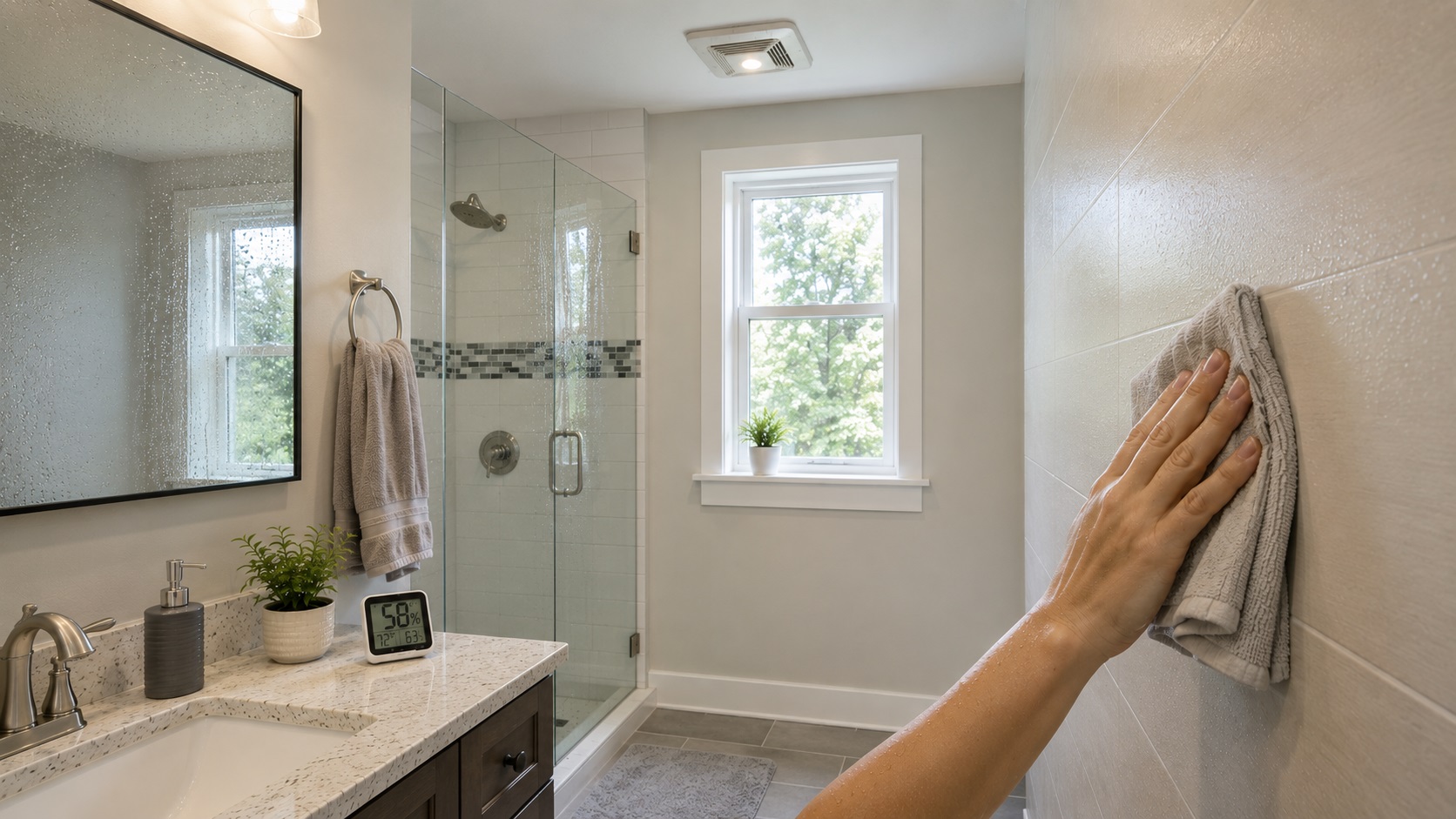
How to Reduce Bathroom Wall Moisture
To reduce bathroom wall moisture, remove humid air quickly, keep the exhaust fan running during and after showers, improve airflow, wipe visible condensation, and keep bathroom humidity below 60% whenever possible. When moisture repeatedly forms on walls and does not dry quickly, it can lead to paint damage, lingering dampness, and eventually mold growth.
Most bathroom moisture problems develop gradually. Steam from showers raises humidity levels, and warm air condenses on cooler wall surfaces. Over time, repeated moisture exposure can soften paint, stain surfaces, and allow dampness to build up in porous materials even when no plumbing leak is present.
Reducing bathroom wall moisture early helps prevent long-term damage. Because bathroom moisture is closely tied to humidity levels, it also helps to understand how to test indoor humidity levels so you can tell whether the room is drying properly after showers.
Why Bathroom Walls Collect Moisture
Bathroom walls collect moisture because of repeated humidity exposure and temperature differences between surfaces and indoor air. Warm, moisture-filled air settles on cooler walls and turns into water droplets through condensation. This process occurs frequently during and after showers.
The main goal is to remove humid air before it condenses and help wet surfaces dry before moisture can soak into porous materials.
Steam From Showers
Hot showers produce large amounts of steam in a short period of time. As water heats up, moisture enters the air and spreads throughout the bathroom. This rapid increase in humidity causes moisture to settle on nearby surfaces, including walls and ceilings.
Bathrooms without strong airflow are especially vulnerable to steam buildup. When moisture remains trapped in the room, it continues to settle on surfaces long after the shower ends.
Steam-related moisture buildup is most common in:
- Small enclosed bathrooms
- Bathrooms without windows
- Spaces with limited airflow
- Bathrooms used frequently throughout the day
- Rooms with weak ventilation systems
Over time, repeated steam exposure can allow moisture to soak into wall finishes and underlying materials. If drying does not occur quickly, moisture accumulation gradually increases.
Condensation From Temperature Differences
Condensation forms when warm, humid air contacts cooler surfaces. Bathroom walls—especially exterior walls—often remain cooler than surrounding air. When moisture-filled air touches these cooler surfaces, water droplets form.
This condensation process creates visible dampness on walls and encourages moisture buildup inside materials.
Temperature-related condensation commonly occurs in:
- Bathrooms located along exterior walls
- Homes with insufficient insulation
- Cold climates with temperature fluctuations
- Bathrooms with high humidity levels
Understanding these temperature differences helps explain why some walls collect more moisture than others.
Poor Ventilation and Airflow
Ventilation removes humid air from bathrooms and replaces it with drier air. Without proper airflow, moisture remains trapped inside the room, increasing the chance that water will settle on walls.
When ventilation systems are weak or used incorrectly, humidity levels remain elevated longer than expected. This prolongs drying time and increases moisture absorption.
Signs of poor ventilation may include:
- Mirrors remaining fogged after showers
- Walls staying damp for extended periods
- Musty odors developing over time
- Condensation forming repeatedly
Understanding the role of airflow helps explain many persistent moisture problems. Exploring the causes described in why bathroom walls stay damp can help clarify recurring moisture patterns.
Surface Materials That Hold Moisture
Some bathroom materials absorb moisture more easily than others. Painted drywall, grout, and wood trim can hold moisture for extended periods, especially when drying conditions are poor.
Even when surfaces appear dry, moisture may remain trapped beneath paint or inside porous materials.
Common moisture-holding materials include:
- Drywall beneath painted surfaces
- Grout between tile seams
- Wood trim and baseboards
- Textured wall finishes
Repeated moisture exposure increases the amount of retained moisture over time. Reducing wall moisture requires controlling both humidity levels and drying speed.
How to Reduce Moisture on Bathroom Walls
Reducing bathroom wall moisture requires removing humidity quickly and drying visible dampness before walls absorb it. Consistent moisture control helps protect paint finishes, wall materials, grout edges, trim, and nearby fixtures.
The most effective strategies combine ventilation, airflow, surface drying, and humidity monitoring.
Using Exhaust Fans Properly
Exhaust fans are one of the most powerful tools for reducing bathroom wall moisture. They remove humid air from the room and help prevent condensation from settling on walls.
However, many moisture problems occur because exhaust fans are shut off too soon. Running a fan only during a shower removes some moisture, but much of the humidity remains suspended in the air afterward.
For effective moisture reduction, follow these fan usage guidelines:
- Turn on the exhaust fan before starting the shower
- Keep the fan running throughout the shower
- Allow the fan to continue operating for 20–30 minutes afterward
- Use timers or humidity sensors when available
Extending fan runtime allows more moisture to leave the room rather than settling onto wall surfaces. If mirrors stay fogged, walls remain damp, or humidity stays high after 30 minutes, the fan may be undersized, dirty, poorly ducted, or not moving enough air.
Consistent ventilation also supports long-term prevention strategies. Combining these habits with steps described in prevent mold behind bathroom walls helps reduce hidden mold risks inside wall cavities.
Improving Air Circulation
Air movement speeds up evaporation and reduces the amount of time moisture remains on walls. When air remains still, moisture lingers longer and increases the chance of absorption into materials.
Improving airflow inside the bathroom helps remove humid air and supports faster drying.
Ways to improve bathroom air circulation include:
- Leaving the bathroom door open after showers
- Opening windows when weather conditions allow
- Allowing air to move freely around fixtures
- Avoiding blocking airflow with heavy items
These simple adjustments help prevent moisture from settling into walls and reduce the duration of damp conditions.
Drying Walls After Showers
Drying visible moisture from walls significantly reduces the amount of water that enters porous materials. Even small amounts of condensation can accumulate over time if left untreated.
Removing moisture immediately after showers helps prevent long-term buildup.
Effective wall-drying methods include:
- Wiping condensation from walls with a towel or cloth
- Removing visible water droplets promptly
- Drying areas where water splashes frequently
- Maintaining clean and sealed grout lines
Surface drying supports faster evaporation and reduces the likelihood of moisture entering wall cavities.
Managing Bathroom Humidity
Humidity control plays a central role in reducing bathroom wall moisture. High humidity levels slow evaporation and increase condensation formation. Managing humidity helps create conditions where moisture dries quickly instead of accumulating.
Most bathrooms benefit from maintaining humidity levels between:
- 30% to 50% for optimal drying
- Below 60% to reduce moisture risk
A useful check is to measure the bathroom shortly before a shower, shortly after the shower, and again 30 minutes later. If humidity does not trend back down after ventilation, the room is not drying fast enough.
Humidity that remains above safe levels encourages repeated moisture formation on walls. Monitoring humidity with a small bathroom hygrometer helps identify problem conditions early, especially if readings stay above 60% long after the shower ends.
When moisture persists despite ventilation and airflow improvements, additional strategies may be needed. Reviewing options described in fix persistent bathroom moisture problems can help determine when stronger solutions are necessary.
How to Reduce Condensation on Bathroom Walls
Condensation is one of the most common causes of bathroom wall moisture. When warm, humid air contacts cooler wall surfaces, water droplets form and create visible dampness. The best way to reduce it is to lower the humidity spike and help the room dry faster after each shower.
This matters most on exterior walls, corners, and poorly ventilated areas where dampness tends to last the longest.
Controlling Temperature Differences
Temperature differences between indoor air and wall surfaces play a major role in condensation formation. Exterior bathroom walls often remain cooler than interior air, especially during colder weather. When warm, humid air touches these cooler surfaces, condensation forms quickly.
Helpful methods for controlling temperature differences include:
- Maintaining consistent indoor temperatures
- Improving insulation in exterior walls
- Keeping bathroom doors slightly open to balance temperatures
- Avoiding sudden temperature changes during use
These steps reduce the likelihood of condensation forming on cooler wall surfaces.
Reducing Humidity Levels
Humidity levels directly affect how much condensation forms on walls. When humidity remains high, moisture stays suspended in the air and settles onto surfaces more easily.
Lower humidity means fewer droplets forming on painted walls, tile edges, trim, and colder surfaces.
Effective humidity-reduction methods include:
- Running exhaust fans consistently
- Using portable dehumidifiers in high-humidity bathrooms
- Allowing airflow between rooms
- Avoiding long periods of trapped steam
Persistent condensation often signals underlying humidity problems. Understanding the underlying causes explained in why bathroom walls stay damp helps identify the conditions contributing to recurring moisture.
Keeping Surfaces Warm and Dry
Keeping wall surfaces warm reduces the chance that humid air will condense into water droplets. Warmer surfaces encourage moisture to remain in vapor form, allowing ventilation systems to remove it more easily.
Maintaining dry and warm surfaces also reduces the amount of water that penetrates porous materials.
Practical steps for keeping surfaces warm and dry include:
- Starting ventilation before steam fills the room
- Leaving the door open after showering when privacy is no longer needed
- Maintaining consistent indoor temperatures
- Wiping condensation first from exterior walls, corners, and other cooler surfaces
These practices help maintain favorable drying conditions and limit moisture accumulation.
Daily Habits That Help Keep Walls Dry
Daily routines significantly influence how much moisture collects on bathroom walls. Small behavior changes can improve drying conditions and reduce long-term moisture exposure.
The most useful habits are the ones that remove steam before it settles and remove water before it can soak into paint, grout, trim, or drywall.
Shorter Showers
Long showers produce large amounts of steam, which increases humidity levels inside the bathroom. Reducing shower length helps limit the total moisture released into the air.
Even reducing shower time by a few minutes can lower the humidity spike and help walls dry faster afterward.
Benefits of shorter showers include:
- Lower overall humidity levels
- Reduced condensation on walls
- Faster surface drying
- Less moisture absorption into wall materials
Surface Drying Habits
After heavy steam exposure, wipe the wettest wall areas, mirror edges, splash zones, and tile transitions first. These are the places where repeated moisture is most likely to sit long enough to affect paint, grout, trim, or drywall.
Improving Routine Airflow
After the bathroom is used, leave the door open when privacy is no longer needed, keep fan grilles clear, and avoid storing items where they block airflow around damp wall areas. These small habits help the room finish drying instead of trapping humid air.
When Moisture Problems Need Extra Solutions
Most bathroom wall moisture problems can be reduced through better ventilation, airflow, and daily drying habits. However, some situations require additional steps when moisture continues to return despite routine efforts. Persistent moisture signals that the underlying conditions are not being fully controlled.
Recognizing when moisture reduction methods are no longer enough helps prevent long-term damage and reduces the risk of mold development.
Signs Moisture Is Not Improving
Moisture problems that continue despite improved habits may indicate deeper airflow or humidity issues. Identifying these warning signs early helps prevent repeated moisture cycles from causing hidden damage.
Common signs that moisture problems are not improving include:
- Walls that remain damp long after showers
- Condensation appearing daily on the same surfaces
- Paint showing signs of bubbling or peeling
- Persistent musty odors inside the bathroom
- Moisture streaks forming repeatedly on walls
If these symptoms continue after better fan use, airflow, and surface drying, the bathroom may need stronger ventilation, humidity control, or leak evaluation.
When to Use Dehumidifiers
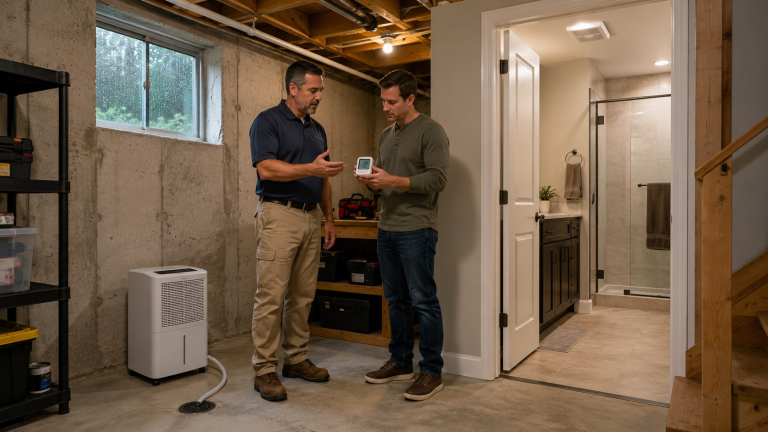
Dehumidifiers help remove excess moisture from the air, making them useful in bathrooms where humidity remains high despite ventilation improvements. In a bathroom, they are best used as a support tool for stubborn humidity rather than a substitute for a working exhaust fan.
Using a dehumidifier may be helpful in:
- Bathrooms without windows
- Homes located in humid climates
- Bathrooms used frequently throughout the day
- Spaces with limited airflow
A dehumidifier is most useful when humidity readings stay high after normal fan use, not when the real problem is a clogged, weak, or poorly vented exhaust fan.
When to Seek Professional Help
Some moisture problems cannot be solved through routine adjustments alone. Persistent humidity or repeated wall dampness may indicate structural or ventilation limitations that require professional evaluation.
Professional assistance may be necessary when:
- Moisture returns quickly after drying
- Walls show repeated signs of damage
- Humidity levels remain elevated for extended periods
- Musty odors, staining, soft drywall, or suspected hidden mold continue after the bathroom has been dried
Do not paint over, seal, or cover damp bathroom walls until the moisture source is controlled. Covering damp materials can trap moisture and make hidden damage harder to find later.
In cases where moisture continues despite preventive efforts, reviewing guidance on how to fix persistent bathroom moisture problems can help determine when more advanced solutions are required.
Conclusion
Reducing bathroom wall moisture requires consistent airflow, humidity control, and routine drying habits. The goal is to remove steam quickly, dry visible moisture, and prevent repeated dampness from soaking into paint, grout, trim, or drywall.
A single habit may help, but the strongest results come from combining fan use, surface drying, open airflow, and humidity checks.
If moisture control is part of a larger mold-prevention plan, the next step is to review how to prevent mold behind bathroom walls without letting hidden dampness remain inside wall materials.
Key Takeaways
- Bathroom wall moisture forms primarily from steam, condensation, and poor airflow.
- Using exhaust fans properly helps remove humidity before moisture settles on walls.
- Air circulation speeds drying and reduces the amount of water absorbed by wall materials.
- Surface drying after showers helps prevent moisture from entering porous materials.
- Persistent moisture may require humidity monitoring, stronger ventilation, or professional evaluation.
- Early moisture reduction helps prevent long-term wall damage and mold growth.
Frequently Asked Questions About Reducing Bathroom Wall Moisture
How do I stop moisture from forming on bathroom walls?
Moisture can be reduced by using exhaust fans during and after showers, improving airflow, and drying surfaces quickly. Keeping humidity levels below 60 percent also helps prevent condensation.
Why do bathroom walls stay wet after showers?
Bathroom walls stay wet when humidity remains trapped inside the room. Poor ventilation, temperature differences, and slow drying conditions are common causes of persistent wall moisture.
Does wiping walls after showers help reduce moisture?
Yes. Removing visible moisture helps prevent water from soaking into wall materials. This simple step can significantly reduce long-term moisture buildup.
Can high humidity damage bathroom walls?
Yes. High humidity can cause paint damage, surface deterioration, and eventually mold growth if moisture remains trapped over time.
When should I worry about bathroom wall moisture?
You should investigate moisture problems when walls remain damp more than 30 minutes after ventilation, condensation appears daily in the same areas, paint starts bubbling, or musty odors develop.
3 Comments
Comments are closed.