
Why Bathroom Walls Stay Damp
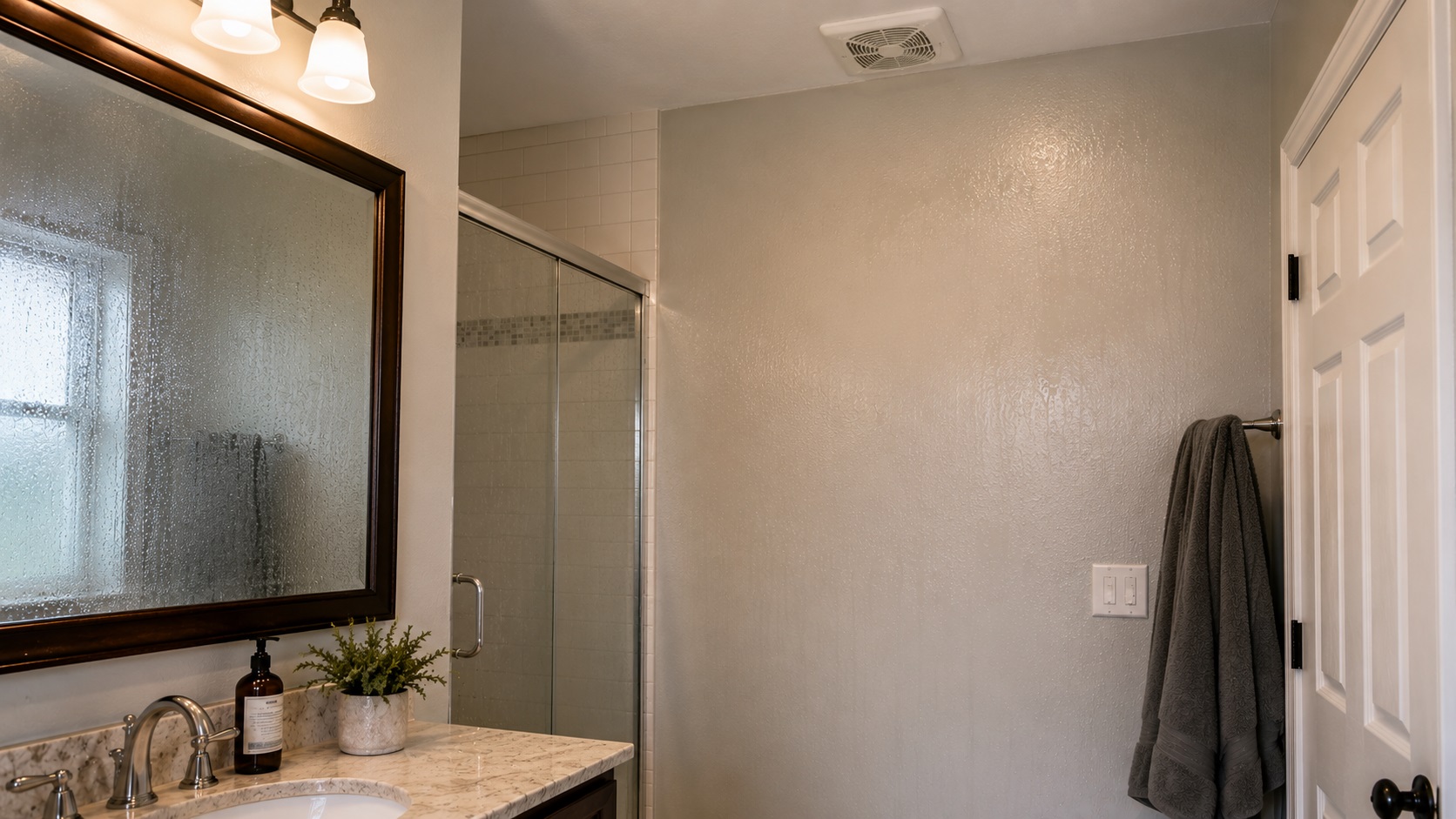
Bathroom walls stay damp when moisture is added faster than the room can remove it. The most common causes are repeated shower steam, high indoor humidity, weak ventilation, cool wall surfaces, condensation, and wall materials that absorb moisture instead of drying quickly.
Brief wetness after a shower is normal. Dampness becomes a concern when walls stay wet for hours, moisture returns soon after wiping, paint begins to bubble or peel, or the same wall areas repeatedly feel cool and damp. These patterns usually mean the bathroom’s drying cycle is incomplete, not just that the wall was splashed once.
Because damp bathroom walls are often part of a larger location-based moisture pattern, it also helps to understand how to find hidden moisture in different areas of your home before surface dampness turns into hidden wall damage.
Steam and Humidity Buildup
Steam and humidity buildup are the most common reasons bathroom walls stay damp. Hot water releases large amounts of moisture into the air, and this moisture spreads quickly throughout the room. Without proper removal, humidity remains suspended in the air and continues to settle onto surfaces.
Frequent Shower Use
Bathrooms used multiple times each day are more likely to experience persistent dampness. Each shower releases moisture into the air, and if the bathroom does not fully dry between uses, humidity accumulates over time.
The problem is worse when the next shower starts before walls, grout lines, trim, and corners have fully dried from the previous one.
This situation is especially common in:
- Shared household bathrooms
- Homes with multiple daily users
- Bathrooms with limited airflow
- Small enclosed bathrooms
- Spaces without windows
High Indoor Humidity
Indoor humidity levels play a major role in how long walls remain damp. When humidity remains high, evaporation slows and moisture lingers on surfaces longer than expected.
Bathrooms located in humid climates often experience longer drying times because surrounding air already contains high moisture levels.
High indoor humidity commonly results from:
- Humid outdoor weather conditions
- Poor ventilation performance
- Limited air circulation between rooms
- Frequent steam production
When humidity remains elevated, surfaces struggle to release moisture efficiently. In these situations, learning how to reduce bathroom wall moisture becomes the next practical step after identifying why the walls are staying damp.
Incomplete Drying Between Uses
A bathroom can stay damp even when some moisture is being removed if the room does not dry fully before the next use. Walls, grout, trim, and corners need enough dry time between showers to release the moisture they absorbed.
Incomplete drying between uses is more likely when:
- Several showers happen close together
- Towels, bath mats, or damp laundry add extra moisture to the room
- The door stays closed long after showers
- Corners, trim, and grout lines remain damp between uses
When the bathroom never gets a full drying period, each new shower adds moisture on top of the last one.
Temperature Differences That Cause Condensation
Temperature differences between bathroom air and wall surfaces play a major role in keeping walls damp. Condensation forms when warm, humid air contacts cooler surfaces. This process causes water droplets to develop on walls, especially after showers when humidity levels are highest.
This is why one wall may stay damp while another dries quickly, even in the same bathroom.
Cold Wall Surfaces
Cold wall surfaces are more likely to collect condensation because they lower the temperature of humid air that comes into contact with them. When warm air cools quickly, water vapor turns into liquid droplets and settles onto surfaces.
This process occurs most frequently in bathrooms where wall temperatures remain lower than surrounding air.
Cold wall surfaces commonly result from:
- Exterior temperature exposure
- Insufficient wall insulation
- Limited indoor heating near bathroom areas
- Poor air circulation that prevents temperature balance
When wall surfaces remain cool, moisture continues to form repeatedly. These repeated condensation cycles contribute to ongoing dampness.
Exterior Wall Exposure
Bathroom walls that face outdoor conditions often remain cooler than interior walls. Outdoor temperatures influence interior wall temperatures, especially during colder months or in areas with frequent temperature fluctuations.
This temperature difference increases the likelihood of condensation forming on these surfaces.
Exterior wall exposure increases dampness risk in bathrooms that:
- Share walls with outdoor environments
- Have limited insulation protection
- Experience frequent temperature changes
- Are located in colder climates
These conditions create environments where moisture forms more easily and drying takes longer.
Poor Insulation Conditions
Insulation plays an important role in maintaining stable wall temperatures. When insulation is inadequate or damaged, walls cool more quickly and become more vulnerable to condensation.
Insufficient insulation allows heat to escape from indoor spaces, leaving wall surfaces cooler than surrounding air.
Signs that insulation conditions may be contributing to damp walls include:
- Cold spots along bathroom walls
- Condensation forming in the same areas repeatedly
- Walls feeling cooler than nearby surfaces
- Moisture forming even with ventilation in use
Understanding temperature-related moisture behavior helps explain why dampness may persist despite routine drying efforts.
Ventilation Problems That Trap Moisture
Ventilation removes humid air from the bathroom and helps walls dry efficiently. When ventilation systems do not function properly, moisture remains trapped inside the room and continues to settle on surfaces.
Ventilation problems are one of the most common causes of persistent damp walls.
A simple first check is to run the exhaust fan during the shower and for at least 20 to 30 minutes afterward, leave the door slightly open when privacy allows, and watch whether mirrors, upper wall corners, and exterior-facing walls dry noticeably faster. If steam still lingers or walls remain damp after that, the issue may involve fan strength, blocked airflow, or cooler wall surfaces rather than shower habits alone.
Weak Exhaust Fans
Exhaust fans that move insufficient air cannot remove moisture quickly enough. When airflow is limited, humidity remains in the room longer and increases condensation formation on walls.
Weak exhaust fans often struggle to keep up with moisture production during showers.
Signs that an exhaust fan may be weak include:
- Mirrors staying fogged for extended periods
- Steam lingering after showers
- Walls remaining damp longer than expected
- Minimal airflow felt near the fan
Weak ventilation systems reduce drying efficiency and contribute to long-term moisture buildup.
Improper Fan Usage
Even properly functioning exhaust fans cannot remove moisture effectively if they are not used correctly. Many homeowners turn off ventilation too soon, leaving humidity trapped inside the bathroom.
Short fan runtimes are one of the most common causes of incomplete drying cycles.
Improper fan usage patterns include:
- Turning fans off immediately after showers
- Using fans only occasionally
- Running fans for short periods
- Not activating ventilation before steam buildup
These habits allow humidity to remain in the air long enough to settle onto walls.
Blocked Airflow
Blocked airflow prevents moisture from leaving the bathroom effectively. Dust buildup, obstructed ducts, and poor airflow pathways reduce ventilation performance.
When airflow becomes restricted, humidity accumulates and slows drying across all surfaces.
Common airflow blockages include:
- Dust accumulation inside ventilation ducts
- Obstructed vent openings
- Closed doors limiting airflow movement
- Furniture or storage blocking ventilation paths
Maintaining clear airflow pathways helps prevent moisture from remaining trapped inside bathroom environments.
Surface and Material Factors
The materials used in bathroom walls play a significant role in how long moisture remains after showers. Some surfaces release moisture quickly, while others absorb water and hold it internally. When materials retain moisture, walls remain damp longer even when ventilation is functioning properly.
Understanding how materials respond to moisture helps explain why dampness may persist despite visible drying on the surface.
Porous Wall Materials
Porous materials absorb moisture more easily than non-porous surfaces. Many common bathroom materials—such as drywall, grout, and wood—contain tiny openings that allow moisture to enter.
When these materials absorb water repeatedly, they retain moisture longer than smooth or sealed surfaces.
Porous materials commonly found in bathrooms include:
- Drywall beneath painted surfaces
- Grout between tile seams
- Wood trim and baseboards
- Textured wall finishes
These materials may feel dry on the surface but still contain internal moisture. Over time, repeated absorption contributes to persistent dampness.
Moisture Retention Inside Walls
Moisture does not always remain visible. Water vapor and repeated surface moisture can move into porous wall materials, especially when humidity remains high for extended periods.
Once moisture enters wall materials, drying becomes slower and more difficult.
Internal moisture retention commonly occurs when:
- Humidity remains elevated after showers
- Airflow is insufficient to remove moisture
- Wall materials absorb repeated condensation
- Drying cycles are interrupted by repeated moisture exposure
This hidden moisture buildup contributes to damp wall conditions that may continue even when surfaces appear dry.
Repeated Surface Wetting
Repeated surface wetting is one of the most common reasons bathroom walls stay damp. Each time water forms on surfaces, materials absorb small amounts of moisture. Over time, this repeated exposure increases the total moisture content within wall systems.
Repeated wetting often results from:
- Daily condensation cycles
- Water splashes near sinks and showers
- Long periods of high humidity
- Incomplete drying between uses
When wetting occurs faster than drying, dampness becomes a persistent condition rather than a temporary one.
When Damp Walls Become a Serious Problem
Occasional dampness may not always indicate a serious issue. However, persistent moisture that remains for extended periods can lead to material damage and mold growth. Recognizing when damp walls are becoming a long-term concern helps prevent more serious problems.
Signs Moisture Is Becoming Persistent
Persistent moisture typically develops gradually. Early warning signs often appear before visible damage occurs.
Signs that dampness is becoming persistent include:
- Walls that remain wet hours after showers
- Recurring condensation on the same surfaces
- Musty odors developing in bathroom areas
- Paint showing signs of bubbling or peeling
- Walls feeling damp throughout the day
If these signs appear mostly after showers, the cause is usually humidity, condensation, or ventilation. If they appear even when the bathroom has not been used, check for a hidden leak, exterior wall moisture, or dampness migrating from an adjacent room.
Hidden Damage Risks
Long-term damp walls increase the risk of hidden damage inside wall structures. Moisture that remains trapped inside materials can weaken surfaces and create conditions favorable for mold growth.
Hidden damage risks associated with persistent dampness include:
- Paint deterioration
- Softening of drywall materials
- Formation of mold colonies
- Development of persistent odors
Over time, these problems may spread beyond the original damp area and affect nearby surfaces.
When to Investigate Further
If dampness continues despite improvements in ventilation and airflow, additional investigation may be necessary. Persistent moisture problems often require identifying deeper causes rather than relying on surface-level adjustments.
Situations that may require further attention include:
- Moisture that returns quickly after drying
- Repeated damage to wall surfaces
- Humidity remaining elevated for long periods
- Signs of mold growth developing
Do not paint over, seal, or cover damp bathroom walls until the moisture source is understood. Covering damp materials can trap moisture behind the surface and make hidden damage harder to detect.
When moisture problems persist despite routine efforts, reviewing guidance on how to fix persistent bathroom moisture problems can help determine when additional solutions are needed.
What Damp Bathroom Walls Usually Mean
Bathroom walls stay damp when moisture accumulates faster than the room can dry. This usually results from repeated humidity cycles, condensation caused by temperature differences, poor ventilation performance, and materials that retain moisture over time. Understanding these causes helps explain why dampness may persist even when surfaces appear dry.
The most useful next step is to identify which pattern is happening: steam that is not being exhausted, humidity that stays high, condensation on cool walls, or moisture being absorbed into porous materials.
Understanding why dampness occurs is the first step toward preventing long-term moisture damage. Once the cause is clear, the next step is choosing the right response: improving daily drying habits, reducing bathroom wall moisture, checking for hidden leaks, or reviewing how to prevent mold behind bathroom walls when dampness has become a repeated condition.
Key Takeaways
- Bathroom walls stay damp when humidity remains trapped and drying cycles are incomplete.
- Frequent showers create repeated moisture exposure that increases dampness over time.
- Temperature differences between warm air and cooler wall surfaces cause condensation.
- Poor ventilation prevents humid air from leaving the bathroom efficiently.
- Porous materials such as drywall and grout absorb moisture and slow drying.
- Persistent dampness increases the risk of mold growth and long-term wall damage.
Frequently Asked Questions About Why Bathroom Walls Stay Damp
Why do my bathroom walls stay damp even hours after a shower?
Bathroom walls stay damp when humidity remains trapped inside the room. Poor ventilation, repeated steam exposure, and cooler wall temperatures can slow drying and cause moisture to linger for long periods.
Is condensation the main reason bathroom walls stay damp?
Yes. Condensation is one of the most common causes of damp bathroom walls. When warm, humid air touches cooler wall surfaces, water droplets form and create ongoing moisture buildup.
Do exterior bathroom walls stay damp longer than interior walls?
Exterior walls often stay damp longer because they are exposed to outdoor temperatures. Cooler wall surfaces increase condensation formation and slow evaporation.
Can poor ventilation cause bathroom walls to stay wet?
Yes. Poor ventilation prevents moisture from leaving the bathroom. When humid air remains trapped, walls stay wet longer and drying becomes less effective.
When should damp bathroom walls be investigated further?
Damp walls should be investigated when moisture returns quickly after drying, musty odors develop, or paint begins to peel or bubble. These signs may indicate persistent moisture problems that require additional attention.
3 Comments
Comments are closed.