How to Prevent Mold Behind Kitchen Cabinets
To prevent mold behind kitchen cabinets, keep hidden cabinet spaces dry, control humidity, inspect plumbing and appliance lines monthly, and improve airflow wherever possible. Mold often develops behind cabinets because moisture dries slowly where cabinet backs cover wall surfaces and block ventilation. Even small repeated moisture exposure can create long-term mold risk if the area stays damp.
Prevention is usually easier and less expensive than removing mold after it appears. Once mold begins growing behind cabinets, moisture damage may spread into walls, insulation, cabinet backs, and nearby base materials. Learning how to prevent mold behind cabinets helps protect both structural materials and indoor air quality.
If mold growth may already be present, review this guide on signs of mold behind kitchen cabinets to confirm whether immediate action is needed. Understanding the early warning signs allows homeowners to shift quickly from prevention to corrective action if necessary.
This article focuses on prevention strategies that reduce moisture risk before mold forms. These methods address airflow, humidity, plumbing protection, and maintenance routines that help keep cabinet spaces dry. For broader long-term moisture prevention across the home, see how to prevent recurring moisture damage.
Why Mold Prevention Behind Kitchen Cabinets Matters
Preventing mold behind kitchen cabinets is essential because cabinet spaces create ideal conditions for hidden moisture buildup. Once moisture enters these enclosed areas, it dries slowly due to limited airflow. Over time, trapped moisture allows mold to grow on cabinet materials and wall surfaces.
Ignoring moisture risks behind cabinets can lead to several long-term problems:
- Hidden mold growth: Mold may develop behind cabinet backs before becoming visible.
- Structural material damage: Moisture weakens cabinet bases and wall surfaces.
- Recurring odors: Persistent dampness creates musty smells.
- Cabinet warping: Absorbed moisture causes swelling and deformation.
- Increased repair costs: Delayed prevention leads to larger repairs later.
Many moisture problems begin with conditions that seem minor at first. A small plumbing drip or humidity buildup may not appear dangerous, but repeated exposure creates long-term moisture retention. Understanding how these problems develop is explained in why kitchen cabinets trap moisture, which describes the underlying causes of moisture accumulation.
Prevention becomes especially important after any water-related event because moisture can remain trapped behind cabinets even after the visible leak or spill is fixed.
Preventive strategies focus on reducing the conditions that allow mold to grow behind cabinets:
- Moisture exposure from leaks, splashes, condensation, or humidity
- Limited airflow that slows drying behind cabinet backs and bases
- Extended dampness that keeps wood, drywall, or cabinet materials wet long enough for mold to develop
Controlling these conditions reduces mold risk in cabinet areas. The following sections explain how to manage moisture sources, improve airflow, and reduce humidity behind and around kitchen cabinets.
Control Moisture Sources Before Mold Can Start
The most effective way to prevent mold behind kitchen cabinets is to control moisture at its source. Reducing water exposure lowers the risk of hidden mold development because mold needs damp conditions to grow. Many cabinet moisture problems begin with small water sources that go unnoticed until damage becomes visible.
Moisture sources behind cabinets are often subtle rather than dramatic. Small leaks, splashes, pipe condensation, and humidity buildup can repeatedly dampen cabinet spaces, especially where airflow is limited.
The most common moisture sources behind kitchen cabinets include:
- Slow plumbing leaks: Loose fittings and worn seals may drip gradually.
- Pipe condensation: Cold water pipes produce moisture droplets.
- Sink splashes: Daily water use introduces repeated moisture exposure.
- Dishwasher seepage: Connections and hoses may leak slightly over time.
- Refrigerator water line leaks: Small seepage may occur behind appliances.
Controlling these sources early reduces the likelihood of hidden mold formation.
Perform Monthly Plumbing Inspections
Regular plumbing inspections are one of the most reliable preventive practices. Small leaks often begin gradually and may remain hidden until cabinet materials become damaged. Checking plumbing components monthly allows homeowners to detect minor issues before they become serious problems.
During plumbing inspections, check:
- Pipe connections: Touch around joints with a dry paper towel and look for dampness, mineral deposits, or fresh staining.
- Supply lines: Inspect braided hoses and plastic lines for cracks, corrosion, bulging, or moisture at the fittings.
- Shutoff valves: Confirm that valves are dry, stable, and not leaving moisture marks on the cabinet floor or wall.
- Drain fittings: Check beneath sink traps for slow seepage, musty odor, or a darkened ring below the drain assembly.
- Appliance connections: Inspect dishwasher and refrigerator water lines, especially where hoses pass behind cabinets or through cabinet side panels.
If moisture is detected during inspection, immediate correction prevents long-term accumulation. Early detection methods described in how to detect moisture behind kitchen cabinets help confirm whether hidden dampness exists.
Important: Do not seal, paint, line, or cover a damp cabinet area until the moisture source is fixed and the material is fully dry. If cabinet backs, drywall, or base materials feel soft, swollen, crumbly, or musty, stop routine prevention and consider professional inspection.
Reduce Daily Water Exposure Inside Cabinets
Daily kitchen use introduces moisture through normal activities. Splashing water, wet cleaning materials, and spills can expose cabinet interiors to moisture repeatedly. While each exposure may seem minor, repeated wetting creates favorable conditions for mold growth.
Simple daily habits reduce moisture exposure significantly:
- Wipe cabinet interiors dry: Remove moisture after spills or cleaning.
- Use splash guards: Prevent water from contacting cabinet surfaces.
- Avoid storing wet materials: Allow cleaning cloths to dry before storage.
- Keep cleaning supplies organized: Avoid crowding cabinet interiors so leaks, damp corners, and musty odors are easier to notice.
- Check for hidden moisture: Inspect cabinet bases, back corners, toe-kick areas, and wall contact points periodically.
- Dry sink areas thoroughly: Prevent lingering moisture near plumbing.
These routine actions reduce moisture buildup before it becomes persistent. Over time, consistent drying habits create safer cabinet environments.
Prevent Pipe Condensation
Pipe condensation is another common moisture source inside cabinet spaces. Cold water pipes produce condensation when warm indoor air contacts cooler pipe surfaces. Water droplets form and accumulate inside cabinets, particularly in humid conditions.
Condensation prevention methods include:
- Insulate exposed pipes: Foam insulation reduces temperature differences.
- Improve airflow: Air movement helps moisture evaporate faster.
- Control humidity levels: Lower humidity reduces condensation risk.
- Monitor seasonal changes: Condensation increases during humid weather.
Understanding how condensation forms — as explained in why kitchen cabinets trap moisture — helps homeowners identify conditions that increase risk.
Controlling moisture sources creates the foundation for long-term prevention. Airflow is the next step because it helps hidden cabinet spaces dry before moisture becomes persistent.
Improve Airflow Behind and Around Kitchen Cabinets
Improving airflow behind kitchen cabinets is one of the most effective ways to prevent mold growth. Airflow helps moisture evaporate quickly, reducing the amount of time surfaces remain damp. When airflow is restricted, moisture lingers longer and increases the risk of mold formation.
Cabinets are often installed tightly against walls, leaving little space for air movement. This creates enclosed spaces where moisture becomes trapped. Improving airflow in these areas reduces moisture buildup and helps maintain dry cabinet surfaces.
Effective airflow improvement methods include:
- Preserve ventilation space where possible: Avoid blocking existing gaps, toe-kick vents, or service openings that allow limited air movement.
- Use vented cabinet panels: Vent openings allow air exchange in enclosed areas.
- Do not install cabinets over damp walls: Make sure wall surfaces are dry before installation, caulking, lining, or finishing work.
- Improve room airflow: Increase general air circulation within the kitchen.
- Open cabinet doors periodically: Allows trapped humidity to escape.
Improving airflow is particularly important in areas near sinks and appliances. These locations experience frequent moisture exposure, making ventilation essential for long-term prevention.
If moisture buildup has already occurred, airflow can help support drying, but this article does not replace a recovery process. For active wet cabinets after a leak, use how to dry cabinets after kitchen leaks before focusing on long-term prevention.
How to Reduce Kitchen Humidity Levels
Humidity control plays a major role in preventing mold behind kitchen cabinets. High humidity can allow moisture to collect on surfaces even when no plumbing leak is present. Kitchens naturally produce steam during cooking and dishwashing, so ventilation matters.
As a practical target, keep indoor humidity low enough that cabinet interiors, wall surfaces, and cold-water pipes do not stay damp. If a kitchen regularly feels humid, has window condensation, or leaves stored items feeling damp, humidity control should be part of the prevention routine.
Reducing indoor humidity lowers condensation risk and prevents moisture from settling into cabinet structures.
Effective humidity reduction strategies include:
- Use vented range hoods: Exhaust cooking steam outdoors rather than recirculating it.
- Operate exhaust fans regularly: Remove humid air during cooking and dishwashing.
- Open windows when possible: Promote natural ventilation.
- Limit extended steam exposure: Reduce prolonged boiling and steaming when ventilation is limited.
- Use dehumidifiers in humid climates: Maintain stable humidity levels.
Humidity control is especially important in homes located in humid climates or areas with limited natural ventilation. Without proper humidity management, condensation may occur behind cabinets even when plumbing systems are functioning normally.
For ongoing moisture management strategies throughout the home, see how to prevent recurring moisture damage, which provides additional guidance on controlling environmental moisture risks.
How to Prevent Condensation Behind Cabinets
Condensation is one of the most common hidden moisture sources behind kitchen cabinets. It occurs when warm, humid air contacts cooler surfaces such as exterior walls. Because cabinets block airflow, moisture formed through condensation often remains trapped behind cabinet backs.
Preventing condensation reduces long-term mold risk and protects cabinet materials from moisture exposure.
Effective condensation prevention techniques include:
- Improve wall insulation: Warmer wall surfaces reduce condensation formation.
- Seal air leaks: Prevent humid air from entering wall cavities.
- Maintain consistent indoor temperatures: Reduce rapid temperature changes.
- Monitor seasonal humidity: Adjust ventilation during cold or humid periods.
- Control indoor humidity levels: Keep humidity low enough that cabinet interiors, cold pipes, and exterior wall surfaces do not stay damp.
Condensation prevention is particularly important for cabinets installed on exterior walls. Temperature differences between indoor and outdoor environments increase moisture risk in these locations.
If condensation continues despite preventive efforts, evaluating long-term moisture patterns becomes necessary. Advanced monitoring techniques described in how to fix persistent moisture behind kitchen cabinets can help identify deeper structural causes.
The next section explains how regular maintenance and protective materials further strengthen long-term mold prevention efforts.
How to Maintain Cabinets to Prevent Long-Term Mold Risk
Preventing mold behind kitchen cabinets requires ongoing maintenance rather than one-time action. Even when cabinets are installed correctly and moisture sources are controlled, regular monitoring helps ensure hidden moisture problems do not develop over time.
Routine maintenance helps identify early warning signs before damage becomes severe. Many moisture problems can be prevented simply by checking cabinet areas regularly and correcting minor issues quickly.
Check Cabinet Materials During Routine Cleaning
In addition to checking plumbing, look at the cabinet materials themselves during routine cleaning. Cabinet bases, back corners, toe-kicks, and wall contact points often show early moisture stress before mold becomes visible.
During routine checks, inspect:
- Cabinet bases: Look for swelling, discoloration, or warping.
- Wall contact points: Look where cabinet backs, side panels, and toe-kicks meet walls or flooring.
- Cabinet interiors: Feel for dampness or unusual softness.
- Hardware components: Watch for rust or corrosion.
- Odors: Musty smells may indicate early moisture issues.
If moisture is detected during inspection, immediate evaluation helps prevent long-term damage. Detection techniques explained in how to detect moisture behind kitchen cabinets help confirm whether hidden dampness is present.
Perform Seasonal Deep Inspections
Seasonal inspections provide additional protection during periods when humidity levels change. Moisture risks often increase during seasonal transitions, especially in humid climates or colder months when condensation becomes more likely.
Seasonal inspection tasks include:
- Inspect exterior wall cabinets: Check for condensation-related moisture.
- Watch for cold wall surfaces: Cabinets on exterior walls may be more prone to condensation during seasonal temperature changes.
- Check ventilation systems: Confirm fans and ducts operate properly.
- Monitor humidity levels: Adjust airflow methods if humidity increases.
- Examine surrounding walls: Look for staining or softening materials.
These inspections reduce the likelihood of long-term hidden moisture buildup and support early correction when necessary.
Use Moisture-Resistant Materials During Repairs or Updates
Material selection plays an important role in preventing mold behind kitchen cabinets. Some cabinet materials absorb moisture more easily than others, increasing long-term risk. Using moisture-resistant materials reduces the likelihood of damage when water exposure occurs.
Moisture-resistant materials help reduce mold risk by limiting water absorption and speeding drying time.
Recommended moisture-resistant materials include:
- Moisture-resistant cabinet boards: Engineered to resist swelling.
- Sealed cabinet edges: Prevent water from entering exposed material layers.
- Waterproof backing panels: Provide additional moisture protection.
- Mold-resistant primers or coatings: May help protect surfaces, but only after moisture sources are corrected and materials are dry.
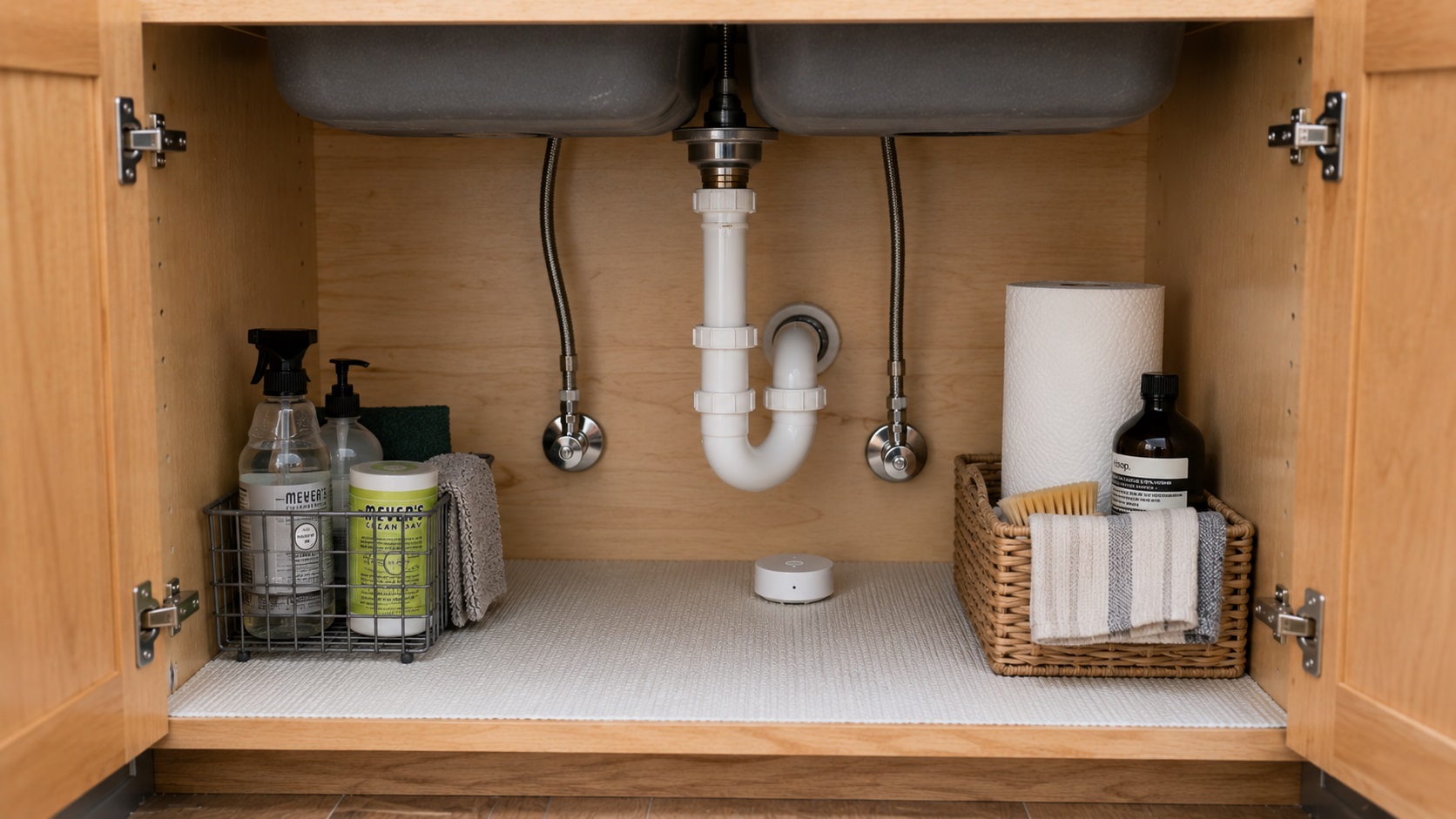
- Protective liners: Shield cabinet bases from direct water exposure.
While these materials do not eliminate moisture risk completely, they provide an additional layer of protection when combined with proper maintenance and ventilation.
Monitor Moisture Conditions Over Time
Long-term monitoring helps maintain consistent moisture control behind kitchen cabinets. In homes with recurring humidity challenges, monitoring tools provide early warnings before visible problems develop.
Helpful monitoring tools include:
- Hygrometers: Measure kitchen humidity and help confirm whether humidity is staying high enough to support condensation.
- Moisture meters: Check cabinet backs, base panels, toe-kicks, and nearby drywall for elevated moisture after leaks, spills, or humid periods.
- Water leak alarms: Place near dishwashers, sink bases, refrigerator water lines, or other high-risk cabinet areas to catch leaks early.
- Humidity alarms: Alert homeowners to excessive humidity levels.
- Temperature sensors: Identify condensation-prone conditions.
Monitoring moisture levels helps identify environmental changes that may increase mold risk. If mold keeps returning despite these preventive steps, how to prevent recurring mold behind kitchen cabinets covers the deeper recurrence patterns that this article does not fully address.
Frequently Asked Questions About How to Prevent Mold Behind Kitchen Cabinets
How do I stop mold from forming behind kitchen cabinets?
Prevent mold by controlling moisture sources, improving airflow, reducing humidity, and performing regular inspections. Keeping cabinet areas dry is the most effective preventive strategy.
Do kitchen cabinets need ventilation behind them?
While not always required, improved airflow behind cabinets significantly reduces moisture buildup. Ventilation helps surfaces dry faster and lowers mold risk.
Can humidity alone cause mold behind cabinets?
Yes. High humidity levels can cause condensation behind cabinets even when plumbing systems are functioning properly. Maintaining controlled humidity levels is essential.
How often should cabinet areas be inspected?
Monthly plumbing checks are useful, along with routine cabinet material checks during cleaning and deeper seasonal inspections during humid or cold-weather periods.
Is it necessary to use a dehumidifier in kitchens?
In humid climates or poorly ventilated homes, dehumidifiers can help maintain safer humidity levels and reduce condensation risks.
Conclusion
Preventing mold behind kitchen cabinets requires consistent attention to moisture control, airflow improvement, and routine inspection. Because cabinet spaces trap moisture easily, proactive prevention methods significantly reduce the risk of hidden mold growth and structural damage.
By controlling moisture sources, improving ventilation, and maintaining regular inspection routines, homeowners can protect cabinet structures and maintain healthier indoor environments. Preventive maintenance also reduces the likelihood of expensive repairs and long-term mold remediation.
For additional prevention strategies across the home, see how to prevent recurring moisture damage, which explains how to control moisture sources, reduce repeat dampness, and protect structural materials over time.
Key Takeaways
- Controlling moisture sources is the most effective way to prevent mold behind kitchen cabinets.
- Improving airflow helps reduce moisture retention in hidden cabinet spaces.
- Reducing indoor humidity lowers condensation risk.
- Regular inspections detect early moisture problems before mold develops.
- Moisture-resistant materials provide additional protection, but they do not replace moisture control.
- Long-term monitoring helps maintain consistent mold prevention.