How to Fix Persistent Moisture Behind Kitchen Cabinets (When Drying Alone Isn’t Enough)
Persistent moisture behind kitchen cabinets usually means drying alone did not solve the real problem. To fix it, you must stop the active moisture source, confirm whether water is trapped behind the cabinet, and decide whether cabinet parts, drywall, flooring, or subfloor materials need repair or replacement.
If cabinets remain damp or moisture returns days or weeks after cleanup, the problem is no longer just a drying issue. The steps in How to Dry Cabinets After Kitchen Leaks are useful for initial moisture removal, but persistent dampness requires source correction, access behind the cabinet, and material-damage decisions.
This article explains how to fix persistent moisture behind kitchen cabinets by deciding what must be corrected first: the active moisture source, the trapped wet material, the damaged cabinet components, or the surrounding wall and floor structure. For broader structural moisture decisions, see Structural Moisture Problems in Homes: Causes, Risks, and Repair Guide.
Why Moisture Sometimes Returns After Drying
When moisture returns after cabinets appear dry, it usually means the original moisture source was never fully resolved. Drying removes existing water, but it does not stop new moisture from entering cabinet areas.
Recurring moisture often develops through hidden pathways that allow water to reappear over time. These pathways may remain unnoticed until materials begin showing signs of repeated dampness.
Common reasons moisture returns after drying include:
- Hidden plumbing leaks that continue releasing water
- Moisture trapped inside wall cavities
- Subfloor materials that remain damp beneath cabinets
- Condensation cycles caused by temperature differences
- External moisture entering from outside walls
Before planning repairs, check three things in order: whether water is still entering, whether the wall or floor behind the cabinet is still wet, and whether the cabinet base has lost strength. Repairing the visible cabinet surface before those checks are complete can trap moisture and hide continuing damage.
Moisture that repeatedly returns may also lead to mold development. If mold begins appearing after previous drying efforts, the underlying moisture cause must be addressed before long-term solutions are possible. Many of the formation patterns linked to recurring mold are explained in this article on why mold forms behind kitchen cabinets, which outlines the environmental conditions that allow mold to persist.
Once moisture returns after drying, the next step is to decide whether the problem is still surface-level or whether hidden materials need access, repair, or replacement.
Signs That Moisture Problems Require Structural Fixes
Not all cabinet moisture problems can be solved with drying alone. When moisture continues to return or visible damage develops, structural fixes may be required. Recognizing the warning signs early helps prevent further deterioration and reduces the likelihood of costly repairs.
Many of these warning signs develop gradually, which makes them easy to overlook. However, when multiple symptoms appear together, they often indicate deeper moisture problems behind cabinets.
Recurring Moisture After Drying
If cabinets appear dry but become damp again within days or weeks, moisture is likely entering from an active source. This pattern suggests that water continues to reach cabinet structures even after drying attempts.
Recurring dampness commonly indicates:
- Slow plumbing leaks inside cabinet walls
- Moisture trapped in subfloor materials
- Condensation forming repeatedly on cool surfaces
- External moisture entering through walls
Repeated moisture exposure increases the risk of long-term damage. Early signs of water movement that lead to recurring moisture are described in this guide to identifying water damage behind kitchen cabinets, which explains how moisture spreads through concealed areas.
Soft or Swollen Cabinet Bases
Cabinet base swelling is one of the clearest indicators that moisture has entered structural materials. Particleboard and MDF bases absorb water quickly, causing materials to expand and weaken.
Signs of structural swelling include:
- Cabinet bottoms that feel soft when pressed
- Raised or uneven cabinet surfaces
- Visible bulging along cabinet edges
- Separation between cabinet components
Once cabinet bases swell significantly, structural integrity may be compromised. In these cases, moisture removal alone may not restore the original strength of affected materials.
Persistent Musty Odors
Musty odors inside cabinets often signal hidden moisture or mold growth. Even when visible surfaces appear clean, lingering odors may indicate microbial activity behind cabinet panels.
Persistent odors typically develop when:
- Moisture remains trapped inside materials
- Organic materials stay damp for extended periods
- Airflow remains restricted inside cabinet areas
If musty odors continue despite drying efforts, hidden moisture or mold may remain inside concealed areas. Odor-based warning signs linked to hidden moisture are also discussed in this article about mold smells without visible mold, which explains how hidden moisture produces persistent odors.
Wall Damage or Surface Changes
Wall damage behind cabinets often signals moisture spreading into surrounding structures. Because cabinets cover large sections of walls, these changes may remain hidden until damage becomes severe.
Watch for signs such as:
- Peeling or bubbling paint near cabinet edges
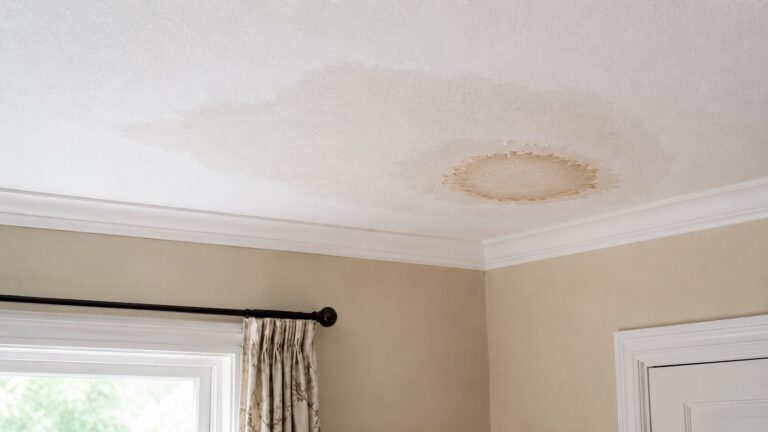
- Discoloration appearing along walls
- Soft drywall surfaces
- Expanding stains along seams or corners
Wall damage usually indicates moisture moving beyond cabinet interiors. When walls are affected, structural repairs may be required to correct the underlying cause.
Repeated Mold Growth
Mold that returns after cleaning is one of the strongest indicators of unresolved moisture problems. Repeated mold growth typically occurs when moisture remains hidden behind cabinet structures.
Recurring mold often results from:
- Incomplete drying after leaks
- Active moisture sources that remain undetected
- Humidity levels that stay consistently high
- Poor ventilation behind cabinets
When mold repeatedly returns, moisture must be eliminated before lasting cleanup becomes possible. For the prevention side of this problem, see How to Prevent Recurring Mold Behind Kitchen Cabinets; this article stays focused on deciding what must be fixed when moisture keeps returning.
When these warning signs appear together, assume the cabinet area needs more than extra fans or more time to dry.
Common Structural Causes of Persistent Moisture Behind Kitchen Cabinets
Persistent moisture problems rarely occur without an ongoing structural cause. When cabinets continue to feel damp after drying, moisture is usually entering from a hidden source. Identifying these structural causes is necessary before meaningful repairs can begin.
Several structural issues are responsible for most long-term cabinet moisture problems. These causes often develop slowly and may not become visible until damage has progressed.
Hidden Plumbing Leaks
Hidden plumbing leaks remain the most common cause of recurring moisture behind kitchen cabinets. Even small leaks can introduce enough water to create long-term damp conditions.
Plumbing-related causes include:
- Loose or worn pipe fittings
- Hairline cracks in drain pipes
- Leaking shutoff valves
- Slow drips from supply lines
- Deteriorated pipe seals
Because these leaks may release small amounts of water over long periods, moisture often spreads gradually through cabinet materials and surrounding structures. The early warning signs associated with these leaks are described in this article about water damage behind kitchen cabinets, which helps identify conditions before structural damage worsens.
Wall Moisture Intrusion
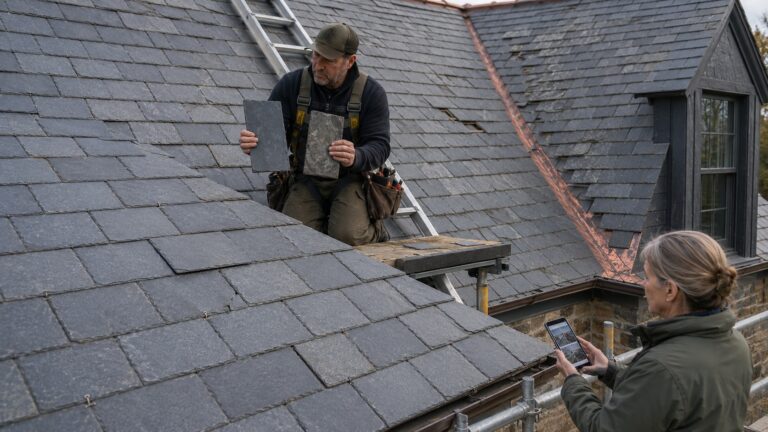
Moisture entering from exterior walls can create long-term moisture cycles behind cabinets. External water intrusion may originate from roof leaks, window failures, or exterior sealing problems.
Common sources of wall intrusion include:
- Damaged roof flashing allowing water into walls
- Leaking windows near cabinet areas
- Cracked siding or exterior wall materials
- Poor sealing around exterior openings
Moisture from these sources often travels downward inside wall cavities before reaching cabinet locations. Because this water movement occurs behind finished surfaces, it may remain unnoticed until significant damage develops.
Water movement inside structural walls is explained in this guide to detecting moisture in exterior walls, which outlines how external water intrusion spreads through hidden areas.
Subfloor Saturation Beneath Cabinets
Subfloor materials beneath cabinets frequently absorb water during leaks. If subflooring remains damp after initial drying, moisture may continue moving upward into cabinet bases.
Subfloor moisture problems often result from:
- Extended water exposure during plumbing leaks
- Incomplete drying after flooding events
- Water spreading beneath cabinet bases
- Moisture trapped between flooring layers
Subfloor moisture is particularly concerning because it may weaken structural materials beneath cabinets. If flooring feels soft or unstable, structural repair may be necessary.
Condensation Cycles Behind Cabinets
Some persistent moisture problems occur without visible leaks. In these cases, condensation cycles may create repeated dampness behind cabinets.
Condensation typically forms when:
- Warm indoor air contacts cool exterior walls
- Humidity levels remain consistently high
- Airflow behind cabinets is restricted
- Insulation behind walls is inadequate
Repeated condensation can create long-term moisture exposure even when no plumbing leak exists. Identifying condensation patterns helps prevent recurring moisture cycles.
When Cabinets Need to Be Opened or Partially Removed
In some situations, cabinets may block access to hidden moisture sources. Partial cabinet removal allows inspection of concealed areas and improves access for repairs.
Cabinet removal is not always necessary, but it becomes more likely when moisture remains trapped behind cabinet structures.
Do not cover, caulk, repaint, or reinstall cabinet panels over an area that still smells musty, feels soft, shows active staining, or gives elevated moisture readings. Covering the area too early can trap moisture and allow hidden damage to continue.
Situations That May Require Cabinet Removal
Partial cabinet removal may be needed when:
- Moisture remains trapped behind cabinet backs
- Wall inspection is necessary to locate leaks
- Subfloor drying cannot be completed through cabinet openings
- Mold spreads across concealed surfaces
- Structural damage is suspected behind cabinets
Opening or partially removing cabinets allows contractors or remediation professionals to inspect hidden wall areas and confirm whether structural damage exists. In many cases, partial removal is enough to locate the moisture source without dismantling the entire cabinet system.
Risks of Delaying Structural Access
Delaying cabinet removal when structural moisture exists may allow damage to spread further. Moisture trapped behind cabinet backs may continue affecting walls and flooring even when surfaces appear dry.
Long-term exposure increases the risk of mold development and material deterioration. If recurring mold appears despite repeated cleaning, moisture may remain hidden in areas that cannot be reached without structural access.
If moisture cannot be confirmed or corrected from the cabinet opening, structural access is usually the safer next step before rebuilding or covering the area.
How to Fix Persistent Moisture Behind Kitchen Cabinets
Once the source of persistent moisture has been identified, repairs must focus on eliminating the cause and restoring dry conditions. The correct repair approach depends on the severity of moisture exposure and the materials affected.
A practical repair order is: stop the leak or intrusion first, open enough of the cabinet or wall area to confirm hidden wet materials, dry or remove materials that cannot recover, then rebuild or replace damaged cabinet components only after moisture readings and visible conditions are stable.
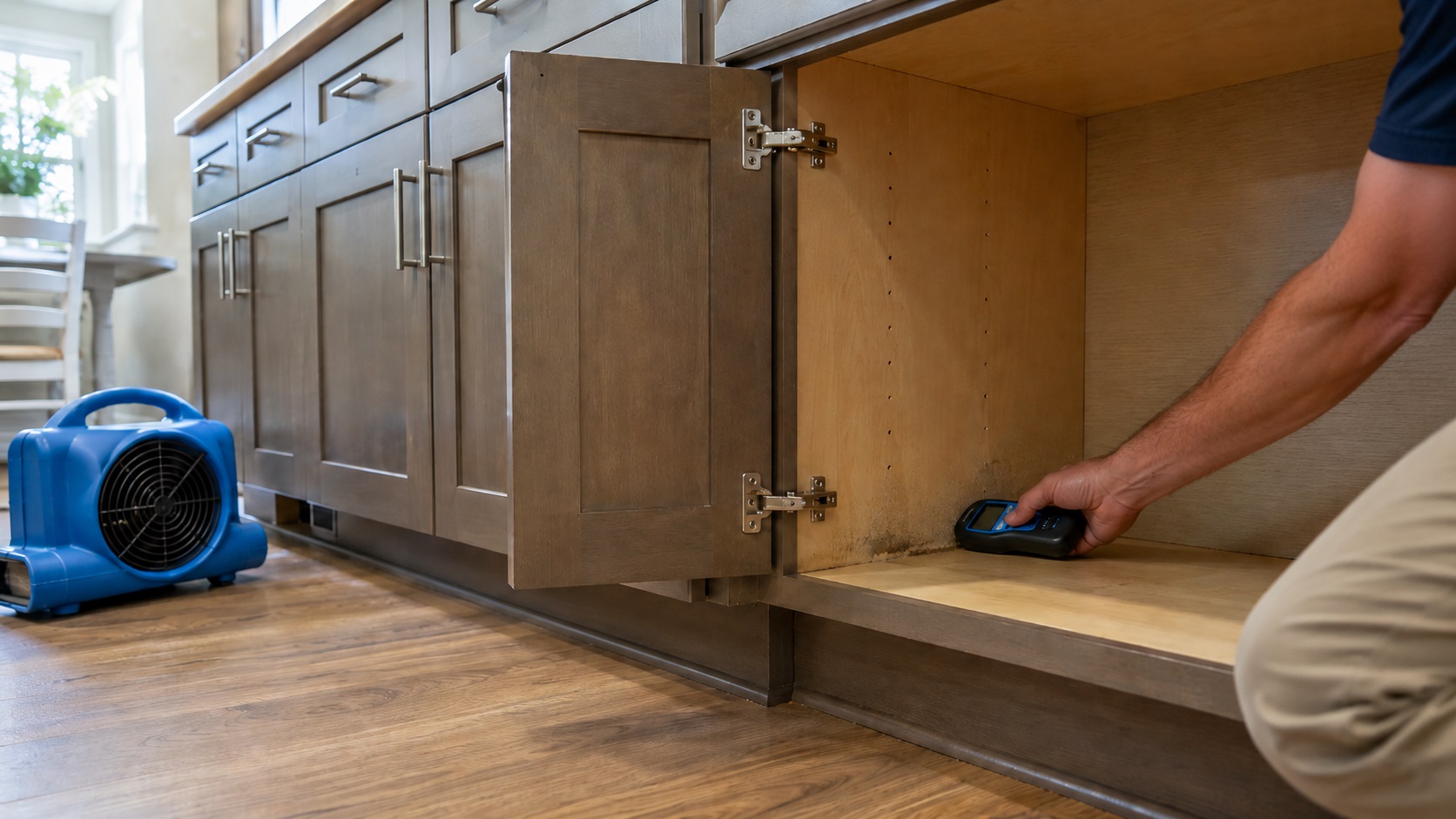
If a moisture meter is available, compare readings from the affected cabinet area with nearby dry materials of the same type before closing the wall, reinstalling panels, or replacing flooring.
Repairing Hidden Plumbing Leaks
If plumbing leaks are responsible for recurring moisture, repairing the affected components is the first step. This may involve replacing worn fittings, tightening connections, or installing new pipe sections.
Common plumbing-related repairs include:
- Replacing cracked or leaking supply lines
- Repairing damaged drain pipes
- Installing new shutoff valves
- Sealing loose plumbing connections
After plumbing repairs are completed, drying procedures should follow to remove remaining moisture. Proper drying methods are outlined in this cabinet drying guide, which explains how to restore dry conditions safely.
Correcting Exterior Moisture Intrusion
When moisture enters from outside walls, repairs must address exterior vulnerabilities. Fixing these issues prevents water from repeatedly entering cabinet areas.
Exterior-related repairs may include:
- Sealing gaps around windows or siding
- Repairing roof flashing near kitchen walls
- Replacing damaged exterior materials
- Improving exterior drainage conditions
Exterior moisture intrusion often requires professional inspection because water pathways inside walls may be difficult to locate without specialized tools.
Repairing Subfloor Moisture Damage
Subfloor repairs may be necessary when water exposure weakens structural materials beneath cabinets. If subflooring remains damp or damaged, moisture may continue affecting cabinet bases.
Subfloor repair steps may include:
- Removing saturated flooring sections
- Drying structural components thoroughly
- Replacing weakened subfloor materials
- Restoring flooring layers after repairs
Subfloor repairs help stabilize cabinet structures and prevent moisture from rising into surrounding materials.
Improving Ventilation to Reduce Condensation
When condensation contributes to persistent moisture, improving airflow becomes essential. Increasing ventilation helps prevent moisture from accumulating behind cabinets.
Ventilation improvements may include:
- Installing or upgrading kitchen exhaust fans
- Improving airflow beneath cabinets
- Reducing humidity through ventilation practices
- Checking exterior-wall insulation gaps that may be allowing cold surfaces and condensation
Reducing humidity levels limits condensation formation and helps maintain dry cabinet environments.
When to Call a Professional
Some moisture problems require professional evaluation due to structural complexity or safety concerns. Recognizing when to seek expert assistance helps prevent long-term damage.
Professional inspection is recommended when:
- Moisture persists longer than 48–72 hours after active drying or returns after the area seemed dry
- Cabinet bases feel soft or unstable
- Drywall, subflooring, or cabinet backs feel soft, crumbly, swollen, or separated
- Wall damage continues to worsen
- Mold repeatedly returns after cleaning
- Multiple cabinets are affected by moisture
Professional services may use specialized equipment to locate hidden moisture and identify structural damage. These tools allow contractors or remediation professionals to confirm moisture sources without unnecessary demolition.
If mold is present along with persistent moisture, treat mold cleanup as a secondary step after the moisture source and damaged materials are addressed. Safe cleanup methods are covered in How to Remove Mold Permanently, but this cabinet problem should still be handled as a moisture-source and structural-access issue first.
Frequently Asked Questions About How to Fix Persistent Moisture Behind Kitchen Cabinets
Why does moisture keep coming back behind cabinets?
Moisture usually returns because the original source was never eliminated. Hidden plumbing leaks, trapped subfloor moisture, condensation cycles, or exterior moisture intrusion can keep reintroducing water into cabinet areas.
Do cabinets need to be removed to fix moisture problems?
Cabinet removal is sometimes necessary when moisture remains trapped behind cabinet backs or inside wall cavities. In many cases, partial removal allows sufficient access to identify and correct hidden problems.
How serious is persistent cabinet moisture?
Persistent moisture can lead to structural damage, mold growth, and weakening of cabinet materials. Addressing the problem early helps prevent more extensive repairs later.
Can cabinet moisture problems fix themselves over time?
Moisture problems rarely resolve on their own. Without removing the source of moisture, damp conditions typically worsen and allow damage to spread.
When should a professional inspect cabinet moisture?
Professional inspection is recommended when moisture persists longer than 48–72 hours after active drying, returns after the area seemed dry, structural materials weaken, or mold repeatedly appears despite cleanup efforts.
Conclusion
Persistent moisture behind kitchen cabinets should be treated as an unresolved source, access, or material-damage problem—not just a damp surface that needs more drying time.
By recognizing warning signs early and addressing moisture causes directly, homeowners can protect cabinet structures and surrounding materials from ongoing deterioration. Once structural issues are corrected, long-term moisture prevention strategies become the next critical step.
Preventive methods that stop mold and moisture from returning are explained in How to Prevent Recurring Mold Behind Kitchen Cabinets, which focuses on maintaining dry, stable conditions after repairs are completed.