
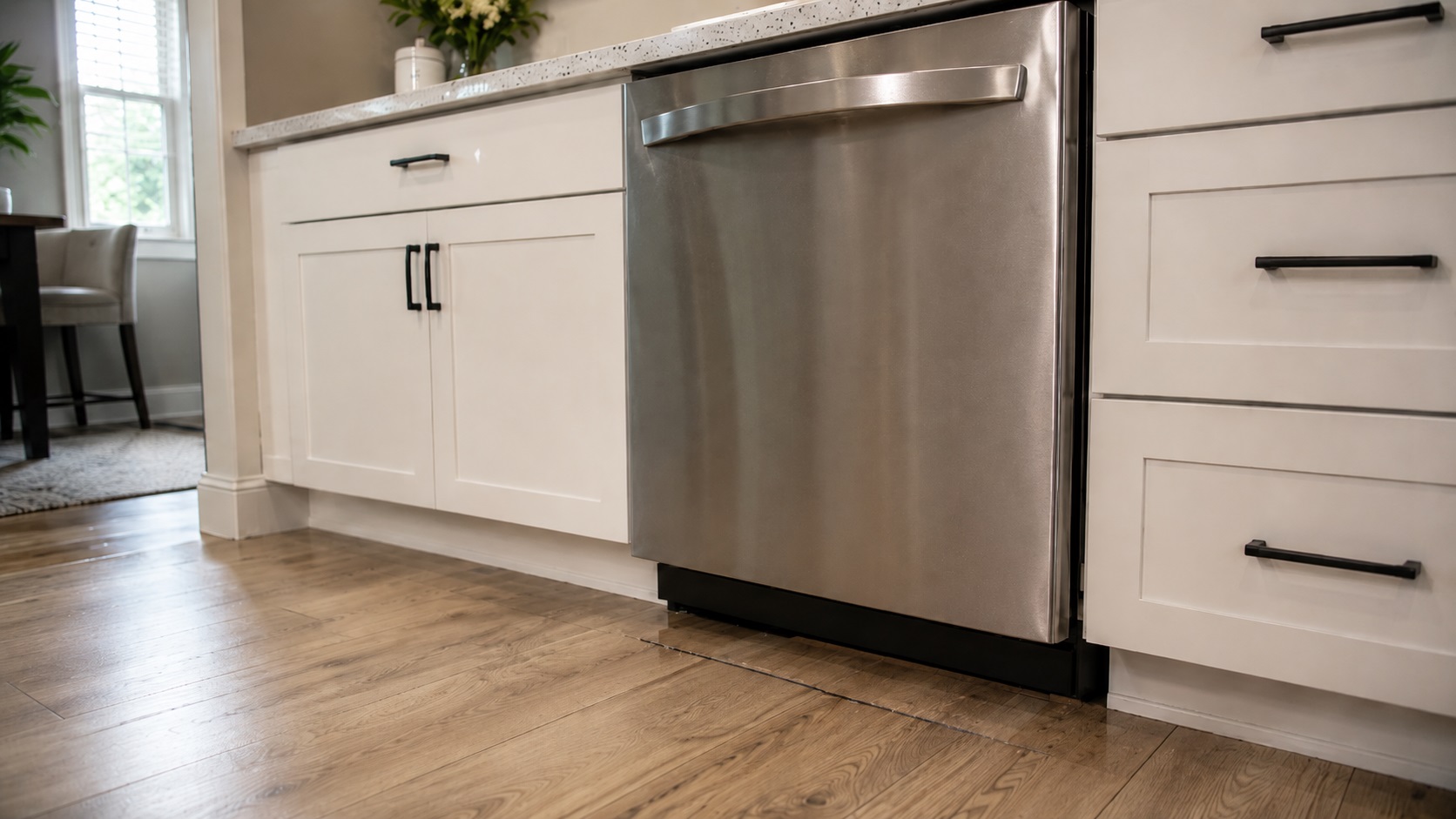
Signs of Water Leaks Under Dishwashers
Common signs of water leaks under dishwashers include recurring dampness near the front of the appliance, moisture that appears after a wash cycle, swollen flooring edges, soft or spongy floor areas, musty odors, and cabinet base damage. These symptoms often start subtly because water can spread under the dishwasher before it becomes visible.
This guide focuses on the warning signs that suggest a dishwasher leak may be active or spreading under nearby flooring and cabinets. If you want to understand how appliance and plumbing leaks weaken floors, cabinets, and framing over time, see How Plumbing Leaks Cause Structural Damage.
Why Dishwasher Leaks Are Easy to Miss
Dishwasher leaks are frequently overlooked because they often develop in concealed areas where water spreads beneath the appliance instead of appearing in open view. Many kitchens are built with tightly fitted dishwashers surrounded by cabinetry, making it difficult to notice small leaks until visible damage begins to appear.
Unlike sink leaks, which typically drip into visible cabinet spaces, dishwasher leaks tend to spread under the appliance base and across subfloor surfaces. This hidden spread allows moisture to move sideways before it becomes obvious. Understanding this behavior helps explain why early signs may appear in unexpected places.
Water Often Spreads Before It Becomes Visible
When water leaks under a dishwasher, gravity pulls it downward while capillary action draws moisture sideways through flooring seams and porous materials. This means damage can begin beneath the appliance long before you see standing water.
Typical hidden spread patterns include:
- Moisture moving under vinyl or laminate flooring
- Water soaking into subfloor seams
- Dampness reaching nearby cabinet bases
- Moisture traveling toward lower areas of the kitchen floor
In many cases, the visible signs appear at the edges of flooring or cabinets rather than directly under the dishwasher itself. This delayed visibility is one reason homeowners sometimes miss early leak symptoms.
Many Leaks Are Slow Rather Than Sudden
Most dishwasher leaks begin as slow drips or minor seepage rather than dramatic failures. Small leaks may release only a few drops of water during each wash cycle, but repeated cycles allow moisture to accumulate over time.
Common slow-leak behaviors include:
- Dampness that follows a repeated appliance-use pattern
- Small damp areas that seem to dry between cycles
- Gradual swelling or warping of nearby materials
- Recurring dampness in the same location
If you notice repeated moisture patterns—even if they seem minor—it is often worth investigating further. These early warning signs are often more reliable than waiting for obvious flooding.
For a broader look at slow leak patterns throughout the home, see Signs of Slow Hidden Water Leaks.
The Most Common Signs of Water Leaks Under Dishwashers
Recognizing the early warning signs of water leaks under dishwashers helps you act before minor moisture becomes extensive damage. These signs typically appear gradually and may seem unrelated at first, but together they often indicate an active moisture source beneath the appliance.
Water Appearing Near the Front of the Dishwasher
One of the earliest visible signs of a dishwasher leak is water appearing along the front edge of the appliance. This often shows up as damp flooring or small puddles near the toe-kick area.
Important characteristics of this symptom include:
- Water appearing shortly after a wash cycle
- Dampness limited to the front edge of the unit
- Moisture reappearing in the same location repeatedly
- No obvious spill or cleaning activity explaining the moisture
This pattern often suggests internal leakage or seal-related seepage that escapes beneath the dishwasher during operation.
Damp or Wet Flooring in Front of the Appliance
Persistent damp flooring in front of the dishwasher is one of the strongest indicators of hidden leakage. Even when water does not form visible puddles, slight dampness can signal moisture movement below the surface.
Look for:
- Cool or damp flooring when touched
- Recurring moisture in the same location
- Dampness that increases after running the dishwasher
- Wet areas that extend slightly beyond the appliance width
These symptoms often suggest water is spreading beneath flooring layers rather than remaining on the surface.
Swollen or Warped Flooring Edges
Swelling or warping of flooring materials near the dishwasher is a highly reliable sign of hidden water exposure. Many flooring materials absorb moisture easily, causing visible distortion.
Common examples include:
- Raised seams in laminate flooring
- Bubbling in vinyl flooring
- Cupping or distortion in hardwood flooring
- Uneven surfaces forming near appliance edges
- Loose, lifting, or separating flooring pieces near the dishwasher
Flooring damage often develops slowly and may appear weeks after a leak begins. If these changes appear near a dishwasher, moisture beneath the surface is likely involved.
Floor and Cabinet Clues That Suggest a Hidden Leak
Not all dishwasher leaks show up as visible water. In many kitchens, the most reliable clues appear in surrounding materials rather than directly under the appliance. Flooring and cabinet components react to moisture in predictable ways, and those reactions often provide the earliest warnings of a developing leak.
Because dishwashers are typically installed tightly between cabinets, moisture can become trapped with limited airflow. This allows water to soak into materials slowly, creating subtle damage patterns that may go unnoticed until they become more severe.
Soft or Spongy Flooring Near the Dishwasher
A soft or spongy feeling underfoot near the dishwasher is one of the strongest indicators of hidden moisture. This usually happens when water penetrates flooring layers and weakens the subfloor beneath.
You may notice:
- A slight bounce or give when stepping near the dishwasher
- Areas that feel weaker than surrounding flooring
- Changes in flooring firmness over time
- Softness that becomes more noticeable after dishwasher use
Subfloor materials such as plywood and particleboard are particularly vulnerable to moisture exposure. Once water begins to break down these materials, structural weakening can occur quickly. If flooring softness is present, it is important to determine whether moisture is still actively entering the area.
To confirm whether hidden moisture exists beneath flooring, follow the step-by-step process outlined in this guide to detecting hidden dishwasher leaks.
Swollen or Damaged Cabinet Base Panels
Cabinet base panels located beside the dishwasher often show early damage from hidden leaks. Many cabinet bases are made from particleboard, which absorbs water easily and swells when exposed to moisture.
Typical signs include:
- Swelling along cabinet edges
- Cracked or flaking surfaces
- Warped toe-kick panels
- Soft or crumbly cabinet base material
These symptoms are especially important because cabinet materials rarely swell without repeated moisture exposure. If cabinet damage appears near the dishwasher, it often indicates ongoing moisture rather than a one-time spill.
Musty Odors Near the Dishwasher Area
A musty odor near the dishwasher can indicate trapped moisture beneath flooring or inside cabinet structures. Odors often develop before visible mold appears, making smell one of the earliest detectable symptoms.
You may notice:
- A persistent damp smell near the dishwasher
- Odor that becomes stronger after running the appliance
- Smells concentrated near floor seams or cabinet edges
- Odors that do not disappear after normal cleaning
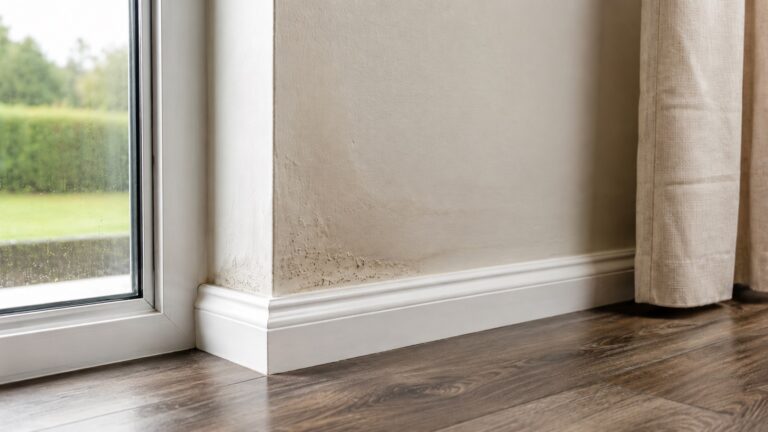
Musty odors usually result from prolonged dampness inside hidden spaces. If the odor persists or you notice dark staining behind or beside the appliance, compare the symptoms with Signs of Mold Behind Dishwashers.
Signs That Appear Only After the Dishwasher Runs
One of the most reliable indicators of dishwasher-related leaks is moisture that appears specifically after the appliance operates. These cycle-related symptoms strongly suggest that water is escaping during washing or draining rather than coming from unrelated sources.
Moisture Appearing Shortly After a Wash Cycle
If moisture consistently appears after running the dishwasher, this pattern strongly suggests internal leakage. Water released during operation can spread beneath the unit and gradually reach visible areas.
Watch for:
- Water appearing within minutes or hours after a cycle finishes
- Dampness forming near the same area each time
- Moisture spreading outward gradually
- Repeated drying followed by new dampness
This pattern distinguishes leaks from accidental spills, which typically occur randomly rather than consistently after appliance use.
Increasing Dampness With Frequent Dishwasher Use
Leaks often become more noticeable during periods of heavy dishwasher use. Running multiple cycles in a day increases the amount of escaping moisture, allowing dampness to accumulate faster.
Common signs include:
- Damp areas growing larger after multiple cycles
- Flooring showing more visible changes during heavy use
- Moisture lingering longer between cycles
- Damage becoming more noticeable during busy kitchen periods
This pattern often indicates that water is escaping during each dishwasher cycle, gradually worsening moisture exposure beneath nearby materials.
Water Appearing Without Any Visible Spill
Another strong indicator of a dishwasher leak is finding water near the appliance without any known spill or cleaning activity. When moisture appears without explanation, it should not be dismissed as accidental.
Possible observations include:
- Unexpected damp spots appearing overnight
- Water appearing even when no sink overflow occurred
- Dampness forming beneath appliance edges
- Moisture present despite dry surrounding surfaces
If unexplained water repeatedly appears, the next step usually involves identifying the likely cause. Understanding why leaks develop in the first place can help guide troubleshooting, as explained in this breakdown of why dishwashers develop hidden leaks.
Signs the Dishwasher Leak Has Spread Under Flooring
A dishwasher leak may have spread under flooring when damage appears beyond the immediate appliance edge. Because water can follow seams, gaps, and low spots, the first visible signs may show up several inches or even several feet from the dishwasher.
Watch for raised laminate seams, buckled flooring near adjacent cabinets, recurring damp spots, cool areas that stay slightly moist, stains that reappear after cleaning, or patchy discoloration along flooring seams.
These signs do not always prove the dishwasher is the source, but when they appear with cycle-related moisture or cabinet swelling, hidden water movement is likely. After the leak source is corrected, recovery steps may require drying flooring after dishwasher leaks.
Mistakes to Avoid When You See Water Near a Dishwasher
Do not assume a small amount of water is harmless if it appears repeatedly in the same place. Recurring moisture after dishwasher cycles is more concerning than a one-time spill because each cycle can add more water beneath the appliance.
Do not assume tile flooring prevents hidden damage. Water can pass through cracked grout, loose caulk lines, small gaps, and unfinished edges near cabinets, then collect beneath the visible surface.
Do not rely on wiping the surface dry if dampness keeps returning. Surface drying may hide the symptom temporarily, but it does not stop an active dishwasher leak or confirm that the subfloor is dry.
When to Stop Using the Dishwasher and Investigate Further
Recognizing leak symptoms is only useful if you also know when the situation requires immediate attention. Some signs suggest minor moisture exposure, while others indicate that continued dishwasher use could worsen structural damage.
In general, repeated moisture patterns should never be ignored. Even small leaks can release significant amounts of water over time, gradually weakening flooring and cabinet materials.
Safety note: If water is pooling near electrical components, outlets, cords, or the dishwasher base, avoid touching wet areas around the appliance. Stop using the dishwasher, shut off power at the breaker or turn off the water supply only if you can do so safely, and call a qualified appliance technician or plumber if the source is not obvious.
Stop Using the Dishwasher If Moisture Keeps Returning
If dampness appears repeatedly after dishwasher use, continuing to run the appliance can accelerate damage. This is especially true when moisture appears in the same location after each cycle.
Consider stopping use if you notice:
- Water appearing after multiple wash cycles
- Damp flooring that returns after drying
- Moisture spreading into nearby areas
- Flooring or cabinet damage becoming more visible
At this stage, confirming the source of moisture becomes the priority. Structured inspection methods, such as those described in this guide to inspecting dishwasher hoses for leaks, can help determine whether supply or drain components are responsible.
Signs That Moisture Has Reached Structural Materials
Some symptoms suggest moisture has moved beyond surface materials into structural layers. These signs indicate a higher risk of long-term damage and often require more careful evaluation.
Warning signs include:
- Soft or spongy flooring beneath foot pressure
- Persistent musty odors near the dishwasher
- Swollen cabinet bases that continue to expand
- Flooring that remains damp despite cleaning
When structural materials are affected, moisture often spreads beneath the visible surface. At that point, the priority is to stop the water source and confirm whether subfloor materials have stayed damp long enough to weaken.
When Professional Inspection May Be Necessary
While some minor moisture issues can be monitored, certain conditions suggest that professional evaluation may be appropriate. This is especially true when visible damage progresses or when moisture persists despite basic troubleshooting.
Professional help may be needed if:
- Flooring feels weak or unstable
- Moisture spreads beyond the dishwasher area
- Damage appears in multiple nearby materials
- Mold-like staining or strong odors develop
Early professional assessment can prevent larger structural repairs later. Even if the leak appears minor, hidden moisture may already be affecting subfloor components.
FAQ — Signs of Water Leaks Under Dishwashers
Is a small amount of water under a dishwasher normal?
No. While occasional surface moisture from cleaning or spills may occur, recurring water under a dishwasher is not normal. Repeated moisture in the same area usually indicates an active leak or drainage issue that requires investigation.
Why does my floor feel soft in front of the dishwasher?
Soft flooring typically indicates that moisture has penetrated beneath the visible surface and weakened underlying materials. This often happens when water spreads into subfloor layers over time.
Can a dishwasher leak without leaving a visible puddle?
Yes. Many leaks release small amounts of water that spread beneath flooring rather than forming puddles. These leaks may produce subtle symptoms such as odors, swelling, or recurring dampness instead of standing water.
Does a musty smell near a dishwasher mean mold is present?
Not always, but persistent musty odors often indicate trapped moisture. If the odor continues or visible mold-like staining appears behind or beside the appliance, compare the symptoms with Signs of Mold Behind Dishwashers.
Should I keep using the dishwasher if I see moisture nearby?
If moisture appears repeatedly or increases after dishwasher use, it is usually best to stop using the appliance until the cause is identified. Continued operation may worsen hidden damage and increase repair costs.
What to Do After You Notice Dishwasher Leak Signs
If you notice recurring dampness, swollen flooring, soft floor areas, musty odors, or moisture that appears after dishwasher cycles, treat the pattern as a possible active leak. Stop using the appliance if moisture keeps returning, dry visible water without treating that as the fix, and monitor the area without running another cycle until the source is checked.
The next step is source confirmation, not cosmetic cover-up. Use How to Detect Hidden Dishwasher Leaks to narrow down whether water is escaping from the appliance, drain area, supply connection, or surrounding materials.
Key Takeaways
- Recurring dampness near a dishwasher is one of the most reliable signs of hidden leakage.
- Soft flooring and swollen cabinet bases often indicate moisture beneath the surface.
- Leaks frequently become visible only after the dishwasher runs.
- Tile flooring does not prevent hidden moisture damage beneath the surface.
- Persistent odors near the dishwasher may signal trapped moisture and possible mold risk.
- Stopping appliance use early can prevent more extensive structural damage.
- Confirming the leak source is the next step after identifying symptoms.

8 Comments
Comments are closed.