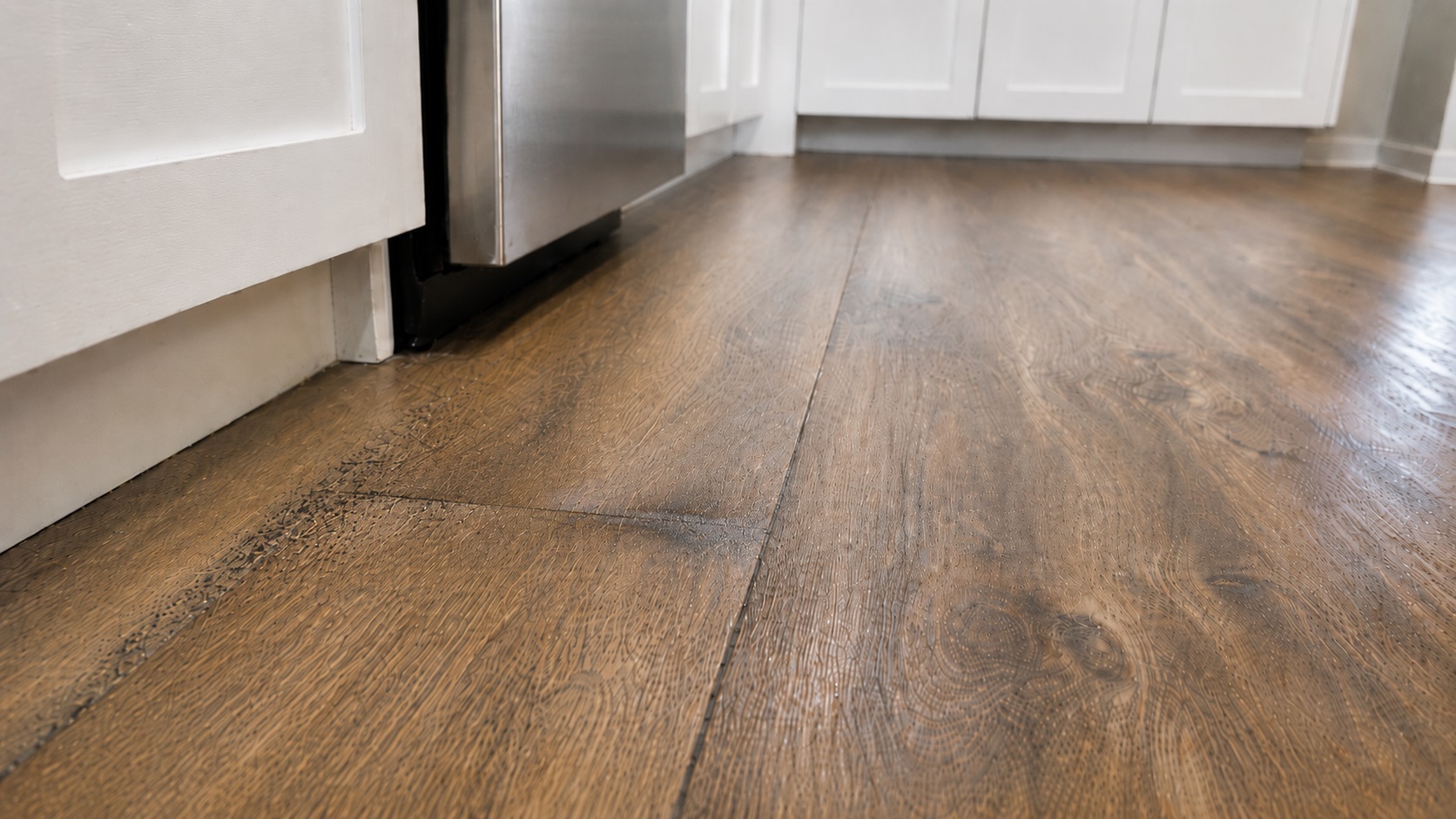
Why Kitchen Floors Develop Mold After Leaks
Kitchen floors develop mold after leaks when water moves below the visible surface and stays trapped inside subfloors, underlayment, flooring seams, cabinet bases, or appliance cavities. The floor may look dry from above while deeper materials remain damp long enough for mold to grow.
This is why mold often appears after the leak seems finished. Small dishwasher leaks, sink leaks, refrigerator water line leaks, and repeated cleaning water can all create hidden damp areas where airflow is poor and drying is slow.
If you recently had a leak, early warning signs described in signs of water damage under kitchen flooring often appear before mold becomes visible. For the broader pattern behind repeated leaks, trapped moisture, and mold that returns after cleanup, see why moisture problems keep returning.
How Water Leaks Create Mold Risk Beneath Kitchen Floors
Water leaks create mold risk when they reach layered materials that dry slowly. Kitchen floors often include finished flooring, underlayment, adhesive, subfloor panels, and cabinet edges, so water can disappear from the surface while remaining below.
Most Kitchen Leaks Begin as Small Moisture Events
Large flooding events receive immediate attention, but many kitchen moisture problems begin with slow, repeated leaks. These leaks often release small amounts of water over long periods.
Common examples include:
- Dishwasher door seal leaks
- Loose sink plumbing connections
- Refrigerator ice maker line leaks
- Garbage disposal fitting failures
- Cracked supply hoses
Because these leaks occur gradually, water accumulates beneath flooring without drawing immediate attention.
Water Moves Beneath Flooring Layers
Water rarely remains in one location after a leak occurs. Instead, it spreads outward through seams, joints, and porous materials.
This movement happens through capillary action, which allows water to travel along narrow gaps and material pores. As water spreads beneath flooring, moisture may affect areas several feet away from the original leak.
Understanding how moisture spreads helps explain why mold sometimes appears far from the visible source of water.
Hidden Moisture Often Remains After Leaks Stop
Even after visible water disappears, moisture can remain trapped beneath flooring materials. Surface drying removes visible water but does not always remove moisture inside deeper layers.
Hidden moisture often remains inside:
- Subfloor materials
- Underlayment layers
- Cabinet base panels
- Flooring seams and joints
If those materials stay damp, mold can begin even though the walking surface looks dry.
Why Moisture Becomes Trapped Under Kitchen Flooring
One of the main reasons mold develops after leaks is that flooring systems limit airflow. Without proper air movement, trapped moisture evaporates slowly and remains inside materials.
Modern flooring materials often resist water from above, but this protective design can unintentionally trap moisture underneath.
Flooring Materials Create Moisture Barriers
Many kitchen flooring systems are designed to resist spills and surface water. While this helps prevent immediate surface damage, it also slows evaporation when water becomes trapped underneath.
Flooring types that commonly trap moisture include:
- Laminate flooring
- Vinyl plank flooring
- Engineered wood flooring
- Tile installed over sealed underlayment
These materials often act as vapor barriers, preventing moisture from escaping upward.
Cabinets and Appliances Restrict Airflow
Kitchen layouts contain many enclosed spaces where airflow is limited. Cabinets, appliances, and tight floor clearances prevent air circulation beneath flooring systems.
Restricted airflow slows drying and allows moisture to remain trapped for extended periods.
Common airflow-restricted areas include:
- Beneath dishwashers
- Under sink cabinets
- Behind refrigerators
- Under cabinet toe-kicks
These locations often become long-term moisture reservoirs after leaks.
Absorbent Materials Hold Moisture for Long Periods
Many structural materials beneath kitchen flooring absorb water easily. Once wet, these materials dry slowly, especially when airflow is limited.
Materials most likely to retain moisture include:
- Plywood subfloors
- Oriented strand board (OSB)
- Particleboard panels
- Medium-density fiberboard (MDF)
- Laminate flooring cores
These materials can hold moisture and provide organic material that mold can use as a food source.
How Mold Begins Growing After Water Exposure
Mold growth does not begin instantly, but it can start sooner than many homeowners expect. Understanding the typical mold growth timeline helps explain why mold often appears days or weeks after leaks occur.
The Mold Growth Timeline
Mold growth follows predictable stages once moisture becomes available.
- 0–24 hours: Materials absorb moisture and remain damp.
- 24–48 hours: Mold spores begin activating in damp areas.
- 48–72 hours: Early mold colonies begin forming beneath surfaces.
- 3–7 days: Visible mold may begin appearing on exposed materials.
- Several weeks: Mold colonies expand and spread through affected materials.
Why Mold Appears After Floors Seem Dry
Surface dryness does not guarantee internal dryness. Many flooring systems dry on the surface first while moisture remains trapped inside deeper materials.
This hidden moisture continues supporting mold growth even when the floor feels dry to the touch.
A practical clue is uneven drying: one area may feel normal while nearby seams, toe-kicks, transitions, or appliance edges show swelling, odor, softness, or recurring discoloration.
In many cases, moisture detection methods described in how to detect moisture under kitchen floors help confirm whether hidden moisture remains after drying.
If the leak involved sewage, dishwasher wastewater, flooding, extensive mold, electrical components, or soft structural flooring, avoid disturbing the area until it has been evaluated safely.
Materials That Promote Mold Growth Under Kitchen Floors
Kitchen floors contain both water-resistant surfaces and moisture-sensitive backing materials. Mold risk usually increases when water reaches wood-based layers, cabinet panels, adhesives, or porous underlayment rather than staying on the finished surface.
Wood Subfloors Are Highly Vulnerable
Wood-based subfloors are among the most common materials found beneath kitchen flooring. These materials provide an organic surface that mold can use as a food source.
Wood subfloors become vulnerable because:
- Wood fibers absorb water easily
- Moisture spreads along grain patterns
- Drying is slow when airflow is limited
- Repeated moisture exposure weakens the structure
Once moisture enters wood materials, it may remain trapped for long periods, especially beneath sealed flooring layers.
Particleboard and MDF Break Down Quickly
Particleboard and medium-density fiberboard (MDF) are commonly used in cabinet bases and underlayment panels. These materials absorb moisture rapidly and lose structural strength when wet.
Common effects of moisture exposure include:
- Swelling along edges
- Loss of structural strength
- Softening of material surfaces
- Increased mold growth potential
These materials are particularly vulnerable because once they absorb moisture, drying becomes difficult without proper airflow and time.
Laminate Flooring Cores Retain Moisture
Laminate flooring often contains compressed wood fiber cores. Although laminate surfaces resist spills, water that enters through seams may penetrate the internal core.
Once inside the laminate structure, moisture may remain trapped and difficult to remove. This trapped moisture supports mold growth beneath the visible surface.
Laminate flooring is especially vulnerable when:
- Seams allow water penetration
- Edges remain exposed to repeated moisture
- Cleaning water enters through damaged seals
- Leaks occur beneath cabinets or appliances
Vinyl Flooring Can Trap Hidden Moisture
Vinyl flooring is often considered water-resistant, but it can still contribute to hidden mold growth. Vinyl surfaces prevent moisture from escaping upward, trapping water beneath the flooring system.
This trapped moisture environment creates:
- Low-airflow moisture zones
- Delayed drying conditions
- Hidden mold growth locations
- Long-term moisture retention
Even when vinyl surfaces appear dry, moisture beneath them may continue supporting mold development.
Environmental Conditions That Accelerate Mold Formation
Moisture alone does not determine how quickly mold develops. Environmental factors influence the speed and severity of mold growth beneath kitchen floors.
Several common conditions found in kitchens increase mold formation risk.
Warm Temperatures Encourage Faster Growth
Mold grows most efficiently within moderate temperature ranges commonly found inside homes. Kitchen temperatures often fall within this ideal growth range.
Typical mold growth temperatures include:
- 68°F to 86°F (20°C to 30°C)
- Warm indoor environments
- Areas near appliances that produce heat
- Spaces with limited cooling airflow
Warmer temperatures increase mold activity and accelerate colony expansion.
High Humidity Slows Drying
Humidity levels play a major role in mold development. High humidity prevents moisture from evaporating quickly and increases the time materials remain damp.
Humidity becomes especially problematic when:
- Relative humidity exceeds 60%
- Cooking produces steam without ventilation
- Dishwashers release heat and moisture
- Air circulation remains limited
Persistent humidity combined with hidden moisture creates ideal mold growth conditions.
Limited Airflow Creates Persistent Moisture Zones
Air movement is essential for drying moisture beneath flooring. Kitchens contain multiple structures that restrict airflow, making certain areas more vulnerable.
Common low-airflow areas include:
- Under cabinets
- Beneath appliances
- Inside enclosed cabinet bases
- Along wall-floor junctions
When airflow remains restricted, moisture lingers long enough for mold to develop.
Repeated Moisture Exposure Increases Risk
Repeated small leaks often create worse mold conditions than single large water events. Small leaks may continue for weeks without detection, providing continuous moisture exposure.
Repeated moisture sources include:
- Loose plumbing fittings
- Slow dishwasher leaks
- Condensation buildup beneath appliances
- Frequent cleaning water intrusion
Because moisture never fully dries between exposures, mold growth becomes more likely.
Why Small Leaks Often Cause the Worst Mold Problems
Small leaks are often overlooked because they produce minimal visible damage. However, these slow leaks allow moisture to accumulate over time.
Large Leaks Are Usually Repaired Quickly
Major water leaks often receive immediate attention. Visible flooding prompts fast cleanup, which reduces the time materials remain wet.
Because drying begins quickly, mold risk may decrease when repairs occur promptly.
Small Leaks Often Go Undetected
Slow leaks can remain hidden for long periods. Water spreads quietly beneath flooring, allowing moisture levels to increase gradually.
Common examples include:
- Slow drip beneath sink fittings
- Dishwasher seal seepage
- Refrigerator water line leaks
- Hairline cracks in supply hoses
Because these leaks produce little visible water, moisture continues accumulating until mold conditions develop.
In kitchens, check especially near dishwasher corners, refrigerator water lines, sink cabinet floors, toe-kicks, and flooring transitions where small amounts of water can hide.
How Mold Spreads Beneath Kitchen Flooring
Once mold begins forming beneath kitchen flooring, it rarely remains isolated in one location. Moisture movement and material structure allow mold colonies to expand into surrounding areas, often without visible warning signs.
Mold spreads most easily in areas where moisture remains trapped and airflow is limited. Understanding how this spread occurs helps explain why small moisture problems can eventually affect large sections of flooring.
Mold Follows Moisture Pathways
Mold growth typically follows the same pathways used by water movement. As moisture spreads beneath flooring, mold colonies expand along those damp routes.
Common moisture pathways include:
- Seams between flooring panels
- Joints between subfloor sections
- Gaps along cabinet bases
- Transitions between flooring types
- Cracks near walls or appliances
Because moisture often travels several feet from its source, mold may appear in unexpected locations.
Mold Can Develop Far From the Original Leak
Water introduced at one location may migrate across large sections of flooring before becoming trapped. As a result, mold growth may appear far from the original leak location.
This delayed and displaced growth pattern often confuses homeowners who believe the visible mold location represents the original source.
Detection methods explained in how to detect moisture under kitchen floors help identify the moisture patterns that lead to these hidden growth zones.
Secondary Growth Zones Form Over Time
Once mold begins forming, nearby materials may absorb moisture from surrounding areas. This allows new colonies to develop even in locations that were initially dry.
Secondary growth zones commonly appear:
- Under adjacent cabinets
- Along wall-floor intersections
- In nearby rooms sharing the same subfloor
- Around structural supports
Secondary mold growth increases the total affected area and complicates future repairs.
Why Mold Continues Growing After Drying Attempts
Drying attempts fail when they dry the room air or finished surface but leave moisture inside lower flooring layers.
Surface Drying Does Not Remove Internal Moisture
Drying the surface of flooring does not always remove moisture trapped inside deeper materials. Subfloors, underlayment, and cabinet bases may retain moisture long after the visible surface feels dry.
Hidden moisture may remain inside:
- Wood fibers within subfloors
- Compressed laminate cores
- Cabinet base materials
- Layered flooring systems
This retained moisture supports mold growth even when the floor appears dry.
Cabinets and Appliances Shield Moisture
Large fixtures such as cabinets and appliances prevent air movement beneath flooring. This shielding effect slows evaporation and allows moisture to remain trapped beneath enclosed areas.
Shielded areas commonly include:
- Beneath dishwashers
- Under refrigerator bases
- Inside cabinet toe-kicks
- Behind fixed appliances
These areas often dry more slowly than the open floor.
Moisture May Reappear After Initial Drying
Even after initial drying efforts, moisture may reappear as water redistributes within materials. This delayed movement can bring moisture back to the surface days or weeks later.
Reappearing moisture often indicates:
- Hidden trapped water
- Incomplete drying of structural layers
- Persistent moisture sources
- Continued leak activity
When moisture repeatedly returns, deeper investigation may be required to identify the original cause.
Why Some Kitchen Floors Develop Mold Faster Than Others
Not all kitchens experience mold growth at the same rate. Several factors influence how quickly mold develops after leaks occur.
Older Flooring Systems May Be More Vulnerable
Older flooring systems often contain materials that absorb moisture more easily than modern alternatives. Over time, wear and aging may weaken protective seals.
Older systems may include:
- Worn laminate seams
- Deteriorated sealants
- Aged underlayment materials
- Cracked transition joints
These conditions allow moisture to enter more easily and remain trapped longer.
Kitchen Layout Influences Moisture Retention
Complex kitchen layouts with large cabinets and enclosed areas restrict airflow. Limited airflow slows drying and increases moisture retention.
High-risk layout features include:
- Large cabinet islands
- Tight appliance spacing
- Limited ventilation openings
- Deep cabinet bases
Layouts that restrict airflow often increase mold risk following leaks.
Frequent Water Use Increases Moisture Exposure
Kitchens experience frequent water use, including washing, cooking, and cleaning. Repeated exposure to moisture increases the chance of hidden water reaching flooring systems.
Frequent moisture activities include:
- Dishwasher cycles
- Sink usage
- Cleaning with excess water
- Ice maker operation
Over time, repeated exposure increases the probability of moisture accumulation beneath flooring.
FAQs About Mold Under Kitchen Floors After Leaks
How long does it take mold to grow under kitchen floors after a leak?
Mold can begin developing within 24 to 48 hours after moisture becomes trapped beneath flooring materials. However, visible mold may not appear for several days or even weeks, depending on temperature, humidity, and airflow conditions.
Can mold grow even after the floor looks dry?
Yes. Surface dryness does not always mean internal materials are dry. Moisture trapped inside subfloors, underlayment, or cabinet bases can remain long after visible water disappears, allowing mold growth to continue beneath the surface.
Do all water leaks cause mold under kitchen flooring?
Not every leak leads to mold growth. Mold risk rises when water reaches absorbent layers and remains trapped without enough airflow to dry. Quick cleanup, source repair, and verified drying reduce the chance of mold forming after a leak.
Why does mold sometimes appear weeks after a leak?
Mold growth often begins shortly after moisture exposure, but it may take time before colonies become visible. Hidden moisture can support slow growth that remains unnoticed until damage becomes more advanced.
Can mold spread to other areas under the floor?
Yes. Mold often spreads along moisture pathways beneath flooring materials. Water movement allows mold colonies to expand into surrounding areas, sometimes affecting locations far from the original leak source.
Conclusion
Kitchen floors develop mold after leaks because water can move below the finished surface and remain trapped in absorbent materials with poor airflow. The most important warning is not whether the surface looks dry, but whether the subfloor, underlayment, cabinet bases, and appliance edges have actually dried.
If moisture is suspected beneath flooring, detection strategies outlined in how to detect moisture under kitchen floors can help confirm whether hidden moisture remains. For a complete strategy covering identification, repair, and prevention of moisture problems throughout the home, see how to find, fix, and prevent moisture problems.