How to Prevent Moisture Build-Up in Crawl Spaces
Preventing moisture build-up in a crawl space means stopping water before it reaches the space, blocking soil vapor, and keeping humidity low enough that wood, insulation, and ductwork stay dry. Once moisture accumulates beneath a home, it can lead to mold growth, wood rot, insulation failure, and poor indoor air quality.
If you have already noticed warning signs such as damp insulation or musty odors, reviewing signs of moisture in crawl spaces can help confirm whether prevention measures should be applied immediately. Likewise, understanding why crawl spaces develop moisture problems helps clarify which prevention methods are most effective for your situation.
This guide explains how to prevent moisture build-up in crawl spaces using layered protection strategies. Effective prevention starts with controlling bulk water, blocking soil vapor, reducing humidity, and maintaining dry conditions over time. For broader whole-home prevention planning, see how to prevent recurring moisture damage.
Install Vapor Barriers to Block Ground Moisture
Ground moisture is one of the most consistent sources of crawl space humidity. Even when soil appears dry, it releases water vapor continuously. Installing a vapor barrier is one of the most important steps for preventing moisture build-up.
A vapor barrier creates a physical layer between soil and crawl space air, reducing the amount of moisture that enters the environment.
How Vapor Barriers Reduce Soil Moisture
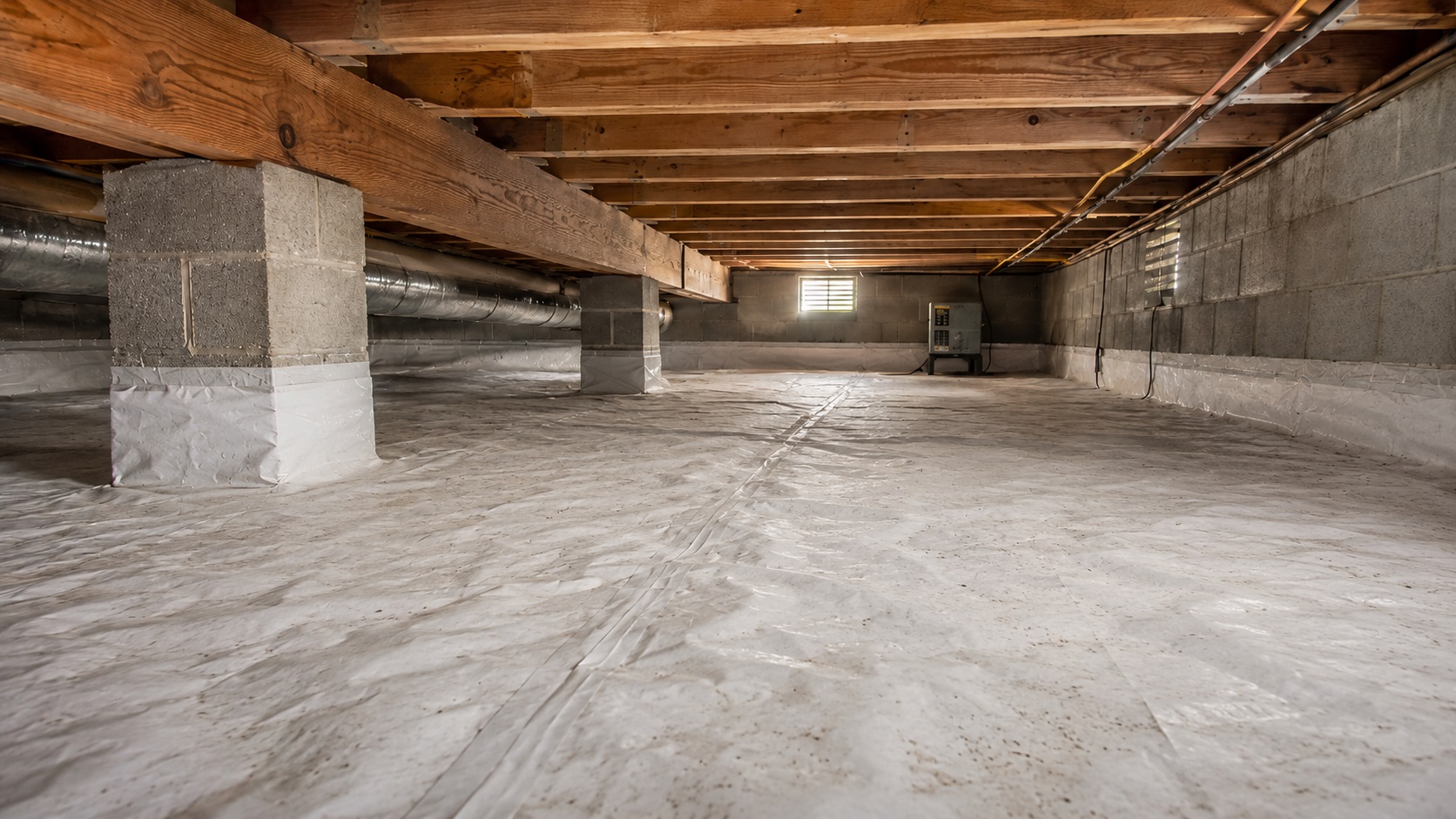
Vapor barriers are typically made from heavy-duty polyethylene sheeting placed across exposed soil surfaces. For best results, the barrier should cover the soil continuously, overlap at seams, be sealed or taped where sections meet, and extend up the foundation walls where appropriate.
Effective vapor barriers help:
- Reduce humidity levels inside the crawl space
- Limit moisture absorption into wood and insulation
- Improve drying conditions throughout the space
- Lower the risk of mold growth
Even partial coverage provides benefits, but full coverage offers the strongest protection. Vapor barriers are especially important in crawl spaces with exposed soil floors.
Common Vapor Barrier Installation Mistakes
Improper installation can reduce the effectiveness of vapor barriers. Many moisture problems persist because barriers are incomplete, damaged, or poorly sealed.
Common mistakes include:
- Leaving exposed soil uncovered
- Failing to seal seams between barrier sections
- Allowing tears or punctures to remain unrepaired
- Not securing edges to foundation walls
Visible plastic alone is not enough. Exposed soil, open seams, loose edges, and torn areas can still allow ground moisture to enter the crawl space air.
Improve Exterior Drainage Systems
Exterior drainage plays a major role in crawl space moisture prevention. When water flows toward the home instead of away from it, soil becomes saturated and increases moisture pressure against foundation walls.
Improving drainage helps prevent water accumulation before it reaches crawl space materials.
Maintain Gutters and Downspouts
Gutters and downspouts collect rainwater from the roof and direct it away from the foundation. When these systems fail, large amounts of water may collect near crawl space walls.
Gutter-related prevention steps include:
- Cleaning gutters regularly to prevent blockages
- Checking downspouts for proper flow
- Extending downspouts far enough from foundation walls that roof water does not soak the soil beside the crawl space
- Repairing damaged gutter sections
Proper gutter maintenance significantly reduces the risk of soil saturation around the foundation.
Ensure Proper Soil Grading Around the Home
Soil grading determines how water flows around the foundation. Proper grading directs water away from the structure rather than allowing it to collect near crawl space walls.
Effective grading conditions include:
- Soil sloping downward away from the house so rainwater does not pond against the foundation
- No depressions forming near foundation edges
- Even surface drainage paths
- Consistent water runoff patterns
Correct grading reduces the likelihood of moisture entering through foundation materials or structural gaps.
Install Surface Drainage Systems When Needed
Some properties need more than gutters and grading, especially when water repeatedly collects beside the foundation. Surface swales, drain lines, or professionally designed drainage systems can move water away before it saturates the soil around the crawl space.
Surface drainage systems may include:
- French drains
- Surface swales
- Drainage trenches
- Water diversion channels
These systems help prevent repeated soil saturation, especially in areas with frequent rainfall or poor natural drainage.
Seal Crawl Space Openings and Structural Gaps
Even small openings around a crawl space can allow moisture to enter over time. Water vapor, humid air, and rainwater can pass through cracks and gaps that may appear insignificant. Sealing these openings helps reduce moisture entry and improves the overall effectiveness of other prevention methods.
Sealing structural gaps is especially important after moisture sources have been identified. If you have previously detected elevated moisture levels using techniques from how to detect hidden moisture in crawl spaces, sealing gaps helps prevent those conditions from returning.
Seal Foundation Cracks and Wall Openings
Foundation materials expand and contract due to temperature changes and soil movement. Over time, these forces can create cracks that allow water to seep into crawl spaces.
Common sealing targets include:
- Visible cracks along foundation walls
- Open joints between masonry sections
- Gaps along crawl space wall intersections
- Areas showing recurring moisture stains
Sealing foundation openings can reduce water and humid air entry, but sealants should not be used as a substitute for fixing exterior drainage problems. If water pressure keeps pushing against the wall, the source of that water still needs to be corrected.
Seal Utility Penetrations
Utility penetrations are frequent entry points for moisture. Pipes, cables, and ducts pass through foundation walls, leaving small openings that may expand over time.
Typical penetration sealing areas include:
- Plumbing pipe openings
- Electrical conduit passages
- HVAC duct penetrations
- Cable entry points
Proper sealing prevents water infiltration and helps control humidity movement into crawl spaces.
Improve Crawl Space Access Door Seals
Crawl space access doors are often overlooked moisture entry points. These doors may warp, loosen, or lose sealing effectiveness over time.
Improving access door protection includes:
- Replacing worn weather stripping
- Ensuring tight door closure
- Repairing damaged frames
- Checking door alignment regularly
Well-sealed access doors prevent outside moisture from entering during storms and seasonal weather changes.
Control Humidity Inside Crawl Spaces
Humidity control is one of the most important elements of long-term moisture prevention. Even when water entry is minimized, high humidity can create condensation and damp conditions that support mold growth.
Controlling humidity reduces the likelihood of condensation forming on wood, insulation, and other surfaces.
Use Dehumidifiers When Needed
Dehumidifiers help remove excess moisture from crawl space air. These devices pull moisture from the air and collect it in a reservoir or discharge it through a drainage line.
Dehumidifiers are especially helpful when:
- Humidity levels remain elevated
- Seasonal moisture persists
- Airflow is limited
- Previous moisture problems have occurred
A crawl space dehumidifier works best after bulk water, soil vapor, and open gaps are controlled. Otherwise, the unit may run constantly while the original moisture source continues feeding the space.
Improve Airflow and Circulation
Air circulation helps moisture evaporate more efficiently. When airflow remains restricted, moisture may accumulate even when other prevention methods are in place.
Airflow improvements may include:
- Clearing obstructions blocking airflow paths
- Ensuring ventilation openings remain unobstructed
- Maintaining open pathways between crawl space sections
- Avoiding dead zones where damp air stays trapped behind insulation, stored items, or foundation obstructions
Balanced airflow reduces the likelihood of moisture becoming trapped in isolated areas.
Monitor Humidity Levels Regularly
Monitoring humidity helps detect early changes before moisture problems develop. A crawl space hygrometer can show whether relative humidity is staying in a safer range or climbing into conditions where condensation, mold, and wood moisture become more likely.
Humidity monitoring helps:
- Identify rising moisture conditions
- Track seasonal humidity patterns
- Confirm the effectiveness of prevention methods
- Detect developing moisture risks
Regular monitoring helps confirm that drainage, vapor control, and humidity control are still working.
Maintain Plumbing Systems to Prevent Moisture
Plumbing maintenance is essential for preventing hidden moisture problems. Slow leaks and condensation can create long-term damp conditions even when no visible flooding occurs.
Routine plumbing maintenance helps prevent moisture accumulation inside crawl spaces.
Inspect Pipes for Leaks
Regular pipe inspection helps identify small leaks before they become major problems. Moisture from plumbing leaks often spreads gradually and may remain hidden for extended periods.
Leak prevention steps include:
- Checking joints and fittings regularly
- Inspecting pipes for corrosion
- Watching for mineral buildup around connections
- Addressing minor leaks immediately
Early leak detection prevents localized moisture buildup that can spread to surrounding materials.
Insulate Cold Water Pipes
Cold water pipes frequently produce condensation when exposed to warm, humid air. Pipe insulation reduces condensation by preventing temperature differences that cause moisture formation.
Pipe insulation helps:
- Reduce condensation buildup
- Protect nearby materials from moisture exposure
- Limit humidity increases near plumbing lines
- Improve long-term moisture stability
Insulating pipes is especially important in humid climates where condensation occurs frequently.
Monitor Crawl Space Conditions Regularly
Moisture prevention is not a one-time task. Minor leaks, clogged drainage, torn vapor barriers, or rising humidity can slowly undo earlier improvements if the crawl space is never checked again.
Routine monitoring helps detect early changes before damage occurs. If moisture signs begin to appear, reviewing signs of moisture in crawl spaces can help confirm whether conditions are worsening.
Schedule Routine Crawl Space Checks
Routine checks allow homeowners to catch moisture conditions before structural damage develops. At minimum, check the crawl space once or twice per year and again after heavy rain, flooding nearby, plumbing work, or major seasonal humidity changes.
Routine checks should include:
- Looking for damp soil or standing water
- Checking insulation for sagging or staining
- Inspecting wood framing for discoloration
- Watching for rust on metal components
These routine inspections provide early warning signals that help prevent long-term moisture damage.
Watch for Seasonal Changes
Seasonal weather patterns often influence crawl space moisture levels. Rainfall, temperature swings, and humidity changes may introduce moisture even when prevention systems are in place.
Seasonal monitoring should focus on:
- Moisture changes after heavy rainfall
- Humidity increases during warm weather
- Condensation forming during temperature shifts
- Recurring dampness in specific locations
Identifying seasonal patterns helps determine whether additional prevention methods are needed.
Use Monitoring Tools for Long-Term Tracking
Monitoring tools help track moisture conditions over time. Hygrometers and moisture sensors provide valuable data that reveals changing humidity and moisture patterns.
Monitoring tools help:
- Track humidity fluctuations
- Detect moisture increases early
- Confirm the effectiveness of prevention measures
- Identify long-term moisture trends
Long-term tracking is most useful when readings are checked after rain, during humid seasons, and after any drainage or vapor barrier repairs.
Long-Term Moisture Prevention Strategies
Effective crawl space moisture prevention depends on combining multiple protective measures. Relying on a single method rarely provides complete protection.
Combine Multiple Moisture Control Methods
The most reliable prevention systems control moisture in the order it usually enters: outside water first, soil vapor second, air leaks third, and indoor humidity last.
Layered prevention may include:
- Installing vapor barriers over exposed soil
- Maintaining functional drainage systems
- Sealing cracks and penetration points
- Controlling humidity with dehumidifiers
- Monitoring environmental conditions regularly
Each layer reduces moisture risk, and together they provide long-term protection against recurring problems.
Address Moisture Sources Promptly
When moisture sources are identified, addressing them quickly helps prevent widespread damage. Even minor problems can worsen over time if left untreated.
Prompt action helps prevent:
- Material saturation
- Mold growth
- Structural weakening
- Indoor air quality problems
If recurring moisture patterns appear, reviewing why moisture problems keep returning can help identify underlying causes that may require additional attention.
Prepare for Extreme Weather Events
Heavy rainfall, flooding, and severe storms increase moisture risks in crawl spaces. Preparing for these events helps reduce the likelihood of sudden moisture buildup.
Storm preparation strategies include:
- Ensuring drainage paths remain clear
- Checking gutter and downspout performance
- Inspecting foundation edges before rainy seasons
- Monitoring crawl space humidity during extreme weather
Preparation helps reduce moisture risks during periods of increased environmental stress.
When Professional Moisture Prevention Is Necessary
Some crawl space moisture problems are too persistent for simple homeowner maintenance. If water keeps returning after drainage, vapor control, sealing, and humidity control have been addressed, the crawl space may need professional evaluation.
Professional assistance is recommended when:
- Moisture returns repeatedly after preventive measures
- Standing water forms regularly
- Humidity remains consistently elevated
- Structural materials show signs of damage
- Large areas remain damp despite drying attempts
Professional inspections can help identify complex moisture pathways and recommend long-term solutions. For structured evaluation methods, reviewing how to inspect crawl spaces for moisture damage provides additional guidance.
Key Takeaways
- Effective crawl space moisture prevention requires multiple protective layers.
- Vapor barriers reduce moisture from soil but must be installed correctly.
- Proper drainage prevents water from collecting near foundation walls.
- Sealing cracks and gaps reduces moisture entry points.
- Humidity control helps prevent condensation and material damage.
- Routine monitoring ensures prevention systems remain effective.
Frequently Asked Questions About Preventing Crawl Space Moisture
What is the most effective way to prevent crawl space moisture?
The most effective way to prevent crawl space moisture is to control the main sources in order: exterior water, soil vapor, air leaks, humidity, and plumbing leaks. Vapor barriers, drainage improvements, sealing, dehumidification, and routine monitoring work best as a combined system.
Homes with repeated moisture issues usually need more than one correction.
Do vapor barriers stop moisture completely?
Vapor barriers significantly reduce moisture from soil, but they do not stop all moisture sources. Water can still enter through drainage problems, structural openings, or plumbing leaks.
Vapor barriers work best when combined with proper drainage and humidity control measures. When installed correctly, they reduce moisture levels and support long-term drying conditions.
Can dehumidifiers prevent crawl space moisture?
Dehumidifiers help control humidity levels and reduce condensation risks. However, they are most effective when used alongside other prevention methods. If moisture sources such as soil vapor or drainage problems remain unresolved, humidity control alone may not fully prevent moisture buildup.
Dehumidifiers are particularly useful in humid climates or enclosed crawl spaces where natural drying conditions are limited.
How often should crawl spaces be checked for moisture risks?
Crawl spaces should be checked at least once or twice per year. Additional inspections are recommended after heavy rainfall, flooding events, or major seasonal weather changes.
Routine monitoring helps identify early moisture conditions before structural damage occurs.
Is ventilation alone enough to prevent crawl space moisture?
Ventilation alone is not always enough to prevent crawl space moisture. In humid climates, outside air can carry more moisture into the crawl space instead of drying it. Ventilation works best when drainage, vapor barriers, sealing, and humidity control are already addressed.
It should be treated as one part of the system, not the whole solution.
Conclusion
Preventing crawl space moisture works best when the home is protected in layers: exterior drainage, ground vapor control, sealed openings, humidity management, plumbing maintenance, and routine monitoring. If moisture keeps returning after those basics are in place, the next step is a more detailed inspection rather than simply adding another temporary drying method.
For a structured next step, review how to inspect crawl spaces for moisture damage so you can confirm whether the problem is coming from water entry, humidity, soil vapor, plumbing, or damaged materials.