
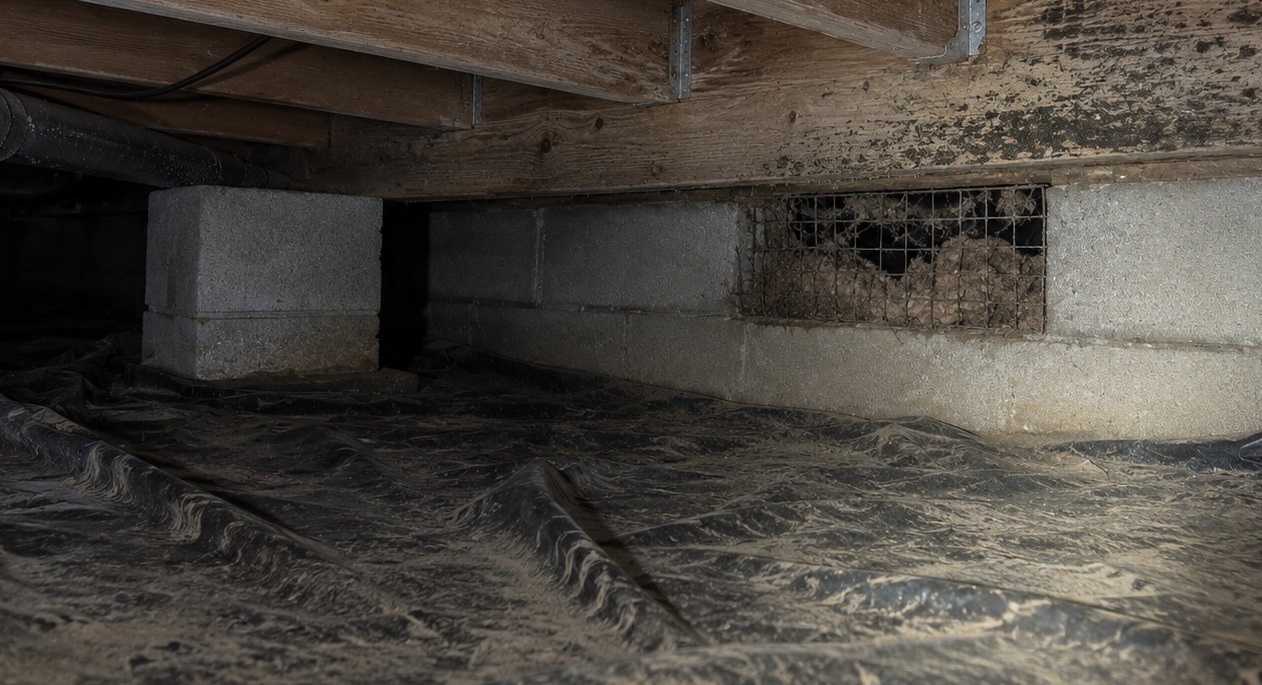
Why Crawl Space Airflow Problems Lead to Mold Growth
Crawl space airflow problems lead to mold growth because humid air stays trapped beneath the home instead of drying out. When air movement is blocked, weak, or poorly balanced, moisture from soil, outdoor humidity, condensation, and damp materials can linger long enough for mold to grow on joists, subfloors, insulation, and debris.
This is why mold often returns after cleaning. Cleaning removes visible growth, but it does not change the damp conditions that allowed mold to form. This cause pattern connects closely with why moisture problems keep returning, where persistent environmental conditions drive repeated damage.
This article explains the moisture chain behind crawl space mold. It focuses on causes, not inspection or repair. If you already see damp insulation, musty odors, condensation, or staining, compare those symptoms with signs of moisture caused by crawl space vent failure.
How Airflow Controls Moisture in Crawl Spaces
Airflow is one of the main moisture controls in crawl spaces, especially vented crawl spaces, but it only helps when the incoming air can actually dry the space. When air exchange works correctly, moisture is removed before it settles on surfaces. When air movement is blocked, unbalanced, or bringing in humid outdoor air, humidity can remain trapped and gradually rise to levels that support mold growth.
The Role of Ventilation in Moisture Control
Crawl space vents are designed to create air exchange between the crawl space and the outside environment. This air movement helps only when it lowers moisture inside the crawl space instead of introducing more humid air.
When airflow is working correctly:
- Moisture evaporating from soil is removed
- Condensation dries more quickly
- Wood and insulation remain dry
- Humidity levels remain stable
- Mold risk stays lower
This balance matters because crawl spaces naturally collect moisture. Even in dry weather, soil can release water vapor into the air. Without enough drying movement, that moisture accumulates and creates the foundation for mold growth.
Why Crawl Spaces Naturally Produce Moisture
Many homeowners assume crawl spaces only become damp when water enters directly. In reality, crawl spaces can collect moisture through normal environmental processes.
Primary moisture sources include:
- Soil evaporation releasing water vapor
- Outdoor humidity entering through vents
- Minor groundwater seepage
- Temperature differences between surfaces
- Air movement from inside the home
Even when no visible water is present, moisture levels can rise slowly over time. This invisible humidity buildup often explains why mold develops unexpectedly in areas that appear dry.
Air Exchange Prevents Moisture Accumulation
Proper air exchange shortens the amount of time moisture remains available. When air can move through the crawl space and remove damp air, wood framing, subfloor panels, and insulation are less likely to stay wet long enough for mold to develop.
What Happens When Crawl Space Airflow Weakens
When crawl space airflow weakens, moisture conditions change even if no water is visibly entering the space. Instead of being removed, moisture accumulates and creates the environment mold needs to grow.
Humidity Levels Begin Rising
The first change after airflow weakens is rising humidity. Moisture released from soil and surrounding materials remains trapped beneath the home instead of being carried away or dried.
This process usually happens gradually. Homeowners rarely notice it at first because humidity builds slowly. Over time, relative humidity can exceed levels that allow mold growth to begin.
Humidity above roughly 60 percent creates conditions where mold becomes more likely to form on exposed surfaces, especially when those surfaces remain damp for extended periods.
Air Becomes Stagnant Beneath the Home
Without airflow, crawl space air becomes stagnant. Instead of circulating, humid air remains trapped in place. This stagnant air prevents moisture from evaporating effectively.
Signs of stagnant crawl space air include:
- Persistent damp smells
- Slow drying after humid weather
- Moisture remaining on surfaces
- Air that feels heavy or humid
- Condensation forming repeatedly
These conditions often appear before visible mold develops. They also frequently accompany the airflow limitations described in how to detect inadequate crawl space airflow, where airflow failure is confirmed through inspection.
Moisture Begins Settling on Surfaces
Once humidity rises high enough, moisture begins settling on surfaces throughout the crawl space. Cooler materials such as wood framing, subfloor panels, foundation walls, pipes, and ductwork often collect moisture first.
Surfaces that remain damp for extended periods become the first locations where mold is likely to colonize, which is why growth often appears in corners, near blocked vents, under insulation, or on cooler framing before it spreads elsewhere.
Why Humidity Creates Ideal Mold Conditions
Mold does not require standing water. It needs moisture that remains available long enough for spores to activate. In crawl spaces with poor airflow, elevated humidity can keep surfaces damp even when the space looks dry at first glance.
The Critical Humidity Threshold for Mold Growth
Mold spores exist naturally in the air and on surfaces, but they remain inactive until moisture conditions allow them to grow. In crawl spaces, this typically happens when humidity levels stay elevated for extended periods.
Conditions that promote mold activation include:
- Relative humidity consistently above 60 percent
- Surface moisture that remains for more than 24 to 48 hours
- Warm temperatures that support biological growth
- Limited airflow that prevents drying
These conditions are common when crawl space vents are blocked or airflow becomes restricted. Over time, this environment begins producing the moisture symptoms often described in signs of moisture caused by crawl space vent failure, which typically appear before visible mold becomes widespread.
Why Humidity Is More Dangerous Than Visible Water
Many homeowners assume mold only forms after flooding or obvious leaks. In reality, long-term humidity is often more dangerous because it affects large areas slowly and consistently.
Humidity-related mold risks include:
- Moisture spreading across wide surface areas
- Hidden dampness that remains unnoticed
- Extended drying times that allow mold to activate
- Repeated moisture cycles that weaken materials
How Trapped Humidity Sustains Mold Growth
Trapped humidity supports mold differently than a one-time leak. Even after weather improves or visible dampness fades, moisture can remain in the crawl space air, insulation, and wood fibers. If those conditions are not corrected, cleaned surfaces can become damp again and restart the mold cycle.
Condensation and Surface Moisture Formation
Condensation plays a major role in turning humidity into active mold growth. When humid air contacts cooler surfaces inside the crawl space, water droplets can form and create the persistent moisture mold requires.
Why Condensation Forms on Crawl Space Surfaces
Condensation occurs when warm, humid air encounters cooler materials. Crawl spaces contain many surfaces that remain cooler than surrounding air, making them natural targets for moisture buildup.
Common condensation surfaces include:
- Wood floor joists
- Subfloor panels
- Foundation walls
- Metal ductwork
- Plumbing pipes
These materials can cool faster than surrounding air, allowing water vapor to condense and remain on their surfaces.
Why Condensation Leads to Persistent Moisture
In spaces with good drying conditions, condensation may evaporate quickly. When airflow is restricted, moisture remains on surfaces long enough to support mold growth.
Persistent condensation often leads to:
- Repeated wetting of wood surfaces
- Moisture accumulation in insulation
- Corrosion of metal components
- Surface staining and discoloration
These conditions typically develop alongside the crawl space ventilation problems explained in why crawl space ventilation causes moisture problems, especially when outdoor humidity, blocked airflow paths, and cool surfaces work together.
Why Mold Starts on Wood, Insulation, and Debris
Crawl space mold does not appear randomly. It usually begins on materials that hold moisture, collect dust, or provide organic material for mold to feed on.
Wood Framing Holds Moisture
Floor joists, beams, sill plates, and subfloor panels are common mold locations because wood absorbs and releases moisture. When airflow is weak, wood can stay damp long enough for surface mold to form.
Mold may first appear as dark staining, speckled growth, fuzzy patches, or discoloration along cooler framing members. If moisture continues, the same damp conditions can also contribute to wood deterioration over time.
Insulation Can Trap Moisture Against Wood
Crawl space insulation can make airflow problems worse when it becomes damp or blocks movement around joists and subfloor areas. Wet or sagging insulation can hold moisture against wood and slow drying.
This is why mold may appear behind insulation before it becomes obvious from the crawl space opening. The surface may look dry from a distance while moisture remains trapped behind the material.
Debris Gives Mold More Places to Grow
Cardboard, scraps of wood, old insulation, paper-faced materials, and organic debris can all support mold when crawl space humidity stays high. These materials absorb moisture and dry slowly in stagnant air.
Even small debris piles can become early mold locations because they create sheltered pockets where air does not move well.
Seasonal Effects That Accelerate Mold Growth
Crawl space mold risk often changes with the seasons. Airflow problems may exist all year, but certain weather patterns make the moisture cycle more active.
Seasonal Moisture Changes Can Speed Up Mold Growth
Spring rainfall can raise soil moisture, summer humidity can increase condensation risk, and cooler seasons can slow drying. These seasonal changes make airflow problems more serious because the crawl space has less ability to release moisture before it affects wood, insulation, and subfloor materials.
Seasonal patterns also explain why crawl space mold may seem to appear suddenly even though the moisture problem has been building for weeks or months.
When Airflow Problems Create Long-Term Mold Risk
A short humidity spike is less concerning than a crawl space that stays damp for weeks or months. Long-term airflow failure creates stable moisture conditions that allow mold to keep returning.
Mold Risk Increases When Dampness Becomes Routine
Repeated dampness is one of the strongest warning signs that the crawl space environment is not drying properly. Even if surfaces dry temporarily, recurring humidity can reactivate the same mold-prone conditions.
This often happens when crawl space moisture depends on weather cycles, blocked vents, poor cross-ventilation, wet soil, or insulation that traps humidity against wood.
Repeated Mold Cycles Create Structural Risk
Repeated mold cycles usually point to repeated moisture cycles. Over time, that moisture can contribute to wood staining, surface deterioration, fastener corrosion, and structural concerns if the crawl space remains damp.
The concern is not only the visible mold. The deeper issue is the environment that keeps materials damp enough for mold, decay organisms, and moisture damage to continue.
When Structural Risk Becomes a Concern
Structural risk becomes more serious when mold appears together with signs of long-term moisture damage.
Warning signs include:
- Soft or darkened wood
- Sagging or wet insulation
- Rust on fasteners or metal supports
- Persistent musty odors inside the home
- Condensation returning after drying
- Visible fungal growth on joists or subfloor panels
Do not disturb large mold-covered areas, wet insulation, or weakened framing without proper protection and evaluation. Crawl spaces can contain mold, pests, contaminated debris, exposed wiring, and structural hazards that make inspection unsafe.
When these signs appear together, the issue may no longer be limited to surface mold. The crawl space may need a broader moisture correction plan rather than repeated cleaning alone.
Why Cleaning Alone Does Not Stop Crawl Space Mold
Cleaning mold from crawl space surfaces may remove visible growth, but it does not remove the moisture conditions that caused the mold. If airflow remains poor, humidity can rise again and make the same areas damp enough for new growth.
Mold Removal Does Not Correct the Moisture Source
Mold cleanup addresses the result of the problem. Airflow correction addresses one of the causes. Without correcting moisture movement, cleaning can become a repeated cycle.
This is especially common when mold is cleaned from joists or subfloor panels while blocked vents, wet soil, damp insulation, or poor cross-ventilation remain unchanged.
The Crawl Space Must Be Able to Dry
A crawl space does not need to be perfectly dry every minute, but it does need the ability to release moisture after damp conditions occur. When airflow problems prevent drying, mold risk remains active.
This is why the long-term solution usually involves more than wiping surfaces. The drying environment must change so moisture no longer stays available long enough for mold to return.
How Airflow Correction Breaks the Mold Cycle
Airflow correction helps break the mold cycle by reducing how long moisture remains trapped under the home. When air can move properly and the crawl space has a way to dry, mold-prone surfaces are less likely to stay damp.
Correcting airflow may involve clearing blocked vents, improving cross-ventilation, removing obstructions, correcting insulation problems, managing soil moisture, or addressing humid outdoor air that makes ventilation less effective.
Once airflow and moisture conditions improve, mold growth becomes much less likely to return under normal environmental conditions.
For practical next steps after identifying the cause, see how to improve airflow in crawl spaces.
If the same moisture conditions keep returning after basic corrections, the problem may need a more complete repair approach. In that case, compare the situation with how to fix persistent crawl space ventilation problems.
FAQ: Crawl Space Airflow Problems and Mold Growth
Why does crawl space mold return after cleaning?
Crawl space mold returns when the damp airflow conditions remain unchanged. Cleaning removes visible colonies, but humid air, wet insulation, condensation, and damp wood can make the same surfaces suitable for new growth.
Can crawl space mold grow without standing water?
Yes. Standing water is not required. High humidity, condensation on cooler framing, wet insulation, or moisture rising from exposed soil can keep surfaces damp enough for mold to grow.
What humidity level makes crawl space mold more likely?
Mold risk increases when crawl space humidity stays above roughly 60 percent, especially if wood, insulation, or subfloor surfaces remain damp for more than 24 to 48 hours.
Why does mold often start near joists, subfloors, or insulation?
These areas often stay cooler or hold moisture longer than open surfaces. Joists and subfloors can collect condensation, while insulation can trap humidity against wood and slow drying.
Will improving airflow stop crawl space mold permanently?
Improving airflow can reduce mold risk, but it is not always enough by itself. Soil moisture, drainage problems, humid outdoor air, damaged insulation, and hidden leaks may also need to be corrected to prevent recurrence.
Conclusion: Airflow Problems Keep Crawl Space Mold Conditions Active
Crawl space airflow problems lead to mold because they allow humidity, condensation, and damp materials to remain active beneath the home. Once wood, insulation, soil vapor, and stagnant air stay damp long enough, mold can grow even without flooding or standing water.
Cleaning visible mold helps only after the moisture cycle is corrected. If poor airflow continues, the same surfaces can become damp again and support new growth. The next step is to confirm whether the crawl space has blocked vents, dead-air zones, humid outdoor air entry, soil moisture, or another condition keeping the space from drying.
One Comment
Comments are closed.