Why Crawl Space Wood Framing Develops Mold
Crawl space wood framing develops mold when joists, beams, rim joists, or subfloor surfaces stay damp long enough for mold spores to grow. The moisture usually comes from soil vapor, humid outdoor air, condensation, standing water, plumbing leaks, or poor drying conditions beneath the home.
The important point is that crawl space mold is usually a moisture-control problem before it is a cleaning problem. Mold may appear on the surface of the wood, but the cause is almost always ongoing humidity, trapped moisture, or repeated wetting around the framing.
If mold has already appeared on crawl space framing, it should be viewed as a structural moisture warning, not only a surface-cleaning problem. The broader relationship between moisture, wood framing, and long-term damage is explained in Structural Moisture Problems in Homes.
How Mold Forms on Crawl Space Wood Framing
Mold begins growing on crawl space framing when wood stays damp and the surrounding air remains humid. Wood contains organic material mold can colonize, so moisture control is the deciding factor.
Most crawl spaces can provide the conditions mold needs:
- Organic wood surfaces
- Elevated humidity levels
- Limited airflow
- Moderate temperatures
When these conditions occur together, mold spores begin growing on wood surfaces within a short period of time.
The Moisture Requirement for Mold Growth
Moisture is the most important factor controlling mold development. Without moisture, mold cannot grow.
In crawl spaces, moisture typically enters wood framing through:
- Air humidity
- Condensation
- Water intrusion
- Ground vapor movement
Even small amounts of moisture can support mold growth if exposure continues over time.
Many homeowners assume mold requires standing water. In reality, mold often forms in areas where humidity remains elevated for long periods, even when surfaces appear dry.
How Wood Supports Mold Growth
Wood contains cellulose fibers that provide nutrients for mold. When moisture enters wood fibers, mold spores settle on the surface and begin feeding on these organic materials.
This process typically follows a predictable pattern:
- Moisture enters wood fibers
- Humidity remains elevated
- Mold spores attach to the wood surface
- Colonies can begin forming within 24 to 48 hours when conditions stay favorable
Once mold colonies begin forming, they expand gradually as long as moisture remains present.
Humidity Levels That Trigger Mold Growth
Humidity plays a major role in determining whether mold develops in crawl space wood framing.
Typical humidity risk levels include:
- Below 50% — Lower mold risk when wood is also dry
- 50% to 60% — Increasing risk, especially in poorly dried crawl spaces
- Above 60% — Mold risk increases significantly if conditions persist
- Above 70% — High risk of widespread mold and damp framing
Many crawl spaces exceed safe humidity levels during humid weather or rainy seasons. Air humidity matters, but the real concern is whether wood framing stays damp long enough for mold to colonize the surface.
Moisture Sources That Cause Crawl Space Mold
Understanding the source of moisture is essential to stopping mold growth. Mold problems rarely develop from a single cause. Instead, they typically result from multiple moisture sources working together.
Soil Vapor Rising from Exposed Ground
One of the most common causes of crawl space mold is moisture vapor rising from exposed soil.
Soil naturally contains moisture. Over time, this moisture evaporates and enters the crawl space air. When humidity rises, wood framing absorbs moisture and supports mold growth.
This process can continue daily, even when the top layer of soil appears dry.
Homes without ground protection experience higher vapor movement, which increases mold risk. Installing protective ground barriers such as described in How to Install a Crawl Space Vapor Barrier reduces moisture entering crawl space air and helps protect wood framing.
Standing Water Beneath the Crawl Space
Standing water dramatically increases moisture levels inside crawl spaces. Even shallow water produces large amounts of humidity.
Common causes of standing water include:
- Poor exterior drainage
- Foundation leaks
- Improper grading around the home
- Heavy rainfall accumulation
Water that remains beneath the home creates constant humidity exposure that encourages mold growth across structural wood.
Plumbing Leaks and Hidden Water Sources
Small plumbing leaks often remain unnoticed for long periods. These leaks produce localized moisture zones that support mold growth.
Typical leak locations include:
- Water supply connections
- Drain pipes
- Water heater lines
- Outdoor hose connections
Even slow leaks create long-term moisture exposure that spreads through surrounding framing materials.
How Humidity Leads to Mold Growth in Crawl Space Framing
Humidity is one of the most overlooked causes of mold on crawl space framing. Even without flooding or an obvious leak, humid air can keep wood surfaces damp enough for mold to grow.
This moisture buildup often occurs without visible water, which is why crawl space mold can appear before homeowners notice a clear leak or puddle.
If you suspect elevated humidity but are unsure how to confirm it, testing methods explained in How to Detect Moisture in Crawl Space Framing can help determine whether moisture conditions are present.
How Humid Air Moves Through Crawl Spaces
Humidity does not remain stationary. It moves through crawl spaces based on airflow, temperature differences, and external weather conditions.
Common humidity movement patterns include:
- Outdoor humidity entering through vents
- Moist air rising from exposed soil
- Air circulation pulling moisture into enclosed areas
- Seasonal humidity increases during warm weather
These airflow patterns often distribute moisture unevenly, allowing certain areas to remain damp while others appear dry.
Why Trapped Humidity Is Especially Dangerous
Trapped humidity creates persistent moisture exposure that prevents wood from drying naturally.
Humidity becomes trapped when:
- Airflow is restricted
- Insulation blocks air movement
- Structural components create enclosed spaces
- Plastic barriers are installed incorrectly
When humidity remains trapped, mold growth becomes more likely even without direct water exposure.
Persistent humidity conditions often match warning signs outlined in Signs of Moisture in Crawl Spaces, where early moisture symptoms first become visible.
The Role of Condensation in Mold Growth
Condensation plays a major role in crawl space mold development. It occurs when warm, humid air contacts cooler surfaces and forms water droplets.
Many crawl spaces experience daily temperature changes that create repeated condensation cycles.
Where Condensation Commonly Forms
Condensation forms most often on surfaces that remain cooler than surrounding air.
Common condensation locations include:
- Metal HVAC ducts
- Cold water pipes
- Foundation walls
- Rim joists
- Subfloor surfaces
When condensation forms repeatedly, moisture accumulates on nearby wood framing.
How Daily Temperature Changes Create Moisture Cycles
Temperature differences between indoor air and crawl space surfaces often produce condensation cycles.
These cycles typically occur when:
- Warm outdoor air enters cooler crawl spaces
- Cold surfaces contact humid air
- Nighttime temperatures drop suddenly
- Seasonal temperature swings occur
Repeated condensation gradually increases moisture content in wood, allowing mold colonies to develop.
Why Poor Airflow Accelerates Mold Growth
Airflow helps remove moisture from crawl spaces. When airflow becomes restricted, humidity accumulates and remains trapped near structural wood.
Many crawl space mold problems develop because airflow is insufficient to remove excess moisture.
How Airflow Problems Develop
Airflow limitations often occur due to structural design or obstruction.
Common airflow problems include:
- Blocked crawl space vents
- Debris obstructing airflow paths
- Dense insulation limiting air movement
- Structural obstacles preventing circulation
Restricted airflow allows moisture to remain in place long enough for mold growth to occur.
Why Ventilation Does Not Always Solve Moisture Problems
Many homeowners assume that adding more vents improves crawl space ventilation. However, this is not always effective.
In humid climates, outdoor air entering through vents may increase moisture levels rather than reduce them.
This misconception often leads to continued mold problems despite increased ventilation efforts.
When airflow problems exist, identifying the underlying moisture sources becomes critical before making structural changes.
Why Mold Often Returns After Cleaning Crawl Space Wood
Safety note: Avoid disturbing large mold-covered areas, wet insulation, sewage-contaminated materials, or visibly weakened framing without proper protection and professional guidance. For general homeowner mold cleanup and moisture-control guidance, see the EPA guide to mold, moisture, and your home.
One of the most frustrating experiences homeowners face is seeing mold return after it has been cleaned. This happens because mold removal alone does not eliminate the underlying moisture conditions that allowed mold to grow in the first place.
If the wood is cleaned but the crawl space stays humid, damp, or poorly drained, the same framing areas often support new mold growth.
Unresolved Moisture Sources
Mold always follows moisture. If moisture remains present after cleaning, mold spores will begin growing again.
Common unresolved moisture sources include:
- Exposed soil releasing moisture vapor
- Hidden plumbing leaks
- Foundation seepage
- Persistent condensation
- Standing water beneath the home
Many homeowners remove visible mold without confirming whether moisture levels remain elevated. Testing methods described in How to Detect Moisture in Crawl Space Framing help confirm whether moisture is still present after cleanup.
Hidden Moisture Inside Wood
Wood can retain moisture internally even after surfaces appear dry. Mold spores continue growing when moisture remains trapped inside wood fibers.
This internal moisture retention occurs when:
- Drying time is insufficient
- Humidity remains elevated
- Airflow is limited
- Water exposure occurred repeatedly
Without correcting these conditions, mold often returns in the same locations.
Incomplete Moisture Control Measures
Mold cleanup without moisture control creates temporary improvement but does not provide long-term protection.
For example:
- Cleaning mold without sealing exposed soil allows vapor to continue rising.
- Removing mold without fixing leaks allows moisture to re-enter wood.
- Drying surfaces without improving airflow allows humidity to remain trapped.
Long-term mold prevention usually requires addressing moisture at its source rather than treating surface growth alone.
Environmental Conditions That Make Crawl Space Mold Worse
Environmental factors strongly influence mold development in crawl spaces. These conditions often change seasonally, causing mold problems to appear or worsen at certain times of the year.
Seasonal Humidity Changes
Seasonal weather patterns significantly affect crawl space moisture levels.
High-risk seasons typically include:
- Warm, humid summer months
- Rainy seasons with frequent storms
- Transitional periods with temperature swings
During these times, humidity levels increase and remain elevated for extended periods. Wood framing absorbs moisture more quickly during these seasonal spikes.
Seasonal humidity changes often explain why mold problems appear suddenly even when crawl spaces previously seemed dry.
Outdoor Conditions Affect Indoor Crawl Spaces
Weather conditions outside the home strongly influence moisture behavior beneath it.
Outdoor conditions that increase mold risk include:
- Heavy rainfall saturating surrounding soil
- High humidity entering through vents
- Poor exterior drainage directing water toward foundations
- Landscape grading that traps water near walls
Outdoor moisture conditions frequently create crawl space humidity problems even when no visible leaks exist.
Temperature Differences Within Crawl Spaces
Temperature variations between outdoor air and crawl space surfaces create moisture movement that supports mold growth.
These differences commonly occur when:
- Warm air enters cool crawl spaces
- Nighttime temperatures drop rapidly
- Seasonal transitions occur
- Cold foundation walls contact humid air
Repeated temperature fluctuations create daily condensation cycles that maintain elevated moisture levels.
When Mold Growth Signals Structural Risk
Not all mold growth immediately indicates structural danger. However, persistent mold development often signals conditions that eventually weaken wood framing.
Surface mold alone is not the same as wood rot, but the moisture conditions that support mold can eventually lead to decay if the framing stays wet.
Recognizing when mold becomes a structural concern helps homeowners take action before damage becomes severe.
Widespread Mold Coverage
Small isolated mold patches may indicate localized moisture problems. However, widespread mold coverage suggests persistent humidity affecting large areas.
Watch for:
- Mold spreading across multiple joists
- Growth appearing on beams and subfloor surfaces
- Discoloration extending across large framing areas
- Repeated mold formation after cleaning
These signs indicate moisture exposure affecting multiple structural components.
Wood Softening Alongside Mold Growth
Mold often develops before structural damage becomes visible. When mold appears alongside wood softening, structural weakening may already be underway.
Signs of softening include:
- Wood surfaces that feel spongy
- Compression when touched
- Fibrous or crumbly textures
- Loss of structural rigidity
If mold appears together with soft, crumbly, sagging, or weakened joists, the issue has moved beyond a surface mold concern. Signs of Moisture Damage in Crawl Space Joists explains how to recognize framing damage more directly.
Persistent Musty Odors Despite Cleaning
Musty odors that remain after cleaning often indicate hidden mold growth or ongoing moisture problems.
Odor persistence usually signals:
- Moisture trapped behind insulation
- Hidden mold colonies
- Incomplete drying conditions
- Humidity levels remaining elevated
These conditions suggest that additional moisture control measures are required.
Frequently Asked Questions About Crawl Space Mold Causes
Why Does Mold Grow on Crawl Space Wood?
Mold grows on crawl space wood because joists, beams, rim joists, and subfloor surfaces are organic materials that can support mold when they stay damp.
In crawl spaces, the moisture usually comes from soil vapor, humid vent air, condensation, standing water, or hidden plumbing leaks.
What Moisture Level Causes Mold Growth?
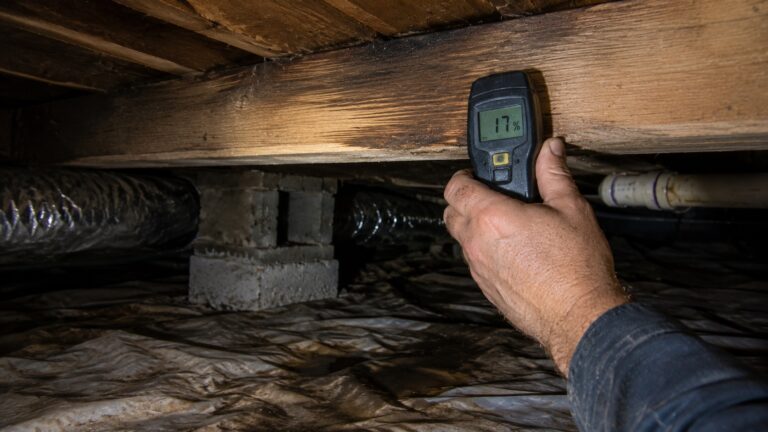
Mold risk rises when crawl space humidity stays above about 60%, especially if wood surfaces remain damp. Wood moisture readings are often more useful than air humidity alone because mold grows on the framing surface, not in the air.
If the framing remains damp after weather changes, drainage repairs, or cleanup, the crawl space still has a moisture-control problem.
Can Mold Grow Without Visible Water?
Yes. Mold commonly grows in humid crawl spaces even when no puddles or obvious leaks are visible.
Moisture vapor, condensation, and damp wood surfaces can provide enough moisture to support mold growth without clear flooding or dripping water.
Does Humidity Alone Cause Crawl Space Mold?
Persistent humidity can support crawl space mold when it keeps wood surfaces damp. This is common when humid outdoor air enters through vents, exposed soil releases vapor, or airflow is too limited to dry the framing.
Humidity alone is most concerning when it stays high for long periods or combines with condensation, leaks, or standing water.
Why Does Mold Keep Coming Back After Cleaning?
Mold returns when the moisture source remains unresolved. Cleaning may remove visible growth, but it does not dry the wood, stop soil vapor, repair leaks, or correct condensation.
If mold comes back in the same areas, the crawl space needs moisture control, not repeated surface cleaning alone.
How Fast Can Mold Grow on Crawl Space Wood?
Mold can begin growing within 24 to 48 hours when wood stays damp and humidity remains favorable. Visible colonies may appear within days or weeks depending on the moisture level, airflow, and temperature.
Long-term moisture exposure increases both the speed and severity of mold development on crawl space framing.
Conclusion: Mold Growth Always Points to Moisture Problems
Mold growth on crawl space wood framing is a sign that moisture conditions are staying favorable long enough for mold to grow. The cause may be soil vapor, humid air, condensation, standing water, plumbing leaks, poor airflow, or a combination of several conditions.
Cleaning visible mold may improve the appearance of the wood, but mold usually returns if the moisture source remains. If mold continues after cleanup or appears alongside soft, weakened, or damaged framing, review broader warning signs in Signs of Structural Moisture Problems.