How to Prevent Standing Water in Crawl Spaces
To prevent standing water in crawl spaces, start by keeping rainwater away from the foundation. Correct the yard slope, keep gutters clear, extend downspouts, maintain drainage systems, cover exposed soil with a vapor barrier, and monitor the crawl space after heavy rain.
Most crawl space water problems begin outside the home. Poor grading, clogged gutters, short downspouts, low spots near the foundation, and saturated soil can all send water beneath the structure during storms. Once water collects there, humidity rises and wood, insulation, and foundation materials stay damp longer than they should.
If water is already present, first confirm the problem with signs of standing water in crawl spaces. Then use the prevention steps below to reduce the chance of repeat flooding.
For a broader look at drainage systems, vapor barriers, sump pumps, and foundation water-control layers, see how to waterproof basements and control water intrusion. This guide focuses specifically on preventing water from collecting beneath the home.
Why Preventing Standing Water Matters
Standing water beneath a home keeps the crawl space damp long after rain stops. That moisture can raise humidity, wet insulation, stain foundation walls, soften wood framing, and create conditions where mold is more likely to grow.
The biggest risks include:
- Wood rot and decay in joists, beams, and supports
- Damp or sagging insulation
- Musty odors moving into living areas
- Mold growth on wood and stored materials
- Higher repair costs if flooding becomes recurring
If joists already show staining, softness, or dark moisture marks, compare those symptoms with signs of moisture damage in crawl space joists. If mold odors or visible growth are present, see signs of mold growth in crawl spaces.
The most effective prevention usually starts outside, with the way water drains around the foundation.
Improve Exterior Grading Around the Home
Proper exterior grading is one of the most effective ways to prevent standing water in crawl spaces. Grading refers to the slope of the soil surrounding the foundation. When the ground slopes correctly, rainwater flows away from the structure instead of collecting near foundation walls.
Many crawl space water problems begin with grading issues that develop gradually. Soil naturally settles over time, especially near foundation edges. Landscaping changes, erosion, and construction activities can also alter the slope of the yard. These changes may seem minor but significantly affect how water moves during heavy rainfall.
If standing water has already appeared beneath the home, identifying grading problems early can help prevent future flooding. In many cases, grading improvements address the same conditions that lead to intrusion patterns described in how to detect water intrusion in crawl spaces, particularly when water repeatedly enters near foundation walls.
Create Proper Yard Slope Away from the Foundation
The ground surrounding your home should slope downward away from the foundation. As a practical benchmark, many residential codes call for soil to fall at least 6 inches within the first 10 feet away from foundation walls, with paved surfaces sloped away as well. Local site conditions may require drains or swales where that much slope is not possible.
A properly graded yard helps:
- Reduce pooling near foundation walls
- Move roof and yard runoff away from crawl space openings
- Limit soil saturation during heavy rain
- Reduce the amount of water drainage systems must handle
Even small slope corrections can significantly improve water movement. When soil slopes away from the home, water travels along the surface instead of accumulating near entry points.
Fill Low Spots Near Foundation Walls
Low spots near the foundation are common water collection points. These depressions form when soil settles or erodes, creating areas where rainwater pools during storms.
Low spots may develop due to:
- Soil settling after construction
- Erosion caused by repeated rainfall
- Improper landscaping installation
- Heavy foot traffic or equipment use
Filling these depressions with properly compacted soil reduces water retention near the foundation. Eliminating low spots prevents water from remaining in contact with foundation walls for extended periods.
Avoid piling loose soil directly against siding, vents, or wood trim. Keep drainage improvements below vulnerable materials so the fix does not create a new moisture path into the wall or crawl space.
Maintain Stable Soil Around the Structure
Stable soil helps maintain proper grading over time. Loose or poorly compacted soil shifts easily, allowing slopes to change and low spots to form. Maintaining soil stability reduces the likelihood of grading problems returning.
Soil stability improves when:
- Loose soil is compacted properly
- Erosion-prone areas are reinforced
- Vegetation is maintained to reduce runoff
- Surface water is directed away from exposed soil
Regular inspection of grading conditions helps identify changes before they create major drainage problems.
Maintain Gutters and Downspouts
Gutters and downspouts prevent roof water from dumping beside the foundation. When they clog, leak, overflow, or discharge too close to the house, large volumes of water can saturate the soil around crawl space walls during storms.
Prevent Gutter Overflow During Storms
Clogged gutters prevent water from flowing freely through the drainage system. Leaves, debris, and sediment buildup restrict water movement, causing gutters to overflow during rainfall.
Overflowing gutters create several risks:
- Water pouring directly beside foundation walls
- Soil becoming saturated near crawl space openings
- Increased pressure against foundation materials
- Greater risk of water entering through cracks
Routine cleaning helps maintain proper water flow. Removing debris before heavy rain seasons reduces the likelihood of overflow and flooding.
Extend Downspouts Away from the Foundation
Downspouts should discharge where water continues flowing away from the foundation, not into mulch beds, low spots, crawl space vents, or soil that slopes back toward the home.
Proper downspout management includes:
- Extending discharge points away from the foundation
- Ensuring water flows toward safe drainage areas
- Avoiding discharge locations near crawl space walls
- Preventing water pooling near entry points
Extend downspouts far enough that roof water continues moving away from the foundation after it leaves the pipe. If the discharge area still drains back toward the house, use a longer extension, splash block, buried drain line, or swale to carry water to a safer location.
Inspect Gutters After Heavy Rainfall
Post-storm inspection provides valuable insight into drainage performance. Observing how water flows during storms helps identify weaknesses before they lead to standing water.
After rainfall, check for:
- Overflow marks along gutter edges
- Water pooling near discharge points
- Soil erosion beneath downspouts
- Debris buildup inside gutter channels
If gutter performance appears inconsistent, water may be entering the crawl space during storms. Conditions like these often contribute to flooding patterns explained in why crawl spaces flood during heavy rain, especially when water accumulates near the structure.
Improving grading and maintaining gutters addresses two of the most important water diversion strategies. However, even well-managed surface water requires reliable drainage systems to remove excess moisture effectively.
Install and Maintain Drainage Systems
Even when grading and gutter systems function properly, heavy rainfall can still produce large volumes of water that must be safely removed from around the home. Drainage systems provide a controlled pathway that moves water away before it reaches the crawl space. Without adequate drainage, water accumulates near the foundation and increases the risk of standing water beneath the structure.
Drainage systems vary widely depending on soil conditions, climate, and home design. However, all effective systems share one goal: removing water faster than it collects.
If a drainage system already exists but water still returns, inspect whether it is clogged, damaged, poorly sloped, or discharging too close to the foundation. For a more detailed checklist, see how to inspect crawl space drainage systems.
Use Surface Drains to Control Runoff
Surface drains help remove water from areas where pooling commonly occurs. These drains collect excess rainwater and redirect it through underground pipes or drainage channels. Surface drains are particularly useful in yards with uneven terrain or poor natural drainage.
Surface drains are often installed in:
- Low areas near the foundation
- Walkways and patios
- Driveways with inward slope
- Areas prone to repeated pooling
Properly installed surface drains prevent water from remaining near structural walls. When runoff is removed quickly, soil saturation decreases and pressure against the foundation is reduced.
Install Subsurface Drainage Systems
Subsurface drainage systems, such as perimeter drains or French drains, remove water from below the ground surface. These systems capture groundwater before it reaches the crawl space floor.
Subsurface drains help:
- Intercept groundwater before it reaches the crawl space
- Reduce pressure against foundation walls
- Move water toward a safe discharge point
- Support long-term crawl space moisture control
Homes with high groundwater, clay soil, or recurring water after long storms may need subsurface drainage rather than surface grading alone.
Maintain Drainage Systems Regularly
Drainage systems require ongoing maintenance to remain effective. Sediment buildup, debris accumulation, and pipe damage can reduce flow capacity over time. Regular maintenance ensures that systems function correctly when heavy rain occurs.
Routine maintenance includes:
- Clearing debris from drain openings
- Inspecting pipes for blockages
- Monitoring drainage outlets
- Repairing damaged components
If drainage performance declines over time, damp soil, staining, or recurring wet areas may begin appearing near foundation walls.
Use Vapor Barriers to Reduce Moisture
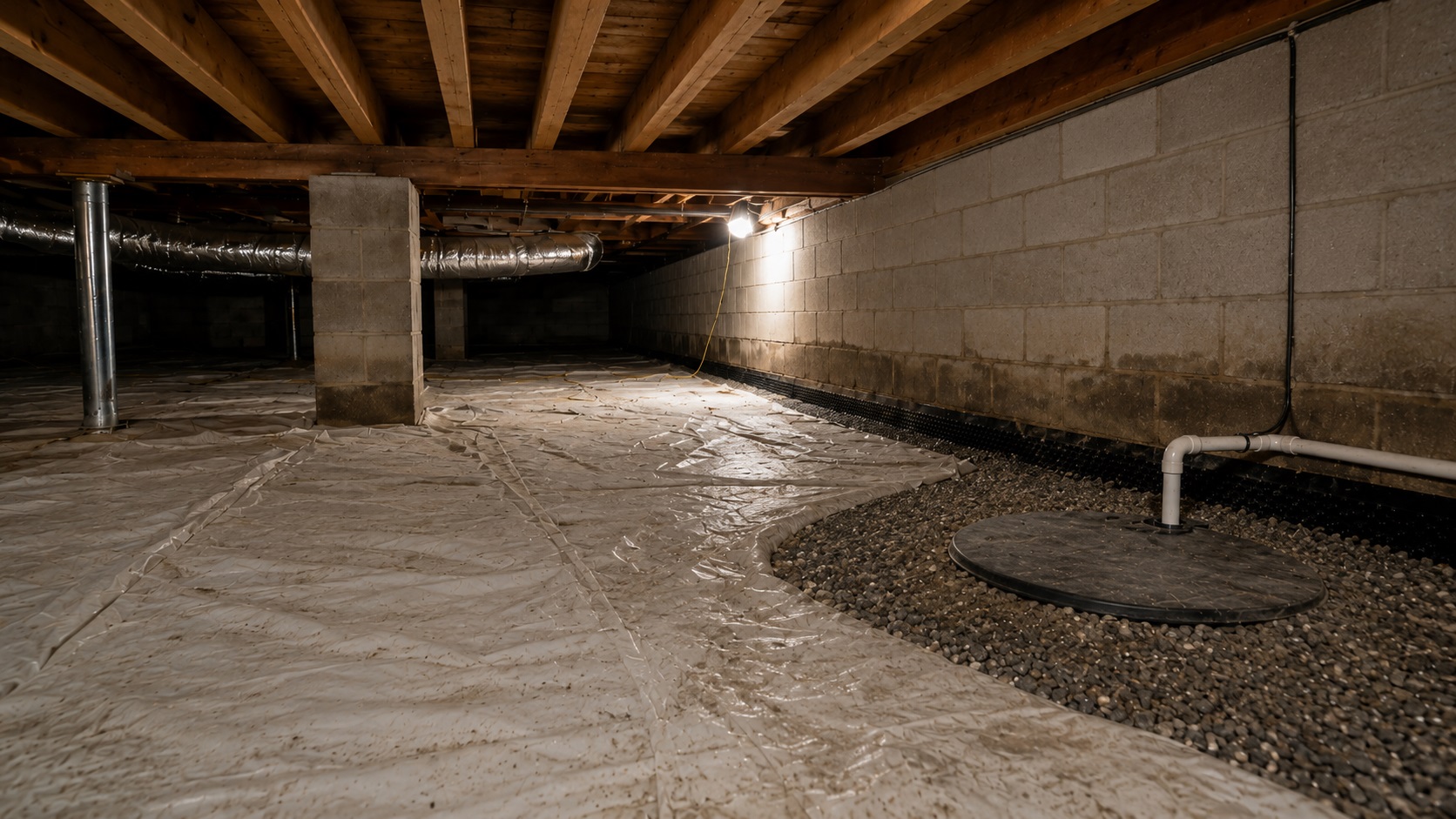
Vapor barriers help control ground moisture after bulk water is managed. They reduce moisture vapor rising from exposed soil, but they are not a substitute for grading, gutters, drains, or sump systems when water is actively entering the crawl space.
Install Vapor Barriers Correctly
Proper installation is critical for vapor barrier effectiveness. The material must cover exposed soil surfaces completely to prevent moisture from rising into the crawl space.
Key installation practices include:
- Covering the entire soil surface
- Overlapping seams to prevent gaps
- Securing edges to prevent movement
- Extending material along foundation walls
Incomplete installation leaves exposed soil areas that continue releasing moisture into the air. When gaps exist, humidity levels remain elevated despite the presence of a barrier.
Inspect Vapor Barriers for Damage
Vapor barriers can become damaged over time due to foot traffic, pests, or shifting soil. Tears or displacement allow moisture to escape into the crawl space, reducing the effectiveness of the barrier.
Common damage signs include:
- Torn plastic sheets
- Loose edges or lifted sections
- Wrinkled or displaced material
- Moisture collecting beneath damaged areas
Routine inspections help maintain vapor barrier performance and reduce humidity-related risks.
Understand the Limits of Vapor Barriers
If water appears on top of the vapor barrier after rain, the problem is bulk water intrusion, not ordinary ground vapor. Fix the drainage source before relying on the barrier to control crawl space moisture.
Once surface water and ground vapor are controlled, long-term prevention also depends on managing groundwater conditions and monitoring the crawl space after storms.
Control Groundwater Movement
Some crawl spaces flood because the soil below or around the home stays saturated. This is more common on low lots, clay soil, flat yards, and sites where water remains after long storms.
If the crawl space gets wet even when gutters and grading appear correct, groundwater may be part of the problem. In that case, surface fixes may need to be combined with perimeter drainage, interior drainage, a sump system, or professional waterproofing design.
Know When Surface Fixes Are Not Enough
If water still appears after grading, gutters, downspouts, and surface drains are corrected, the source may be below the surface. At that point, the crawl space may need a perimeter drain, French drain, sump system, or contractor-designed drainage plan.
Common subsurface drainage methods include:
- Perimeter drainage systems installed around foundation walls
- French drains that collect groundwater and redirect flow
- Drainage channels positioned along crawl space edges
- Water diversion trenches placed in high-risk areas
When groundwater is managed effectively, the likelihood of standing water beneath the home decreases significantly.
Prevent Soil Saturation Beneath the Crawl Space
Soil saturation beneath the crawl space floor increases the likelihood of moisture rising into the structure. Maintaining stable soil conditions reduces upward water movement and protects structural components.
Preventing saturation includes:
- Maintaining effective drainage systems
- Reducing water pooling near foundation walls
- Addressing recurring wet soil conditions
- Monitoring seasonal water movement patterns
If soil remains wet for long periods, standing water may eventually form even without obvious surface flooding.
Monitor Crawl Space Conditions Regularly
Preventing standing water is not a one-time task. Crawl space conditions change over time as weather patterns shift and structural materials age. Routine monitoring allows homeowners to identify developing problems before they become severe.
After each major storm, check the same crawl space areas rather than looking randomly. Repeated wet spots usually reveal the source pattern: downspout discharge, foundation low spots, groundwater seepage, vent entry, or failed drainage outlets.
Perform Seasonal Inspections
Seasonal inspections help identify water risks associated with changing weather conditions. Heavy rain seasons often expose weaknesses in grading, drainage, or structural components.
Important seasonal inspection times include:
- Before rainy seasons begin
- After major storms
- During seasonal temperature changes
- After landscaping modifications
Inspecting during these periods increases the likelihood of detecting emerging problems early.
Track Moisture Changes Over Time
Monitoring moisture trends provides valuable insight into crawl space performance. Tracking changes helps determine whether preventive measures are working or if additional action is required.
Useful monitoring techniques include:
- Record crawl space humidity during dry weather and after storms
- Photograph the same corners and foundation walls during each inspection
- Mark where water appears and how long it remains
- Note whether wet areas line up with downspouts, low spots, vents, or drainage outlets
Documenting these observations allows homeowners to identify patterns and respond to developing moisture problems.
Respond Quickly to Early Warning Signs
Small moisture problems often become large ones when ignored. Responding quickly to early signs prevents water from accumulating into standing pools.
Early warning signs include:
- Damp odors beneath the home
- Soil remaining wet after rain
- Moisture stains on foundation walls
- Insulation appearing damp or sagging
Addressing these signs early reduces long-term repair costs and prevents repeated flooding cycles.
When Prevention Requires Professional Solutions
Some crawl space water problems are not safe or practical to solve with basic maintenance. Repeated standing water may indicate groundwater pressure, failed drainage, foundation defects, or a sump system that needs professional design.
Professional intervention may be necessary if:
- Standing water returns after every storm
- Flooding increases in severity over time
- Drainage systems appear ineffective
- Structural materials show signs of damage
- Groundwater pressure remains high
Professional solutions may include correcting the drainage slope, adding a sump basin, installing perimeter drainage, repairing foundation defects, or redirecting discharge to a safer location.
Safety note: Do not enter a crawl space with standing water if electrical wiring, outlets, HVAC equipment, sewage, pest contamination, or unstable structural materials may be present. Have the area inspected before attempting cleanup or repairs.
Frequently Asked Questions About Preventing Standing Water in Crawl Spaces
What is the first thing to fix if water collects in a crawl space?
Start outside. Check whether the yard slopes toward the foundation, gutters overflow, downspouts discharge too close to the home, or water pools near crawl space walls after rain. Exterior runoff is often the easiest source to reduce first.
Do vapor barriers stop standing water?
No. Vapor barriers reduce moisture vapor from exposed soil, but they do not stop liquid water from entering. If water appears on top of the barrier, drainage, grading, groundwater, or sump system problems still need to be corrected.
Can grading alone prevent crawl space flooding?
Sometimes, but not always. Grading can reduce surface water near the foundation, but homes with high groundwater, clay soil, low lots, or repeated storm flooding may also need drainage improvements or a sump system.
How often should crawl space drainage be checked?
Check drainage before rainy seasons and after major storms. Also inspect it after landscaping changes, gutter repairs, soil settling, or any event that changes how water moves around the foundation.
When should a professional inspect crawl space water problems?
Call a professional if standing water returns after every storm, water appears despite clean gutters and good grading, structural wood looks damaged, the sump pump cannot keep up, or the crawl space may contain electrical or contaminated-water hazards.
Key Takeaways
- Start with outside water sources first: slope, gutters, downspouts, low spots, and drainage outlets.
- Preventing standing water requires managing both surface water and groundwater movement.
- Proper grading and gutter maintenance are critical first-line defenses.
- Drainage systems must remain clear and functional to prevent flooding.
- Vapor barriers reduce humidity but do not stop water intrusion.
- Regular monitoring helps detect early warning signs before flooding occurs.
- Professional solutions may be necessary when prevention measures fail.