How to Prevent Moisture Build-Up in Exterior Walls
Preventing moisture build-up in exterior walls comes down to three things: keeping bulk water away from the wall, maintaining the exterior details that shed rain, and controlling indoor humidity so condensation does not form inside the wall cavity.
No exterior wall can avoid every exposure to rain, vapor, or temperature change. The goal is to reduce repeated wetting and make sure the wall can dry before moisture damages sheathing, framing, insulation, or interior finishes.
This guide focuses on prevention, not diagnosis or repair. It explains how to reduce wall wetting, improve drying conditions, and support the broader moisture-control habits covered in how to prevent recurring moisture damage. If damage is already visible, review signs of moisture in exterior walls before treating the problem as routine maintenance.
Why Preventing Moisture Build-Up Matters
Preventing moisture accumulation inside exterior walls protects the hidden materials that keep the wall strong and energy efficient. Repeated wetting can reduce insulation performance, soften wood framing, weaken drywall, and create conditions where mold can develop inside concealed cavities.
Prevention provides several long-term benefits:
- Reduces the likelihood of mold growth inside wall cavities
- Protects insulation performance and indoor comfort
- Extends the lifespan of siding and wall finishes
- Minimizes the need for major structural repairs
- Improves energy efficiency by keeping insulation dry
Moisture damage often begins quietly, without visible warning signs. By the time problems become obvious, materials may already be weakened. Regular prevention efforts reduce the chance of hidden damage developing over time.
Prevention also reduces recurrence. Visible repairs often fail when the original wetting pattern—poor drainage, failed flashing, high humidity, or restricted drying—remains unchanged.
If moisture has been detected previously, periodic confirmation using methods outlined in how to detect hidden moisture in exterior walls helps verify that preventive measures remain effective.
Exterior Maintenance That Reduces Moisture Risk
Exterior maintenance is one of the most effective ways to prevent moisture build-up in exterior walls. Most water intrusion begins at exposed surfaces where materials are subjected to weather, temperature changes, and physical movement.
The most useful checks are the ones that focus on real entry points: open joints, failed sealant, loose trim, blocked drainage gaps, and flashing that no longer sheds water cleanly.
Sealing Windows and Doors
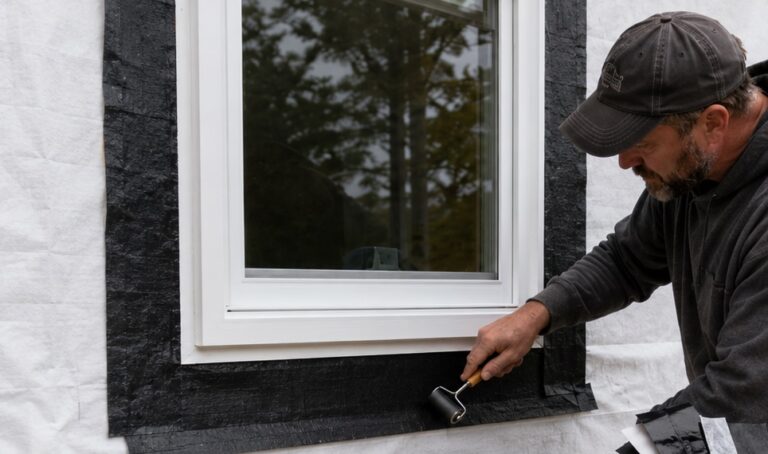
Windows and doors create openings in exterior walls that require continuous protection. Over time, sealants surrounding these openings degrade due to weather exposure and material movement.
Regular inspection of window and door seals helps identify early deterioration before moisture entry occurs.
Key maintenance steps include:
- Checking sealant lines for cracks or separation
- Inspecting corners where movement is most common
- Replacing aging sealants before complete failure
- Ensuring trim components remain securely attached
Do not seal over damp materials, active leaks, or trapped water. Sealant should close small exterior gaps after the source is understood, not hide a moisture problem that still needs drying or repair.
Sealant materials expand and contract with temperature changes. This movement gradually weakens their ability to block moisture. Early replacement prevents small gaps from developing into long-term entry pathways.
Special attention should be given to areas exposed to direct rainfall or strong wind conditions. These locations experience increased stress and require more frequent inspection.
Maintaining Siding Systems
Siding serves as the first protective layer against environmental exposure. When siding becomes damaged or misaligned, water can reach deeper structural materials.
Routine siding maintenance helps reduce this risk by keeping protective surfaces intact.
Common siding maintenance practices include:
- Inspecting panels for cracks, warping, gaps, or separation
- Checking trim, corners, J-channels, and butt joints for openings
- Keeping weep holes, drainage gaps, and lower edges clear
- Repairing damaged sections promptly before repeated rain exposure
Siding defects often develop gradually due to seasonal movement. Small gaps may not cause immediate leaks but can allow repeated moisture entry over time.
Even minor siding damage should be addressed quickly, as repeated exposure increases the likelihood of internal moisture accumulation.
Protecting Flashing Components
Flashing is one of the most important protective elements in exterior wall systems. It redirects water away from vulnerable areas such as window tops, doors, and roof intersections.
Flashing failures frequently lead to long-term moisture problems because water entering through these areas often remains hidden.
Preventive flashing maintenance includes:
- Inspecting flashing edges for separation
- Checking sealant condition around flashing joints
- Watching for rust or physical damage
- Ensuring flashing overlaps, drip edges, and kick-out flashing remain properly aligned
Flashing problems are particularly dangerous because they allow repeated water entry during rainfall events. Preventive inspection reduces the likelihood of moisture infiltration in these high-risk areas.
If flashing defects are suspected but not fully visible, periodic inspection methods described in how to inspect exterior walls for moisture damage may help identify hidden risks.
Managing Water Around Your Home
Controlling how water moves around your home is one of the most effective ways to prevent moisture build-up inside exterior walls. Even well-sealed siding and properly installed flashing can be overwhelmed when large volumes of water repeatedly contact wall surfaces.
Water management focuses on directing moisture away from vulnerable areas before it can enter structural materials. Many long-term moisture problems begin when water remains near exterior walls for extended periods.
Maintaining Gutters and Downspouts
Gutters and downspouts are designed to capture roof runoff and move it safely away from wall surfaces. When these systems fail, large volumes of water may spill directly onto exterior walls or accumulate near foundations.
Routine gutter maintenance is one of the simplest and most effective prevention strategies available to homeowners.
Important gutter maintenance practices include:
- Cleaning gutters regularly to remove leaves and debris
- Inspecting gutters for sagging or separation
- Checking joints for leaks or loose connections
- Ensuring gutters remain securely fastened
Overflowing gutters allow water to cascade down wall surfaces during rain events. Repeated overflow increases moisture exposure at roof-to-wall intersections—one of the most vulnerable areas for moisture entry.
Downspouts play an equally important role. Even properly functioning gutters cannot prevent moisture problems if downspouts release water too close to the home.
Effective downspout management includes:
- Directing water several feet away from the foundation and away from siding splash zones
- Ensuring discharge points remain unobstructed
- Monitoring splash zones during heavy rain
- Extending downspouts if water pools near walls
These simple steps significantly reduce the volume of water contacting exterior wall surfaces.
Improving Ground Drainage Around Foundations
Ground drainage conditions have a major influence on wall moisture risk. Soil that slopes toward the home allows water to collect near foundation walls, increasing the likelihood of moisture absorption.
Proper grading directs water away from the structure, allowing surfaces to dry more quickly after rainfall.
Key drainage improvements include:
- Ensuring soil slopes gently away from exterior walls
- Filling low areas where water tends to collect
- Monitoring soil conditions after heavy rainfall
- Adjusting landscaping to prevent water pooling
Even small grading adjustments can significantly reduce long-term moisture exposure. Homes located in areas with poor drainage often experience repeated wetting cycles that increase the likelihood of internal moisture accumulation.
Water remaining near foundation walls may also contribute to hidden moisture movement inside structural materials. Periodic moisture detection checks—such as those described in how to detect hidden moisture in exterior walls—help confirm whether drainage improvements are working effectively.
Controlling Splashback From Roof Runoff
Roof runoff striking the ground near exterior walls can create splashback, sending water upward onto siding surfaces. This repeated wetting increases the risk of moisture entering seams and joints.
Splashback occurs most often when:
- Downspouts discharge directly onto hard surfaces
- Soil near the home becomes compacted
- Water falls from roof edges without proper drainage
- Ground surfaces allow water to bounce against walls
Reducing splashback means watching where roof water actually lands during rain, then changing the discharge point, ground surface, or drainage path so water does not bounce back onto siding.
Effective splashback prevention strategies include:
- Using extensions to redirect downspout discharge
- Maintaining soil surfaces that absorb water gradually
- Avoiding hard surfaces directly below roof edges
- Observing water movement during heavy rain events
Watching how water behaves during storms provides valuable insight into whether splashback conditions exist.
Managing Landscaping Near Exterior Walls
Landscaping plays an often-overlooked role in moisture prevention. Plants, mulch, and decorative features placed too close to exterior walls can trap moisture and restrict airflow.
Dense vegetation increases moisture exposure by:
- Holding moisture against wall surfaces
- Blocking airflow that promotes drying
- Encouraging water retention near foundations
- Allowing debris to accumulate against siding
Maintaining proper spacing between landscaping and wall surfaces improves airflow and reduces moisture buildup.
Preventive landscaping practices include:
- Keeping plants trimmed away from siding
- Keeping mulch, soil, and decorative stone below siding edges and away from weep paths
- Removing debris that traps moisture
- Monitoring vegetation growth near drainage areas
These adjustments allow exterior wall surfaces to dry more effectively after rainfall or humidity exposure.
Improving Indoor Moisture Control
Not all moisture problems originate outdoors. Indoor humidity can significantly affect exterior wall conditions, especially when warm air meets cooler surfaces inside wall cavities.
Indoor moisture control reduces the risk of condensation forming inside walls. This is particularly important in homes located in cold or humid climates.
Managing Indoor Humidity Levels
Indoor humidity is one of the most influential factors affecting wall moisture conditions. Maintaining balanced humidity levels reduces condensation risk and improves drying potential.
Most homes perform best when indoor humidity remains between 30% and 50% relative humidity.
Humidity levels above this range increase the likelihood of condensation forming on cooler wall surfaces.
Common sources of indoor humidity include:
- Cooking without proper ventilation
- Showers and baths
- Indoor laundry drying
- Humidifier use
Managing these moisture sources helps reduce vapor buildup inside living spaces.
If indoor humidity stays high even after basic ventilation changes, reviewing how to reduce humidity in a house can help identify broader moisture sources before they affect exterior wall cavities.
Improving Ventilation Systems
Ventilation plays a key role in preventing moisture buildup inside walls. Without proper airflow, humidity remains trapped indoors and increases condensation risk.
Effective ventilation strategies include:
- Running bathroom exhaust fans during showers and for a short period afterward
- Using kitchen ventilation during cooking, especially when boiling water
- Avoiding indoor laundry drying in rooms with poor ventilation
- Confirming exhaust fans actually discharge outdoors rather than into attics or wall cavities
Ventilation helps remove excess moisture before it can migrate into wall systems.
Homes with limited airflow often experience repeated condensation problems, especially in enclosed areas such as closets and storage rooms.
Long-Term Prevention Strategies
Preventing moisture build-up in exterior walls is not a one-time repair. It depends on routine maintenance, quick correction of small defects, and preserving the wall’s ability to dry after normal exposure.
Monitoring High-Risk Areas Regularly
Some parts of the home are naturally more vulnerable to moisture exposure than others. These high-risk locations require more frequent attention.
Areas that should be monitored regularly include:
- Window and door perimeters, especially lower corners
- Roof-to-wall intersections and kick-out flashing locations
- Exterior wall corners and siding transitions
- Interior areas behind large furniture placed against exterior walls
- Lower wall sections near grade, patios, decks, or splash zones
These locations experience increased exposure to water movement, temperature differences, or restricted airflow.
Periodic inspection of these zones helps identify early warning signs before moisture becomes trapped inside structural materials.
If signs such as staining or odor begin to appear, reviewing signs of moisture in exterior walls can help confirm whether moisture conditions may be developing.
Maintaining Protective Exterior Coatings
Exterior finishes such as paint and sealants provide an additional layer of protection against moisture intrusion. While these coatings do not replace structural barriers, they help reduce water penetration when maintained properly.
Protective coating maintenance includes:
- Inspecting painted surfaces for cracking or peeling
- Reapplying coatings when surface wear becomes visible
- Repairing damaged finishes promptly
- Ensuring surfaces remain clean and free of debris
Do not repaint or coat a wall surface while moisture is still entering from behind. Paint can protect a sound surface, but it cannot correct failed flashing, blocked siding drainage, wet sheathing, or active leaks.
When coatings crack, peel, or wear thin, exposed materials can absorb water more easily during repeated rain exposure.
Controlling Airflow Behind Interior Surfaces
Airflow plays a critical role in drying wall materials. When airflow becomes restricted, moisture remains trapped longer than expected.
Maintaining adequate airflow involves:
- Leaving small gaps between furniture and exterior walls
- Avoiding tightly sealed storage areas along exterior walls
- Allowing air movement within closets and cabinets
- Reducing clutter that blocks circulation
Restricted airflow commonly contributes to moisture accumulation behind furniture and inside enclosed spaces. Even small adjustments—such as moving furniture slightly away from walls—can improve drying performance.
These airflow improvements are particularly important during colder months, when condensation risks increase.
Upgrading Aging Components When Necessary
Over time, building components naturally deteriorate. Aging sealants, siding materials, and flashing systems become less effective at preventing moisture entry.
Replacing aging components before failure occurs significantly reduces long-term moisture risk.
Preventive upgrades may include:
- Replacing worn sealant around windows and doors
- Updating deteriorated flashing materials
- Repairing damaged siding sections
- Reinforcing areas exposed to repeated weather stress
Preventive replacement often costs less than repairing moisture damage caused by neglected materials.
Routine Prevention Checks
Routine checks are most useful when they happen before and after high-moisture seasons. Look for changes after storms, long rainy periods, freeze-thaw cycles, or stretches of high indoor humidity.
Seasonal Inspection Planning
Seasonal inspections help detect damage caused by changing weather conditions. Exterior wall systems experience different stresses throughout the year, making periodic checks especially valuable.
Recommended inspection times include:
- Spring: Check for damage caused by winter weather
- Summer: Inspect for seal deterioration due to heat exposure
- Fall: Prepare drainage systems before heavy rainfall or snow
- After major storms: Look for new damage or debris buildup
Seasonal inspections help ensure protective components remain functional before extreme conditions occur.
If problems are suspected during inspections, structured evaluation methods described in how to inspect exterior walls for moisture damage provide additional guidance.
Routine Moisture Monitoring
Even when no visible damage is present, periodic moisture monitoring can help confirm that preventive measures remain effective.
Routine monitoring may involve:
- Checking known high-risk locations periodically
- Comparing wall conditions over time
- Recording moisture meter readings when available
- Watching for recurring changes after rainfall
Monitoring patterns helps identify gradual changes before they develop into significant problems.
If elevated moisture levels are detected during routine checks, using detection techniques described in how to detect hidden moisture in exterior walls can help confirm conditions.
Responding Quickly to Minor Damage
Small defects rarely remain small when exposed to repeated moisture. Addressing minor damage early is one of the most effective long-term prevention strategies.
Examples of minor damage that should be corrected promptly include:
- Small cracks in sealant lines
- Loose siding panels
- Minor flashing separation
- Localized staining or discoloration
These conditions often represent early warning signs rather than isolated cosmetic issues. Ignoring them increases the likelihood of long-term moisture entry.
When minor damage appears repeatedly, it may indicate an unresolved underlying cause. Reviewing moisture pathways described in how water enters homes through structural gaps can help identify likely entry points.
Key Takeaways
- Preventing moisture build-up requires consistent maintenance rather than one-time repairs.
- Exterior maintenance, including sealing and siding care, reduces water entry risk.
- Effective drainage keeps water away from walls and prevents repeated exposure.
- Indoor humidity control reduces condensation inside wall systems.
- Routine seasonal inspections help detect small defects before they worsen.
- Proper airflow behind furniture and in enclosed spaces improves drying conditions.
- Addressing minor damage early prevents long-term structural deterioration.
- Prevention works best when paired with periodic inspection of high-risk wall areas.
FAQ About Preventing Moisture Build-Up in Exterior Walls
How often should exterior walls be checked for moisture risks?
Exterior walls should be visually checked at least twice per year, typically in the spring and fall. These seasonal inspections help identify damage caused by temperature changes, storms, and long-term exposure.
Additional checks are recommended after severe weather events, heavy rainfall, or noticeable changes in wall appearance. If warning signs begin to appear, reviewing signs of moisture in exterior walls can help determine whether moisture conditions are developing.
Does sealing cracks prevent all moisture problems?
No, sealing cracks reduces one entry point but does not prevent moisture if water is still collecting against the wall, flashing is misdirecting runoff, siding drainage is blocked, or indoor humidity is causing condensation.
Sealant works best after the moisture source is understood. Sealing over damp materials or active leaks can trap moisture inside the wall instead of preventing damage.
Can landscaping affect moisture build-up in exterior walls?
Yes, landscaping can significantly influence moisture behavior around exterior walls. Plants placed too close to the home trap moisture against surfaces and restrict airflow needed for drying.
Improper grading, heavy mulch layers, or dense vegetation can increase water retention near foundations. Maintaining proper spacing between plants and wall surfaces improves airflow and reduces long-term moisture exposure.
What humidity level helps prevent condensation problems?
Most homes benefit from maintaining indoor humidity between 30% and 50% relative humidity. In cold weather, the safer target may be toward the lower end of that range because colder wall surfaces are more likely to collect condensation.
Humidity control becomes especially important during colder months when temperature differences between indoor and outdoor air increase condensation risk.
Do newer homes still develop moisture problems?
Yes, newer homes can still develop moisture problems if flashing is missing, sealants fail early, siding details are blocked, grading is poor, or indoor humidity stays too high. Tight construction can also make humidity control more important because moisture may not dry as easily through uncontrolled air leakage.
Newer materials help only when the wall is detailed, drained, ventilated, and maintained correctly.
Conclusion: Keep Water Away and Let Walls Dry
Preventing moisture build-up in exterior walls depends on two priorities: reduce repeated wetting from the outside and improve drying conditions from the inside. Gutters, grading, siding, flashing, sealants, humidity control, and airflow all work together.
If moisture has appeared before, prevention should be paired with periodic checks using the steps in how to inspect exterior walls for moisture damage. Small exterior defects are usually easier to correct than hidden moisture damage after it has spread inside the wall system.