
How to Inspect Basement Floors for Moisture Problems
To inspect a basement floor for moisture problems, look for damp patches, dark concrete, efflorescence, musty odors, wet cracks, moisture along the floor–wall joint, and areas that become wet again after rain. The goal is to identify whether the moisture is isolated, recurring, or actively entering through the slab or foundation perimeter.
A good inspection compares what you see on the surface with timing, location, and behavior. If you are already noticing damp spots or storm-related water behavior, reviewing signs of water coming through basement floors can help you recognize early symptoms before you inspect the whole floor.
For broader context on how basement floor dampness fits into whole-home moisture detection, see the complete guide to finding hidden moisture in different areas of your home.
Why Basement Floor Inspection Matters
Moisture problems in basements rarely start as obvious leaks. In many cases, they begin as small damp patches, slight discoloration, or intermittent wet spots that seem harmless at first. Without proper inspection, these early signs can be misinterpreted or ignored.
A structured inspection helps you:
- Identify whether moisture is active or historical
- Understand if the problem is getting worse over time
- Distinguish between seepage, condensation, and plumbing issues
- Locate patterns that reveal the moisture source
Step-by-Step Basement Floor Inspection Process
A reliable basement floor inspection follows a layered approach. Instead of focusing on a single wet spot, you evaluate the entire environment to understand how moisture behaves in the space.
Step 1: Start With a Full Visual Scan of the Floor
Begin by slowly scanning the entire basement floor under good lighting. Do not focus only on wet areas—look for subtle signs that may indicate past or recurring moisture.
Key things to look for include:
- Darkened or uneven concrete coloration
- Visible damp patches or glossy wet areas
- White powdery residue (efflorescence)
- Discoloration around cracks or edges
- Musty odors strongest near the floor, especially near stored items or perimeter walls
These visual indicators help establish whether moisture is isolated or widespread.
Step 2: Identify Structural Weak Points in the Floor
After the visual scan, focus on structural areas where water is most likely to enter. Basement floors rarely leak randomly—moisture typically follows weak points in the structure.
Inspect the following areas closely:
- Visible cracks in the concrete slab
- The floor–wall joint around the perimeter
- Low spots or uneven sections of the floor
- Areas around pipes, drains, or sump systems
These locations often reveal the first signs of active moisture intrusion.
Step 3: Evaluate Moisture Distribution Patterns
Once structural points are identified, observe how moisture is distributed across the floor. Pattern recognition is one of the most important parts of inspection.
Ask the following questions:
- Is moisture appearing in the same location repeatedly?
- Are wet areas expanding over time?
- Do damp spots appear after rain or storms?
- Is moisture isolated or spread across multiple zones?
These patterns help distinguish between active seepage and temporary surface moisture.
Step 4: Compare Dry and Wet Conditions Over Time
Basement moisture is often intermittent, which means a single inspection may not reveal the full picture. Comparing conditions over time is essential.
Pay attention to:
- How quickly wet areas dry
- Whether moisture returns in the same spots
- Changes after rainfall or snowmelt
- Seasonal variations in dampness
Recurring moisture in the same areas is often a stronger indicator of an underlying issue than a single wet observation.
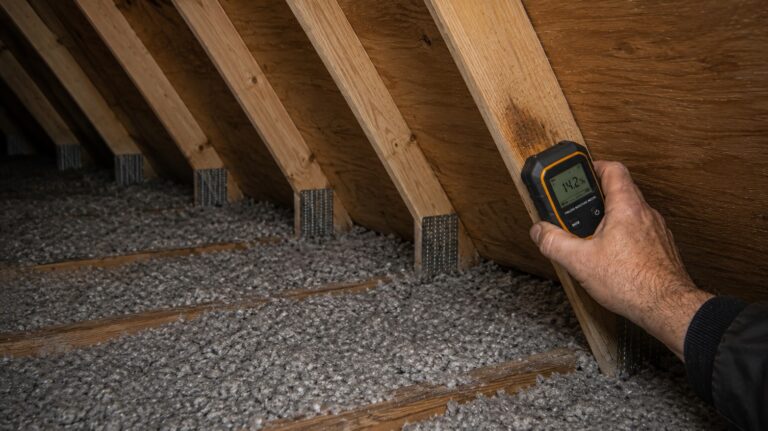
If the surface looks dry but still seems suspicious, use a moisture meter on nearby wood trim, stored items, or flooring materials, and use a hygrometer to compare humidity near the floor with the rest of the basement. Concrete readings can be harder to interpret, so focus on patterns rather than treating one meter reading as final proof.
How to Check for Surface Moisture Signs
Surface signs are the first clues most homeowners notice, but they should be interpreted by pattern. A damp patch that appears once after a spill is very different from a dark area that returns after every storm, follows a crack, or appears with white mineral residue.
Look for Darkened or Discolored Concrete
One of the most common surface indicators is uneven coloration on the basement floor. Concrete often darkens when it absorbs moisture, but the pattern of discoloration provides important clues.
Pay attention to:
- Isolated dark patches that return in the same location
- Gradual spreading of damp areas over time
- Irregular moisture patterns rather than uniform dampness
Localized and recurring dark spots often suggest moisture entering from below the slab rather than surface humidity.
Identify Efflorescence (White Mineral Deposits)
Efflorescence appears as a white, chalky residue on concrete surfaces. It forms when water moves through concrete and leaves behind mineral deposits as it evaporates.
During inspection, check for:
- White streaks or powder near cracks or edges
- Repeated buildup in the same locations
- Areas where moisture and white residue appear together
Efflorescence is not mold. It usually means moisture has moved through concrete or masonry and left minerals behind as the surface dried.
Check for Musty Odors Near the Floor
Odor is an important but often overlooked inspection clue. Moisture near the floor, under stored items, or in nearby porous materials can create persistent musty smells, even when visible water is minimal.
Look for:
- Odors strongest near floor level rather than upper walls
- Smells that become more noticeable after rain
- Persistent damp odor in specific zones of the basement
Odors often indicate long-term moisture conditions that may not be immediately visible.
Inspect Moisture Around Stored Items
Basements often contain stored materials, which can unintentionally reveal hidden moisture problems.
Move a few items away from the wall and lift rugs or boxes instead of only checking the visible edges.
Check beneath and around:
- Cardboard boxes
- Plastic containers
- Furniture placed directly on the floor
- Carpets or rugs
Signs such as damp bottoms, warping, or rust on metal items may indicate ongoing moisture exposure from the floor.
How to Inspect Cracks and Structural Weak Points
Basement floor moisture rarely appears randomly. Instead, it typically enters through structural weak points such as cracks, joints, and penetrations in the slab. A careful inspection of these areas is essential for understanding how moisture is entering the basement.
Examine Floor Cracks Closely
Cracks in the basement floor are one of the most common pathways for water intrusion. Even small, hairline cracks can allow moisture to pass through when conditions beneath the foundation create pressure.
During inspection, look for:
- Moisture forming directly along crack lines
- Dark staining following the shape of the crack
- Cracks that become wet after rainfall
- Expansion or widening of existing cracks over time
Cracks that consistently show moisture activity are strong indicators of active seepage conditions.
Inspect the Floor–Wall Joint (Cove Joint)
The joint where the basement wall meets the floor is a critical inspection area. This location is commonly called the cove joint, and it can show moisture when pressure builds beneath or around the foundation.
Check for:
- Dampness along the basement perimeter
- Water beads forming at the wall-floor connection
- Efflorescence along the joint
- Dark staining that follows the perimeter line
Moisture along the cove joint often indicates that water pressure is affecting the foundation perimeter.
Check Around Pipes, Drains, and Penetrations
Any place where plumbing, drains, or mechanical systems pass through the basement floor deserves close attention. These penetrations can create weak points where moisture enters or collects.
Inspect around:
- Floor drains
- Sump pump pits
- Plumbing penetrations
- Utility openings
Moisture in these locations may come from floor seepage, plumbing leaks, or drainage problems, so context is important.
Look for Low Spots and Uneven Areas
Low spots in a basement floor can collect water even if the source is elsewhere. During inspection, note areas where moisture consistently pools or dries slowly.
Low spots may indicate:
- Uneven slab settlement
- Poor floor drainage
- Water movement from another part of the basement
- Recurring surface accumulation
Identifying low spots helps distinguish where water collects from where water actually enters.
How to Evaluate Moisture Patterns and Behavior
The most useful basement floor inspection does not rely on a single observation. How damp areas behave over time often reveals more than the first visible sign.
Identify Recurring Moisture Locations
Recurring moisture in the same location is one of the strongest indicators of an ongoing problem. Even if the area dries between events, repeated dampness suggests the source has not been resolved.
Mark or photograph:
- The location of damp spots
- The size of wet areas
- The date and weather conditions
- How long the area takes to dry
This simple tracking can help reveal whether the problem is seasonal, storm-related, or constant.
Compare Moisture With Weather Events
Basement floor moisture that appears after heavy rain, snowmelt, or prolonged wet weather often points to exterior water pressure or drainage-related problems.
Pay attention to:
- Moisture after storms
- Wetness after snowmelt
- Increased dampness during humid seasons
- Dry conditions during extended rain-free periods
Weather-based comparison helps narrow down whether the source is external water pressure or an indoor moisture condition.
Evaluate Whether Moisture Is Spreading
Moisture that spreads over time should be taken more seriously than a stable, isolated damp patch. Expanding moisture may indicate worsening seepage, drainage failure, or increasing pressure beneath the slab.
Signs of spreading include:
- Larger damp areas after each event
- New wet spots appearing nearby
- Moisture moving from cracks toward open floor areas
- Stored items becoming damp in more than one location
Spreading moisture suggests that the issue is developing rather than remaining isolated.
How to Identify Hidden or Recurring Moisture
Not all basement floor moisture is visible during inspection. Some signs appear indirectly through stored materials, odors, or changes in nearby surfaces.
Look for Subtle Material Changes
Moisture problems may show up in materials near the floor before they are obvious on the slab itself.
Look for:
- Swollen baseboards
- Rust on metal shelving or tools
- Warped flooring materials
- Damp insulation or wall materials near the floor
These clues can indicate that moisture is affecting the basement environment even when the floor looks mostly dry.
Rule Out Common False Alarms
Before assuming the slab is leaking, check for simple explanations that can mimic floor moisture.
- Recent mopping, spills, or tracked-in rainwater
- Condensation under plastic bins, rubber mats, or rugs
- A leaking water heater, washing machine, sink, or condensate line nearby
- A floor drain backing up or holding moisture around the grate
If the same area becomes damp again after these sources are ruled out, the inspection finding is more likely to reflect a floor or foundation moisture problem.
Safety note: Do not walk through standing water if electrical cords, outlets, appliances, or the electrical panel may be affected. If water may be from sewage, drain backup, or flooding, avoid contact and get professional help before inspecting further.
How to Assess the Severity of Basement Moisture Problems
After completing a full inspection, the next step is determining how serious the moisture issue is. Severity is not defined by a single wet spot but by frequency, spread, and impact on materials and structure.
Low Severity Conditions
Low severity issues are typically early-stage or minor moisture problems.
Characteristics include:
- Small, isolated damp spots
- Slow drying areas
- No visible structural damage
- No strong odor or material impact
Mark the location, photograph it, and recheck it after the next heavy rain. If it dries fully and does not return, it may be a minor or isolated condition.
Moderate Severity Conditions
Moderate issues indicate recurring or developing moisture problems that require attention.
Characteristics include:
- Repeated moisture in the same locations
- Visible efflorescence on concrete
- Crack-related dampness
- Noticeable musty odors
At this stage, document the timing, location, and size of each damp area so you can tell whether the pattern is stable, spreading, or tied to storms.
High Severity Conditions
High severity moisture problems indicate active and persistent water intrusion.
Characteristics include:
- Standing water or pooling
- Multiple affected areas across the floor
- Active cracks showing moisture
- Persistent humidity and odor issues
- Damage to stored materials or flooring
These conditions often require more advanced solutions beyond simple surface-level fixes.
If inspection points to repeated seepage, pooling, or pressure-related moisture, the next step is usually understanding broader basement waterproofing and water control options rather than treating the damp spot alone.
When Basement Floor Moisture Needs Further Evaluation
A basement floor moisture problem needs further evaluation when dampness returns after every storm, spreads beyond the original area, appears along active cracks or the floor–wall joint, remains during dry weather, or begins damaging stored items and flooring materials.
These patterns suggest the issue is no longer a simple surface observation. At that point, the inspection should shift from watching a damp spot to identifying the source of water entry and deciding whether drainage, waterproofing, or professional evaluation is needed.
Frequently Asked Questions About How to Inspect Basement Floors for Moisture Problems
How often should I inspect my basement floor for moisture?
Inspect the floor seasonally, after heavy rain or snowmelt, and any time stored items, rugs, or floor coatings show dampness. If you have seen moisture before, photograph the same areas each time so you can compare changes.
What is the most important thing to look for during inspection?
The most important clue is repeat behavior. Moisture that returns in the same location, follows a crack, appears along the floor–wall joint, or shows up after storms is more significant than one isolated damp spot.
Can a basement floor look dry but still have moisture problems?
Yes. Moisture may be hidden under boxes, rugs, plastic bins, floor coatings, or stored furniture. Musty odor, efflorescence, rust on metal items, or damp material bottoms can reveal moisture even when the exposed concrete looks dry.
Should I use a moisture meter on a basement floor?
A moisture meter can help when checking wood trim, flooring materials, or stored items near the floor, but concrete readings can be harder to interpret. Use the meter as one clue and compare it with location, timing, visible signs, and whether moisture returns after rain.
Conclusion
The most useful basement floor inspection is not a one-time glance at a damp spot. It compares surface signs, structural weak points, timing, and repeat behavior.
If moisture returns in the same location, follows cracks or the floor–wall joint, appears after storms, or begins affecting stored items, the inspection has identified a pattern that should be addressed instead of ignored.
Key Takeaways
- Inspect the entire floor, not just the obvious damp spot
- Pay closest attention to cracks, the floor–wall joint, drains, pipe penetrations, and low spots
- Track whether damp areas return after rain, spread over time, or dry slowly
- Check under stored items, rugs, plastic bins, and furniture for hidden moisture clues
- Rule out spills, condensation, nearby appliance leaks, and drain backups before assuming the slab is leaking
- Standing water, spreading moisture, active cracks, or damaged materials mean the problem needs further evaluation

3 Comments
Comments are closed.