How to Prevent Condensation in HVAC Ducts (Practical Steps That Actually Work)
Condensation in HVAC ducts is a common problem, especially in homes with high humidity or ductwork located in unconditioned spaces. While it often starts as light “sweating” on ducts, it can quickly lead to damp insulation, musty odors, and even long-term moisture damage if the underlying conditions are not addressed.
The key to stopping duct condensation is not simply wiping away moisture or reacting to symptoms. Condensation forms when humid air reaches duct surfaces cold enough for moisture to collect. The most effective prevention steps are lowering humidity, insulating exposed duct surfaces, sealing air leaks, improving airflow, and correcting attic or crawl-space conditions around the ducts.
If you are seeing early warning signs like damp vents or sweating ducts, you may want to review signs of moisture in HVAC ducts. If you have already confirmed moisture is present, this guide focuses on how to stop it from returning.
Why Preventing Duct Condensation Matters
Light duct sweating may not seem urgent, but repeated moisture can dampen insulation, stain nearby materials, and create conditions where odors or mold concerns become harder to control.
Common early signs include water droplets on ducts, damp insulation, cool or damp areas near vents, and brief musty odors when the system runs. If those conditions continue, nearby ceilings, walls, insulation, and framing can begin absorbing moisture.
Prevention matters because duct condensation is easier to stop before surrounding materials stay damp. Once insulation or nearby building materials absorb moisture, the problem can shift from simple condensation control to drying, repair, or mold prevention.
If you are unsure what is causing condensation in your system, this guide on why HVAC ducts develop condensation explains the underlying factors in more detail.
Control Humidity to Reduce Condensation
Humidity is one of the most important factors in condensation because moist air is more likely to reach saturation when it contacts cold duct surfaces. Lowering humidity inside the home and in areas around ductwork reduces the amount of moisture available to collect on the ducts.
Manage Indoor Humidity Levels
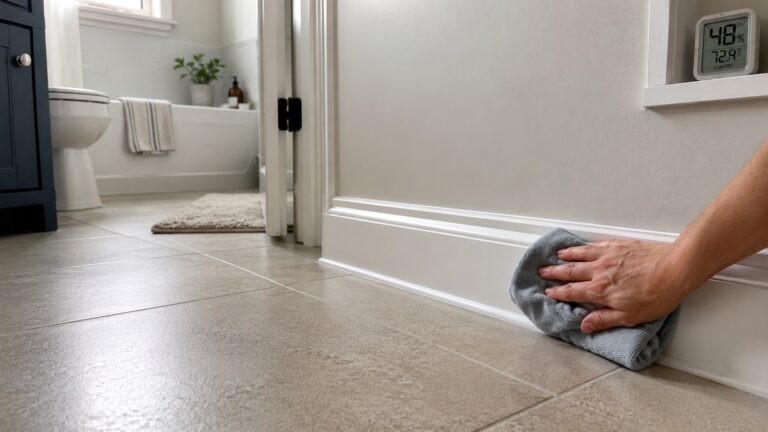
Maintaining moderate indoor humidity is one of the most effective ways to prevent duct condensation. As a practical target, try to keep indoor relative humidity near 30% to 50% when possible, and pay close attention when readings stay above the mid-50% range in areas where ductwork runs.
Steps to manage indoor humidity include:
- Using dehumidifiers in damp areas such as basements
- Running exhaust fans in bathrooms and kitchens
- Avoiding excess moisture buildup from daily activities
- Monitoring humidity levels with simple devices
Tracking humidity over time is more useful than checking it once. If humidity regularly increases when the HVAC system runs, it may indicate conditions that support condensation.
If you are not sure whether humidity is part of the problem, start by measuring it in the rooms, attic, basement, or crawl space near the duct runs. This guide on how to test indoor humidity levels explains where and how to check readings.
Reduce Humidity in Problem Areas
Some areas of the home are more prone to moisture buildup than others. Focusing on these areas can improve overall conditions around ductwork.
Common problem areas include:
- Basements with limited airflow
- Crawl spaces with ground moisture
- Attics with poor ventilation
Because ductwork often runs through these spaces, reducing humidity there lowers the amount of moisture available to collect on cold duct surfaces.
Improve Duct Insulation to Prevent Surface Condensation
Insulation plays a critical role in preventing condensation because it acts as a barrier between cold duct surfaces and warm, humid air. When insulation is effective, it reduces the temperature difference at the duct surface, making condensation much less likely to form.
If insulation is missing, damaged, or no longer performing properly, even moderate humidity conditions can lead to moisture buildup.
Do not simply wrap new insulation over wet, dirty, or moldy duct insulation. Damp insulation should be dried, removed, or replaced as appropriate before the duct is re-insulated, otherwise moisture can be trapped against the duct surface.
Why Insulation Matters for Condensation Control
Cold air moving through ducts lowers the temperature of the duct surface. Without insulation, this surface becomes exposed to the surrounding air, allowing moisture to condense directly on it.
Proper insulation helps by:
- Reducing the temperature difference between the duct and surrounding air
- Preventing humid air from contacting cold metal surfaces
- Slowing down temperature changes that trigger condensation
For prevention, the insulation must be continuous, dry, and sealed well enough that humid surrounding air cannot easily reach the cold duct surface underneath.
Signs Insulation May Not Be Effective
Before improving insulation, it is important to recognize when it is no longer performing as intended. Common warning signs include:
- Condensation forming on insulated duct surfaces
- Insulation that appears compressed or uneven
- Damp or cool insulation that does not dry quickly
- Visible gaps where duct surfaces are exposed
These signs suggest that insulation is not adequately protecting the duct system from surrounding conditions.
If you are unsure whether insulation issues are contributing to condensation, this inspection guide on how to inspect HVAC ductwork for moisture damage can help you evaluate duct conditions more closely.
Maintaining Insulation Effectiveness
Preventing condensation often involves maintaining insulation rather than completely replacing it. Key considerations include:
- Ensuring insulation remains evenly distributed along duct runs
- Avoiding compression or displacement of insulation materials
- Keeping insulation dry so it retains its insulating properties
Once insulation becomes saturated with moisture, it may no longer function effectively, which can allow condensation to return even if other conditions improve.
Seal Air Leaks to Reduce Moisture Exposure
Air leaks in ductwork can significantly increase the likelihood of condensation. Even small gaps or openings allow humid air to enter the system or expose cold air to surrounding spaces.
By reducing air leakage, you limit the interaction between humid air and cold duct surfaces. Duct mastic or HVAC-rated foil tape is usually more appropriate than ordinary cloth duct tape, which can loosen as temperature and humidity change.
How Air Leaks Contribute to Condensation
When ducts are not properly sealed, several things can happen:
- Humid air enters the duct system through gaps or joints
- Conditioned air escapes into unconditioned spaces
- Temperature differences become more extreme in certain areas
- Localized condensation zones develop around leaks
These effects increase the chances of condensation forming, especially in areas where ducts pass through hot or humid environments.
Common Locations for Air Leaks
Air leaks often occur at connection points where duct sections meet or where components are attached. Common areas include:
- Duct seams and joints
- Connections between ducts and vents
- Areas where ducts pass through walls or ceilings
- Transitions between different duct materials
These areas matter because leaks often form at joints, boots, collars, and transitions before they appear along straight duct runs.
Why Sealing Helps Prevent Recurring Moisture
Reducing air leaks helps stabilize airflow and temperature conditions within the duct system. This makes it less likely for cold surfaces to come into direct contact with humid air.
Sealing also helps prevent moisture from being drawn into the system from surrounding spaces, which is especially important in attics and crawl spaces.
If condensation has already been occurring, reducing air leaks can help prevent it from returning after conditions improve. However, if moisture persists even after addressing leaks, it may indicate that multiple factors are contributing to the problem. This is explored further in why HVAC ducts stay damp.
If ducts are hard to reach, damaged, internally wet, or located near electrical components, stop at visual inspection and have the system evaluated professionally instead of opening or disturbing the ductwork.
Improve Airflow and System Balance
Airflow plays a major role in preventing condensation. When air moves evenly through the duct system, temperatures remain more stable, reducing the chance of localized cold spots where moisture can form.
When airflow is restricted or uneven, some duct sections may become colder than others, increasing the likelihood of condensation in those areas.
Keep Vents Open and Unobstructed
Closing or blocking vents can disrupt airflow and create pressure imbalances within the system. This often leads to uneven cooling, which increases condensation risk in certain duct sections.
To maintain proper airflow:
- Keep supply and return vents open whenever possible
- Avoid placing furniture directly over vents
- Ensure airflow is consistent across different rooms
Balanced airflow helps maintain more consistent duct temperatures, reducing the conditions that allow condensation to form.
Replace Dirty or Clogged Air Filters
Air filters that are clogged with dust or debris restrict airflow throughout the system. This can cause ducts to become colder than intended, increasing condensation risk.
A clean filter helps keep air moving across the coil and through the duct system, which reduces cold spots that can contribute to duct sweating. Replacing filters on a consistent schedule is one of the simplest ways to support condensation prevention.
Avoid Airflow Imbalances Between Rooms
Uneven airflow distribution can cause some areas of the duct system to cool more than others. These colder sections are more likely to develop condensation, especially when exposed to humid air.
Signs of airflow imbalance include:
- Rooms that feel significantly cooler or warmer than others
- Uneven airflow strength from vents
- Localized humidity differences
Addressing these imbalances helps create more consistent conditions throughout the duct system.
Manage Temperature Differences Around Ducts
Condensation forms when there is a large temperature difference between duct surfaces and the surrounding air. Reducing this difference is one of the most effective ways to prevent moisture from forming.
Limit Exposure to Extreme Heat or Humidity
Ducts located in hot or humid environments are more likely to develop condensation. While it may not always be possible to fully control these conditions, reducing extreme exposure can help.
Practical approaches include:
- Improving ventilation in attics and crawl spaces
- Reducing heat buildup in enclosed areas
- Minimizing sources of excess moisture near duct runs
The goal is not to make an attic or crawl space perfect; it is to reduce the temperature and humidity gap enough that duct surfaces are less likely to reach dew-point conditions.
Reduce Rapid Temperature Changes
Sudden temperature shifts can cause condensation to form quickly. For example, when an HVAC system turns on after being off for a long period, cold air entering warm ducts can trigger immediate moisture formation.
Maintaining more consistent system operation helps reduce these sudden changes and limits condensation cycles.
Prevent Condensation in Attics and Crawl Spaces
Attics and crawl spaces are the most common locations for duct condensation problems. These areas often combine high temperatures, high humidity, and limited airflow—creating ideal conditions for moisture to form.
Attic Duct Prevention Strategies
In attics, the primary goal is to reduce the temperature and humidity difference between ducts and the surrounding air.
Key strategies include:
- Ensuring ducts are properly insulated
- Improving attic ventilation to reduce heat buildup
- Limiting the amount of humid air entering the attic
Because attic temperatures can become extreme, insulation gaps, damaged duct wrap, and poor ventilation can make condensation much worse in specific duct runs.
Crawl Space Duct Prevention Strategies
Crawl spaces often contain moisture from the ground or surrounding environment. This moisture can increase humidity levels around ductwork, making condensation more likely.
To reduce this risk:
- Keep ground moisture controlled with proper vapor protection where applicable
- Keep duct insulation dry, intact, and continuous
- Monitor crawl-space humidity during humid weather
Because ducts in crawl spaces are exposed to moisture from below as well as surrounding air, controlling conditions in this area is especially important.
Basement Duct Considerations
Basements can also contribute to condensation problems, particularly when humidity levels are elevated. Even if ducts are visible and accessible, they can still be affected by damp air conditions.
Preventive measures include:
- Using dehumidifiers to control moisture levels
- Maintaining airflow within the space
- Monitoring humidity patterns over time
If basement ducts sweat mainly during humid weather, track humidity near the duct runs before and after using a dehumidifier so you can confirm whether moisture control is actually improving the problem.
When Prevention Requires Professional Help
If condensation continues after humidity, insulation, airflow, and obvious air leaks have been addressed, the issue may involve duct design, system sizing, hidden moisture sources, or pressure imbalances that require professional evaluation.
Signs That Basic Prevention Is Not Enough
Consider seeking professional help if you notice:
- Condensation continues despite improving humidity and airflow
- Insulation appears heavily damaged or remains damp
- Water stains or structural damage are developing
- Moisture appears in multiple areas of the duct system
These signs suggest that the issue may involve deeper system design problems, hidden moisture sources, or conditions that cannot be fully addressed through simple adjustments.
What Professionals Can Evaluate
HVAC and moisture specialists can assess conditions that are difficult to evaluate through basic observation, including:
- Internal duct conditions
- Airflow balance and system performance
- Insulation effectiveness throughout the system
- Hidden moisture accumulation
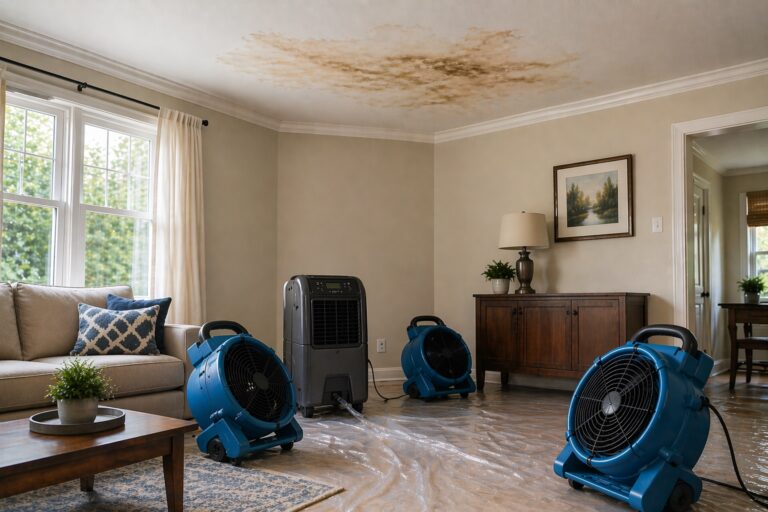
If condensation has left stains, damp insulation, or moisture near ceilings and vents, a more detailed duct inspection can help determine whether the issue is still active or whether surrounding materials have already absorbed moisture.
If moisture has already affected materials, additional steps such as drying may be necessary. You can learn more in this guide on how to dry HVAC ducts after moisture exposure.
Frequently Asked Questions About How to Prevent Condensation in HVAC Ducts
Can I completely stop condensation in HVAC ducts?
In many homes, duct condensation can be greatly reduced or stopped by lowering humidity, keeping duct insulation dry and continuous, sealing duct leaks, and improving airflow. If condensation keeps returning on the same duct run, the issue may involve duct location, system design, or conditions in the attic or crawl space.
What is the most effective way to prevent duct condensation?
The most effective approach is usually to keep humid air away from cold duct surfaces. In practice, that means controlling humidity, insulating exposed ductwork, sealing joints and boots, and correcting airflow restrictions that create cold spots.
Do I need to replace duct insulation to stop condensation?
Not always. If insulation is dry, intact, and only slightly displaced, it may only need correction. If it is compressed, torn, moldy, or repeatedly damp, it may need replacement after the moisture source is corrected.
Will a dehumidifier solve duct condensation problems?
A dehumidifier can help when high humidity is the main driver, especially in basements or enclosed areas near ductwork. It will not fully solve condensation caused by missing insulation, leaky ducts, restricted airflow, or wet crawl-space conditions.
Why does condensation keep coming back even after I address it?
Condensation often returns when only one contributing factor is addressed. Multiple conditions—such as humidity, insulation, airflow, leaky joints, and attic or crawl-space moisture—usually need to be managed together to prevent recurrence.
Is condensation worse in certain parts of the home?
Yes. Ducts in attics, crawl spaces, basements, garages, and other unconditioned areas are more prone to condensation because surrounding air is often warmer, more humid, or less controlled than the air inside the ductwork.
Final Prevention Checklist
To prevent condensation in HVAC ducts, focus on the conditions that allow moisture to form: humid air, cold duct surfaces, air leaks, poor airflow, and damp attic or crawl-space environments.
- Keep indoor humidity in a moderate range and measure it near problem duct runs
- Keep duct insulation dry, continuous, and properly sealed
- Seal duct joints, boots, collars, and transitions with appropriate HVAC sealing materials
- Maintain airflow by keeping vents open, filters clean, and returns unobstructed
- Reduce excess heat, humidity, and ground moisture around attic, crawl-space, or basement ductwork
- Get professional help if condensation keeps returning after basic prevention steps
For a broader prevention framework, see this guide on how to prevent recurring moisture damage. It explains how to stop moisture problems from returning after the first warning signs appear.