
Does Insurance Cover Basement Flood Damage? What Homeowners Need to Know
Insurance may cover basement flood damage in some situations, but coverage usually depends on where the water came from. A basement flooded by a burst pipe is handled very differently from a basement flooded by groundwater, storm runoff, sewer backup, sump pump overflow, or long-term foundation seepage.
In general, standard homeowners insurance is more likely to apply when the water came from a sudden indoor source. Outside floodwater usually requires separate flood insurance. Sewer backup, drain backup, and sump pump overflow often require a water backup or sump pump endorsement. Groundwater seepage and repeated foundation dampness are commonly excluded.
This guide explains the main coverage scenarios, what to document before cleanup, and why the insurance question should be connected to waterproofing basements and controlling water intrusion if the basement keeps taking on water.
Quick Coverage Guide: Match the Claim to the Water Source
Basement water claims usually rise or fall on the source of the water. Use this as a starting point before calling your insurer:
| Basement water source | Common coverage path | What to check first |
|---|---|---|
| Burst pipe, water heater rupture, or sudden appliance line failure | May fall under homeowners insurance if sudden and accidental | Cause of failure, maintenance history, and emergency mitigation steps |
| Surface flooding, storm runoff, or rising outside water | Usually requires separate flood insurance | Whether you have flood coverage and what basement limits apply |
| Groundwater seepage through walls, floor cracks, or cove joints | Commonly excluded under standard homeowners insurance | Drainage, hydrostatic pressure, foundation cracks, and waterproofing problems |
| Sewer backup, floor drain backup, or sump pump overflow | Often requires a water backup, sewer backup, or sump pump endorsement | Whether the endorsement exists and what dollar limit applies |
| Long-term dampness, repeated moisture, or recurring mold | Often treated as maintenance or gradual damage | History of prior moisture, repairs, inspections, and prevention records |
Policy language varies by insurer, state, endorsement, and claim history, so use this as general guidance rather than a coverage guarantee. Always confirm your specific policy language with your insurer or agent.
Homeowners insurance may apply to sudden indoor water damage
Standard homeowners insurance is more likely to help when basement water damage comes from a sudden indoor source. Examples may include a pipe that bursts in the basement, a water heater that suddenly ruptures, or an appliance supply line that fails and releases water into the room.
The insurer will still review whether the system was maintained, how quickly the damage was discovered, and whether the homeowner took reasonable steps to prevent further damage. This is different from rainwater or groundwater entering through basement walls or floors, even when the visible damage looks similar.
Flood insurance may be needed for outside water
If water enters from outside at ground level, standard homeowners insurance usually does not cover the damage. This includes many situations homeowners commonly describe as basement flooding, such as surface runoff, rising groundwater, overflowing streams, stormwater, or floodwater entering through doors, windows, foundation openings, or basement window wells.
These events usually require a separate flood insurance policy. Having homeowners insurance does not automatically mean the basement is protected from outside floodwater, and flood insurance itself may limit coverage for finished basement improvements and personal property.
Water backup coverage may be needed for drains and sump pumps
Basement water can also come from a sewer line, floor drain, or sump system rather than from outside floodwater or a burst pipe.
These losses often require a water backup, sewer backup, or sump pump endorsement. Without the right endorsement, the claim may be denied or limited even if the water damage is severe.
For example, if a sump pump fails during heavy rain and water backs up into the finished basement, the claim may depend on whether the homeowner purchased sump pump backup coverage. If sewage backs up through a floor drain, the claim may depend on sewer backup coverage. These are not always included automatically in a standard homeowners policy.
Why “Basement Flooding” Means Different Things to Insurance Companies
The phrase “basement flooding” is useful for describing what the homeowner sees, but it is not specific enough for insurance coverage. The insurer wants to know how the water entered, where it came from, and whether that water source is covered.
A few inches of water on the basement floor could come from several different sources:
- A burst pipe
- A failed water heater
- A washing machine leak
- Sump pump failure
- Sewer or drain backup
- Stormwater entering through a window well
- Groundwater seepage through foundation walls
- Water coming up through basement floor cracks
- Hydrostatic pressure around the foundation
- Surface flooding from heavy rain or overflowing waterways
Each source can create the same visible damage, but insurance may classify each one differently.
Internal water is different from outside water
Internal water usually means water that starts inside the home, such as a burst pipe, water heater rupture, plumbing failure, or appliance supply line leak. These events may fall under homeowners insurance if they are sudden and accidental.
Outside water usually means water that enters from outside the structure. This includes floodwater, groundwater, rain runoff, and water that enters through foundation walls, basement floors, window wells, or exterior openings. Standard homeowners insurance usually excludes many of these sources.
This distinction is central to basement claims. A finished basement damaged by an indoor plumbing failure may be evaluated differently from a finished basement damaged by rainwater entering through a foundation crack.
Floodwater is different from seepage
Floodwater usually refers to outside water that rises, flows, or accumulates and then enters the home. Seepage is often slower and may involve water moving through foundation materials, floor cracks, cove joints, or porous masonry.
Both can leave a basement wet, but they are not always handled the same way. Floodwater may require flood insurance. Seepage may be excluded as a maintenance, groundwater, or foundation water intrusion issue.
Seepage can be especially frustrating because it may happen repeatedly after heavy rain. A homeowner may dry the basement several times, only to see damp spots, water stains, or puddles return. When this happens, the issue may connect more to drainage, foundation pressure, and hydrostatic pressure causing basement leaks than to a one-time insured loss.
Sewer backup is different from floodwater
Sewer or drain backup is another separate category. It may happen when wastewater or stormwater backs up through a basement floor drain, utility sink, toilet, shower drain, or sewer line.
This is not the same as river flooding or groundwater seepage. It may require sewer backup or water backup coverage. It also creates a different cleanup concern because the water may be contaminated.
If sewage or drain water enters the basement, avoid direct contact, keep people and pets away, and contact professionals quickly. Contaminated water is not the same as clean water from a burst supply pipe.
When Homeowners Insurance May Cover Basement Water Damage
Homeowners insurance is more likely to cover basement water damage when the water comes from a sudden and accidental source inside the home. The key idea is that the event must usually be unexpected, not gradual, not caused by neglected maintenance, and not excluded by the policy.
Even when the source appears covered, the insurer may still review how the damage happened, how quickly the homeowner responded, whether the affected materials were dried promptly, and whether there are signs of old or repeated moisture problems.
Burst pipe in the basement
A burst pipe is one of the stronger potential coverage scenarios. If a pressurized water line suddenly breaks and releases water into the basement, the resulting damage to drywall, flooring, trim, insulation, and nearby belongings may be covered, depending on the policy.
The claim is stronger when the burst was sudden, the homeowner shut off the water quickly, the area was documented, and emergency drying began before moisture spread into hidden materials.
The claim may become harder if the pipe had been leaking slowly for a long time, showed obvious deterioration, or had been repaired repeatedly without solving the problem. In that case, the insurer may treat part of the damage as gradual or maintenance-related.
Water heater rupture or sudden appliance failure
A water heater, washing machine, refrigerator water line, or other appliance can release a large amount of water into a basement. If the failure is sudden and accidental, homeowners insurance may cover the resulting water damage.
For example, a water heater tank that suddenly ruptures and floods a utility room may create a different insurance situation than a water heater that has been slowly leaking around the base for months. A sudden rupture may be covered; long-term leakage is more likely to be disputed.
The same logic applies to washing machines and appliance supply lines. A sudden hose failure may be treated differently from a slow drip that damaged flooring over time.
Covered storm-related interior damage
Some storm-related water damage may be covered if the storm first causes covered damage to the home. For example, if wind damages part of the structure and rain enters through that new opening, the resulting interior water damage may be evaluated under the homeowners policy.
This does not mean all rain-related basement flooding is covered. Rainwater that enters through the foundation, seeps through basement walls, backs up through drainage systems, or flows into window wells is usually treated differently from rain entering through a covered structural opening.
If the claim involves a leak rather than outside flooding, compare the situation with whether insurance covers water damage from leaks, because leak source and timing often control the coverage decision.
When Standard Homeowners Insurance Usually Does Not Cover Basement Flooding
Standard homeowners insurance usually does not cover basement water damage when the source is outside floodwater, groundwater, surface runoff, seepage, or long-term dampness. These are some of the most common causes of basement water problems, but they are also some of the most common coverage exclusions.
Rainwater entering through foundation walls
If rainwater enters through basement walls after a storm, the insurer may classify the problem as seepage, groundwater, or foundation water intrusion. Standard homeowners insurance often excludes this type of damage.
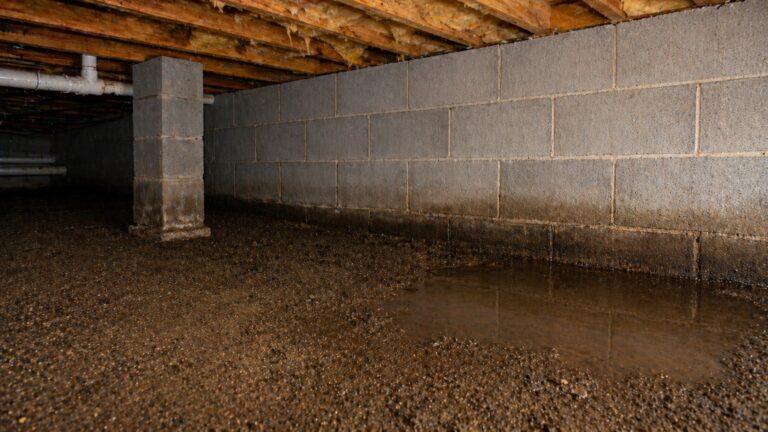
Common signs include damp masonry, water stains along foundation walls, moisture at the cove joint where the wall meets the floor, peeling paint, efflorescence, and puddles that appear after heavy rain. These conditions often point to drainage or waterproofing problems rather than a sudden indoor water loss.
Repeated wall seepage should be addressed as a basement water-control issue. The longer it continues, the greater the risk of mold, material damage, and future claim problems.
Water coming through basement floor cracks
Water that comes up through floor cracks, control joints, or slab openings is often linked to hydrostatic pressure or groundwater below the basement floor. This is usually not treated the same way as a burst pipe.
The damage may appear suddenly during heavy rain, but the source is still often groundwater pressure. Standard homeowners insurance commonly excludes groundwater intrusion and seepage, even when the water enters quickly during a storm.
Basement floor water should be investigated carefully because it may indicate drainage failure, sump pump capacity problems, clogged footing drains, poor grading, or high groundwater around the home.
Surface runoff entering through doors or window wells
Surface runoff can enter a basement through exterior stairwells, walkout doors, window wells, or low foundation openings. This may happen during heavy rain when grading, gutters, downspouts, drains, or window well systems cannot move water away from the foundation fast enough.
Even though the water may enter through a visible opening, it may still be considered outside water or flood-related water rather than covered indoor water damage. Coverage may depend on flood insurance or another policy provision, not the basic homeowners policy.
To reduce repeat risk, homeowners should look beyond cleanup and identify why water collected against the basement opening in the first place. That may involve grading, gutters, downspout extensions, window well covers, exterior drains, or broader basement waterproofing improvements.
Long-term dampness and repeated basement moisture
Basements that stay damp for months or years are usually not insurance problems in the same way sudden pipe failures are. Long-term dampness may come from humidity, condensation, poor ventilation, foundation seepage, drainage problems, or incomplete repairs.
Insurance is generally not designed to pay for ongoing maintenance conditions. If the basement has recurring musty odors, repeated staining, chronic dampness, or mold that returns after cleaning, the insurer may see the problem as gradual and preventable.
For long-term prevention, the better path is to identify the moisture source, correct drainage problems, control humidity, and strengthen the basement water-control system. The parent guide to basement waterproofing and water intrusion control is the stronger resource for that prevention side.
Sump Pump Failure, Sewer Backup, and Water Backup Coverage
Sump pump failure and sewer backup are common basement water scenarios, but they are not always included in standard homeowners insurance. Many homeowners only discover this after a basement water event.
These situations often depend on endorsements. An endorsement is added coverage that modifies the basic policy. In basement water claims, the most relevant endorsements are usually water backup, sewer backup, sump pump overflow, or similar policy additions.
Sump pump failure may require an endorsement
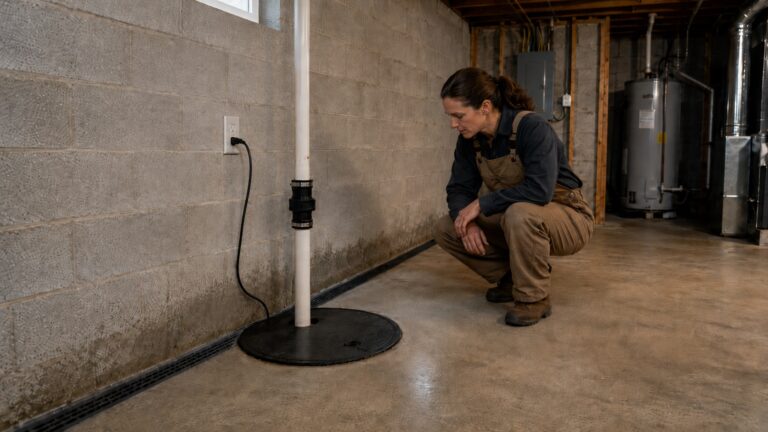
A sump pump is designed to remove water from a sump pit before it rises into the basement. If the pump fails, loses power, becomes overwhelmed, or the discharge line clogs, water can overflow into the basement.
Some homeowners assume this is automatically covered because the sump pump is part of the home. In many policies, sump pump overflow is excluded or limited unless the homeowner purchased specific water backup or sump pump coverage.
This is one reason backup systems matter. A battery backup pump, secondary pump, high-water alarm, and routine maintenance can reduce the risk of a flooded basement. If your basement depends on a sump system, review why sump pump backup systems are important before the next heavy rain event.
Sewer or drain backup may require separate coverage
Sewer backup can happen when wastewater or stormwater moves backward through a basement drain, toilet, shower, utility sink, or sewer line. This can cause serious contamination and should be handled differently from clean water damage.
Standard homeowners insurance may not cover sewer or drain backup unless the policy includes a sewer backup or water backup endorsement. Even when coverage exists, there may be limits.
Because sewage-contaminated water can contain harmful contaminants, homeowners should avoid direct contact and call qualified cleanup help quickly. Do not treat sewage backup like a simple wet carpet problem.
Drain backup is not the same as groundwater seepage
A basement drain backup and groundwater seepage may both leave water on the floor, but they are different problems. A drain backup involves water coming through the plumbing or drainage system. Seepage involves water entering through the foundation, slab, wall-floor joint, or porous materials.
This distinction matters for insurance and for repair. Drain backup may point to plumbing or municipal sewer issues. Seepage may point to exterior drainage, hydrostatic pressure, foundation cracks, or waterproofing failure.
Before filing the claim, document where the water appeared to enter. Photos of the drain, sump pit, floor cracks, foundation wall, window well, or failed appliance can help the insurer classify the loss more accurately.
Policy limits may still apply
Even if you have a water backup endorsement, it may not cover unlimited damage. The endorsement may have a dollar limit, deductible, exclusions, or restrictions on contents and finished materials.
Review the policy before assuming the full cost of cleanup, drying, mold prevention, flooring replacement, drywall repair, and personal property replacement will be covered. Basement water losses can become expensive quickly, especially when finished rooms or stored belongings are affected.
Does Flood Insurance Cover Basement Damage?
Flood insurance may cover some basement damage, but basement coverage is not always as broad as homeowners expect. A separate flood insurance policy is usually needed for outside floodwater, but even then, finished basement materials and personal belongings may have special limits.
This is why homeowners should review flood insurance before a storm, not after water has already entered the basement. A finished basement may contain flooring, drywall, trim, furniture, electronics, storage, mechanical systems, and personal items, but not all of those items are necessarily treated the same way under a flood policy.
Flood insurance is separate from standard homeowners insurance
Standard homeowners insurance usually does not cover floodwater entering from outside the home. If water rises outside and enters through doors, windows, foundation openings, window wells, or basement stairs, a homeowners claim may be denied unless a separate coverage type applies.
Flood insurance is designed for this type of outside water event. It may cover certain building elements and, if contents coverage was purchased, some personal property. However, coverage depends on the policy, the location of the damaged item, and whether the item falls within basement coverage rules.
For flood-specific basement limits, review the policy language and compare it with official National Flood Insurance Program guidance before assuming finished basement items are covered.
If your home has any history of basement water during storms, review flood insurance before the next event. Do not assume that being outside a high-risk flood zone means there is no risk. Heavy rain, poor drainage, and local surface runoff can still create serious basement water damage.
Finished basement improvements may be limited
Flood insurance can be especially limited in finished basements. Flooring, paneling, drywall finishes, built-in features, and finished living-space improvements may not always be covered the way homeowners expect.
For example, a flood policy may treat essential systems differently from finished flooring or basement furniture. A furnace, water heater, electrical panel, or foundation-related building element may fall into a different category than carpet, laminate, entertainment furniture, or stored personal belongings.
This matters because finished basements are often expensive to restore. Even a few inches of water can damage carpet padding, baseboards, drywall, cabinets, doors, trim, insulation, and personal property. Before relying on flood insurance, homeowners should ask exactly what is covered below grade.
Basement contents may need separate attention
Personal belongings in a basement may not be covered the same way as building materials. Stored boxes, furniture, tools, seasonal decorations, electronics, books, clothing, and household supplies may be limited or excluded depending on the policy and the type of insurance involved.
Even when contents coverage exists, documentation matters. Take photos of damaged items before disposal, keep lists of affected belongings, note approximate purchase dates and values when possible, and save receipts for cleanup or replacement.
Basement storage areas are especially vulnerable because items often sit directly on concrete floors. Plastic shelving, sealed bins, and raised storage can reduce future losses even when insurance coverage is limited.
Does Homeowners Insurance Cover Finished Basement Damage?
Homeowners insurance may cover finished basement damage if the water source is covered. The word “finished” does not automatically create coverage, but it can increase the cost of the claim when coverage does apply.
A finished basement can include drywall, flooring, baseboards, doors, insulation, built-in cabinets, lighting, outlets, furniture, and mechanical systems. These materials absorb water differently, so fast documentation and drying are important.
Drywall, flooring, trim, and insulation
If a covered burst pipe floods a finished basement, the policy may help pay for damaged drywall, flooring, baseboards, insulation, and related repairs. However, the insurer may still inspect whether the water source was sudden and accidental.
Finished materials can hide moisture. Drywall may wick water upward, insulation may stay wet behind the wall, and carpet padding can hold water long after the top of the carpet feels only slightly damp. This is why basement water damage should not be judged only by what is visible on the surface.
If the water came from seepage, groundwater, or outside flooding, the same finished materials may not be covered under the homeowners policy. The damage may be real, but the policy may classify the cause differently.
Furniture and personal property
Furniture and personal property may be covered when the basement water event is covered and the policy includes personal property protection. However, coverage can depend on the source of water, policy limits, deductibles, and whether the property was damaged by clean water, contaminated water, floodwater, or long-term moisture.
Items stored directly on the floor are at higher risk. Cardboard boxes, fabric furniture, rugs, books, and electronics can be damaged quickly even when the water level is shallow.
If you need to remove items before an adjuster arrives, photograph them first. Show where they were located, how high the water reached, and what visible damage occurred. Keep a written inventory instead of relying on memory later.
Mechanical systems and utilities
Basements often contain furnaces, boilers, water heaters, electrical panels, sump systems, HVAC equipment, and plumbing components. These systems may be affected by water even if the finished living area looks only mildly damaged.
Do not restart electrical, HVAC, fuel-burning, or mechanical equipment that has been exposed to standing water until it has been inspected by a qualified professional. Basement water damage can create electrical hazards, combustion risks, corrosion, and hidden safety problems.
If utility equipment was damaged, document it separately from flooring and walls. Take photos of the equipment, waterline marks, labels, model numbers, and the surrounding area.
Does Insurance Cover Mold After Basement Flooding?
Insurance coverage for mold after basement flooding usually depends on whether the original water source was covered. Mold after a covered burst pipe may have a stronger coverage argument, while mold after excluded floodwater, seepage, groundwater, humidity, or long-term dampness is much less likely to be covered under a standard homeowners policy.
For the broader mold coverage rules, compare this situation with whether home insurance covers mold damage. Basement mold follows the same basic logic, but basements add extra complications because they are exposed to groundwater, drainage problems, and foundation seepage.
Mold after a covered basement water event
If a covered pipe burst wets basement materials and mold develops before the area is fully dried, the mold may be considered part of the covered loss. The claim is stronger when the homeowner documents the water event, reports the claim quickly, and takes reasonable steps to dry the affected area.
That does not mean mold cleanup is unlimited. Some policies cap mold testing, remediation, removal, or repairs. Others exclude mold except under narrow circumstances. Always ask whether the policy has mold limits or endorsements.
Mold after excluded basement water
If mold grows after groundwater seepage, floodwater, long-term humidity, or repeated dampness, it may be excluded along with the original water source. This is common in basements because mold can develop after recurring moisture that was never fully corrected.
For example, a basement wall that becomes damp every time it rains may eventually grow mold behind finished drywall or baseboards. Even if the mold is serious, the insurer may argue that the cause was long-term seepage rather than a sudden covered loss.
Fast drying reduces mold and claim problems
Fast drying matters whether insurance covers the damage or not. Wet basement materials can support mold growth when moisture remains trapped in drywall, carpet padding, insulation, cabinets, and wood framing.
After a basement water event, focus on safety, documentation, water removal, drying, and source identification. If the water source is not corrected, the same area may flood again and the claim may become harder to support in the future.
What to Do Before Filing a Basement Flood Claim
Your first steps after basement flooding can affect safety, repair costs, mold risk, and the insurance claim. The goal is to protect people first, preserve evidence, and prevent avoidable secondary damage.
Stay safe around electricity and contaminated water
Do not enter standing basement water if outlets, electrical panels, extension cords, appliances, or mechanical equipment may be energized. If there is any electrical risk, stay out and contact emergency services, your utility, or a qualified electrician before entering.
Also avoid direct contact with sewage, drain backup, or muddy floodwater. Contaminated water can create health risks and should be handled by qualified cleanup professionals.
Take photos and videos before cleanup
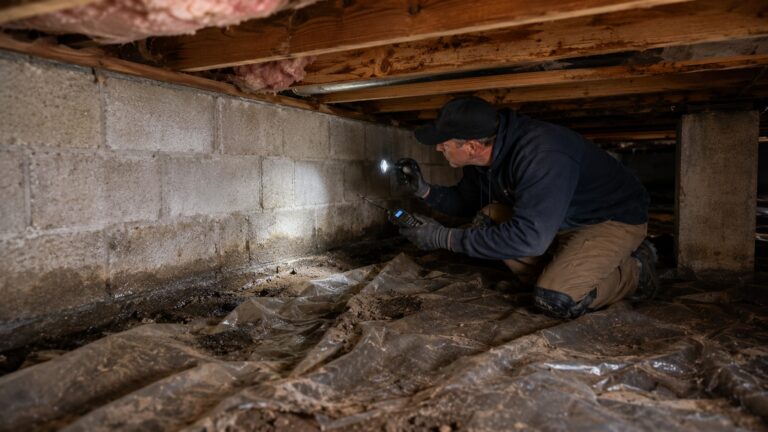
Document the basement before removing materials when it is safe to do so. Take wide photos of each affected room, close photos of waterlines and damaged materials, and detail photos of likely entry points such as floor drains, sump pits, wall-floor joints, foundation cracks, window wells, exterior doors, and failed appliances.
Also photograph damaged flooring, soaked belongings, mechanical equipment, model labels, and any visible waterline marks before disposal or cleanup. A more detailed guide on how to photograph water damage for insurance claims can help organize this step.
Identify the likely water source
Try to determine whether the water came from an indoor source, a drain backup, a sump pump overflow, a foundation wall, a floor crack, a window well, or outside surface water. You do not need to prove everything immediately, but early observations can help the insurer classify the claim.
Look for clues such as water near a failed appliance, water rising from a drain, water stains on foundation walls, a full sump pit, wet window wells, or puddles forming along the wall-floor joint.
Write down the first place you saw water, the time you noticed it, the weather conditions, whether the sump pump was running, and whether any appliance, pipe, drain, or foundation area looked like the starting point.
Contact your insurer quickly
Call your insurer or agent as soon as practical. Ask what type of claim applies, whether your policy includes flood, sewer backup, sump pump overflow, or water backup coverage, and what emergency mitigation is allowed.
If the water is actively damaging the home, do not wait passively while damage worsens. Ask the insurer how to proceed with pumping, drying, cleanup, and professional mitigation while preserving documentation.
For the broader process after documentation, use how to file a water damage insurance claim as the claim-handling guide rather than trying to turn the basement coverage question into the full claims process.
Save receipts and mitigation records
Keep receipts for pumping, water extraction, drying equipment, plumber visits, restoration work, emergency repairs, temporary power, professional inspections, and damaged items. Also keep written notes of dates, times, calls, claim numbers, and instructions from the insurer.
If you need an emergency checklist for the first few hours after damage, refer to what to do immediately after water damage for insurance so the response is organized instead of rushed.
Which Professional to Call Based on the Water Source
Basement flood damage can involve more than visible water on the floor. Water can reach electrical systems, soak into finished materials, contaminate belongings, hide behind walls, and create mold risk if drying is incomplete. The right professional depends on where the water came from.
In some cases, you may need more than one type of contractor. A restoration company may remove water and dry materials, while a plumber fixes a pipe or drain problem, and a basement waterproofing contractor corrects the foundation or drainage issue that allowed water to enter.
Call a restoration company for widespread water damage
A water damage restoration company is usually the right call when water has affected finished basement materials, soaked carpet padding, entered wall cavities, reached insulation, damaged stored items, or spread across multiple rooms.
Restoration professionals can extract water, remove unsalvageable materials, set up drying equipment, document affected areas, and monitor moisture levels. This can be especially helpful when the insurance company needs evidence that emergency mitigation was started promptly.
Professional drying is also important because basements dry slowly. Concrete, framing, drywall, insulation, and flooring systems can hold moisture after the surface water is gone. If wet materials are left in place too long, mold and odor problems can develop.
Call a plumber for pipe, drain, sewer, or appliance problems
If the water came from a burst pipe, failed water heater, leaking appliance, sewer backup, or floor drain backup, a plumber may be needed to identify and repair the source.
A plumber’s report can also help the insurance claim because it may explain whether the water source was a sudden failure, a drain backup, a sewer issue, or a long-term leak. This matters because different causes can fall under different types of coverage.
Do not assume the water source is obvious just because the basement floor is wet. Water can travel across concrete, under flooring, behind walls, and along the wall-floor joint before it becomes visible.
Call a basement waterproofing contractor for seepage or foundation water
If water entered through basement walls, floor cracks, the cove joint, window wells, exterior stairwells, or foundation openings, a basement waterproofing contractor may be needed. These problems often involve drainage, grading, gutters, hydrostatic pressure, sump systems, or foundation waterproofing.
This type of water entry is often not solved by drying alone. If the exterior drainage problem, foundation seepage, or hydrostatic pressure remains, the basement may flood again during the next heavy rain.
For prevention, the next step is usually to identify whether the basement needs drainage improvements, sump pump upgrades, exterior water management, interior drainage, crack repair, or a broader water-control plan. A related guide on how to prevent basement water intrusion can help separate short-term cleanup from long-term prevention.
Call a mold remediation professional if mold appears
If mold appears after basement flooding, especially behind walls, under flooring, on insulation, or across a large area, a mold remediation professional may be needed. Basement mold is often connected to hidden moisture, and surface cleaning may not solve the problem if wet materials remain behind finished surfaces.
Mold can also complicate an insurance claim because coverage usually follows the original water source. Professional documentation may help clarify the extent of damage, the affected materials, and whether hidden moisture remains.
How to Reduce Future Basement Flood Claim Problems
Preventing future basement water problems can also protect future claims. Repeated water damage may look gradual, preventable, or maintenance-related unless the homeowner can show that the source was corrected and the basement was maintained.
Maintain sump pumps before storms
If your basement depends on a sump pump, test it regularly and keep the pit clean. Make sure the float moves freely, the discharge line is clear, and the pump turns on before water reaches the basement floor.
A sump pump should not be ignored until the next storm. Many basement floods happen because the pump lost power, failed mechanically, clogged, or could not keep up with water entering the pit.
Backup systems can also reduce risk. A battery backup pump, water-powered backup pump, high-water alarm, or smart water sensor may help prevent a small sump problem from becoming a finished basement flood.
Improve exterior drainage
Many basement water problems start outside. Gutters that overflow, downspouts that discharge near the foundation, low soil near the house, clogged yard drains, and poorly protected window wells can all direct water toward the basement.
If you notice puddles near the foundation after rain, water stains on basement walls, or recurring dampness along the wall-floor joint, treat the problem as a drainage warning rather than a cosmetic issue.
Address hydrostatic pressure and seepage
If water repeatedly appears after rain, especially along basement walls, floor cracks, or the wall-floor joint, the issue may be hydrostatic pressure or seepage rather than a one-time insured flood. Mopping, painting, or running a fan will not correct the source; the basement may need drainage improvements, sump system evaluation, crack repair, waterproofing measures, or grading corrections.
Use water sensors and document maintenance
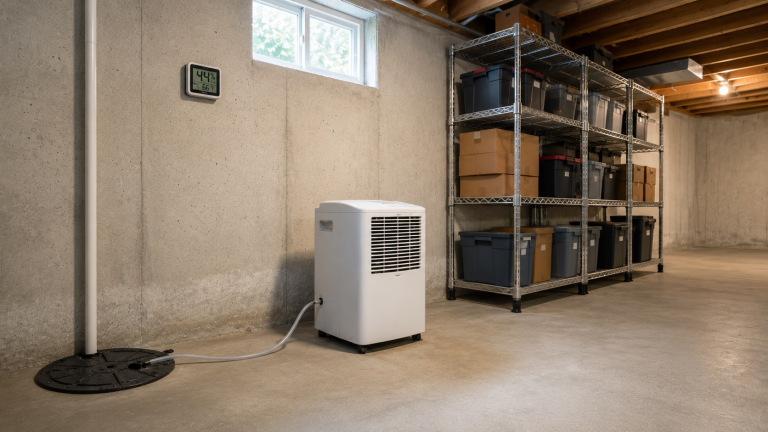
Water sensors, sump alarms, and leak detectors can help catch basement water before it spreads. They are especially useful near sump pits, water heaters, washing machines, floor drains, basement bathrooms, and finished rooms with hidden flooring layers.
Keep records of repairs and maintenance, including sump pump service, plumbing repairs, waterproofing work, drainage improvements, and professional inspections. If a future claim occurs, those records can help show that the basement was maintained and that the damage was not simply ignored over time.
Review coverage before damage happens
The best time to review basement water coverage is before the basement floods. Ask your insurance agent or insurer about flood insurance, sewer backup coverage, sump pump overflow coverage, water backup endorsements, and basement contents limitations.
Do not assume that standard homeowners insurance covers every type of basement water damage. Many homeowners only learn about exclusions after a storm, backup, or sump failure has already caused damage.
Frequently Asked Questions
Does homeowners insurance cover basement flooding from rain?
Usually not if rainwater enters through the foundation, basement floor, window wells, exterior doors, or surface runoff. Standard homeowners insurance often excludes outside floodwater, groundwater, and seepage. If rain damages the structure first and water enters through a covered opening, the claim may be evaluated differently.
Does insurance cover sump pump failure?
Sump pump failure may be covered only if your policy includes the right endorsement, such as water backup or sump pump overflow coverage. It is not always included automatically in a standard homeowners policy.
Does insurance cover sewer backup in a basement?
Sewer backup often requires separate sewer backup or water backup coverage. Without that endorsement, damage from sewage or drain backup may be denied or limited. Because sewer water can be contaminated, professional cleanup is usually recommended.
Does flood insurance cover finished basements?
Flood insurance may cover some basement building elements or essential systems, but finished basement improvements and personal belongings may have limitations. Flooring, finished walls, furniture, electronics, and stored items may not be covered the way homeowners expect. Always check the basement section of the policy.
Does insurance cover water coming through basement floors?
Water coming through basement floors is often linked to groundwater, seepage, or hydrostatic pressure. Standard homeowners insurance commonly excludes these sources. Coverage may be different if the water came from a covered indoor plumbing failure rather than from below the slab.
Does insurance cover groundwater seepage?
Groundwater seepage is usually excluded under standard homeowners insurance. It is often treated as a foundation, drainage, or maintenance-related water intrusion problem rather than a sudden covered loss.
Does insurance cover mold after basement flooding?
Mold coverage depends on whether the original water source was covered. Mold after a covered burst pipe may have a stronger coverage argument. Mold after excluded floodwater, seepage, groundwater, humidity, or long-term dampness is much less likely to be covered.
Should I file a claim if I am not sure where the basement water came from?
You may want to contact your insurer or agent if the damage is significant, involves finished materials, affects mechanical systems, includes contaminated water, or may involve a covered water source. Before filing, document the damage, identify the likely entry point, review your deductible, and ask whether the claim would fall under homeowners coverage, flood insurance, sewer backup, water backup, or sump pump overflow coverage.
Bottom Line on Basement Flood Insurance Coverage
Insurance coverage for basement flood damage depends on the source of the water. A burst pipe in the basement may be handled very differently from groundwater seepage, surface flooding, sewer backup, or sump pump overflow.
Standard homeowners insurance usually does not cover outside floodwater, groundwater, or foundation seepage. Flood insurance is separate. Sewer backup and sump pump overflow often require endorsements. Finished basement damage, personal belongings, mold, and utility equipment may all have different coverage rules.
The safest approach is to document the damage immediately, identify the water source, contact your insurer quickly, and correct the basement water problem before it happens again. Insurance may help with certain losses, but long-term basement protection depends on drainage, waterproofing, sump reliability, moisture monitoring, and fast response after water intrusion.
3 Comments
Comments are closed.