Best Utility Pumps for Basements, Crawl Spaces, and Standing Water
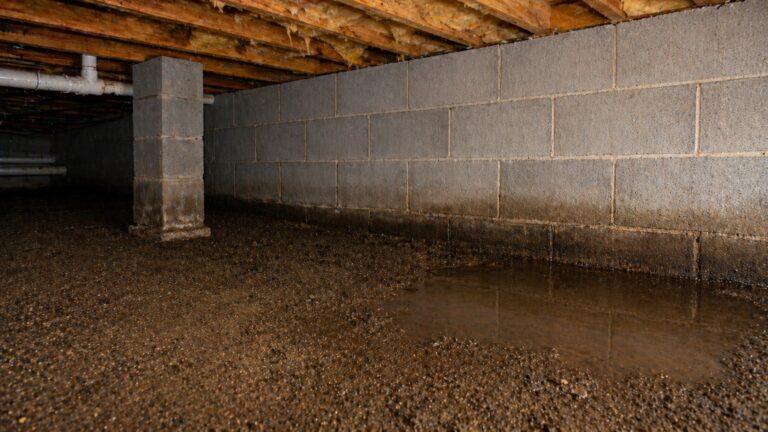
Standing water can spread across a basement floor, collect beneath a crawl space, fill a window well, or remain after an appliance leak. Removing that water quickly is an important first step, but the right pump depends on more than horsepower. Some pumps move deep water rapidly but leave a shallow layer behind. Others remove puddles almost to the floor but work more slowly. Automatic models can respond to rising water, while manual pumps give you greater control during a one-time cleanup.
This guide compares the best utility pumps for basements, crawl spaces, and standing water. These are portable pumps for temporary removal of clean water or water containing limited small debris—not permanently installed sump pumps. For a broader plan that addresses recurring intrusion, drainage, and wall or floor leakage, see our guide to waterproofing basements and controlling water intrusion. Before entering any flooded area or connecting electrical equipment, follow the safety steps in our guide to removing standing water safely.
As an Amazon Associate, this site earns from qualifying purchases. This does not affect the price you pay. Our recommendations are based on research, product reliability, and real-world usability in moisture-prone environments.
Quick Picks: Portable Pumps for Different Water-Removal Jobs
- Best Overall Portable Utility Pump: Superior Pump 91250 1/4 HP Thermoplastic Submersible Utility Pump
- Best for Shallow Standing Water: WAYNE WaterBUG WWB 1/6 HP Submersible Utility Pump
- Best High-Flow Emergency Pump: AQUASTRONG 1 HP 4500 GPH Portable Utility Pump
- Best for Light Debris: FOTING 1 HP 4600 GPH Clean/Dirty Water Utility Pump
- Best Automatic Portable Pump: WAYNE WaterBUG AUTO 1/4 HP 1900 GPH Auto On/Off Submersible Pump
Also Consider:
- Automatic/Manual Alternative: FLUENTPOWER 1/2 HP 2500 GPH Automatic/Manual Utility Pump
- Aluminum Continuous-Duty Alternative: Little Giant 5-MSP 1/6 HP Aluminum Utility Pump
We selected these pumps by comparing intended water type, advertised flow, maximum lift, residual water depth, discharge compatibility, automatic controls, brand history, and current Amazon rating and review history. Because published flow ratings are measured under favorable conditions, we gave practical hose setup and lift requirements more weight than the largest GPH number alone.
Portable Utility Pump Specifications and Best Uses
Advertised flow, lift, particle-handling, and residual-water figures come from manufacturer or listing specifications. Real performance varies with hose diameter, hose length, vertical lift, fittings, water depth, and site conditions.
| Product | Category | Best Use Case | Key Strengths | Main Limitation | Amazon |
|---|---|---|---|---|---|
| Superior Pump 91250 | Best Overall | General basement, crawl-space, pool, and window-well drainage | Established model, garden-hose adapter, and simple operation | No automatic shutoff | View on Amazon |
| WAYNE WaterBUG WWB | Best for Shallow Water | Thin water layers on flat floors and liners | Very low pickup depth and selectable discharge position | Lower flow than large pumps | View on Amazon |
| AQUASTRONG 1 HP | Best High-Flow Emergency Pump | Deeper basement water, pools, and major accumulations | High flow and multiple discharge sizes | Needs a large hose to approach its rated output | View on Amazon |
| FOTING 1 HP | Best for Light Debris | Rainwater with small grit or organic particles | High flow and limited small-particle handling | Not suitable for sewage or heavily contaminated water | View on Amazon |
| WAYNE WaterBUG AUTO | Best Automatic Portable Pump | Areas that refill during rainfall or slow intrusion | Automatic sensing with a low-profile Multi-Flo design | Needs sufficient depth before activation | View on Amazon |
| FLUENTPOWER 1/2 HP | Automatic/Manual Alternative | Deeper water where selectable control is useful | Automatic/manual modes and a long cord | Automatic mode leaves a noticeable water layer | View on Amazon |
| Little Giant 5-MSP | Aluminum Continuous-Duty Alternative | Extended supervised drainage and maintenance use | Aluminum housing and continuous-duty design | Less customer-review history for the exact current ASIN | View on Amazon |
Portable Utility Pumps for Different Standing-Water Conditions
Superior Pump 91250 — Best Overall Portable Utility Pump
The Superior Pump 91250 is a practical general-purpose choice for homeowners who want one pump for basement water, crawl-space puddles, window wells, pools, hot tubs, and other temporary drainage jobs. Its moderate output is easier to manage than a large 1 HP pump, while its garden-hose compatibility makes setup straightforward for occasional household emergencies.
This pump is manually operated, so it begins running when connected to power and continues until it is unplugged. That simplicity is useful during supervised cleanup because there is no float switch to position or electronic sensor to satisfy. It can also remove water to a relatively shallow level when placed on a firm, level surface.
Key Features
- 1/4 HP motor with a maximum advertised output of approximately 1,800 gallons per hour at low lift
- Maximum head height of approximately 25 feet
- Bottom-suction design that can reduce water to roughly 1/8 inch under suitable conditions
- Handles small particles up to approximately 1/8 inch
- Includes an adapter for a standard 3/4-inch garden hose
- Removable intake screen for cleaning
- Thermoplastic body with integrated carrying handle
- 10-foot power cord
Pros
- ✔ Long, established track record among residential utility pumps
- ✔ Simple manual operation reduces switch-related complications
- ✔ Works with an ordinary garden hose
- ✔ Compact enough to store with emergency cleanup supplies
- ✔ Suitable for several common household water-removal jobs
Cons
- ✖ Does not start or stop automatically
- ✖ Slower than the larger 1 HP pumps in this comparison
- ✖ A long or narrow garden hose can reduce actual flow substantially
- ✖ Manual operation requires the user to stop the pump according to the manufacturer’s minimum-water and dry-running instructions
Best For
- Homeowners who want a dependable all-purpose emergency pump
- Moderate basement or crawl-space water accumulation
- Draining pools, hot tubs, window wells, tanks, and low outdoor areas
- Users who prefer a standard garden-hose connection
For a closer look at its construction, limitations, and household applications, read our Superior Pump 91250 review.
Check the Superior Pump 91250 on Amazon to see current availability.
WAYNE WaterBUG WWB — Best for Shallow Standing Water
The manual WAYNE WaterBUG is designed for a problem that many conventional utility pumps handle poorly: removing a broad, shallow layer of water from a flat surface. Its low-profile body and selectable discharge position make it especially useful on basement floors, crawl-space liners, pool covers, flat roofs, and other locations where water may be only a fraction of an inch deep.
The Multi-Flo design lets you use side discharge in open areas or top discharge where surrounding space is limited. This makes the WaterBUG easier to position against walls, in narrow window wells, or between framing members than many taller high-flow pumps.
Key Features
- 1/6 HP motor with maximum output around 1,350 gallons per hour
- Side-discharge setting for open, flat surfaces
- Top-discharge setting for confined locations
- Designed to remove water down to approximately 1/16 inch on a suitable surface
- Standard garden-hose connection
- Compact low-profile housing
- Manual plug-in operation
- Integrated carrying handle
Pros
- ✔ Removes a shallower layer than many standard utility pumps
- ✔ Useful on basement floors and crawl-space vapor barriers
- ✔ Dual discharge position improves placement flexibility
- ✔ Established residential pump brand
- ✔ Compact and easy to store
Cons
- ✖ Lower maximum flow than the 1 HP pumps
- ✖ Intended mainly for relatively clean water
- ✖ Leaves more water if the floor is uneven or the intake cannot remain flat
- ✖ Manual model requires supervision
Best For
- Shallow water spread across a smooth basement floor
- Crawl-space liners with localized puddles
- Pool covers, flat roofs, window wells, and low patios
- Final bulk-water removal before wet-vacuuming and drying
Check the WAYNE WaterBUG WWB on Amazon to see current availability.
AQUASTRONG 1 HP 4500 GPH — Best High-Flow Emergency Pump
The AQUASTRONG 1 HP pump is intended for homeowners who need to move a larger volume of water than a compact garden-hose utility pump can handle efficiently. It is a strong candidate for deeper basement flooding, heavily filled window wells, pools, ponds, and substantial crawl-space accumulation.
Its advertised maximum flow is much higher than the Superior Pump or WaterBUG models, but that rating assumes favorable conditions. Actual output decreases as vertical lift, hose length, bends, fittings, and hose resistance increase. To make meaningful use of the pump’s capacity, choose the largest practical discharge hose rather than automatically attaching a long garden hose.
Key Features
- 1 HP motor with maximum advertised flow near 4,500 gallons per hour
- Maximum lift of approximately 30 feet
- Multiple discharge adapters for different hose sizes
- Thermoplastic housing with carrying handle
- Bottom intake for bulk water removal
- Thermal-overload protection
- 10-foot power cord
- Manual operation for supervised emergency drainage
Pros
- ✔ Moves deep standing water faster than smaller utility pumps under suitable conditions
- ✔ Larger discharge options allow better flow than a narrow garden hose
- ✔ Useful for basement, pool, pond, and window-well drainage
- ✔ Portable despite its higher output
- ✔ Good option when speed matters during active water intrusion
Cons
- ✖ Advertised maximum flow will not be reached through a restrictive hose setup
- ✖ More pump than necessary for a small appliance leak or shallow puddle
- ✖ Manual operation requires monitoring
- ✖ Usually leaves a thin layer that needs a wet vacuum, mop, or other drying method
Best For
- Deeper basement water where rapid bulk removal is the priority
- Large crawl-space accumulations with reasonably clean water
- Pools, ponds, window wells, and outdoor low areas
- Homeowners willing to use a larger discharge hose for better performance
Check the AQUASTRONG 1 HP utility pump on Amazon to see current availability.
FOTING 1 HP 4600 GPH — Best for Light Debris
The FOTING 1 HP pump offers high-volume drainage with the ability to pass small particles. That makes it more suitable than a shallow puddle pump when rainwater contains minor grit, sediment, or small organic material. It can be useful in crawl spaces, window wells, ponds, and unfinished basement areas where the water is not perfectly clean.
The phrase “clean/dirty water” should be interpreted cautiously. This model may tolerate small particles, but it is not a sewage pump, trash pump, or contaminated-floodwater system. Water containing waste, chemicals, petroleum products, heavy mud, or large debris requires equipment specifically rated for that material and may require professional handling.
Key Features
- 1 HP motor with advertised maximum output around 4,600 gallons per hour
- Maximum lift of approximately 31 feet
- Manufacturer-listed passage for particles up to roughly 1/5 inch in otherwise suitable water
- Multiple discharge-size options
- Bottom intake that can lower water to around 1/5 inch under favorable conditions
- Thermoplastic body with portable handle
- Thermal protection
- 10-foot power cord
Pros
- ✔ Better suited to lightly debris-laden water than clean-water-only puddle pumps
- ✔ High advertised flow for bulk removal
- ✔ Multiple discharge options
- ✔ Useful for outdoor and unfinished-space drainage
- ✔ Can serve as an emergency pump for several household locations
Cons
- ✖ Not appropriate for sewage or unknown contaminated floodwater
- ✖ Small debris can still obstruct a hose, fitting, or intake
- ✖ High flow requires a suitably large discharge hose
- ✖ Not designed to remove every trace of water from a floor
Best For
- Rainwater containing small amounts of grit or organic debris
- Crawl spaces, window wells, ponds, and unfinished basement areas
- Bulk removal where a clean-water puddle pump may clog too easily
- Homeowners who need high flow without moving into sewage-pump equipment
Check the FOTING 1 HP utility pump on Amazon to see current availability.
WAYNE WaterBUG AUTO — Best Automatic Portable Pump
The WAYNE WaterBUG AUTO combines the shallow-water shape of the manual WaterBUG with automatic operation. It is useful where water may continue entering a window well, crawl space, basement area, or low outdoor location after the initial cleanup begins.
An automatic pump can reduce the need to repeatedly plug and unplug the unit, but it is not a permanent substitute for a sump-pump system. The pump must be positioned correctly, connected to an appropriate discharge route, and used only under conditions allowed by the manufacturer. Automatic sensors also need sufficient water around the pump before they activate.
Key Features
- 1/4 HP motor with advertised maximum output near 1,900 gallons per hour
- Automatic on-and-off water-sensing operation
- Multi-Flo top or side discharge configuration
- Garden-hose connection
- Low-profile body for flat surfaces and confined spaces
- Designed for portable temporary water removal
- Carrying handle for repositioning and storage
- Shallow-water capability after the pump has activated
Pros
- ✔ Automatic operation can respond as water rises and falls
- ✔ Low-profile design works well on flat surfaces
- ✔ Top and side discharge improve placement options
- ✔ Useful where water may continue entering for several hours
- ✔ More convenient than repeatedly controlling a manual pump
Cons
- ✖ Needs a minimum water depth before automatic activation
- ✖ Not a permanently installed flood-prevention system
- ✖ Electronic sensing can be affected by dirt or poor placement
- ✖ Lower bulk-removal capacity than the 1 HP models
Best For
- Window wells that refill during heavy rain
- Localized basement or crawl-space areas with recurring clean-water accumulation
- Homeowners who want automatic operation without installing a permanent pump
- Shallow surfaces where a conventional float switch would need too much room
Check the WAYNE WaterBUG AUTO on Amazon to see current availability.
FLUENTPOWER 1/2 HP 2500 GPH — Automatic/Manual Alternative
The FLUENTPOWER pump is a useful alternative when selectable automatic and manual operation matters more than removing water to the thinnest possible layer. Automatic mode can manage rising water, while manual mode lets the user continue pumping below the sensor’s normal shutoff level.
Its longer cord and moderate output make it practical for pools, window wells, basements, and crawl spaces. However, automatic mode requires several inches of water before activation and generally stops while a noticeable layer remains. It should not be selected when the main goal is extracting a very shallow puddle.
Key Features
- 1/2 HP motor with advertised output around 2,500 gallons per hour
- Selectable automatic and manual operation
- Automatic activation at a higher water depth than shallow puddle pumps
- Manual mode for removing additional residual water
- Maximum lift near 26 feet
- 16.4-foot power cord
- Multiple hose-connection options
- Passes small particles in otherwise suitable water
Pros
- ✔ Offers both automatic and manual control
- ✔ Longer power cord than many competing pumps
- ✔ Moderate flow suits several residential applications
- ✔ Automatic mode is useful when water continues collecting
Cons
- ✖ Automatic mode needs relatively deep water before starting
- ✖ Leaves more residual water in automatic mode
- ✖ Less established brand history than WAYNE or Superior Pump
- ✖ Still requires correct placement and regular observation
Best For
- Users who want selectable automatic and manual operation
- Pools, window wells, deeper crawl-space puddles, and basement water
- Locations where a longer integrated power cord is helpful
- An alternative when the preferred WAYNE automatic model is unavailable
Check the FLUENTPOWER automatic/manual pump on Amazon to see current availability.
Little Giant 5-MSP — Aluminum Continuous-Duty Alternative
The Little Giant 5-MSP is the construction-focused alternative in this comparison. Its aluminum housing and continuous-duty design make it appealing for users who place greater value on durable materials and extended operation than on maximum flow or automatic sensing.
This model appears among our alternatives because its exact current Amazon listing has less customer-review history than the principal recommendations. Little Giant has a long background in water-moving equipment, but shoppers should verify the exact model number, advertised output, cord length, and seller before ordering because several 5-MSP versions appear similar.
Key Features
- 1/6 HP motor
- Aluminum housing rather than an all-thermoplastic body
- Continuous-duty capability when used according to the manufacturer’s instructions
- Bottom intake for low-level water removal
- Garden-hose adapter
- Thermal-overload protection
- Manual operation
- Compact portable form
Pros
- ✔ Durable aluminum construction
- ✔ Suitable for extended operation within rated conditions
- ✔ Established pump manufacturer
- ✔ Low-profile intake can remove shallow water
Cons
- ✖ Lower flow than large emergency pumps
- ✖ No automatic sensor
- ✖ Exact current Amazon listing has less customer-review history than the main picks
- ✖ Similar model numbers can make specification matching confusing
Best For
- Users who prioritize aluminum construction
- Extended supervised water-transfer or drainage tasks
- Utility rooms, tanks, pools, and recurring maintenance jobs
- An alternative when a more heavily reviewed main recommendation is unavailable
Check the Little Giant 5-MSP on Amazon to confirm the exact model and current availability.
How to Choose a Utility Pump for Standing Water
Match the Pump to Water Depth, Not Room Size
Utility pumps are not rated by square-foot coverage. A 500-square-foot basement with one inch of water presents a different job from a small window well containing three feet of water. Estimate the water depth, the area covered, how quickly more water is entering, and where the water must be discharged.
A shallow pickup pump such as the manual WaterBUG is useful when water is spread thinly over a broad floor. A 1 HP pump is more appropriate when several inches of water have accumulated and rapid bulk removal matters.
Understand Flow Rate and Head Height
Maximum gallons per hour usually represents performance with little or no vertical lift and minimal discharge resistance. Actual flow decreases as the pump lifts water higher. A basement pump sending water up several feet, through a narrow hose, around bends, and across a long yard may deliver much less than the advertised maximum.
Do not buy solely by comparing the largest GPH number. A modest pump with a short, correctly sized hose can outperform a larger pump connected to a long, kinked garden hose.
Choose the Right Discharge Hose
A 3/4-inch garden hose is convenient, easy to store, and adequate for moderate residential cleanup. However, it restricts high-flow pumps. Larger 1-inch or 1-1/4-inch discharge hoses allow more water to move with less resistance.
Before buying, confirm what adapters are included and whether the hose you intend to use can connect securely. Also determine where the water will go. Discharging beside the foundation can allow it to reenter the basement or crawl space.
Decide Between Manual and Automatic Operation
A manual utility pump is usually best for supervised emergency cleanup. It starts when plugged in and gives the user direct control. It must be unplugged before the intake runs dry or reaches the manufacturer’s minimum operating depth.
An automatic utility pump is useful when water continues entering slowly. However, the sensor needs a minimum depth before the motor starts. The pump may remove water to a shallower level after activation than the depth required to activate it. Automatic operation does not make a portable pump equivalent to a permanently installed sump pump.
Consider Solids Handling Honestly
Clean-water pumps work best when the intake is free of mud, fibers, leaves, stones, and construction debris. A model that passes small particles offers some protection in rainwater or unfinished areas, but its rating does not make it suitable for sewage or heavily contaminated floodwater.
Place the pump on a stable paver, board, pump stand, or other firm surface when the floor is muddy. This reduces the chance of drawing sediment directly into the intake.
Utility Pump vs. Transfer Pump vs. Sump Pump vs. Condensate Pump
- Utility pump: A portable pump placed directly into standing water for temporary removal.
- Transfer pump: A portable pump that often remains outside the water and uses separate intake and discharge hoses to move water from one location to another.
- Sump pump: A permanently installed pump that operates inside a sump basin as part of a basement drainage system.
- Condensate pump: A small pump designed to move water produced by HVAC equipment, dehumidifiers, or certain appliances.
Utility pumps remove water that has already accumulated. They do not correct the cause. If water repeatedly appears beneath the home, review the common reasons crawl spaces flood during heavy rain and the steps for preventing standing water in crawl spaces.
Setting Up a Portable Pump Without Creating Another Water Problem
- Confirm that entering the area is safe. Do not step into flooded water when outlets, appliances, extension connections, wiring, or electrical panels may be energized. Follow the appropriate emergency and electrical guidance before handling a pump.
- Identify the water source. Stop an appliance supply line, plumbing leak, or other controllable source before pumping when possible.
- Inspect the water. Do not use these pumps for sewage, flammable liquids, petroleum products, chemical contamination, or unknown hazardous floodwater.
- Place the pump on a firm surface. Keep the intake out of mud, loose insulation, carpet fibers, leaves, and heavy sediment.
- Attach the hose before powering the pump. Tighten fittings and route the hose without sharp bends or kinks.
- Discharge water away from the foundation. Choose a location where the water can drain safely without entering a neighbor’s property, returning to the house, or causing erosion.
- Use a GFCI-protected circuit. Follow the manufacturer’s electrical instructions. Avoid placing ordinary extension-cord connections where they can become wet.
- Monitor the pump and hose. Watch for movement, clogging, leaks, overheating, or loss of flow.
- Remove the final shallow layer separately. Many pumps leave residual water. A wet vacuum, mop, squeegee, towels, and controlled drying may still be necessary.
- Dry the structure after extraction. Removing visible water is only the first stage. Follow a complete plan for drying a house after flood damage.
Common Utility Pump Mistakes That Waste Time or Create Risk
Entering Water Before Checking Electrical Hazards
A pump should never be the first concern when energized equipment may be present. Standing water can conceal electrical hazards. Do not assume that a tripped breaker has made every part of the area safe.
Expecting the Advertised Maximum Flow Through a Garden Hose
High-flow pumps are often tested under conditions that do not resemble a basement cleanup. A long 3/4-inch hose, several feet of vertical lift, and multiple bends can cut output sharply. Use the shortest practical hose and the largest compatible diameter.
Using an Automatic Pump in Water Too Shallow to Trigger It
An automatic sensor may need several inches of water before starting. A pump advertised to remove water to a very shallow level may only reach that level after it has already activated. Check both the activation depth and shutoff depth.
Running a Manual Pump Without Supervision
A manual pump does not know when the water is gone. Allowing it to run below its permitted operating level may cause overheating or premature wear. Stay close enough to unplug it when flow stops or the manufacturer’s shutoff instructions require it.
Placing the Intake Directly in Mud
Even a light-debris pump can clog when set into silt, wet insulation, leaves, or loose soil. Raise it slightly on a stable surface without blocking the intake.
Pumping Water Back Toward the House
A fast pump accomplishes little if the discharge water runs back against the foundation. Extend the hose far enough to reach a safe drainage location with positive slope away from the building.
Assuming Water Removal Solves the Moisture Problem
A utility pump treats the immediate symptom. Recurring basement water may indicate failed exterior drainage, hydrostatic pressure, wall cracks, floor seepage, grading problems, or an undersized permanent drainage system. Review the signs of water coming through basement floors when moisture appears along slab cracks, wall-floor joints, or low areas. Repeated flooding needs diagnosis rather than repeated pumping alone.
Questions Homeowners Ask Before Pumping Standing Water
What is the best utility pump for a flooded basement?
The Superior Pump 91250 is the most balanced general-purpose choice for moderate clean-water removal. For deeper water where rapid bulk extraction is more important, the AQUASTRONG 1 HP model offers greater potential flow when paired with a suitable discharge hose.
Can I use a utility pump instead of a sump pump?
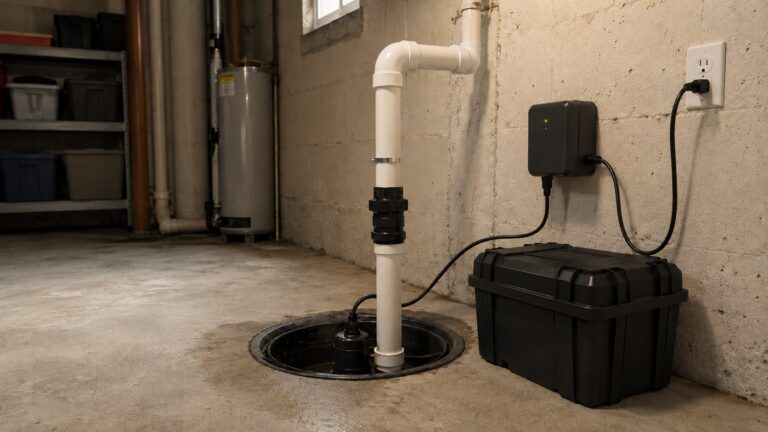
A portable utility pump can remove water after it has accumulated, but it is not a direct substitute for a permanently installed sump pump. A sump system is designed to collect and discharge groundwater automatically before it spreads across the basement floor. Utility pumps are temporary extraction tools.
Which pump removes water closest to the floor?
The manual WAYNE WaterBUG is designed for shallow standing water and may reduce water to approximately 1/16 inch on a smooth, level surface. Floor irregularities, debris, hose resistance, and pump position can leave additional water behind.
Can these pumps remove muddy or contaminated floodwater?
They should not be used for sewage, chemical contamination, flammable liquids, or unknown hazardous floodwater. The FOTING model can pass small particles in otherwise appropriate water, but that does not make it a sewage or heavy-mud pump.
Why is my pump moving less water than its advertised GPH?
Vertical lift, hose length, hose diameter, fittings, bends, clogged screens, low voltage, and debris all reduce flow. Advertised maximum output is generally measured under favorable conditions with minimal head pressure.
Do automatic utility pumps remove all the water?
No. An automatic model usually needs a minimum depth to start and stops at a preset level. It can leave a shallow layer that requires manual pump mode, a wet vacuum, a squeegee, or absorbent cleanup.
Can I connect a utility pump to a garden hose?
Many residential utility pumps include a garden-hose adapter. Confirm the exact listing and included fittings before ordering. A garden hose is convenient but may substantially restrict a high-flow pump.
What should I do after the standing water is removed?
Remove wet materials that cannot be dried safely, extract residual water, increase controlled airflow, operate appropriate dehumidification equipment, and monitor hidden materials for retained moisture. Our emergency flood cleanup steps explain how pumping fits into the broader recovery process.
Which Portable Utility Pump Should You Choose?
The Superior Pump 91250 is the best overall choice for homeowners who want a proven, compact pump for ordinary basement, crawl-space, pool, and window-well drainage. It has enough output for many household emergencies without requiring the larger hoses and greater capacity associated with a 1 HP model.
Choose the WAYNE WaterBUG WWB when the main challenge is a shallow layer spread across a floor or crawl-space liner. Select the AQUASTRONG 1 HP when deeper water must be removed quickly, and use the largest practical discharge hose to take advantage of its capacity. The FOTING 1 HP is the more suitable option when otherwise acceptable water contains small amounts of grit or light debris.
The WAYNE WaterBUG AUTO is the strongest automatic portable choice for areas that may refill during rain. The FLUENTPOWER and Little Giant models are reasonable alternatives for shoppers who specifically need selectable automatic/manual control or aluminum continuous-duty construction.
Regardless of the model, a utility pump is an emergency removal tool—not a waterproofing system. Once the water is gone, identify the entry path, dry the affected materials, and correct the underlying drainage or leakage problem.