
Signs Mold Exposure May Be Coming From Your Home
Mold exposure may be coming from your home when symptoms repeatedly line up with indoor moisture clues: a musty smell, damp rooms, condensation, water stains, past leaks, high humidity, visible growth, or symptoms that feel worse in certain areas of the house. Symptoms alone do not prove mold is the cause because congestion, coughing, eye irritation, skin irritation, headaches, or fatigue can also come from allergies, dust, dry air, pets, pollen, viruses, cleaning products, smoke, or other indoor air triggers.
The strongest clue is a pattern: how people feel, where symptoms happen, when symptoms improve, and what the home is showing you. This guide explains the signs that mold exposure may be coming from your home, how to separate symptoms from building clues, and when it makes sense to move from suspicion to testing or inspection. For the broader indoor air framework, see this guide to mold exposure and indoor air quality.
Can Mold Exposure Signs Point Back to Your Home?
Mold exposure signs may point back to your home when health symptoms and household moisture clues appear together. A person may notice coughing, congestion, throat irritation, watery eyes, wheezing, or skin irritation indoors, but those symptoms become more meaningful when the house also has musty odors, visible mold, damp materials, or rooms that stay humid.
A single stuffy nose does not identify a mold problem. A musty basement, recurring condensation, damp drywall, and symptoms that become worse after spending time indoors are a stronger reason to investigate. The goal is not to self-diagnose illness; it is to decide whether the home has enough warning signs to justify a closer moisture and mold inspection.
Mold problems usually trace back to moisture. That moisture may come from a plumbing leak, roof leak, basement seepage, crawl space dampness, HVAC condensation, poor ventilation, or high indoor humidity. If you want to understand how these moisture sources connect across a home, start with this broader guide on how to find, fix, and prevent moisture problems in homes.
Symptoms That May Raise Suspicion Indoors
Health symptoms are often the first reason people suspect mold exposure, but they should be handled carefully. Mold can irritate sensitive people, especially those with allergies, asthma, or respiratory conditions, but similar symptoms can come from many other causes. In this article, symptoms matter most when they repeatedly appear or worsen in the same indoor environment.
Nasal, Throat, and Breathing Irritation
Common symptoms that may raise suspicion include sneezing, nasal congestion, runny nose, throat irritation, coughing, or wheezing. These symptoms may feel similar to seasonal allergies or a lingering cold, which is why the home environment matters. If symptoms seem noticeably worse in one house, one room, or after the HVAC system runs, it is worth looking for indoor moisture clues.
For a more complete breakdown of symptom types, see the guide to common symptoms of mold exposure in homes. This article stays focused on whether those symptoms may be connected to the home itself.
Eye and Skin Irritation
Some people notice red, itchy, watery, or burning eyes indoors. Others may develop skin irritation or rashes that seem to flare in certain environments. These signs are not mold-specific, but they can support further investigation when they appear alongside damp rooms, musty odor, visible growth, or a known water damage history.
Asthma or Allergy Flare-Ups
If someone in the home has asthma, mold allergy, chronic lung issues, or other sensitivity, indoor mold and dampness may be more concerning. A pattern of wheezing, chest tightness, coughing, or allergy flares that worsens at home should not be ignored. That does not mean mold is automatically the cause, but it does mean the indoor environment deserves closer attention.
Persistent, severe, unusual, or worsening symptoms should be discussed with a healthcare professional. A home inspection can help identify environmental conditions, but it cannot diagnose a medical condition.
The Biggest Clue: Symptoms Improve Away From Home
One of the strongest clues that your home may be involved is a repeated improvement pattern when you leave. For example, symptoms may feel worse after sleeping at home, spending time in a basement, working in a home office, or sitting near certain vents. Then they may improve after several hours outdoors, at work, at school, or away for a weekend.
This pattern does not prove mold exposure, but it does suggest that something in the indoor environment may be irritating you. The cause could be mold, dust mites, pet dander, pollen tracked indoors, cleaning chemicals, dry air, smoke residue, poor ventilation, or HVAC contamination. Mold becomes more plausible when the symptom pattern matches moisture evidence.
Pay attention to these patterns:
- Symptoms are worse after waking up at home.
- Symptoms improve when you spend the day elsewhere.
- Symptoms return soon after coming back inside.
- Symptoms are worse in one room, basement, bathroom, or home office.
- Multiple people in the home notice irritation in the same areas.
- Symptoms worsen after rain, humidity spikes, HVAC use, or showering.
If you are trying to separate health symptoms from indoor conditions, this guide on how to tell if mold is making you sick can help you think through the symptom side more carefully. For this article, the important point is that symptoms are more suspicious when they follow a consistent home-based pattern.
Home Clues That Make Mold Exposure More Plausible
If symptoms are the personal side of the pattern, building clues are the environmental side. Mold exposure is more plausible when the home shows signs of moisture, poor drying, recurring dampness, or hidden water damage. The more these clues line up with where symptoms happen, the more seriously you should investigate.
Musty Odors
A musty smell is one of the most important household clues. It may be strongest in basements, crawl spaces, bathrooms, closets, cabinets, HVAC vents, or rooms that stay closed for long periods. Sometimes the odor appears after rain, when the air conditioner starts, or when a door to a damp area is opened.
A musty odor does not identify the exact source by itself. It also does not prove how much mold is present. But if the odor is recurring, localized, or paired with symptoms, it is a strong reason to inspect for damp materials and hidden moisture.
Damp Air or High Humidity
Homes with indoor humidity problems can feel heavy, clammy, or stale. High humidity makes it harder for materials to dry and can support mold growth on dust, drywall, wood, fabrics, stored items, and hidden surfaces. Bathrooms, basements, laundry areas, crawl spaces, and poorly ventilated rooms are especially common problem zones.
A basic hygrometer can help you see whether the home is staying too humid instead of relying only on how the air feels. If you are not sure where or how to measure humidity, use this guide on how to test indoor humidity levels before assuming the entire house has the same conditions.
Water Stains, Peeling Paint, or Soft Materials
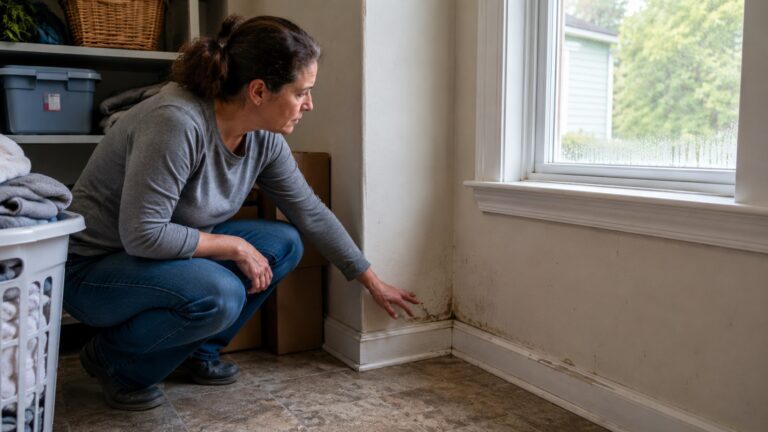
Visible water damage makes mold exposure suspicion more realistic because mold needs moisture to grow. Look for ceiling stains, wall discoloration, bubbling paint, peeling wallpaper, swollen trim, soft drywall, warped flooring, dark spots near baseboards, or cabinet bottoms that feel weak or spongy.
These signs are especially important when they appear in the same rooms where symptoms or odors are strongest. A stained ceiling below an attic, a soft floor near a dishwasher, or swollen baseboards along an exterior wall may point to a moisture source that has not been corrected.
Past Leaks or Recurring Condensation
A previous leak can still matter if materials were never fully dried. Dry surfaces do not always mean wall cavities, subfloors, insulation, or cabinet backs dried properly. Mold concern becomes stronger when symptoms begin after a roof leak, plumbing leak, appliance leak, basement seepage, flooding event, or HVAC overflow.
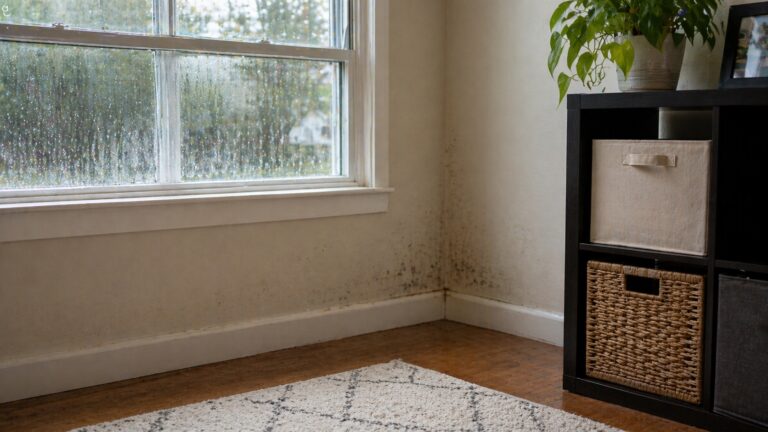
Recurring condensation is another clue. Condensation on windows, ducts, toilet tanks, walls, or ceiling areas can keep surfaces damp long enough for mold or mildew to develop. The issue may be poor ventilation, cold surfaces, excessive humidity, missing insulation, or an HVAC imbalance.
Rooms Where Mold Exposure Clues Often Show Up First
Start with rooms where water, humidity, poor ventilation, symptoms, odors, stains, or dampness are strongest. You do not need to tear the house apart to begin looking for a pattern.
Bathrooms
Bathrooms are common mold-prone areas because showers, tubs, sinks, and toilets add moisture repeatedly. Warning signs include persistent wall dampness, dark spots on grout or caulk, mold around the ceiling line, peeling paint, musty odors behind cabinets, soft flooring near the toilet, or a fan that does not clear steam effectively.
A bathroom does not have to look severely damaged to create air quality concerns. A slow leak behind a vanity, wet drywall near a shower, or poor exhaust ventilation can keep materials damp even when the surface looks mostly normal.
Basements and Crawl Spaces
Basements and crawl spaces can influence indoor air even if the living area looks clean. Damp soil, foundation seepage, standing water, wet insulation, exposed wood, stored cardboard, or musty crawl space air can contribute to odors and particle movement into the home.
These areas are especially suspicious when the first floor smells musty, symptoms are worse near floor registers, or the odor becomes stronger after rain. A crawl space or basement does not have to flood to create a moisture problem. Chronic dampness alone can be enough to justify inspection.
HVAC Systems and Air Ducts
HVAC systems can spread odors and irritants through multiple rooms. If symptoms worsen when heating or cooling turns on, or if a musty smell comes from vents, the system may need attention. Possible causes include a clogged condensate drain, damp evaporator coil area, wet insulation near ducts, dirty filters, condensation on ductwork, or moisture in the air handler cabinet.
Do not assume the ducts themselves are moldy without inspection. The source may be near the coil, drain pan, filter area, surrounding building cavity, or a damp crawl space connected to ductwork. HVAC-related clues are strongest when odor or irritation follows airflow patterns.
Kitchens and Plumbing Areas
Kitchens often hide slow leaks. Check under sinks, behind dishwashers, behind refrigerators with water lines, around ice maker connections, under cabinets, and along flooring seams. A small leak can soak cabinet bases or subflooring without leaving obvious standing water.
Warning signs include swollen cabinet bottoms, dark staining under sink plumbing, warped toe kicks, soft flooring near appliances, musty smells inside cabinets, or recurring insects around damp areas. If symptoms or odors seem strongest near the kitchen, hidden plumbing moisture should be part of the inspection.
Windows, Attics, and Exterior Walls
Window areas, attics, and exterior walls can develop moisture from leaks, condensation, poor flashing, roof problems, or insulation gaps. Watch for staining around window trim, peeling paint near exterior walls, damp attic insulation, dark roof sheathing, ceiling spots after rain, or musty smells near closed exterior rooms.
These areas often create confusion because the mold source may be hidden behind trim, insulation, drywall, or attic materials. The visible clue may be small, while the moisture path behind it is larger.
Why Visible Mold Is Not Always Present
One of the most confusing parts of mold exposure concern is that visible mold is not always easy to find. A home may smell musty, feel damp, or trigger symptoms in certain rooms even when walls and floors look mostly clean. That does not prove hidden mold is present, but it does mean visible surfaces are not the only places to check.
Mold can grow where moisture reaches materials and airflow is limited. Common hidden areas include wall cavities, the backs of cabinets, subflooring, carpet padding, insulation, crawl space framing, attic sheathing, HVAC components, and the space behind baseboards or trim. A homeowner may only notice a faint odor, a small stain, or recurring irritation before the source becomes obvious.
If your home has musty air or moisture clues but no visible growth, see this guide on whether mold exposure can happen without visible mold. That topic deserves its own deeper explanation because hidden mold concerns require careful inspection instead of guesswork.
When Symptoms Alone Are Not Enough
Symptoms are important, but they are not enough to blame mold by themselves. Congestion, coughing, eye irritation, throat irritation, headaches, fatigue, or skin irritation can come from dust, pollen, pet dander, smoke, dry air, cleaning products, new building materials, HVAC dust, viruses, seasonal allergies, or medical issues unrelated to the home.
That is why the home itself must be evaluated. Symptoms that worsen in a musty basement, near a damp bathroom wall, after the HVAC system turns on, or after heavy rain are more suspicious than symptoms that happen randomly with no building clues. At the same time, not every dark stain is dangerous mold; some stains are dirt, soot, mildew-like surface growth, rust bleed, or old water staining.
How to Start Checking Whether Your Home Is the Source
If you suspect mold exposure may be coming from your home, start with a calm, organized inspection process. You are not trying to prove everything in one day. You are trying to build a practical picture of whether symptoms, odors, humidity, and moisture clues point to the same indoor source.
A useful first pass is simple: check the room where symptoms feel strongest, smell for musty odor near walls, cabinets, vents, and flooring edges, look for stains or swelling, measure humidity in that room, and compare it with a room where symptoms are not as noticeable. That quick comparison can help you decide where to inspect more closely instead of treating the whole house as one mystery.
Track Where and When Symptoms Happen
Write down when symptoms are worst, which rooms seem connected, and whether symptoms improve away from home. Note whether irritation increases after sleeping, showering, running the HVAC system, opening a basement door, spending time in a home office, or returning after the house has been closed up.
Also track whether symptoms shift after rain, during humid weather, during heavy air conditioner use, or after a known leak. A simple pattern log can help you avoid guessing and may be useful if you later speak with a healthcare provider, mold inspector, HVAC contractor, or remediation professional.
Check Humidity and Moisture-Prone Areas
Next, look for moisture conditions that could support mold growth. Check bathrooms, basements, crawl spaces, kitchens, laundry areas, attic spaces, window trim, HVAC equipment, and any area with previous water damage. Look for stains, swelling, soft materials, condensation, musty odor, peeling paint, or damp storage items.
A hygrometer can help identify rooms that stay humid. A moisture meter can help screen suspicious building materials, especially around stains, baseboards, cabinet bottoms, and flooring transitions. Compare suspicious areas with nearby dry-looking areas instead of trusting one reading by itself. These tools do not diagnose mold exposure, but they can help identify damp conditions that deserve closer attention.
Use Mold Test Kits Carefully
Home mold test kits can be useful as a screening tool, especially when a homeowner wants more information before deciding whether to call an inspector. However, a test kit should not be treated as the whole answer. Mold is common in the environment, and a test result does not automatically explain where moisture is coming from, whether hidden materials are wet, or whether professional remediation is needed.
If you use a test kit, treat it as one part of the evidence. Pair it with visual inspection, odor patterns, humidity readings, moisture checks, and leak history. If you are unsure whether testing is the right next step, start with this guide on whether you should test your home after mold exposure symptoms. If you are already comparing DIY options, this guide to best mold test kits for homeowners can help you understand the role these kits should and should not play.
Move From Suspicion to Confirmation
Once symptoms, odors, moisture clues, or test results point in the same direction, the next step is confirmation. Confirmation means identifying the likely moisture source, checking whether materials are still wet, understanding whether mold is visible or hidden, and deciding whether the situation is small enough for careful homeowner action or large enough for professional help. Do not paint, seal, or cover suspicious areas until the moisture source is understood.
For the full verification process, use this guide on how to confirm mold exposure risks inside your home. That article owns the structured inspection and testing approach; this article is only meant to help you decide whether the home shows enough warning signs to investigate further.
When Symptoms or Home Clues Deserve Professional Help
You should get medical help if symptoms are severe, persistent, worsening, or affecting someone with asthma, allergies, chronic lung disease, immune compromise, or other higher-risk conditions. Seek urgent care for trouble breathing, severe asthma symptoms, chest tightness, or rapidly worsening reactions. A home inspection can identify moisture and mold conditions, but it cannot tell you what is causing a medical symptom. Health concerns should be handled by a qualified healthcare professional.
You should consider a mold or moisture inspection when household clues keep repeating. Professional help becomes more important when the home has a strong musty odor, visible mold over a large area, recurring water intrusion, damp crawl space conditions, basement seepage, suspected HVAC contamination, wet insulation, hidden wall moisture, mold that returns after cleaning, or symptoms that seem connected to the home but no visible source can be found.
If the source is unclear, the issue may be behind walls, below flooring, inside cabinets, in the attic, in the crawl space, or connected to the HVAC system. Guessing can lead to unnecessary cleaning, missed leaks, or repeated mold return.
If you are ready to move from concern to action, use this step-by-step guide on what to do if you suspect mold exposure in your home. It will help you organize the next steps without jumping straight to expensive remediation before the source is understood.
FAQ: Signs Mold Exposure May Be Coming From Your Home
Can mold exposure symptoms happen only at home?
Symptoms may feel worse at home if something in the indoor environment is irritating you. Mold is one possible cause, especially when symptoms line up with musty odors, damp materials, high humidity, visible growth, or a history of water damage. However, symptoms that happen at home can also come from dust, pets, pollen, dry air, cleaning products, smoke, or HVAC issues, so the home should be inspected before blaming mold alone.
Is a musty smell enough to suspect mold exposure?
A musty smell is enough to justify investigation, especially if it is recurring or strongest in one area. It may point to damp materials, hidden mold, wet insulation, a crawl space problem, HVAC moisture, or an old leak. A musty odor does not prove the exposure level or identify the source by itself, but it is one of the most useful household clues.
Can mold exposure come from HVAC vents?
It is possible for mold-related odors or particles to be associated with HVAC moisture problems, but the vents are not always the source. The issue could be a damp air handler, clogged condensate drain, dirty filter area, wet duct insulation, condensation on ductwork, or musty air being pulled from a basement or crawl space. If symptoms or odors worsen when the HVAC system runs, the system and nearby moisture sources should be inspected.
What if I feel better when I leave the house?
Feeling better away from home can be an important clue, but it does not prove mold exposure by itself. It suggests that something in the indoor environment may be contributing to symptoms. Mold becomes more likely when that pattern is paired with moisture clues such as musty odor, condensation, water stains, damp materials, high humidity, or previous leaks.
Should I test my home if I suspect mold exposure?
Testing can be helpful when symptoms and home clues point in the same direction, but it should not replace moisture investigation. A mold test may give you more information, but the most important question is still why mold or dampness may be present. If the situation is persistent, hidden, or widespread, a professional inspection may be more useful than a single DIY test.
Can a house cause mold exposure symptoms without visible mold?
Yes, it is possible for mold or dampness concerns to exist without obvious visible growth. Mold may be hidden behind walls, under flooring, inside cabinets, in crawl spaces, in attics, or near HVAC components. However, no visible mold also means you need to be careful about assumptions. Look for supporting clues such as odor, moisture, staining, condensation, or symptom patterns before deciding what to do next.
Does an air purifier fix mold exposure from a home?
An air purifier may help reduce some airborne particles, but it does not fix the source of mold growth. If mold is growing on damp drywall, wood, insulation, flooring, or HVAC components, the moisture source still needs to be found and corrected. Filtration can support the process, but it should not replace moisture control or proper cleanup.
What the Pattern Usually Means
- Symptoms alone do not prove mold exposure is coming from your home.
- The strongest clue is a repeated pattern between symptoms and indoor conditions.
- Musty odors, damp air, condensation, water stains, and past leaks make mold concern more plausible.
- Symptoms that improve away from home are worth tracking, especially if they return indoors.
- Hidden mold is possible, but it should be investigated through moisture clues rather than assumed.
- Mold test kits can help screen concerns, but they do not replace finding the moisture source.
- Professional inspection is wise when signs are persistent, hidden, widespread, or affecting higher-risk occupants.
The Safest Next Step
Mold exposure may be coming from your home when personal symptoms and household clues point in the same direction. A musty odor, damp rooms, recurring condensation, water stains, past leaks, and symptoms that seem worse indoors can all justify a closer look, but no single symptom or stain proves the source by itself.
The safest next step is to compare patterns: track when symptoms happen, inspect moisture-prone rooms, check humidity, and look for water damage. If the signs keep repeating or the source is hidden, a professional mold or moisture inspection can help you find the problem before it spreads further.
2 Comments
Comments are closed.