How Stored Items Increase Garage Humidity
Stored items can make a garage feel more humid, musty, and slow to dry because they trap damp air, absorb moisture, block airflow, and hide early warning signs. Boxes, fabric, furniture, paper, wood, tools, bins, and shelving usually do not create the original moisture source, but they can make ordinary garage dampness last much longer than it should.
This is especially common in garages used for overflow storage. When cardboard boxes, old furniture, clothing, tools, wood scraps, lawn equipment, sports gear, and household items are stacked tightly, stored directly on concrete, or pushed against exterior walls, they create damp pockets where air does not move well.
In most cases, storage acts as a moisture amplifier. It takes moisture from rain, humid air, wet vehicles, damp concrete, temperature swings, or poor ventilation and keeps it close to vulnerable materials. That is why stored items can make garage dampness feel like one of those recurring moisture problems that never fully goes away.
Why Stored Items Make Garage Moisture Worse
Garage moisture often starts with a separate source. Rainwater may enter on vehicles, outdoor humidity may move through the door, condensation may form on cold concrete, or water may collect near the garage threshold. Stored items make the problem worse when they prevent that moisture from drying quickly.
Air needs space to move. When boxes, cabinets, shelves, furniture, and equipment are packed tightly against walls or floors, they reduce airflow around the exact areas where garage moisture usually lingers. The open center of the garage may dry, while corners and floor edges behind storage stay damp.
Stored items also hold moisture differently than the garage structure itself. Concrete may release moisture slowly, but cardboard, paper, fabric, and wood can absorb it. Once those materials become damp, they can hold musty odors and release moisture back into nearby air. This can make the garage feel humid even after visible water is gone.
This is why cluttered garages often develop localized damp zones. The garage may not be wet everywhere. Instead, the moisture may be concentrated behind shelving, under boxes, near stored fabric, along exterior walls, or where items touch the concrete floor. If the garage already has garage ventilation problems, these storage zones dry even more slowly.
Stored Items Can Increase Garage Humidity By:
- Absorbing moisture from humid air.
- Wicking dampness from concrete floor contact.
- Blocking airflow along walls, corners, and floor edges.
- Holding moisture after rain, snow, or humid weather.
- Hiding damp areas that would otherwise be noticed earlier.
- Releasing musty odors when porous materials stay damp.
- Keeping localized humidity higher around storage zones.
Because of this, reducing garage humidity is not only about fans, dehumidifiers, or opening the garage door. It also depends on how the garage is stored. A better storage layout can help the garage dry faster and make moisture problems easier to spot before they damage belongings.
How Cardboard, Paper, and Fabric Absorb Garage Moisture
Cardboard boxes are one of the most common storage-related moisture problems in garages. Cardboard is porous, so it absorbs moisture from humid air. It can also pull dampness from concrete when boxes sit directly on the floor. Once cardboard becomes damp, it softens, smells musty, and can transfer moisture to the items inside.
Paper goods behave the same way. Books, documents, photographs, paper decorations, files, and packaging materials can absorb humidity and become wavy, soft, stained, or musty. Even if the garage does not have standing water, high humidity can slowly damage paper-based items over time.
Fabric is another high-risk material. Clothing, cushions, rugs, blankets, towels, upholstered furniture, and camping gear can hold moisture deep inside the fibers. These items may feel slightly damp, smell stale, or develop mildew-like odors before there is any obvious visible damage. If fabric is stored in a closed bin while already damp, the moisture may remain trapped inside.
Wood, leather, and upholstered furniture are also vulnerable because they absorb and release moisture as conditions change. A chair, cabinet, plywood sheet, or wood-framed item stored in a humid garage may swell, warp, smell musty, or develop surface growth if it stays damp long enough.
Stored Materials Most Likely to Hold Moisture
- Cardboard boxes and packing materials.
- Paper documents, books, photos, and decorations.
- Clothing, rugs, towels, and blankets.
- Upholstered furniture and cushions.
- Untreated wood, plywood, lumber, and wood furniture.
- Leather goods and fabric-covered storage items.
- Damp sports gear, camping gear, and outdoor equipment.
These materials are often the first things to smell musty in a humid garage. The odor may seem like a general garage smell, but it often comes from stored porous items that have been holding moisture for weeks or months. If you notice soft cardboard, damp fabric, or rust near storage zones, compare the pattern with the signs of high humidity in garages.
The safest approach is to treat porous stored items as moisture-sensitive. Keep them off concrete, away from exterior walls, out of tight corners, and inside dry containers only after the contents are fully dry. Otherwise, storage becomes a hidden moisture reservoir inside the garage.
Why Items Stored on Concrete Get Damp
Concrete garage floors can make stored items damp even when there is no visible puddle. Concrete is porous, slow to warm, and often cooler than the surrounding air. During humid weather, warm moist air can condense on the slab. During rain or snow, water from vehicles and equipment can sit on the surface and dry slowly. Items stored directly on that floor can trap moisture underneath them.
This is why cardboard boxes, wood, paper, fabric, and furniture should not sit directly on bare concrete for long periods. The bottom of the item may absorb moisture from the surface, while the item itself blocks airflow and slows drying. The garage floor may look dry around the item, but the hidden contact point underneath can stay damp.
Rubber mats, rugs, plywood sheets, and plastic storage bins can also trap moisture against the slab if they are left in the same place too long. Plastic does not absorb moisture like cardboard, but it can still create a covered area where condensation or surface dampness has trouble evaporating. When the item is finally moved, the concrete underneath may look darker, cooler, or damp.
Floor contact becomes more important after storms, snowmelt, humid weather, or vehicle washing. If water repeatedly collects in the same part of the garage, any storage in that area becomes more vulnerable. When floor dampness is persistent, it may help to understand why garage floors stay damp before assuming the stored items are the only problem.
Items That Should Not Sit Directly on Garage Concrete
- Cardboard boxes.
- Paper files, books, and documents.
- Clothing, rugs, cushions, and fabric storage bags.
- Wood furniture, plywood, lumber, and trim pieces.
- Upholstered furniture.
- Leather goods or fabric-covered belongings.
- Moisture-sensitive seasonal decorations.
Raised shelving, pallets, wall hooks, and storage racks are usually safer than direct floor storage. The goal is to create an air gap so the item is not touching the coldest and most moisture-prone surface in the garage. Even a small amount of separation can help stored items dry faster and make floor moisture easier to see.
How Crowded Storage Blocks Airflow
Crowded storage makes garage humidity worse because it breaks the garage into small stagnant zones. Air may move near the overhead door or through the open center of the garage, but it may not reach the spaces behind boxes, cabinets, shelves, workbenches, or furniture. Those hidden areas can stay damp long after the visible part of the garage seems dry.
This is especially common along exterior walls and in corners. Exterior walls are often cooler than interior surfaces, and floor-wall joints are naturally low-airflow areas. When storage is pushed tightly against them, moisture has fewer ways to escape. Damp air stays trapped, and materials near that area may absorb moisture repeatedly.
Airflow blockage also reduces the effectiveness of fans and ventilation. A fan may move air through the open center of the garage while the back of a shelving unit remains still. Opening the garage door may freshen the space near the door while storage zones remain musty. That is why storage layout matters almost as much as the amount of storage.
Plastic bins are better than cardboard for protecting belongings, but they can still block airflow if they are stacked tightly against walls. Cabinets can also hide moisture behind them if they sit flush against exterior walls or lower corners. Better storage is not only about using better containers; it is also about leaving enough space for air to move.
Storage Layouts That Trap Damp Air
- Boxes stacked tightly in corners.
- Shelving pushed directly against exterior walls.
- Cabinets or workbenches with no gap behind them.
- Plastic bins stacked from floor to ceiling with no airflow space.
- Furniture stored against drywall, trim, or exterior wall surfaces.
- Stored items blocking windows, vents, side doors, or airflow paths.
- Vehicles parked so close to storage that air cannot circulate.
Improving storage airflow does not mean the garage has to be empty. It means creating visible, dryable spaces. Leave a small gap behind shelves, keep items off the floor, avoid packing corners tightly, and keep vents or windows clear. These changes allow damp areas to dry and make hidden moisture easier to notice.
How Stored Items Hide Early Moisture Warning Signs
Stored items can make garage moisture harder to find because they cover the places where early warning signs usually appear. A damp wall edge, stained baseboard, darkened concrete patch, small threshold leak, or musty corner may stay hidden behind boxes or furniture for months.
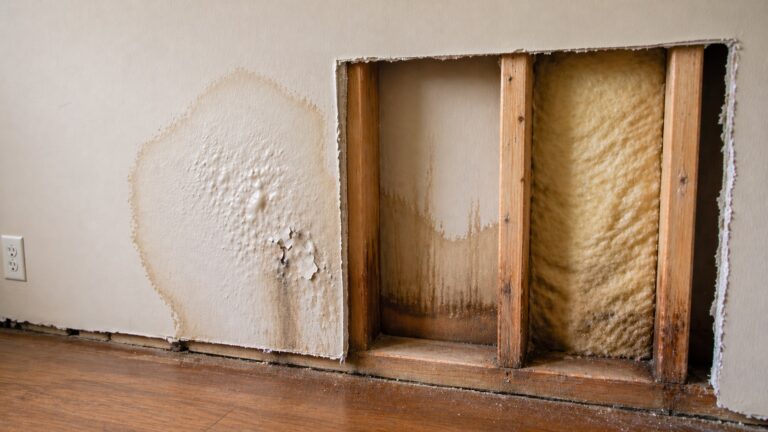
By the time the items are moved, the problem may look sudden even though it has been developing slowly. The homeowner may find softened cardboard, rusted tools, stained drywall, swollen trim, dark spots on stored wood, or a strong musty odor behind the storage. In many cases, the storage did not cause the entire problem, but it kept the area from drying and delayed discovery.
This hidden effect is important because garage moisture often starts at low edges: the floor, the threshold, the base of exterior walls, and corners behind stored items. These areas need visibility. If they are covered, moisture can keep returning without being noticed until belongings are damaged.
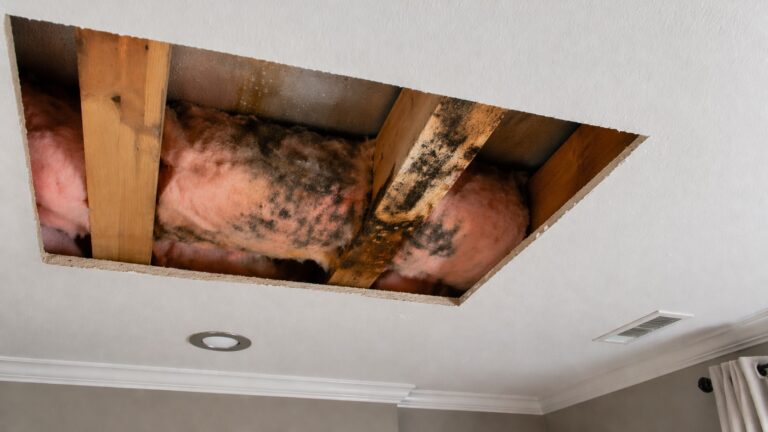
Mold risk also increases when porous materials stay damp and hidden. Clutter does not create mold by itself, but it can create conditions where cardboard, fabric, wood, or drywall remain damp long enough for mold to develop. If you are already seeing suspicious growth, compare it with the signs of mold growth in garages.
Moisture Clues Often Hidden Behind Storage
- Darkened concrete under boxes or bins.
- Musty odors strongest near storage zones.
- Soft, sagging, or stained cardboard.
- Rust on tools, bikes, shelves, or hardware.
- Peeling paint or staining near lower wall edges.
- Swollen trim, damp drywall, or soft base materials.
- Small mold spots on stored porous items.
Checking behind storage a few times a year can prevent small moisture problems from becoming recurring damage. It is especially important after long rainy periods, humid seasons, snowmelt, or any time the garage develops a musty odor.
How Weather Makes Stored Items Damp
Outdoor weather often affects stored garage items before homeowners notice a larger moisture problem. Rain, humid air, fog, snow, and temperature swings can all raise moisture levels inside the garage. If stored items are porous, crowded, or sitting on concrete, they may absorb that moisture and hold it long after the weather changes.
Rainy weather brings water in on vehicles, tools, and equipment, while humid weather allows moisture-heavy air to collect behind shelves, boxes, cabinets, and bins. Temperature swings can make the problem worse when warm humid air enters a cool garage and condenses on concrete, metal, tools, or stored surfaces.
This is why a garage can feel dry in the open walkway while boxes near the wall feel damp. The weather provides the moisture, but the storage layout decides where that moisture gets trapped. This pattern is often part of how outdoor weather affects garage moisture.
Weather Conditions That Make Garage Storage More Vulnerable
- Several rainy days in a row.
- High outdoor humidity or fog.
- Warm humid air entering a cool garage.
- Snowmelt from vehicles, boots, and tools.
- Storm runoff near the garage door.
- Seasonal changes when temperatures shift quickly.
- Long periods with the garage door closed after wet weather.
Weather-related storage dampness is usually not random. It tends to appear after specific conditions. If the same boxes, corners, or storage shelves become musty after storms or humidity spikes, the garage needs better moisture control around those areas.
Which Stored Items Are Most Vulnerable to Garage Humidity
Some stored items tolerate garage humidity better than others. Metal, sealed plastic, and outdoor-rated tools may handle occasional dampness, although metal can still rust. Porous and absorbent materials are more vulnerable because they take in moisture and release it slowly.
Cardboard usually shows damage first. Boxes soften, sag, smell musty, and may collapse. Paper documents, photos, books, decorations, and packaging can become wavy or stained. Fabric items may hold musty odors even when they do not look visibly wet.
Wood, plywood, lumber, furniture, and upholstery are also sensitive because they can absorb moisture from humid air or concrete contact. If they stay damp, they may swell, warp, discolor, or support surface growth. Plastic bins are better than cardboard, but only when the contents are dry and the bins are not stacked tightly against damp walls.
Items That Should Be Protected From Garage Humidity
- Important documents, books, photos, and paper keepsakes.
- Cardboard boxes and paper decorations.
- Clothing, blankets, rugs, cushions, and fabric items.
- Upholstered furniture and mattresses.
- Untreated wood, plywood, lumber, and wood furniture.
- Leather goods and fabric-covered cases.
- Electronics, tools, and metal hardware that may corrode.
Moisture-sensitive items should not be stored in the dampest parts of the garage. Avoid floor contact, exterior wall contact, tight corners, and areas near repeated vehicle drip zones. If an item would be difficult or expensive to replace, it should usually be stored in a drier area of the home instead of a humid garage.
How Storage Habits Can Make Garage Moisture Return
Stored items can make garage moisture seem like it keeps returning because damp materials continue to hold and release moisture. After a humid week or rainy period, cardboard, fabric, and wood may remain damp long after the garage air begins to improve. Those materials can then keep nearby air musty and humid.
This is one reason cleaning the garage floor may not solve the smell. If damp boxes, rugs, furniture, or stored wood remain in place, they can keep the odor and moisture problem alive. The garage may look cleaner, but the stored materials still hold moisture behind shelves or inside containers.
Storage also hides the original source. A small leak near the threshold, damp concrete patch, or condensation area can stay covered. The homeowner may clean the visible garage, but the hidden area remains damp and the moisture returns. This is why storage-related dampness often overlaps with why garage moisture problems keep returning.
Storage Habits That Keep Moisture Coming Back
- Leaving damp cardboard in the garage after humid weather.
- Stacking storage directly on concrete.
- Keeping furniture, rugs, or fabric in closed damp corners.
- Storing wet tools, hoses, or sports gear without drying them first.
- Covering damp floor areas with mats, plywood, or boxes.
- Blocking wall edges where moisture needs to dry.
- Never checking behind shelves after storms or humid seasons.
Breaking the cycle usually means removing damp materials, changing the storage layout, and correcting the moisture source that made the items damp in the first place. Otherwise, the same stored items can keep making the garage feel humid even after surface cleanup.
What to Do If Stored Items Are Increasing Garage Humidity
If stored items are making the garage more humid, start by separating the storage problem from the moisture source. The boxes, bins, furniture, and tools may be holding dampness, but something else usually introduced the moisture first. That source may be humid weather, wet vehicles, poor ventilation, damp concrete, water near the garage door, or a recurring moisture pattern that has not been corrected.
Begin by moving stored items away from exterior walls, corners, and damp floor areas. Check the concrete underneath boxes, bins, mats, rugs, and furniture. Look for darkened concrete, musty odors, rust, softened cardboard, damp wood, or staining along lower wall edges. These clues show where moisture is being held or hidden.
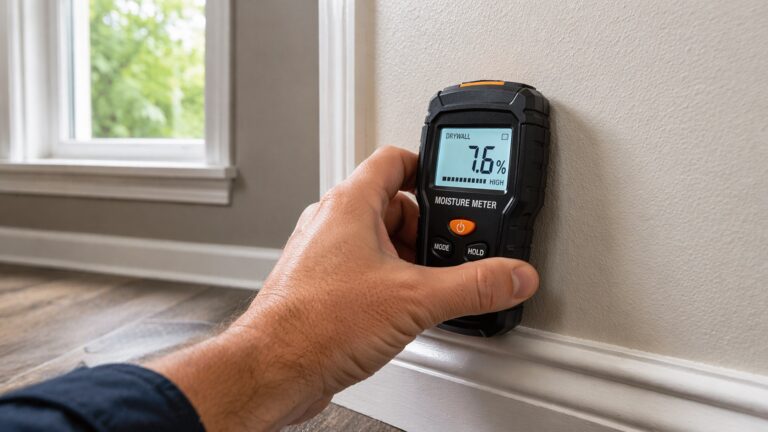
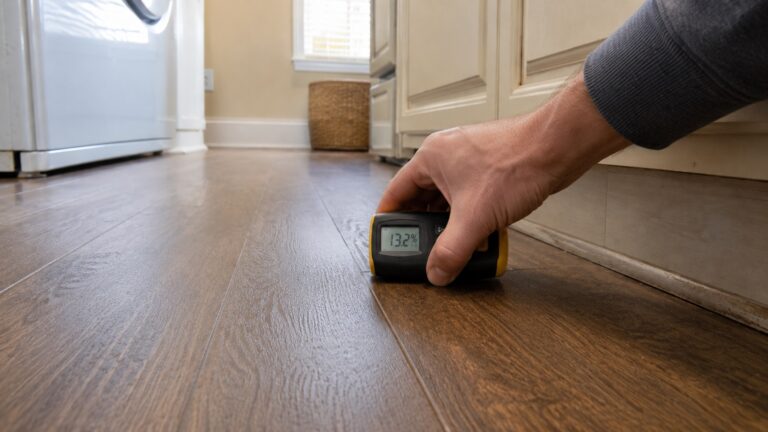
If you have a hygrometer, take one reading in the open center of the garage and another reading behind or beside the storage area. A higher reading near stored items suggests that the storage zone is holding moisture rather than drying with the rest of the garage.
Next, remove or dry anything that has already absorbed moisture. Damp cardboard should usually be discarded, especially if it smells musty or has staining. Fabric, rugs, cushions, and upholstered items should be dried completely before being stored again. Wood should be inspected for swelling, odor, discoloration, or surface growth. Wear gloves and avoid shaking moldy or musty materials indoors. Do not seal damp materials inside plastic bins and assume the problem is solved.
Then change the storage layout. Use raised shelving, leave airflow gaps behind shelves and cabinets, keep moisture-sensitive items off concrete, and avoid packing corners tightly. These changes make it easier to dry the garage and easier to inspect vulnerable areas after storms, humid weather, or temperature swings.
Finally, address the larger garage moisture pattern. If humidity stays high, if water appears near the threshold, or if the garage keeps smelling musty after cleanup, storage is probably only one part of the issue. Use a broader guide to prevent moisture buildup in garages so the stored items do not become damp again.
Storage Changes That Help Lower Garage Humidity
- Replace cardboard boxes with plastic bins only after the contents are dry.
- Dry items completely before placing them in closed containers.
- Raise storage off concrete with shelves, racks, pallets, or wall hooks.
- Leave space between stored items and exterior walls.
- Keep vents, windows, and airflow paths clear.
- Remove damp rugs, fabric, paper, or wood that keeps smelling musty.
- Check behind storage after long rainy periods or humid seasons.
- Use a hygrometer to compare humidity near storage zones with the rest of the garage.
If the garage is attached to the home, storage-related humidity deserves extra attention. Damp storage can create musty odors near the entry door, laundry area, mudroom, or rooms beside the garage. In that situation, storage changes should be part of a larger plan to find, fix, and prevent moisture problems throughout the home.
FAQ: How Stored Items Increase Garage Humidity
Can stored items really make a garage more humid?
Yes. Stored items can make a garage more humid by absorbing moisture, blocking airflow, trapping damp air, and slowly releasing moisture back into the surrounding space. They usually do not create the original moisture source, but they can make moisture last longer.
Why do cardboard boxes get damp in garages?
Cardboard boxes get damp because cardboard absorbs moisture from humid air and can also wick dampness from concrete floor contact. Once cardboard becomes damp, it can soften, smell musty, and transfer moisture to the items inside.
Is it bad to store things directly on a garage floor?
Yes, it can be bad for moisture-sensitive items. Garage concrete can stay cool, collect condensation, or hold surface moisture after rain, snow, or vehicle drips. Items stored directly on the floor can trap dampness underneath and dry slowly.
Can garage clutter cause mold?
Garage clutter does not create mold by itself, but it can keep mold-prone materials damp long enough for growth to develop. Cardboard, fabric, wood, paper, drywall, and stored furniture are most vulnerable when they stay in low-airflow areas against concrete, corners, or exterior walls.
Are plastic bins better than cardboard in a humid garage?
Plastic bins are usually better than cardboard because they do not absorb moisture as easily. However, they can still trap moisture inside if the contents are damp, and they can block airflow if stacked tightly against walls or in corners.
How do I know if stored items are causing musty garage odors?
Check whether the odor is strongest near boxes, fabric, furniture, stored wood, or crowded shelving. Look for soft cardboard, damp rugs, rust nearby, darkened concrete under storage, or musty smells behind bins. If the odor improves after damp items are removed, storage was likely part of the problem.
The Bottom Line on Garage Storage and Humidity
Stored items increase garage humidity when they hold moisture, block airflow, and hide damp areas that need to dry. The fix is not just a cleaner-looking garage. Raise storage off concrete, leave gaps behind shelves, remove damp porous materials, protect moisture-sensitive belongings, and check storage zones after storms or humid weather. When storage no longer traps moisture, the garage becomes easier to dry, inspect, and maintain.
Storage Rules That Help Keep Garages Drier
- Keep cardboard, paper, fabric, wood, and upholstered items away from direct concrete contact.
- Store moisture-sensitive belongings on shelves, racks, pallets, or wall hooks instead of the garage floor.
- Leave airflow gaps behind shelves, cabinets, bins, and furniture, especially along exterior walls.
- Put only fully dry items inside plastic bins, and avoid stacking bins tightly in damp corners.
- Remove damp cardboard, rugs, fabric, or wood that keeps producing musty odors.
- Check behind storage after storms, humid weather, snowmelt, or long periods with the garage door closed.
- Use a hygrometer to compare humidity near stored items with the open center of the garage.