
Signs Water Is Entering Through Wall Penetrations
Water entering through wall penetrations can be difficult to spot because the opening may look small from the outside while the moisture spreads behind siding, trim, sheathing, insulation, framing, or drywall. A tiny gap around a pipe, cable, vent, faucet, sleeve, or exterior fixture can become a repeated wetting point when rainwater is directed toward it.
Common signs water is entering through wall penetrations include staining below exterior openings, cracked caulk, damp siding, loose flanges, swollen trim, interior wall stains, bubbling paint, musty odors, wet insulation, or damp basement and crawl space areas that line up with an exterior opening.
This type of problem belongs to the broader pattern of exterior water entry through small structural gaps. The parent guide on How Water Enters Homes Through Structural Gaps explains how openings, joints, penetrations, and weak exterior details can allow water to move behind the outer wall surface.
The strongest warning pattern is simple: moisture appears near an exterior penetration, returns after storms or fixture use, and lines up with dampness on the inside of the same wall.
Why Wall Penetration Leaks Are Easy to Miss
Wall penetration leaks are easy to miss because they often start small. A cable hole, pipe sleeve, faucet opening, vent flange, electrical box, or exhaust termination may only let in a little water during certain conditions. That moisture may not appear immediately on the interior wall.
Instead, water may travel behind siding, soak sheathing, drip along framing, wet insulation, or collect near the rim joist before the homeowner notices anything. By the time a stain appears indoors, the exterior opening may already have been leaking for a while.
These leaks can also be intermittent. A penetration may stay dry during light rain but leak during wind-driven rain. A faucet opening may only leak when the outdoor faucet is running. A dryer or exhaust vent may show moisture only when warm, humid air meets a cold or poorly sealed wall detail.
That is why timing and alignment matter. If a damp spot appears after storms and lines up with an exterior wall opening, the penetration should be part of the investigation. A broader moisture-source approach, like the one described in how to find, fix, and prevent moisture problems in homes, helps homeowners avoid focusing only on the most obvious source.
Exterior Signs Around Wall Penetrations
The first signs often appear outside. These exterior clues do not always prove water has reached the wall cavity, but they show that the penetration area is being repeatedly exposed to moisture or is no longer sealed correctly.
Check these areas when the wall is dry, then again after rain. A mark that darkens, spreads, or reappears after storms is more meaningful than an old stain that never changes.
Staining Below the Opening
Dark streaks, dirt lines, rust marks, mineral deposits, or algae-like staining below a wall penetration can show where water is repeatedly draining. Look below outdoor faucets, cable entries, pipe sleeves, exhaust vents, dryer vents, electrical boxes, exterior lights, and utility penetrations.
Staining that begins at the edge of the opening is more suspicious than staining that appears randomly on the wall. If the mark starts below a flange, sleeve, trim block, or cable hole, water may be collecting at that point and running down the exterior surface.
Cracked, Missing, or Pulled-Away Sealant
Cracked caulk or missing sealant is one of the most common visible signs around wall penetrations. You may see a gap around a pipe, wire, faucet flange, vent hood, mounting block, electrical box, or trim edge. The gap may be thin, but it can still allow water to enter when rain hits the wall.
Sealant can also pull away from one side while still looking present from a distance. This creates a narrow opening behind the visible bead. When this happens, the exterior may look mostly sealed, but water can still reach the wall opening.
Loose Flanges, Sleeves, or Mounting Blocks
Many wall penetrations rely on a flange, sleeve, mounting block, cover plate, escutcheon, or fixture base to protect the opening. If that part is loose, cracked, tilted, or separated from the wall, water can get behind it.
A loose vent hood, wobbly hose bib, shifting cable plate, or separated utility sleeve should be taken seriously. Movement breaks seals and allows water to reach places it was not meant to reach.
Damp Siding or Trim That Dries Slowly
Exterior siding and trim naturally get wet during rain, but they should not stay damp around one penetration long after nearby areas have dried. If the wall around a pipe, wire, vent, or fixture remains dark, cool, swollen, or damp, moisture may be trapped around the opening.
Wood trim may swell or peel. Fiber cement or painted siding may show dark edges. Stucco may show a darker patch. Brick or masonry may show staining around the penetration. The exact symptom depends on the material, but the pattern is the same: the area around the opening stays wetter than the surrounding wall.
Rust, Mineral Stains, or Dirt Tracks Around Fixtures
Rust stains around metal sleeves, vent covers, fasteners, or fixture bases can indicate repeated wetting. Mineral stains may appear when water runs over masonry, concrete, or metal and leaves deposits behind. Dirt tracks often form where water repeatedly follows the same path down the wall.
These marks do not always mean hidden wall damage is present, but they help identify where water is moving. If the staining begins at a penetration and returns after cleaning or drying, the opening may need closer inspection.
Recurring Organic Growth Below the Opening
Green, black, or brown surface growth below a wall penetration can develop when the same area stays damp. This may be algae, mildew-like growth, dirt accumulation, or exterior biological staining. It does not automatically prove there is mold inside the wall.
However, recurring surface growth directly below an exterior opening shows that the area is receiving enough moisture to stay wet repeatedly. If the inside wall behind that area also smells musty or shows staining, the concern becomes stronger.
Interior Signs Behind Exterior Wall Openings
Interior symptoms are more concerning than exterior staining alone because they suggest moisture may have passed beyond the outer wall surface. The most important clue is alignment. If the indoor symptom lines up with an exterior pipe, vent, cable, faucet, sleeve, or fixture, that penetration should be investigated.
Damp Drywall or Bubbling Paint
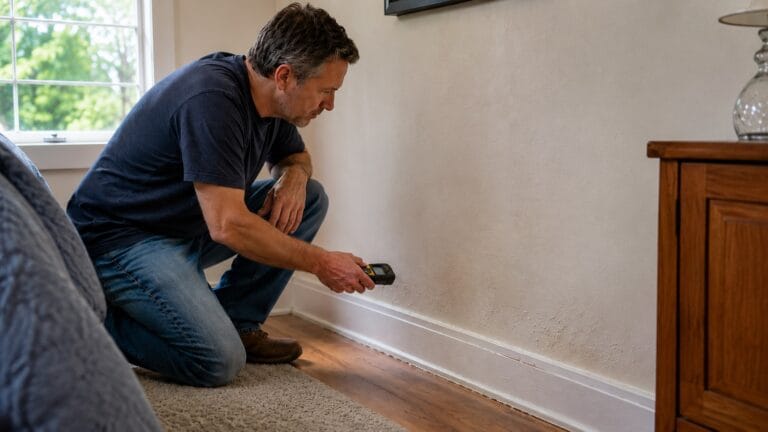
Damp drywall near an exterior wall can appear as a cool spot, soft area, yellowish stain, gray mark, bubbling paint, or peeling finish. The stain may not appear directly across from the opening if water travels downward or sideways inside the wall.
Still, if the interior mark is near the same height or wall bay as an exterior penetration, the opening becomes a possible source. This is especially true when the symptom appears after rain or returns after the wall has dried.
Swollen Baseboards or Soft Trim
Water entering through a wall penetration may run downward inside the wall before showing at the baseboard. This can cause swelling, paint separation, staining, or trim that pulls away from the wall.
Baseboard symptoms can also come from floor leaks, plumbing leaks, condensation, or exterior grade problems. But if the affected baseboard sits below an exterior penetration, the wall opening should be included in the moisture investigation.
Musty Odors Near an Exterior Wall
A musty smell near an exterior wall can be an early clue that hidden materials have stayed damp. Odor may appear before obvious staining, especially when water is affecting insulation, sheathing, framing, or the backside of drywall.
Musty odor alone does not identify the source. The key is whether the odor is strongest near a wall with exterior penetrations and whether it becomes worse after rain, hose use, exhaust operation, or repeated damp weather.
Wet Insulation, Framing, or Rim Joists
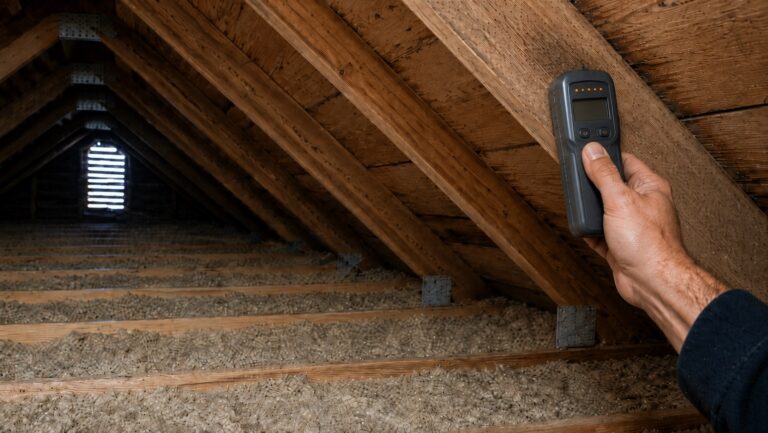
In basements, crawl spaces, garages, utility rooms, or unfinished areas, you may be able to see the backside of some exterior wall penetrations. Look for damp insulation, darkened wood, water trails, rusted fasteners, or staining on framing near the opening.
Water that reaches framing or insulation is more serious than surface staining. These materials can stay damp longer and may not dry well without correcting the source. If the dampness is hidden behind finished walls, broader guidance on signs of hidden moisture in walls can help you compare related symptoms.
Moisture in a Basement or Crawl Space Below the Penetration
Exterior wall penetrations near the rim joist, sill area, foundation edge, or lower wall can leak into basements and crawl spaces. The water may not appear at the exact hole. It may drip down framing, follow pipes or wires, or collect on the foundation ledge.
If a damp basement or crawl space area lines up with an exterior wall penetration, check the outside wall directly above or behind it. Water entering through a small opening can sometimes look like foundation moisture when it actually began higher on the wall.
Timing Clues That Point to Penetration Leaks
Timing often tells you more than appearance. The same stain can mean different things depending on when it appears. A wall that gets wet after rain points to a different source than a wall that gets wet only when a faucet, dryer, fan, or appliance operates.
Moisture After Wind-Driven Rain
If moisture appears after windy storms but not after light rain, an exterior wall penetration may be involved. Wind can push rain into gaps that stay dry during ordinary rainfall. This is common around loose flanges, cracked caulk, poorly sealed cable holes, and vent covers that do not sit tight against the wall.
When this pattern repeats, look for the exterior opening closest to the damp area. The nearest opening is not always the source, but it is a good place to begin.
Water During Outdoor Faucet Use
If moisture appears only when an outdoor faucet is running, the problem may involve the hose bib, faucet body, pipe connection, or wall opening around the faucet. This is different from a rain-only leak because water pressure can reveal hidden plumbing problems.
For faucet-specific warning signs, see signs water is entering around outdoor faucets. That page stays focused on hose bibs and exterior faucet penetrations, while this article covers wall penetrations more broadly.
Moisture After Rain Near Cable or Internet Lines
If dampness appears after rain near a coax, fiber, satellite, phone, or security camera line, the cable route may be guiding water toward the wall. This is especially likely if the cable slopes toward the entry point or lacks a drip loop.
For the cause-specific explanation, see how cable entry points allow moisture inside. Cable penetrations have their own behavior because the cable itself can direct water toward the hole.
Moisture During Exhaust Fan or Dryer Operation
If moisture appears when a bathroom fan, kitchen exhaust fan, laundry vent, or dryer vent is running, the problem may involve an exhaust termination or vent opening. Warm humid air, poor exterior sealing, backdrafting, condensation, or a loose vent hood can all create moisture symptoms around the wall opening.
This pattern is different from a rain-only leak. It may involve both exterior water entry and moisture produced by the system itself. For exhaust-specific symptoms, see signs moisture is entering around exhaust vents.
Recurring Dampness After the Area Has Dried
A penetration leak often returns in the same place. The wall may dry after one storm, then become damp again after the next. Paint may bubble repeatedly. A stain may reappear after being cleaned. A musty odor may come back during wet weather.
Recurring moisture usually means the water path has not been corrected. Drying the surface may hide the symptom until the next rain, fixture use, or humid exhaust cycle wets the same area again.
Common Penetration Types That Show These Symptoms
Different wall penetrations can show similar moisture symptoms. The signs may look alike, but the source and repair path can be different. That is why it helps to identify what type of opening lines up with the moisture.
Outdoor Faucets and Hose Bibs
Outdoor faucets combine plumbing pressure with an exterior wall opening. Water may leak from the faucet body, hose connection, pipe connection, or wall penetration around the fixture. Staining below the faucet, damp siding, a loose hose bib, or indoor dampness when the faucet runs can point to this type of problem.
Cable, Internet, Satellite, and Camera Lines
Cable and low-voltage lines are often added after construction. They may enter through small drilled holes in siding, trim, brick, or stucco. If the cable slopes toward the wall, lacks a drip loop, or has failed sealant, rainwater can follow the line into the opening.
Exterior Vent Openings
Exterior vent openings can allow moisture when the vent hood is loose, cracked, poorly sealed, blocked, or angled in a way that traps water. Vent openings may involve dryer vents, bathroom exhaust vents, kitchen exhaust vents, combustion appliance vents, crawl space vents, or other wall terminations.
For a cause-focused explanation of this specific category, see how exterior vent openings cause moisture.
Exhaust Vents and Dryer Vents
Exhaust vents can create moisture problems in two ways. Water may enter from outside around the vent hood, or humid indoor air may condense near a cold or poorly sealed vent opening. Dryer vents also add lint, airflow, and warm moist exhaust to the situation.
If the moisture appears during dryer or fan operation, the vent system deserves closer attention. The symptom may not be caused by rain alone.
Utility Pipes, Sleeves, and Electrical Boxes
Utility penetrations include pipes, conduits, sleeves, meter penetrations, exterior outlets, light fixtures, service boxes, and other openings through the wall. These may leak if the surrounding sealant fails, the wall material deteriorates, or the component separates from the wall.
Electrical openings should be treated carefully. Do not open, seal, or modify electrical components unless you are qualified. Water near electrical fixtures requires professional attention.
How to Tell a Wall Penetration Leak From Other Moisture Sources
A wall penetration may be the source, but it is not the only possibility. Roof leaks, window leaks, siding failures, plumbing leaks, condensation, and foundation moisture can all create similar symptoms. The goal is to compare timing, location, and pattern before deciding. If you want the cause-focused explanation, see why wall penetrations become leak points.
Compare the Exterior Opening With the Interior Symptom
Start by checking whether the exterior penetration lines up with the interior stain, odor, damp baseboard, wet insulation, or basement moisture. Alignment does not prove the source, but it raises suspicion.
Remember that water can travel behind siding or inside wall cavities. The stain may appear below or slightly to the side of the penetration rather than directly behind it.
A simple way to compare locations is to measure from a nearby corner, window, door, or floor line on both sides of the wall. This can help you tell whether the indoor symptom is in the same wall bay as the exterior opening.
Check Whether the Moisture Follows Rain or Fixture Use
Rain-related moisture usually points toward exterior water entry. Moisture during faucet use may point toward plumbing pressure. Moisture during dryer or exhaust fan operation may point toward venting, condensation, or exterior vent sealing.
If the moisture appears at random or during humid indoor conditions, condensation may also be involved. This is why timing notes are useful before calling a professional.
Look for Other Exterior Wall Problems Nearby
Sometimes the penetration is not the only issue. Loose siding, missing flashing, cracked stucco, rotted trim, or failed caulk around nearby joints can direct water toward the wall opening. The penetration may be where the water enters, even if the broader wall detail is also contributing.
This is one reason a penetration leak can overlap with general exterior wall moisture. The problem may involve both the opening and the surrounding wall system.
Do Not Assume the Nearest Opening Is Always the Source
The closest exterior penetration is a logical place to check, but it is not automatically the source. Water can travel downward from a higher window, roof edge, siding joint, or flashing defect before appearing near a lower penetration.
If the source is unclear, avoid sealing random openings without understanding the water path. Sealing over the wrong area may trap moisture or delay the correct repair.
When the Signs Become Serious
Some wall penetration symptoms are only early warnings. The concern becomes stronger when moisture appears indoors, materials soften, odors develop, or the same area gets wet repeatedly.
Water Appears on the Interior Side of the Wall
Interior water is more concerning than exterior staining. Damp drywall, bubbling paint, wet trim, or water at the baseboard means moisture may already be past the exterior wall surface.
Once water reaches interior finishes, the wall may need more than surface sealing. The source should be identified before the materials are dried or repaired.
Soft Trim, Siding, or Wall Materials
Soft, swollen, or deteriorated material around a penetration suggests repeated wetting. Wood trim may feel spongy. Siding may deform or separate. Drywall may soften. Paint may peel repeatedly.
Soft materials show that water has affected the material itself, not just the surface. This should be inspected before the damage spreads to sheathing or framing.
Musty Odor or Mold-Like Staining Appears
Musty odor, especially near an exterior wall, may mean hidden dampness has lasted long enough to affect porous materials. Mold-like staining near the penetration or on the interior wall increases concern, especially when the area gets wet repeatedly.
This does not mean every stain is dangerous or that the entire wall is damaged. It does mean the moisture source should be corrected before cleanup or repainting.
The Same Area Gets Wet Again and Again
Repeated moisture is one of the strongest signs that the underlying path remains open. Even if each individual leak seems small, repeated wetting can keep hidden materials damp long enough to cause deterioration.
If the same wall area gets wet after each storm, each faucet use, or each exhaust cycle, treat it as an unresolved moisture pathway rather than a one-time event.
Safe Checks Before Opening a Wall
You can check for signs of wall penetration moisture without taking apart the wall or disconnecting fixtures. The goal is to document what you see, compare outside and inside locations, and decide whether the source needs professional inspection.
- Look for staining below exterior wall openings.
- Check caulk, sealant, sleeves, flanges, mounting blocks, and fixture bases for gaps.
- Compare the exterior opening with the interior wall, basement, crawl space, garage, or utility room behind it.
- Note whether moisture appears after rain, during fixture use, or during exhaust fan or dryer operation.
- Look for damp drywall, bubbling paint, swollen baseboards, wet insulation, or musty odor.
- Check whether the penetration feels loose or separated from the wall.
- Take photos after rain or during visible dampness so the pattern can be compared later.
Do not cut into walls, disconnect electrical components, remove active utility lines, or seal over an active leak without understanding the source. If several penetrations need checking, use a more complete process like this guide on how to inspect exterior penetrations for moisture.
Who to Call Based on the Penetration Type
The right professional depends on the type of penetration and the signs you are seeing. Wall penetration leaks often involve more than one system, so the repair may not be handled by the same person in every case.
Call a Plumber
Call a plumber if the moisture appears around an outdoor faucet, hose bib, pipe sleeve, water line, or wall opening that becomes wet when water is running. A leak that appears under pressure may involve a pipe connection or fixture inside the wall.
Call a Siding or Exterior Repair Contractor
Call a siding or exterior repair contractor if the penetration is surrounded by cracked siding, rotted trim, damaged stucco, loose mounting blocks, failed flashing, or deteriorated exterior materials. The fixture may not be the only problem. The wall detail around it may also need repair.
Call an HVAC, Dryer Vent, or Exhaust Vent Professional
Call the appropriate vent professional if moisture appears around dryer vents, bathroom fans, kitchen exhaust vents, or other exhaust openings. These problems can involve exterior water entry, condensation, airflow restriction, duct slope, lint buildup, or poor vent termination.
Call an Electrician
Call an electrician if the penetration involves exterior outlets, electrical boxes, service lines, light fixtures, or powered equipment. Water near electrical components should not be handled as a simple caulking problem, and the area should not be opened or worked on while it may be energized.
Call a Cable or Low-Voltage Technician
Call a cable, internet, satellite, or low-voltage technician if the issue involves coax, fiber, phone, security camera, or other service lines. Do not cut, splice, pull, or reroute service cables yourself.
Call a Moisture or Mold Professional
Call a moisture or mold professional if there is musty odor, damp drywall, wet insulation, mold-like staining, or recurring moisture inside the wall. Once hidden materials are wet, the source must be corrected before drying, repainting, or cleanup can be reliable.
FAQ About Wall Penetration Leaks
What is a wall penetration leak?
A wall penetration leak happens when water enters around an opening that passes through an exterior wall. Common examples include pipes, cables, vents, faucets, utility sleeves, electrical boxes, exhaust ducts, and exterior fixtures.
How do I know if water is entering around a wall opening?
Look for staining below the opening, cracked sealant, damp siding, loose flanges, interior wall stains, musty odor, swollen trim, or moisture that appears after rain or fixture use. The strongest clue is when the exterior opening lines up with the interior symptom.
Is cracked caulk around a wall penetration serious?
Cracked caulk is not always an emergency, but it is a warning sign. If the area is stained, damp, loose, or associated with interior moisture, the gap may be allowing water into the wall. Caulk alone may not solve the issue if the fixture, wall material, flashing, sleeve, or pipe is also damaged.
Why does water only appear after windy rain?
Wind-driven rain can push water into openings that stay dry during light rain. Loose flanges, failed sealant, cable holes, vent covers, siding gaps, and poorly protected penetrations may leak only when rain hits the wall at an angle.
When should a wall penetration leak raise mold concern?
Mold concern increases when a penetration leak keeps drywall, insulation, sheathing, framing, or trim damp repeatedly. Musty odor, recurring staining, soft materials, or dampness inside the wall are stronger warning signs than a one-time exterior stain.
Who should repair a leaking wall penetration?
It depends on the penetration. A plumber should handle pipe or faucet leaks. A siding contractor may be needed for damaged exterior wall details. An electrician should handle electrical penetrations. An HVAC or dryer vent professional should handle vent-related problems. A moisture or mold professional may be needed if hidden materials are already damp.
Key Takeaways
- Wall penetrations include exterior openings for pipes, cables, faucets, vents, exhaust ducts, utility lines, electrical boxes, and fixtures.
- Common signs of water entry include exterior staining, cracked sealant, damp siding, loose flanges, interior wall stains, musty odor, and wet insulation.
- Timing matters: rain-related moisture, faucet-use moisture, and exhaust-operation moisture point to different sources.
- Small gaps can still cause hidden moisture when they are exposed to repeated wetting.
- Caulk may help some surface gaps, but it will not fix damaged siding, loose fixtures, hidden plumbing leaks, poor vent details, or water trapped behind the wall surface.
- Do not disconnect utilities, electrical components, service cables, or vent systems without the right professional.
- Recurring dampness near a wall penetration should be treated as an unresolved moisture pathway.
Conclusion
Water entering through wall penetrations is easy to miss because the opening may be small and the first signs may look minor. A stain below a vent, cracked caulk around a pipe, or dampness behind a cable entry matters more when it returns after rain, fixture use, or exhaust operation.
The most useful clues are alignment and timing. If an interior stain, musty odor, wet baseboard, or damp basement area lines up with an exterior penetration, check that opening before repainting, drying the surface, or assuming the problem came from the foundation.
One Comment
Comments are closed.