Signs Water Is Entering Around Outdoor Faucets
Signs water is entering around an outdoor faucet include damp siding below the fixture, cracked or missing sealant, stains that start behind the faucet flange, a loose hose bib, water appearing indoors when the faucet runs, musty smells near the opposite wall, or dampness in the basement or crawl space behind the faucet.
These signs matter because a hose bib, sillcock, or outdoor spigot is both a plumbing fixture and an exterior wall penetration. A simple spout drip may stay outside, but water that disappears behind siding, enters around the faucet flange, or appears on the interior side of the wall can point to a hidden moisture path.
This issue belongs in the larger category of exterior water entry because outdoor faucets combine plumbing, siding, wall framing, and repeated water exposure in one small area. If you are trying to understand how small exterior openings let moisture into a home, the parent guide on how water enters homes through structural gaps explains the broader pattern.
The main distinction is simple: a drip from the spout is usually different from water that reaches the wall assembly. Water that disappears behind siding, stains the wall, dampens interior surfaces, or appears only when the faucet is pressurized deserves closer attention.
Why Outdoor Faucets Can Let Water Into Walls
An outdoor faucet is not just a plumbing fixture. It is also a pipe passing through the exterior wall. That opening may pass through siding, sheathing, framing, insulation, rim joists, masonry veneer, or basement wall areas depending on how the home is built.
When the faucet is firmly mounted and the wall opening is protected, normal hose use should not send water into the wall. Problems begin when the faucet leaks, moves, freezes, cracks, or loses its exterior seal.
Water can enter around an outdoor faucet in several ways:
- The sealant around the faucet flange cracks or separates from the wall.
- The faucet moves when a hose is pulled, opening gaps around the pipe penetration.
- Water sprays backward from a loose hose connection or damaged vacuum breaker.
- A frost-free sillcock or pipe connection leaks inside the wall when the faucet is turned on.
- Water runs behind siding or trim near the faucet mounting point.
- Repeated hose spray keeps the same wall area wet long enough to affect trim, siding, or sheathing.
This is why faucet-area moisture should not be treated as only a plumbing issue. Sometimes the faucet itself is leaking. Other times, the leak is at the wall opening, the siding detail, the pipe connection, or the hidden section behind the faucet. For a broader whole-home approach to identifying moisture sources, see this guide on how to find, fix, and prevent moisture problems in homes.
Early Exterior Signs Around the Faucet
The first clues usually appear on the outside of the home. These signs may be subtle at first, especially if the faucet only leaks during hose use or after heavy rain. Look at the wall around the faucet when the siding is dry, then check again after the faucet has been used.
Staining Below the Outdoor Faucet
Dark streaks, rust-colored stains, mineral deposits, or dirty vertical marks below the faucet can mean water is repeatedly running down the same part of the wall. One stain does not prove water is entering the wall, but repeated staining below the hose bib shows that moisture is collecting or draining from that fixture area.
Pay attention to stains that start behind the faucet flange instead of directly below the spout. If water appears to be coming from the wall opening rather than the faucet outlet, the problem may involve the seal around the penetration or a leak behind the exterior surface.
Damp Siding Around the Faucet
Siding that stays damp around the faucet after the rest of the wall has dried is a warning sign. Vinyl siding may show darkened seams or trapped moisture at overlaps. Wood siding may look swollen, stained, or soft. Fiber cement siding may show dark edges or deteriorated paint. Stucco or masonry may show darker patches near the pipe opening.
The most important pattern is repeated wetting in the same location. If the wall around the faucet gets wet every time the hose is used, the moisture source may be the hose connection, faucet body, or wall penetration. If it becomes wet after rain even when the faucet has not been used, the issue may involve exterior sealing, siding, or flashing around the fixture.
Cracked Caulk or Missing Sealant
Cracked caulk around an outdoor faucet is one of the simplest signs to spot. The gap may appear as a thin dark line around the faucet flange, escutcheon, pipe sleeve, mounting block, or siding cutout. Missing sealant can leave an open space where wind-driven rain or splashing water can reach the wall cavity.
However, caulk should not be treated as proof of the entire problem. Failed caulk may allow rainwater into the wall opening, but it does not explain every faucet-area leak. If water appears indoors only when the faucet is turned on, the problem may be a plumbing leak rather than a simple exterior seal gap. The article on how hose bib leaks cause wall moisture covers that cause-focused angle more directly.
A Loose Outdoor Faucet
An outdoor faucet should not shift noticeably when you touch it or attach a hose. If the faucet moves in and out of the wall, twists in the siding, or flexes when the hose is pulled, the movement may be widening the gap around the wall penetration. That gap can let water track behind the exterior surface.
A loose faucet can also stress the pipe or connection inside the wall. This is especially important when the leak appears during use. Water pressure inside the pipe may reveal a hidden leak that is not obvious when the faucet is turned off.
Soft, Swollen, or Deteriorated Trim
If the faucet is mounted through wood trim, a siding block, or a framed exterior detail, check whether the surrounding material feels soft, swollen, cracked, or spongy. Water repeatedly entering around the faucet can damage trim before it becomes obvious inside the home.
Paint failure around the fixture can also be a clue. Bubbling paint, peeling edges, darkened caulk lines, or softened wood near the faucet suggest the area has been wet more often than it should be.
Organic Growth or Dark Discoloration Below the Hose Bib
Green, black, or brown growth below an outdoor faucet does not automatically mean hidden mold inside the wall. Exterior surfaces can develop algae, mildew-like staining, or dirt patterns simply from shade and repeated wetting. Still, recurring growth directly below the faucet tells you the wall is staying wet enough to support surface growth.
If the staining is paired with soft trim, musty odor indoors, damp interior drywall, or a loose faucet, it becomes more concerning. The issue is not the surface growth alone. The concern is whether the same wetting pattern is reaching hidden materials behind the wall.
Interior Signs Behind the Outdoor Faucet
The most important signs are not always outside. If water enters around an outdoor faucet, it may show up inside the home, basement, crawl space, garage, utility room, or wall cavity directly behind the fixture. These interior symptoms deserve more attention than a simple exterior drip.
Damp Drywall or Paint on the Opposite Wall
If the inside wall behind the outdoor faucet feels damp, looks stained, or develops bubbling paint, moisture may be entering through the faucet area or leaking from the pipe inside the wall. The location matters. A damp spot that lines up with the exterior faucet is more suspicious than a random stain elsewhere in the room.
Drywall may show faint yellow or brown staining before it feels wet. Paint may bubble, wrinkle, or separate from the surface. In some cases, the wall may only feel cool or slightly soft at first. These are signs to take seriously because drywall can hide moisture before the damage is visible.
If you are trying to compare these symptoms with other wall moisture clues, the guide on signs of hidden moisture in walls gives a broader explanation of what hidden dampness can look like indoors.
Wet Baseboards Near the Faucet Wall
Water that enters around an outdoor faucet can travel downward inside the wall and appear near the baseboard. This may show up as swelling, staining, separation from the wall, peeling paint, or a musty smell at floor level.
Baseboard symptoms do not always mean the outdoor faucet is the source. Water can also come from plumbing, windows, doors, siding, condensation, or floor-level leaks. But if the damp baseboard lines up with the outdoor faucet location, especially after faucet use, the hose bib area should be inspected.
Dampness in a Basement or Crawl Space Behind the Faucet
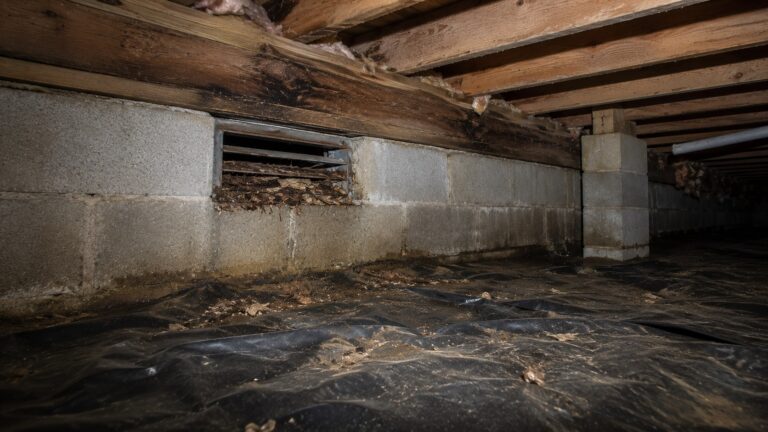
Many outdoor faucets pass through a rim joist, basement wall area, crawl space wall, or utility area before reaching the exterior. If the basement or crawl space behind the faucet is damp, stained, or musty, the outdoor faucet may be one possible source.
Look for water marks on the rim joist, sill plate, insulation, foundation edge, or wall surface directly behind the outdoor faucet. If the area becomes wet when the faucet is running, the issue may involve the faucet body, pipe connection, or frost-free sillcock. If the area becomes wet after rain, the problem may involve exterior sealing around the wall penetration.
Musty Smells Near the Interior Wall
A musty smell near the wall behind an outdoor faucet can suggest that moisture has been present long enough to affect hidden materials. Odor alone does not prove the faucet is the source, but it becomes more meaningful when paired with exterior staining, damp drywall, soft trim, or repeated wetting after faucet use.
Musty odor is especially important if the wall looks normal from the outside. Water can enter behind siding, sheathing, insulation, or trim before obvious surface damage appears. If odor increases after the faucet is used, the timing can help narrow the source.
Signs the Leak Happens Only When the Faucet Is Running
One of the most useful clues is timing. Some outdoor faucet leaks are visible all the time. Others only appear when the faucet is turned on and the pipe is pressurized. This second pattern is often more concerning because it can indicate a leak inside the wall rather than simple rain entry around the exterior seal.
Water Appears Indoors During Hose Use
If water appears inside the home, basement, crawl space, or garage only when the outdoor faucet is running, stop using the faucet until the source is checked. A leak that appears under pressure may come from a damaged faucet body, cracked pipe, failed connection, or split frost-free sillcock behind the wall.
This is different from a faucet that drips from the spout after shutoff. A spout drip wastes water, but a pressurized leak inside the wall can wet framing, insulation, drywall, sheathing, or rim joist materials before the homeowner notices widespread damage.
Water Sprays Near the Handle, Vacuum Breaker, or Hose Connection
Sometimes the water source is visible at the faucet itself. Water may spray from the handle, packing nut, vacuum breaker, anti-siphon device, or hose connection. If that water runs backward toward the wall, it can collect around the faucet penetration and seep behind the exterior surface.
This is common when a hose washer is missing, the hose is cross-threaded, the vacuum breaker is leaking, or the faucet packing is worn. Even if the plumbing inside the wall is intact, repeated spray against the wall can still create a moisture problem.
Moisture Appears Behind Siding While the Faucet Runs
If water seems to come from behind the siding, trim block, or wall surface while the faucet is running, the leak may be hidden behind the fixture. This pattern should not be dismissed as ordinary hose splash. Water should not be exiting from behind siding when the outdoor faucet is pressurized.
When this happens, the source may be inside the wall or immediately behind the exterior fixture. A plumber may be needed to evaluate the faucet and pipe. If siding or wall materials are already soft, damaged, or stained, an exterior repair professional may also be needed.
How to Tell a Faucet Drip From Wall Entry
Not every outdoor faucet leak means water is entering the wall. The location and timing of the water help separate a simple drip from a wall-entry problem.
A Spout Drip
A spout drip comes from the outlet where water normally exits the faucet. It may continue after the faucet is turned off. This can waste water and may need repair, but it does not automatically mean water is entering the wall.
The concern increases if the dripping water runs back toward the wall, pools against siding, or keeps the area below the faucet wet for long periods.
A Handle or Packing Leak
A handle leak usually appears around the stem or packing area when the faucet is turned on. Water may bead around the handle, drip down the faucet body, or spray backward toward the wall. This is still a faucet leak, but it can become a wall moisture issue if water repeatedly runs behind the faucet flange.
The key question is where the water goes. If it falls away from the wall, the risk is lower. If it runs along the faucet body and disappears behind siding, trim, brick, stucco, or caulk gaps, the wall penetration may be getting wet.
A Hose Connection Leak
A hose connection leak happens where the hose attaches to the outdoor faucet. It may be caused by a missing washer, damaged threads, over-tightening, cross-threading, or a poor hose connection. This kind of leak often sprays sideways or backward.
Even though the source is outside the wall, repeated spray can soak the siding around the faucet. Over time, water can enter through seams, gaps, siding blocks, loose trim, or failed sealant. This is one reason a leak that looks harmless during hose use can still contribute to hidden wall moisture.
A Wall Penetration Leak
A wall penetration leak appears around the opening where the faucet pipe passes through the wall. Water may seem to come from behind the flange, from the edge of a mounting block, from a siding seam, or from a gap around the pipe.
This is different from a spout drip. A wall penetration leak suggests water is interacting with the building envelope, not just the faucet outlet. If you see water collecting at the wall opening, compare the pattern with other signs water is entering through wall penetrations, especially if other exterior openings show similar staining or failed sealant.
A Hidden Pipe or Sillcock Leak
A hidden pipe or sillcock leak may not be visible from the outside. The faucet may look mostly normal, but water appears inside the wall, basement, crawl space, garage, or utility room when the faucet is turned on.
This is one of the most important patterns to recognize. If the leak only appears under pressure, the problem may be behind the wall surface. In that case, caulking around the outside may cover the gap but will not fix the plumbing leak.
What the Signs Usually Point To
Most outdoor faucet moisture problems fall into two categories: water entering from outside around the wall opening, or water leaking from the faucet or pipe system itself. The signs above help you decide which category is more likely.
Failed sealant, loose faucet movement, freeze damage, and hose backpressure can all create faucet-area moisture. Failed sealant is more suspicious when the area gets wet during rain or hose spray. Loose faucet movement becomes more concerning when the fixture shifts or pulls away from the wall. Freeze damage is especially suspicious when water appears inside the wall during the first uses of spring. Hose attachments, shutoff nozzles, pressure washers, or irrigation connections may also reveal weak points if water sprays backward or appears only when a hose is attached.
For the fuller cause-focused explanation, see the article on how hose bib leaks cause wall moisture.
Siding or Wall Gaps Around the Fixture
Outdoor faucets are often installed through siding blocks, trim pieces, brick openings, stucco penetrations, or exterior wall cutouts. If these details are poorly sealed, damaged, or deteriorated, water can enter around the fixture even when the faucet plumbing is not leaking.
This is where the faucet issue overlaps with exterior wall moisture. The guide on how exterior walls allow moisture into homes explains how siding, trim, joints, and openings can become moisture paths when water is not controlled at the exterior surface.
Repeated Hose Spray and Runoff
Sometimes the faucet is not defective, but the wall still gets soaked repeatedly. This can happen when hoses spray at the connection, children play near the faucet, irrigation lines splash the wall, or water runs down the siding after each use.
Repeated wetting matters because exterior materials are designed to shed water, not stay wet continuously. If the same small area gets soaked day after day, paint, caulk, trim, siding edges, and sheathing may eventually become vulnerable.
When Moisture Around an Outdoor Faucet Is Serious
Some faucet-area moisture problems are minor and easy to identify. Others are signs that water may already be affecting hidden materials. The more the symptoms involve the interior side of the wall, the more seriously the issue should be treated.
Water Appears Inside the Home
Water appearing indoors near the same wall as an outdoor faucet is one of the strongest warning signs. This is especially true if it happens while the faucet is running. A damp interior wall, wet floor edge, stained baseboard, or dripping in the basement behind the faucet can point to a hidden leak path.
Do not keep testing the faucet repeatedly if water is entering the home. Each test may add more moisture to the wall cavity. Instead, document when the water appears and stop using the faucet until the source is identified.
The Wall Stays Damp After the Faucet Is Off
If the wall around the faucet stays wet long after use, moisture may be trapped behind siding, trim, masonry, or sheathing. A wall surface that dries quickly is less concerning than one that remains damp, dark, or cool compared with nearby areas.
Persistent dampness may mean water has already moved beyond the surface. That does not automatically mean severe damage, but it does mean the area should be checked before the problem spreads.
The Faucet Moves or Pulls Away From the Wall
A faucet that pulls away from the wall can leave a direct gap around the pipe. It may also indicate that the fixture is not properly supported. If water is already staining the wall below it, the combination of movement and moisture is more serious than either sign alone.
Do not rely on caulk to hold a loose faucet in place. If the pipe or fixture is moving, the support issue should be corrected so the seal is not repeatedly broken.
Trim, Siding, or Framing Feels Soft
Soft material around the faucet suggests repeated wetting. Wood trim may feel spongy. Siding edges may deform. Paint may peel. If you can access the backside from a basement or crawl space, the rim joist or sill area may show staining or softness.
Soft structural materials are no longer just a surface moisture concern. If wood framing, sheathing, sill plates, or rim joists are affected, compare the issue with broader signs of structural moisture problems and consider professional inspection.
Musty Odor or Mold-Like Staining Appears Nearby
A musty smell near the inside wall, basement area, crawl space, or utility room behind an outdoor faucet can mean moisture has been present long enough to affect hidden materials. Mold-like staining near the faucet area does not always prove the faucet caused it, but it should not be ignored when the location lines up with the exterior fixture.
The concern is stronger when odor, staining, dampness, and faucet use appear connected. If the area smells worse after the faucet runs or after wind-driven rain hits that wall, the faucet penetration should be part of the moisture investigation.
Quick Checks Before Using the Faucet Again
Before continuing to use an outdoor faucet that may be letting water into the wall, do a careful visual check. The goal is not to perform plumbing repairs yourself. The goal is to understand whether the symptom looks like a simple exterior drip or a possible hidden moisture problem.
Check the area once while everything is dry, then again while the faucet is running briefly. Do not keep running the faucet if water appears indoors, behind siding, or inside a basement or crawl space.
- Check whether the faucet feels loose when lightly touched.
- Look for gaps, cracks, or missing sealant around the faucet flange or wall opening.
- Look for staining directly below the faucet and along nearby siding seams.
- Inspect the interior wall, basement, crawl space, or garage area behind the faucet.
- Watch whether moisture appears when the faucet is off, when it is running, or only when a hose is attached.
- Check whether water is spraying backward from the hose connection, handle, or vacuum breaker.
- Look for soft trim, peeling paint, swollen siding, damp baseboards, or musty odor.
If the wall stays dry and the only issue is a visible drip from the hose connection, the problem may be limited to the faucet or hose connection. If water appears at the wall opening, behind siding, or indoors, the issue may be more than a surface drip.
It can also help to compare the faucet area with nearby penetrations. If several openings on the same wall show failed sealant or staining, the problem may be part of a broader exterior wall moisture pattern rather than one isolated faucet. For a wider inspection process, see this guide on how to inspect exterior penetrations for moisture.
When to Call a Professional
Some outdoor faucet problems are simple, but water entering a wall can become harder to trace once it reaches hidden materials. Calling the right professional depends on what you are seeing.
Call a Plumber If the Leak Appears When the Faucet Runs
If water appears indoors, in the basement, in the crawl space, or behind the wall only when the faucet is turned on, a plumber should inspect the faucet, pipe connection, and sillcock. This pattern may indicate a pressurized leak inside the wall.
If the faucet has a dedicated indoor shutoff valve, leave it off until the leak is evaluated. Do not rely on exterior caulk to contain water that may be leaking from a pressurized pipe inside the wall.
You should also call a plumber if the faucet moves, leaks around the handle under pressure, loses pressure unexpectedly, or may have been exposed to freezing damage. These signs can point to plumbing problems that exterior caulk will not solve.
Call an Exterior Repair Professional If the Wall Materials Are Damaged
If siding, trim, stucco, brick joints, or mounting blocks around the faucet are cracked, soft, loose, or deteriorated, the wall assembly may need exterior repair. A plumber can address the water supply issue, but damaged exterior materials may still let rainwater enter unless the wall detail is corrected.
This is especially important if the faucet passes through siding that has already warped, separated, or trapped water around the mounting area.
Call a Moisture or Mold Professional If Hidden Dampness Is Suspected
If there is musty odor, mold-like staining, damp drywall, wet insulation, or repeated moisture inside the wall, a moisture or mold professional may be needed to evaluate how far the dampness has spread. This is more likely when the problem has been present for weeks or months or when indoor symptoms are already visible.
Professional help is also wise if the area has been repeatedly wet and the source is unclear. Outdoor faucets can be one possible source, but nearby windows, doors, siding seams, flashing, plumbing lines, and foundation edges can create similar symptoms.
FAQ About Water Entering Around Outdoor Faucets
Can an outdoor faucet leak inside the wall?
Yes. An outdoor faucet can leak inside the wall if the pipe connection, faucet body, or frost-free sillcock is damaged. This often shows up when the faucet is turned on because the pipe becomes pressurized. Water may appear on the interior wall, in a basement, in a crawl space, or near the rim joist behind the faucet.
Why does water only appear when I turn on the outdoor faucet?
Water that appears only when the faucet is on may indicate a pressurized leak. The leak may be at the faucet body, pipe connection, frost-free sillcock, hose connection, or vacuum breaker. If the water appears indoors or behind the wall, stop using the faucet until the source is checked.
Is staining below a hose bib a serious warning sign?
Staining below a hose bib can be minor if it comes from occasional splash or an old surface drip. It becomes more serious when the stain keeps returning, the siding stays damp, the faucet is loose, the sealant is cracked, or the inside wall behind the faucet shows moisture symptoms.
Can caulking around an outdoor faucet stop water entry?
Caulking can help if the only problem is a small exterior gap around the faucet penetration. It will not fix a cracked pipe, damaged sillcock, loose plumbing connection, loose faucet support, or leak inside the wall. If water appears when the faucet is running, the plumbing should be checked before exterior sealant is treated as the fix.
Why is my basement damp near an outdoor faucet?
A basement wall or rim joist area near an outdoor faucet may become damp if the faucet, pipe, or wall penetration is leaking. Exterior drainage, siding leaks, foundation moisture, or other wall penetrations can cause similar symptoms, but dampness that appears when the faucet runs points more strongly toward the outdoor faucet or pipe.
Should I stop using an outdoor faucet if the wall gets wet?
Yes, if the wall, basement, crawl space, or interior surface gets wet when the faucet is used, stop using it until the source is identified. Continued use can add more water to hidden materials and make the damage harder to dry.
Can a leaking hose bib cause mold inside a wall?
Yes, if the leak keeps hidden materials damp long enough. A single brief drip is less concerning than repeated wetting inside drywall, insulation, sheathing, rim joists, or framing, especially when the area cannot dry between uses.
Key Takeaways
- Outdoor faucets are both plumbing fixtures and exterior wall penetrations.
- Stains, damp siding, cracked caulk, loose faucet movement, and soft trim can signal water entry around the faucet area.
- Interior dampness behind the faucet is more serious than a simple exterior drip.
- Water that appears only when the faucet is running may point to a pressurized leak inside the wall.
- Caulk may help with exterior gaps, but it will not fix hidden plumbing leaks.
- Stop using the faucet if water appears indoors, in a basement, in a crawl space, or behind the wall.
- Call a plumber, exterior repair contractor, or moisture professional depending on whether the signs point to pressurized plumbing, damaged wall materials, or hidden dampness.
Final Check Before Ignoring Faucet-Area Moisture
The most useful clues are location and timing. If staining stays outside and comes from a visible hose connection drip, the issue may be limited. If water appears indoors, the faucet feels loose, the wall stays damp, or moisture shows up only when the faucet runs, the problem may involve the wall penetration or plumbing behind the exterior surface.
Check both sides of the wall, avoid assuming caulk fixes every faucet-area leak, and stop using the faucet if water appears indoors, behind siding, in a basement, or in a crawl space. The earlier the source is identified, the less time hidden materials have to stay wet.