Signs Water Is Entering Around Chimney Base
Water entering around a chimney base often shows up as ceiling stains near the chimney, damp drywall beside a chimney chase, dark lower brick, white residue on masonry, musty odors, or wet attic materials after rain. The visible damage may not appear exactly where the water gets in because the leak can travel through framing, masonry, roof sheathing, insulation, or drywall first.
A small stain near the chimney should matter more when it darkens after storms, dries between rains, then returns in the same area. Repeated wetting around a chimney base can affect roof decking, attic framing, wall cavities, insulation, siding transitions, and interior finishes before the damage looks serious from inside the room.
This guide focuses specifically on signs that water is entering around the chimney base. It does not cover every possible chimney leak, crown defect, mortar failure, or roof leak. For a broader overview of structural leak paths, see this guide to how water enters homes through structural gaps.
Why Water Entry Around a Chimney Base Is Hard to Spot
A chimney base is one of the more vulnerable moisture entry points on a roof because it interrupts the normal path water follows down the roof surface. Instead of flowing uninterrupted over shingles or other roofing material, rainwater has to move around a vertical chimney structure. That transition depends on flashing, masonry, seal details, roof slope, and drainage patterns working together.
When any part of that transition weakens, water may enter through a small gap and move behind finished surfaces before the homeowner sees anything obvious. A chimney-base leak may not create an active drip in the room below. It may first appear as a faint stain, a musty smell, a soft section of drywall, or a damp patch that only shows up after wind-driven rain.
The water path can also be indirect. Water may enter at the lower chimney flashing, run along roof sheathing, follow a rafter, soak into masonry, or move behind siding before it reaches the visible surface. This is why a stain several inches or even several feet from the chimney can still be related to chimney-base water entry.
Several chimney problems can create similar lower-chimney symptoms. Flashing failure, deteriorated mortar, a cracked crown, a siding transition gap, or a poorly sealed chimney chase can all send water toward the base area. That is why the pattern matters more than one stain: where the damage appears, when it appears, whether it returns after rain, and whether exterior clues line up with the interior moisture.
Common Signs Water Is Entering Around the Chimney Base
The most reliable signs of chimney-base water entry are repeated moisture patterns near the chimney after rain. One isolated stain may not prove the source, but the same stain returning, spreading, or darkening after storms is much more important.
Water stains near the chimney-side ceiling
Brown, yellow, or tan stains on the ceiling near the chimney are one of the most common interior clues. These stains may appear as rings, streaks, irregular patches, or faint discoloration that becomes darker after rain. If the stain is close to where the chimney passes through the roof, the chimney base should be one of the first areas considered.
The stain may not appear directly against the chimney. Water can move along framing or drywall before it becomes visible. A ceiling mark that lines up with the chimney from above, especially if it grows after storms, can still point to water entering near the chimney base.
Damp drywall beside a chimney chase
In homes with a framed chimney chase, water may enter around the lower exterior transition and move into the chase wall. Instead of showing up on the ceiling first, it may create damp drywall beside the chimney, near the fireplace wall, or along an upper-floor wall that borders the chimney structure.
This can look like soft drywall, darker paint, bubbling texture, or a section of wall that feels cooler or damper than the surrounding area. If the dampness returns after rain and stays concentrated around the chimney chase, the base transition deserves closer inspection.
Peeling paint or bubbling wall surfaces near the chimney
Paint that peels, bubbles, wrinkles, or separates near a chimney can be a sign of repeated moisture behind the finish layer. This is especially important when the same area has already been patched or repainted and the damage keeps coming back.
Fresh paint may temporarily hide the stain, but it does not stop water from entering. If the surface fails again after rain, the problem is likely behind the wall or ceiling, not just on the painted surface.
Musty odor near the chimney area
A musty smell near a chimney, fireplace wall, or chimney chase can suggest hidden dampness. Odor alone does not prove there is mold or confirm the exact leak source, but it is a warning sign when paired with stains, damp drywall, or recurring moisture after rain.
Musty odors are especially important when they become stronger during wet weather or when the room has been closed up. That pattern may mean moisture is entering the chimney area and remaining trapped inside wall cavities, insulation, or wood framing.
Wet attic framing around the chimney penetration
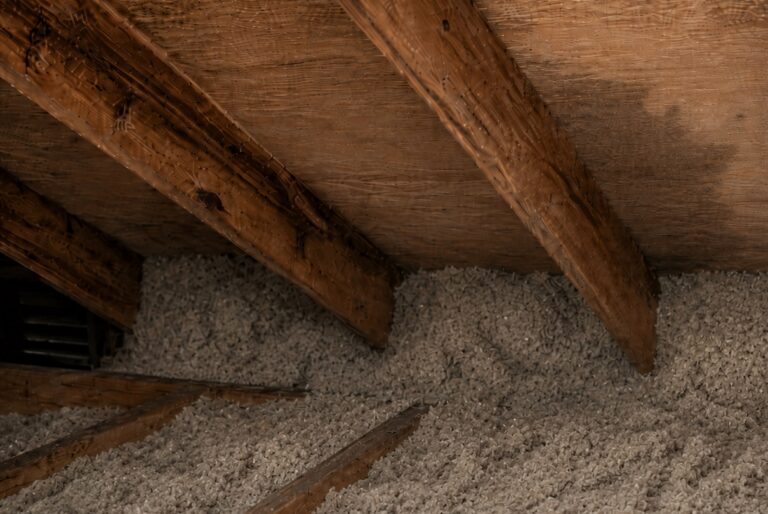
If the attic is safely accessible, moisture around the chimney penetration can provide an important clue. Wet roof sheathing, stained rafters, damp insulation, rusted fasteners, or darkened wood near the chimney opening may indicate water is entering where the chimney passes through the roof system.
This type of evidence is often more useful than looking only at interior paint damage. Interior stains may appear late, but attic materials can show the water path earlier. If the wet area is concentrated around the chimney rather than spread across the attic, the chimney base or nearby flashing transition becomes a more likely source.
Recurring symptoms after wind-driven rain
Some chimney-base leaks only show up during heavy rain, sideways rain, or storms with strong wind. Light rain may drain normally, while wind-driven rain pushes water into small gaps around flashing, siding, masonry joints, or chase trim.
This pattern matters because it can make the problem seem inconsistent. A homeowner may see no leak during several normal rains, then notice staining after one storm. When the symptoms repeatedly follow wind-driven rain and stay near the chimney area, the base transition should be checked carefully.
Exterior Signs Near the Chimney Base
Exterior symptoms can help confirm whether the chimney base is a likely water entry point. If the outside of the chimney shows repeated staining, residue, gaps, or material separation near the lower transition, interior stains near the same area are less likely to be random.
The safest way for most homeowners to look for these signs is from the ground with binoculars or from a safe window view. Do not climb onto a roof to inspect chimney details unless you are trained and properly equipped. Chimney-base leaks often require roof-level inspection, but the first step is recognizing the visible clues.
If you can see the chimney safely, take photos after dry weather and again after rain. Comparing the same area in both conditions can make darkening, residue, and wet patterns easier to notice.
Dark staining on brick near the lower chimney
Dark streaks, blotchy staining, or damp-looking masonry near the lower part of the chimney can suggest repeated wetting. This is especially important when the discoloration begins near the roofline, flashing area, siding joint, or chimney chase trim rather than evenly across the entire chimney.
Brick and masonry can absorb moisture, then release it slowly as conditions dry. Because of that, a lower chimney area may look darker than surrounding brick even after the rain has stopped. If the same area repeatedly darkens after storms, water may be entering or collecting near the chimney base.
Dark staining does not prove flashing failure by itself. It may also come from porous masonry, deteriorated mortar, poor drainage behind the chimney, or water traveling downward from a higher defect. When the staining is concentrated near the chimney base and returns after rain, it becomes much more meaningful.
White residue on lower chimney masonry
White powdery residue on brick or mortar near the chimney base can be a sign that moisture is moving through masonry and leaving mineral deposits behind as it dries. This residue is often called efflorescence. It does not always mean there is an active leak inside the home, but it does show that water has been moving through the masonry.
When white residue appears mostly near the lower chimney, roofline, or siding intersection, it may point to moisture entering around the base or being trapped at that transition. If the residue keeps returning after cleaning, the moisture source has probably not been corrected.
Exterior residue alone may not tell the full story, but residue near the lower chimney plus recurring interior moisture nearby is a stronger pattern.
Staining where siding meets the chimney
Some chimneys are not freestanding masonry stacks. Many homes have framed chimney chases covered with siding, trim, stucco, or manufactured veneer. In these cases, water may enter where siding meets the chimney chase, where trim pieces intersect, or where the chase meets the roof surface.
Look for dark streaks, swollen trim, peeling paint, soft siding edges, or stains running down from the chimney-to-siding joint. These symptoms suggest that water may be getting behind the cladding rather than draining away from the chimney area.
This is one reason chimney-base leaks can overlap with exterior wall moisture symptoms. For this article, the focus should stay on water patterns connected to the chimney base or chimney chase transition, not general siding leaks elsewhere on the wall.
Gaps, lifted edges, or separated materials around the base
Visible gaps around the chimney base are a major warning sign. These may appear where metal flashing meets masonry, where trim separates from a framed chimney chase, where sealant has cracked, or where roofing materials pull away from the chimney transition.
Flashing-related symptoms belong more directly in a full guide to signs of chimney flashing failure, but they matter here because failed flashing often shows up as water entering around the chimney base. If the visible gap is near the lower chimney transition and the interior stain appears nearby, the connection is worth investigating.
Do not assume that adding more caulk over a gap will solve the problem. Chimney-base water entry often involves layered materials that are supposed to shed water in a specific direction. Smearing sealant over the surface may hide the symptom temporarily while trapping moisture or leaving the real water path open.
Debris or water collecting behind the chimney
Leaves, pine needles, roof granules, and other debris can collect behind or beside a chimney. When debris holds water against the chimney base, it can increase the chance of moisture entering through weak flashing, gaps, masonry joints, or siding edges.
This is most common on the uphill side of the chimney, where roof water flows toward the obstruction. If the roof shape allows water to collect behind the chimney instead of moving around it cleanly, that area may stay wet longer than the surrounding roof surface.
Some chimneys use a cricket or saddle to divert water around the uphill side. If water and debris are collecting there repeatedly, the chimney-base area may be under more moisture stress than it was designed to handle.
Interior Signs Below or Beside the Chimney
Interior symptoms are often what first alert a homeowner to a chimney-base leak, but the damage may not appear directly below the entry point.
If interior symptoms keep appearing near the chimney after rain, compare them with broader signs of water leaks around chimneys. Then narrow the pattern by checking whether the damage lines up with the lower chimney transition rather than the top of the chimney, the firebox, or an unrelated roof area.
Ceiling rings or stains near the chimney
A ring-shaped stain near the chimney is one of the clearest interior warning signs. The stain may start faint, then darken after the next rain. It may also dry lighter and leave a yellow or brown outline behind.
When a stain appears close to the chimney line, especially on an upper-floor ceiling or ceiling below an attic, the chimney base should be considered. The stain may indicate water entering near the roof/chimney joint and traveling across the ceiling material before becoming visible.
Wall stains beside the chimney structure
Water entering near the chimney base may run downward into a wall cavity instead of dripping through the ceiling. This can create vertical stains, irregular blotches, or damp areas beside the chimney structure.
These stains are common near framed chimney chases, fireplace walls, and exterior walls where the chimney passes beside living space. If the stain appears after rain and stays close to the chimney, the base transition or chimney-to-wall interface may be involved.
Swollen trim or soft drywall near the chimney wall
Trim, baseboards, and drywall edges near a chimney can absorb moisture from hidden leaks. Swollen trim, softened drywall, loose joint compound, or paint separation near the chimney wall may indicate that water is moving behind finished surfaces.
This is especially concerning when the damage is localized. Widespread room humidity usually affects broader areas, while chimney-base water entry tends to create a more concentrated moisture pattern near the chimney structure.
Damp insulation or staining in the attic
Attic evidence can be more direct than room-side stains. If insulation near the chimney is damp, compressed, discolored, or musty, water may be entering near the roof penetration. Stained roof sheathing or darkened framing around the chimney is another important clue.
Because attic moisture can also come from condensation, compare the pattern carefully. Condensation may affect broad areas of sheathing or ventilation trouble spots. A chimney-base leak is more likely when the moisture is concentrated around the chimney penetration and appears after rain.
How Water Moves From the Chimney Base Into Nearby Materials
Water entering around a chimney base rarely stays in one neat location. Once it gets past the exterior water-shedding layer, it may move along roof decking, framing, masonry, siding, insulation, or the backside of drywall before it becomes visible.
Water can follow roof decking before dripping down
If water enters at the chimney base, it may run along the top or underside of roof sheathing before dripping into the attic or ceiling cavity. This can make the stain appear slightly downhill from the chimney instead of directly underneath it.
Roof slope, framing direction, insulation placement, and drywall seams all affect where the water finally becomes visible. A stain that appears a short distance from the chimney can still be related to the chimney base if the path follows the roof structure.
Water can follow rafters or framing members
Wood framing can direct water away from the entry point. A small amount of water may cling to the side of a rafter, truss, or framing member before dripping lower in the attic. That can create stains or damp insulation away from the exact chimney penetration.
This is why attic inspection patterns matter. If several stains or damp marks seem to point back toward the chimney, the chimney base may be the starting point even if the final wet spot is not directly beside it.
Masonry can absorb and release moisture slowly
Brick and mortar can absorb moisture, hold it, and release it slowly as they dry. That is why a chimney-base problem may appear as darkened brick, white residue, damp mortar, or staining below the roofline instead of an obvious indoor drip.
Siding and chimney chase details can hide water paths
On framed chimney chases, water may enter behind siding, trim, or manufactured cladding. If moisture symptoms show up beside the chimney wall rather than on the ceiling, the chimney-to-siding transition may be part of the problem.
Because moisture can move through several materials before becoming visible, chimney-base symptoms should be compared with other hidden moisture patterns in the home. For broader whole-home context, see this guide to how to find, fix, and prevent moisture problems in homes.
How to Tell the Chimney Base Is the Likely Entry Point
No single stain proves that water is entering around the chimney base. The stronger evidence comes from patterns. When several clues point toward the same lower chimney transition, the chimney base becomes a much more likely source.
A simple first check is to compare three things: the indoor stain location, the exterior chimney-base condition, and the timing after rain. If all three point to the same chimney-side area, the base transition should move higher on the inspection list.
The symptoms line up with the chimney location
Start by comparing the indoor symptom with the chimney location above or outside. A ceiling stain near the chimney line, a damp wall beside the chimney chase, or attic staining around the chimney penetration is more suspicious than a random stain on the opposite side of the room.
The alignment does not have to be perfect. Water can travel, but the damage usually has some relationship to the chimney structure. If the stain appears downhill from the chimney on a sloped roof, or beside the chimney chase inside the home, that pattern may still point back to the base area.
The symptoms appear or worsen after rain
Timing is one of the most important clues. If the stain darkens after rain, the drywall feels damp after storms, or the odor becomes stronger during wet weather, the issue is more likely to involve exterior water entry than general indoor humidity.
Rain-related timing is especially important when the same area dries between storms, then becomes damp again. That repeated wet/dry cycle suggests that water is still finding a path into the chimney area.
The problem is worse during wind-driven rain
Wind-driven rain can push water sideways into small openings that do not leak during light rain. If the chimney area only leaks during certain storms, that does not rule out the chimney base. It may actually support the possibility of a small gap, weak flashing edge, siding joint, or chimney chase opening.
Homeowners often underestimate wind-driven rain because they expect leaks to happen every time it rains. Chimney-base leaks may be intermittent when the vulnerable opening only receives water from a certain wind direction.
Exterior staining starts near the lower chimney area
If the outside of the chimney shows dark staining, white residue, peeling trim, or damp-looking material near the roofline or lower chimney transition, that exterior evidence strengthens the case. Exterior symptoms that line up with interior stains are more meaningful than interior stains alone.
This is also where it helps to separate chimney-base symptoms from other chimney problems. If the visible damage is concentrated around metal flashing, compare it with the more specific guide to signs of chimney flashing failure. If the staining is lower and connected to the base transition, this article’s chimney-base pattern is more relevant.
Attic moisture is concentrated around the chimney penetration
If attic moisture appears mostly around the chimney opening, the chimney base or nearby flashing transition becomes a likely source. Look for darkened sheathing, water marks on framing, damp insulation, or staining that starts near the chimney and trails downward.
By contrast, widespread attic moisture may suggest poor ventilation, condensation, or broader roof moisture problems. A chimney-base leak usually has a more localized pattern around the penetration.
Other nearby roof areas appear dry
When the chimney area shows repeated moisture but surrounding roof areas appear dry, the chimney transition becomes more suspicious. This does not prove the exact failure point, but it helps narrow the inspection.
For example, if roof decking away from the chimney is dry, attic insulation elsewhere is normal, and the only staining appears around the chimney penetration, the chimney base should be inspected before assuming the problem is a general roof leak.
For a deeper cause-based explanation of rain-related chimney leaks, see this guide to why chimneys leak during rain.
When the Problem May Be Coming From Another Chimney Area
Water showing up near the chimney base does not always mean the original opening is exactly at the base. The goal is to compare the location, timing, exterior clues, and interior damage pattern before deciding whether the base, crown, mortar, flashing, chase, or nearby roof surface needs closer inspection.
When the chimney crown may be involved
If the top surface of the chimney is cracked, deteriorated, sunken, or holding water, moisture may enter from above and move downward through the chimney structure. In that case, the base may show staining even though the upper chimney is part of the problem.
When the strongest visible clues are at the top of the chimney, compare them with the more specific signs of chimney crown damage. Crown damage is a different issue than base-level water entry, even though both can eventually produce lower chimney moisture symptoms.
When mortar joints may be allowing water in
Deteriorated mortar can allow water to enter the chimney masonry itself. Crumbling joints, open gaps, loose mortar, and separated brick joints are especially important when moisture symptoms appear across the masonry rather than only at the roofline or base transition.
If the most obvious clues are failing joints, gaps between bricks, or widespread masonry absorption, the issue may fit the more specific guide to signs chimney mortar is allowing water in. Mortar-related moisture can still show up near the base, but the repair path is different from a simple lower transition leak.
When flashing failure is the main clue
Flashing problems are one of the most common reasons water enters near chimney bases. If the strongest clues are rust, loose metal, lifted edges, failed counterflashing, cracked sealant, or gaps where the chimney meets the roof, the base symptom may be real but the more specific failure is flashing-related.
When the issue may be a broader roof leak
Sometimes the chimney is near the damage but is not the actual source. Water can enter higher up on the roof, travel along sheathing or framing, and appear near the chimney because of the roof slope or framing layout.
This is why attic evidence matters. If staining starts far above the chimney or follows roof framing from another location, the source may be a different roof leak. If the water path begins at the chimney penetration, the chimney base becomes more likely.
When to Call a Professional
A chimney-base moisture problem should be inspected professionally when the symptoms repeat, spread, or affect structural materials. Small stains can be early warnings, but recurring moisture around a chimney can eventually damage wood, drywall, insulation, masonry, and roof components.
Call a qualified roofer, chimney professional, mason, or home inspector when you notice any of the following:
- Stains near the chimney return after every rain.
- Ceiling or wall damage keeps reappearing after repainting.
- Attic sheathing, rafters, or insulation near the chimney are damp.
- Brick or mortar near the chimney base is dark, soft, cracked, or crumbling.
- There are visible gaps, loose flashing, or separated materials around the chimney base.
- A musty odor persists near the chimney chase or fireplace wall.
- Water appears near electrical fixtures, outlets, or wiring; avoid touching the area and have it checked safely.
- The only way to inspect the problem safely would require climbing onto the roof.
Professional inspection is especially important when the leak has returned more than once. Repeated wetting is often more damaging than one small stain because the materials do not get a chance to dry fully before the next storm. That pattern can allow hidden moisture to remain inside walls, roof cavities, or framing.
Avoid treating a chimney-base leak as a simple surface caulking problem unless the actual water path has been identified. A temporary seal may reduce visible water for a while, but if flashing, masonry, siding, or roof drainage is still failing, moisture can continue moving behind the surface or become trapped where it cannot dry.
What the Pattern Usually Means
- Water entering around a chimney base often shows up as ceiling stains, damp drywall, dark masonry, musty odors, or wet attic framing.
- The visible stain may appear away from the actual entry point because water can travel along sheathing, rafters, masonry, siding, or drywall.
- Exterior clues near the lower chimney, such as dark staining, white residue, gaps, or siding discoloration, can support the diagnosis.
- Recurring symptoms after rain are more important than a one-time stain.
- Not every chimney-base symptom is caused by flashing; crown damage, mortar failure, siding transitions, and broader roof leaks can create similar evidence.
- Professional inspection is recommended when stains return, attic materials are wet, masonry is deteriorating, or the roof-level transition needs to be checked safely.
FAQ: Signs Water Is Entering Around Chimney Base
Can water enter around a chimney base without visible dripping?
Yes. Chimney-base water entry often begins as staining, damp drywall, musty odor, or wet attic materials before any active dripping appears. Water may soak into masonry, insulation, sheathing, or drywall and dry slowly between storms.
Is water near the chimney base always caused by flashing failure?
No. Flashing failure is common, but it is not the only possible cause. Water near the chimney base can also come from deteriorated mortar, crown damage, siding intersections, a framed chimney chase, or a nearby roof leak that travels toward the chimney area.
Why does the wall beside my chimney get wet only when it rains?
If the wall beside the chimney gets wet after rain, exterior water may be entering around the chimney-to-roof or chimney-to-wall transition. Wind-driven rain can push water into small gaps that do not leak during lighter storms.
Can chimney-base leaks cause mold inside walls?
Yes, repeated moisture around a chimney base can create damp conditions inside wall cavities, attic spaces, or chimney chases. A musty odor, recurring staining, or damp drywall near the chimney should be investigated because the leak source may be hidden behind finished materials.
Should I seal around the chimney base myself?
It is usually better to identify the actual water path before applying sealant. Chimney-base leaks often involve flashing, masonry, siding, or drainage details. Surface caulk may temporarily hide the symptom without correcting the underlying leak path.
How do I know if the leak is from the chimney base or the chimney crown?
Base leaks usually show stronger clues near the roofline, lower chimney transition, siding joint, or attic penetration. Crown problems usually show signs at the top of the chimney, such as cracking, surface deterioration, or water pooling. In some cases, both areas need inspection.
Why is the stain near my chimney but not directly under it?
Water can enter near the chimney base, then follow roof sheathing, rafters, masonry, or drywall seams before it becomes visible. A stain a short distance from the chimney can still be related if it appears after rain and points back toward the chimney penetration.
What to Do When Chimney-Base Signs Keep Returning
Water entering around a chimney base is usually confirmed by a pattern rather than one obvious sign. If the same chimney-side area stains, darkens, smells musty, or becomes damp after rain, the lower chimney transition should be inspected before the damage spreads.
The most important step is to compare the symptoms. Look at where the damage appears, whether it returns after rain, whether exterior staining lines up with interior moisture, and whether attic evidence is concentrated around the chimney penetration. That pattern can help separate chimney-base water entry from crown damage, mortar deterioration, general roof leaks, or unrelated wall moisture.
If the signs keep returning, do not rely on paint, patching, or surface caulk to hide the evidence. Repeated moisture around a chimney can move into framing, insulation, drywall, and masonry before the damage becomes obvious. A careful inspection can help stop the water path before a small chimney-base leak damages materials around the roofline and chimney chase.