
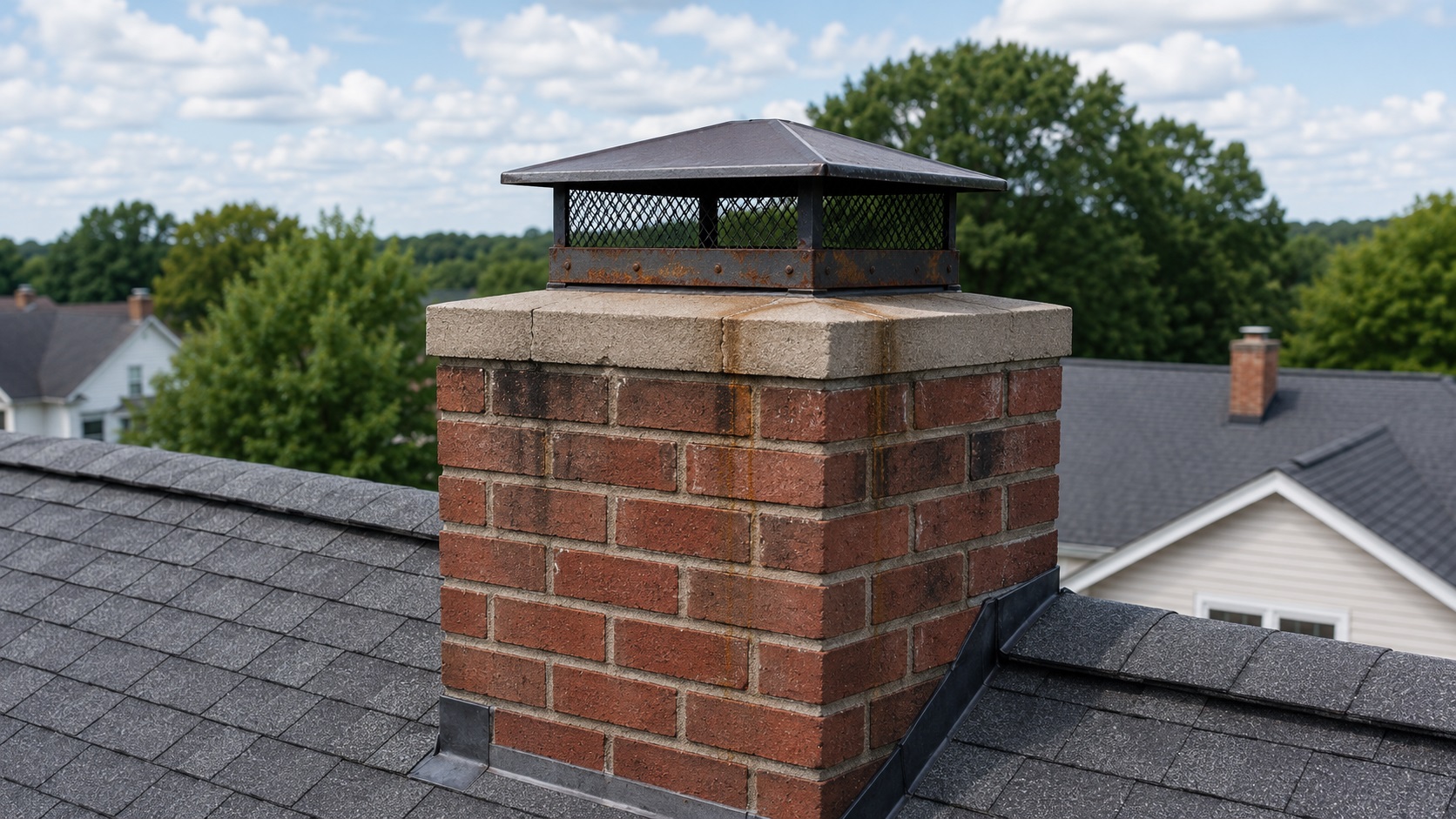
Signs of Chimney Crown Damage
Chimney crown damage can be easy to overlook because it starts at the very top of the chimney, where most homeowners rarely look closely. Small cracks, surface flaking, pooling water, or crumbling edges may not seem urgent at first, but the crown is one of the chimney’s main defenses against rainwater entering from above.
When the crown begins to fail, water can move into the upper chimney masonry, around flue openings, behind brick and mortar, or down into interior chimney-related areas. The first warning signs may appear outside as cracks or staining, but the moisture may later show up as damp masonry, white residue, odors, or water stains near the fireplace or chimney chase.
This article focuses on signs that the chimney crown itself is damaged, not every possible chimney leak. For a broader explanation of exterior moisture pathways, see this guide to how water enters homes through structural gaps.
Why Chimney Crown Damage Matters
The chimney crown is the top surface that covers the chimney structure around the flue opening. On many masonry chimneys, it is made from concrete, mortar, or another masonry material. Its job is to help shed rainwater away from the flue area and the brick or stone below it.
A sound chimney crown should direct water away from the chimney top instead of letting water sit, seep, or run into weak areas. When the crown cracks, crumbles, separates, or loses its slope, water can begin entering places that were supposed to stay protected.
This matters because chimneys are exposed to weather from every side. The top of the chimney receives direct rain, sun, wind, snow, and temperature changes. A small crack can collect water. Over time, repeated wetting and drying can widen the opening, especially if water freezes inside the crack during cold weather.
Once water enters through a damaged crown, it may not create an obvious leak right away. It can soak into the upper masonry, move down through brick and mortar, collect around flue tile gaps, or appear as stains below the crown. That delayed symptom pattern is one reason chimney crown damage is often missed until the problem has progressed.
The most important clues are physical changes in the crown surface, repeated water behavior, and moisture patterns that begin just below the chimney top.
Common Signs of Chimney Crown Damage
The most useful signs are visible changes at the top of the chimney and moisture patterns just below it. One small mark may not prove failure, but several symptoms together can strongly suggest that the crown needs closer inspection.
A simple way to judge the pattern is to ask three questions: Is the defect on the top surface? Does water sit there after rain? Do stains or residue begin directly below that area? When the answer to more than one question is yes, the crown becomes a stronger suspect.
Hairline cracks on the crown surface
Hairline cracks are often the earliest visible sign that a chimney crown is beginning to fail. They may look thin, shallow, and harmless, especially from a distance. However, even small cracks can allow water to sit in the crown surface or enter the material over time.
Not every hairline crack means the chimney is in immediate danger. The concern is whether the crack is growing, holding moisture, branching across the surface, or appearing alongside staining, flaking, or gaps near the flue. A small crack that keeps expanding after seasonal weather changes should not be ignored.
Wider cracks across the crown
Wider cracks are more concerning than fine surface lines. A crack that crosses the crown, opens visibly, or reaches from the flue area toward the outer edge can provide a direct path for water to enter the top of the chimney.
These cracks may appear as straight lines, branching patterns, or irregular gaps. If the crack is wide enough to catch water or debris, the crown is no longer shedding water as cleanly as it should. Wide cracks are especially important when there are moisture stains on the upper brick below them.
Crumbling or broken crown edges
The edges of the chimney crown help move water away from the masonry below. When those edges crumble, chip, or break away, water may run down the chimney face instead of being directed outward.
Crumbling edges can appear as missing corners, rough broken sections, loose pieces, or an uneven crown outline. This is more than a cosmetic issue because damaged edges can change how water drains off the chimney top.
Surface flaking, scaling, or spalling
A chimney crown surface that flakes, scales, pits, or sheds small pieces may be deteriorating. This can happen when the crown material breaks down from weather exposure, repeated moisture absorption, poor drainage, or age.
Surface deterioration often looks like a rough, worn, powdery, or layered texture instead of a solid, smooth surface. If the top of the chimney looks like it is peeling or breaking apart, the crown may be losing its ability to protect the masonry below.
Water pooling on top of the chimney
Standing water on the chimney crown is one of the clearest signs that the crown is not shedding water properly. A crown should help move water away from the flue and outer edges. If water sits on top after rain, the surface may be too flat, sunken, cracked, or deteriorated.
Pooling water matters because it increases the amount of time the crown stays wet. The longer water sits on the surface, the more opportunity it has to enter cracks, gaps, or weakened material.
Pooling is especially concerning if it appears in the same low spot after multiple storms rather than only during a brief heavy rain.
Gaps around the flue tile or flue opening
Open gaps around the flue tile, flue liner, or chimney opening can let water enter near the center of the chimney top. These gaps may appear as separation between the crown and the flue tile, cracked seal areas, or missing material around the opening.
This is a different issue from a missing chimney cap. The cap protects the flue opening from rain, debris, and animals, while the crown protects the chimney top surface. A chimney can have a cap and still have crown damage around the flue area.
Early Signs That a Chimney Crown Is Starting to Fail
Early chimney crown damage may look minor: small cracks, slight surface wear, minor separation around the flue, or subtle staining on the upper chimney. The goal is not to panic over every mark, but to notice whether the crown is still shedding water properly or beginning to create moisture paths into the chimney structure.
Fine cracks that change after seasonal weather
Small crown cracks often become more noticeable after freeze-thaw cycles, long wet periods, strong sun exposure, or seasonal temperature swings. The concern is not only that a crack exists, but whether it changes after repeated weather exposure.
If a fine crack stays dry, stable, and isolated, it may only need monitoring or professional evaluation during routine chimney service. If it widens, branches, collects water, or appears with staining below the crown, it is a stronger sign that the crown is beginning to fail.
Slight surface roughness or powdery texture
A healthy crown should look solid and intact. If the surface starts to look sandy, powdery, pitted, or rough, the material may be losing strength. This can happen before obvious chunks break away.
Surface wear is important because it can make the crown more absorbent. A rough or weakened surface may hold moisture longer than a sound crown, especially after repeated rain.
Small gaps around the flue area
The area where the flue tile or liner passes through the crown is a common weak point. Small gaps, cracks, or separation around this opening can allow water to enter near the center of the chimney top.
These gaps may not be visible from the ground without a close inspection photo. If you have inspection images showing separation around the flue, that is a strong reason to have the crown evaluated before water reaches deeper masonry or flue-adjacent materials.
Minor staining below the crown edge
Early crown problems may show up as dark streaking, damp-looking brick, or faint discoloration just below the crown. This can happen when water is not being directed away from the masonry correctly.
A small stain below the crown does not prove severe damage, but it does suggest that water is repeatedly moving over or into the upper chimney. If the stain becomes darker after rain or continues to spread, the crown should be inspected.
Damp-looking upper masonry after rain
Upper brick or stone that stays damp longer than the rest of the chimney may indicate that the crown is allowing too much water into the top of the structure. Masonry can absorb water and dry slowly, so the pattern may remain visible after the roof surface has already dried.
This is especially important when the dampness begins directly below crown cracks, flue gaps, or broken crown edges. If the upper chimney repeatedly dries slower than surrounding materials, the crown may not be managing water correctly.
For a more procedure-focused follow-up, use a dedicated guide to inspect chimney crowns for cracks rather than turning this symptom checklist into a roof-level inspection walkthrough.
Advanced Signs of Chimney Crown Deterioration
Advanced crown deterioration is easier to recognize because the damage is no longer limited to small surface defects. Wide cracks, missing pieces, crumbling edges, visible separation, or top-down moisture patterns suggest the crown may already be failing at its basic job of shedding water away from the chimney top.
Wide cracks that cross the crown
A wide crack across the crown is a serious warning sign. It can allow rainwater to enter directly into the crown material or reach the masonry below. If the crack crosses from the flue area toward the outer edge, it may create a channel for water to move through the top of the chimney.
Wide cracks are especially concerning when they hold debris, darken after rain, or line up with staining on the brick below. Those clues suggest that the crack is not just a surface mark but part of a moisture path.
Missing chunks or broken sections
Missing crown material means the top surface is no longer continuous. Broken sections can expose weak areas, collect water, and allow moisture to reach the brick or mortar below.
If pieces of crown material are visible on the roof near the chimney, in the gutters, or around the base of the chimney, the crown may be deteriorating beyond surface wear. Falling debris also creates a safety concern and should be evaluated professionally.
Crumbling edges around the crown perimeter
When the crown edges crumble, water can run down the chimney face instead of being directed outward. This can contribute to dark staining, white residue, brick spalling, or mortar deterioration near the upper chimney.
Crumbling edges often indicate that the crown material is breaking down from repeated weather exposure or trapped moisture. Once the edge fails, the chimney below may receive more water than it was designed to handle.
Open separation between the crown and masonry
A visible gap between the crown and the brick or stone below it can allow water to enter at the top of the chimney wall. This is different from a simple surface crack because the crown may be separating from the chimney structure itself.
Separation can be difficult to judge from a distance, but any visible line, shadow, gap, or displacement around the crown edge should be taken seriously when paired with moisture staining below.
Repeated water entry after storms
If interior chimney-area stains, damp masonry, or fireplace-adjacent moisture appears after rain, and the crown has visible damage, the crown becomes a likely suspect. The stronger pattern is when top-surface defects and rain-related symptoms occur together.
However, this still does not mean every leak near the chimney is from the crown. Chimney water can also come from flashing, mortar joints, base transitions, siding interfaces, or nearby roof defects. Crown damage is most likely when visible deterioration begins at the top and the moisture pattern moves downward.
Moisture Patterns That Point to Crown Damage
Chimney crown damage is not always recognized from cracks alone. Sometimes the stronger clue is how moisture behaves below the crown. Water entering through the chimney top can move into masonry, around flue openings, or along the chimney structure before it becomes visible indoors.
Dark staining below the crown
Dark stains or streaks just below the chimney crown can suggest that water is repeatedly running over or through the top area. This may happen when the crown edge is damaged, the surface is too flat, or cracks are allowing water to move into the upper chimney.
The location of the stain is important. Staining that begins directly below the crown is more suspicious than discoloration that appears only near the roofline or lower chimney base. Top-down staining supports a crown-related moisture pattern.
White residue on upper chimney masonry
White powdery residue on brick or mortar can appear when moisture moves through masonry and leaves mineral deposits behind as it dries. On the upper chimney, this residue can be a clue that water is entering near the crown or staying in the masonry longer than it should.
White residue alone does not prove the crown is damaged. It should be interpreted with other signs, such as crown cracks, surface flaking, upper brick staining, or water pooling on the crown. When those signs appear together, the crown becomes a stronger suspect.
Wet-looking brick near the top of the chimney
Brick or stone below the crown that stays damp after rain may indicate that water is being absorbed from above. If the upper chimney remains darker or wetter than the rest of the chimney, the crown may not be shedding water correctly.
This is different from a leak that starts at the chimney base. Base-related symptoms are usually strongest near the roofline, siding transition, or lower chimney area. Crown-related symptoms usually begin at the top and move downward.
Rust stains near upper chimney components
Rust stains near a chimney cap, chase cover, damper area, or other upper metal components can suggest repeated moisture exposure at the top of the chimney. Rust does not automatically prove crown failure, because metal caps and covers can fail on their own, but it is still an important clue.
If rust stains appear near visible crown cracks, flue gaps, or pooling water, the crown should be evaluated along with the metal components. The issue may involve more than one part of the chimney top.
Interior stains near the fireplace or chimney chase after rain
Crown damage can eventually show up indoors if water moves down through the chimney structure or into adjacent materials. Interior signs may include staining near the fireplace, damp masonry, musty odor near the chimney, or moisture around a chimney chase after rain.
These symptoms should be interpreted carefully. Interior chimney-area stains can come from several sources. For a broader symptom comparison, see this guide to signs of water leaks around chimneys. Crown damage becomes more likely when interior symptoms appear with visible top-of-chimney deterioration.
How Crown Damage Differs From Other Chimney Leak Problems
Many chimney leak symptoms overlap. A ceiling stain, damp wall, dark brick, or musty odor may not immediately reveal whether the problem is the crown, flashing, mortar, base transition, or nearby roof surface. The best way to narrow the source is to compare where the strongest evidence begins.
Crown damage starts at the top of the chimney
Chimney crown damage is most likely when the clearest symptoms are on the top surface or directly below it. Cracks in the crown, flaking material, pooling water, gaps around flue tiles, broken edges, and upper chimney staining all point toward the crown area.
If the damage pattern begins at the top and moves downward, the crown should be inspected before assuming the leak is coming from the roof surface or lower chimney base.
If the strongest clues are instead rusted, lifted, separated, or loose metal where the chimney meets the roof, compare the symptoms with this guide to signs of chimney flashing failure.
Base water entry starts near the lower chimney transition
Water entering around the chimney base usually creates clues near the roofline, chimney-to-siding joint, lower chimney masonry, attic penetration, or nearby ceiling below the chimney. These symptoms are different from crown damage because the strongest evidence is lower on the chimney structure.
If the moisture appears near the lower chimney transition, compare it with the more specific guide to signs water is entering around chimney base.
Mortar water entry follows deteriorated joints
Mortar-related water intrusion is usually tied to cracked, missing, soft, or separated joints between bricks. Instead of one damaged top surface, the evidence may appear along multiple horizontal or vertical mortar joints.
If the most obvious clues are crumbling joints, open gaps between bricks, or moisture moving through the masonry face, use the guide to signs chimney mortar is allowing water in. Crown damage can contribute to mortar problems below it, but the symptom territory is different.
Rain-driven chimney leaks may involve several components
Some chimney leaks only appear during certain storms. Wind direction, rainfall intensity, roof slope, masonry absorption, flashing condition, and crown damage can all influence whether water enters. That is why a rain-related leak does not automatically identify one single component.
For the broader cause pattern, see this explanation of why chimneys leak during rain. This crown article should stay focused on the visible signs that the crown itself may be damaged.
Crown cracking mechanics belong in a separate cause article
This article focuses on recognizing damage. It is not a full explanation of how crowns crack, how freeze-thaw damage progresses, or how poor crown construction allows water in. Those details belong in a deeper cause-based guide to how chimney crowns crack and allow water in.
When Chimney Crown Damage Needs Professional Inspection
Chimney crown damage should be inspected professionally when the signs are visible, recurring, or connected to water stains below the chimney top. A small surface crack may not be an emergency, but the crown is difficult to evaluate fully from the ground. Do not climb onto a roof or chimney top just to confirm crown damage. If the crown is already cracked, crumbling, holding water, or separating around the flue, a qualified chimney professional or mason can determine whether the issue is minor surface damage or a deeper moisture-entry problem.
Professional inspection is especially important when you notice any of the following:
- Wide cracks crossing the chimney crown.
- Water pooling on top of the chimney after rain.
- Crumbling or broken crown edges.
- Missing crown material or loose fragments.
- Open gaps around the flue tile or flue liner.
- Dark staining or white residue on the upper chimney masonry.
- Interior stains near the fireplace or chimney chase after rain.
- Pieces of crown material on the roof, in gutters, or near the chimney.
- Any suspected crown damage that would require roof access to inspect safely.
It is also wise to call a professional when crown damage appears alongside broader chimney moisture symptoms. A damaged crown can be one part of a larger water-entry problem involving masonry, flashing, caps, or the chimney base. Looking only at one visible crack may miss the actual water path.
For homeowners trying to understand the larger moisture pattern, this guide to how to find, fix, and prevent moisture problems in homes can help connect chimney moisture with other hidden water problems inside the structure.
What Not to Assume About Chimney Crown Damage
Chimney crown damage is often misunderstood because the crown is out of sight and easy to confuse with other chimney parts. Avoiding the wrong assumption can prevent wasted repairs and missed moisture problems.
Do not assume small cracks are always harmless
Small cracks may be early warning signs. They do not always mean the chimney is actively leaking, but they can become moisture paths if they widen, hold water, or appear with staining below the crown.
Do not assume the chimney cap and crown are the same thing
The chimney cap and chimney crown are different parts. The cap usually protects the flue opening from rain, animals, and debris. The crown is the masonry or concrete top surface that helps shed water away from the chimney structure. A chimney can have a good cap and still have a damaged crown.
Do not assume sealant fixes every crown problem
Some minor surface issues may be addressed with proper materials, but sealant is not a cure for wide cracks, missing sections, poor slope, crumbling edges, or separation around the flue. Do not seal over damp, loose, or actively deteriorating crown material without understanding the source of the damage, because covering the surface can hide the symptom while water continues entering.
Do not assume no indoor drip means no water entry
Crown damage can affect the chimney before water appears inside the living space. Moisture may first show up as dark upper masonry, white residue, damp brick, or surface deterioration. Interior dripping is often a later sign, not the first warning.
Do not assume every chimney leak comes from the crown
A damaged crown is only one possible source of chimney water entry. Flashing problems, mortar deterioration, chimney-base leaks, damaged caps, siding intersections, and nearby roof leaks can create similar symptoms. The strongest crown-related clues are cracks, pooling, flaking, flue gaps, and moisture patterns beginning at the top of the chimney.
Chimney Crown Damage Checklist
- Chimney crown damage often starts with small cracks, surface roughness, flaking, or minor gaps around the flue.
- Water pooling on top of the chimney is a strong warning sign because the crown should shed water away from the chimney structure.
- Wide cracks, missing chunks, crumbling edges, and open flue gaps are more advanced signs of crown deterioration.
- Dark staining or white residue on the upper chimney can indicate that moisture is moving through masonry below the crown.
- Crown damage is different from chimney-base leaks, flashing failure, and mortar deterioration, even though the symptoms can overlap.
- Professional inspection is recommended when crown damage is visible, recurring, or connected to rain-related interior stains.
FAQ: Signs of Chimney Crown Damage
Are small cracks in a chimney crown serious?
Small cracks are not always an emergency, but they should not be ignored. They can allow water to sit in the crown surface and may widen over time. Cracks are more concerning when they grow, branch, hold water, or appear with staining below the crown.
Can a damaged chimney crown cause leaks inside the house?
Yes. A damaged crown can let water enter from the top of the chimney. That water may move into masonry, around flue openings, or down into chimney-adjacent materials before showing up as stains, dampness, or odor inside the home.
What does water pooling on a chimney crown mean?
Water pooling usually means the crown is not shedding water properly. The surface may be too flat, sunken, cracked, or deteriorated. Standing water increases the chance that moisture will enter cracks, gaps, or weakened crown material.
How do I know if the crown or flashing is the problem?
Crown problems usually show the strongest signs at the top of the chimney: cracks, pooling, flaking, flue gaps, or upper masonry staining. Flashing problems usually show clues near the roofline where the chimney meets the roof. In some cases, both areas need inspection.
Can chimney crown damage affect the bricks below it?
Yes. If the crown allows water to enter or run down the chimney face, the bricks and mortar below it may stay wet, stain, develop white residue, or begin deteriorating. Symptoms that begin directly below the crown are especially important clues.
Should I seal a cracked chimney crown myself?
Do not assume a surface seal is enough. Minor cracks may need one type of treatment, while wide cracks, missing material, poor slope, damp deteriorating material, or flue-area gaps may require professional repair. The safest approach is to identify the full condition before covering the damage.
The Top-Down Pattern Is the Main Clue
Chimney crown damage is often visible before it becomes an obvious indoor leak. Hairline cracks, wider crown gaps, surface flaking, crumbling edges, water pooling, separation around the flue, dark upper-chimney staining, and white residue can all point to a crown that is no longer shedding water properly.
The key pattern is where the evidence begins. Crown-related moisture usually starts at the top of the chimney and moves downward. Because chimney crowns are difficult to inspect safely from roof level, recurring or visible damage deserves professional evaluation before repeated wetting spreads into masonry, attic framing, or interior chimney-adjacent materials.
One Comment
Comments are closed.