
Hidden Chimney Leaks That Cause Ceiling Damage
A ceiling stain near a chimney is often the first visible sign of a leak that has been active longer than it appears. The chimney may look normal from the ground, the roof may seem intact, and the damage may start as only a small brown ring or faint discoloration. But once water reaches ceiling drywall, it has already moved through part of the roof, chimney, attic, or interior structure.
Hidden chimney leaks are especially confusing because the stain does not always appear directly below the leak source. Water can enter at the chimney flashing, crown, mortar joints, or brick surface, then travel along framing, insulation, sheathing, or the chimney chase before it finally stains the ceiling. That is why ceiling damage near a fireplace, chimney breast, or roofline should not be treated as a paint problem until the moisture source has been found.
Chimneys are one of the places where water enters homes through structural gaps because they interrupt the roof system and expose masonry, flashing, and roofing materials to rain at the same location. A small defect in any one of those parts can let water into hidden areas before the homeowner sees anything indoors.
Why Hidden Chimney Leaks Damage Ceilings Before You Notice the Source
Ceiling damage from a chimney leak usually appears late in the moisture path. The water often starts outside, enters around the chimney, moves through concealed materials, and only becomes visible when the ceiling can no longer hide the moisture. By the time drywall stains, bubbles, softens, or peels, water may have already touched insulation, wood framing, fasteners, or the backside of the ceiling board.
This is why a small stain should be taken seriously. A stain does not always mean the damage is severe, but it does mean water has crossed from the exterior side of the building into the interior finish system. Even if the ceiling dries between storms, repeated wetting can weaken drywall, damage paint, compress insulation, and create conditions where odor or mold growth becomes more likely.
Ceiling stains near chimneys also tend to be intermittent. They may appear after hard rain, wind-driven rain, snowmelt, or storms from a certain direction. That pattern can make the leak seem random. In reality, the water path may open only when rain hits the chimney at the right angle or when enough water accumulates at the roof-to-chimney joint.
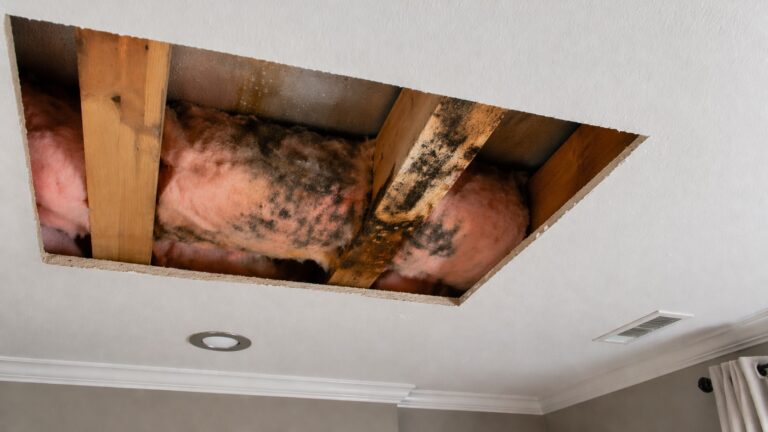
A chimney leak can also remain hidden because the first wet materials are out of sight. Insulation may absorb moisture, framing may show water trails, and the backside of drywall may become damp before paint bubbles on the finished side.
This is why ceiling damage near a chimney should be handled as part of a broader effort to find, fix, and prevent moisture problems in homes. The visible stain is only the symptom. The important question is how water is entering and what hidden materials it touched before reaching the ceiling.
How Water Travels From a Chimney to the Ceiling
Water from a chimney leak rarely follows a perfectly straight path. It follows gravity, but it can also cling to surfaces, wick through porous materials, and travel sideways along framing before dripping. That is why the stain may appear beside the chimney, near the fireplace, along an exterior wall, or several feet away from the point where water first entered.
Water can enter at the chimney flashing
Flashing is the metal transition that helps seal the joint where the chimney passes through the roof. If the flashing is loose, rusted, poorly sealed, lifted, or separated from the chimney, rain can enter at the roofline and move into the attic or ceiling assembly. This is one of the most common reasons ceiling stains appear near chimneys after storms.
A flashing-related leak may show up as a ceiling stain below the chimney, but it may also appear slightly downhill from the chimney because water follows roof sheathing, rafters, or framing before dripping onto the ceiling. If the stain worsens after rain and appears near the roof-to-chimney area, it is worth comparing the symptoms with the signs of chimney flashing failure.
Water can enter through crown cracks
The chimney crown is the sloped masonry or concrete surface at the top of the chimney. Its job is to shed water away from the flue and chimney walls. When the crown cracks, separates, or loses its slope, rain can enter from the top and move downward through the chimney structure.
This kind of leak can be difficult to notice from the ground because the top surface of the crown is not usually visible. A chimney may look acceptable from the yard while the crown has cracks that allow water to enter during rain. From there, water may move down through masonry, chase areas, or adjacent framing until it reaches ceiling materials.
Water can enter through mortar joints or porous masonry
Brick and mortar can absorb moisture, especially when the chimney is weathered, unprotected, or exposed to wind-driven rain. Open mortar joints, small cracks, soft mortar, and porous brick can allow water to enter the chimney wall system. This does not always create an immediate drip. Sometimes it creates slow dampness that accumulates until ceiling materials begin to stain.
Masonry-related leaks are often subtle because the chimney face may simply look damp after storms. The first interior clue may be a faint stain, musty smell, or recurring discoloration near the chimney area. The source may be brick absorption, mortar deterioration, or a combination of masonry and flashing defects.
Water can travel through attic materials before staining drywall
Once water gets past the exterior chimney system, it may move through attic materials before it reaches the ceiling. It can wet insulation, follow rafters or trusses, run along roof sheathing, drip onto the top side of drywall, or collect around the chimney chase. The finished ceiling below may not show damage until the moisture has repeated enough times to discolor paint or soften the drywall surface.
This hidden travel path is why the location of the ceiling stain is only a clue, not a complete diagnosis. A stain near a chimney strongly suggests that the chimney area should be investigated, but the leak source still needs to be traced before ceiling repair begins.
Ceiling Damage Signs That May Point to a Hidden Chimney Leak
Ceiling damage near a chimney can look similar to other water stains, so the pattern matters. A single stain does not prove the chimney is the source, but a chimney-related leak becomes more likely when the stain is near the chimney area, changes after rain, returns after repainting, or appears with attic staining around the chimney chase.
One of the most common signs is a brown or yellow stain near the chimney, fireplace, or upper wall where the chimney passes through the home. The stain may be round, irregular, or shaped like a water trail. It may be light at first and then darken after repeated storms.
Bubbling paint or peeling ceiling texture can also point to moisture from above. When water reaches the backside of drywall or plaster, it can loosen paint, soften joint compound, or cause texture to separate. This often happens after the leak has repeated several times, even if each individual leak was small.
Soft drywall is a more serious warning sign. If the ceiling feels spongy, sags slightly, or flakes when touched, moisture has affected the material itself. At that point, the problem is no longer just staining. The ceiling material may need drying, evaluation, or replacement after the leak source is corrected.
A musty smell near the chimney, fireplace, or ceiling stain can also indicate hidden dampness. Odor does not always mean visible mold is present, but it does suggest moisture may be lingering in insulation, drywall, wood, or the chimney chase. If the area smells worse after rain, the moisture source may still be active.
Recurring stains are especially important. If the ceiling was painted or cleaned and the stain returned, the leak source was probably never fixed. Many homeowners first notice this pattern after covering a small stain, only to see it reappear during the next heavy storm.
For broader chimney-related warning signs beyond ceiling damage, compare the situation with the guide on signs of water leaks around chimneys. That article covers the wider symptom pattern, while this article focuses specifically on how hidden chimney leaks show up as ceiling damage.
Why the Chimney May Look Fine From Outside
A chimney can leak even when it looks normal from the ground. Many of the most important leak points are not easy to see without a closer inspection. The top of the chimney crown, the back side of the chimney, counterflashing details, upper mortar joints, and roofline transitions may all be hidden from a normal yard-level view.
Small defects can also let in more water than expected. A narrow flashing gap, hairline crown crack, or slightly open mortar joint may not look dramatic, but it can admit water repeatedly during wind-driven rain. Over time, those small amounts can accumulate inside hidden materials until the ceiling below begins to stain.
Another reason the chimney may look fine is that the leak may only happen under certain weather conditions. A light vertical rain may not cause visible leakage, while wind-driven rain from one direction may push water behind flashing or into masonry joints. That is why a stain may darken after certain storms but stay unchanged during others.
Chimney crown problems are a good example. From the ground, the chimney sides may look straight and intact, while the top crown has cracks or separation that cannot be seen easily. If water enters from above, it may travel down through the chimney structure before it appears near the ceiling. When top-entry leaks are suspected, the guide on signs of chimney crown damage can help separate crown-related problems from other leak sources.
Mortar problems can also be hard to spot from below. Older joints may be recessed, cracked, powdery, or separated behind the visible face of the chimney. Those defects may allow water into the masonry system without creating an obvious hole. If the chimney looks damp after storms or the mortar appears weathered, review the signs that chimney mortar is allowing water in before assuming the stain is only a roof problem.
How Hidden Chimney Leaks Differ From Ordinary Roof Leaks
A hidden chimney leak can look like an ordinary roof leak from inside the house, but the source is often more complicated. A standard roof leak may come from damaged shingles, exposed fasteners, roof valleys, or underlayment problems. A chimney leak can involve all of those roof details plus masonry, flashing, crown, mortar, cap, and chimney chase conditions.
The chimney is both a roof penetration and a masonry structure. That means water can enter at the roof-to-chimney joint, through the chimney wall, from the top crown, or through small construction gaps where different materials meet. The ceiling stain may look the same in each case, but the repair path is different.
This is why guessing from the ceiling stain alone can lead to the wrong repair. A roofer may need to evaluate flashing and shingles around the chimney. A chimney mason may need to evaluate crown cracks, brick condition, and mortar joints. In some cases, both roof and masonry defects contribute to the same ceiling stain.
Another difference is that chimney leaks often produce delayed symptoms. Masonry can absorb water, insulation can hold moisture, and framing can carry water before it drips. A ceiling stain may appear hours after a storm or grow slowly over several rain events.
Ordinary roof leaks also tend to be easier to trace when the damaged roof area sits directly above the stain. Chimney-related leaks may be offset because water follows the chimney chase, rafters, or sheathing before staining the ceiling. That offset pattern is one reason ceiling damage near chimneys often gets misdiagnosed or repaired more than once.
What to Check Before Repainting or Patching the Ceiling
Before repairing or repainting ceiling damage near a chimney, the leak source should be found. If the ceiling is repaired while the chimney leak remains active, the stain will usually return. In worse cases, the ceiling surface may look better while moisture continues affecting insulation, framing, or the backside of drywall.
Start by checking the timing of the stain. If it darkens after rain, grows during storms, or appears after wind-driven weather, the leak is likely active. Mark the edge of the stain lightly with a pencil or take dated photos so you can see whether it expands after future rain.
Also note whether the stain is closest to the chimney chase, the fireplace wall, the roofline, or an exterior wall. That location will not prove the source, but it can help separate a chimney leak from an unrelated plumbing, HVAC, or roof leak.
If attic access is safe, inspect the area above the ceiling before doing cosmetic repairs. Look for wet or compressed insulation, dark stains on wood framing, water trails on the chimney surface, rusted fasteners, damp sheathing, or drip marks near the chimney chase. Do not walk on ceiling drywall or enter an attic with unsafe footing, exposed wiring, active dripping, or poor visibility. The guide on how to check for chimney water intrusion in attics gives a more focused attic inspection path for this situation.
Do not rely only on the finished side of the ceiling. Drywall can stain after water has already moved through insulation or wood above it. If the attic shows dampness, the ceiling repair should wait until the source is corrected and the affected materials are dry.
The exterior chimney should also be evaluated before the ceiling is repaired. Check the flashing, crown, mortar joints, brick condition, chimney cap, and roof materials around the chimney. From the ground, you may only be able to see obvious damage, so use safe access or professional inspection if the chimney is tall, the roof is steep, or the damage is not visible.
When Ceiling Damage Means the Problem Is Getting Serious
Not every ceiling stain means major structural damage, but some symptoms suggest the problem has moved beyond minor staining. A stain that grows after each rain, feels damp to the touch, or returns after repainting usually means the leak is still active.
Sagging ceiling drywall is more serious. Drywall loses strength when it stays wet or becomes saturated. If the ceiling bulges, bows, cracks around the stain, or feels soft, avoid poking, cutting, or standing directly below it until you know whether water is still trapped above it. A wet ceiling can release water or debris unexpectedly.
Wet insulation above the ceiling is another warning sign. Insulation can hold moisture against wood framing and drywall, slowing drying and making the stain worse over time. Wet insulation may also lose performance, which can contribute to condensation and uneven drying around the chimney area.
A musty odor near the stain should also be taken seriously. Persistent dampness around the chimney can create conditions where mold growth becomes more likely, especially if moisture reaches paper-faced drywall, dust, wood, or insulation. For the mold side of this problem, the related guide on how chimney leaks lead to mold growth explains why hidden chimney moisture should not be ignored.
Staining on attic framing near the chimney can also indicate a longer-term issue. Darkened wood, repeated wetting marks, softened areas, or moisture trails around the chimney chase may mean the leak has been active through multiple storms. If the problem has reached rafters, sheathing, or other attic components, review how chimney leaks damage attic structures so you understand why the ceiling stain may be only one part of the damage.
Why Repainting the Ceiling Without Fixing the Leak Fails
Repainting a stained ceiling may hide the discoloration temporarily, but it does not stop the water source. If the chimney continues leaking, the stain will usually bleed through again. Even stain-blocking primer can fail when fresh moisture keeps reaching the ceiling material.
Paint also cannot dry hidden materials. If insulation, drywall backing, framing, or the chimney chase is damp, covering the visible stain may make the room look better while the moisture problem remains above the ceiling. The correct order is source repair first, drying second, and cosmetic ceiling repair last.
Another issue is that repainting too early can make it harder to track whether the leak is still active. If the stain is covered before the next storm, you may lose a useful visual clue. It is better to document the stain, watch whether it changes after rain, and repair the source before restoring the finish.
Once the leak has been corrected and the ceiling materials are dry, cosmetic repair can make sense. Depending on the severity, that may include stain-blocking primer, repainting, texture repair, or drywall replacement. But if the stain keeps returning, the chimney or roofline still needs investigation.
When Chimney-Related Ceiling Damage Needs Professional Inspection
Call a professional when ceiling damage near a chimney keeps returning, grows after rain, or appears with dampness, odor, sagging drywall, or attic staining. Once water has reached the ceiling, the problem has moved beyond simple exterior appearance. The source needs to be traced before the interior repair will last.
A roofing contractor may be needed if the leak appears to be coming from the roof-to-chimney transition, shingles, step flashing, counterflashing, or nearby roof materials. Chimney flashing problems are common because the chimney interrupts the roof plane and depends on several overlapping materials to shed water correctly.
A chimney mason may be needed if the crown is cracked, the mortar joints are deteriorated, the brick is absorbing water, or the chimney structure itself is allowing water in. Masonry-related leaks can be subtle because water may enter slowly and travel through the chimney before staining the ceiling.
A water damage professional may be needed if the ceiling is soft, sagging, wet, or affected by repeated leaks. Wet drywall, insulation, and framing need proper drying and evaluation before cosmetic repair. If mold-like growth is visible or a strong musty odor remains after drying, a mold professional may also be needed.
Do not assume that one trade can always solve every chimney-related ceiling stain. Some leaks involve both roof details and masonry defects, so the right repair depends on where the water is actually entering.
FAQs About Hidden Chimney Leaks and Ceiling Damage
Can a chimney leak cause a ceiling stain?
Yes. Water can enter around the chimney, move through attic materials, and eventually stain the ceiling drywall. The stain may appear near the fireplace, chimney chase, roofline, or upper wall depending on how the water travels.
Why is the ceiling stain not directly under the chimney?
Water does not always fall straight down. It can travel along roof sheathing, rafters, trusses, insulation, or the chimney chase before dripping onto the ceiling. This can make the stain appear beside or downhill from the actual leak source.
Can I repaint the ceiling after a chimney leak?
You should only repaint after the leak source has been fixed and the ceiling materials are dry. If the chimney leak is still active, the stain can return through new paint or primer during the next storm.
How do I know if a ceiling stain near a chimney is active?
An active stain may darken after rain, grow over time, feel damp, smell musty, soften the drywall, or return after being covered. Taking dated photos after storms can help you tell whether the stain is changing.
Is a ceiling stain near a chimney usually caused by flashing failure?
Flashing failure is common, but it is not the only possible cause. Crown cracks, deteriorated mortar, porous masonry, chimney cap problems, and nearby roof defects can also allow water to reach ceiling materials.
Should I check the attic after seeing ceiling damage near a chimney?
Yes, if attic access is safe. The attic may show wet insulation, stained framing, water trails, damp sheathing, or drip marks near the chimney before the ceiling damage becomes severe. Do not enter unsafe attic or roof areas just to inspect a stain.
Key Takeaways
- Hidden chimney leaks often become visible as ceiling stains, peeling paint, bubbling texture, or soft drywall.
- The visible stain may not be directly below the leak because water can travel through attic materials before reaching the ceiling.
- A chimney can look normal from the ground while crown cracks, flashing gaps, or mortar defects allow water inside.
- Ceiling damage near a chimney should be investigated before repainting or patching the ceiling.
- Repeated stains, sagging drywall, wet insulation, musty odors, or attic framing stains mean the problem needs prompt attention.
- The source may involve flashing, crown damage, mortar deterioration, masonry absorption, nearby roof defects, or more than one issue at the same time.
Final Advice Before Repairing a Chimney-Related Ceiling Stain
Hidden chimney leaks can cause ceiling damage long before the source is obvious. Before repairing the ceiling, trace the moisture path, correct the exterior defect, dry the affected materials, and then restore the finish. If the stain keeps returning or hidden materials are wet, professional inspection is usually the safest way to prevent the same chimney leak from causing more ceiling damage.
One Comment
Comments are closed.