How to Choose the Right Size Dehumidifier for Your Home
Choosing the right size dehumidifier is not just about matching a machine to the square footage printed on the box. A small room with mild humidity may need only a modest unit, while a basement of the same size may need much more capacity because it is cooler, below grade, and exposed to more moisture pressure. If the dehumidifier is too small, it may run constantly without bringing humidity under control. If it is much larger than needed, it may cost more upfront than necessary.
The best way to choose the right size is to look at three things together: the size of the space, how damp the space actually is, and what kind of area you are trying to control. A bedroom, basement, crawl space, laundry area, and whole-house system do not all follow the same sizing logic. This guide focuses specifically on sizing. For the broader selection process, see this guide on how to choose and use a dehumidifier effectively.
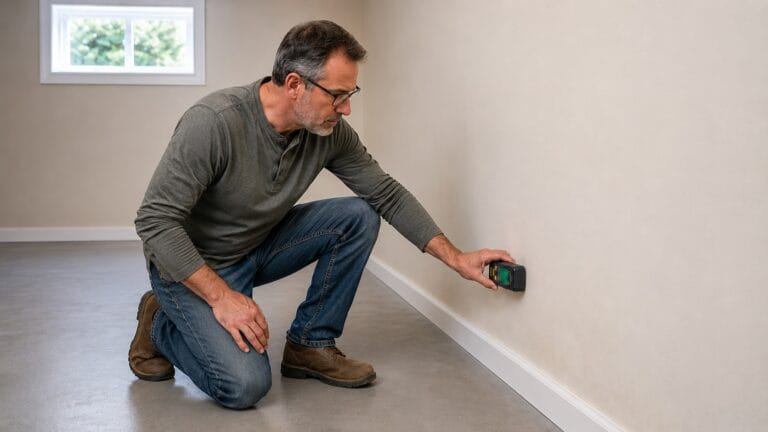
Before buying, measure the space and check humidity instead of guessing by feel. If you are not sure what your current humidity level is, start by learning how to test indoor humidity levels before choosing a capacity.
Why Dehumidifier Size Matters
Dehumidifier size matters because the unit must remove moisture as fast as the space adds it back into the air. Every room has a moisture load. That load may come from humid outdoor air, damp foundation walls, wet soil under a crawl space, laundry activity, shower moisture, air leaks, poor ventilation, or past water intrusion. The more moisture the space adds, the more capacity the dehumidifier needs.
An undersized dehumidifier may still collect water, but that does not mean it is controlling the space well. A small unit can fill its bucket and still leave the room too humid because it cannot remove moisture fast enough. This is common in basements where the air feels damp, the floor stays cool, or a musty smell returns soon after the unit shuts off.
The right size helps the dehumidifier reach the target humidity range without struggling all day. It can recover faster after humid weather, laundry use, rain, or door openings. It also gives the unit a better chance of cycling normally instead of running constantly.
At the same time, sizing is not the only factor. A properly sized dehumidifier still needs good airflow, reasonable drainage, and a moisture source that is not overwhelming the room. If water is actively entering through a foundation crack, leaking pipe, wet crawl space, or poor exterior drainage, a bigger unit may help reduce humidity but will not solve the underlying problem. For broader moisture source control, it helps to understand how to find, fix, and prevent moisture problems in your home.
What Dehumidifier Pint Capacity Really Means
Dehumidifiers are usually described by pint capacity. This number tells you how much water the unit can remove from the air over a period of time under specific test conditions. For example, a 35-pint or 50-pint dehumidifier is not named after the bucket size. It is named for its moisture removal capacity.
Because dehumidifier ratings are based on standardized test conditions, treat the listed pint capacity as a comparison point rather than a promise that the unit will remove that exact amount of water in your home every day.
This distinction matters because many homeowners assume the pint number describes how much water the bucket can hold. In reality, the bucket is often smaller than the unit’s daily removal rating. A dehumidifier may be rated to remove many pints per day, but the bucket may need to be emptied more than once if the room is very damp and the unit is not connected to a drain hose.
Pint capacity is not the same as bucket size
Pint capacity describes moisture removal. Bucket size describes storage. A unit with a strong moisture removal rating may still have a smaller bucket, especially if it is designed to work with a drain hose or pump. This is why two dehumidifiers with similar-looking buckets may perform very differently in a damp basement.
When choosing size, focus first on how much moisture the unit can remove, not just how often you want to empty the bucket. Bucket convenience matters, but it does not tell you whether the unit has enough capacity for the room.
Real-world performance can differ from the rating
A dehumidifier’s rated capacity is measured under controlled conditions. Your home may not match those conditions. Cooler basement air, restricted airflow, high starting humidity, open doorways, and ongoing moisture entry can all reduce real-world performance or increase the amount of work the unit has to do.
This is one reason sizing charts should be treated as starting points, not absolute rules. A dehumidifier that looks large enough on paper may still struggle if the room is cooler, wetter, or more exposed to outdoor humidity than expected. A finished upstairs room and an unfinished basement of the same square footage can need different capacity levels.
Start With Room Size, Then Adjust for Dampness
Start with square footage, then adjust for dampness. Square footage tells you the size of the area the unit must influence, but dampness tells you how hard the unit must work. A lightly humid bedroom and a musty basement can be the same size and still need very different dehumidifier capacity.
As a practical rule, use manufacturer square-footage claims as a baseline, then move up in capacity when the space is below grade, musty, slow to dry, or consistently above the humidity level you want to maintain.
Small rooms
Small rooms with mild humidity usually need less capacity than open basements or large living areas. A smaller portable unit may be enough for a bedroom, office, storage room, or laundry-adjacent area if humidity only rises occasionally. Size up if the small room is poorly ventilated, musty, bathroom-adjacent, or has a damp exterior wall.
Medium rooms
Medium rooms need a closer look at moisture severity. A normal room with slightly elevated humidity may be handled by a mid-size unit, but a room with musty odors, condensation, or repeated dampness should be sized more aggressively. If the unit runs all day in a medium room, the problem may be the moisture load, not just the floor area.
Large rooms and open spaces
Large rooms, open basements, combined living areas, and connected lower-level spaces usually need more capacity because the unit is controlling a larger air volume. For large spaces, it is usually safer to size up rather than choose the smallest model that claims to cover the square footage, especially if the area is below grade, musty, damp after rain, or used for moisture-sensitive storage.
Use Moisture Severity to Adjust the Size
After estimating room size, adjust for dampness. Two rooms with the same square footage can need different units because they have different moisture loads.
Slightly damp rooms
A slightly damp room may feel a little humid during certain seasons but does not have strong odors, condensation, visible dampness, or recurring moisture symptoms. In this case, basic square-foot sizing may be close enough, especially if the room is above grade and has normal airflow.
Even in mild cases, it is still useful to check humidity with a hygrometer. If the humidity only rises occasionally, a moderate unit may be enough. If the humidity stays elevated for long periods, the room may need more capacity than it first appears.
Musty or humid rooms
A musty smell usually means the room has had enough moisture to affect materials, stored items, dust, or hidden surfaces. This does not automatically prove mold growth, but it does mean the room should not be sized as a mild humidity problem.
For musty or consistently humid rooms, sizing up is usually safer. A stronger unit can remove moisture faster and recover better after humid weather or activity inside the home. This is especially important in basements, storage rooms, and rooms that do not get much air movement.
Wet or seepage-prone areas
If the area has wet floors, active seepage, water stains, foundation leaks, plumbing leaks, or moisture that returns after every rain, the dehumidifier is not the main fix. In that case, even a large unit may only reduce the symptoms while the source keeps adding moisture back into the space.
A dehumidifier can help dry the air, but it should not be used as a substitute for stopping water entry. If there is standing water, sewage, electrical risk, structural sagging, or moisture that keeps returning after rain, correct the source before relying on more dehumidifier capacity. When moisture keeps coming back, the better first step is to identify the source and prevent recurring moisture damage.
Basement Dehumidifier Sizing
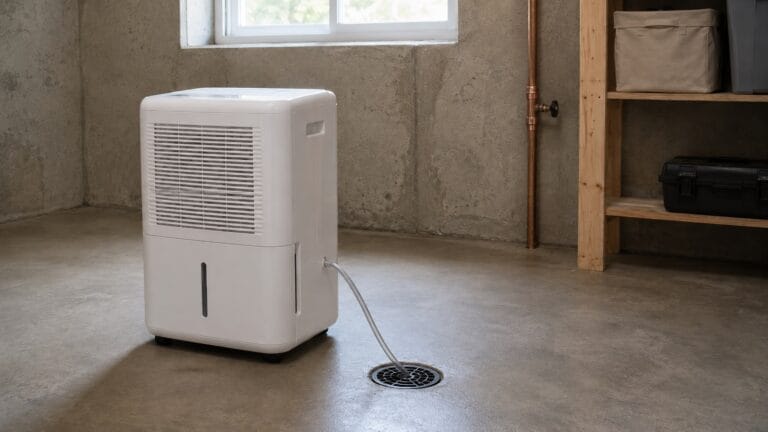
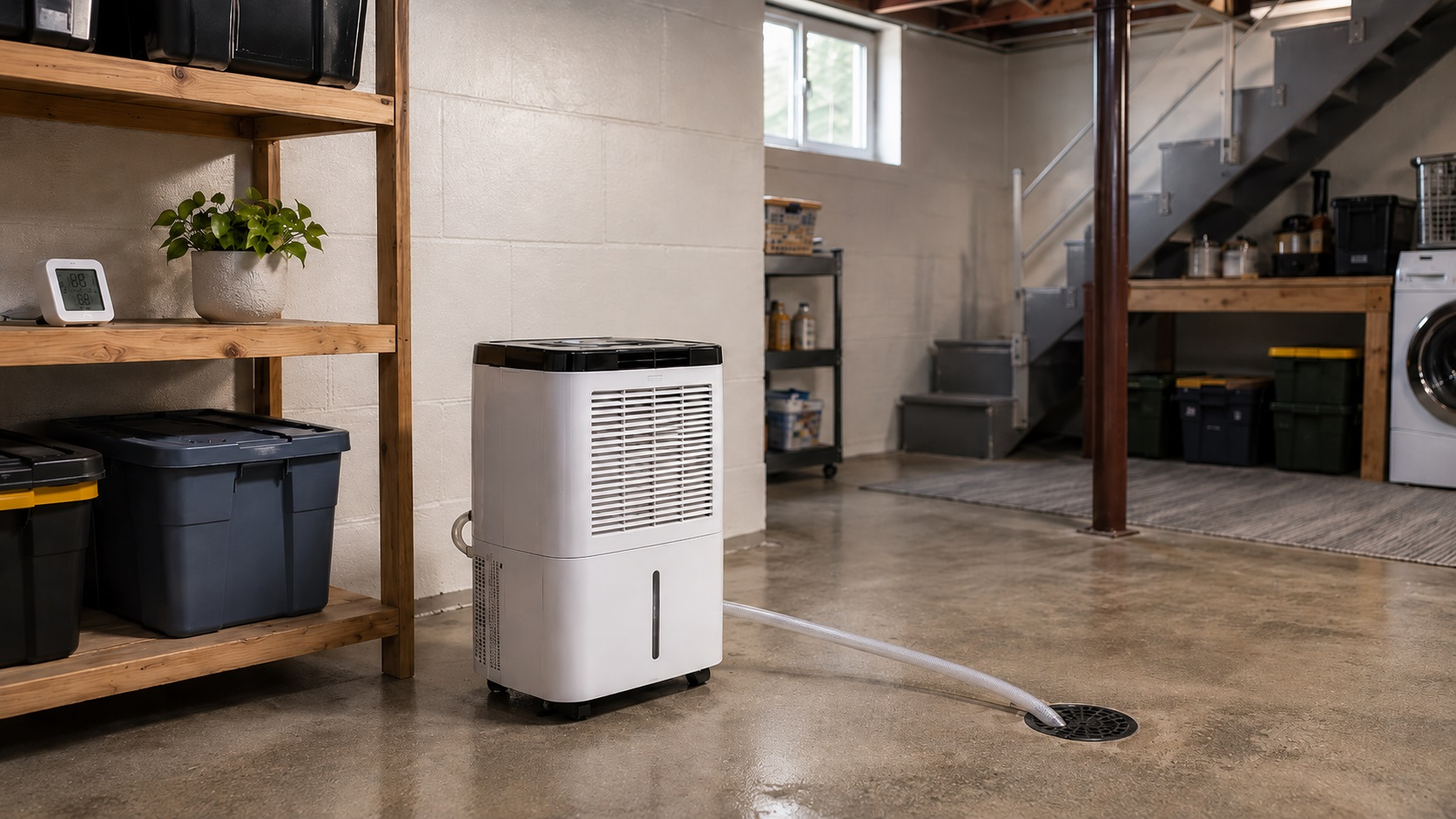
Basements often need more dehumidifier capacity than regular upstairs rooms because they are below grade and surrounded by cooler surfaces. Concrete walls, slab floors, foundation cracks, exterior drainage problems, and limited airflow can all increase the moisture load. Even when the basement is not visibly wet, it may still stay more humid than the rest of the house.
This is why basement sizing should not rely on square footage alone. A 700-square-foot finished basement may need more capacity than a 700-square-foot upstairs living area because the basement has more contact with ground moisture, cooler surfaces, and materials that can keep releasing moisture after the unit turns off.
If the basement is only mildly humid during summer, a mid-size unit may be enough. If it smells musty, has condensation, feels damp after rain, or stores cardboard boxes and fabric items that absorb moisture, sizing up is usually safer. A larger unit can recover faster after humidity spikes and is less likely to run constantly without reaching the desired range.
Once you know the capacity range you need, you can compare models designed for lower-level moisture control. For product-specific options, see this guide to the best basement dehumidifiers.
Crawl Space Dehumidifier Sizing
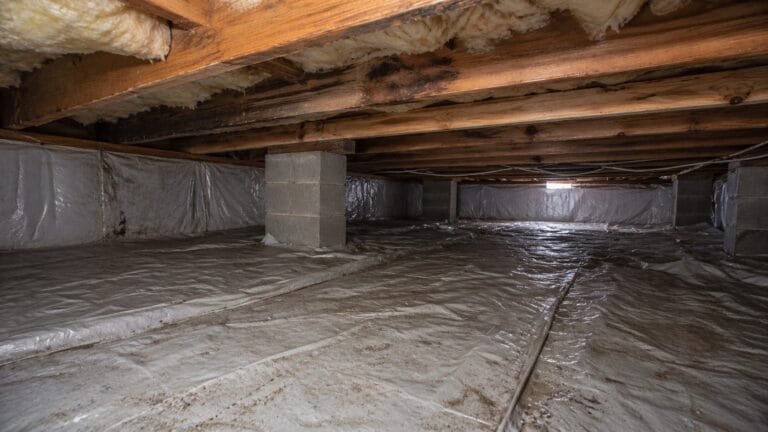
Crawl spaces should be sized differently from normal rooms. A crawl space may have a lower ceiling, but that does not mean it has a low moisture load. Soil vapor, exposed foundation walls, vents, rim joist leakage, poor drainage, and seasonal humidity can all add moisture faster than a basic room-size estimate suggests.
In many crawl spaces, the question is not just square footage. The condition of the crawl space matters. An encapsulated crawl space with sealed ground vapor barrier, closed vents, and controlled air leakage may be much easier to manage than a vented crawl space with exposed soil or loose plastic. A damp crawl space with soil vapor or standing water nearby may overwhelm a small unit even if the area is not large.
If the crawl space is already encapsulated and only needs humidity control, sizing can be based on the area, dampness level, and how tight the space is. If the crawl space has exposed soil, open vents, water entry, or poor exterior drainage, the dehumidifier may need to be part of a larger moisture-control plan instead of the only solution.
For equipment designed for this type of space, compare options in this guide to the best crawl space dehumidifiers.
Signs Your Dehumidifier Is Too Small
An undersized dehumidifier often gives the appearance of working because it collects water. But collecting water is not the same as controlling humidity. The real question is whether the unit can lower the room’s humidity and keep it stable.
One common sign of undersizing is constant operation. If the dehumidifier runs almost all the time but humidity stays high, the unit may not have enough capacity for the space. Constant runtime can also happen when the humidity setting is too low or the moisture source is too strong, but sizing is one of the first things to check.
Another sign is that the room still smells musty even after the unit has been running for days. Musty odors can linger in materials, but if the air still feels damp and the smell returns quickly, the dehumidifier may not be removing moisture fast enough.
You may also notice that the bucket fills frequently while the humidity remains elevated. This means the unit is removing water, but not enough to overcome the ongoing moisture load. In a damp basement or crawl space, this often points to either undersizing or a moisture source that needs to be corrected.
If you are unsure whether the issue is sizing, settings, or operation pattern, remember that this article focuses on capacity. Target humidity is a separate issue, so use the best dehumidifier settings to prevent mold guide for setting guidance instead of turning sizing into a humidity-target decision.
Can a Dehumidifier Be Too Big?
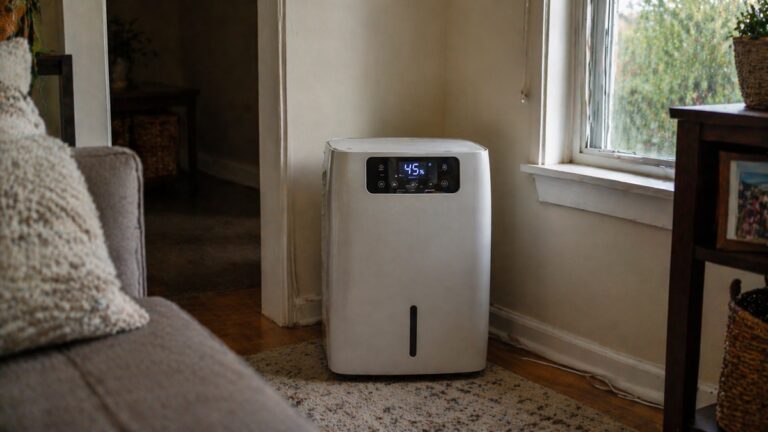
A dehumidifier can be larger than necessary for a small, mild room, but oversizing is usually less of a problem than undersizing in damp basements and crawl spaces. In normal use, a humidistat-controlled unit should shut off or slow down when the room reaches the selected humidity level. That means a larger unit does not always run constantly just because it has more capacity.
The main downsides of buying more capacity than you need are higher upfront cost, larger physical size, more noise, and possibly more heat output. A large unit may also be inconvenient in a small bedroom, office, or living area where space and sound matter.
For a mildly humid room, do not buy a basement-sized unit just because bigger sounds better. But for a basement, crawl space, large open area, or musty storage space, choosing a unit with a little extra capacity is often more practical than choosing the smallest unit that barely meets the listed square footage.
When One Dehumidifier May Not Be Enough
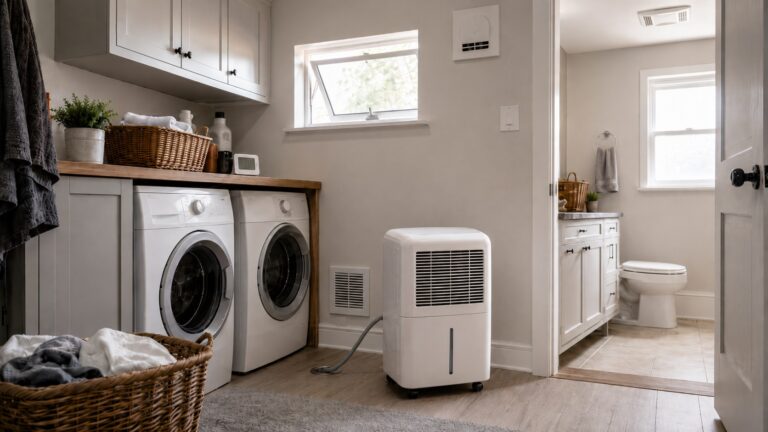
One dehumidifier may not control multiple separated rooms, a large basement with closed-off areas, or a home with humidity problems on different floors. Dehumidifiers work best when air can circulate through the area being controlled. If the space is divided by walls, doors, storage shelves, or separate rooms, one unit may only dry the area closest to it. For setup details beyond sizing, see this guide on where to place a dehumidifier.
In some homes, a portable dehumidifier is enough for one problem area, but not for the whole house. If humidity is high across several rooms, a whole-house or ducted system may be more appropriate. This is especially true when the home has central humidity issues rather than one damp basement room.
Whole-house systems are different from portable room units because they are designed to work with broader air movement and larger moisture loads. If your humidity problem affects the entire home, compare options in this guide to the best whole-house dehumidifiers after you understand the capacity difference.
Simple Dehumidifier Sizing Framework
The easiest way to choose the right size dehumidifier is to start with the area, then adjust for moisture severity and room type. Use this quick framework before choosing a unit:
- Measure the space. Estimate the square footage of the room, basement, crawl space, or connected area the unit will realistically serve.
- Check how damp it is. Mild seasonal humidity needs less capacity than musty odors, condensation, or humidity that stays high for days.
- Adjust for below-grade areas. Basements and crawl spaces usually need more caution because they are cooler and more exposed to ground moisture.
- Look for active water entry. Leaks, seepage, wet floors, or damp soil should be corrected instead of relying only on a larger dehumidifier.
- Plan drainage. In damp areas, a drain hose or pump helps the unit keep running instead of shutting off when the bucket fills.
Sizing Direction by Space Type
Because homes vary, it is better to think in sizing direction rather than rely on a universal chart. Manufacturer recommendations can help, but they should be adjusted for dampness, room type, and moisture source.
| Space or Condition | Practical Sizing Direction |
|---|---|
| Small room with mild humidity | A smaller portable unit may be enough if humidity only rises occasionally. |
| Medium room with regular dampness | A mid-size unit is usually safer than the smallest available option. |
| Large room or open basement | Choose a larger-capacity unit, especially if the area is below grade. |
| Musty basement | Size up from basic square-foot estimates because odor usually points to a higher moisture load. |
| Crawl space | Consider a crawl-space-rated dehumidifier instead of a standard room unit. |
| Whole-home humidity problem | Consider whether a ducted or whole-house dehumidifier is more appropriate than multiple portable units. |
| Active seepage or leaks | Correct the moisture source first. A larger dehumidifier may reduce humidity but will not stop water entry. |
When to Size Up From the Basic Recommendation
Use this as a sizing adjustment guide, not a replacement for manufacturer capacity charts. The more signs that apply, the more likely you should choose the next larger capacity range.
| Condition | How It Should Affect Sizing |
|---|---|
| Humidity only rises occasionally | Basic room-size guidance may be enough. |
| Humidity stays elevated for days | Size up from the basic square-foot estimate. |
| Musty odor is present | Treat the space as a higher moisture-load area. |
| Basement or below-grade room | Lean toward more capacity than an upstairs room of the same size. |
| Crawl space | Consider a crawl-space-rated unit with continuous drainage. |
| Closed-off rooms or divided layout | One larger unit may still not work if air cannot circulate. |
| Active leak, seepage, or standing water | Correct the source first; do not rely on capacity alone. |
Choose the Unit Type Before Comparing Pint Ratings
The right size also depends on the type of dehumidifier. A portable unit may work well for a bedroom, office, laundry-adjacent room, or mild humidity problem. A basement usually needs more capacity because of cooler air, concrete surfaces, and below-grade moisture exposure. A crawl space often needs a crawl-space-rated unit with continuous drainage and tougher construction. If humidity affects several rooms or floors, a ducted whole-house dehumidifier may be more appropriate than trying to manage the home with one portable unit.
In general, choose the equipment type first, then size within that category. A small room unit, basement dehumidifier, crawl space unit, and whole-house system are not interchangeable just because their listed pint ratings look similar.
Common Sizing Mistakes to Avoid
Choosing only by square footage
Square footage matters, but it does not measure moisture load. A dry upstairs room and a damp basement can have the same area but require different capacity. Always adjust for dampness, room type, and whether moisture is actively entering.
Buying the cheapest small unit for a damp basement
A small unit may look affordable, but it can become frustrating if it runs constantly and still leaves the basement humid. For damp lower-level spaces, capacity is not the best place to cut corners.
Ignoring humidity readings
Guessing by feel can be misleading. Some rooms feel comfortable while still staying humid enough to affect stored items, building materials, or odor. A hygrometer gives you a better starting point for sizing.
Confusing bucket size with dehumidifier capacity
A large bucket does not always mean strong moisture removal, and a small bucket does not always mean weak performance. Check moisture removal capacity first, then consider bucket size and drainage convenience.
Expecting one unit to control separated spaces
A dehumidifier cannot dry air it cannot reach. Closed doors, divided rooms, storage shelves, and poor airflow can limit performance. In divided basements or multi-room areas, one unit may not be enough even if its capacity looks correct on paper.
FAQ
What size dehumidifier do I need for a basement?
Basements usually need more capacity than upstairs rooms of the same size because they are cooler, below grade, and more exposed to ground moisture. Start with the basement’s square footage, then size up if the space smells musty, feels damp after rain, has exposed concrete, or stores moisture-sensitive items.
Is a 50-pint dehumidifier enough?
A 50-pint dehumidifier may be enough for many damp rooms and moderate basement spaces, but it depends on the area, moisture severity, airflow, and whether water is actively entering. If humidity stays high or the unit runs constantly, the space may need more capacity or moisture source correction.
Should I trust the square-foot rating on the dehumidifier box?
Use it as a starting point, not the final answer. Square-foot ratings assume certain test conditions, but basements, crawl spaces, musty rooms, and spaces with poor airflow often need more capacity than the label suggests.
Can a dehumidifier be too big?
A dehumidifier can be larger than necessary for a small, mildly humid room. The main downsides are cost, size, noise, and heat output. In damp basements and crawl spaces, however, slightly extra capacity is often better than choosing a unit that is too small.
Why does my dehumidifier run constantly?
A dehumidifier may run constantly because it is undersized, set too low, blocked by poor airflow, or fighting an active moisture source. If it runs all day and humidity stays high, check capacity, airflow, drainage, and moisture entry before assuming the unit is defective.
Should I size a dehumidifier by square footage or humidity level?
Use both. Square footage tells you the size of the area, but humidity level and dampness severity tell you how much moisture the unit must remove. A small but very damp room may need more capacity than a larger room with only mild humidity.
Do crawl spaces need special dehumidifiers?
Many crawl spaces are better served by crawl-space-rated units because they need low-clearance installation, continuous drainage, and long-term operation in tougher conditions.
Is one dehumidifier enough for a whole house?
One portable dehumidifier is usually not enough for a whole house unless the humidity problem is limited to one open area. If several rooms or floors stay humid, a whole-house or ducted dehumidifier may be more appropriate than trying to control the home with one portable unit.
Should I buy a bigger dehumidifier to prevent mold?
Capacity helps because an undersized dehumidifier may not keep humidity low enough. However, sizing is only one part of mold prevention. You also need the right humidity setting, airflow, drainage, and moisture source control. For target humidity guidance, see this article on best dehumidifier settings to prevent mold.
Final Sizing Rule
Choose dehumidifier size by combining room size, dampness severity, and space type. Pint capacity refers to moisture removal, not bucket size. Basements and crawl spaces often need more capacity than upstairs rooms because they are cooler, more enclosed, and more exposed to ground moisture.
If the space is mildly humid, choose a unit that matches the measured area and actual humidity readings. If the space is damp, musty, below grade, slow to dry, or filled with moisture-sensitive storage, size up rather than choosing the smallest model that claims to cover the square footage. If moisture keeps returning because of leaks, seepage, wet soil, or drainage problems, fix the source first. Once the source is controlled, the right-sized dehumidifier can manage humidity much more effectively.