Best Inline Duct Fans for Moisture Control
Moisture problems often start when damp air gets trapped in places where it cannot move: basements, crawl spaces, utility rooms, grow-room-style enclosures, laundry areas, workshops, and long duct runs. A dehumidifier can remove moisture from the air, but in some spaces, you also need better airflow to exhaust stale, humid air or move it toward a better-controlled area.
The best inline duct fans for moisture control are designed to move air through ductwork more effectively than a basic open-room fan. Some models include humidity and temperature controllers, while others are simpler fans that work best with a separate humidistat, timer, or smart plug. The right choice depends on duct size, airflow needs, noise tolerance, controller features, and whether the fan will be used in a basement, crawl space, HVAC-adjacent setup, or enclosed moisture-prone area.
This guide focuses on inline duct fans that make sense for homeowners who want better moisture control, not just generic air movement.
Disclosure: As an Amazon Associate, I earn from qualifying purchases. This means I may earn a commission if you buy through links on this page, at no extra cost to you.
Quick Picks Summary
- Best Overall: AC Infinity CLOUDLINE PRO T6
- Best for Large Basements: AC Infinity CLOUDLINE PRO T8
- Best Simple Premium Fan: AC Infinity CLOUDLINE PRO S6
- Best AC Infinity Alternative: Spider Farmer 6 Inch Inline Duct Fan with GGS Controller
- Best High-Airflow Value Pick: VIVOSUN AeroZesh T8 8″ Inline Duct Fan
- Best Budget Basic Fan: VIVOSUN 6 Inch Inline Duct Fan 240 CFM
Product Reviews
Best Overall: AC Infinity CLOUDLINE PRO T6
The AC Infinity CLOUDLINE PRO T6 is the strongest overall choice for most homeowners because it combines a residential-friendly 6-inch duct size with smart humidity and temperature control. For moisture-prone areas, that matters. A simple fan can move air, but a fan with humidity-based programming can react when the space becomes damp instead of running only when someone remembers to turn it on.
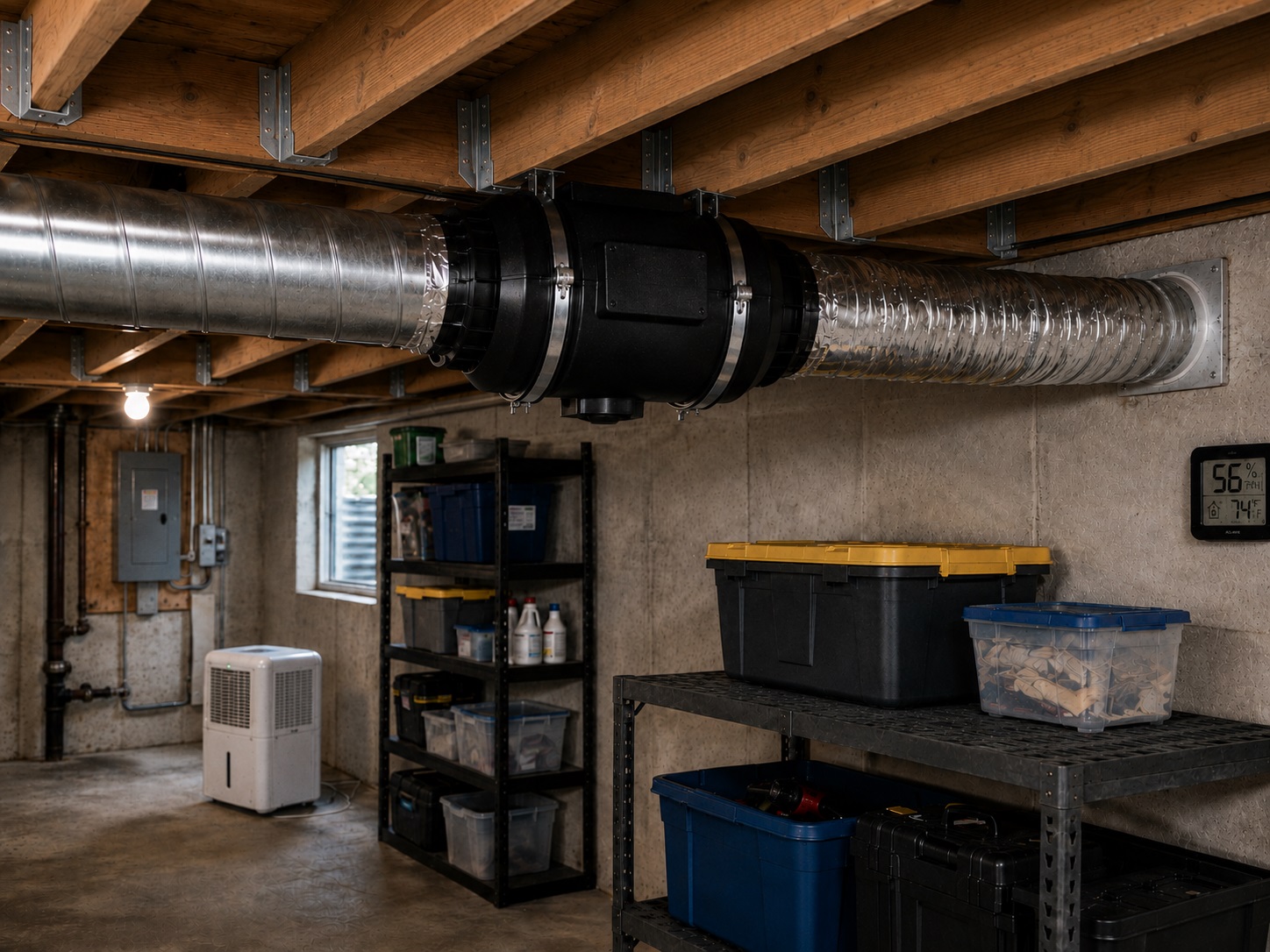
This model is especially useful for basements, crawl spaces, utility rooms, enclosed storage areas, and other spaces where stale air tends to linger. It is also a good fit when you want a more controlled setup than a standard room fan but do not need the size and airflow of a larger 8-inch inline duct fan.
Key Features
- 6-inch inline duct fan design suitable for many residential duct layouts
- Smart controller with temperature and humidity-based programming
- EC motor design for efficient variable-speed operation
- Quiet mixed-flow fan design compared with many basic inline fans
- App-based controls on compatible versions for monitoring and scheduling
- Useful for exhausting humid air or improving air movement in enclosed areas
Pros
- ✔ Strong balance of airflow, control, and homeowner usability
- ✔ Humidity-based automation is highly relevant for moisture control
- ✔ Better long-term option than a basic on/off booster fan
- ✔ Good size for many basements, crawl spaces, and utility spaces
- ✔ Established brand with a strong inline fan lineup
Cons
- ✖ More advanced than some homeowners need for a simple air-moving project
- ✖ Requires proper duct routing to perform well
- ✖ May be more fan than needed for a very small closet or cabinet-size space
Best For
- Homeowners who want one inline duct fan that can handle most moisture-control setups
- Basements, crawl spaces, utility rooms, and enclosed damp areas
- Users who want humidity-based automation instead of manual control only
Check the AC Infinity CLOUDLINE PRO T6 on Amazon to see current availability.
Best for Large Basements: AC Infinity CLOUDLINE PRO T8
The AC Infinity CLOUDLINE PRO T8 is the larger, higher-airflow choice for homeowners who need more serious ventilation capacity. If you are dealing with a larger basement, long duct run, bigger crawl space, or damp workshop, a smaller fan may not move enough air once duct length, elbows, grilles, and exterior termination are added.
This model makes the most sense when the project needs more airflow but still benefits from humidity and temperature controls. It should not be used as a substitute for fixing water intrusion, drainage problems, or active leaks, but it can be part of a broader moisture-management setup when humid air needs to be moved out of a problem area.
Key Features
- 8-inch inline duct fan design for higher airflow applications
- Humidity and temperature controller for automated operation
- EC motor for variable-speed performance
- Designed for stronger airflow than smaller 4-inch or 6-inch fans
- Useful for larger damp spaces or longer duct paths
- Better suited for higher-demand ventilation projects than compact fans
Pros
- ✔ Better airflow capacity for larger or more demanding spaces
- ✔ Smart controls make it more useful for moisture-prone areas
- ✔ Good choice when a 6-inch fan may be undersized
- ✔ Strong option for large basements, crawl spaces, and workshops
- ✔ Can reduce reliance on manual fan operation
Cons
- ✖ Larger duct size may not fit every home setup
- ✖ Can be excessive for small rooms or short duct runs
- ✖ Requires more planning for duct layout, mounting, and exterior exhaust
Best For
- Large basements where humid air needs stronger exhaust support
- Bigger crawl spaces or utility areas with longer duct runs
- Homeowners who want smart controls and higher airflow in the same unit
Check the AC Infinity CLOUDLINE PRO T8 on Amazon to see current availability.
Best Simple Premium Fan: AC Infinity CLOUDLINE PRO S6
The AC Infinity CLOUDLINE PRO S6 is a good choice when you want a better-quality inline duct fan but do not necessarily need built-in humidity programming. It uses the same general premium fan approach as AC Infinity’s smart models, but it is better for homeowners who prefer a simpler speed-control setup or plan to connect the fan to a separate humidistat, timer, or smart-home control.
For moisture control, this fan works best when the user already has a clear plan for when the fan should run. That may mean pairing it with a humidity controller, using it on a schedule, or installing it in a system where manual speed control is enough.
Key Features
- 6-inch inline fan size suitable for many residential duct projects
- Manual speed control instead of full humidity automation
- EC motor design for efficient speed adjustment
- Quiet mixed-flow design for lower-noise operation
- Useful for air transfer, exhaust support, and ducted ventilation
- Compatible with more controlled setups when paired with separate controls
Pros
- ✔ Premium fan build without unnecessary smart features for some users
- ✔ Good choice for people who already have a control strategy
- ✔ Quieter and more refined than many basic duct booster fans
- ✔ Practical 6-inch size for many moisture-control installations
- ✔ Strong option for DIY users who want manual speed adjustment
Cons
- ✖ Does not offer the same built-in humidity automation as the T-series models
- ✖ May need a separate humidistat or controller for moisture-triggered operation
- ✖ Less convenient for users who want automatic set-it-and-forget-it control
Best For
- Homeowners who want a higher-quality inline fan with simpler controls
- Projects where the fan will be connected to a separate humidity controller
- Basement, crawl space, or utility-room setups where manual speed control is enough
Check the AC Infinity CLOUDLINE PRO S6 on Amazon to see current availability.
Best AC Infinity Alternative: Spider Farmer 6 Inch Inline Duct Fan with GGS Controller
The Spider Farmer 6 Inch Inline Duct Fan with GGS Controller is a strong alternative for homeowners who want a smart inline fan but do not want to rely only on AC Infinity models. It is especially relevant because it includes controller functionality that can help regulate airflow based on changing environmental conditions.
This fan is often marketed toward grow-room and enclosed-space ventilation, but that same type of airflow control can be useful in moisture-prone residential spaces when the fan is installed correctly. It is most appropriate for homeowners who want automation, good airflow, and a controller-based setup without moving up to an 8-inch system.
Key Features
- 6-inch inline fan size for moderate airflow projects
- Controller-based operation for managing temperature and humidity conditions
- EC motor design for efficient variable-speed control
- Useful for enclosed areas where damp air needs to be exhausted
- Suitable for homeowners comparing alternatives to AC Infinity
- Designed for controlled ventilation rather than simple always-on airflow
Pros
- ✔ Good alternative to the AC Infinity smart fan lineup
- ✔ Controller features are useful for humidity-related applications
- ✔ Practical 6-inch size for many enclosed moisture-prone areas
- ✔ Strong fit for users who want more than a basic booster fan
- ✔ Useful for controlled airflow in damp storage or utility spaces
Cons
- ✖ Availability can be less predictable than the most popular AC Infinity models
- ✖ Grow-room-style marketing may confuse some residential buyers
- ✖ Homeowners still need proper ducting, termination, and safe installation
Best For
- Homeowners who want a smart 6-inch inline fan from a brand other than AC Infinity
- Moderate-size moisture-prone spaces where humidity-responsive control is useful
- Users comparing controlled ventilation options for enclosed damp areas
Best High-Airflow Value Pick: VIVOSUN AeroZesh T8 8″ Inline Duct Fan
The VIVOSUN AeroZesh T8 is a higher-airflow 8-inch option for homeowners who want strong air movement without automatically choosing the AC Infinity T8. It is a good fit for larger spaces, longer duct routes, and situations where a small fan may not move enough damp air to make a noticeable difference.
This fan should be considered a value-oriented high-airflow pick rather than the safest overall recommendation. It can be useful for moving humid air through ductwork, but the installation still matters more than the fan alone. Poor duct routing, blocked intake air, or exhausting into the wrong area can limit results no matter how strong the fan is.
Key Features
- 8-inch inline fan design for higher-airflow ventilation projects
- Controller-based operation for more flexible fan management
- EC motor design on the AeroZesh line
- Useful for large enclosed areas and longer duct paths
- Designed for stronger air movement than compact inline fans
- Good alternative for homeowners comparing high-airflow options
Pros
- ✔ Strong airflow potential for larger moisture-prone areas
- ✔ Useful when smaller fans may be underpowered
- ✔ Good value-oriented alternative in the 8-inch category
- ✔ Controller features add flexibility compared with basic fans
- ✔ Can work well in larger basements, workshops, and enclosed utility spaces
Cons
- ✖ May be oversized for small rooms or short duct runs
- ✖ Less ideal if you specifically want the AC Infinity control ecosystem
- ✖ Requires careful duct planning to avoid wasted airflow
Best For
- Large spaces where airflow capacity is the main concern
- Homeowners who want an 8-inch fan but are comparing alternatives
- Basements, workshops, and longer ducted exhaust setups
Check the VIVOSUN AeroZesh T8 8″ Inline Duct Fan on Amazon to see current availability.
Best Budget Basic Fan: VIVOSUN 6 Inch Inline Duct Fan 240 CFM
The VIVOSUN 6 Inch Inline Duct Fan 240 CFM is the simplest option in this lineup. It is not the best choice for someone who wants humidity automation, app control, or a premium EC motor system. However, it can make sense when the goal is basic airflow improvement on a tighter budget.
This fan is best used for smaller, less demanding setups where simple air movement is enough. For moisture control, it should not be treated as a complete solution by itself. If humidity is consistently high, you may need a dehumidifier, better drainage, leak repair, or a more controlled ventilation strategy. For readers still deciding between air movement and moisture removal, see the guide on when to use a dehumidifier vs ventilation.
Key Features
- 6-inch inline duct fan with basic airflow support
- Simple plug-in style operation
- Budget-friendly choice for less demanding projects
- Useful for small ducted ventilation or air-transfer setups
- Good option when smart controls are not required
- Simple design compared with controller-based inline fans
Pros
- ✔ More affordable than smart inline fan systems
- ✔ Simple to understand and operate
- ✔ Good for basic airflow improvement
- ✔ Useful for smaller moisture-prone areas with light ventilation needs
- ✔ Does not require app setup or advanced programming
Cons
- ✖ No built-in humidity controller
- ✖ Less advanced than EC-motor smart fan systems
- ✖ Not ideal for large spaces or long duct runs
- ✖ May need a separate timer, humidistat, or smart plug for better moisture-control use
Best For
- Budget users who need basic ducted airflow support
- Small utility areas, light-duty air transfer, or short duct runs
- Homeowners who do not need smart humidity automation
Check the VIVOSUN 6 Inch Inline Duct Fan 240 CFM on Amazon to see current availability.
Product Comparison Table
| Product | Category Label | Best Use Case | Key Strengths | Main Limitation | Amazon Link |
|---|---|---|---|---|---|
| AC Infinity CLOUDLINE PRO T6 | Best Overall | Most basements, crawl spaces, utility rooms, and enclosed moisture-prone areas | Strong mix of 6-inch airflow, humidity automation, quiet operation, and smart controls | More advanced than needed for very simple airflow projects | View on Amazon |
| AC Infinity CLOUDLINE PRO T8 | Best for Large Basements | Larger spaces, long duct runs, workshops, and bigger crawl spaces | Higher airflow capacity with humidity and temperature control | May be oversized for small rooms or short duct paths | View on Amazon |
| AC Infinity CLOUDLINE PRO S6 | Best Simple Premium Fan | Users who want a quality fan but prefer separate or manual controls | Premium 6-inch fan design with simple speed control | No built-in humidity automation like the T-series models | View on Amazon |
| Spider Farmer 6 Inch Inline Duct Fan with GGS Controller | Best AC Infinity Alternative | Controlled ventilation in medium damp spaces | Smart controller features and good 6-inch airflow potential | Availability may be less predictable | View on Amazon |
| VIVOSUN AeroZesh T8 8″ Inline Duct Fan | Best High-Airflow Value Pick | Large spaces where stronger airflow is more important than compact size | 8-inch fan size, strong airflow potential, controller-based operation | Requires careful duct planning and may be too large for small spaces | View on Amazon |
| VIVOSUN 6 Inch Inline Duct Fan 240 CFM | Best Budget Basic Fan | Simple, light-duty airflow support on a tighter budget | Affordable, straightforward, and easy to understand | No humidity controller and less advanced performance | View on Amazon |
Buying Guide: How to Choose the Right Inline Duct Fan for Moisture Control
Start with the moisture problem, not the fan size
An inline duct fan can help move humid air, but it cannot fix every moisture problem. If the space is damp because of a roof leak, plumbing leak, foundation seepage, or standing water, the source needs to be addressed first. A fan may help reduce stagnant air, but the hidden moisture source can continue feeding mold or structural damage.
For a broader diagnostic starting point, see how to find, fix, and prevent moisture problems in homes. That kind of whole-home moisture thinking is important before buying any ventilation product.
Choose 6-inch fans for moderate spaces
Most homeowners should start by looking at 6-inch inline duct fans. They are easier to fit into residential projects than larger 8-inch fans, and they can provide enough airflow for many basements, crawl spaces, laundry-adjacent spaces, utility rooms, and enclosed storage areas.
The AC Infinity CLOUDLINE PRO T6 is the best example of this balance. It is strong enough for many real moisture-control setups but not as bulky as an 8-inch fan.
Choose 8-inch fans for larger spaces or longer duct runs
An 8-inch inline duct fan can make sense when the space is larger, the duct run is long, or the airflow path includes multiple elbows, grilles, filters, or exterior hoods. Every obstruction reduces real-world airflow. If you are trying to ventilate a large damp basement or a bigger crawl space, a small fan may look good on paper but feel weak once installed.
The AC Infinity CLOUDLINE PRO T8 is the best large-space choice in this list because it combines higher airflow with humidity-based control. The VIVOSUN AeroZesh T8 is the stronger value-style alternative if airflow capacity is the main priority.
Prioritize humidity controls for moisture-prone areas
For moisture control, humidity-based operation is usually more useful than simple manual control. A fan that responds to humidity can run when moisture rises and slow down when conditions improve. That is especially helpful in spaces where damp air builds gradually.
Manual fans can still work, but they require a plan. You may need a separate humidistat, timer, or smart plug. You should also monitor the space with a hygrometer. The guide on how to test indoor humidity levels explains how to measure humidity before and after making changes.
Think about where the humid air is going
A fan is only helpful if it moves damp air somewhere appropriate. For moisture-control exhaust, that usually means ducting air outdoors, not into another hidden cavity, attic corner, wall space, or crawl space section where moisture can create a new problem.
Do not assume that “more airflow” is always better. Exhausting air from a basement or crawl space can also pull replacement air from somewhere else. In humid climates, poorly planned ventilation can sometimes bring in more moisture than it removes. This is one reason the decision between ventilation and dehumidification matters.
Match the product to the space
For a medium damp basement or utility room, the AC Infinity CLOUDLINE PRO T6 is the safest all-around pick. For a larger basement or long duct run, use the AC Infinity CLOUDLINE PRO T8. For a simpler premium fan that you will control separately, use the AC Infinity CLOUDLINE PRO S6. For a non-AC-Infinity smart alternative, consider the Spider Farmer fan. For a budget air movement project, the VIVOSUN 6-inch basic fan may be enough.
Setup and Usage Advice
Use a clear intake and exhaust path
An inline duct fan needs both intake air and a discharge path. If the fan is pulling from a cramped or blocked area, performance will suffer. If it exhausts into another enclosed area, moisture may simply move from one problem zone to another.
Keep duct runs as short and smooth as possible
Long duct runs, sharp elbows, crushed flexible duct, undersized grilles, and restrictive exterior hoods can all reduce real-world airflow. A stronger fan can help, but good duct design matters just as much as the product itself.
Use humidity readings to verify results
Do not judge performance only by how much air you feel moving. Use a hygrometer to compare humidity before installation, during operation, and after several days of normal use. If humidity stays high, the fan may be undersized, poorly placed, or solving the wrong problem.
Do not use a generic inline fan in a dryer vent
Dryer vents have lint, heat, code requirements, and fire-safety concerns. Do not place a generic inline duct fan in a dryer exhaust run unless the product is specifically rated and approved for that use. If your concern is dryer-related moisture, start with the cause of the venting problem instead of adding a random fan.
Use ventilation with dehumidification when needed
Some homes need both airflow and moisture removal. An inline duct fan may help remove stale air, but a dehumidifier may still be needed if the space consistently holds high humidity. For product selection on the dehumidifier side, see how to choose and use a dehumidifier effectively.
Common Mistakes to Avoid
Buying a fan before identifying the moisture source
If the moisture problem comes from a leak, seepage, blocked drain line, roof issue, or plumbing failure, an inline fan will not solve the real cause. It may improve airflow, but the hidden moisture source can continue feeding mold or structural damage.
Undersizing the fan for a long duct run
A fan that works well in a short, straight duct may perform poorly in a long duct with multiple bends. For large basements, bigger crawl spaces, or complicated duct paths, an 8-inch fan may be more appropriate than a compact model.
Oversizing the fan for a small enclosed space
More airflow is not always better. An oversized fan can be louder, harder to control, and unnecessary in a small space. In some homes, aggressive exhaust can also pull in humid outdoor air or conditioned indoor air from places you did not intend.
Ignoring humidity monitoring
Without humidity readings, you are guessing. A fan may sound powerful but fail to lower humidity in a meaningful way. Use a humidity monitor before and after installation so you can see whether the space is improving.
Venting into the wrong place
Do not dump humid air into an attic, wall cavity, garage corner, or crawl space area where it can condense on cooler surfaces. Moisture-control ventilation should be planned carefully so the air ends up where it will not create another problem.
Confusing inline duct fans with bathroom exhaust fans
This article focuses on inline duct fans. A standard bathroom fan, ceiling fan/light combo, or room exhaust fan is a different product category. If you need a bathroom-specific product, choose a product designed for that use instead of forcing an inline duct fan into the wrong role.
FAQ About the Best Inline Duct Fans for Moisture Control
What is the best inline duct fan for moisture control?
For most homeowners, the AC Infinity CLOUDLINE PRO T6 is the best overall inline duct fan for moisture control because it combines a practical 6-inch size with humidity-based automation, variable speed control, and strong residential usability.
Can an inline duct fan prevent mold?
An inline duct fan can help reduce stagnant, humid air, which may lower conditions that support mold growth. However, it cannot guarantee mold prevention. Leaks, standing water, damp materials, poor drainage, and high indoor humidity still need to be corrected. For broader indoor air and mold context, see Mold Exposure and Indoor Air Quality: Complete Home Guide.
Is a 6-inch or 8-inch inline duct fan better?
A 6-inch fan is better for many moderate residential spaces because it is easier to fit and usually provides enough airflow. An 8-inch fan is better for larger basements, bigger crawl spaces, workshops, or longer duct runs where a smaller fan may not move enough air.
Do I need a humidity controller?
A humidity controller is strongly recommended for moisture-prone spaces. It allows the fan to respond when humidity rises instead of relying only on manual operation. Basic fans can still work, but they are better when paired with a separate humidistat, timer, or smart plug.
Can I use an inline duct fan in a crawl space?
Yes, an inline duct fan can be part of a crawl space ventilation setup, but it must be planned carefully. Crawl spaces are sensitive to outdoor humidity, vapor barriers, drainage, and air sealing. In some climates, uncontrolled ventilation can make moisture worse. Make sure the fan is moving air in a way that supports the overall moisture-control plan.
Can I use an inline duct fan instead of a dehumidifier?
Sometimes, but not always. Ventilation helps move humid air, while a dehumidifier removes moisture from the air. If outdoor air is humid or the space has ongoing moisture sources, a dehumidifier may be more effective. Many damp spaces benefit from both controlled ventilation and dehumidification.
Where should an inline duct fan exhaust humid air?
In most moisture-control setups, humid air should be exhausted outdoors through a properly installed vent termination. Avoid exhausting humid air into attics, wall cavities, enclosed framing spaces, or other hidden areas where condensation and mold can develop.
Are grow tent inline fans okay for home moisture control?
Some grow-tent-style inline fans can work well for residential moisture-control projects because they are designed to move air through ducting and often include useful controllers. However, they still need to be installed safely and appropriately for the home environment. The product label, electrical rating, duct layout, and exhaust location all matter.
Conclusion
The best inline duct fan for moisture control depends on the size of the space, the duct layout, and how much automation you want. For most homeowners, the AC Infinity CLOUDLINE PRO T6 is the best overall choice because it offers a strong mix of airflow, smart humidity control, and manageable 6-inch sizing.
Choose the AC Infinity CLOUDLINE PRO T8 if you need more airflow for a larger basement, crawl space, or long duct run. Choose the AC Infinity CLOUDLINE PRO S6 if you want a simpler premium fan and plan to manage controls separately.
The Spider Farmer 6 Inch Inline Duct Fan with GGS Controller is the best alternative to AC Infinity, while the VIVOSUN AeroZesh T8 is a practical high-airflow value pick. For a basic low-cost airflow project, the VIVOSUN 6 Inch Inline Duct Fan 240 CFM may be enough.
Whichever fan you choose, remember that ventilation works best when it is part of a complete moisture-control plan. Fix leaks, monitor humidity, route exhaust correctly, and make sure the fan is solving the right problem.