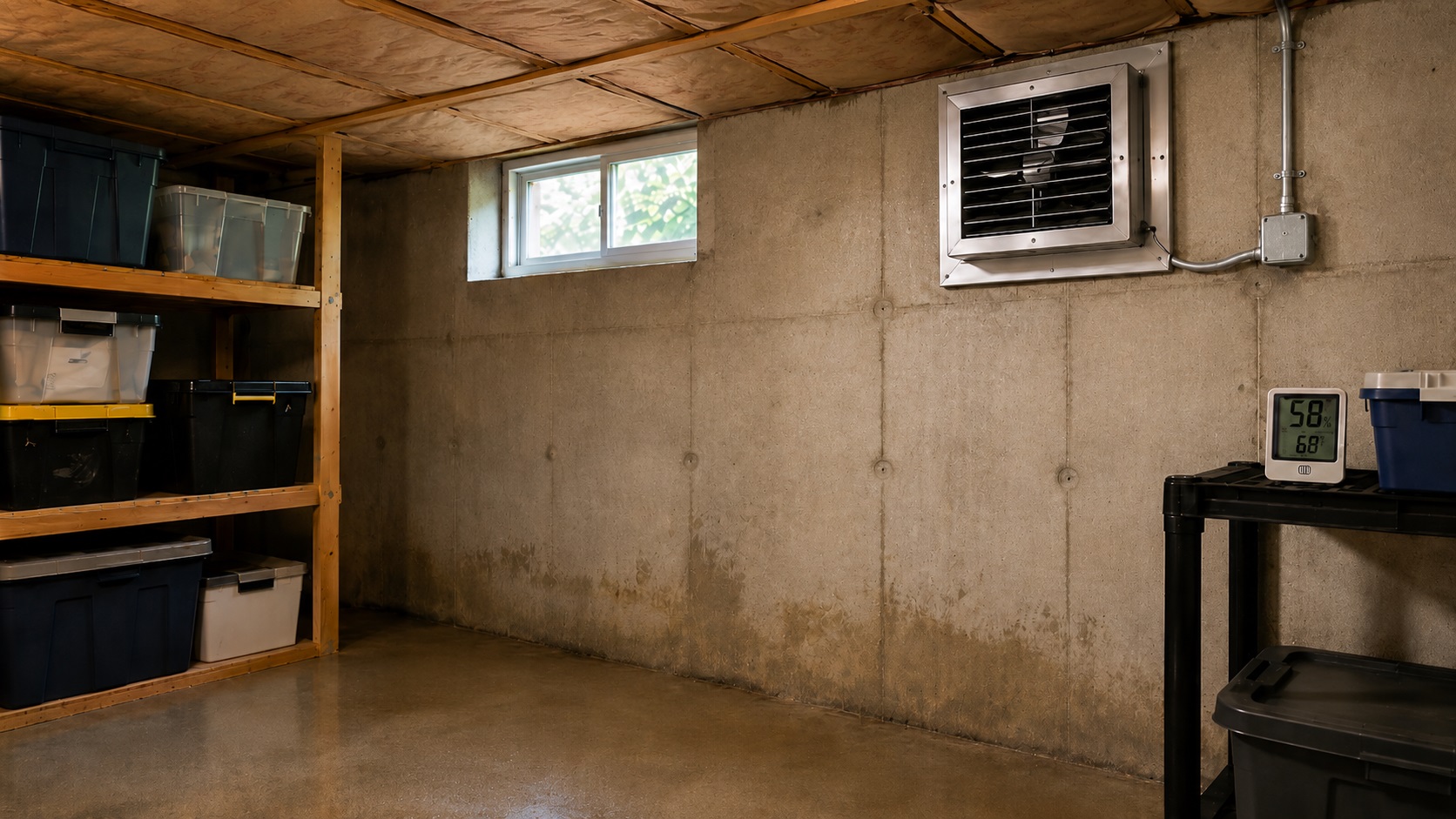
Best Basement Ventilation Systems for Moisture, Musty Air, and Mold Prevention Support
Introduction
A damp basement can make the whole house feel less comfortable. Musty odors, stale air, high humidity, and poor airflow are often signs that moisture is lingering longer than it should. A basement ventilation system can help move damp air out, bring controlled airflow into problem areas, and support a broader moisture-control plan.
The best basement ventilation systems are not all the same. Some are foundation-style vent fans for crawlspace-like basement openings. Others are inline duct fans for homeowners who need to move air through ductwork. Larger unfinished basements may need a high-CFM wall exhaust fan instead of a small vent fan. The right choice depends on the basement layout, moisture source, venting path, and whether you also need waterproofing or dehumidification.
Before choosing a fan, remember that ventilation is not the same as waterproofing. If your basement has seepage, standing water, foundation leaks, or hydrostatic pressure, start with a broader plan such as how to waterproof basements and control water intrusion.
As an Amazon Associate, this site earns from qualifying purchases. This does not affect the price you pay. Our recommendations are based on research, product reliability, and real-world usability in moisture-prone environments.
Quick Picks Summary
- Best Overall Basement Ventilation Fan: AC Infinity AIRTITAN T8 Crawlspace Basement Ventilator Fan
- Best Smart Inline Ventilation System: AC Infinity CLOUDLINE PRO S6 Quiet 6-Inch Inline Duct Fan
- Best Budget Inline Fan: VIVOSUN 6 Inch Inline Duct Fan 240 CFM
- Best High-CFM Wall Exhaust Fan: iLIVING 12-Inch Wall Mounted Shutter Exhaust Fan with Thermostat and Variable Speed Controller
- Best Compact Crawlspace-Style Basement Fan: Tjernlund V1D UnderAire Crawlspace Ventilator Fan, 110 CFM
- Best Stainless Foundation Vent Fan: Durablow 220 CFM Air-Out Stainless Steel Crawl Space Vent Fan with Built-in Dehumidistat
These products are best used for airflow and odor support. If your basement has active leaks, standing water, or wet walls, solve the water source before relying on ventilation.
Product Reviews
Best Overall Basement Ventilation Fan: AC Infinity AIRTITAN T8
The AC Infinity AIRTITAN T8 is the strongest overall choice for homeowners who want a purpose-built lower-level ventilation fan rather than a generic duct booster. It is especially useful for basements, crawlspace-style foundation openings, and damp lower areas where stale air and humidity tend to collect. The built-in environmental controls make it more practical than a basic on/off fan because it can respond to temperature and humidity conditions instead of running blindly all day.
This is a good fit if your basement has musty air but does not have active water entry. If your basement walls are wet, floors are seeping, or water appears after rain, read signs of moisture problems in basements before assuming ventilation alone will solve the issue.
Key Features
- Designed for crawlspace and basement-style ventilation applications
- 240 CFM airflow rating for stronger air exchange than small passive vents
- Controller support for temperature and humidity-based operation
- Weather-resistant construction for damp lower-level environments
- Useful for exhausting stale, musty air from enclosed lower spaces
Pros
- ✔ More basement-specific than a generic inline duct fan
- ✔ Smart controls make it easier to manage changing humidity conditions
- ✔ Strong choice for foundation vent-style installations
- ✔ Good balance of airflow, control, and homeowner-friendly setup
Cons
- ✖ Not a substitute for basement waterproofing or drainage repairs
- ✖ Works best when the basement has an appropriate vent opening or exhaust path
- ✖ May be more advanced than needed for a very small storage area
Best For
- Homeowners who want the best overall basement ventilation system for musty lower-level air
- Basements with crawlspace-style or foundation vent openings
- Moisture-prone areas where humidity control is more important than simple air movement
Check the AC Infinity AIRTITAN T8 on Amazon to see current availability.
Best Smart Inline Ventilation System: AC Infinity CLOUDLINE PRO S6
The AC Infinity CLOUDLINE PRO S6 is a strong option when your basement ventilation plan requires ductwork. Instead of mounting directly into a foundation vent, this type of fan is installed inline with ducting to move air from one area to another or exhaust it outdoors through a proper vent path. That makes it useful for utility rooms, finished basements, storage rooms, or basement zones where a direct wall fan is not practical.
This fan is best for homeowners who already understand where the air will come from and where it will go. A ducted fan should not simply dump damp basement air into another hidden cavity, attic, wall space, or crawlspace. The goal is controlled exhaust, not just moving the problem somewhere else.
Key Features
- 6-inch inline duct fan design for ducted basement ventilation setups
- Quiet EC motor design compared with many basic duct fans
- Speed control for adjusting airflow to the space
- Useful for targeted exhaust from utility rooms or enclosed basement areas
- Better suited to planned ducting than open foundation vent installation
Pros
- ✔ Excellent choice for a more controlled ducted ventilation system
- ✔ Quieter and more refined than many budget inline fans
- ✔ Adjustable airflow helps prevent over-ventilating small spaces
- ✔ Good fit for finished or partially finished basement layouts
Cons
- ✖ Requires ducting and a proper exhaust route
- ✖ Not as basement-specific as a foundation vent fan
- ✖ May be more system than needed for a simple unfinished basement
Best For
- Basements where air needs to be moved through ductwork
- Homeowners who want a quieter smart inline fan
- Utility rooms, storage rooms, and enclosed lower-level spaces
Check the AC Infinity CLOUDLINE PRO S6 on Amazon to see current availability.
Best Budget Inline Fan: VIVOSUN 6 Inch Inline Duct Fan 240 CFM
The VIVOSUN 6 Inch Inline Duct Fan is a budget-friendly choice for homeowners who need basic ducted air movement without paying for a more advanced smart system. It can work for simple basement exhaust setups, small utility areas, or storage rooms where stale air needs help moving toward an exterior vent.
This fan makes the most sense when the installation is straightforward and the homeowner is not relying on the fan as the only moisture-control tool. If the basement air is damp because of outdoor humidity, foundation seepage, or recurring wet surfaces, ventilation may need to be paired with humidity monitoring, dehumidification, or waterproofing. For broader humidity strategy, see how to test indoor humidity levels.
Key Features
- 6-inch inline duct fan with 240 CFM airflow rating
- Simple design for basic exhaust or airflow support
- Works with compatible ducting in basement or utility-room setups
- Good entry-level option for homeowners on a tighter budget
- Useful where a smart controller is not necessary
Pros
- ✔ Budget-friendly way to add ducted airflow
- ✔ Higher airflow than many small booster fans
- ✔ Simple choice for basic basement exhaust projects
- ✔ Good backup option for storage rooms and utility spaces
Cons
- ✖ Less advanced than smart inline systems
- ✖ May require separate controls depending on the setup
- ✖ Not ideal for homeowners who need humidity-based automation
Best For
- Budget users who need basic ducted basement ventilation
- Small basement rooms, utility rooms, or enclosed storage spaces
- Homeowners who already have a simple duct path planned
Check the VIVOSUN 6 Inch Inline Duct Fan on Amazon to see current availability.
Best High-CFM Wall Exhaust Fan: iLIVING 12-Inch Wall Mounted Shutter Exhaust Fan
The iLIVING 12-Inch Wall Mounted Shutter Exhaust Fan is the best fit on this list for larger unfinished areas that need a stronger exhaust fan. Unlike small foundation vent fans or inline duct fans, this style is built around a wall-mounted shutter design. It can move a lot of air, which may help in workshops, large utility basements, garage-basement spaces, or unfinished lower levels where air feels stagnant.
Because this is a higher-airflow fan, it should be used thoughtfully. Pulling too much outdoor air into a basement during humid weather can make moisture problems worse. It is best used when you understand the replacement-air path and when the basement does not already have active water problems. If your basement repeatedly stays damp, compare the fan option with why basements stay damp.
Key Features
- 12-inch wall-mounted shutter exhaust fan design
- High airflow capacity for larger unfinished areas
- Thermostat and variable speed controller included with this model
- Automatic shutter helps close the opening when the fan is not running
- Better suited to large open spaces than small enclosed rooms
Pros
- ✔ Strong airflow for larger basement or workshop-style spaces
- ✔ Shutter design is useful for wall-mounted exhaust
- ✔ Variable speed control gives more flexibility than a fixed-speed fan
- ✔ Good choice where small vent fans would be underpowered
Cons
- ✖ Too powerful for many small basement rooms
- ✖ Requires a suitable wall opening and careful installation
- ✖ Can pull in humid outdoor air if used at the wrong times
Best For
- Large unfinished basements
- Basement workshops and utility areas
- Homeowners who need stronger exhaust than a compact vent fan can provide
Check the iLIVING 12-Inch Wall Mounted Shutter Exhaust Fan on Amazon to see current availability.
Best Compact Crawlspace-Style Basement Fan: Tjernlund V1D UnderAire
The Tjernlund V1D UnderAire is a compact ventilation fan for lower spaces where a large wall fan or full ducted system would be excessive. It is especially relevant for crawlspace-style openings, small foundation vent areas, and tight lower-level spaces that need steady air exchange rather than high-volume exhaust.
This is not the biggest fan in the group, but that is part of the appeal. Smaller spaces do not always need aggressive airflow. In some situations, a compact fan that moves air consistently is more appropriate than a large fan that pulls humid outdoor air into the basement too quickly. This makes the V1D a practical option for smaller, moisture-prone lower areas where the goal is ventilation support rather than full basement air replacement.
Key Features
- 110 CFM airflow rating for smaller lower-level spaces
- Compact crawlspace-style ventilator design
- Useful for foundation vent openings and tight areas
- Established brand in specialty ventilation products
- Designed for moisture and odor reduction support in enclosed lower spaces
Pros
- ✔ Good size for compact basement-adjacent spaces
- ✔ More targeted than a large wall exhaust fan
- ✔ Practical for crawlspace-style vent openings
- ✔ Less likely to be oversized for small areas
Cons
- ✖ Not powerful enough for large open basements
- ✖ Limited use if there is no suitable vent location
- ✖ Does not replace dehumidification in chronically damp areas
Best For
- Small basement-adjacent spaces
- Crawlspace-style foundation openings
- Homeowners who need compact ventilation rather than high-CFM exhaust
Check the Tjernlund V1D UnderAire on Amazon to see current availability.
Best Stainless Foundation Vent Fan: Durablow 220 CFM Air-Out Stainless Steel Crawl Space Vent Fan
The Durablow 220 CFM Air-Out Stainless Steel Crawl Space Vent Fan is a strong choice when durability matters in a damp lower-level environment. Its stainless steel construction makes it especially appealing for foundation vent areas, crawlspace-style basement openings, and spaces where a basic painted or plastic housing may not inspire confidence over time.
The built-in dehumidistat is useful because basement and crawlspace ventilation should not always run the same way in every season. Humidity changes with outdoor weather, basement temperature, and air movement. A fan with humidity-based control can be more practical than a fan that simply runs whenever it is plugged in.
Key Features
- 220 CFM airflow rating for moderate lower-space ventilation
- Stainless steel housing for damp foundation-style environments
- Built-in dehumidistat for humidity-responsive operation
- Designed for crawlspace and foundation vent applications
- Useful for odor and humidity support in enclosed lower areas
Pros
- ✔ Stainless construction is a plus in damp spaces
- ✔ Built-in humidity control improves usability
- ✔ Good airflow level for moderate foundation vent applications
- ✔ Strong alternative to the AC Infinity AIRTITAN T8
Cons
- ✖ More specialized than a simple inline duct fan
- ✖ Not ideal for large finished basements without foundation vent access
- ✖ Still needs a real moisture-control plan if the basement has seepage or leaks
Best For
- Foundation vent-style basement ventilation
- Damp lower-level spaces where corrosion resistance matters
- Homeowners who want built-in humidity-based control
Check the Durablow 220 CFM Air-Out Stainless Steel Vent Fan on Amazon to see current availability.
Product Comparison Table
| Product | Best Category | System Type | Best Use Case | Key Strengths | Main Limitation | Amazon Link |
|---|---|---|---|---|---|---|
| AC Infinity AIRTITAN T8 | Best Overall Basement Ventilation Fan | Foundation vent fan | Basement or crawlspace-style vent openings | Smart controls, strong airflow, basement-relevant design | Needs a suitable exhaust location | View on Amazon |
| AC Infinity CLOUDLINE PRO S6 | Best Smart Inline Ventilation System | Inline duct fan | Ducted basement exhaust setups | Quiet operation, adjustable speed, strong ducted airflow | Requires ductwork and proper venting | View on Amazon |
| VIVOSUN 6 Inch Inline Duct Fan | Best Budget Inline Fan | Inline duct fan | Basic ducted airflow on a budget | Affordable, simple, useful for small ducted spaces | Less advanced control than premium fans | View on Amazon |
| iLIVING 12-Inch Wall Mounted Shutter Exhaust Fan | Best High-CFM Wall Exhaust Fan | Wall shutter exhaust fan | Large unfinished basements and workshops | High airflow, shutter design, variable speed control | Can be oversized for small basements | View on Amazon |
| Tjernlund V1D UnderAire | Best Compact Crawlspace-Style Basement Fan | Foundation vent fan | Small foundation vent areas | Compact size, targeted airflow, established specialty brand | Not for large open basements | View on Amazon |
| Durablow 220 CFM Air-Out Stainless Steel Vent Fan | Best Stainless Foundation Vent Fan | Foundation vent fan | Damp foundation vent-style spaces | Stainless housing, built-in dehumidistat, moderate airflow | More specialized than a general duct fan | View on Amazon |
Buying Guide: How to Choose the Right Basement Ventilation System
The right basement ventilation system depends on the problem you are trying to solve. A musty odor in a small foundation vent area is different from stale air in a large unfinished basement. A finished basement utility room is different from a damp crawlspace connected to the lower level. Before buying, look at the basement layout, the moisture pattern, and the path the air will take.
Choose a foundation vent fan for crawlspace-style basement openings
If your basement has foundation vent openings or a crawlspace-like lower section, a product such as the AC Infinity AIRTITAN T8, Tjernlund V1D, or Durablow 220 CFM fan makes the most sense. These are designed for lower-level ventilation rather than generic room circulation.
Choose an inline duct fan when you need ducted exhaust
If the fan needs to sit inside a duct run, choose an inline model such as the AC Infinity CLOUDLINE PRO S6 or VIVOSUN 6 Inch Inline Duct Fan. These are better for planned exhaust paths, enclosed rooms, or utility areas where the air needs to travel through ductwork before leaving the house.
Choose a high-CFM wall fan for large unfinished areas
The iLIVING 12-inch shutter fan is better for larger spaces that need more aggressive air exchange. It is not the best fit for a small basement room, but it may make sense in a workshop-style lower level, garage-basement space, or large unfinished area with a suitable wall opening.
Think about humidity, not just airflow
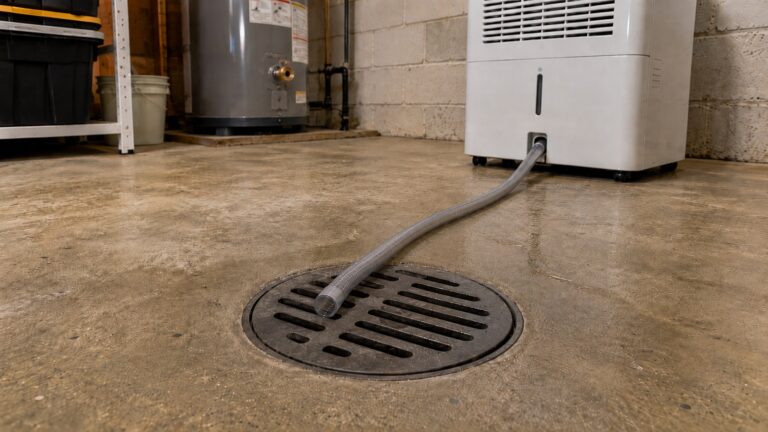
Moving air does not always reduce moisture. In humid weather, bringing in outdoor air can increase indoor humidity. That is why humidity monitoring matters. If basement humidity stays high even after adding ventilation, you may need a dehumidifier instead of more airflow. For product options, see best basement dehumidifiers.
Do not start with ventilation if you have active water intrusion
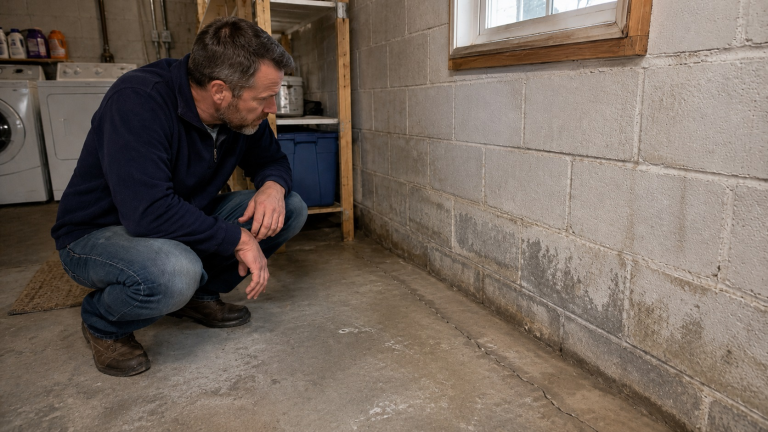
If you see standing water, wet basement walls, water coming through the floor, or leaks after rain, a fan should not be your first solution. Start by finding the water source and controlling the intrusion. Ventilation can help with stale air, but it will not stop hydrostatic pressure, foundation seepage, or drainage failures.
Know when ventilation is not enough
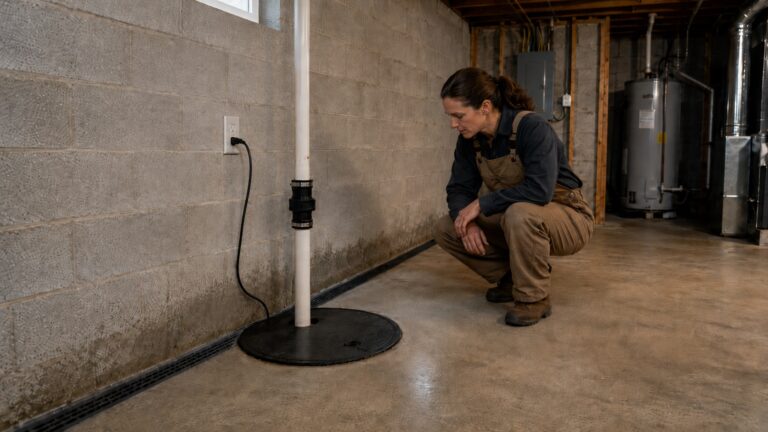
Ventilation can help with stale air and odors, but it will not seal foundation cracks, stop water seepage, fix poor drainage, or remove standing water. If moisture keeps returning after cleanup or repairs, your basement may need drainage, waterproofing, grading improvements, sump pump protection, or professional evaluation.
Setup and Usage Advice
Basement ventilation works best when it is part of a complete moisture-control plan. The fan should move air toward a safe outdoor discharge point. It should not exhaust damp air into another hidden part of the house.
Start by identifying the air path. Ask where the fan will pull air from, where replacement air will come from, and where the damp air will go. If the answer is unclear, the system may not perform well.
Use a hygrometer before and after installation. Measure humidity in the basement for several days before running the fan, then continue monitoring after installation. This helps you see whether ventilation is actually improving conditions or simply changing the airflow pattern.
Do not run ventilation blindly during humid outdoor conditions. In some climates, nighttime or rainy-weather ventilation can bring more moisture inside. A fan with humidity controls can help, but you should still check actual humidity levels instead of assuming more airflow is always better.
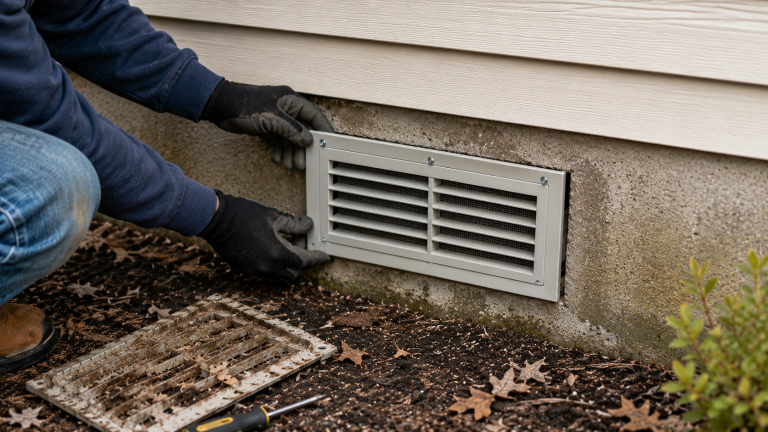
Keep vents and fan housings clean. Dust, lint, insects, and debris can restrict airflow. Inspect the fan periodically, especially in foundation vent locations where outdoor debris can collect.
If your main concern is preventing mold growth rather than only improving airflow, also see how to prevent mold in basements.
Pair ventilation with source control. If you notice water stains, wall seepage, wet basement floors, or recurring mold odors, ventilation should not be the only response. The sitewide guide on how to find, fix, and prevent moisture problems in homes can help you think through the bigger moisture pattern.
Common Mistakes to Avoid
Using ventilation as a substitute for waterproofing
A fan can move air, but it cannot fix liquid water intrusion. If your basement leaks during rain, has seepage through walls, or shows water coming through the floor, start with waterproofing and drainage diagnosis.
Oversizing the fan
A bigger fan is not always better. Too much exhaust can pull humid outdoor air into the basement, create drafts, or make the system harder to control. Choose airflow based on the space, not just the largest CFM number.
Venting damp air into another enclosed space
Do not exhaust basement air into an attic, wall cavity, garage wall, ceiling cavity, or another hidden area. That can move moisture problems instead of solving them.
Ignoring humidity readings
If you do not measure humidity, you are guessing. A basement can feel cool and still have high relative humidity. Use a hygrometer to confirm whether the ventilation system is helping.
Forgetting about mold risk
Musty odors can be a warning sign that moisture has been present long enough to support mold growth. If odor persists after ventilation, look deeper. Basement-related air quality concerns are covered in mold exposure risks from basements.
Buying an inline fan without a duct plan
Inline fans are not standalone room fans. They need properly sized ducting, a clear exhaust route, and a safe termination point. Without that, they may not solve the problem you bought them for.
FAQ About Basement Ventilation Systems
What is the best basement ventilation system for most homes?
For many homeowners with a foundation vent-style opening, the AC Infinity AIRTITAN T8 is the best overall choice because it is designed for basement and crawlspace-style ventilation and includes smart environmental controls. For ducted setups, the AC Infinity CLOUDLINE PRO S6 is a better fit.
Will a basement ventilation fan prevent mold?
A ventilation fan may help reduce stale air and support humidity control, but it cannot guarantee mold prevention. Mold prevention depends on controlling moisture sources, keeping humidity in a safer range, drying wet materials, and fixing leaks or seepage.
Is ventilation better than a dehumidifier for a basement?
It depends on the source of the moisture. Ventilation can help remove stale air and odors, but a dehumidifier is often better when basement humidity stays high even without active leaks. In many damp basements, both ventilation and dehumidification may be useful.
Can ventilating a basement make humidity worse?
Yes. If outdoor air is humid, bringing that air into a cool basement can increase relative humidity and condensation risk. This is why humidity monitoring and controlled fan operation are important.
Do I need a ducted inline fan or a wall-mounted vent fan?
Choose a ducted inline fan if the air must travel through ductwork to reach the outdoors. Choose a wall-mounted or foundation vent fan if the fan can exhaust directly through a suitable wall or vent opening.
How much airflow does a basement need?
There is no single airflow number that fits every basement. A small enclosed lower-level area may only need compact ventilation, while a large unfinished basement may need a higher-CFM fan. The layout, moisture level, air path, and outdoor conditions all matter.
Should I run a basement ventilation fan all the time?
Not necessarily. Continuous operation may waste energy or pull humid outdoor air inside during the wrong conditions. A fan with humidity controls, speed control, or timed operation is usually more practical than running a fan nonstop.
What should I do if my basement still smells musty after adding ventilation?
If the musty smell continues, look for hidden moisture, mold growth, wet materials, drainage issues, or recurring water entry. Ventilation may reduce odor concentration, but it will not remove the source if moisture is still present.
Conclusion
The best basement ventilation system depends on how your basement is built and what kind of moisture problem you are trying to manage. For most foundation vent-style situations, the AC Infinity AIRTITAN T8 is the strongest overall choice because it is designed for lower-level ventilation and includes smart humidity-related controls.
If you need ducted exhaust, choose the AC Infinity CLOUDLINE PRO S6 for a more refined smart inline system or the VIVOSUN 6 Inch Inline Duct Fan for a simpler budget setup. For large unfinished spaces, the iLIVING 12-Inch Wall Mounted Shutter Exhaust Fan provides much stronger airflow, but it should be used carefully so it does not pull in unwanted humid air.
For smaller crawlspace-style openings, the Tjernlund V1D UnderAire is a compact option, while the Durablow 220 CFM Stainless Steel Vent Fan is a strong pick where corrosion resistance and built-in humidity control matter.
Most importantly, do not treat ventilation as a complete basement moisture fix. Use a fan to support airflow, odor reduction, and humidity management, but investigate seepage, leaks, standing water, and persistent dampness separately. A good basement ventilation system works best when it supports a larger plan for moisture control, waterproofing, humidity monitoring, and long-term mold prevention.